Off Going Blank Again (Creation Records, 1992).
Author Archives: cherry bomb
pale saints – a thousand stars burst open
No longer cradled in gravity’s memory…
Off the album In Ribbons (4AD, 1992)
black rain – now i’m just a number
The ego is the source of all suffering.
This track is perfect for the way I feel right now, waking up too early after a too-late night.
honestly

nothing and everything
Wisdom tells me I am nothing.
Love tells me I am everything.
Between the two my life flows.
~ Nisargadatta Maharaj
ravi shankar, go in peace and thank you for the sound
7 April 1920 – 11 December 2012
Pandit Ravi Shankar – Raga Asa Bhairav (আশা ভৈরব রাগ) from the album Maestro’s Choice. পণ্ডিত রবি শংকরের সেতারে আশা ভৈরব রাগ…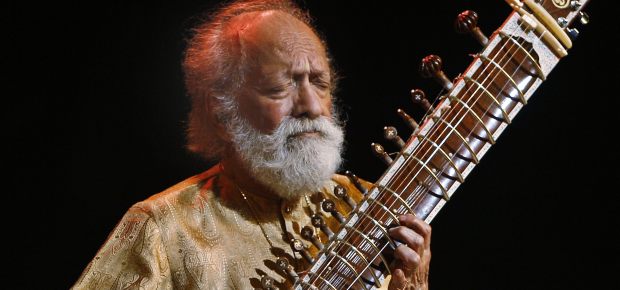
Listen to the entire Transmigration Macabre (1973) HERE. Transmigration Macabre was composed by Ravi Shankar for the British art film Viola, which tells of the growth and eventual victory of a possessed man’s belief that his dead wife has returned to life in the form of a cat that pursues him. The music traces his emotional turmoil as the man, dominated by his wife during her lifetime, struggles against her baneful influence after her death. ~ Richie Unterberger
bob dylan – shelter from the storm (alternate version)
Different lyrics to the version on Blood on the Tracks (1975).
peter, paul and mary – puff the magic dragon
Tonight in Person, 1966.
charles bukowski – pull a string, a puppet moves
 each man must realize
that it can all disappear very
quickly:
the cat, the woman, the job,
the front tire,
the bed, the walls, the
room; all our necessities
including love,
rest on foundations of sand –
and any given cause,
no matter how unrelated:
the death of a boy in Hong Kong
or a blizzard in Omaha …
can serve as your undoing.
all your chinaware crashing to the
kitchen floor, your girl will enter
and you’ll be standing, drunk,
in the center of it and she’ll ask:
my god, what’s the matter?
and you’ll answer: i don’t know,
i don’t know…
happy birthday, jim
The Doors – People Are Strange (1967).
rilke – the dragon princess

Still from Kwaidan (Kobayashi, 1964)
To speak of solitude again, it becomes always clearer that this is at bottom not something that one can take or leave. We are solitary. We may delude ourselves and act as though this were not so. That is all. But how much better it is to realize that we are so, yes, even to begin by assuming it. We shall indeed turn dizzy then; for all points upon which our eye has been accustomed to rest are taken from us, there is nothing near any more and everything far is infinitely far. A person removed from his own room, almost without preparation and transition, and set upon the height of a great mountain range, would feel something of the sort; an unparalleled insecurity, an abandonment to something inexpressible would almost annihilate him. He would think himself falling or hurled into space, or exploded into a thousand pieces: what a monstrous lie his brain would have to invent to catch up with and explain the state of his senses!
So for him who becomes solitary all distances, all measures change; of these changes many take place suddenly, and then, as with the man on the mountaintop, extraordinary imaginings and singular sensations arise that seem to grow out beyond all bearing. But it is necessary for us to experience that too. We must assume our existence as broadly as we in any way can; everything, even the unheard-of, must be possible in it. That is at bottom the only courage that is demanded of us: to have the courage for the most strange, the most singular, and the most inexplicable that we may encounter. That mankind has in this sense been cowardly has done life endless harm; the experiences that are called “visions,” the whole so-called “spirit-world,” death, all those things that are so closely akin to us, have by daily parrying been so crowded out of life that the senses with which we could have grasped them are atrophied. To say nothing of God.
But fear of the inexplicable has not alone impoverished the existence of the individual; the relationship between one human being and another has also been cramped by it, as though it had been lifted out of the riverbed of endless possibilities and set down in a fallow spot on the bank, to which nothing happens. For it is not inertia alone that is responsible for human relationships repeating themselves from case to case, indescribably monotonous and unrenewed; it is shyness before any sort of new, unforeseeable experience with which one does not think oneself able to cope. But only someone who is ready for everything, who excludes nothing, not even the most enigmatical, will live the relation to another as something alive and will himself draw exhaustively from his own existence. For if we think of this existence of the individual as a larger or smaller room, it appears evident that most people learn to know only a corner of their room, a place by the window, a strip of floor on which they walk up and down. Thus they have a certain security. And yet that dangerous insecurity is so much more human which drives the prisoners in Poe’s stories to feel out the shapes of their horrible dungeons and not be strangers to the unspeakable terror of their abode.
We, however, are not prisoners. No traps or snares are set about us, and there is nothing which should intimidate or worry us. We are set down in life as in the element to which we best correspond, and over and above this we have through thousands of years of accommodation become so like this life, that when we hold still we are, through a happy mimicry, scarcely to be distinguished from all that surrounds us. We have no reason to mistrust our world, for it is not against us. Has it terrors, they are our terrors; has it abysses, those abysses belong to us; are dangers at hand, we must try to love them.
And if only we arrange our life according to that principle which counsels us that we must always hold to the difficult, then that which now still seems to us the most alien will become what we most trust and find most faithful. How should we be able to forget those ancient myths that are at the beginning of all peoples, the myths about dragons that at the last moment turn into princesses. Perhaps all the dragons in our lives are princesses who are only waiting to see us act, just once, with beauty and courage. Perhaps everything that frightens us is, in its deepest essence, something helpless that wants our love.
From Rilke on Love and Other Difficulties: Translations and Considerations of Rainer Maria Rilke by John J L Mood. Norton, 1993.
aimee mann – wise up (magnolia sequence)
a moment of clarity
in this world
i don’t belong to anywhere or anyone
and i should stop looking for anywhere or anyone
or getting hopeful when someone tells me they understand me
that they feel the same as me
when i feel like we “see” or “hear” each other
like no one else does
those are precisely the situations most dangerous to me
because we don’t belong,
together,
and it will always tear me
apart
public image limited – careering (peel session)
December 10, 1979: The live recording of a John Peel Session by PiL (Lydon, Levene, Wobble & Atkins) at BBC Maida Vale Studios 4, London. The session is produced by Tony Wilson, and engineered by David Dade.
das boot

nina hagen – du hast den farbfilm vergessen
Nina Hagen & Automobil (1974). One of her first performances on film. There’s a version with English subtitles HERE.
Raised by her mother, well-known film and TV actress Eva-Maria Hagen and her stepfather, dissident singer-songwriter Wolf Biermann (who was a big influence on her political views and a big nuisance to the GDR), Hagen began singing professionally at a young age. Backed by her group, Automobil, her 1974 single, “Du Hast den Farbfilm Vergessen” (“You forgot the color film”) became a huge hit in the GDR and made Hagen a big star. The seemingly innocent-sounding lyrics (a girlfriend berating her boyfriend for not bringing color film on their vacation) were a subtle dig mocking the sterile, gray, Communist state. The fluffy-sounding ditty became one the most popular songs of 1974 and the double meaning of the comical lyrics was apparently well-understood by both the general population and the Politbüro elites.
In 1976, Wolf Biermann was stripped of his citizenship and refused re-admittance into the GDR after he’d played a TV concert in Cologne. When her mother left to join her husband, Nina claimed to be Biermann’s biological daughter. However, the thing that probably got her visa stamped stat was her threat to the authorities that she would become “the next Wolf Biermann.”
Four days later she was living in the West. I wonder how many people were thrown OUT of East Germany? That’s punk! (from dangerousminds.net)
And here’s a version from 1985 (in full, garish colour):
sylvia plath – cut
For Susan O’Neill Roe
What a thrill —
My thumb instead of an onion.
The top quite gone
Except for a sort of a hinge
Of skin,
A flap like a hat,
Dead white.
Then that red plush.
Little pilgrim,
The Indian’s axed your scalp.
Your turkey wattle
Carpet rolls
Straight from the heart.
I step on it,
Clutching my bottle
Of pink fizz.
A celebration, this is.
Out of a gap
A million soldiers run,
Redcoats, every one.
Whose side are they on?
O my
Homunculus, I am ill.
I have taken a pill to kill
The thin
Papery feeling.
Saboteur,
Kamikaze man —
The stain on your
Gauze Ku Klux Klan
Babushka
Darkens and tarnishes and when
The balled
Pulp of your heart
Confronts its small
Mill of silence
How you jump —
Trepanned veteran,
Dirty girl,
Thumb stump.
on being human
Being human is a raw experience. I have bouts of not feeling fully human. It’s always connected to a horrible sensation of being very distant from my body, like I’m disintegrating. I feel like this today. I think it is the result of too much time alone in thought and on the internet this weekend. I look on my body’s workings numbly, from a great distance, as though through the wrong end of a telescope. My hand resting on the mouse is a heavy foreign instrument. When I walk around town, I feel very far from everything and everyone. People’s voices, including my own when I speak, come at me down a funnel. It’s hard to get work done in such a state. It takes great effort to appear coordinated.
I slipped and fell and gashed my shin open the other day. It felt so good, the sting and the blood oozing out, like proof of real contact with something outside myself. I noticed that I felt more alive than in weeks, as if I had been pulled back into my body at the moment of impact.
14 April, 2009
from ‘the waves’
“For this moment, this one moment, we are together. I press you to me. Come, pain, feed on me. Bury your fangs in my flesh. Tear me asunder. I sob, I sob.”
~ Virginia Woolf, The Waves
cut hands – black mamba
Artist: Cut Hands
Title: Black Mamba
Album: Black Mamba
Year: 2012
vertigo
Cape Town’s Good Film Society presents this Alfred Hitchcock masterpiece, on at the Labia Theatre at 20h15 tonight.
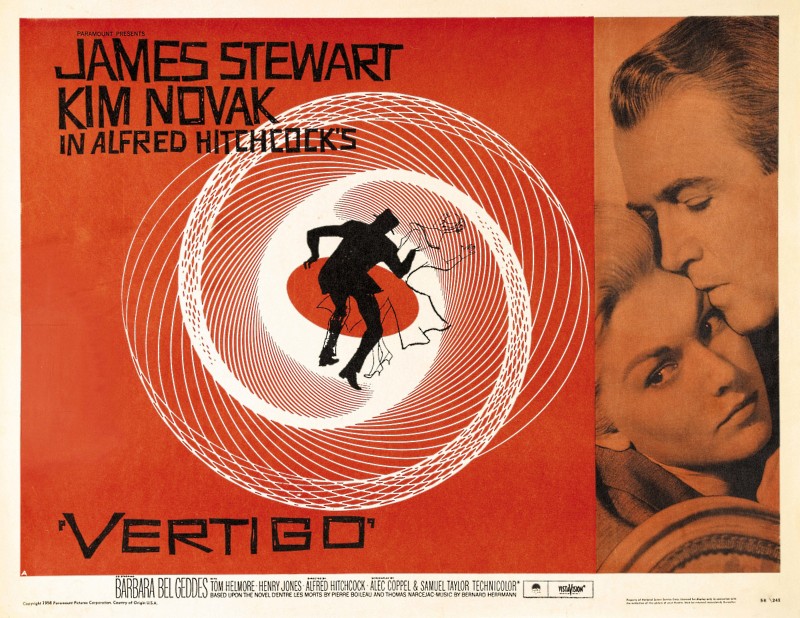
Recently voted in Sight and Sound’s definitive poll as the greatest film ever made (the only film to surpass Orson Welles’ Citizen Kane in many a decade), come to this Sunday’s one-off screening and decide for yourself if it’s worthy of the accolade!
Vertigo is the spellbinding tale of an ex-policeman with a fear of heights, Scottie Ferguson (James Stewart), who is hired by an old friend to investigate his wife (Kim Novak). But it’s no ordinary case – the woman is suspected of being possessed by the malignant spirit of a suicide victim. As the mystery leads to a spiral into paranoia and obsession, Scottie is forced to encounter the most painful truth: He has fallen in love with a woman who may not exist. Stylistically breathtaking, intellectually complex and profound, the film is a startlingly experimental exploration of desire, a psychological spider-web woven with unusual compassion by the master of nightmares. With this touchstone of psychological thrillers – his most personal masterpiece – Hitchcock defined not only a genre, but an entire era of filmmaking and art. Continue reading
bill hicks – revelations (1993)
Bill Hicks performing live at the Dominion Theatre in London. This is the entire show.
complete notes on the dissection of cadavers
Complete Notes on the Dissection of Cadavers is an Edo-period Japanese anatomical atlas by Kawaguchi Shinnin (1736-1811) with woodcut illustrations by Aoki Shukuya (d. 1802), published in Kyoto in 1772.


More illustrations from the book HERE.
bob dylan – blind willie mctell
“Well, God is in His heaven
And we all want what’s His
But power and greed and corruptible seed
Seem to be all that there is
I’m gazing out the window
Of the St. James Hotel
And I know no one can sing the blues
Like Blind Willie McTell.”
Copyright © 1983 by Special Rider Music, from The Bootleg Series, Vol 1-3: Rare & Unreleased 1961-1991
howard zinn on war, violence and human nature
Howard Zinn talking about the environmental factors that influence aggression. Excerpt from You Can’t Be Neutral On a Moving Train, 2004 [DVD], available from firstrunfeatures.com.
oliver chow on inter-repulsion, desire and transgression
Note on the author: Olivier Chow is a former senior protection officer of the International Committee of the Red Cross (ICRC) and has led investigations on war crimes in Afghanistan, Cambodia, the Democratic Republic of the Congo and Macedonia. He is currently finishing a PhD in critical theory at the School of Oriental and African Studies (SOAS), London University, working on the theory and visual mediation of cruelty. His main interests concern French theory and in particular the work of Georges Bataille, fetishism, violence, popular culture and tribal arts. He has also worked for UNESCO, Sotheby’s and a private collection of surrealist art. The following article was first published HERE.
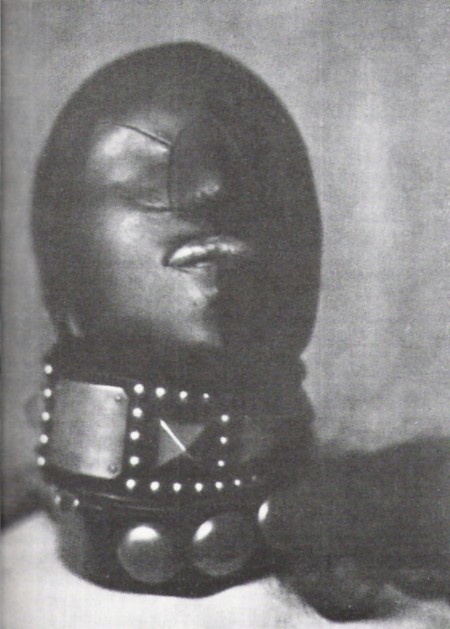
Jacques-André Boiffard, Untitled, Article “Le Caput Mortuum ou la Femme de l’Alchimiste”, Documents, 1930, No 8
In this paper we shall explore desire from the perspective of transgression and, to be precise, desire generated by the transgressive space born from the oscillation between attraction and repulsion, or what the French surrealist Georges Bataille named ‘inter-repulsion’. We shall argue that the ultimate object of inter-repulsion is death itself and, as such, inter-repulsion brings forth not only the subject and its discontents but also the social with its taboos and prohibitions. Inter-repulsion will be discussed in relation to the visual culture of Documents, a dissident and short-lived surrealist journal (1929-1930) that has recently come back to life at the Hayward in the exhibition “Undercover Surrealism.” [1] One of the pièces maîtresses in the main hall of the exhibition is a photograph by Jean-Jacques Boiffard, the most prominent photographer of the journal: a photograph of a magnified big toe around which our discussion will centre. This photograph has become an emblem for a surrealism that has done away with the ‘marvellous’ – which it literally shat on – and that has shamelessly promoted the ‘low’ (bassesse ) and the ordure: the surrealism of Georges Bataille which opposed the impossible of the real to Breton’s possible of the imagination. The big toes had a task – for Bataille, words and images always had to do something: to bring forth through the sensations of visceral reactions and gut feelings what had remained hidden and repressed. The object of repression staged in Documents was a desire rooted in death. Thus we shall argue that inter-repulsion creates a pornography of death since it shows us our darkest and most obscene object of desire. Our discussion will be divided into two sections: first we shall explore the big toe as ‘idol’, second as ‘ordure’.
Documents was initially intended as a scientific review, albeit one with a unique and innovative twist. It brought together high and popular art (beaux arts and variétés), archaeology and ethnographic art. Documents’ ambiguous mission statement already contained the seeds of its undoing: “the most provoking as yet unclassified works of art and certain unusual productions, neglected until now, will be the object of studies as rigorous and scientific as those of archaeologists.” As early as issue four, the provocative, disturbing and frankly monstrous became the focus of the journal and it quickly became a war machine against surrealism: “Documents made clear what surrealism was not; what, under the aegis of Breton, it could not be.” [2] It would be “the abscess burst each month from surrealism.” [3]Documents elaborated a common theoretical front against positivism and idealism reducing all images and objects (dead animals, big toes, abattoirs, ancient coins, high and ‘primitive art’) to document status. It promoted a fragmenting, magnifying and anti-aesthetic gaze on the world, privileging the monstrous and corporeal. Facts from ethnography, faits divers andvariétés , religion and culture, were artificially ‘planted’ in order to anchor images and discourse in a reality that was both familiar and yet complete fantasy and fabrication. This mock reality was largely one of distortion and pastiche; a distortion that was also applied to constituted forms (mainly the human body and its architecture). Here the positivism of factual documentation, like the body itself, was perversely subverted: reality was deformed and this was placed in the service of sensations such as vertigo and disgust. The ‘facts’ that were revealed were closer to what Francis Bacon understood as facts: a brutal revelation of a hidden truth about the human condition. These were inseparable from the brutal sensations they imposed on the viewer. These visceral facts, or ‘visual instincts’, fashioned a new and powerful reality where differences between a subject and object were brutally collapsed. This is the sensational reality that the big toes managed to bring about, or in the words of Bataille: “a return to reality…means that one is seduced in a base manner, without transpositions and to the point of screaming, opening his eyes wide: opening them wide, then, before a big toe.”[4] Inter-repulsion inaugurates a brutal return to sensation – not pleasant sensations, rather as we shall demonstrate, sensations of death.
Jacques-André Boiffard’s ‘Big Toes’ were published in Documents number 6, 1929, with a text by Bataille titled ‘Le Gros Orteil’. The two male big toes that appeared here are actually part of a series. Altogether there are three (two male and one female), a sort of “friendly trinity”. [5]The chiaroscuro isolates the toe from the body, providing it with a fetishistic and almost godly aura. Whereas most of the other photographs published in the journal were usually juxtaposed together in a sort of montage that reminded the viewer of the random and haphazard juxtapositions of a newspaper, the big toes stand alone in the magazine, occupying a full page. The visual brutality of the big toes and the mocking tone of the text that accompany the image, are typical of Documents: the provocative and almost ethnographic enterprise on the big toes was not dissimilar to the exploration of eccentric artistic productions, exotic cultures, sacrificial rituals and dismissed historical periods that defined Documents’ anthropological realm.
In his “Gros Orteil”, Bataille describes how feet, for some individuals, are sexually charged. Here Bataille cites the example of the Count of Villamediana who burnt a house in order to carry the queen and stroke her feet or foreign cultures like China where the feet of women are both deformed and venerated. As a fetish, feet and toes are abstracted from the body and turned into independent wholes charged with desire: idols. We shall name these idolised fragments of the body, ‘part-objects’ – a term that designs parts of the body, real or fantasised (penis, breast, food, faeces, toes, et cetera) invested with desire. The destiny of part-objects or ‘érotique combinatoire‘ [6] to use Roland Barthes’ expression, was one of Bataille’s favourite anthropological and symbolic explorations. Part-objects are celebrated in Bataille’s pornographic novels from Histoire de l’Oeil to Madame Edwarda . In Bataille’s Histoire de l’Oeil, the eye is set within a symbolic matrix and a system of correspondences. Histoire de l’Oeil, as Roland Barthes noted, is really the history of an object, its migration and metamorphosis into its symbolic equivalents. Every metamorphosis is like a new station within the migration of the object/organ. The part-object is recited throughout the novel (eye, sun, egg, and their respective seminal liquids), revealing the humid substance of a round phallicism. In Madame Edwarda, Madame Edwarda asks the narrator if he wants to sees her ‘vilaines guenilles’. She exposes her ‘old rags’, a source of anxious fascination. From within these revolting guenilles emanates a dirty gaze that stares at the narrator like a Medusean ‘pieuvre répugnante’ . When the narrator asks her why she does this, she tells him: “Tu vois…je suis DIEU”. [7] In Madame Edwarda, God is a genital revelation. Madame Edwarda’s ‘gazing beast’ is god-like: totemic and sovereign. The big toe photographed by Boiffard is also staged like a genital, repugnant and sovereign creature.
Binet’s seminal essay on fetishism, Le Fétichisme dans l’Amour (1887) was well known to Bataille. It dedicated a few pages to the account of various forms of fetishism related to inanimate objects or fractions of the body, real or symbolic such as hand, feet, hair, eye, voice and smell. Binet combines his theory of fetishism as a sexual perversion with the aesthetics of fetishism. According to Binet, fetishism tends to detach and isolate the part-object from the person to which it belongs. The fetishist tends to transform this part-object into an independent whole. The part-object is thus an abstraction according to Binet. This tendency towards abstraction is also supplemented by a tendency towards generalisation: the cult of the fetishist is not oriented towards a part-object belonging to one specific person. On the contrary, the part-object stands for a sort of genre or ‘monotheism’ to use Binet’s expression that is not attached to one individual specifically but to one abstracted fragment. Finally, Binet observes that there is a tendency towards exaggeration: the volume or the importance of the part-object is enhanced.
 Jacques-André Boiffard, Big Toe, feminine subject, twenty-four years old , Documents, No6, 1929
 Jacques-André Boiffard, Big Toe, masculine subject, thirty years old , Documents, No6, 1929
 Jacques-André Boiffard, Big Toe, masculine subject, thirty years old , Documents, No6, 1929
The fetishistic photographic process confers the big toe with a new status as part-object ready to be mapped out by desire and sexualised. The big toe’s sexual persona is here evidently exposed as obscene. Boiffard has mimicked the fetishist gaze observed by Binet. The toes are isolated from their bodies, fragmented, enlarged, staged and dramatised. The magnified, blown-up toes seem impossibly real: ugly, hairy, genital-like. We are literally put face to face with their excessive and nauseous reality. The photographs are cropped, the angle imposes a violent deformation on the toe – they are upside down, brought down if such an operation were possible. It is a portrait that transgresses and subverts the very idea of what a portrait should be: the highest and most noble part of the body has been thrown away and transformed into a grotesque, absurd and scandalous ‘other face’.
The framing of the toe is an act of violence set against the human figure. Bataille’s text refers to material and visual operations of abuse and violence such as “deformation”, “infection”, “tortures”, “pain”, “brutal”. Those forces that deform the human figure are violent forces that Bataille equates with forces of entropy and decomposition, such as those that attack the corpse. The deformation or “alteration” of the human figure was an essential strategy in Bataillean aesthetics: “the word alteration provides the double advantage of expressing a partial decomposition similar to that of corpses and at the same time the expression of the passage to a perfectly heterogeneous state that the protestant professor Otto named the ‘wholly other’, that is the sacred.” [8]
In his classic study of the Holy, the German theologian, philosopher and historian of religions Rudolf Otto (1869-1937), situates the sacred in relation to an a priori emotional structure, the numinosum . In the experience of the numinous, the subject experiences a feeling of intimate dependence towards a higher and independent force. The experience of the “wholly other” [9]: is what Otto describes as “creature-consciousness”. This “creature-feeling” is “the emotion of a creature, abased and overwhelmed by its own nothingness in contrast to that which is supreme above all creatures.” [10] This experience is fundamentally ambivalent, a mélange of attraction and repulsion: this mysterium tremendum is an uncanny experience of awfulness, an awfulness that lies beyond the realm of knowledge, producing a feeling of peculiar dread, a “terror fraught with inward shuddering.” [11] The big toes reek of these creepy “creature feelings”.
Boiffard has also captured the fetish’s destiny as fixation. William Pietz, one of the leading commentators on fetishism, defines the fetish in the following terms: “The fetish is always a meaningful fixation of a singular event; it is above all a ‘historical’ object, the enduring material form and force of an unrepeatable event.” [12] This unrepeatable and traumatic event could be rooted in early childhood beliefs and complexes. Freud and psychoanalysis argue fetishism is linked to the experience of shock that comes about once the absence of a maternal penis is revealed. The fetish becomes a substitute for the penis and a disavowal of that lack. The captions for this big toe could be: “it is not really gone as long as I’m here”. The body as site of revelation of the phallus was a common surrealist visual strategy. One of its most famous expressions is Man Ray’s anatomies (1930). The idea behind that specific visual operation was to de-territorialise bodies, rendering them polymorphously perverse and ‘genital’ by liberating desire from the conventional and limiting mappings of the erogenous zones.
 Jacques-André Boiffard, Untitled , Article “Le Caput Mortuum ou la Femme
de l’Alchimiste », Documents, 1930, No8
We are now going to discuss another famous image of Documents by Boiffard where the body turns into phallus: his untitled image that features a mask by W.B. Seabrook. Michel Leiris in his “Le Caput Mortuum ou la Femme de la l’Alchimiste” published in Documents in 1931, discusses the photograph portraying a woman wearing a mask. The image brings forth both fetishistic memories of desire (sado-masochistic fantasies) and mystic possibilities of religious revelation (could that mask be the face of God, Leiris wonders). For Leiris, a mask can thus open up to desire and the sacred: the mask opens towards what is both foreign and intimate within us. What the mask manages in true fetishistic form is to abstract and concentrate body parts – making them more as well as less real, that is, schematic. Boiffard’s woman becomes more mysterious but also more threatening as her features are disguised by her second leather skin. The woman becomes an abstraction, a generality, a thing or essence (“ chose-en-soi ”). Her severity is tinged with suffering, appealing to our sadism as Leiris argues: “in addition to suffering under the leather skin, being subjected and mortified (which satisfies our will to power and our fundamental cruelty), her head – sign of her intelligence and individuality – is insulted and negated.” [13]Her mouth is reduced to a wound and her body transgressed: the body is naked and the face is masked, an obscene and forced inversion that associates violence to desire. The figure of the woman is profoundly ambiguous and can be seen as either a perpetrator (“ bourreau ”) or a beheaded queen (“reine décapitée ”).
We have now witnessed the uncanny connection between desire and death. This connection is also active in the photographs of big toes. Boiffard restitution of the lost phallus has only been possible through the castrating use of picture cropping that has separated the toe from the foot. The sight of these big toes is not very comforting: on the contrary they signify pain, mutilation and danger. The big toe is a monument to castration: the nail suggests endless cuttings, a ‘thousand cuts’. Continue reading
louis armstrong – st james infirmary
blind willie mctell – you was born to die (1933)
jimi hendrix on the dick cavett show, july 1969
Interview
Performance
lisa hannigan – tiny desk concert
At the NPR Music offices, October 2011. I fall in love with her a little bit more every time I watch her. Wow.
Set List:
“Knots”
“Little Bird”
“Passenger”
It was early in the morning,
we were sitting on the stoop,
there wheeled away a starling
and I thought that I would too.
Oh for all I knew,
I was lost through and through,
in my high heels and my old dress
with my new keys in the wrong city.
I tie the knots to remember in my heart,
so I choke and I sputter to a stop,
I am a borrower and lender of the lot.
I walk away asleep
and chalk an outline round the scene.
This shadow play of whiskey talk,
a heavy denier dream.
Oh let it be, I was lost in him and me.
In my high heels and my old dress
with my new keys in the wrong city.
I tie the knots to remember in my heart,
so I choke and I sputter to a stop,
I am a borrower and lender of the lot.
 fleurmach