le journal de personne – not even in your dreams!

I am a woman – quite real – to myself
and all that is most virtual to others
accessible to myself
inaccessible to all the others
what is it that separates me from the others?
the veil of Maya, say some
the unbearable lightness of being, say others
illusions and allusions
there you have it, what protects us, the one and the others
what separates us, the ones from the others
to a friend who insisted on seeing me, I said, “not even in your dreams”
she took it badly and eclipsed herself from my mind
i was mistaken, badly mistaken, I should have told her
in dreams, why not, but not in real life
some hidden meaning… some secret meaning… some sacred meaning…
there you have it, what comprises Mystery
my life and I, we will always be out of reach
intimate intimity
Chimène* or Chimera
since ancient times the emphasis was always on the duplicity of all living things
am I a person or a personality?
real or virtual?
existence or excellence?
that I am Nobody makes my character more enigmatic but at the same time more consistent
it is paradoxical, but all who are tempted by infinity will know what I am saying
will push themselves to question Orpheus anew. He descended into hell to save Eurydice. Imagine the pain he put himself through. No, you can’t imagine, because it is unimaginable. And at the moment of returning to the surface, when he was in front and she behind him, the gods forbade him to turn around until they were both together at the other side of the barrier, on the human side, but Orpheus couldn’t restrain himself; he turned around, and lost Eurydice forever

* literary character signifying obsessive passion

(Thanks to Martin Jacklin for help with this translation. Original text HERE.)

3. affectivity

on why we often desire what makes us miserable (to where we often come to regret the good old days of arranged marriages) and on why women don’t say what they think.

13. Within the terrible community, emotional education is based on systematic humiliation, and the pulverization of its members’ self-esteem. No one must be able to believe themselves to be a carrier of that kind of affectivity which would have the right to a place inside the community.The hegemonic type of affectivity inside the terrible community corresponds, paradoxically, to what is seen outside of it as the most backwards form. The tribe, the village, the clan, the gang, the army, the family; these are the human formations universally acknowledged as being the most cruel and the least gratifying, and yet in spite of all they persist within the terrible communities. And in them, women must take on a kind of virility that even males disclaim now in biopolitical democracies, all the while seeing themselves as women whose femininity has lost out to the masculine fantasy dominant at the very heart of the terrible community: the fantasy of plastic “sexy” woman (in the image of the Young-Girl, that carnal envelope) ready for use and consumption by genital sexuality.

14. In the terrible communities, women, because they cannot actually become men, must become like men, while remaining furiously heterosexual and prisoners of the most worn-out stereotypes. If nobody has the right, in the terrible community, to say the truth about human relations, that’s doubly true for women: any woman that undertakes parrhesia within the terrible community will be immediately classed as just some hysteric.

from Tiqqun 2: Theses on the terrible community.

gertrude stein – from “the mother of us all”

“Yes, but what is man, what are men, what are they? I do not say that they haven’t kind hearts, if I fall down in a faint, they will rush to pick me up, if my house is on fire, they will rush in to put the fire out and help me, yes they have kind hearts but they are afraid, afraid, they are afraid, they are afraid. They fear women, they fear each other, they fear their neighbor, they fear other countries and then they hearten themselves in their fear by crowding together and following each other, and when they crowd together and follow each other they are brutes, like animals who stampede, and so they have written in the name male into the United States constitution, because they are afraid of black men because they are afraid of women, because they are afraid afraid. Men are afraid.”

“And women.”

“Ah women often have not any sense of danger, after all a hen screams pitifully when she sees an eagle but she is only afraid for her children, men are afraid for themselves, that is the real difference between men and women.”

“But Susan B, why do you not say these things out loud?”

“I say they are afraid, but if I were to tell them so their kindness would turn to hate. Yes the Quakers are right, they are not afraid because they do not fight, they do not fight.”

“But Susan B. you fight and you are not afraid.”

“I fight and I am not afraid, I fight but I am not afraid.”

“And you will win.”

“Win what, win what?”

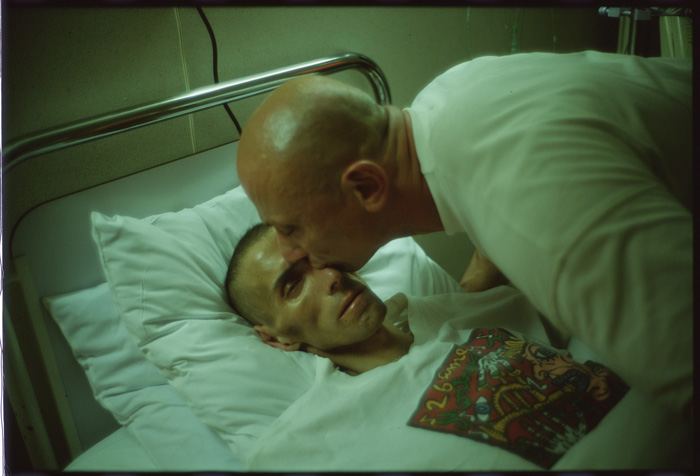
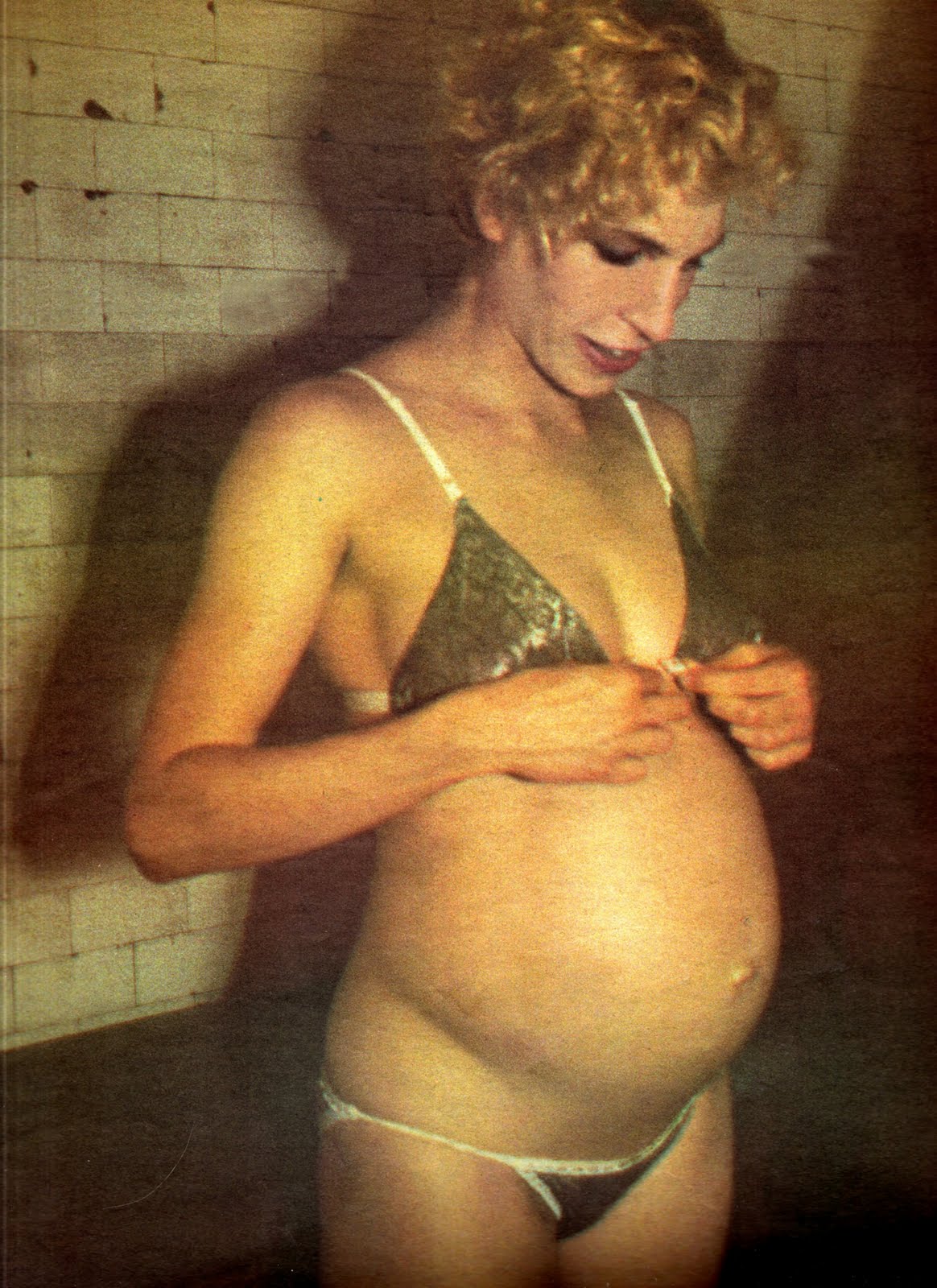
the work of nan goldin

As a teenager in Boston in the 1960s, then in New York starting in the 1970s, Nan Goldin has taken intensely personal, spontaneous, sexual, and transgressive photographs of her family, friends, and lovers. In 1979 she presented her first slideshow in a New York nightclub, and her richly colored, snapshotlike photographs were soon heralded as a groundbreaking contribution to fine art photography. The Ballad of Sexual Dependency—the name she gave her ever-evolving show—eventually grew into a forty-five-minute multimedia presentation of more than 900 photographs, accompanied by a musical soundtrack.

ulricke lourens – reconstructed restriction 05

This is one of a series of eight videos made by Ulricke Lourens for a Master’s degree in Fine Arts. It is a focused look at the body being corsetted and the tension that occurs. The series documents the practice of waist training, exploring the notion of culture imprinted onto the body and reflected through the skin. Watch more on Ulricke’s Youtube channel.