🍒🍒🍒
🍒🍒🍒
Not anyone who says, “I’m going to be
careful and smart in matters of love,”
who says, “I’m going to choose slowly,”
but only those lovers who didn’t choose at all
but were, as it were, chosen
by something invisible and powerful and uncontrollable
and beautiful and possibly even
unsuitable —
only those know what I’m talking about
in this talking about love.
___
From Felicity (Penguin Press, 2015).
Still true.
Two Solutions for One Problem (Persian: دو راه حل برای يک مسئله , Dow Rahehal Baraye yek Massaleh) is an Iranian short film from 1975, directed by Abbas Kiarostami, who died yesterday.
During breaktime, Dara and Nader have an altercation about a torn exercise book that the former has given back to the latter. There are two possible outcomes, which the film shows one after the other.
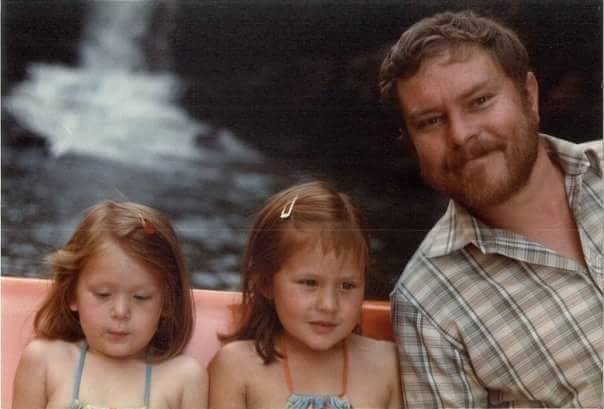
My dad with Heather and me - Uvongo
A poem for those who died, shot in Pulse nightclub in Orlando this weekend past.
i was going to see you
i was going to dance
in the same place with you someday
i was going to pretend not to notice
how you and your friends smiled
when you saw me and my partner
trying to cumbia to bachata
but i was going to feel more free anyway
because you were smiling
and we were together
and you had your stomach out
and you felt beautiful in your sweat
i was going to smile when i walked by
i was going to hug you the first time
a friend of a friend introduced us
i was going to compliment your shoes
instead of writing you a love poem
i was going to smile every time i saw you
and struggle to remember your name
we were going to sing together
we were going to belt out Selena
i was going to mispronounce everything
except for amor
and ay ay ay
i was going to covet your confidence and your bracelet
i was going to be grateful for the sight of you
i was going scream YES!!! at nothing in particular
at everything especially
meaning you
meaning you beyond who i knew you to be
i was going to see you in hallways
and be too shy to say hello
you were going to come to the workshop
you were going to sign up for the workshop and not come
you were going to translate the webinar
even though my politics seemed out there
we were going to sign up for creating change the same day
and be reluctant about it for completely different reasons
we were going to watch the keynotes
and laugh at completely different times
i was going to hold your hand in a big activity
about the intimacy of strangers
about the strangeness of needing prayer
we were going to get the same automated voice message
when we complained that it was not what it should have been
we were going to be standing in the same line
for various overpriced drinks
during a shift change
i was going to breathe loudly so you would notice me
you were going to compliment my hair
it isn’t fair
because we were going to work
to beyonce and rihanna
and the rihanna’s and beyonce’s to come
and the beyonce’s and rihanna’s after that
we were going to not drink enough water
and stay out later than our immune systems could handle
we were going to sit in traffic in each others blindspots
listening to top 40 songs that trigger queer memories
just outside the scope of marketing predictions
we were going to get old and i was going to wonder
about the hint of a tattoo i could see under your sleeve
i was going to blink and just miss
the fought-for laughter lines around your liner-loved eyes
i was going to go out for my birthday
but i didn’t
and you did
we were going to be elders
just because we were still around
and i was going to listen to you on a panel
we didn’t feel qualified for
and hear you talk about your guilt
for still being alive
when so many of your friends were taken
by suicide
by AIDS
by racist police
and jealous ex-lovers
and poverty
and no access to healthcare
and how you had a stable job
you suffered at until the weekend
how you avoided the drama
and only went to the club at pride
and so here you were with no one to dance with anymore
i was going to see you and forget you
and only remember you in my hips
and how my smile came easier than clenching my teeth eventually
and how i finally learned whatever it is i still haven’t learned yet
i was going to hear you laugh and not know why
and not care
our ancestors fought for a future
and we were both going to be there
until we weren’t
and i don’t know if it would hurt more
to lose you later after knowing you
i don’t know if it would hurt more
to know you died on your own day
by your own hands
or any of the other systems
that stalk you and me and ours forever
i only know the pain that i am having
and that you are not here to share it
you are not here to bear it
you were going to pass me a candle at the next vigil
but now i am pulse
and now you
are flame.
Society moulds human character and in turn human character reproduces social ideology en masse. Thus, in reproducing the negation of life inherent in social ideology, people reproduce their own suppression.
Those who are truly alive are kindly and unsuspecting in their human relationships and consequently endangered under present conditions. They assume that others think and act generously, kindly, and helpfully, in accordance with the laws of life. This natural attitude, fundamental to healthy children as well as to primitive man, inevitably represents a great danger in the struggle for a rational way of life as long as the emotional plague subsists, because the plague-ridden impute their own manner of thinking and acting to their fellow men.
A kindly man believes that all men are kindly, while one infected with the plague believes that all men lie and cheat and are hungry for power. In such a situation the living are at an obvious disadvantage. When they give to the plague-ridden, they are sucked dry, then ridiculed or betrayed.
Read the whole of Reich’s essay, “The Emotional Plague” HERE, and an “orgonomic” analysis of mass murders and their relationship to repression HERE (an interesting take in the light of the Orlando nightclub shooting this past weekend, although I completely disagree with the conclusions drawn by the author about what the USA should do about it! I think, frankly, that the USA has an enormous log in its own eye where repression is concerned.)

Diagram by Wilhelm Reich depicting his theory of the antithetical functional unity between instinct and defense, and illustrating specific impulses.


Charity Hamilton
The body is the canvas on which the female experience is painted and through which female identity is often understood. The female body is a slate on which a patriarchal story has been written, scarred onto the flesh.
For Simone Weil metaxu was simultaneously that which separated and connected, so for instance the wall between two prison cells cuts off the prisoners but was also the means by which they communicated by knocking on that wall. Could the body be that metaxu all at once separating us and connecting us to the Divine? The nature of metaxu is that it offers a route not just for the individual soul but for the souls of others to travel…
—
It’s all well and good to dust off a dead French Jewish Catholic not-quite-feminist-philosopher called Simone Weil and say ‘thanks, your theory of metaxu is great’, but what I want to know within the bones of my so-called soul is how this notion of metaxu can draw me into God, how can it liberate my sisters and how can it usher in the kingdom of the mother of all creation?
Human beings are created in the image of God and formed from the dust of the earth, and thus the body has an echoing significance throughout Christian history. The body is the perceived seat of what some describe as the fall, the locus of the incarnation, the home of crucifixion, the vessel of redemption, salvation and resurrection. The body is not an external meaningless diversion from the spiritual path; rather it is an incredibly important recurring theme both biblically and in Christian tradition and history. Bray and Colebrook state that,
The body is a negotiation with images, but it is also a negotiation with pleasures, pains, other bodies, space, visibility, and medical practice; no single event in this field can act as a general ground for determining the status of the body (Bray and Colebrook, 1998).
Yet more than all of this, the body is the place in which we dwell, it is all we have. As Elizabeth Moltmann Wendell says ‘I am my body’ (Moltmann-Wendell, 1994). For each of our sisters the body is the canvas on which the female experience is painted and through which female identity is often understood. It is on the stage of our female bodies that some of the most fixed church doctrines have been written and enacted. The female body is a slate on which a patriarchal story has been written, scarred onto the flesh. These bodies of ours are patriarchal constructs which must be liberated and re-adopted into the Christian story without the limitations of perceived notions or definitions of ‘gender’.
Isherwood and Stuart assert that ‘From the moment we are asked to believe that Eve was a rib removed from the side of Adam we understand that theology is based in the body and we are at a disadvantage!’ (Isherwood and Stuart, 1998: 15). The historical dichotomy between the Eve and the Mary constructions has led to a definitive inequality for women, both in terms of physical wellbeing and in terms of spiritual and psychological wellbeing. The choices for a woman to be the sin-formed, temptress Eve or the virginal pure vessel Mary are seen historically in the precarious place of women in the church and in society.
Elizabeth Stuart writes that ‘Women were regarded as being ensnared in their bodiliness to a far greater degree than men and they too had to be tamed and subdued for their own good and the good of the men they might tempt into sin’ (Stuart, 1996: 23). It is hardly surprising therefore that twentieth and twenty-first century feminist, womanist, mujerista and black theologians have worked hard to undo and re-express a theology of the body which offers a more authentic narrative of the relationship between the Divine and the physical which both liberates the female body and liberates God from the patriarchal box the Church has created around her.
…The female body can only be liberated from that patriarchal overwriting by writing its own narrative, much of which will be based upon experiences of being troubled. The true nature of the female body can only be revealed by a concerted effort to ‘re-own’ this body as our own not as we have been taught to understand it. This in turn means that the systems, doctrines and ‘ways of being’ which exist within the Church and society must be challenged and re-imagined from the perspective of the un-vocalized and troubled female narrative. In the sense that the female body has not really been ours, has not been an authentically female body and yet has the potential to be unlocked as such, it therefore makes for the perfect condition for metaxu, it is that thing which separates in its forms of oppression and connects in its potential liberation. It is at once a place where great evil has been wrought and a place of divine goodness. Weil writes of love that,
Creation is an act of love and it is perpetual. At each moment our existence is God’s love for us. But God can only love himself. His love for us is love for himself through us. Thus, he who gives us our being loves in us the acceptance of not being. Our existence is made up only of his waiting for our acceptance not to exist. He is perpetually begging from us that existence which he gives. He gives it to us in order to beg it from us (Weil, 2002: 28).
According to Weil, our very existence is from God and returns to God. I would argue that to be able to return this ‘not being’ to God, the body has to take some form of action, or have some form of action performed upon it to open a space in which our not being or not existing can be offered to God. It is this removal of our self which I argue can be interpreted as a removal of the socially created self to leave only the God part of ourselves, the authentic self that is God. The body is metaxu in that it is imperfect and yet perfect. The body is human and therefore unreal and socially recreated, yet the body is also created by God and God dwells within it. The female body is both imprisoned and is liberated. Its imprisonment is the very thing that enables it to unravel the layers of patriarchal construction to locate the God part and its imprisonment is the thing which allows for an authentic narrative to be written. The female body has to separate us from the Divine in order to connect us to the Divine.
Read the whole of this interesting paper by Charity Hamilton HERE.
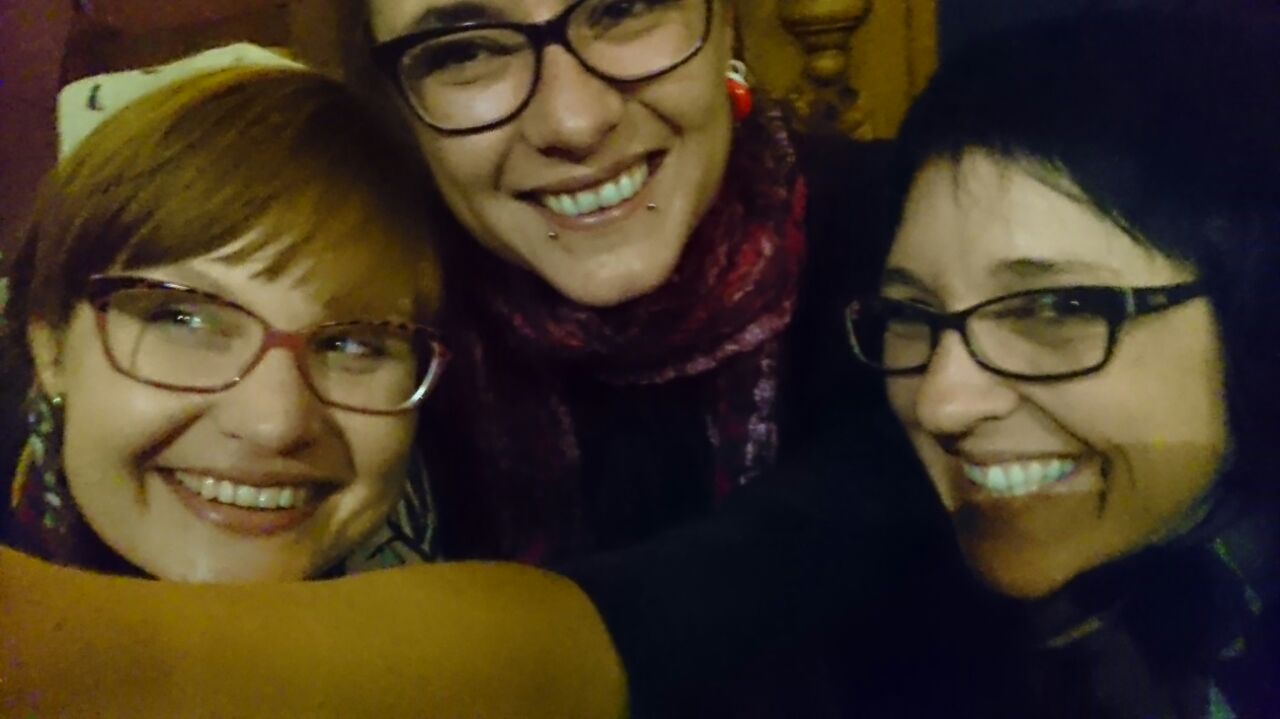
Me with Moon and Rike, last night. Friends since last century!
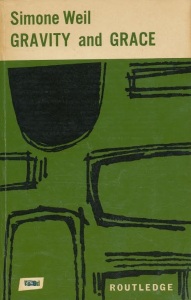 We are a part which has to imitate the whole.
The a¯tman. Let the soul of a man take the whole universe for its body. Let its relation to the whole universe be like that of a collector to his collection, or of one of the soldiers who died crying out ‘Long live the Emperor!’ to Napoleon. The soul transports itself outside the actual body into something else. Let it therefore transport itself into the whole universe.
We should identify ourselves with the universe itself. Everything that is less than the universe is subject to suffering.
Even though I die, the universe continues. That does not console me if I am anything other than the universe. If, however, the universe is, as it were, another body to my soul, my death ceases to have any more importance for me than that of a stranger. The same is true of my sufferings.
Let the whole universe be for me, in relation to my body, what the stick of a blind man is in relation to his hand. His sensibility is really no longer in his hand but at the end of the stick. An apprenticeship is necessary.
To limit one’s love to the pure object is the same thing as to extend it to the whole universe.
To change the relationship between ourselves and the world in the same way as, through apprenticeship, the workman changes the relationship between himself and the tool. Getting hurt: this is the trade entering into the body. May all suffering make the universe enter into the body.
Habit, skill: a transference of the consciousness into an object other than the body itself.
May this object be the universe, the seasons, the sun, the stars. The relationship between the body and the tool changes during apprenticeship. We have to change the relationship between our body and the world.
We do not become detached, we change our attachment. We must attach ourselves to the all.
We have to feel the universe through each sensation. What does it matter then whether it be pleasure or pain? If our hand is shaken by a beloved friend when we meet again after a long separation, what does it matter that he squeezes it hard and hurts us?
There is a degree of pain on reaching which we lose the world. But afterwards peace comes. And if the paroxysm returns, so does the peace which follows it. If we realize this, that very degree of pain turns into an expectation of peace, and as a result does not break our contact with the world.
Two tendencies with opposite extremes: to destroy the self for the sake of the universe, or to destroy the universe for the sake of the self. He who has not been able to become nothing runs the risk of reaching a moment when everything other than himself ceases to exist.
External necessity or an inner need as imperative as that of breathing. ‘Let us become the central breath.’ Even if a pain in our chest makes respiration extremely painful, we still breathe, we cannot help it.
We have to associate the rhythm of the life of the body with that of the world, to feel this association constantly and to feel also the perpetual exchange of matter by which the human being bathes in the world.
Things which nothing can take from a human being as long as he lives: in the way of movement over which his will has a hold, respiration; in the way of perception, space (even in a dungeon, even with our eyes blinded and our ear-drums pierced, as long as we live we are aware of space).
We have to attach to these things the thoughts which we desire that no circumstances should be able to deprive us of.
To love our neighbour as ourselves does not mean that we should love all people equally, for I do not have an equal love for all the modes of existence of myself. Nor does it mean that we should never make them suffer, for I do not refuse to make myself suffer. But we should have with each person the relationship of one conception of the universe to another conception of the universe, and not to a part of the universe.
Not to accept an event in the world is to wish that the world did not exist. That is within my power—for myself. If I wish it I obtain it. I am then an excrescence produced by the world.
Wishes in folklore: what makes wishes dangerous is the fact that they are granted. To wish that the world did not exist is to wish that I, just as I am, may be everything.
Would that the entire universe, from this pebble at my feet to the most distant stars, existed for me at every moment as much as Agnès did for Arnolphe or his money-box did for Harpagon. If I choose, the world can belong to me like the treasure does to the miser. But it is a treasure that does not increase.
This irreducible ‘I’ which is the irreducible basis of my suffering—I have to make this ‘I’ universal.
What does it matter that there should never be joy in me since there is perfect joy perpetually in God! And the same is true with regard to beauty, intelligence and all things.
To desire one’s salvation is wrong, not because it is selfish (it is not in man’s power to be selfish), but because it is an orientation of the soul towards a merely particular and contingent possibility instead of towards a completeness of being, instead of towards the good which exists unconditionally.
All that I wish for exists, or has existed, or will exist somewhere. For I am incapable of complete invention. In that case how should I not be satisfied?
Br . . . I could not prevent myself from imagining him living, imagining his house as a possible place for me to listen to his delightful conversation. Thus the consciousness of the fact of his death made a frightful desert. Cold with metallic coldness. What did it matter to me that there were other people to love? The love that I directed towards him, together with the outlines shaping in my mind of exchanges of ideas which could take place with no one else, were without an object. Now I no longer imagine him as alive and his death has ceased to be intolerable for me. The memory of him is sweet to me. But there are others whom I did not know then and whose death would affect me in the same way.
D . . . is not dead, but the friendship that I bore him is dead, and a like sorrow goes with it. He is no more than a shadow.
But I cannot imagine the same transformation for X . . ., Y . . ., Z . . ., who, nevertheless, so short a time ago did not exist in my consciousness.
Just as parents find it impossible to realize that three years ago their child was non-existent, I find it impossible to realize that I have not always known the beings I love.
I think I must love wrongly: otherwise things would not seem like this to me. My love would not be attached to a few beings. It would be extended to everything which is worthy of love.
‘Be ye perfect even as your Father who is in heaven. . . .’ Love in the same way as the sun gives light. Love has to be brought back to ourselves in order that it may be shed on all things. God alone loves all things and he only loves himself.
To love in God is far more difficult than we think.
I can taint the whole universe with my wretchedness without feeling it or collecting it together within myself.
We have to endure the discordance between imagination and fact. It is better to say ‘I am suffering’ than ‘this landscape is ugly’.
We must not want to change our own weight in the balance of the world—the golden balance of Zeus.
The whole cow gives milk although the milk is only drawn from the udder. In the same way the world is the producer of saintliness.
__
* The identification of the soul with the universe has no connexion here with pantheism. One can only fully accept the blind necessity which rules the universe by holding closely through love to the God who transcends the universe. Cf. above: ‘This world, in so far as it is quite empty of God, is God himself.’ [Editor’s note.]
__
Excerpted from Simone Weil‘s Gravity and Grace. First French edition 1947. Translated by Emma Crawford. English language edition 1963. Routledge and Kegan Paul, London.
The body is the zero point of the world. There, where paths and spaces come to meet, the body is nowhere. It is at the heart of the world, this small utopian kernel from which I dream, I speak, I proceed, I imagine, I perceive things in their place, and I negate them also by the indefinite power of the utopias I imagine. My body is like the City of the Sun. It has no place, but it is from it that all possible places, real or utopian, emerge and radiate.
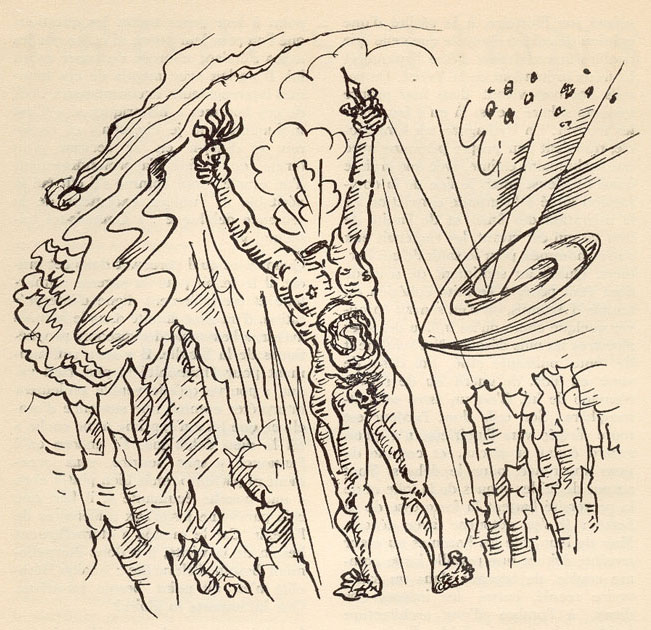
Illustration by Andre Masson, 1936.
Excerpts from the translation by Lucia Allais of a radio lecture Foucault delivered in 1966. Published in Sensorium, MIT Press, 2006, 229-34:
…
My body: it is the place without recourse to which I am condemned. And actually I think that it is against this body (as if to erase it) that all these utopias have come into being. The prestige of utopia–to what does utopia owe its beauty, its marvel? Utopia is a place outside all places, but it is a place where I will have a body without body, a body that will be beautiful, limpid, transparent, luminous, speedy, colossal in its power, infinite in its duration. Untethered, invisible, protected–always transfigured. It may very well be that the first utopia, the one most deeply rooted in the hearts of men, is precisely the utopia of an incorporeal body.
…
No, really, there is no need for magic, for enchantment. There’s no need for a soul, nor a death, for me to be both transparent and opaque, visible and invisible, life and thing. For me to be a utopia, it is enough that I be a body. All those utopias by which I evaded my body–well they had, quite simply, their model and their first application, they had their place of origin, in my body itself, I really was wrong, before, to say that utopias are turned against the body and destined to erase it. They were born from the body itself, and perhaps afterwards they turned against it.
…
My body, in fact, is always elsewhere. It is tied to all the elsewheres of the world. And to tell the truth, it is elsewhere than in the world, because it is around it that things are arranged. It is in relation to it–and in relation to it as if in relation to a sovereign–that there is a below, an above, a right, a left, a forward and a backward, a near and a far. The body is the zero point of the world. There, where paths and spaces come to meet, the body is nowhere. It is at the heart of the world, this small utopian kernel from which I dream, I speak, I proceed, I imagine, I perceive things in their place, and I negate them also by the indefinite power of the utopias I imagine. My body is like the City of the Sun. It has no place, but it is from it that all possible places, real or utopian, emerge and radiate.
…
Maybe it should also be said that to make love is to feel one’s body close in on oneself. It is finally to exist outside of any utopia, with all of one’s density, between the hands of the other. Under the other’s fingers running over you, all the invisible parts of your body begin to exist. Against the lips of the other, yours become sensitive. In front of his half-closed eyes, your face acquires a certitude. There is a gaze, finally, to see your closed eyelids. Love also, like the mirror and like death–it appeases the utopia of your body, it hushes it, it calms it, it encloses it as if in a box, it shuts and seals it. This is why love is so closely related to the illusion of the mirror and the menace of death. And if, despite these two perilous figures that surround it, we love so much to make love, it is because, in love, the body is here.
I can’t quite believe it’s five years today since my beloved grandpa passed on.
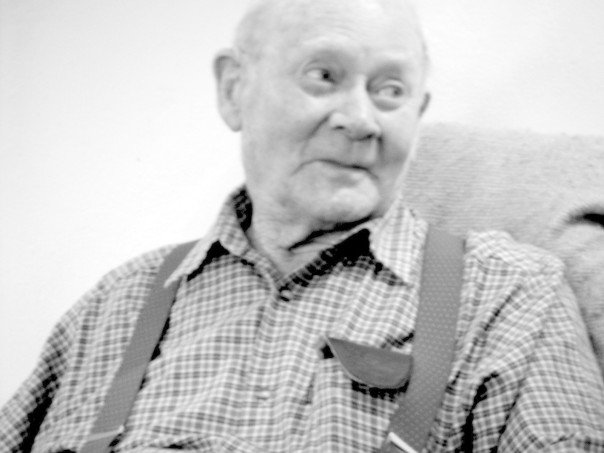
Ed Bean, Melville, December 2006.
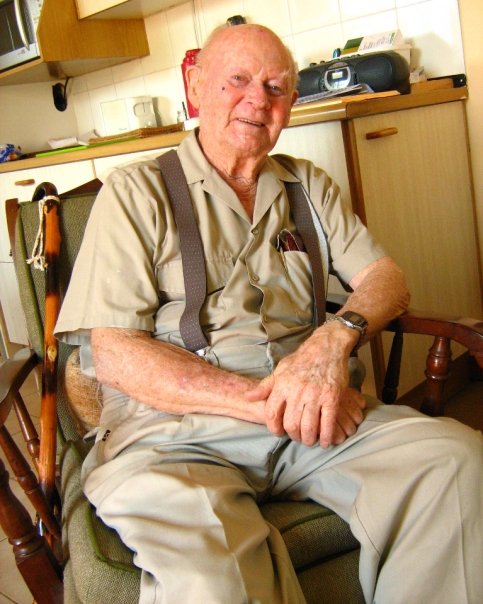
Gramps, behaving himself, 2007.
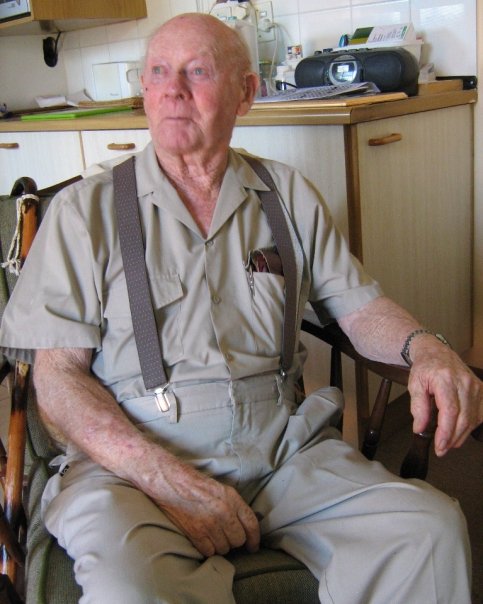
Gramps, posing. 2007.
The album version of this song was released by Fleetwood Mac on Mirage in 1982, and my dad had it on a tape in his car for most of the ’80s.
But this, this is something else.
Something wonderful I came across HERE this week while trying to find Rock Rose essential oil online.
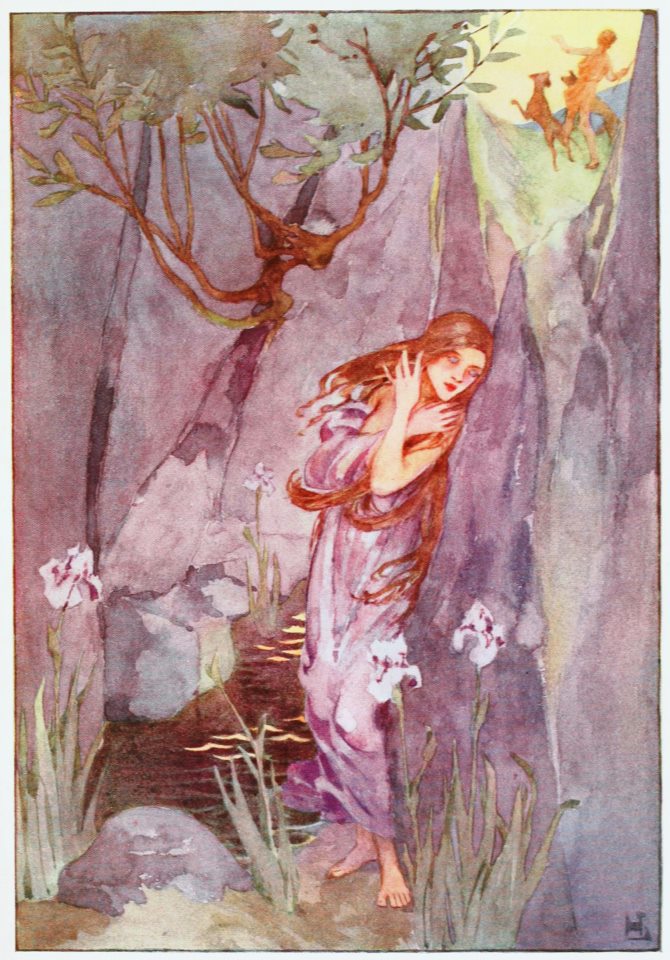
Echo and Narcissus. Helen Stratton, 1915.
The daffodil has been adopted by both the American Cancer Society, and the Madame Curie Society, for whom it symbolizes simultaneously hope and disease. The Greeks today call N. tazetta Dakrakia, “Little Tear Drops,” as this flower’s association with grief and the dead is both exceedingly ancient, and modern.
The legend of Echo’s fertility daemon Narcissus, who pined to death desiring his own reflection, is parallelled by similar flower boys such as Adonis “the scentless rose” (i.e., a windflower or anemone) who was the slain beloved of both Aphrodite and Persephone; and Hyacinthus, the slain catamite of Zeus and Apollo; and the hidden son of Aphrodite, Hermaphroditus, cavern-raised in secret by naiads of Cybele’s Mount Ida. He came to the Fountain of Queen Salmacis, to whom boxwood and clinging ivy was sacred, and he became one with Salmacis after drinking of her mystic waters, achieving a unity which Narcissus appears likewise but unsuccessfully to have sought.
Like these others, Narcissus is fundamentally impotent or sexless, though erotically appealing to goddesses or nymphs and even to the more masculine gods. We are reminded that Cybele’s boy companion Attis, born of an almond tree was, like Narcissus, sexually incapable – indeed was literally unmanned. Such sexless lads seem to originate in a very early level of myth when the Mother Goddess, being Absolute, had no actual consort, at a time when the male principle was at most a companion, son, or a priest who had unsexed himself.
Most such fertility daemons are straightforward “dying and reborn” grain-divinities, including even Jesus whose worshippers co-opted the daffodil as well as the lily as symbols of death and Easter resurrection. But Narcissus appears additionally to be partly related to a large number of female nymphs transformed directly into flowers, trees, or reeds to escape unwanted sexual encounters. Because there is something essentially female in his myth, he somewhat bridges the Attis or Galli type of mythology of self-castration, to the Daphne type of myth of nymphs escaping either lust or an unwanted marriage or the pursuit by unwanted rape by a god.
He loved his own reflection (which he mistook for female), then turned into the flower bearing his name, ignoring the erotic desires of Echo all the while. But in an alternative version, he had an incestuous affair with his twin sister, who subsequently died, and his obsession for his own reflection was due to his own resemblance to his beloved.
Echo herself had been cursed never to be able to seduce Narcissus directly, but only to repeat his words. She was, in essence, his reflection, so his sentiment that his reflection was female, or that it was his twin sister, was correct. But Echo herself is a dwindled form of a once very mighty Goddess of great antiquity, Akko, mother of all language, whose Voice was that which called forth creation at the beginning of time, and who bears a close association with the Cretan Crocus-goddess Kar.
We know that Echo’s worship was significant within the secretive rites of Demeter. One day was put aside to honor Echo during the Demeter Festival of Eleusis. The precise nature of worship at the Echo shrine was forbidden to be written down, and is today unknown. Her worship was also part of the cult of the Argive Hera; and while in Latin versions of her myth Echo angered Juno (Hera) by covering for Jove’s sundry sexual liaisons, within the Argive cult Echo was Hera’s beloved handmaiden. Echo’s central myth within this cult binds her to the erotic nature-divinity, Pan, to whom she was reluctantly betrothed, and by whom she bore a daughter, Jynx or Yunx, who cast a spell that caused Zeus to fall in love with Io, for which reason Hera turned Jynx into a wryneck bird.
Or Echo gave birth to Peitho, Goddess of Soft Speech or of Seductive Persuasion. Peitho was handmaiden to Aphrodite, and became the bride of Hermes. Peitho had her own cult in Athens, said to have been introduced to the city by none other than Theseus. She is given several genealogies and isn’t invariably a daughter of Echo, but the notion that she was Echo’s daughter was sensible in that both were associated with speaking.
Dionyssiaca calls Echo the Goddess Who Never Fails to Speak. Though in later tales this meant she was an annoying chatterbox, there is ample evidence that any negative connotation was imposed by rival cults, and that Echo was in her own right a powerful divinity. Her cult was always of a secretive kind associated with lustiness and death, and never spoken of outside the confines of secret initiations. She was depicted as an angel-like being with enormous wings hiding her mouth behind a veil, signifying secret wisdom; just such an image of Echo is shown at the top of this page, and she is clearly distinct from any sort of nymph.
As a Virgin Goddess, she rejected not only Pan, but also Poseidon who sent a flood up the mountains in pursuit of Echo. She even refused to attend the wedding of Dionysios because of her dislike of the marriage bed. It is an interesting aside that a surname for Dionysios, Antheus (“Flowery”), was an alternate name for Narcissus. Echo’s disdain for marriage would have been quite normal for huntress-goddesses or nymphs of Artemis, yet Echo may have taken her disdain for all things connubial to extremes, and insulted Dionysios when she refused to participate in the violent drunken dance of the maenadic Oreiades or Hill-nymphs at Dionysios’ wedding.
In none of her myths is Echo given a genealogy, very likely because she was part and parcel with the First Cause in that it was her Voice that called forth creation. But some have speculated she was a renegade Oreiad of Boeotia, and that she left her sister-band of the pines and oaks of the mountain forests to live alone in a deep cavern of an alpine cliff, in order to not be seen and courted by any man or god.
If she were indeed an Oreiad this would make her a sister of the Dactyls and Satyrs, perhaps even a sister of Pan. The Oreiades were sometimes likened “the female Dactyls” and were wedded to their brothers, the Dactyloi. The children of the Dactyls and Oreiades were the Curetes or Corybontes, who were priests of Cybele and defenders of infant Zeus, and were male equivalents to the raging maenads who danced madly and noisily about the hillsides.
The mother of the Oreiades and Dactyloi was the Titaness of radiant heat, Anchiale, sister of Prometheus. Their father was the Titan of hands Hekateros. The sons and daughters of Anchiale and Hekateros invented iron metallurgy and brought the Bronze Age to a close. These sons and daughters were also great artists of anything involving use of the hands, and as light-bearers were bringers of wisdom out of darkness. Though it was said that Echo was educated in the arts by the Muses, it may once have been that Echo instructed the Muses!
These Oreiades were of the same generation of divinity as the Olympians, although since these children of Anchilale secretly nurtured the infant Zeus in a mountain cavern in Crete, really they are older than the Olympians. Anchiale herself dwelt originally on Mount Ida in Crete, and later on the Phrygian Mt. Ida, which association identifies her most strongly as a byform of Cybele Idaea, greatest of the Great Goddesses, the mother of Zeus.
But it’s important to remember that Echo’s recurring association with the Oreiades never explicitly makes her one of them, and this may well be due to her having been known to be herself a Titaness of the first generation of divinity. Rather than being the Nymph of Mt. Helicon, she was an aspect of the All-Mother herself.
When Pan was spurned by Echo, he visited madness upon local goatherders and sent them raging up the mountain sides until they found Echo, ripping her to pieces and scattering her bones. The behavior of the goatherders was commonly assumed to be an activity of Dionysios’s maenads, and Echo’s fate both duplicates that of Dionysios in his infancy (when he was cut up then restored, sans penis, by Gaea) but also punishes Echo for refusing to dance the mad dance with the maeanadic Oreiades at Dionysios’s wedding.
Gaea gathered up the far-flung bones of Echo and buried her part by part in sundry cliff-faces, where not just her voice can still be heard, but where her spirit inspires poetic gift for any voice beautiful enough to sing inspired lyrics or comprehend the mystic meanings.
By all this we see that Echo had a large presence apart from the best-remembered tale of her downfall for loving Narcissus. But most revealing of her original nature is an ancient Greek assumption that she was Persephone’s personal messenger (as Hermes was the personal messenger of Zeus), and flew upon her dark wings between the living world and Thanatos bringing perfect knowledge to and from the underworld.
In this we find again the real nature of Echo, whose lips are veiled, for the secret knowledge cajoled from her is incorruptible. It was an oral tradition forbidden to be written, but she repeated it verbatim from Persephone the Maiden aspect of Hekate. This Echo is, then, the same as the Jewish Bat Kol, “Daughter Voice,” who brings news from God and repeats it verbatim in her soft womanly voice directly into the hearts and spirits of humanity. In times of need Bat Kol can be heard to speak from out of a fiery light. Echo is also encountered in Vedic religion as the Goddess Devaduti, the Divine Messenger, feminine power of communication without whom even the greatest of gods is mute.
This association of Echo with Persephone, or Black Aphrodite, feeds back to the mythology of the narcissus flower, which was sacred to Persephone. Persephone had been picking daffodils on the very day she was kidnapped into the underworld. These flowers did not formerly bow their heads, but do so now, for shame of their role in the kidnapping. A beautiful meadow of these flowers grew near the River Styx, bringing sunlight to that dark land; and during her captivity, Persephone often walked amidst these flowers.
From the lingering bits of a largely forgotten mythology, it seems probable that Echo worship regarded Her as the “spark” that dwells within each of us, that which Narcissus mistook for his twin sister, a beautiful maiden, or his soul. All the Greek words for Spirit or Soul are feminine words, and so in Greek myth the soul is often personified as a nymph or goddess, Psyche as lover of Eros being most famed of these. Not coincidentally, in Semitic and Sanskrit languages too, the words for Soul are invariably female names. The last great flourishing of Soul worship in western religion was classical gnosticism. Among Gnostics, a central idea was that Sophia (the Mother-goddess Wisdom) spun out from herself, without need of a consort, the whole of the life-force of the world, diminishing herself to become infused into the material world, the energizing power of all life. Such belief remains current in India among saktists or Kali worshippers.
So the diminished Echo is still really that earlier Creatrix trying to call out to humanity, to Narcissus, striving to correct the Error of Sophia and liberate us from the world of Matter by calling us back into the pre-created universe of light and unity. But because she is fused to us, we can never quite perceive Her as anything but a reflection of ourselves, an echo of our own voices, and we are undone by our own vanity and remain snared in the material realm.
“Myself I long for love and light
But must it come so cruel, and oh so bright?”
From Songs of Love and Hate (Columbia,1971).
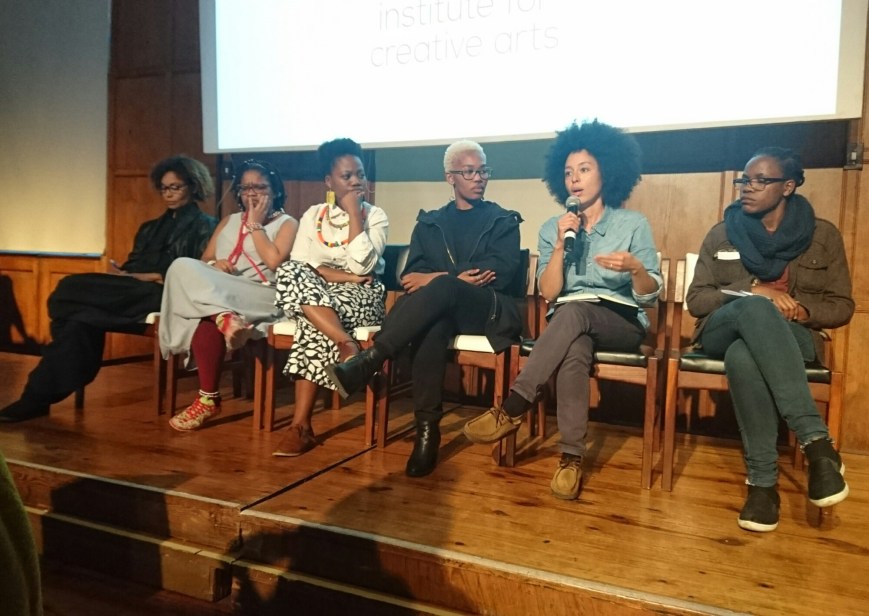
L-R: jackï job, Dee Moholo, Koleka Putuma, Khanyi Mbongwa (Vasiki), Ilze Wolff, Lois Anguria
The most decolonised academic space I have yet had the joy of experiencing. The conference continues today. If you’re in Cape Town, come. It’s free!
HERE is the programme. 🌸
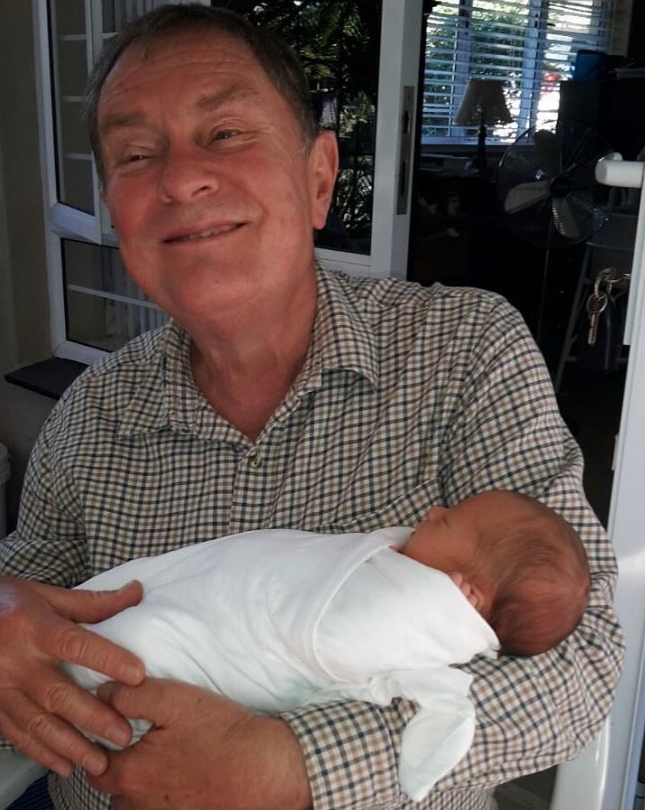
My dad, Ray, on his 68th birthday, with my brother’s daughter, River, born 30 April 2016.
This may be my favourite Prince-penned and -produced song. Such a warm, expansive, peaceful embrace.
Recorded for a live radio show in Munich 23/11/1998.
A profound read.
“In Ursula K. Leguin’s book Gifts, an entire culture lives by the rule of what they call ‘gifts’ – powers to do harm – possessed by certain of its members. Some families possess gifts of Unmaking, where they can turn a farmer’s field into a blackened waste or a puppy into a sack of dissolved flesh. Some possess the ability to create a wasting illness, or blindness, or the gift of calling animals to the hunt.
“By the book’s end, the child at its centre has struggled, against all signs in his culture, to realize something profound and fundamental. The gift they call Unmaking is actually a gift of Making, turned backwards upon itself and rendered unthinkingly into a weapon. The gift of calling animals is turned into a way to hunt them, when it is meant to let humans understand animals and live in balance with them. The wasting disease is the backwards use of a gift of healing illness and old age. He finally asks his sister and closest confidant: what if we are using our gifts backwards? To harm instead of to help? What if they were meant to be used the other way around?”
 Dating Tips for the Feminist Man
The opposite of masculine rape culture is masculine nurturance culture: men* increasing their capacity to nurture, and becoming whole.
The Ghomeshi trial is back in the news, and it brings violent sexual assault back into people’s minds and daily conversations. Of course violence is wrong, even when the court system for handling it is a disaster. That part seems evident. Triggering, but evident.
But there is a bigger picture here. I am struggling to see the full shape emerging in the pencil rubbing, when only parts are visible at a time.
A meme going around says ‘Rape is about violence, not sex. If someone were to hit you with a spade, you wouldn’t call it gardening.’ And this is true. But it is just the surface of the truth. The depths say something more, something about violence.
Violence is nurturance turned backwards.
These things are connected, they must be connected. Violence and nurturance are two sides of the same coin. I…
View original post 5,803 more words
 Love is a sign of our wretchedness. God can only love himself. We can only love something else.
God’s love for us is not the reason for which we should love him. God’s love for us is the reason for us to love ourselves. How could we love ourselves without this motive?
It is impossible for man to love himself except in this roundabout way.
If my eyes are blindfolded and if my hands are chained to a stick, this stick separates me from things but I can explore them by means of it. It is only the stick which I feel, it is only the wall which I perceive. It is the same with creatures and the faculty of love. Supernatural love touches only creatures and goes only to God. It is only creatures which it loves (what else have we to love?), but it loves them as intermediaries. For this reason it loves all creatures equally, itself included. To love a stranger as oneself implies the reverse: to love oneself as a stranger.
Love of God is pure when joy and suffering inspire an equal degree of gratitude.
Love on the part of someone who is happy is the wish to share the suffering of the beloved who is unhappy.
Love on the part of someone who is unhappy is to be filled with joy by the mere knowledge that his beloved is happy without sharing in this happiness or even wishing to do so.
In Plato’s eyes, carnal love is a degraded image of true love. Chaste human love (conjugal fidelity) is a less degraded image of it. Only in the stupidity of the present day could the idea of sublimation arise.
The Love of Phaedrus. He neither exercises force nor submits to it. That constitutes the only purity. Contact with the sword causes the same defilement whether it be through the handle or the point. For him who loves, its metallic coldness will not destroy love, but will give the impression of being abandoned by God. Supernatural love has no contact with force, but at the same time it does not protect the soul against the coldness of force, the coldness of steel. Only an earthly attachment, if it has in it enough energy, can afford protection from the coldness of steel. Armour, like the sword, is made of metal. Murder freezes the soul of the man who loves only with a pure love, whether he be the author or the victim, so likewise does everything which, without going so far as actual death, constitutes violence. If we want to have a love which will protect the soul from wounds, we must love something other than God.
Love tends to go ever further and further, but there is a limit. When the limit is passed love turns to hate. To avoid this change love has to become different.
Among human beings, only the existence of those we love is fully recognised.
Belief in the existence of other human beings as such is love.
The mind is not forced to believe in the existence of anything (subjectivism, absolute idealism, solipsism, scepticism: c.f. the Upanishads, the Taoists and Plato, who, all of them, adopt this philosophical attitude by way of purification). That is why the only organ of contact with existence is acceptance, love. That is why beauty and reality are identical. That is why joy and the sense of reality are identical.
This need to be the creator of what we love is a need to imitate God. But the divinity towards which it tends is false, unless we have recourse to the model seen from the other, the heavenly side…
Pure love of creatures is not love in God, but love which has passed through God as through fire. Love which detaches itself completely from creatures to ascend to God and comes down again associated with the creative love of God.
Thus the two opposites which rend human love are united: to love the beloved being just as he is, and to want to recreate him.
Imaginary love of creatures. We are attached by a cord to all the objects of attachment, and a cord can always be cut. We are also attached by a cord to the imaginary God, the God for whom love is also an attachment. But to the real God we are not attached and that is why there is no cord which can be cut. He enters into us. He alone can enter into us. All other things remain outside and our knowledge of them is confined to the tensions of varying degree and direction which affect the cord when there is a change of position on their part or on ours.
Love needs reality. What is more terrible than the discovery that through a bodily appearance we have been loving an imaginary being. It is much more terrible than death, for death does not prevent the beloved from having lived.
That is the punishment for having fed love on imagination.
It is an act of cowardice to seek from (or to wish to give) the people we love any other consolation than that which works of art give us. These help us through the mere fact that they exist. To love and to be loved only serves mutually to render this existence more concrete, more constantly present to the mind. But it should be present as the source of our thoughts, not as their object. If there are grounds for wishing to be understood, it is not for ourselves but for the other, in order that we may exist for him.
Everything which is vile or second-rate in us revolts against purity and needs, in order to save its own life, to soil this purity. To soil is to modify, it is to touch. The beautiful is that which we cannot wish to change. To assume power over is to soil. To possess is to soil.
To love purely is to consent to distance, it is to adore the distance between ourselves and that which we love.
The imagination is always united with a desire, that is to say a value. Only desire without an object is empty of imagination. There is the real presence of God in everything which imagination does not veil. The beautiful takes our desire captive and empties it of its object, giving it an object which is present and thus forbidding it to fly off towards the future.
Such is the price of chaste love. Every desire for enjoyment belongs to the future and the world of illusion, whereas if we desire only that a being should exist, he exists: what more is there to desire? The beloved being is then naked and real, not veiled by an imaginary future. The miser never looks at his treasure without imagining it n times larger. It is necessary to be dead in order to see things in their nakedness.
Thus in love there is chastity or the lack of chastity according to whether the desire is or is not directed towards the future.
In this sense, and on condition that it is not turned towards a pseudo-immortality conceived on the model of the future, the love we devote to the dead is perfectly pure. For it is the desire for a life which is finished, which can no longer give anything new. We desire that the dead man should have existed, and he has existed.
Wherever the spirit ceases to be a principle it also ceases to be an end. Hence the close connexion between collective ‘thought’ under all its forms and the loss of the sense of and respect for souls. The soul is the human being considered as having a value in itself. To love the soul of a woman is not to think of her a serving one’s own pleasure, etc. Love no longer knows how to contemplate, it wants to possess (disappearance of Platonic love).*
It is a fault to wish to be understood before we have made ourselves clear to ourselves. It is to seek pleasures in friendship and pleasures which are not deserved. It is something which corrupts even more than love. You would sell your soul for friendship.
Learn to thrust friendship aside, or rather the dream of friendship. To desire friendship is a great fault. Friendship should be a gratuitous joy like those afforded by art or life. We must refuse it so that we may be worthy to receive it; it is of the order of grace (‘Depart from me, O Lord. . . .’). It is one of those things which are added unto us. Every dream of friendship deserves to be shattered. It is not by chance that you have never been loved. . . . To wish to escape from solitude is cowardice. Friendship is not to be sought, not to be dreamed, not to be desired; it is to be exercised (it is a virtue). We must have done with all this impure and turbid border of sentiment. Schluss!
Or rather (for we must not prune too severely within ourselves), everything in friendship which does not pass into real exchanges should pass into considered thoughts. It serves no useful purpose to do without the inspiring virtue of friendship. What should be severely forbidden is to dream of its sentimental joys. That is corruption. Moreover it is as stupid as to dream about music or painting. Friendship cannot be separated from reality any more than the beautiful. It is a miracle, like the beautiful. And the miracle consists simply in the fact that it exists. At the age of twenty-five, it is high time to have done with adolescence once and for all…
Do not allow yourself to be imprisoned by any affection. Keep your solitude. The day, if it ever comes, when you are given true affection there will be no opposition between interior solitude and friendship, quite the reverse. It is even by this infallible sign that you will recognise it. Other affections have to be severely disciplined.
The same words (e.g. a man says to his wife: ‘I love you’) can be commonplace or extraordinary according to the manner in which they are spoken. And this manner depends on the depth of the region in a man’s being from which they proceed without the will being able to do anything. And by a marvellous agreement they reach the same region in him who hears them. Thus the hearer can discern, if he has any power of discernment, what is the value of the words.
Benefaction is permissible precisely because it constitutes a humiliation still greater than pain, a still more intimate and undeniable proof of dependence. And gratitude is prescribed for the same reason, since therein lies the use to be made of the received benefit. The dependence, however, must be on fate and not on any particular human being. That is why the benefactor is under an obligation to keep himself entirely out of the benefaction. Moreover the gratitude must not in any degree constitute an attachment, for that is the gratitude proper to dogs.
Gratitude is first of all the business of him who helps, if the help is pure. It is only by virtue of reciprocity that it is due from him who is helped.
In order to feel true gratitude (the case of friendship being set aside), I have to think that it is not out of pity, sympathy or caprice that I am being treated well, it is not as a favour or privilege, nor as a natural result of temperament, but from a desire to do what justice demands. Accordingly he who treats me thus wishes that all who are in my situation may be treated in the same way by all who are in his own.
__
*Here ‘Platonic’ love has nothing to do with what today goes by the same name. It does not proceed from the imagination but from the soul. It is purely spiritual contemplation. Cf. later, in the chapter on Beauty. [Editor’s note.]
__
Excerpted from Simone Weil‘s Gravity and Grace. First French edition 1947. Translated by Emma Crawford. English language edition 1963. Routledge and Kegan Paul, London.
I saw this documentary by Amy Berg the other day… superb use of archive and voiceover by Chan Marshall (Cat Power).
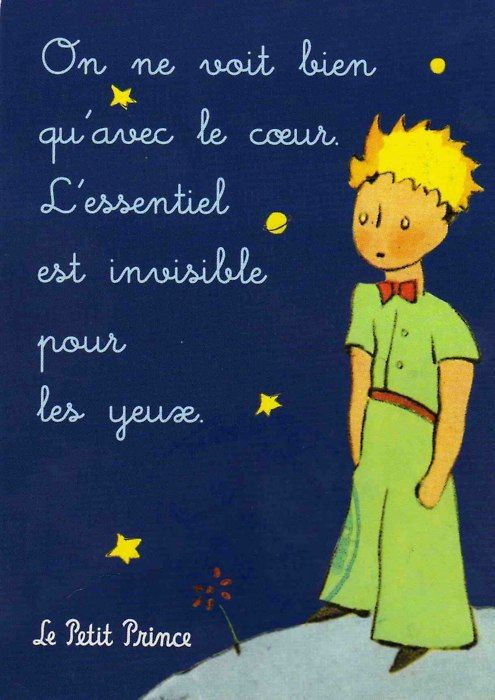
1943.
Watch the whole of this incredible film online, free, HERE.

 fleurmach