kierkegaard on transcending despair

The despairing man who is unconscious of being in despair is, in comparison with him who is conscious of it, merely a negative step further from the truth and from salvation. Despair itself is a negativity, unconsciousness of it is a new negativity. But to reach truth one must pierce through every negativity. For here applies what the fairy tale recounts about a certain enchantment: the piece of music must be played through backward; otherwise the enchantment is not broken.

~ Søren Kierkegaard (under the pseudonym Anti-Climacus) – from The Sickness Unto Death (1849)

lee miller

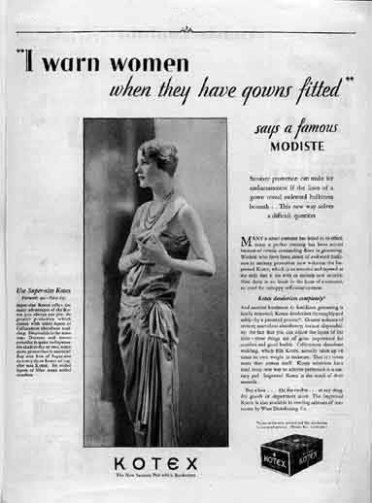
Even during the scandalous Roaring 20s, when women were bobbing their hair and baring their arms, products for “that time of the month” were advertised only very discreetly in women’s magazines. And until 1928, those ads featured line drawings or pastel paintings of females, never real women. But that taboo ended when photographer Edward Steichen sold a photo he’d shot of model and Voguecover girl Lee Miller to the Kotex Company. Miller’s modeling career in the U.S. was essentially kaput thanks to the scandalous placement of her photograph, and she fled to Paris where she studied photography and eventually became a renowned photographer in her own right.

In 1929, Lee traveled to Paris with the intention of apprenticing herself to the surrealist artist and photographer Man Ray. Although, at first, he insisted that he did not take students, Miller soon became his photographic assistant, as well as his lover and muse. While she was in Paris, she began her own photographic studio, often taking over Man Ray’s fashion assignments to enable him to concentrate on his painting. In fact, many of the photographs taken during this period and credited to Man Ray were actually taken by Lee.
At the outbreak of World War II, Miller was living in Hampstead, London with Roland Penrose when the bombing of the city began. Ignoring pleas from friends and family to return to the US, Miller embarked on a new career in photojournalism as the official war photographer for Vogue, documenting the Blitz. Lee was accredited into the U.S. Army as a war correspondent for Condé Nast Publications from December 1942.
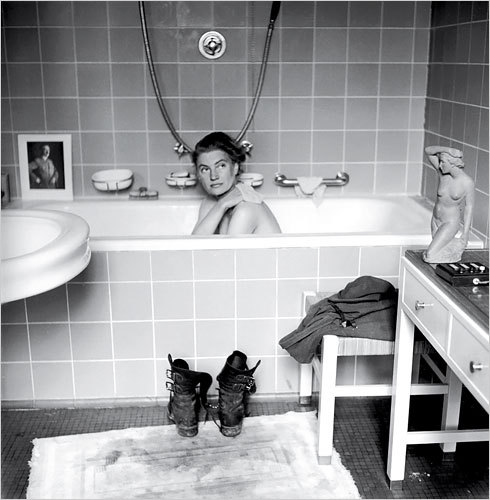
She teamed up with the American photographer David E. Scherman, a LIFE correspondent on many assignments. Miller traveled to France less than a month after D-Day and recorded the first use of napalm at the siege of St. Malo, the liberation of Paris, the battle for Alsace, and the horror of the Nazi concentration camps at Buchenwald and Dachau. One photograph by Scherman of Miller in the bathtub of Adolf Hitler’s apartment in Munich is one of the most iconic images from the Miller-Scherman partnership.
 Miller wrote to her Vogue editor Audrey Winters:

“I was living in Hitler’s private apartment when his death was announced, midnight of Mayday … Well, alright, he was dead. He’d never really been alive to me until today. He’d been an evil-machine-monster all these years, until I visited the places he made famous, talked to people who knew him, dug into backstairs gossip and ate and slept in his house. He became less fabulous and therefore more terrible, along with a little evidence of his having some almost human habits; like an ape who embarrasses and humbles you with his gestures, mirroring yourself in caricature. “There, but for the Grace of God, walks I.”

When the photo came out, it was considered an extremely poor judgement. For some, Miller posing nude in the tub of one of the most repulsive men in history was nothing more than a ill-timed reflection of the adage, “To the victor goes the spoils”. For others, it represents the power of life over death, “The living do what they can and the dead suffer what they must”. Lee Miller herself shied away from the controversies but reprouding the image very rarely and noted that she was merely trying to wash the odors of Dachau away.


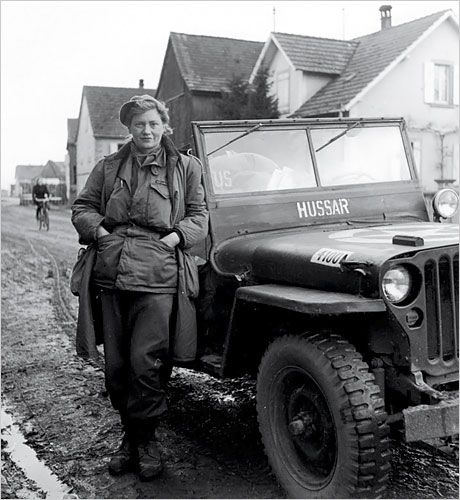
Lee Miller smiles in combat fatigues in Alsace 1944. It was said that no soldier could resist a photographer with a fashion model’s striking beauty. The photo was taken by her friend and colleague, Life magazine’s David E. Scherman.

adorno on beauty and the lie

Even the tree which blooms, lies, the moment that one perceives its bloom without the shadow of horror; even the innocent “How beautiful” becomes an excuse for the ignominy of existence, which is otherwise, and there is no longer any beauty or any consolation, except in the gaze which goes straight to the horror, withstands it, and in the undiminished consciousness of negativity, holds fast to the possibility of that which is better.

pablo neruda – ode and burgeonings (1952)

I

The taste of your mouth and the color of your skin,
skin, mouth, fruit of these swift days,
tell me, were they always beside you
through years and journeys and moons and suns
and earth and weeping and rain and joy
or is it only now that
they come from your roots,
only as water brings to the dry earth
burgeonings that it did not know,
or as to the lips of the forgotten jug
the taste of the earth rises in the water?

I don’t know, don’t tell me, you don’t know.
Nobody knows these things.
But bringing all my senses close
to the light of your skin, you disappear,
you melt like the acid
aroma of a fruit
and the heat of a road,
and the smell of corn being stripped,
the honeysuckle of the pure afternoon,
the names of the dusty earth,
the infinite perfume of our country:
magnolia and thicket, blood and flour,
the gallop of horses,
the village’s dusty moon,
newborn bread:
ah from your skin everything comes back to my mouth,
comes back to my heart, comes back to my body,
and with you I become again
the earth that you are:
you are deep spring in me:
in you I know again how I am born.

2

Years of yours that I should have felt
growing near me like clusters
until you had seen how the sun and the earth
had destined you for my hands of stone,
until grape by grape you had made
the wine sing in my veins.
The wind or the horse
swerving were able
to make me pass through your childhood,
you have seen the same sky each day,
the same dark winter mud,
the endless branching of the plum trees
and their dark-purple sweetness.
Only a few miles of night,
the drenched distances
of the country dawn,
a handful of earth separated us, the transparent
walls
that we did not cross, so that life,
afterward, could put all
the seas and the earth
between us, and we could come together
in spite of space,
step by step seeking each other,
from one ocean to another,
until I saw that the sky was aflame
and your hair was flying in the light
and you came to my kisses with the fire
of an unchained meteor
and as you melted in my blood, the sweetness
of the wild plum
of our childhood I received in my mouth,
and I clutched you to my breast as
if I were regaining earth and life.

3

My wild girl, we have had
to regain time
and march backward, in the distance
of our lives, kiss after kiss,
gathering from one place what we gave
without joy, discovering in another
the secret road
that gradually brought your feet close to mine,
and so beneath my mouth
you see again the unfulfilled plant
of your life putting out its roots
toward my heart that was waiting for you.
And one by one the nights
between our separated cities
are joined to the night that unites us.
The light of each day,
its flame or its repose,
they deliver to us, taking them from time,
and so our treasure
is disinterred in shadow or light,
and so our kisses kiss life:
all love is enclosed in our love:
all thirst ends in our embrace.
Here we are at last face to face,
we have met,
we have lost nothing.
We have felt each other lip to lip,
we have changed a thousand times
between us death and life,
all that we were bringing
like dead medals
we threw to the bottom of the sea,
all that we learned
was of no use to us:
we begin again,
we end again
death and life.
And here we survive,
pure, with the purity that we created,
broader than the earth that could not lead us astray,
eternal as the fire that will burn
as long as life endures.

Continue reading

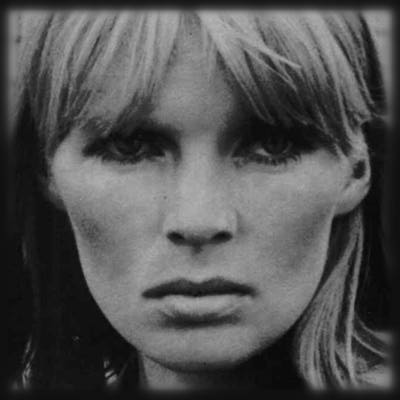
i’ll be your mirror

The Velvet Underground & Nico – I’ll Be Your Mirror (acetate version), recorded 25/04/1966 at Scepter Studios, New York.

(An acetate is a very fragile disc, cut prior to the cutting of the master disc used for mass production of records, used in the same way as a proof in photography.)

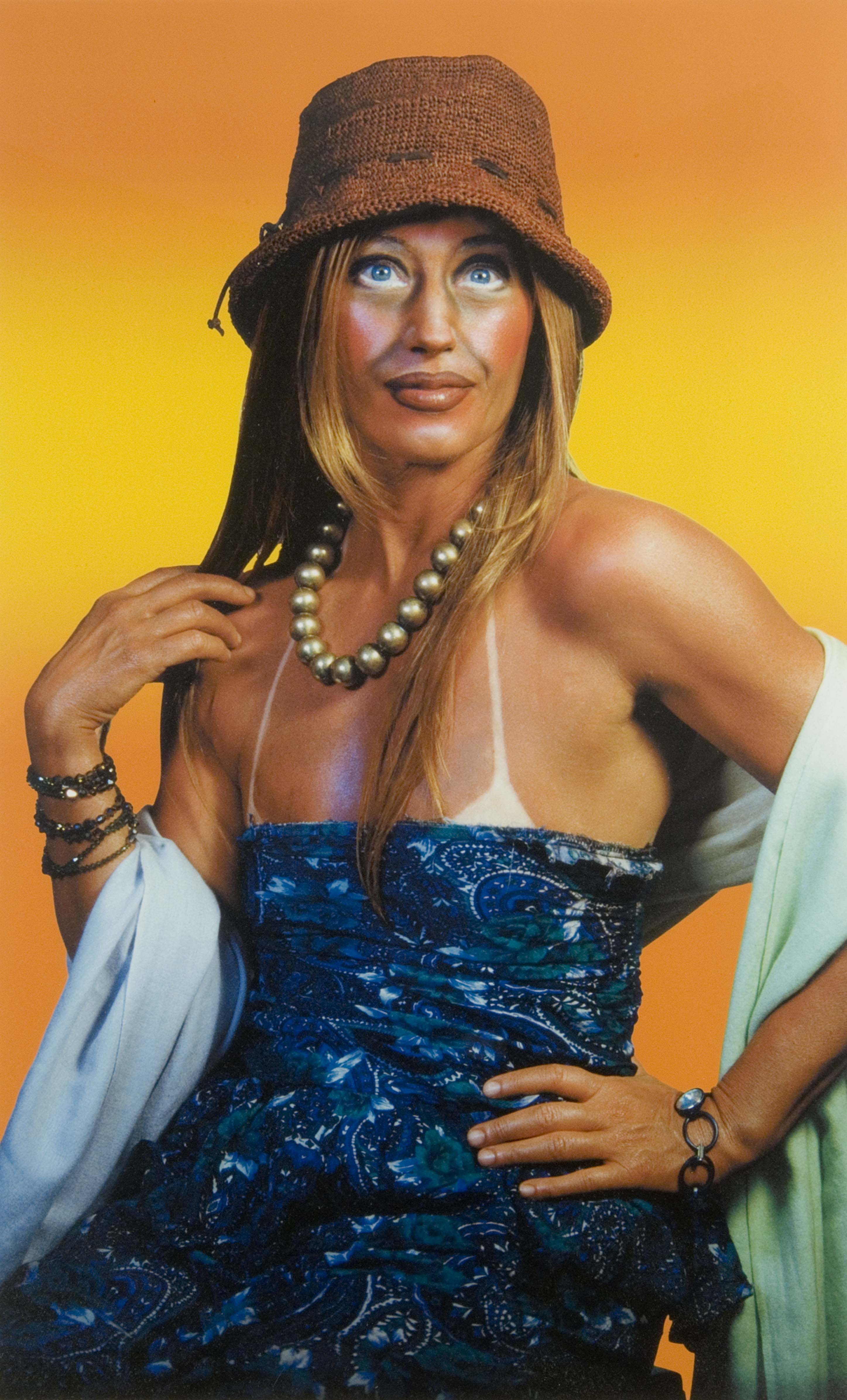
the art of the impersonator – photos by cindy sherman

“I feel I’m anonymous in my work. When I look at the pictures, I never see myself; they aren’t self-portraits. Sometimes I disappear.”

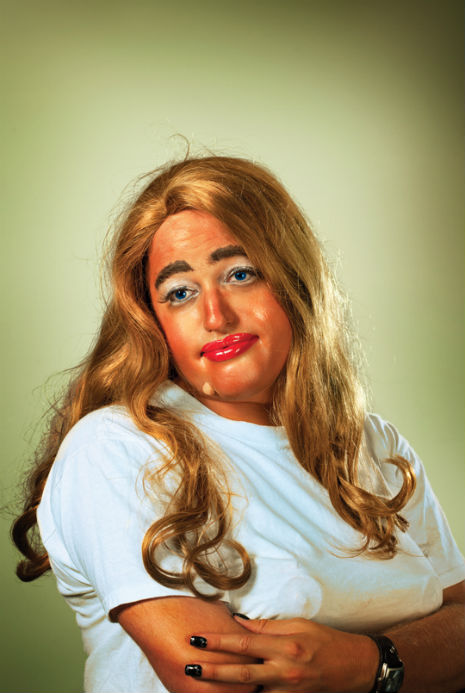
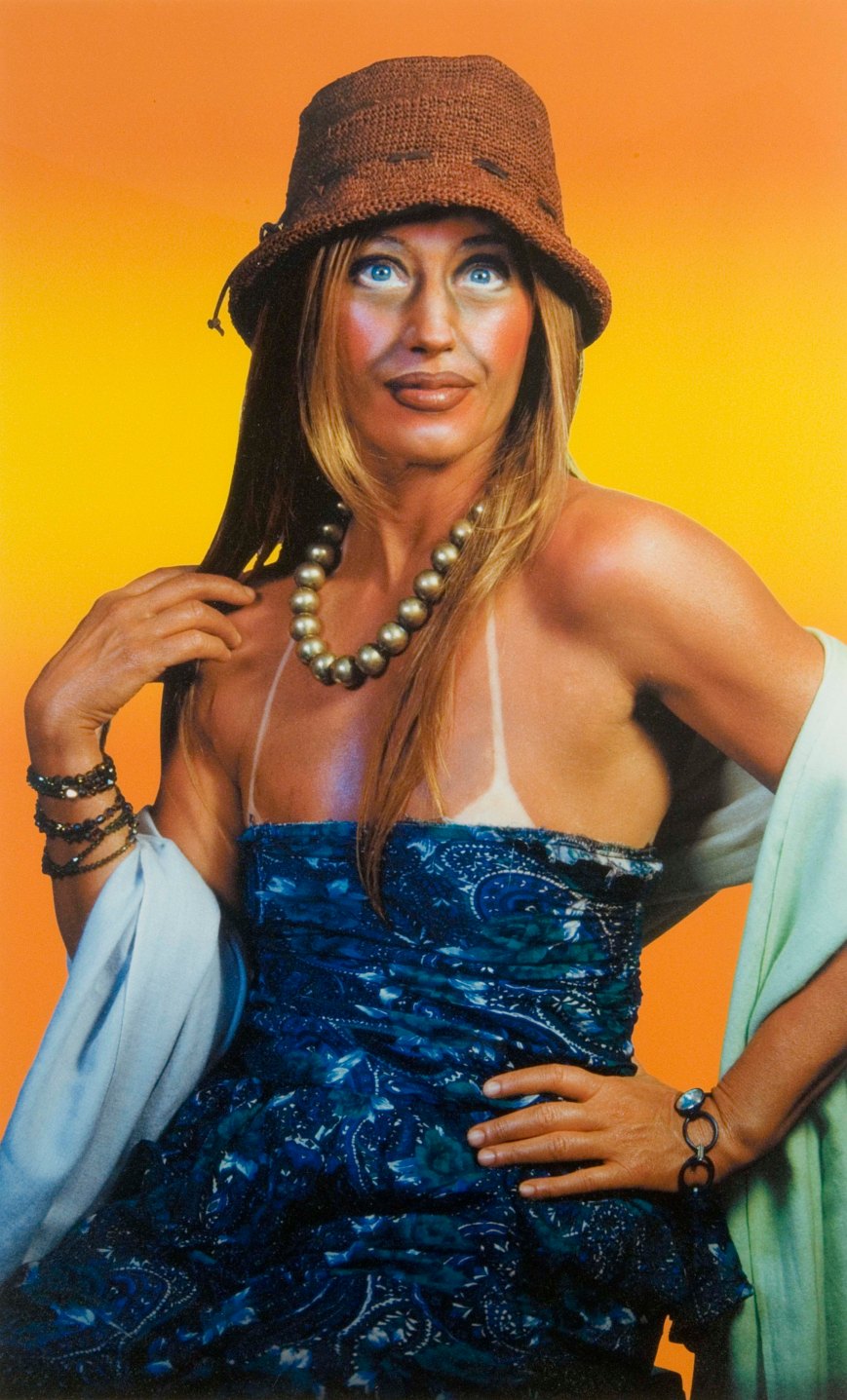
 “Cindy Sherman has explored different kinds of photography, but she has become one of the most lauded artists of her generation for her photographs of her impersonations. Since she arrived on the scene, in a 1980 exhibition, when she was in her mid-twenties, she has come before her own camera in the guise of hundreds of characters, and as an impersonator—which in her case means being a creator of people, and sometimes people-like creatures, who we encounter only in a single photograph—she has been remarkably inventive. Especially as a portrayer of types of people, whether someone who appears to be a perky suburbanite in town for a matinee, or a woman in a sweatshirt who seems both tired and bristling, or a club singer belting out a note, Sherman—who is now, at fifty-eight, the subject of a retrospective at the Museum of Modern Art—has shown herself as well to be a witty and shrewd social observer. And the sheer human spectacle of someone continually transforming herself into one person after another has proved riveting.”
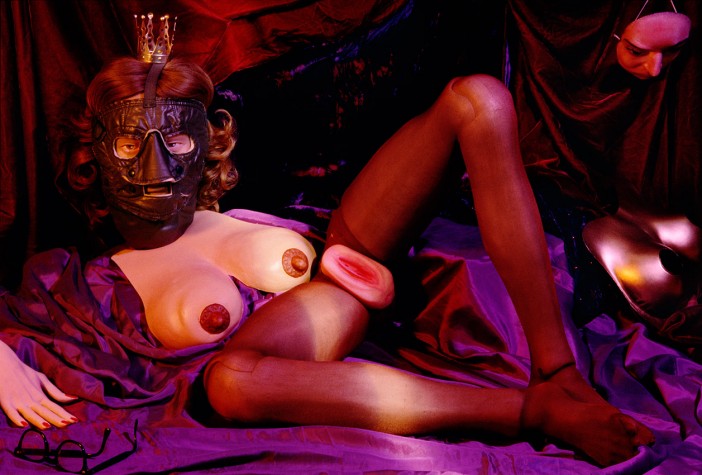
“…Her various accessories and props are appealingly economical and rudimentary, and, given that her art is based on deception, one could say that her large photographs, which sometimes come with transparently cheesy frames, are meant to have the appearance of fake paintings. During much of the 1990s, she also experimented, in pictures she herself was not in, with close cropping and artificial, theatrical color and lighting. But none of this quite erased the way that her pictures in general, and certainly those in which she appears front and center in some disguise, often had the disembodied presence of blown-up shots from one kind of movie or another.”
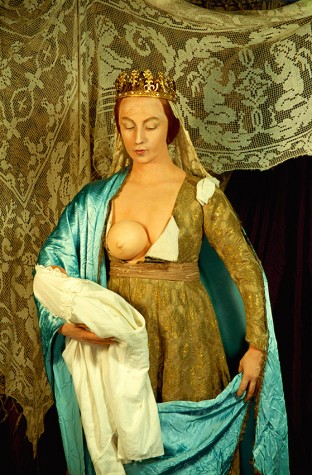
“…The end result of Sherman’s many approaches is a roller coaster of discontent, at times recalling Otto Dix, at other moments Carol Burnett. Sherman can be reproachful and quietly barbed, or merely leaden and gloomy, or showily horrifying, or buoyantly nasty. The works that held me longest were of her strivers and her patronesses. They bring together the poles of Sherman’s thinking: her feeling for contemporary life and for the monstrous. We see people who, carefully but excessively made up, have turned their faces into masks. This can be said of her clowns as well, but they are so fully masked that we have little sense (as we have little sense with actual, professional clowns) of the person underneath the makeup.”
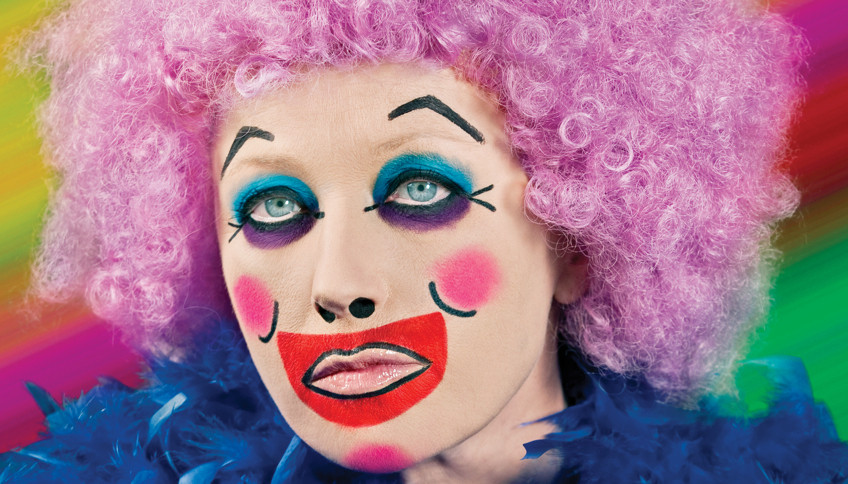
“More crucially, clowns, whether threatening or sad, are so familiar a theme that it is hard to put much stock in Sherman’s versions, which add little to the lore. With her overly avid women and her lionesses of the social scene, however, we feel we look, in each picture, at three people. There is Sherman herself, who, with her fair hair, pale eyebrows, and somewhat pointed features, resembles women in Memling portraits. Then there is her subject, who is clearly hidden behind a protective armor.”
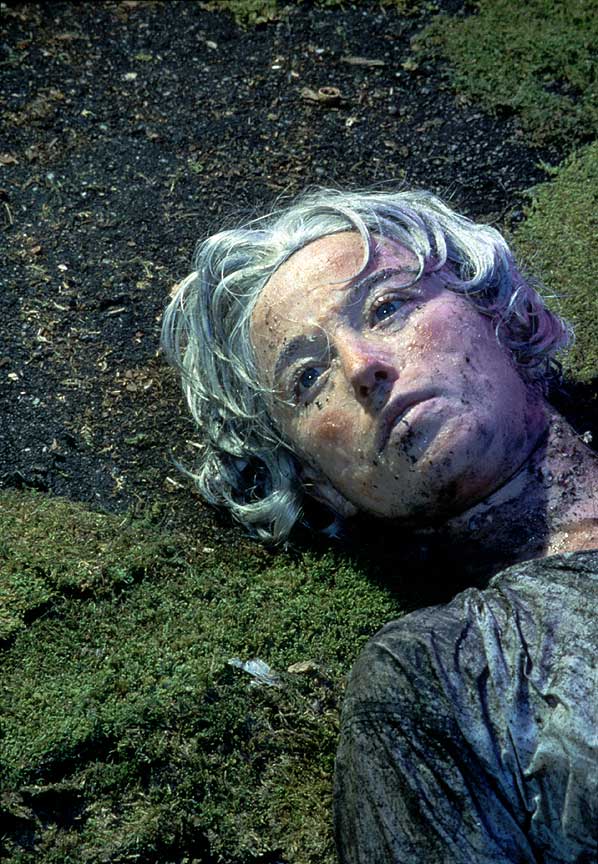
“…Sherman isn’t the first artist to come before the camera in a series of disguises or impersonations. Surely no artist, though, has used the notion as a premise for an entire career, and it creates for her audience a rare sense of intimacy with her and suspense about where she will go next. We seem to look at someone who has indentured her very person for the sake of her art. We can believe we are in this strange lifelong adventure with her, and, especially if we are her age or older, we wonder a little apprehensively how she will handle the issue of aging.”“…On the most literal level, though, we look at someone who has a gift for impersonation. Born in New Jersey and raised on Long Island, Sherman went to Buffalo State College in the early 1970s with the idea of becoming a painter. But she had been disguising herself as different people since childhood. There is a photo of her in the Modern’s catalog around age twelve in which, standing on a suburban street along with a friend who is also in masquerade, she appears convincingly as a little old lady. In college she was exposed to conceptual art, which, already supplanting painting as the field that art students wanted to work in, enabled her to see that she could build on her feeling for impersonation.”read the whole article here
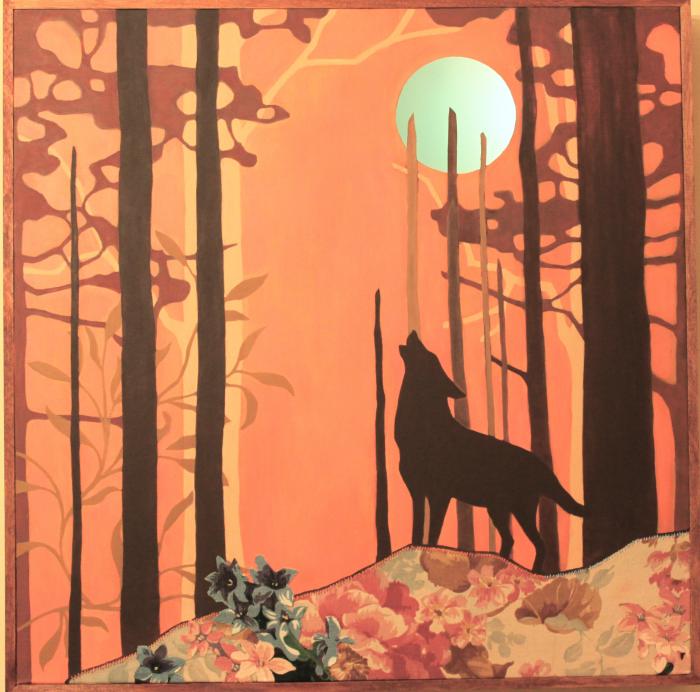
fiona apple – werewolf

“Well, I could liken you to a werewolf, the way you left me for dead, but I admit that I provided a full moon.
And I could liken you to a shark, the way you bit off my head, but then again I was waving around a bleeding, open wound.”

From The Idler Wheel Is Wiser Than The Driver of The Screw, And Whipping Cords Will Serve You More Than Ropes Will Ever Do (2012) – Fiona Apple/Epic Records.

haunted

this is why
i wander the wilderness
beyond the horizon
you meet me round the corner, down the road
that’s not who i am
some old dirty secret
some unclean spirit
cast out into darkness
it’s never been about possession

jeffrey lewis – to be objectified

I left a trail of myself every place that I have been through,
And going bald is the most manly thing that I’m ever gonna do.
I tell the earth, “thanks for the hair, thanks for the skin, thanks for the bone”,
Though I now slowly give it back I still appreciate the loan.
Just tell me that you like me in the same sentence as a mountain side.
‘Cause it would be such a relief to be objectified.
‘Cause who says it’s so important to sort through these thoughts of ours.
Maybe that’s why we love to try to see ourselves from the outside
In photographs and videos and diaries and mirrors.
‘Cause it would be such a relief to be objectified.
And the closest that I ever got still seems to leave a lot to go,
But the horizon seems to be a place that nobody can know.
Looking forth and looking back, our vision can’t extend beyond the quaint vanishing points our bodies recommend,
And I’ll help you move some furniture somewhere it’s never been before, but the room’s so small the dresser drawer won’t let us get back out the door.
Just tell me that you like me in the same sentence as the building.
It would be such a relief to see…
I’m just a natural thing.
We’re only boats,
And the boats are only empty
And you can’t blame an empty boat that’s on a river to the sea.
You can’t blame a billion boats without a sail, without a sailor.
And that’s how we look in photographs, and diaries, and mirrors.
And the plants turn into ants, and the ants turn into plants,
And children are clumsy people, and old people are rotting children.
And I still don’t have a cell phone, but this sea shell gets reception,
And the ocean won’t stop calling, and I want a restraining order.
Just tell me that you like me in the same sentence as a building.
It would be such a relief to see I’m just a natural thing.
We’re just a natural thing.
Just like anything.

lost beauty

NOTES TOWARDS A KIND OF TRANSCENDENCE

6.

…So much imprisoned beauty withers away.
And even the princesses shut away in their towers know that the arrival of prince charming is but
the prelude to spousal segregation, that what must be done is to abolish both the prisons and the
liberators at the same time, that what we need isn’t programs for liberation but practices of
freedom.

from Theses on the terrible community.

the fury of god´s goodbye by anne sexton

One day He
tipped His top hat
and walked
out of the room,
ending the argument.
He stomped off
saying:
I don’t give guarantees.
I was left
quite alone
using up the darkness
I rolled up
my sweater,
up in a ball,
and took it
to bed with me,
a kind of stand-in
for God,
that washerwoman
who walks out
when you’re clean
but not ironed.
When I woke up
the sweater
had turned to
bricks of gold.
I’d won the world
but like a
forsaken explorer,
I’d lost
my map.