Author Archives: cherry bomb
thee headcoats – i wasn’t made for this world (1999)
“I don’t want to live under the clock; I don’t want to climb to the top…”
thee headcoatees – come into my life (1992)
One of the hottest garage girl bands ever.
And then they say the same thing a bit differently.
23 lesser described feelings
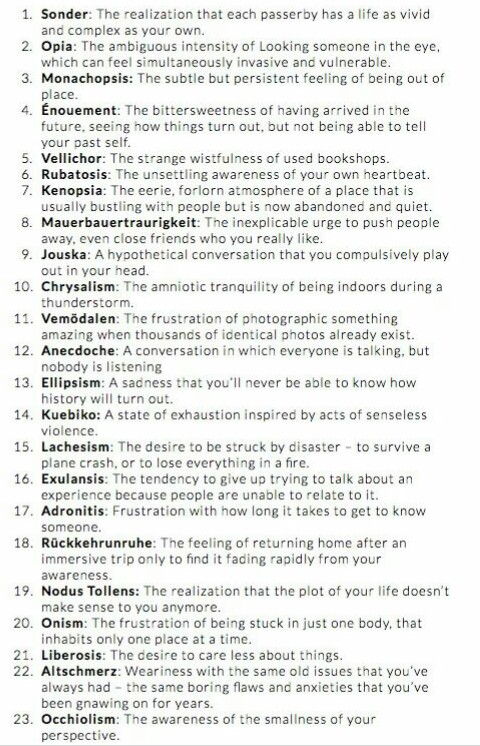
Check out The Dictionary of Obscure Sorrows.
love & sincerity – holy screaming (1993)
Off Come Again II, a Japanese noise compilation released on Furnace Records in 1993, put together by Michio Teshima, head of Vanilla Records, who released the Tawamure – Come Again compilation in 1991.
The liners to the second Come Again compilation call the Japanese noise genre “an exorcism of limits as performed under the clever disguise of music,” a description which effectively negates the idea that the bands which fall under this banner are all about aggression.
naomi shihab nye – kindness (1995)
Before you know what kindness really is
you must lose things,
feel the future dissolve in a moment
like salt in a weakened broth. What you held in your hand,
what you counted and carefully saved,
all this must go so you know how desolate the landscape can be between the regions of kindness. How you ride and ride
thinking the bus will never stop,
the passengers eating maize and chicken
will stare out the window forever.
Before you learn the tender gravity of kindness
you must travel where the Indian in a white poncho
lies dead by the side of the road. You must see how this could be you,
how he too was someone
who journeyed through the night with plans
and the simple breath that kept him alive.
Before you know kindness as the deepest thing inside,
you must know sorrow as the other deepest thing.
You must wake up with sorrow.
You must speak to it till your voice
catches the thread of all sorrows
and you see the size of the cloth.
Then it is only kindness that makes sense anymore,
only kindness that ties your shoes
and sends you out into the day to gaze at bread,
only kindness that raises its head
from the crowd of the world to say
It is I you have been looking for,
and then goes with you everywhere
like a shadow or a friend.
__
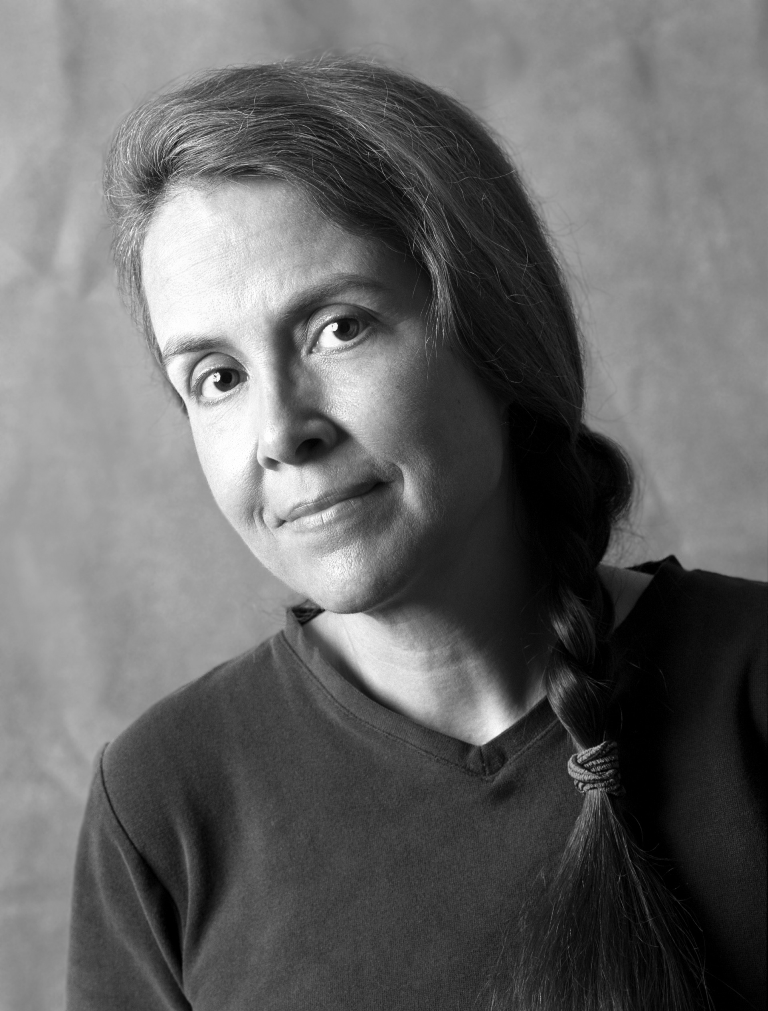
Naomi Shihab Nye was born in St. Louis, Missouri in 1952. Her father was a Palestinian refugee and her mother an American of German and Swiss descent, and Nye spent her adolescence in both Jerusalem and San Antonio, Texas. Read more here.
eartha kitt on love and compromise (1982)
From the documentary All by Myself: the Eartha Kitt Story.
george michael – praying for time (1990)
These are the days of the open hand
They will not be the last
Look around now
These are the days of the beggars and the choosers
This is the year of the hungry man
Whose place is in the past
Hand in hand with ignorance
And legitimate excuses
The rich declare themselves poor
And most of us are not sure
If we have too much
But we’ll take our chances
Because god’s stopped keeping score
I guess somewhere along the way
He must have let us alt out to play
Turned his back and all God’s children
Crept out the back door
And it’s hard to love, there’s so much to hate
Hanging on to hope
When there is no hope to speak of
And the wounded skies above say it’s much too late
Well maybe we should all be praying for time
These are the days of the empty hand
Oh you hold on to what you can
And charity is a coat you wear twice a year
This is the year of the guilty man
Your television takes a stand
And you find that what was over there is over here
So you scream from behind your door
Say “what’s mine is mine and not yours”
I may have too much but i’ll take my chances
Because God’s stopped keeping score
And you cling to the things they sold you
Did you cover your eyes when they told you
That he can’t come back
Because he has no children to come back for
It’s hard to love there’s so much to hate
Hanging on to hope when there is no hope to speak of
And the wounded skies above say it’s much too late
So maybe we should all be praying for time
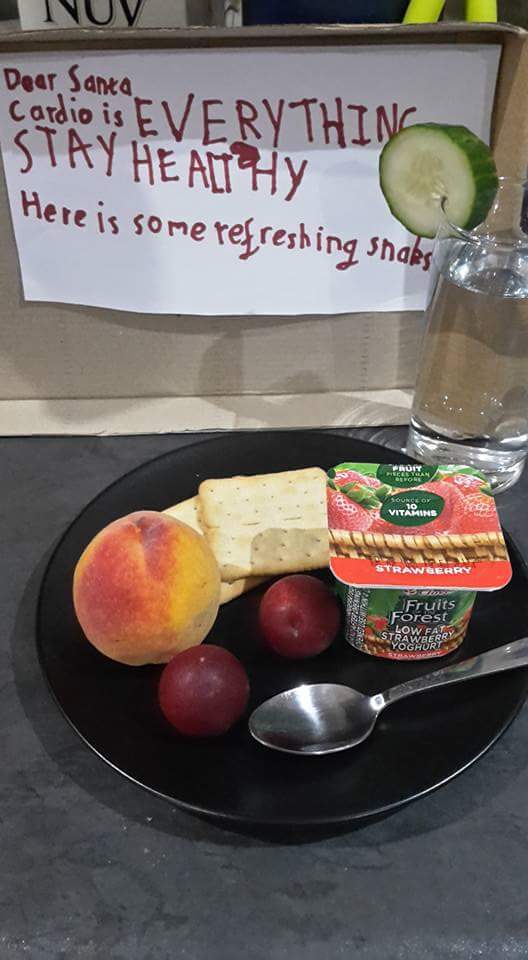
nev’s message to santa
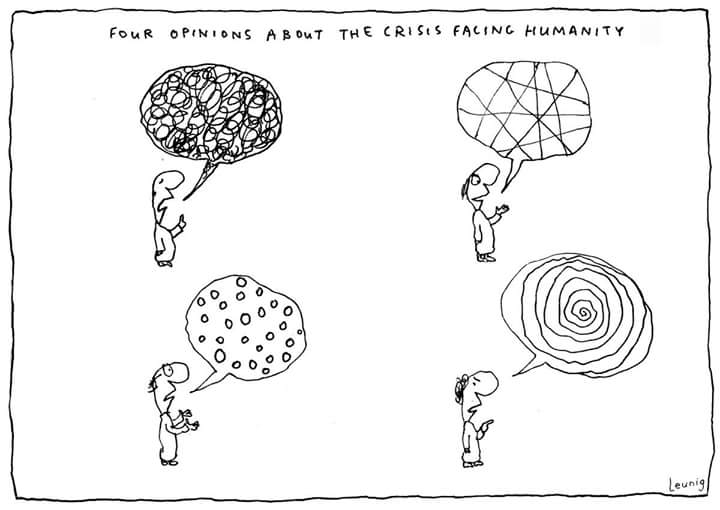
four opinions about the crisis facing humanity
anohni – marrow (2016)
In the, in the countryside, under the stream
Suck the, suck the marrow out of her bones
Inject, inject, inject me with chemotherapies
Suck the, suck the money out of her face
We are, we are all Americans now
Africa, Iceland, Europe and Brazil
China, Thailand, India and Great Britain
Australia, Borneo and Nigeria
We are, we are all Americans now
Suck the, suck the oil out of her face
Burn her, burn her hair, boil her skin
We are, we are all Americans now
eddie harris – i don’t want nobody (1975)
molly nilsson – hey moon (2008)
pain is… (stephen dwoskin, 1997)
Pain Is…’ (1997) unflinchingly examines the role of pain within society. Attempting “to make an image of pain”, Dwoskin’s film is practical and philosophical.
“Pain Is… combines interviews, archival footage and Dwoskin’s thoughtful voice-over to arrive at a scrupulous anatomy of pain (encompassing disease, dental work and sadomasochism). The interviews range from those who suffer from chronic pain to those who find pleasure in wilfully inflicting pain.” (Dennis Lim, director of Film at Lincoln Centre NYC)
moment (stephen dwoskin, 1969)
Stephen Dwoskin’s experimental film records in a single continuous shot a woman’s face before, during and after orgasm.
A static camera records, in one single continuous shot, a woman’s face before, during and after orgasm. The act of looking and the limits of the film frame are highlighted in this intimate sexual episode with Tina Fraser. Stephen Dwoskin presents a powerful, personal moment while maintaining a distance and resisting the viewer being subsumed into the action on screen.
Stephen Dwoskin was a highly regarded underground filmmaker who had moved from New York to London and helped to found the London Filmmakers’ Co-op in 1966. His extremely striking work quickly received critical attention and he made several feature-length works through the 1970s with support from German television and the BFI. He continued with both personal and essayistic films and documentaries, and in the 1990s began shooting on handheld video. He made collage films and explored his family’s home movies as he reflected on age, sexuality and the passing of different generations.
Info from the BFI.
annea lockwood – tiger balm (1970)
Taken from the CD ‘Early Works 1967 – 1982’ (EM), “Tiger Balm” is a piece originally released as a 10″ with Issue No. 9 of SOURCE magazine, USA 1970. More Annea Lockwood HERE.
zeena parkins & ikue mori – jezebel (2004)
From Phantom Orchard (Mego, 2004).
zeena parkins & ikue mori – phantom orchard – live (2004)
Zeena Parkins – arpa elettrica, pianoforte, elettronica
Ikue Mori – percussioni elettroniche, computer
Risonanze 2004-2005
Rassegna di nuove musiche contemporanee
Venezia, Teatro Fondamenta Nuove
1 dicembre 2004
Riprese video – Mauro Sambo
nina simone – please don’t let me be misunderstood (live, 1960-something)
A prayer.
lil wayne – shoot me down (2008)
“I’m aimin’ at a mirror…”
mica levi – love (2014)
This video from Mica Levi (of Micachu and the Shapes) is my favourite discovery this week.
Breathe a balloon full of kisses
Let it go where it will
And it will
🎈
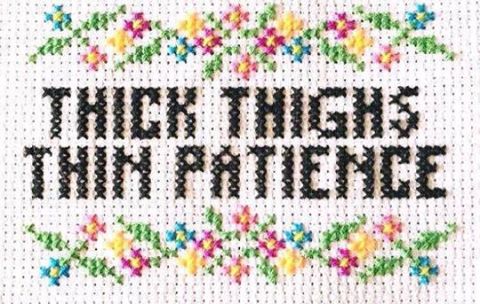
thick ‘n’ thin
screamin’ jay hawkins – constipation blues (1990)
miles davis – red china blues (1974)
Have to post this next to the Relaxed Muscle.
relaxed muscle – battered (2003)
Have to post this next to the Sharon van Etten.
<3
sharon van etten – flirted with you all my life (2010)
This is incredible.
A cover of the 2009 Vic Chesnutt song, from the Fantasy Covers: The 2000s Part Two podcast.
cosey fanni tutti on georges bataille (1984)
 A TEST IN TRUST
“For a brief moment my belief in myself is yours to take and assimilate as you will. My innermost thoughts and private ideals are laid before you in trust.”
I still believe we are sensitive. To hide behind defensive faces for so long has buried our souls. The need to communicate feelings and express experience is, for some, becoming more difficult. Suppressing the natural instincts leads to eventual emotional breakdown. Our only true way to communicate is through our emotions. I only give you what I believe, what I know and what I live. We can all offer something to one another.
I have always thought of Georges Bataille’s work as being very private, yet he shared it with us all, somehow retaining that private feeling that only you had read this piece. Not sensationalist when it could so easily have been. He has always left me with a feeling of warmth and reassurance that life is as complicated as I began to believe but still worth living to the full, experiencing more and more as you grow older, not less and less. A fine writer to me, he communicates guiltless fantasy.
— Cosey Fanni Tutti for Georges Bataille Festival, Violent Silence,1984.
cosey fanni tutti – time to tell (1983)
“One must live in the environment of the day and make that environment as free as possible, to as many people as possible. To give people what they already have, but that which has been buried by years of varying human ideals and standards. All COUM asks is that people once more work with themselves, their feelings, and in doing so, become aware of others. It is simple, yet very difficult. The simplest things are the most difficult.”
ramleh – product of fear (1987)
boyd rice – disneyland can wait (1990)
 fleurmach