Nora Keyes – Songs to Cry by for the Golden Age of Nothing
Nora Keyes – Songs to Cry by for the Golden Age of Nothing
Song by Iggy Pop and Goran Bregovic, from the wonderful soundtrack to Emir Kusturica’s tragicomic, surreal film, Arizona Dream (1993).
Stripped-down, live cover by the (brilliant) Robyn Hitchcock of the (incredible) Bob Dylan song, “Visions of Johanna”, originally from Blonde on Blonde (1966).
“UKE-AKKE!” Gloriously messy, freewheeling video, off her 2011 album, Passenger.
First released in 1991 on Creation Records, this album has been a fount I have returned to so many, many times since I bought it at about 14 from Jan Welter’s second hand cd stall at the flea market in Pietermaritzburg’s Alexandra Park. I picked it based only on the luminous cover photo of a girl, spinning… Well, that and the fact that I trusted Jan’s taste implicitly. Just for a Day is a cool, sweet glass of water to me on a stuffy, fevered day (like today); a comfy, old sweater to nestle in on a dark, sad day… the breeze blowing through my heart when it feels most empty. It lifts my spirits above suffering, always. Here it is in its entirety.
Off Going Blank Again (Creation Records, 1992).
No longer cradled in gravity’s memory…
Off the album In Ribbons (4AD, 1992)
Forty years after his passing Jimi Hendricks lives. Jimi was a dirty uncle, one who crooned “Foxy Lady” to a girl 6 years old in a house filled with adults slurring expletives of the extra terrestrial kind.
I had no idea what he meant or who he was talking to. As plain as the lyrics are, the censorious nature of the song, at least for a six year old, were lost to me. What made the song special, what earned Hendrix a place in my heart like no other musician was the way he whispers ‘foxy’ at the beginning of the song and expression itself.
What got me going was imagining that he couldn’t go to sleep without his piece close by, that he wanted it like he wanted that ‘foxy lady’. I was and am still convinced that when he sung that song it was dedicated to an elusive riff, that itched at the tip of his fingers refusing to connect heart string to guitar string.
With that conclusion I had cured a palate for a music crediting Fishbone, TV on the Radio and other punk/rockers of the charcoal kind. Jimi was a dirty uncle, who synthed me to sleep, set me jumping on furniture and earned me much punishment- you don’t just hop around on rent-to-own property.
RIP Jimi.
First posted at Pan African Space Station.
In Alice, a little girl follows a white rabbit into a world where nothing is quite what it seems. Where Czech surrealist Švankmajer’s Alice differs from other adaptations of Lewis Carroll’s Alice in Wonderland is that it explores the book’s darker side as well, thereby remaining faithful to the tone of uneasy confusion that pervades the original story. A live-action Alice (Kristyna Kohoutova) inhabits a Wonderland that teems with threatening stop-motion characters. Švankmajer’s visual canniness and piercing psychological insight permeate the film with a menacing dream-logic. Curiouser and curiouser.

William S. Burroughs performing A Thanksgiving Prayer. (C) 1990 The Island Def Jam Music Group
Folk song, recorded in 1949 in Istanbul. Sung by Safiye Ayla. Played with violin, kanun, ud and clarinet. This recording is in the public domain. You can download it HERE.
Background
Üsküdar (Scottary), now a section of Istanbul on the Anatolian (Asian) side, used to be a village/town across the Bosphorus from Istanbul proper, where nursing began during the Crimean War (British and French assisted Turks against Russia, 1854-56).
There is much fascinating debate about the origins of this song. Whose Is This Song? is a documentary made about the subject by Adela Peeva in 2003. Here’s the blurb:
“In her search for the true origins of a haunting melody, the filmmaker travels to Turkey, Greece, Macedonia, Albania, Bosnia, Serbia and Bulgaria. The trip is filled with humour, suspense, tragedy and surprise as each country’s citizens passionately claim the song to be their own and can even furnish elaborate histories for its origins. The tune emerges again and again in different forms: as a love song, a religious hymn, a revolutionary anthem, and even a Scottish military march. The powerful emotions and stubborn nationalism raised by one song seem at times comical and other times, eerily telling. In a region besieged by ethnic hatred and war, what begins as a light-hearted investigation ends as a sociological and historical exploration of the deep misunderstandings between the people of the Balkans.”
You can watch the preview HERE.
Lyrics
Here’s a translation of the Turkish version’s lyrics (a compound I have made from various versions I found online), which have been credited in some places to Nuri Halil Poyraz (1885 – 1950) and Muzaffer Sarisozen (1899 – 1963):
On the way to Üsküdar, it started raining
My scribe (katip) wears a frock coat, its long skirt muddied
He has just woken from sleep: his eyes are languid
The scribe is mine; I am his; hands will intertwine
It looks so lovely on my scribe, that starched shirt of his
On the way to Üsküdar, I found a handkerchief
I filled the handkerchief with Turkish delight (lokum)
As I was looking for my helper, I found him next to me
The scribe is mine; I am his; what is it to others?
It looks so lovely on my clerk, that starched shirt of his.
Lisa Hannigan performing her song “Passenger” outside Graywhale store in Salt Lake City, Utah, 11/2/09. Credits to Kyle M.
“Walking ’round Chicago I have smuggled you as cargo
Though you are far away unknowing
By the time we get to Salt Lake, I have packed you in my suitcase
Ironed the creases from my own remembering…”
From the compilation album Rotten Apples (2001).

On October 31, 1927, Hoagy Carmichael and His Pals recorded Carmichael’s composition “Stardust” at the Gennett Records studio in Richmond, Indiana. Hoagy’s “pals,” Emil Seidel and His Orchestra, agreed to record the medium-tempo instrumental in between their Sunday evening and Monday matinee performances in Indianapolis, seventy miles away.
In 1928 Carmichael again recorded “Stardust,” this time with lyrics he had written, but Gennett rejected it because the instrumental had sold so poorly. The following year, at Mills Music, Mitchell Parish was asked to set lyrics to coworker Carmichael’s song. The result was the 1929 publication date of “Star Dust” with the music and lyrics we know today. The Mills publication changed the title slightly to “Star Dust” from “Stardust” as it was originally spelled.
This information taken from JazzStandards.com.
Django Reinhardt recorded “Stardust” in 1935.
Stardust, 2/3/35, OLA 349-1 ,”Fremeaux FA 302, JSP 344, Conifer CDHD 230, EMI Jazz Time 790560-2″,” – Paris – Coleman Hawkins (ts), Stephane Grappelly (p), Django Reinhardt (g), Eugene d’Hellemmes (b), Maurice Chaillou (d).”
Chord chart:
| F69/// | F69/// | Fm7/// | Bb7/// | C6/// | A7/// | Dm/ A7/ | Dm/// |
| G7/ F#7/ | G7/// | C6/// | C6/// | D7/// | D7/// | G7/ F#7/ | G7/ G7+/ |
| F69/// | F69/// | Fm7/// | Bb7/// | C6/// | A7/// | Dm/ A7/ | Dm/// |
| Fm7/// | Bb7/// | C6/// | A7/// | Dm7/// | G7b9/// | C69/ Fm7/ | C69/// :||
Reputed to be Glenn Miller and Benny Goodman… I have hunted in vain for details of this recording and there is debate on Youtube as to whether it is them… A very lovely rendition, regardless.
The following is definitely Glenn Miller, recorded 29 January 1940:
Recorded July 11, 1958 in Hackensack, NJ.
John Coltrane — tenor saxophone
Wilbur Harden — trumpet/flugelhorn
Red Garland — piano
Paul Chambers — bass
Jimmy Cobb — drums
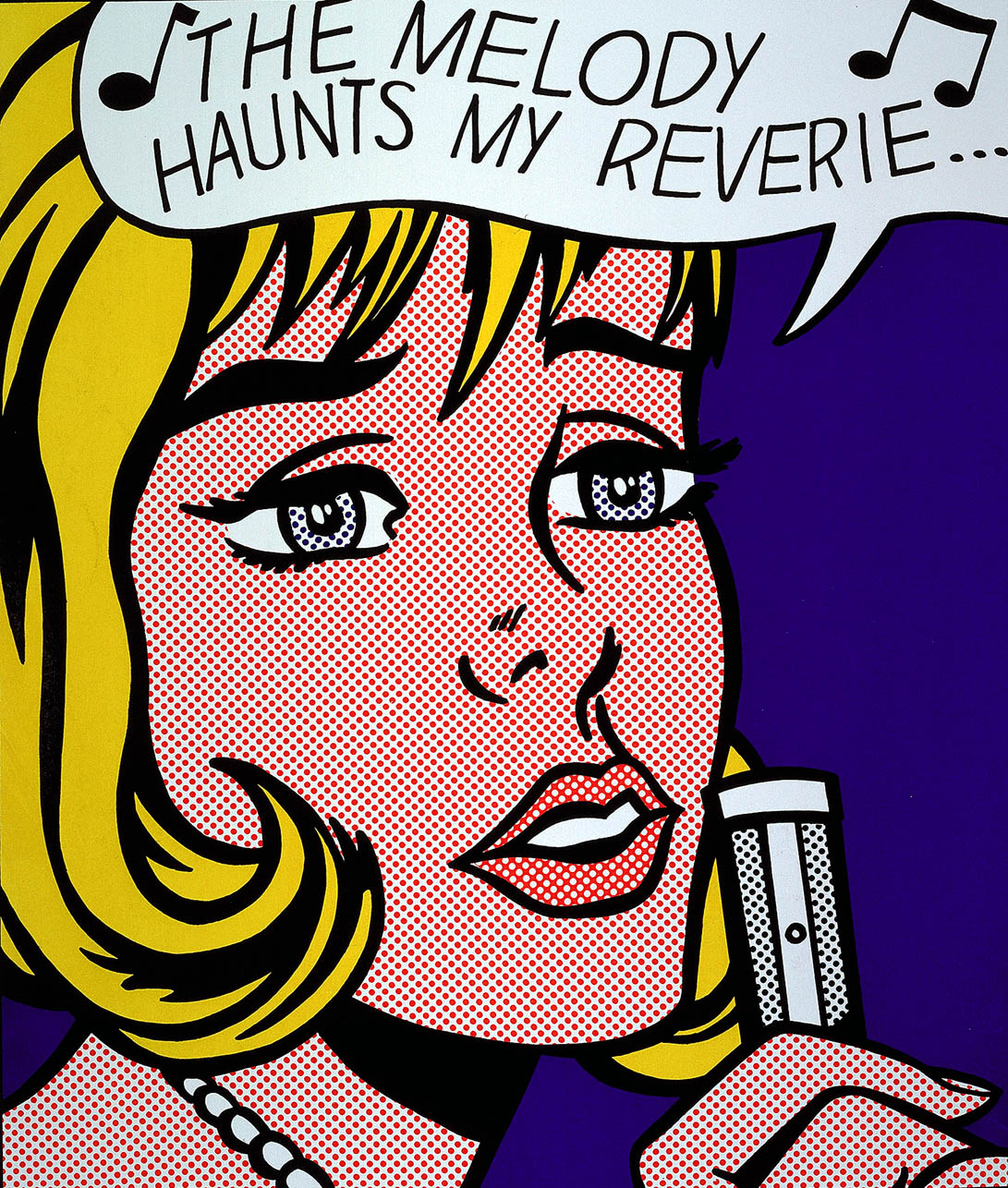
Roy Lichtenstein – “The Melody Haunts My Reverie”
Lithograph on paper, 1965
“The melody haunts my reverie…”
From Jo’s Greatest Hits (LP, Compilation) Columbia CL 1228, US, 1958.
“REFLECTION: LOVE BETWEEN BODIES
They are two people by mistake. The night corrects that.-Eduardo Galeano
The purpose of the reflection that follows is simple. Starting with what has been considered, it is a matter of noting the unsettled relationship with one’s own body and with other bodies (particularly with those that are objects of desire) imposed by the passing of time, a perspective that for reasons indicated in the chapter, our protagonists didn’t even have the possibility of considering.
In an initial very general overview of the subject, one thing that would immediately be noticed by someone who was questioning the place and the importance of the body in our lives is the fact that over the years the body loses its role of opportunity for pleasure, an attribute that it possesses almost spontaneously during one’s youth, and, in its place, it increasingly and unstoppably acquires the role of obstacle to the peaceable development of one’s very existence. With the passing of time, the body in effect turns precisely into that which resists us, which agitates us and reminds us of its existence through symptoms such as pain, discomfort or, of course, illness. In his book The Arc of Words, Andrés Trapiello has expressed this thought with a brilliant aphorism: “The body is like style: the less noticed it is, the healthier it is”.
In other terms, if we agree to call age that specific time that speaks through the body, one could affirm that the greatest characteristic of youth with regards to the relationship that it maintains with corporal physicality is precisely its fluidity, its immediacy, its transience. In this sense, a young person is someone who can call on his or her body with the knowledge that the body will rapidly return the call. On the other hand in a mature age everything is slow as Coetzee has pointed out, sometimes even extremely slow. So much so that even words end up acquiring this calm and slow rhythm and they take time to reach our lips. As I understand it, it was what an old friend of his commented to the great Fernando Fernán-Gómez, remembering the old times nostalgically: “Do you remember when we spoke rapidly?”.
Nevertheless, if it were only that, one could reassuringly maintain that in the last resort living is finding an accommodation —even if paradoxically it is an uncomfortable accommodation— in one’s own body. The problem, at least with respect to one of the subjects that our society thinks about with greatest difficulty (in this regard I could give as an example any of the novels of Michel Houellebecq), lies in the fact that in addition to that intra-subjective dimension to which I have just referred and which each one of us has to take on, there also exists a specific and particular material inter-subjectivity one of whose most prominent expressions is shown through desire.
I note that the most forceful commentaries these days tend to judge with an attitude that to my taste is frankly hypocritical —somewhere between indifference and paternalism— specifically the older the bodies involved are. It looks as if the maximum threshold which those of us who have definitely left behind the condition of glorious bodies find correct to accept, is that of tenderness barely covered by a gentle pastel color of residual passion. But maybe the body responds to a logic that is totally missed by those commentaries. Maybe just like the word remembers the soul, desire preserves the memory of the body.
Or maybe it is that the body has its own memory and is capable of seeing in the body that lies next to it what it was, even though now it may no longer be; it rescues from obscurity the shine of the past and it brings it with loving delicacy to the present, redeeming it from the ravages of time, the unmerciful punishment of evolution. Those who believe that bodies accept, are resigned, agree with what is handed to them are wrong. No. The body remembers the fulfillment that the other, with whom it is now melding with, had. The body preserves the memory —its own memory— of what it knew, of what once was its own. I am not referring to a dreamlike state or a fantasy. All those who do not know this experience: the feel of the violent stab of lust on recognizing in this body that has changed so radically, that almost in no way resembles that of the past, its contours lost, the fresh scent that identified it gone, the now faded smoothness of the skin, all of them should avoid smiling disdainfully, plentiful in their ignorance. Only from that memory of body which I have been referring to can such a revealing experience be understood. Those who do know it will not only know with perfect exactitude —with total precision— what I have been talking about. They will also enjoy an additional privilege: they will understand the deep significance of what is happening to them and, to a similar extent, maybe they will be able to reconcile with it, discarding in one fell swoop the sense of shame and blame that this society insists on placing on their consciences for committing the crime of desiring freely.
To summarize, I have never been able to understand why people limit themselves to swear eternal love to each other (though they do so less and less; that I do know). They ought to have the courage in certain circumstances to swear eternal desire. With luck and sensibility they might even be able to keep their promise. Certainly the mystics believed that. And, much closer to us, André Gorz expressed it at the beginning of a long letter that he wrote to his wife soon after finding out that she was ill, with some moving words embedded with sensitivity and tenderness:
You have just had your 82nd birthday. You have shrunk 6 cm, you don’t weigh more than 45 kg and you continue to be beautiful, elegant and desirable. We have lived together for 58 years and I love you more than ever. Once again I feel in my breast a consuming emptiness that is only eased by the warmth of your body next to mine.”
From I love, therefore I exist.
Love and the philosophers.
by Manuel Cruz
Translated by Gabriel Baum
(We miss you, Gerdtjie)
After years of indulging in martyrdom, I got to thinking, there must be reasons behind all this nonsensical adoration of worthless flesh, complete with limp cock.
Fucking a deadbeat? this is probably why…
1. They stay out of the sun so their skin is all soft
2. They don’t bath as much as other boys so we get to smell the real them and can pretend we are fucking mineworkers.
3. They cant always get it up, posing a challenge and a chance to giggle about them with your girlfriends.
4. When a nihilist is sweet to you, it feels like a blade of sunshine has pierced an angry sky, as it hardly ever happens.
Not as glamorous as one would think…
5. They are incredibly needy, and co-dependent tarts everywhere rejoice in the glory of this.
6. They don’t talk much, letting you rat a tat about all sorts of arb crap, which fuels their negativity.
7. Nihilists take loads of drugs and have massive come downs, making us feel less guilty about our own consumption and general bullshit.
8. They have decent music collections and there is no chance of catching them with oakley’s on their heads.
9. Say one measly nice thing to them, and they will use it as a weapon against you, exciting.
10. A nihilist will never believe you when you say you love them, giving you an opportunity to change your mind whenever you fancy without getting in to trouble.
11. They cant really talk properly, preferring to screech and wail and shout a lot, but write beautiful, tragic love letters that we keep forever and are the envy of our friends.
12. The constant negativity makes us feel that in contrast, we are bursting with positivism and are living fabulous, tanned lives.
13. They have such a low self image, there is very little chance of them upstaging us.
14. Their general incorrigible and juvenile vibe prevents other sluts from moving in until they get to know them, and by that time you have them by their weak ineffectual balls and they cant live without you.
15. ..They will never stand in front of the mirror going “christ, i am gorgeous”
16. They admire your bitching and complaining and actually get a rise out of it, rare and satisfying.
17. We can take out our frustrations on them using inappropriate verbal abuse and kick and scratch them as much as we want.
18. Their suicidal bollocks turns us on, as there is nothing like a kicked pathetic dog to bring out the old maternal instincts.
19. And, in the end, girls really enjoy being treated badly.
In memory of Gerdte Terblanche, who left us seven years ago today. Miss your rotten smile!
I got a sickness sweet as a love note
I got a headache like a pillow
Called me Daisy, called me Daisy, called me Daisy, that one
Called me Daisy
I am a sweetheart
I am a prom queen
I am some puppies
What, Daisy?
What, Daisy?
Are we here now?
I am a horror
This is an old one
What, Daisy?
L Dopa fixed me, all right
from Big Black’s 1987 album, Songs About Fucking.
I am hopelessly in love with Blixa, and I will be forever.
(Thanks to 웃웃 for posting this on Fleurmach’s Facebook page.)
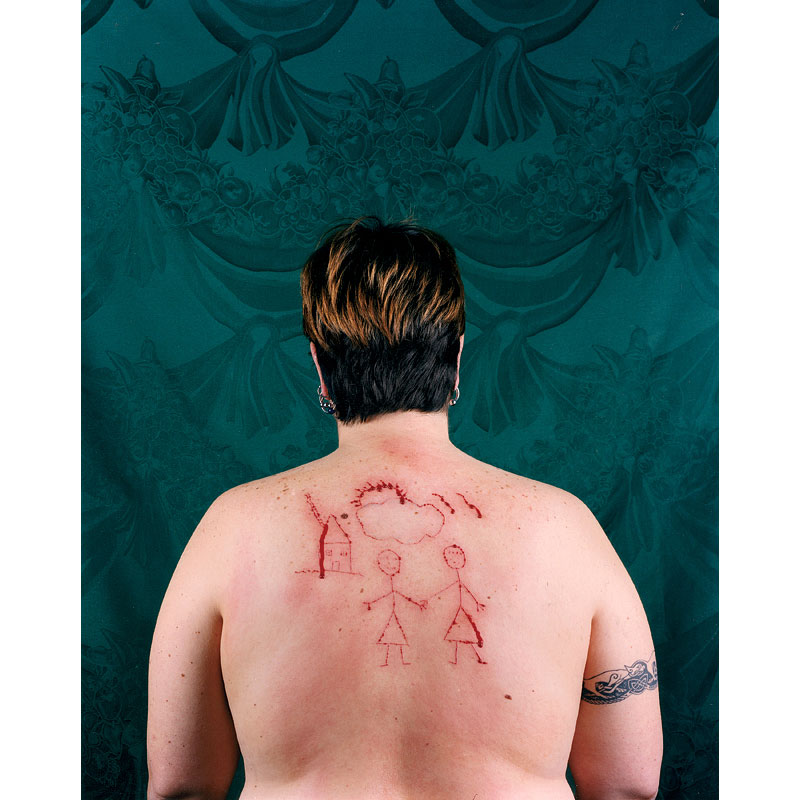
“As though you were stretching inside your own skin…”
Choreography: Martha Graham
Music by: Zoltan Kodaly
Danced by: Peggy Lyman
Created in 1930, filmed in 1976.
Martha Graham Dance Company
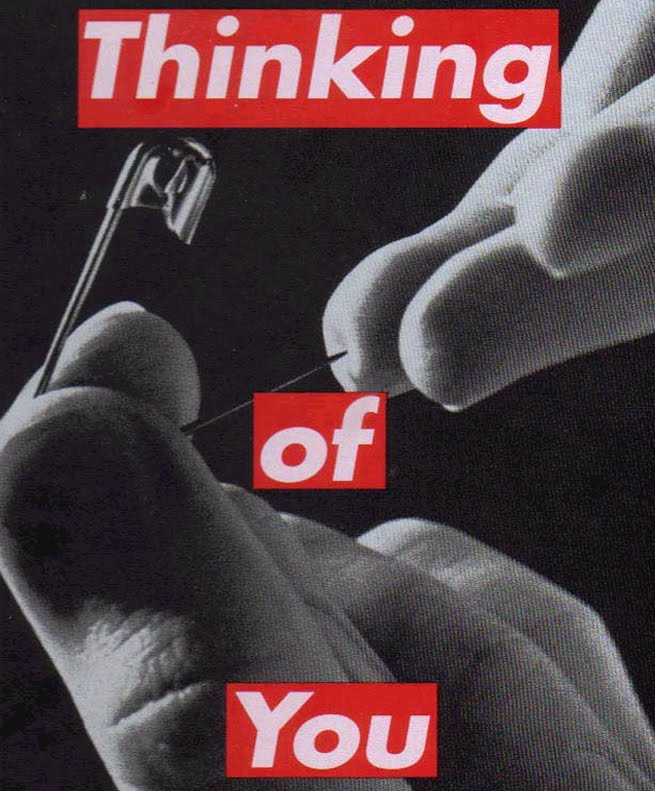
(for scott of the antarctic)
 fleurmach