Category Archives: philosophy
david whyte – the house of belonging
I awoke
this morning
in the gold light
turning this way
and that
thinking for
a moment
it was one
day
like any other.
But
the veil had gone
from my
darkened heart
and
I thought
it must have been the quiet
candlelight
that filled my room,
it must have been
the first
easy rhythm
with which I breathed
myself to sleep,
it must have been
the prayer I said
speaking to the otherness
of the night.
And
I thought
this is the good day
you could
meet your love,
this is the black day
someone close
to you could die.
This is the day
you realize
how easily the thread
is broken
between this world
and the next
and I found myself
sitting up
in the quiet pathway
of light,
the tawny
close grained cedar
burning round
me like fire
and all the angels of this housely
heaven ascending
through the first
roof of light
the sun has made.
This is the bright home
in which I live,
this is where
I ask
my friends
to come,
this is where I want
to love all the things
it has taken me so long
to learn to love.
This is the temple
of my adult aloneness
and I belong
to that aloneness
as I belong to my life.
There is no house
like the house of belonging.
the penis: mightier than the sword – rereading an old quotation at the time of abu ghraib (2004)
The famous quote ‘the pen is mightier than the sword’ has a different meaning today than it had when the English novelist Edward George Bulwer-Lytton (1803-1873) wrote in 1839: ‘Beneath the rule of men entirely great the pen is mightier than the sword’. Apart from the obvious fact that a sentence fragment cannot convey the same meaning as a full sentence, there are a number of reasons why we can assume there to have been significant changes in the meaning of these frequently quoted words in the last 160-odd years. After an initial non-exhaustive exploration of some of these reasons in order to discuss the contemporary reception of old texts in general, I will present an example of a possible contemporary rereading of the sentence in order to critically approach its form as well as its content in more detail.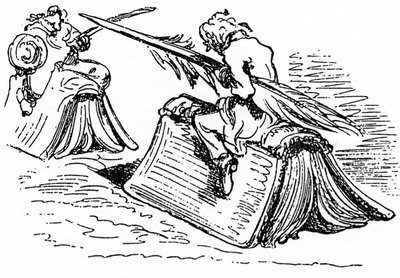
From the 19th through to the 21st century, radical shifts have taken place in the social, political and economic systems of the currently ‘European’ nations like England. Class differences have steadily decreased in importance while the levels of literacy have increased enormously. Nowadays readers of literary, journalistic and other texts come from all walks of life and all classes in society, which was not yet the case in Lytton’s time. Due to the cultural complexity of a postmodern and post-industrialised context, readings of this sentence today are not merely permitted to be different, but are necessarily far more numerous and varied than they would have been expected to be in the 1800s.
In the midst of this new plurality of discourses – which is for reasons of brevity and clarity merely stated here and will not be elaborated on – phrases of such universalising nature are rarely coined by writers and other intellectuals today, whereas in its original context a sentence such as this one may have had only one unmistakeable message to almost anyone reading or hearing it, simply because this context was rather narrow. Those who could read and write of course did not all think alike, but they would all more or less have agreed on what kind of meaning was being transmitted with these words. Nowadays we can observe a very different dynamic unfolding: whatever is said publicly immediately enters a broad field of more or less interconnected discourses, which form more or less homogenous or contradictory opinions as to its meaning within – and its relevance to – their own and possibly other world views.
What any given politician is saying on any given day on any given subject is never entirely opaque to anyone reading about it in the paper who has also read the previous day’s edition, but what effectively stands behind these words is ever more difficult to contextualise constructively in terms of its respective outcomes. ‘Right’ and ‘wrong’ are constructs that have become almost interchangeable or irrelevant, because there are so many equally valid viewpoints on any given subject or utterance, which all have a more or less publicly audible – and thereby already minimally validated – voice.
In order to bring meaning to the signifying remnant ‘the pen is mightier than the sword’ of the 19th century message x (as in ‘unknown’) in this widened, or rather exploded context, it is necessary to – at least initially – ‘misunderstand’ it. ‘Misunderstanding’ here shall refer to the application of an interpretation based on the more or less unspecific world knowledge of an individual living in the 21st century, as opposed to assuming to be in the know about what meaning the text had in 19th century England. At best, in any critical approach the inevitability of this process of ‘misunderstanding’ is acknowledged and problematised; else it is taken for granted, or at worst denied. In the last case lies the danger of laying claims to an absolute truth of sorts. Nowadays certain versions alone – of the infinite number of possible readings – may succeed in presenting certain convincing insights, which do not lay claim to finality or completeness.
The penis: mightier than the sword. This modified version arrived at by simply dropping the space between ‘pen’ and ‘is’ and inserting a colon, crassly illustrates the imagery of pen and sword as charged with concepts of maleness. It is psychoanalytically easily accessible: we are presented with two phalluses holding recourse over their size. The reader is asked to identify with the smaller and therefore supposedly weaker member, and he is told that size not only doesn’t matter, but that he will – on this side of the argument – prevail in the face of overpowering adversity, or better still: competition. The question arises: over what? We do not know. Are we to assume that the sword stands for war and the pen for enlightenment – and in effect peace? If this is the case, what we are led to believe in this statement is that war is bad, and that consequently it is to be regarded as disconnected and even structurally different from everything that has to do with writing and reasoning: as ‘mightier’ human endeavours.
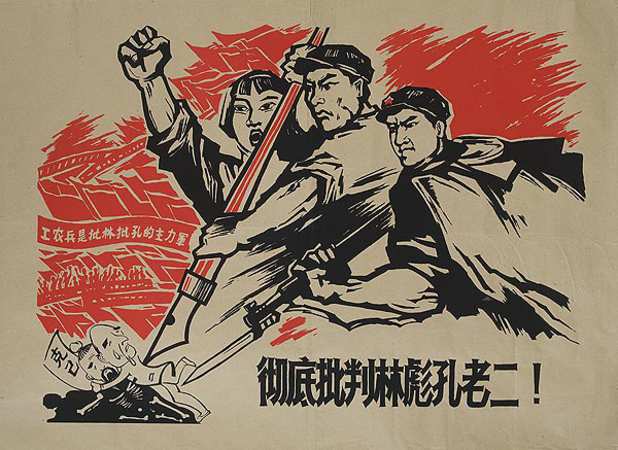
The ‘pen’ here stands for the word, an ideal idea, the thought worth concretising and writing down. The ‘sword’ stands for war, death, planned killing in the name of a higher power or principle. On this literally symbolic level the pen may be mightier than the sword; but moving on from this level it may be argued that the pen harnesses the power that also moves the sword, if less wisely so, and thereby causes greater destruction than the sword alone ever will. Nowadays, if only through the abundance of costume dramas and kung-fu movies, the sword as an image does no longer successfully symbolize chaos and destruction, for in its singularity and crafted clarity it visually far outruns the ill-defined pen. With its size, weight and sharpness, the sword suggests more self-discipline and mental order in its bearer than any pen might afford, which is too often engaged in merely noting down whimsical movements of mental current in forms ranging from scratchy to mannered.
On the surface of the image, pen and sword share the same space, but beyond the rationale of the proposed comparison, which actually draws the argument into one of two courts (where, as we will see later, both parties are at home), another battleground is implied, which stays as empty as it is hidden. Here, logically speaking, the sword has to be fighting with another unmentioned sword in order to be making war. This way the sword is – so to speak: secretly – set up to display its inferiority to the pen; which in turn, firstly as a symbol of a higher order of abstraction, and secondly due to its greater proximity as the first-mentioned in this short and brutal piece of rhetoric, refers more easily and convincingly to an enveloping structure of safety and sense.
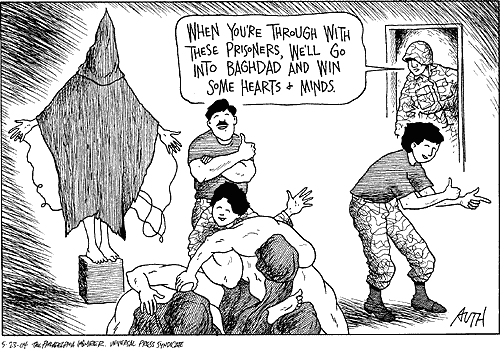
War, in this scenario, is denied any active role in the thinking, conscious persona, and conversely here, the thinking, rational persona is denied all the potency of the fight. The sentiment expressed here is a perfect example of the suppression mechanisms inherent in Western rationalism (‘Civilisation’): Making war, i.e. living out one’s ‘negative’ emotions on a non-intellectual stage – possibly even victoriously – is professedly barbaric, whereas to negate and suppress one’s emotions is constructed as a worthwhile and necessary endeavour. Even in a democratic system that purportedly aims to allow freedom of speech to everyone, there are these cultural limitations of emotional expression. This philosophy in practice may on the one hand be vital for the survival of our species, but the fact that it also provides the breeding ground for arguably the most perverted criminal offences on a daily basis (and has led to the creation of inarguably the most powerful weapons of mass destruction in human history), comes as no surprise when one contemplates how overpowering the restrictive reign of a rationalist culture over the hearts of its members has been. Imperatively, ‘the pen is mightier than the sword’ is voicing pure social conditioning: ‘Do not feel, upon failing at which (inevitable, unless you are dangerously deranged), at least stop yourself from acting on those feelings. Stay distracted, consume continuously according to pre-arranged patterns of perceived needs, and the state will cushion you from fearing death.’
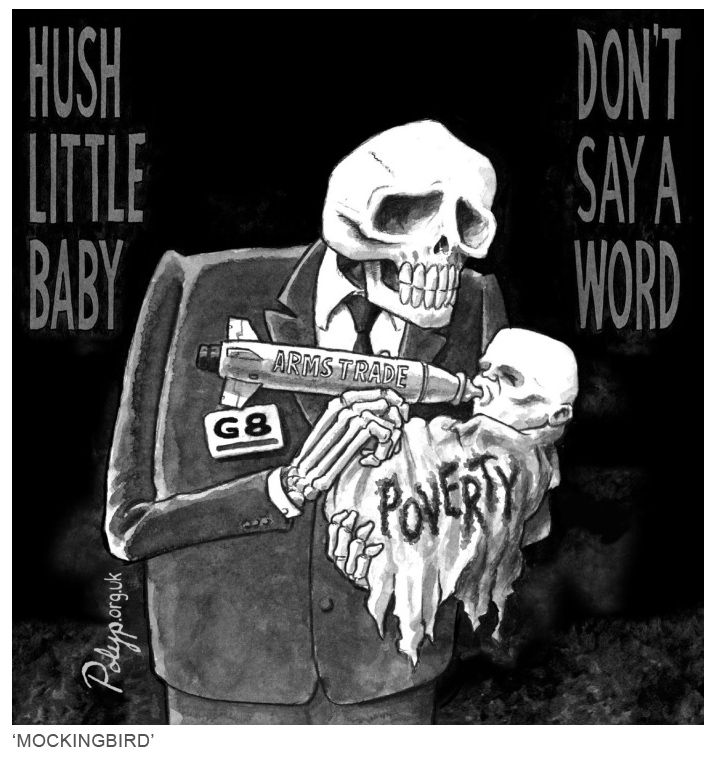
It has become clear that, as a result of the immense complexities of our social, political and economic history, not only has the message of this sentence itself – like everything else in the cultural domain – had to change (hence the variety of possible and necessary contemporary readings), but so also has the sentiment that informed this message long vanished and been replaced by a range of new world views and belief systems. At present, what these generally have in common is that they sense themselves to be one of many possible views: heterogeneously scattered outside traditional hierarchies, others always requiring consideration.
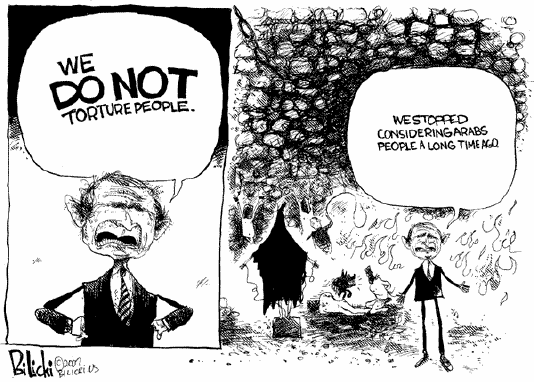
Of course there will always be fundamentalist and self-righteous tendencies in politics and other fields that need to set up an ‘other’ as opposite, with all the horrific consequences that ensue, as in the recent case of ordinary American country folk torturing and killing Iraqi prisoners of war in Abu Ghraib prison. The American defence minister’s public reasoning on this torture is that, far from being the carefully considered act of war between two nations that it was, it was supposedly a dirty deed carried out by rogue individuals. In the terminology of this text: that no ‘sword’ was involved. As a result of this denial the torturers will soon be publicly demonised and punished (under the same principle of othering), thereby serving as scapegoats for all those who have been actively involved in creating a lawless situation in these prisons in the first place. If the idea of a ‘mighty pen’ could be trusted to be referring to a positive pragmatism rather than a positivist idealism, it might now for example be able to symbolise an international military court, which could serve to address this new form of ideological and propagandist warfare. This kind of warfare is reminiscent of the public display of the severed heads of enemy soldiers in the Middle Ages, but it infinitely transcends it in calculation and coldness. That Iraqis are responding ‘in kind’ (with the recent public killing and burning of American tourists), surprises less than the Americans’ refusal to submit their soldiers to said international court of war.
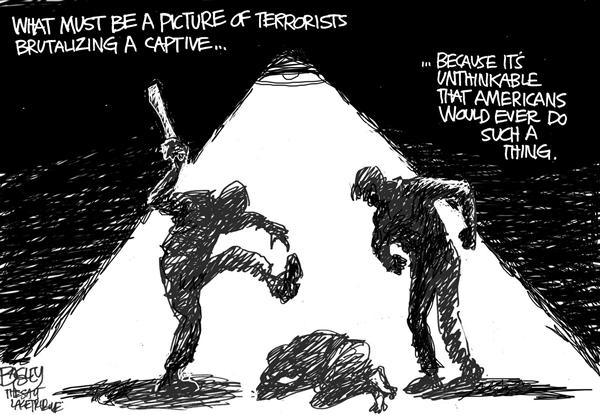
Most people today do not believe that wars are stopped by anything somebody writes with a pen: In fact, we are becoming increasingly sensitised to the demagoguery of the media. The worst wars, the greatest weapons, the most inescapable conflicts, the most far-reaching crimes and deepest infringements of basic human rights are all created on paper, but they are rarely prevented and almost never undone again through the use of that medium.
Once ‘The pen is mightier than the sword’ may actually have been a revolutionary and powerful statement, but nowadays it is merely an overused turn of phrase that invites kitsch sentiments on the one hand and bitter cynicism on the other. Googling this phrase, one comes across fantasy websites, dating chatrooms, reactionary rants by fundamentalist Islamic school children, and all other kinds of intellectually ill-directed verbiage. This selection naturally also has to do with the medium of the internet, and only represents that quantity of writing that has made itself available to us as html code. On the other hand, if ‘mighty’ writing was as easily and readily available today as all that web and magazine copy that likes to borrow this phrase, there would probably be less disillusionment in the mind of today’s reader who comes across it.
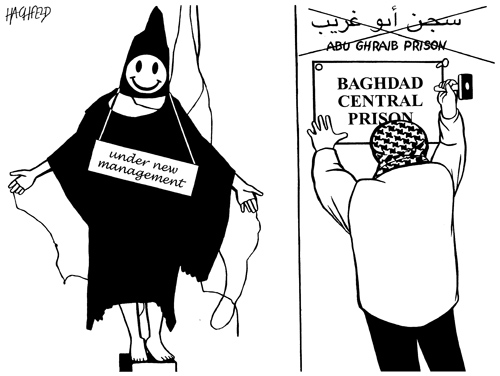
Many readers today are not used to enjoying or savouring the tensions and creative spaces offered by a linguistic symbol – they seem to lack the ability to read symbols as such. This is best exemplified by the mass of websites containing most literal readings of the quote. Self-defence sites for women describe a variety of techniques for using a pen as a weapon; crime-writer blogs publish stories investigating the poisonous qualities of ink; ‘Dungeons and Dragons’-fans have ‘webrings’, where the interpretations voted into the top five all delight in ‘setting things right’: the pen would have to be very big and the sword very small… etc. Many readers who have enjoyed the privilege of being exposed to a variety of literary genres may shudder at the shallowness of this method of constructing linguistic communication, but recognising the widespread reality of this practice could also be a less prematurely judgmental process and even bear new creative fruit: new sets of immediately recognisable symbols are forming all the time, including all the potential pitfalls of more or less hidden reactionary sentiments, but far more open to widespread critical discussion.
‘The sword is mightier than the pen’ – a statement that holds true, only rather less surprisingly so, which is why it is nowhere to be found as a quotation. What might have made the quote so long lasting is that it seems to be expressing something unthinkable: a pen battling with a sword and beating it, as it were: a poet wrestling down a soldier.
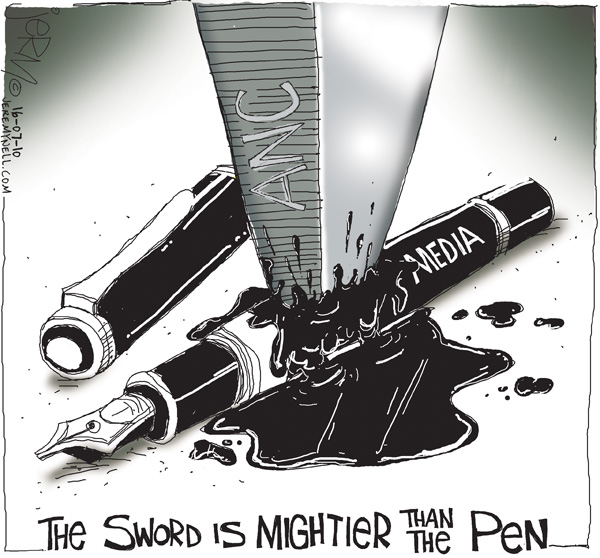
If, hypothetically unencumbered by any knowledge of the quote, a contemporary reader were to come across a sentence expressive of the negative ‘The pen is not mightier than the sword’, they might successfully be moved to contemplate the dynamics of power and information, and the worldwide imbalance regarding the privilege of acquiring knowledge. Installing this modified ‘quote’ publicly in the fashion of, for example, Jenny Holzer’s ‘Truisms’, may serve to draw attention to the Y-generation’s ubiquitous refusal to re-interpret and re-negotiate vital forms of human expression – a refusal structurally inherent in the banality of the practice of ‘sharing’ on (anti-)social networks, of regurgitating and replicating copies of once-historic fragments until the pen is dry.
i love therefore i exist
“REFLECTION: LOVE BETWEEN BODIES
They are two people by mistake. The night corrects that.-Eduardo Galeano
The purpose of the reflection that follows is simple. Starting with what has been considered, it is a matter of noting the unsettled relationship with one’s own body and with other bodies (particularly with those that are objects of desire) imposed by the passing of time, a perspective that for reasons indicated in the chapter, our protagonists didn’t even have the possibility of considering.
In an initial very general overview of the subject, one thing that would immediately be noticed by someone who was questioning the place and the importance of the body in our lives is the fact that over the years the body loses its role of opportunity for pleasure, an attribute that it possesses almost spontaneously during one’s youth, and, in its place, it increasingly and unstoppably acquires the role of obstacle to the peaceable development of one’s very existence. With the passing of time, the body in effect turns precisely into that which resists us, which agitates us and reminds us of its existence through symptoms such as pain, discomfort or, of course, illness. In his book The Arc of Words, Andrés Trapiello has expressed this thought with a brilliant aphorism: “The body is like style: the less noticed it is, the healthier it is”.
In other terms, if we agree to call age that specific time that speaks through the body, one could affirm that the greatest characteristic of youth with regards to the relationship that it maintains with corporal physicality is precisely its fluidity, its immediacy, its transience. In this sense, a young person is someone who can call on his or her body with the knowledge that the body will rapidly return the call. On the other hand in a mature age everything is slow as Coetzee has pointed out, sometimes even extremely slow. So much so that even words end up acquiring this calm and slow rhythm and they take time to reach our lips. As I understand it, it was what an old friend of his commented to the great Fernando Fernán-Gómez, remembering the old times nostalgically: “Do you remember when we spoke rapidly?”.
Nevertheless, if it were only that, one could reassuringly maintain that in the last resort living is finding an accommodation —even if paradoxically it is an uncomfortable accommodation— in one’s own body. The problem, at least with respect to one of the subjects that our society thinks about with greatest difficulty (in this regard I could give as an example any of the novels of Michel Houellebecq), lies in the fact that in addition to that intra-subjective dimension to which I have just referred and which each one of us has to take on, there also exists a specific and particular material inter-subjectivity one of whose most prominent expressions is shown through desire.
I note that the most forceful commentaries these days tend to judge with an attitude that to my taste is frankly hypocritical —somewhere between indifference and paternalism— specifically the older the bodies involved are. It looks as if the maximum threshold which those of us who have definitely left behind the condition of glorious bodies find correct to accept, is that of tenderness barely covered by a gentle pastel color of residual passion. But maybe the body responds to a logic that is totally missed by those commentaries. Maybe just like the word remembers the soul, desire preserves the memory of the body.
Or maybe it is that the body has its own memory and is capable of seeing in the body that lies next to it what it was, even though now it may no longer be; it rescues from obscurity the shine of the past and it brings it with loving delicacy to the present, redeeming it from the ravages of time, the unmerciful punishment of evolution. Those who believe that bodies accept, are resigned, agree with what is handed to them are wrong. No. The body remembers the fulfillment that the other, with whom it is now melding with, had. The body preserves the memory —its own memory— of what it knew, of what once was its own. I am not referring to a dreamlike state or a fantasy. All those who do not know this experience: the feel of the violent stab of lust on recognizing in this body that has changed so radically, that almost in no way resembles that of the past, its contours lost, the fresh scent that identified it gone, the now faded smoothness of the skin, all of them should avoid smiling disdainfully, plentiful in their ignorance. Only from that memory of body which I have been referring to can such a revealing experience be understood. Those who do know it will not only know with perfect exactitude —with total precision— what I have been talking about. They will also enjoy an additional privilege: they will understand the deep significance of what is happening to them and, to a similar extent, maybe they will be able to reconcile with it, discarding in one fell swoop the sense of shame and blame that this society insists on placing on their consciences for committing the crime of desiring freely.
To summarize, I have never been able to understand why people limit themselves to swear eternal love to each other (though they do so less and less; that I do know). They ought to have the courage in certain circumstances to swear eternal desire. With luck and sensibility they might even be able to keep their promise. Certainly the mystics believed that. And, much closer to us, André Gorz expressed it at the beginning of a long letter that he wrote to his wife soon after finding out that she was ill, with some moving words embedded with sensitivity and tenderness:
You have just had your 82nd birthday. You have shrunk 6 cm, you don’t weigh more than 45 kg and you continue to be beautiful, elegant and desirable. We have lived together for 58 years and I love you more than ever. Once again I feel in my breast a consuming emptiness that is only eased by the warmth of your body next to mine.”
From I love, therefore I exist.
Love and the philosophers.
by Manuel Cruz
Translated by Gabriel Baum
rabindranath tagore in conversation with albert einstein
AUGUST 19, 1930
TAGORE: I was discussing with Dr. Mendel today the new mathematical discoveries which tell us that in the realm of infinitesimal atoms chance has its play; the drama of existence is not absolutely predestined in character.
EINSTEIN: The facts that make science tend toward this view do not say good-bye to causality.
TAGORE: Maybe not, yet it appears that the idea of causality is not in the elements, but that some other force builds up with them an organized universe.
EINSTEIN: One tries to understand in the higher plane how the order is. The order is there, where the big elements combine and guide existence, but in the minute elements this order is not perceptible.

TAGORE: Thus duality is in the depths of existence, the contradiction of free impulse and the directive will which works upon it and evolves an orderly scheme of things.
EINSTEIN: Modern physics would not say they are contradictory. Clouds look as one from a distance, but if you see them nearby, they show themselves as disorderly drops of water.
TAGORE: I find a parallel in human psychology. Our passions and desires are unruly, but our character subdues these elements into a harmonious whole. Does something similar to this happen in the physical world? Are the elements rebellious, dynamic with individual impulse? And is there a principle in the physical world which dominates them and puts them into an orderly organization?
EINSTEIN: Even the elements are not without statistical order; elements of radium will always maintain their specific order, now and ever onward, just as they have done all along. There is, then, a statistical order in the elements.
TAGORE: Otherwise, the drama of existence would be too desultory. It is the constant harmony of chance and determination which makes it eternally new and living.
EINSTEIN: I believe that whatever we do or live for has its causality; it is good, however, that we cannot see through to it.
Continue reading
blixa bargeld is cooking risotto
I am hopelessly in love with Blixa, and I will be forever.
(Thanks to 웃웃 for posting this on Fleurmach’s Facebook page.)
impressed
“Thus the first capacity of human intellect is that the mind is fitted to receive the impressions made on it; either through the senses by outward objects, or by its own operations when it reflects on them. This is the first step a man makes towards the discovery of anything, and the groundwork whereon to build all those notions which ever he shall have naturally in this world. All those sublime thoughts which tower above the clouds, and reach as high as heaven itself, take their rise and footing here: in all that great extent wherein the mind wanders, in those remote speculations it may seem to be elevated with, it stirs not one jot beyond those ideas which sense or reflection have offered for its contemplation.”
John Locke. 1690. An Essay Concerning Human Understanding.
pessoa: “because i’ve already seen cats staring at the moon”
Life would be unbearable if we made ourselves conscious of it. Happily we don’t do so. We live with the same unconsciousness as the animals, in the same futile and useless way, and if we anticipate death, which might be assumed, though one can’t be certain, we anticipate it by way of forgetting so much and with so many distractions and subterfuges that we can scarcely say we think about it at all.
So we live our lives, with little grounds for thinking we’re superior to animals. Our difference from them consists in the purely external detail that we speak and write, that we have the abstract intelligence for both distancing ourselves by employing it concretely and by imagining impossible things. All those qualities, therefore, are accidents of our basic organism. Speaking and writing do nothing new for our primordial instinct to live without knowing how. Our abstract intelligence is of no use except in concocting systems or notions about half-systems rather than permitting us to be animals out under the sun. Our imagination of the impossible is not exclusive to us, because I’ve already seen cats staring at the moon, and I don’t know whether they weren’t yearning for it.
– Fernando Pessoa, Always Astonished (San Francisco: City Lights Books, 1988), transl. Edwin Honig, pp 118-19.
melancholic creatures
“If melancholy emerges from the depths of the creaturely realm to which the speculative thought of the age felt bound by the bonds of the church itself, then this explained its omnipotence. In fact it is the most genuinely creaturely of the contemplative impulses, and it has always been noticed that its power need be no less in the gaze of a dog than in the attitude of a pensive genius. ‘Sir, sorrow was not ordained for beasts but men, yet if men do exceed in it they become beasts’, says Sancho Panza to Don Quixote.”
– Walter Benjamin, from The Origin of German Tragic Drama
david foster wallace on interiority (1989)
We all have our little solipsistic delusions, ghastly intuitions of utter singularity: that we are the only one in the house who ever fills the ice-cube tray, who unloads the clean dishwasher, who occasionally pees in the shower, whose eyelid twitches on first dates; that only we take casualness terribly seriously; that only we fashion supplication into courtesy; that only we hear the whiny pathos in a dog’s yawn, the timeless sigh in the opening of the hermetically-sealed jar, the splattered laugh in the frying egg, the minor-D lament in the vacuum’s scream; that only we feel the panic at sunset the rookie kindergartner feels at his mother’s retreat. That only we love the only-we. That only we need the only-we. Solipsism binds us together, J.D. knows. That we feel lonely in a crowd; stop not to dwell on what’s brought the crowd into being. That we are, always, faces in a crowd.
– from “Westward The Course Of Empire Takes Its Way”, a short story in the collection Girl With Curious Hair (1989)
the shaggs – philosophy of the world
on making oneself visible in the world
There is a lovely root to the word humiliation – from the latin word humus, meaning soil or ground. When we are humiliated, we are in effect returning to the ground of our being.
Shedding the carapace we have been building so assiduously on the surface, we must by definition give up exactly what we thought was necessary to protect us from further harm. The outlaw is the radical, the one close to the roots of existence. The one who refuses to forget their humanity and, in remembering, helps everyone else remember too.
To die inside is to rob our outside life of any sense of arrival from that interior. Our work is to make ourselves visible in the world. This is the soul’s individual journey, and the soul would much rather fail at its own life than succeed at someone else’s.
– David Whyte, from Crossing the Unknown Sea
john berger on being born a woman
To be born a woman is to be born, within an allotted and confined space, into the keeping of men. The social presence of women is developed as a result of their ingenuity in living under such tutelage within such a limited space. But this has been at the cost of a woman’s self being split into two.
A woman must continually watch herself. She is almost continually accompanied by her own image of herself. Whilst she is walking across a room or whilst she is weeping at the death of her father, she can scarcely avoid envisaging herself walking or weeping. From earliest childhood she has been taught and persuaded to survey herself continually. And so she comes to consider the surveyor and the surveyed within her as the two constituent yet always distinct elements of her identity as a woman. She has to survey everything she is and everything she does, because how she appears to men is of crucial importance for what is normally thought of as the success of her life. Her own sense of being in herself is supplanted by a sense of being appreciated as herself by another…
One might simplify this by saying: men act and women appear. Men look at women. Women watch themselves being looked at. This determines not only most relations between men and women but also the relation of women to themselves. The surveyor of woman in herself is male: the surveyed female. Thus she turns herself into an object — and most particularly an object of vision: a sight.
― John Berger, from Ways of Seeing.
david whyte — the house of belonging
You must learn one thing. The world was made to be free in. Give up on all other worlds except the one to which you belong. Sometimes it takes darkness and the sweet confinement of your aloneness to learn anything or anyone that does not bring you alive is too small for you.
– David Whyte, from The House of Belonging.
adorno on beauty
It rescues in the object something of the peacefulness of its day of creation.
kierkegaard on transcending despair
The despairing man who is unconscious of being in despair is, in comparison with him who is conscious of it, merely a negative step further from the truth and from salvation. Despair itself is a negativity, unconsciousness of it is a new negativity. But to reach truth one must pierce through every negativity. For here applies what the fairy tale recounts about a certain enchantment: the piece of music must be played through backward; otherwise the enchantment is not broken.
~ Søren Kierkegaard (under the pseudonym Anti-Climacus) – from The Sickness Unto Death (1849)
adorno on beauty and the lie
Even the tree which blooms, lies, the moment that one perceives its bloom without the shadow of horror; even the innocent “How beautiful” becomes an excuse for the ignominy of existence, which is otherwise, and there is no longer any beauty or any consolation, except in the gaze which goes straight to the horror, withstands it, and in the undiminished consciousness of negativity, holds fast to the possibility of that which is better.
lost beauty
NOTES TOWARDS A KIND OF TRANSCENDENCE
6.
…So much imprisoned beauty withers away.
And even the princesses shut away in their towers know that the arrival of prince charming is but
the prelude to spousal segregation, that what must be done is to abolish both the prisons and the
liberators at the same time, that what we need isn’t programs for liberation but practices of
freedom.
a portrait of hans bellmer, by unica zurn (1965)
HANS BELLMER: The female body…is like an endless sentence that invites us to rearrange it, so that its real meaning becomes clear through a series of endless anagrams. (1)
UNICA ZÜRN: If woman is to put into form the ‘ule’ [Greek: matter] that she is, she must not cut herself off from it nor leave it to maternity, but succeed in creating with that primary material that she is […] Otherwise, she risks using or reusing what man has already put into forms, especially about her, risks remaking what has already been made, and losing herself in that labyrinth. (2)
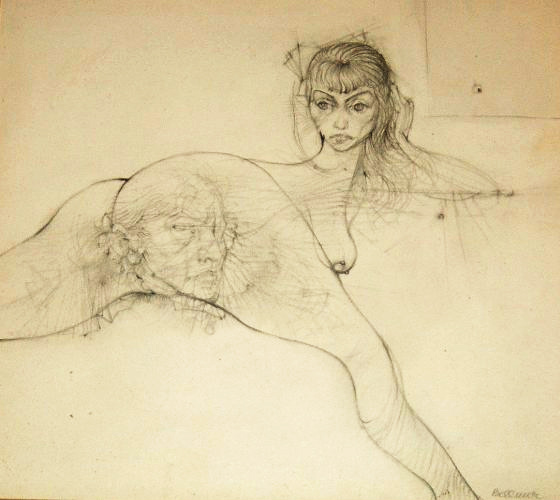
A Portrait of Hans Bellmer
Unica Zurn, 1965
References
(1) Webb P.& Short R., Hans Bellmer (New York: Quartet Books, 1985). Cited in: Miranda Argyle, “Hans Bellmer and The Games of the Doll” (Online Publication, 2004).
(2) Quote cited in: Subversive Intent: Gender, Politics, and the Avant-Gardex by Susan Rubin Suleiman (Cambridge, MA: Harvard University Press, 1990).
suspended sentence (2009)
my menstrual blood does not “run”.
it’s too viscous.
it builds up behind the bottleneck of my cervix until the weight of
sloughed-off lining gets too heavy to contain,
then it blurts out
in thick, slimy strands of not-baby,
a cosmic disappointment
smelling of fresh death.
sometimes crimson, still almost fecund,
sometimes older and blacker, a nauseating cousin of bile,
blended with albumen, like broken egg white, like frogspawn frustrated.
inside my insides,
god’s scraping a blunt teaspoon round and round,
clearing the walls of my womb for another hit-and-miss next month.
on a heavy day,
pulling out an incontinent tampon,
i sit there on the loo,
toilet paper wrapped round my fingers,
trying to abbreviate the sentence of clots
my lips are drooling into the toilet bowl water.
it’s not a lake, it’s a suspension,
a hanging paragraph of placental full-stops that goes on and on,
inexorable
and i wipe and shove in another wad of cotton to staunch the ooze for
another few hours of outer peace.
one day, sometime in my forties or fifties
i’ll be paroled,
retired from service.
god will give up on my body
and that will be the end of that.
it’s irrelevant what anyone else wants.
my cunt is me, but it’s also beyond me,
ordained for a purpose beyond my control,
just like your cock is you, but it’s also beyond you,
ordained for a purpose beyond your control.
mostly we are blasphemous.
the obsession with looking into cunts, like the obsession with hard cocks,
is an ontological obsession with discovering and controlling our cosmic origins,
an expression of our raging, impossible desire for omnipotence.
and indeed pornographic images ARE redundant in that they hold no
physical power to alter the workings of sex
those closeups of fucking are nothing more than flat reproductions of
ten centimetres of Life’s copy machine –
mostly they are over-man-ipulated and bear little resemblance to real
bodies interacting.
porn is the simulacral fantasy of ruling the universe.
Note
I wrote this in 2009 as a comment on this piece:

camus on desire
What distinguishes consciousness of self from the world of nature is not the simple act of contemplation by which it identifies itself with the exterior world and finds oblivion, but the desire it can feel with regard to the world. This desire re-establishes its identity when it demonstrates that the exterior world is something apart. In its desire, the exterior world consists of what it does not possess, but which nevertheless exists, and of what it would like to exist but which no longer does. Consciousness of self is therefore, of necessity, desire. But in order to exist it must be satisfied, and it can only be satisfied by the gratification of its desire. It therefore acts in order to gratify itself and, in so doing, it denies and suppresses its means of gratification. It is the epitome of negation.
from The Rebel
bruce lee on expression
On fighting, on self-knowledge, on honest expression, on balance… such an articulate man. “Be water, my friend.”
nietzsche on the hard
“Why so hard?” the kitchen coal once said to the diamond. “After all, are we not close kin?” Why so soft? O my brothers, thus I ask you: are you not after all my brothers? Why so soft, so pliant and yielding? Why is there so much denial, self-denial, in your hearts? So little destiny in your eyes? And if you do not want to be destinies and inexorable ones, how can you one day triumph with me? And if your hardness does not wish to flash and cut through, how can you one day create with me? For all creators are hard. And it must seem blessedness to you to impress your hand on millennia as on wax. Blessedness to write on the will of millennia as on bronze — harder than bronze, nobler than bronze. Only the noblest is altogether hard. This new tablet, O my brothers, I place over you: Become hard!
— Zarathustra, III: On Old and New Tablets, 29.
søren kierkegaard on anxiety
In a logical system, it is convenient to say that possibility passes over into actuality. However, in actuality it is not so convenient, and an intermediate term is required. The intermediate term is anxiety… Anxiety is neither a category of necessity nor a category of freedom; it is entangled freedom, where freedom is not free in itself but entangled, not by necessity, but in itself…
… Anxiety may be compared with dizziness. He whose eye happens to look down into the yawning abyss becomes dizzy. But what is the reason for this? It is just as much in his own eye as in the abyss, for suppose he had not looked down. Hence anxiety is the dizziness of freedom, which emerges when the spirit wants to posit the synthesis and freedom looks down into its own possiblity, laying hold of finiteness to support itself. Freedom succumbs in this dizziness. Further than this, psychology cannot and will not go. In that very moment everything is changed, and freedom, when it again rises, sees that it is guilty. Between these two moments lies the leap, which no science has explained and which no science can explain.
~ Søren Kierkegaard (under the pseudonym Vigilius Haufniensis) – from The Concept of Anxiety (1844)
thoughts on pasolini talking about montage and death
Cinema is identical to life, because each one of us has a virtual and invisible camera which follows us from when we’re born to when we die. In reality, cinema is an infinite film sequence-shot. Each individual film interrupts and rearranges this infinite sequence-shot and thus creates meaning, which is what happens to us when we die. It is only at our moment of death that our life, to that point undecipherable, ambiguous, suspended, acquires a meaning. Montage thus plays the same role in cinema as death does in life.
~ Pier Paolo Pasolini, “Ora tutto è chiaro, voluto, non imposto dal destino”, Cineforum 68 October 1967, p. 609. 
I have been thinking about the similarities between editing and blogging, about how in juxtaposition meaning comes to light, and this comment from Pasolini that I just came across resonated with my thoughts. An online archive of everyday apprehension, a place to pin the things floating amorphous just behind my eyes… It is powerfully transformative to be able to reflect, live, with others, on chains of thoughts, connections, coincidences, concatenations… More powerful for clarity than a diary. Although the public nature of this grappling is uncomfortable for me, it prevents me from dismissing my thoughts as solipsistic delusions, something to which I am prone, especially because sketching them out in a simple A to B trajectory is often impossible, rendering attempts at expression incomprehensible to others in ordinary conversation.
What I like about the montage inherent in blogging, as distinct from other more traditional types of montage, is that the possibilities of hypertext allow me not to foreclose other meanings, not to narrow connections and paths of interpretation down, as is inevitable when making a film, or a music mix, or any object concrete and discrete in itself. The intertextual permeability and wild openness of virtuality is so exciting in this sense… The possibility of creating and reshaping meaning without having to be final or definitive, which necessarily involves the murder of other meanings in the process… This I love, though it makes me dizzy.
albert einstein on interdependence
sweet honey in the rock – ella’s song
Lyrics and music by Bernice Johnson Reagon
Until the killing of black men, black mothers’ sons
Is as important as the killing of white men, white mothers’ sons
We who believe in freedom cannot rest
We who believe in freedom cannot rest until it comes
martha graham on artists (in a letter to agnes de mille)
“there is a vitality, a life force, a quickening that is translated through you into action, and because there is only one of you in all time, this expression is unique. and if you block it, it will never exist through any other medium, and will be lost. the world will not have it. it is not your business to determine how good it is, nor how valuable it is, nor how it compares with other expressions. it’s your business to keep it yours clearly and directly, to keep the channel open.
you do not even have to believe in yourself or your work. you have to keep open and aware directly to the urges that motivate you. keep the channel open. no artist is pleased. there is no satisfaction whatever at any time. there is only a queer, divine dissatisfaction, a blessed unrest that keeps us marching and makes us more alive than the others.”
from http://kagablog.com/
tiqqun – notes on the local (2001)
Everything which today constitutes an acceptable landscape for us is the result of bloody violences and conflicts of rare brutality.
One can thus summarize that the demokratic government wants to make us forget. Forget that the suburbs have devoured the countryside, that the factory has devoured the suburbs, that the metropolis—tentacled, deafening and without repose—has devoured everything.
This observation doesn’t imply regret, this observation implies: seize everything. In the past, in the present.
The controlled territory where our life passes, between the supermarket and the digital lock on the lobby door, between the traffic signals and the pedestrian pathways, forms us. We are moreover inhabited by the space in which we live. Especially when everything, or nearly everything, from now on, functions there like a subliminal message. We don’t do certain things at certain places because we do not do those things.
Street furniture for example has almost no utility—how often, to our surprise, do we wonder who exactly could fill the benches of a neo-square without succumbing to more violent despair?—it has precisely one meaning and one function, and these are dissuasive. Their mission/charter “You are only home when at home, or where you pay, or where you are monitored.”
The world is becoming global, but it is shrinking.
The physical landscape we traverse each day with great speed (by car, using public transportation, on foot, in a rush) has effectively an unreal character because while there, no one lives as anything at all, nor could anyone possibly live as anything there. It’s a type of micro-desert where one is like an exile, between one private property and another, between one obligation and another.
The virtual landscape seems much more welcoming to us. The liquid crstal screen of the computer, internet navigation, the tele-visual or the play-station universes—these are infinitely more familiar to us than the streets of our neighborhood, populated at night by the moonlight of the streetlamps and the metal gates of closed stores.
It is not the global which opposes the local, it is the virtual.
The global is so little opposed to the local that actually the global creates it. The global only designates a certain distribution of differences from an homogenizing norm. Folklore is the product of cosmopolitanism. If we didn’t know that the local was local, it would be for us a little globality. The local is revealed as the global makes itself possible, and necessary. Go to work, do your shopping, travel far from home: this is what constitutes the local, which otherwise would more modestly be the place where we live.
All the same, we live strictly speaking nowhere. Our existence is simply divided into layers of schedules and topologies, in slices of tailored life.
But this isn’t all. They presently would like to make us live in the virtual, definitively deported. There, the life they wish for us would recompose into a curious unity of non-time and non-place. The virtual, says one Internet publicity, is ” the place where you do all that you cannot do in reality.” But when “everything is permitted,” it is the mechanism of the transfer from the power to act which is under surveillance. In other words” the virtual is the place where possibilities never become real, but remain indefinitely in the virtual state. Here, prevention has won over intervention: if everything is possible in the virtual it’s because the mechanism ensures that everything remains unchanged in our real life
Already, we tele-work and tele-consume. In tele-life, we will no longer be afflicted by the feelings of suffering from avoiding the possibilities which still dwell in public spaces, at each glance crossed and so soon abandoned. The unease, the embarrassing immersion among our contemporaries, for the better part unknown, in the streets or elsewhere, will be abolished. The local, expelled from the global, will itself be projected into the virtual in order to make us believe definitively that only the global exists. Draping this uniformity of multi-ethnicity and multi-culturalism will be necessary, to ensure the pill is swallowed.
As we wait for the tele-life, we post the hypothesis that our bodies in space have a political meaning and that the dominant ones maneuver permanently to hide this fact.
Shouting a slogan at home is not the same as shouting it in the stairwell or in the street. Doing it alone is not the same as doing it wit many others, and so on.
Space is political and space is alive, because space is populated, populated with our bodies which transform it by the simple fact that it contains them. And this is why it is monitored, and this is why it is closed.
Whoever imagines it as a void soon to fill up with objects, bodies, and things has a false idea of space. On the contrary, this idea of space is obtained by mentally removing from a tangible space of all the objects, of all the bodies, of all the things which dwell in it. The powers that be have now materialized this idea in their plazas, their highways, their architecture. But its threatened without pause by its birth defect. Should something take place inside the space it controls, should—thanks to some event—one end of the this space become a place, making an unexpected crease, this is what the Global Order wants to prevent. And against this, it has invented “the local,” in the sense of continuous adjustment of all input, capture, and management devices.
That is why I say that the local is political; because it is the place of present confrontation.
From Tiqqun 2.
nina hagen on god, death, rebirth and freedom (1984)
For more of this kind of stuff, check out Videowave on Facebook – an archive of music and art ignored by mainstream media.
The opening track from Nunsexmonkrock (1981)

