“i will never forget how to dance”

I have been working for the last while as researcher and production manager on a weekly SABC-commissioned TV documentary series, I Am Woman – Leap of Faith. Here’s one of the episodes, directed by Jane Kennedy:

In January 1996 Shelley Barry was 23 and on her way to a job interview in Cape Town when she was caught in the crossfire of taxi violence caused by rival taxi groups battling for ownership of the same routes.

She was sitting next to the taxi driver in the front of his minibus when an assassin pulled up alongside the moving vehicle and opened fire. The driver was shot seven times and was killed instantly. The taxi crashed, injuring many of its passengers.

Shelley was hit by one of the assassin’s bullets and was instantly paralysed. Her life hung in the balance and it was assumed she would not survive. The friend she was travelling with was seriously injured but has recovered, despite the bullet still lodged in her chest. Shelley has been in a wheelchair ever since. Today she is 42.

How does one create a life for oneself after something like this? How does one find work and meaning once again? Importantly, what happened to Shelley Barry’s dream, held close since childhood, of becoming a filmmaker?

Join this remarkable woman, teacher, activist and filmmaker as she describes her life before and after the shooting: The life of a young girl who told her childhood friends that one day her films would be on the big screen and has achieved that, despite a bullet getting in her way and forcing her into a wheelchair for over twenty years… The life of an activist who worked in the Presidency and has made a significant difference to the lives of the disabled in South Africa… The deeply spiritual journey of a sensitive, funny and bolshy woman who, despite her circumstances, is determined to continue making her mark on the world.

Shelley Barry graciously lets us into her world, describing the many Leaps of Faith she has taken so far and continues to take each and every day.

Catch the broadcast of this programme on SABC 3, Sundays at 09h30,  or watch archived episodes on the I AM WOMAN – LEAP OF FAITH WEBSITE.

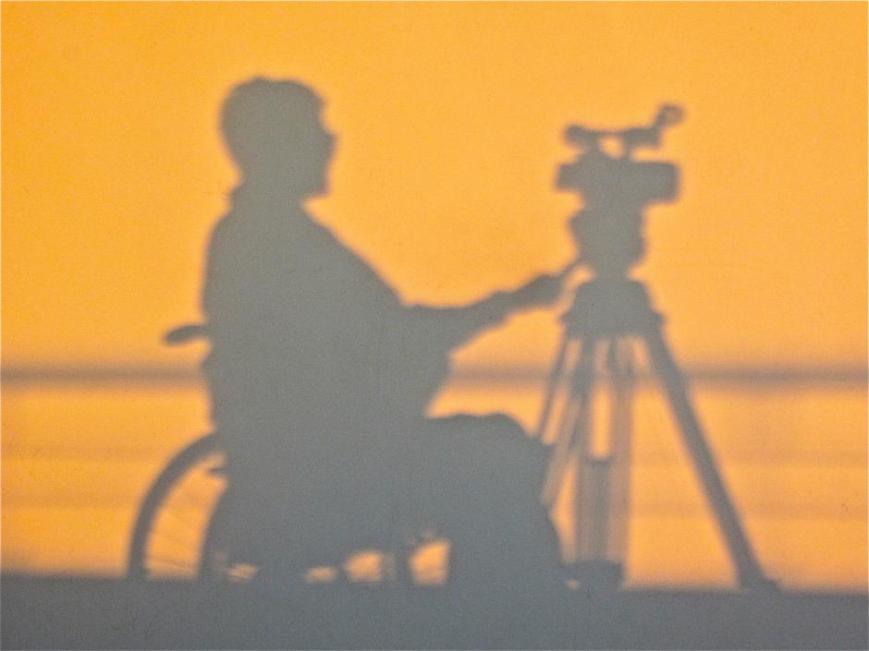
shelley sunset

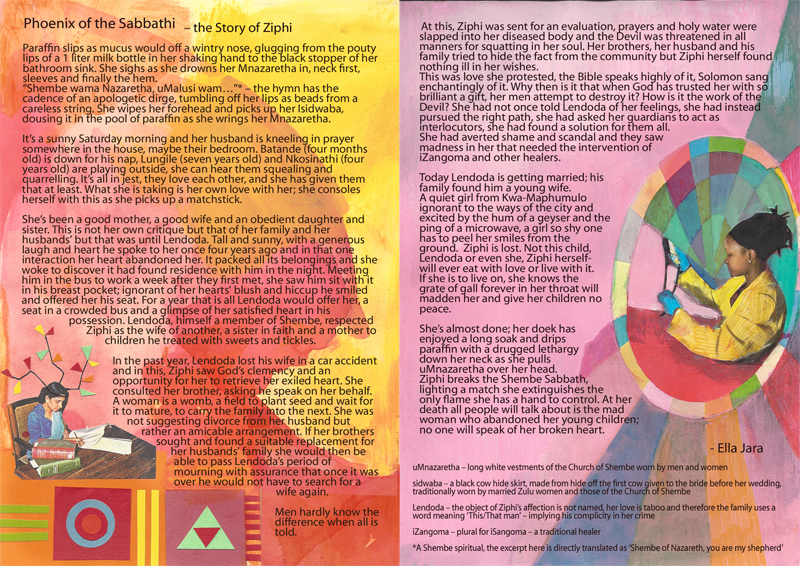
ella jara – phoenix of the sabbathi

fleurmach2

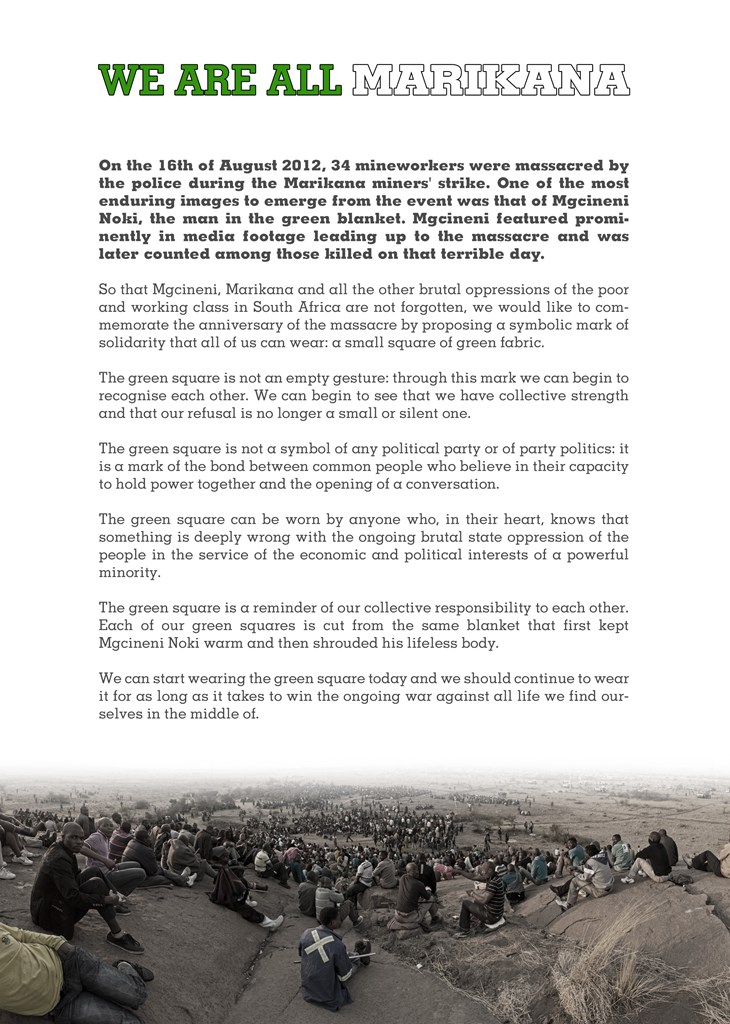
This is a page taken from FLEURZINE, a zine curated and illustrated by Julia Mary Grey. You can go and download this beautiful work of art for free on her site, HERE.

The name was inspired by Fleurmach, and six pieces of writing from this blog appear in the publication. This piece is by Fleurmach contributor NoHolyCows.

sylvia plath on being born a woman

Sylvia-Plath-008“Being born a woman is an awful tragedy… Yes, my consuming desire to mingle with road crews, sailors and soldiers, bar room regulars – to be a part of a scene, anonymous, listening, recording – all is spoiled by the fact that I am a girl, a female always in danger of assault and battery. My consuming interest in men and their lives is often misconstrued as a desire to seduce them, or as an invitation to intimacy. Yet, God, I want to talk to everybody I can as deeply as I can. I want to be able to sleep in an open field, to travel west, to walk freely at night…”

— Sylvia Plath

sathima bea benjamin – i’m glad there is you

Thank you for being here, Sathima. I am so grateful that I had the chance to meet you before you left… May you go in peace.

Sathima Bea Benjamin by Seton_pic_6

The track above comes from the album, A Morning in Paris, recorded in 1963 but only released in 1996.

Sathima Benjamin met Duke Ellington while he was in Zurich for a short engagement in February of 1963. Standing in the wings during most of the Ellington band’s performance, once the concert ended she insisted that Duke hear her husband Abdullah Ibrahim (then known as Dollar Brand)’s trio at the Club Africana, one of the few local jazz spots where the couple could work fairly regularly. Duke obliged and liked what he heard, but he also insisted that Benjamin sing for him. He adored her voice and promptly arranged for the couple to fly to Paris and record separate albums on the Reprise label (at the time, Ellington was the A&R man for Reprise Records). Ibrahim’s record, Duke Ellington Presents The Dollar Brand Trio, was released the following year and subsequently helped him build a following in Europe and the USA. Benjamin’s recording, unfortunately, languished in the vault because Reprise executives did not think she was “commercial” enough. It was eventually released under the title A Morning in Paris, but not until 1996.

Read about what made her so special yet kept her in obscurity HERE.

amilcar patel – in the long hot aftermath of liberation

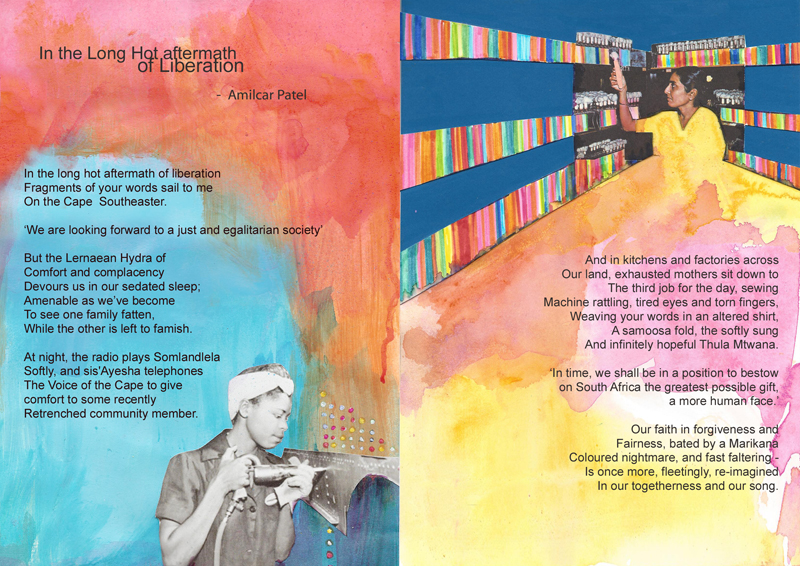
long hot aftermathThis is a page taken from FLEURZINE, a zine curated and illustrated by Julia Mary Grey. You can go and download this beautiful work of art for free on her site, HERE.

The name was inspired by Fleurmach, and six pieces of writing from this blog appear in the publication!

i’m sorry i have to post this

TRIGGER WARNINGS: rape; lethal violence; murder.

I have just dreamed again of being Anene Booysen at the moment of her rape and immediately after it, my pooled blood congealing as my insides lie unseamed in the dust outside me, hacked apart from me, the jagged outside slammed inside me, in my last flickers of awareness the spasms of their hate ripping through me, thudding waves of blows, my head a heavy, dull explosion… the swirling, pulsing aftershocks of pain… going cold, knowing I can never be back together again, that I am smeared asunder into the ground like a fly or a cockroach or an ant, irreversibly crushed. It’s that final. I am no longer me, just a slowly drying patch of gore, beyond being gathered up and revived, soothed, cradled, stitched, kissed better, healed. No one can fix this, not my ma, not the hospital, not God. There is no “if” or “but”. I am aware that this is how I have ended.

I have no words strong enough to express the horror of this experience every time it happens to me, this dream. Yet I need to try to write it out of me in the hope that I never dream it again. Shhh, I tell myself, shivering uncontrollably, curled rigid and foetal, it was only a dream.

But it isn’t. This really happened. Really happens. Continues to happen. And that is what is most horrifying of all.

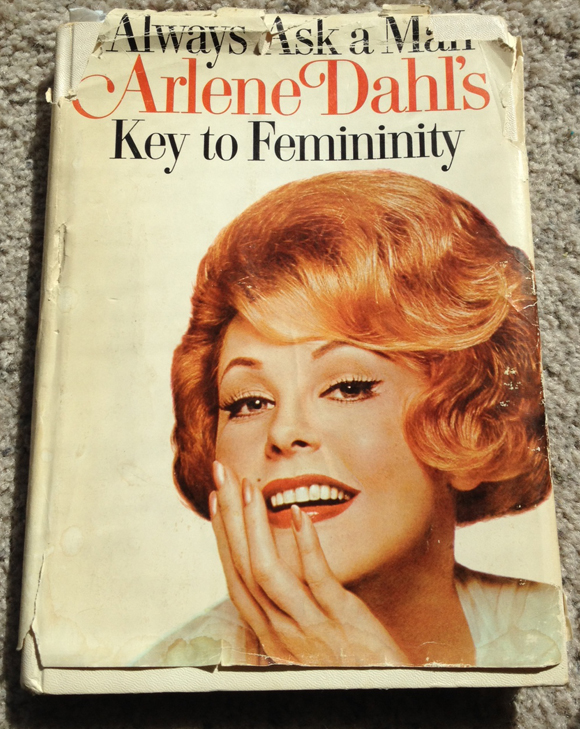
always ask a man (1965)

arlenedahl-always-ask-a-man-key-to-femininity

“Millions of dollars, the statisticians tell us, are spent yearly at beauty salons, cosmetics counters, gymnasiums, and dress shops in woman’s quest for beauty. But beauty for whom? The girls in the office? The women at the club? How can the world progress if women don’t consider men… the man… first?”

— Arlene Dahl, from Always Ask A Man: Arlene Dahl’s Key to Femininity (1965). Read more sage advice transcribed from this minor 1950s screen star’s tome HERE.

vera hall – trouble so hard

Vera Hall (1902-1964)

From Youtube:

Born in 1902 in Payneville, Alabama, just outside of Livingston in Sumter County, Vera Hall grew up to establish one of the most stunning bodies of American folk music on record.

Hall married Nash Riddle, a coal miner, in 1917 and gave birth to their daughter, Minnie Ada. Riddle was killed in 1920. Though Hall sang her entire life, learning spirituals such as I Got the Home in the Rock and When Im Standing Wondering, Lord, Show Me the Way from her mother, Agnes, and her father, Efron Zully Hall, it was not until the late 1930s that Halls singing gained national exposure.

John Avery Lomax, ethnomusicologist, met Hall in the 1930s and recorded her for the Library of Congress. Lomax wrote that she had the loveliest voice [he] had ever recorded. The British Broadcasting System played Halls recording of Another Man Done Gone in 1943 as a sampling of American folk music. The Library of Congress played the song the same year in commemoration of the 75th Anniversary of the Emancipation Proclamation. In 1945, Hall recorded with Byron Arnold. In 1984, the recordings were released as a Collection of Folksongs entitled Cornbread Crumbled in Gravy.

In 1948, with the help of Alan Lomax, Hall traveled to New York and performed on May 15 at the American Music Festival at Columbia University. During the course of this trip, Lomax interviewed Hall on several occasions. In 1959, these interviews would be transformed into Rainbow Sign, a thinly- guised biography of Hall. In this book, Lomax stated, her singing is like a deep-voiced shepherds flute, mellow and pure in tone, yet always with hints of the lips and the pleasure-loving flesh… The sound comes from deep within her when she sings, from a source of gold and light, otherwise hidden, and falls directly upon your ear like sunlight. It is a liquid, full contralto, rich in low overtones; but it can leap directly into falsetto and play there as effortlessly as a bird in the wind.

Today, her work still garners attention. In 1999, techno-artist, Moby (Richard Melville Hall), included her voice and song Troubled So Hard in his multi-platinum album Play, thus introducing Halls voice to a whole new generation of listeners. Prized by scholars and folksong enthusiasts, Halls recordings include examples of early blues and folk songs that are found nowhere else. Her masterful renditions of traditional songs and stories are a defining part of Southern Black culture and the Black Belt region.

helen moffett on “women’s day” in 2013

FUCK WOMEN’S DAY. FUCK IT.

Don’t ask me to celebrate Women’s Day. Don’t offer me ten percent off beauty products or a free glass of cheap bubbly. Don’t even ask me to commemorate the historic women’s march on the Union buildings – a milestone event whose noble essence has been sold down the river by leaders who are eager to claim some sort of retrospective credit for it, but don’t even pretend to honour its values.

Last year, I was in an epic rage. This year, I’m in despair.”

Read why Helen Moffett is so upset about this travesty of a public holiday HERE.

nightmare

After “Pan’s Labyrinth”,  2009

screening tonight: emma goldman – an exceedingly dangerous woman

Tonight at 20h00, Bolo’bolo in Observatory presents a free screening of a documentary about the life and ideas of Emma Goldman: anarchist, feminist and lifelong rabble rouser.

emma goldmanFor nearly half a century, Russian emigrant Emma Goldman was the most controversial woman in America, taunting the mainstream with her fervent attacks on government, big business, and war. To the tabloids, she was “Red Emma, queen of the anarchists,” but many admired Goldman for her defense of labour rights, women’s emancipation, birth control, and free speech.

Goldman’s life was indelibly marked by two violent acts: the attempted assassination of anti-union industrialist Henry Clay Frick by her comrade and lover Alexander Berkman (he spent 14 years in prison for the crime) and the 1901 slaying of President William McKinley by Leon Czolgosz, a young anarchist who claimed he had been “set on fire” by Goldman’s exhortations to political assassination and martyrdom. McKinley’s assassination led to widespread condemnation of Goldman and other anarchists. Fearing for her life, Goldman went underground.

In 1906, she reemerged as founder and editor of Mother Earth, an anarchist magazine devoted to politics and literature. Once again a public figure, she returned to the lecture circuit. Her talks on the struggling revolution in Russia, on the rights of workers, on civil liberties — even on anarchism — drew large, sympathetic crowds. For almost a decade, Goldman maintained a grueling schedule, spending nearly half of every year on the road. In one six-month period, she delivered 120 lectures in 37 cities.

An outspoken opponent of America’s entry into World War I, she was arrested and imprisoned for demonstrating against the draft. In 1919 she, Berkman, and 247 others were deported to Russia, just two years after the October revolution replaced the Czarist regime with Bolshevik tyranny. After two dispiriting years, Goldman and Berkman left the Soviet Union and dedicated themselves to revealing the truth about a revolution gone wrong.

“The State is the altar of political freedom and, like the religious altar, it is maintained for the purpose of human sacrifice.” – Emma Goldman

PS: Non-alcoholic drinks and vegan snacks will be on sale. You may bring your own beer or wine if you’d like. The screenings are free, but donations are welcome.

carlo gesualdo principe di venosa – tristis est anima mea

Carlo Gesualdo Principe di Venosa (1566?-1613): Tenebrae
Tristis est anima mea – Feria V, In coena Domini
In I Nocturno – Responsorium 1 (for Maudy Thursday)
Performed by The King’s Singers (2004)

Tristis est anima mea usque ad mortem:
sustinete hic, et vigilate mecum: nunc videbitis
turbam, quae circumdabit me: Vos fugam
capietis, et ego vadam immolari pro vobis.

Ecce appropinquat hora, et filius hominis
tradetur in manus peccatorum.

———

My soul is sorrowful even unto death: stay here
and watch with me: now shall ye see the crowd
that shall surround me: ye shall take flight, and
I shall go to be offered up for you.

Behold the time draweth nigh, and the son of
man shall be delivered into the hands of sinners.

the eternal flâneur moves on

mthandeni cigar

Photographer unknown – from Facebook

Goodbye and go well, Balthazar Mthandeni Ziqubu… We who are still here in the stream of ever-meandering human folly will miss your impeccable refinement and the always humorous, albeit trenchant, observations that flowed freely in your company.

mthandeni

Photo: Kirsty Cockerill

“If I take death into my life, acknowledge it, and face it squarely, I will free myself from the anxiety of death and the pettiness of life – and only then will I be free to become myself.”

— Martin Heidegger

on erring in the direction of kindness

This is an excerpt from a speech given by American writer George Saunders at Syracuse University recently, and well worth reading:

“Now, one useful thing you can do with an old person, in addition to borrowing money from them, or asking them to do one of their old-time “dances,” so you can watch, while laughing, is ask: “Looking back, what do you regret?”  And they’ll tell you.  Sometimes, as you know, they’ll tell you even if you haven’t asked.  Sometimes, even when you’ve specifically requested they not tell you, they’ll tell you.

So: What do I regret?  Being poor from time to time?  Not really.  Working terrible jobs, like “knuckle-puller in a slaughterhouse?”  (And don’t even ASK what that entails.)  No.  I don’t regret that.  Skinny-dipping in a river in Sumatra, a little buzzed, and looking up and seeing like 300 monkeys sitting on a pipeline, pooping down into the river, the river in which I was swimming, with my mouth open, naked?  And getting deathly ill afterwards, and staying sick for the next seven months?  Not so much.  Do I regret the occasional humiliation?  Like once, playing hockey in front of a big crowd, including this girl I really liked, I somehow managed, while falling and emitting this weird whooping noise, to score on my own goalie, while also sending my stick flying into the crowd, nearly hitting that girl?  No.  I don’t even regret that.

But here’s something I do regret:

In seventh grade, this new kid joined our class.  In the interest of confidentiality, her Convocation Speech name will be “ELLEN.”  ELLEN was small, shy.  She wore these blue cat’s-eye glasses that, at the time, only old ladies wore.  When nervous, which was pretty much always, she had a habit of taking a strand of hair into her mouth and chewing on it.

So she came to our school and our neighborhood, and was mostly ignored, occasionally teased (“Your hair taste good?” – that sort of thing).  I could see this hurt her.  I still remember the way she’d look after such an insult: eyes cast down, a little gut-kicked, as if, having just been reminded of her place in things, she was trying, as much as possible, to disappear.  After awhile she’d drift away, hair-strand still in her mouth.  At home, I imagined, after school, her mother would say, you know: “How was your day, sweetie?” and she’d say, “Oh, fine.”  And her mother would say, “Making any friends?” and she’d go, “Sure, lots.”

Sometimes I’d see her hanging around alone in her front yard, as if afraid to leave it.

And then – they moved.  That was it.  No tragedy, no big final hazing.

One day she was there, next day she wasn’t.

End of story.
windy dryer maypole 1984 or 1985

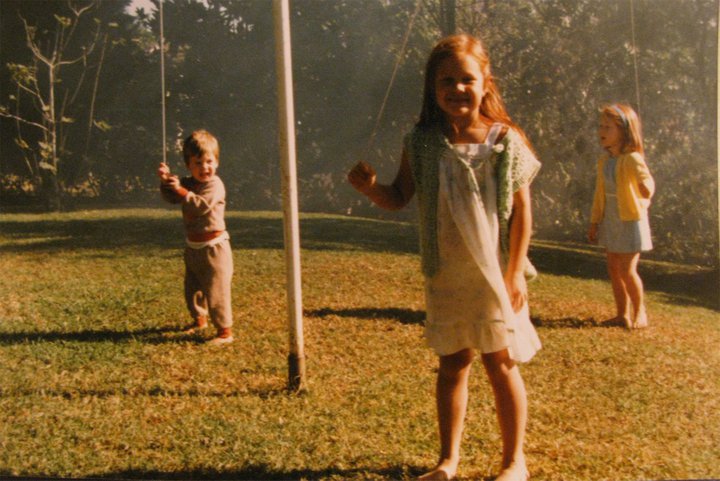
In the garden, circa autumn 1985 (Photo by Ray or June Lombard)

Now, why do I regret that?  Why, forty-two years later, am I still thinking about it?  Relative to most of the other kids, I was actually pretty nice to her.  I never said an unkind word to her.  In fact, I sometimes even (mildly) defended her.

But still.  It bothers me.

So here’s something I know to be true, although it’s a little corny, and I don’t quite know what to do with it:

What I regret most in my life are failures of kindness. 

Those moments when another human being was there, in front of me, suffering, and I responded…sensibly.  Reservedly.  Mildly.

Or, to look at it from the other end of the telescope:  Who, in your life, do you remember most fondly, with the most undeniable feelings of warmth?

Those who were kindest to you, I bet.

It’s a little facile, maybe, and certainly hard to implement, but I’d say, as a goal in life, you could do worse than: Try to be kinder.

Now, the million-dollar question:  What’s our problem?  Why aren’t we kinder?

Here’s what I think:

Each of us is born with a series of built-in confusions that are probably somehow Darwinian.  These are: (1) we’re central to the universe (that is, our personal story is the main and most interesting story, the only story, really); (2) we’re separate from the universe (there’s US and then, out there, all that other junk – dogs and swing-sets, and the State of Nebraska and low-hanging clouds and, you know, other people), and (3) we’re permanent (death is real, o.k., sure – for you, but not for me).

Now, we don’t really believe these things – intellectually we know better – but we believe them viscerally, and live by them, and they cause us to prioritize our own needs over the needs of others, even though what we really want, in our hearts, is to be less selfish, more aware of what’s actually happening in the present moment, more open, and more loving.

So, the second million-dollar question:  How might we DO this?  How might we become more loving, more open, less selfish, more present, less delusional, etc., etc?

Well, yes, good question.

Unfortunately, I only have three minutes left.

So let me just say this.  There are ways.  You already know that because, in your life, there have been High Kindness periods and Low Kindness periods, and you know what inclined you toward the former and away from the latter.  Education is good; immersing ourselves in a work of art: good; prayer is good; meditation’s good; a frank talk with a dear friend;  establishing ourselves in some kind of spiritual tradition – recognizing that there have been countless really smart people before us who have asked these same questions and left behind answers for us.

Because kindness, it turns out, is hard – it starts out all rainbows and puppy dogs, and expands to include…well,everything.

One thing in our favor:  some of this “becoming kinder” happens naturally, with age.  It might be a simple matter of attrition:  as we get older, we come to see how useless it is to be selfish – how illogical, really.  We come to love other people and are thereby counter-instructed in our own centrality.  We get our butts kicked by real life, and people come to our defense, and help us, and we learn that we’re not separate, and don’t want to be.  We see people near and dear to us dropping away, and are gradually convinced that maybe we too will drop away (someday, a long time from now).  Most people, as they age, become less selfish and more loving.  I think this is true.  The great Syracuse poet, Hayden Carruth, said, in a poem written near the end of his life, that he was “mostly Love, now.”

And so, a prediction, and my heartfelt wish for you: as you get older, your self will diminish and you will grow in love.  YOU will gradually be replaced by LOVE.   If you have kids, that will be a huge moment in your process of self-diminishment.  You really won’t care what happens to YOU, as long as they benefit.  That’s one reason your parents are so proud and happy today.  One of their fondest dreams has come true: you have accomplished something difficult and tangible that has enlarged you as a person and will make your life better, from here on in, forever.

When young, we’re anxious – understandably – to find out if we’ve got what it takes.  Can we succeed?  Can we build a viable life for ourselves?  But you – in particular you, of this generation – may have noticed a certain cyclical quality to ambition.  You do well in high-school, in hopes of getting into a good college, so you can do well in the good college, in the hopes of getting a good job, so you can do well in the good job so you can….

And this is actually O.K.  If we’re going to become kinder, that process has to include taking ourselves seriously – as doers, as accomplishers, as dreamers.  We have to do that, to be our best selves.

Still, accomplishment is unreliable.  “Succeeding,” whatever that might mean to you, is hard, and the need to do so constantly renews itself (success is like a mountain that keeps growing ahead of you as you hike it), and there’s the very real danger that “succeeding” will take up your whole life, while the big questions go untended.

So, quick, end-of-speech advice: Since, according to me, your life is going to be a gradual process of becoming kinder and more loving: Hurry up.  Speed it along.  Start right now.  There’s a confusion in each of us, a sickness, really: selfishness.  But there’s also a cure.  So be a good and proactive and even somewhat desperate patient on your own behalf – seek out the most efficacious anti-selfishness medicines, energetically, for the rest of your life.

Do all the other things, the ambitious things – travel, get rich, get famous, innovate, lead, fall in love, make and lose fortunes, swim naked in wild jungle rivers (after first having it tested for monkey poop) – but as you do, to the extent that you can, err in the direction of kindness.  Do those things that incline you toward the big questions, and avoid the things that would reduce you and make you trivial.  That luminous part of you that exists beyond personality – your soul, if you will – is as bright and shining as any that has ever been.  Bright as Shakespeare’s, bright as Gandhi’s, bright as Mother Theresa’s.  Clear away everything that keeps you separate from this secret luminous place.  Believe it exists, come to know it better, nurture it, share its fruits tirelessly.”
Read the rest of George Saunders’ sage advice to graduates HERE.