“You can want one thing and have a secret wish for its opposite.” ― Deb Caletti, The Six Rules of Maybe
pablo neruda – ode and burgeonings (1952)
I
The taste of your mouth and the color of your skin,
skin, mouth, fruit of these swift days,
tell me, were they always beside you
through years and journeys and moons and suns
and earth and weeping and rain and joy
or is it only now that
they come from your roots,
only as water brings to the dry earth
burgeonings that it did not know,
or as to the lips of the forgotten jug
the taste of the earth rises in the water?
I don’t know, don’t tell me, you don’t know.
Nobody knows these things.
But bringing all my senses close
to the light of your skin, you disappear,
you melt like the acid
aroma of a fruit
and the heat of a road,
and the smell of corn being stripped,
the honeysuckle of the pure afternoon,
the names of the dusty earth,
the infinite perfume of our country:
magnolia and thicket, blood and flour,
the gallop of horses,
the village’s dusty moon,
newborn bread:
ah from your skin everything comes back to my mouth,
comes back to my heart, comes back to my body,
and with you I become again
the earth that you are:
you are deep spring in me:
in you I know again how I am born.
2
Years of yours that I should have felt
growing near me like clusters
until you had seen how the sun and the earth
had destined you for my hands of stone,
until grape by grape you had made
the wine sing in my veins.
The wind or the horse
swerving were able
to make me pass through your childhood,
you have seen the same sky each day,
the same dark winter mud,
the endless branching of the plum trees
and their dark-purple sweetness.
Only a few miles of night,
the drenched distances
of the country dawn,
a handful of earth separated us, the transparent
walls
that we did not cross, so that life,
afterward, could put all
the seas and the earth
between us, and we could come together
in spite of space,
step by step seeking each other,
from one ocean to another,
until I saw that the sky was aflame
and your hair was flying in the light
and you came to my kisses with the fire
of an unchained meteor
and as you melted in my blood, the sweetness
of the wild plum
of our childhood I received in my mouth,
and I clutched you to my breast as
if I were regaining earth and life.
3
My wild girl, we have had
to regain time
and march backward, in the distance
of our lives, kiss after kiss,
gathering from one place what we gave
without joy, discovering in another
the secret road
that gradually brought your feet close to mine,
and so beneath my mouth
you see again the unfulfilled plant
of your life putting out its roots
toward my heart that was waiting for you.
And one by one the nights
between our separated cities
are joined to the night that unites us.
The light of each day,
its flame or its repose,
they deliver to us, taking them from time,
and so our treasure
is disinterred in shadow or light,
and so our kisses kiss life:
all love is enclosed in our love:
all thirst ends in our embrace.
Here we are at last face to face,
we have met,
we have lost nothing.
We have felt each other lip to lip,
we have changed a thousand times
between us death and life,
all that we were bringing
like dead medals
we threw to the bottom of the sea,
all that we learned
was of no use to us:
we begin again,
we end again
death and life.
And here we survive,
pure, with the purity that we created,
broader than the earth that could not lead us astray,
eternal as the fire that will burn
as long as life endures.
akira rabelais – then the substanceless blue
From Caduceus, Akira Rabelais’ second album for Samadhisound (2010). Directed by Vardis Marinakis.
mutually exclusive
romance
OR
comfort?
you can only have one
and maybe you don’t get to pick for yourself.
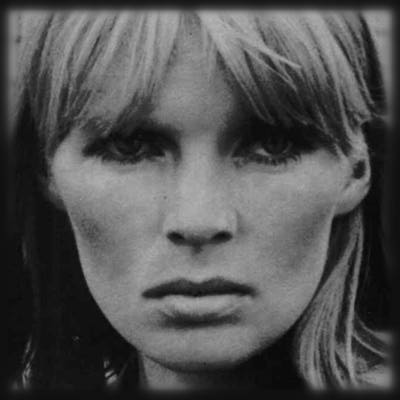
i’ll be your mirror
The Velvet Underground & Nico – I’ll Be Your Mirror (acetate version), recorded 25/04/1966 at Scepter Studios, New York.
(An acetate is a very fragile disc, cut prior to the cutting of the master disc used for mass production of records, used in the same way as a proof in photography.)
doll clothes
the art of the impersonator – photos by cindy sherman
“I feel I’m anonymous in my work. When I look at the pictures, I never see myself; they aren’t self-portraits. Sometimes I disappear.”
“Cindy Sherman has explored different kinds of photography, but she has become one of the most lauded artists of her generation for her photographs of her impersonations. Since she arrived on the scene, in a 1980 exhibition, when she was in her mid-twenties, she has come before her own camera in the guise of hundreds of characters, and as an impersonator—which in her case means being a creator of people, and sometimes people-like creatures, who we encounter only in a single photograph—she has been remarkably inventive. Especially as a portrayer of types of people, whether someone who appears to be a perky suburbanite in town for a matinee, or a woman in a sweatshirt who seems both tired and bristling, or a club singer belting out a note, Sherman—who is now, at fifty-eight, the subject of a retrospective at the Museum of Modern Art—has shown herself as well to be a witty and shrewd social observer. And the sheer human spectacle of someone continually transforming herself into one person after another has proved riveting.”
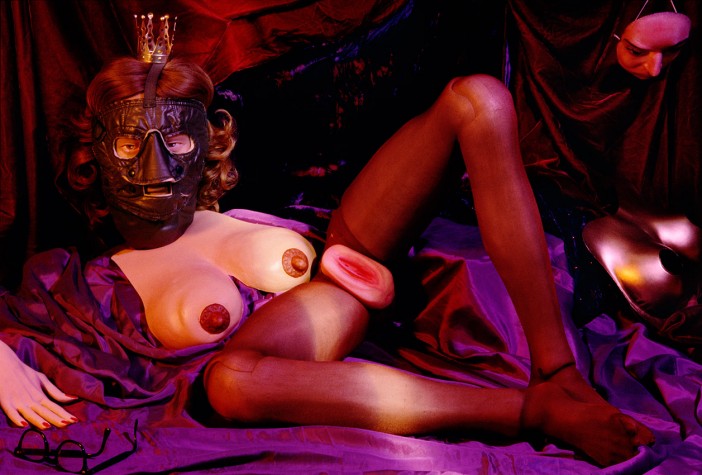 “…Her various accessories and props are appealingly economical and rudimentary, and, given that her art is based on deception, one could say that her large photographs, which sometimes come with transparently cheesy frames, are meant to have the appearance of fake paintings. During much of the 1990s, she also experimented, in pictures she herself was not in, with close cropping and artificial, theatrical color and lighting. But none of this quite erased the way that her pictures in general, and certainly those in which she appears front and center in some disguise, often had the disembodied presence of blown-up shots from one kind of movie or another.”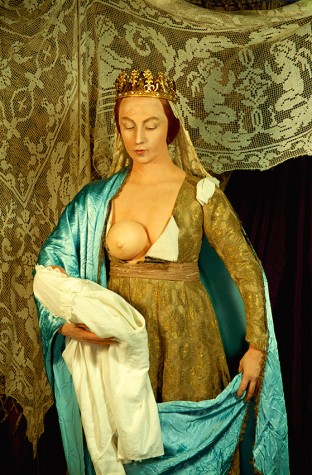
“…The end result of Sherman’s many approaches is a roller coaster of discontent, at times recalling Otto Dix, at other moments Carol Burnett. Sherman can be reproachful and quietly barbed, or merely leaden and gloomy, or showily horrifying, or buoyantly nasty. The works that held me longest were of her strivers and her patronesses. They bring together the poles of Sherman’s thinking: her feeling for contemporary life and for the monstrous. We see people who, carefully but excessively made up, have turned their faces into masks. This can be said of her clowns as well, but they are so fully masked that we have little sense (as we have little sense with actual, professional clowns) of the person underneath the makeup.”
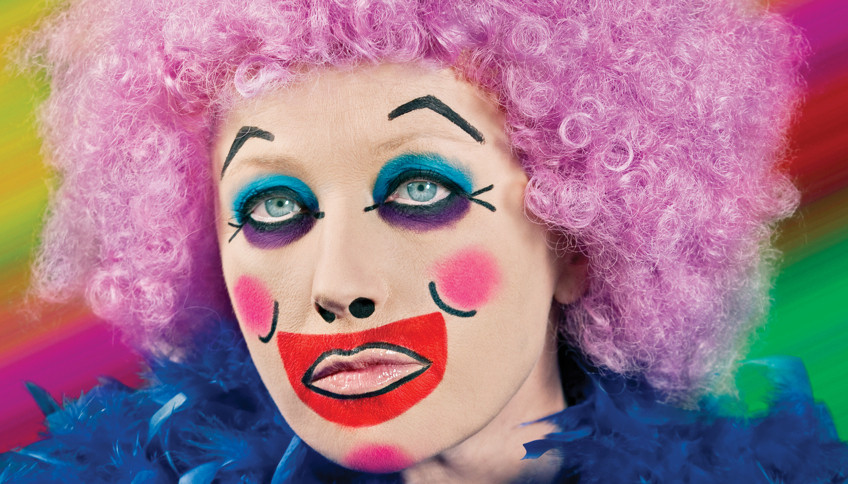
“More crucially, clowns, whether threatening or sad, are so familiar a theme that it is hard to put much stock in Sherman’s versions, which add little to the lore. With her overly avid women and her lionesses of the social scene, however, we feel we look, in each picture, at three people. There is Sherman herself, who, with her fair hair, pale eyebrows, and somewhat pointed features, resembles women in Memling portraits. Then there is her subject, who is clearly hidden behind a protective armor.”
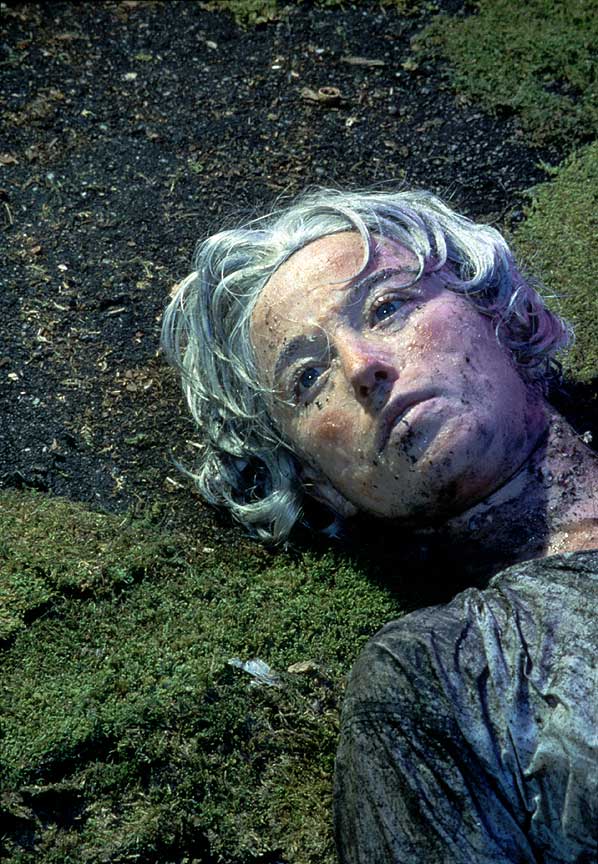 “…Sherman isn’t the first artist to come before the camera in a series of disguises or impersonations. Surely no artist, though, has used the notion as a premise for an entire career, and it creates for her audience a rare sense of intimacy with her and suspense about where she will go next. We seem to look at someone who has indentured her very person for the sake of her art. We can believe we are in this strange lifelong adventure with her, and, especially if we are her age or older, we wonder a little apprehensively how she will handle the issue of aging.”
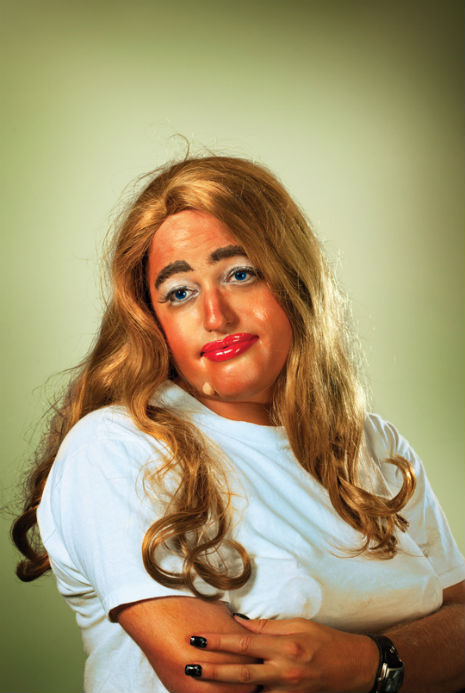 “…On the most literal level, though, we look at someone who has a gift for impersonation. Born in New Jersey and raised on Long Island, Sherman went to Buffalo State College in the early 1970s with the idea of becoming a painter. But she had been disguising herself as different people since childhood. There is a photo of her in the Modern’s catalog around age twelve in which, standing on a suburban street along with a friend who is also in masquerade, she appears convincingly as a little old lady. In college she was exposed to conceptual art, which, already supplanting painting as the field that art students wanted to work in, enabled her to see that she could build on her feeling for impersonation.”
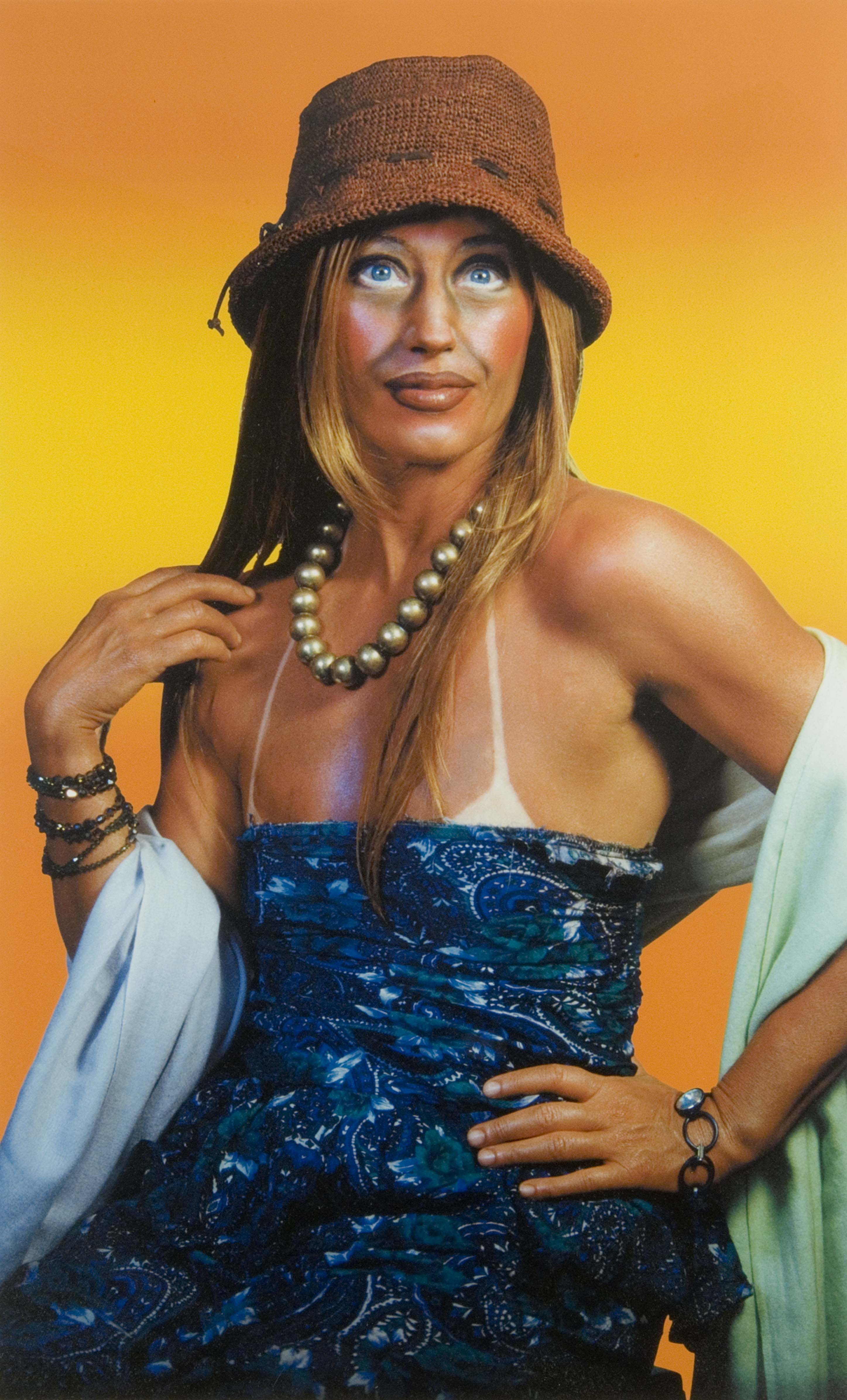 read the whole article here
nwahulwana (the night bird) by wazimbo
” you are a night bird, moving after dark from bar to bar.”
does your dog bite?
Peter Sellers in The Pink Panther Strikes Again (1976)
fiona apple – werewolf
“Well, I could liken you to a werewolf, the way you left me for dead, but I admit that I provided a full moon.
And I could liken you to a shark, the way you bit off my head, but then again I was waving around a bleeding, open wound.”
From The Idler Wheel Is Wiser Than The Driver of The Screw, And Whipping Cords Will Serve You More Than Ropes Will Ever Do (2012) – Fiona Apple/Epic Records.
lycanthropy in apricot
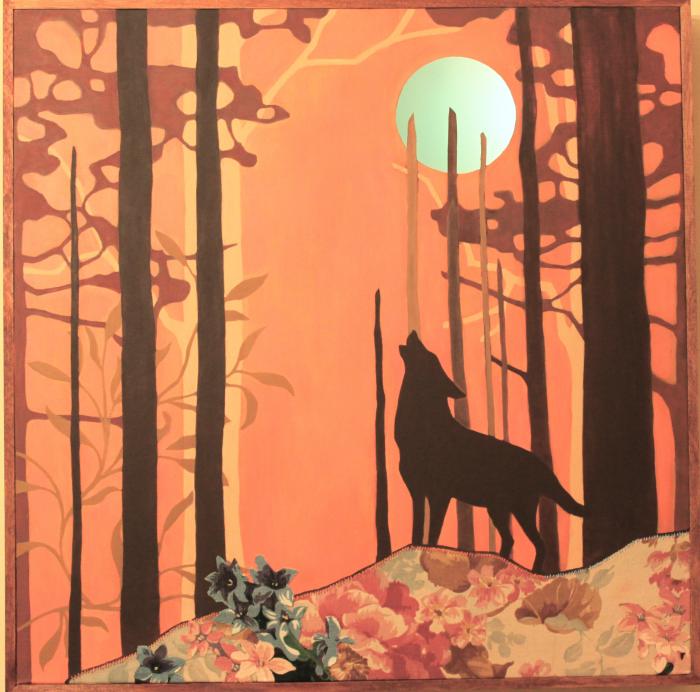
Julia Mary Grey – Lycanthropy in Apricot
all apologies
Sinead O’Connor’s Nirvana cover on Dutch TV, 15 October 1995.
haunted
this is why
i wander the wilderness
beyond the horizon
you meet me round the corner, down the road
that’s not who i am
some old dirty secret
some unclean spirit
cast out into darkness
it’s never been about possession
the geraldine fibbers – get thee gone
jeffrey lewis – to be objectified
I left a trail of myself every place that I have been through,
And going bald is the most manly thing that I’m ever gonna do.
I tell the earth, “thanks for the hair, thanks for the skin, thanks for the bone”,
Though I now slowly give it back I still appreciate the loan.
Just tell me that you like me in the same sentence as a mountain side.
‘Cause it would be such a relief to be objectified.
‘Cause who says it’s so important to sort through these thoughts of ours.
Maybe that’s why we love to try to see ourselves from the outside
In photographs and videos and diaries and mirrors.
‘Cause it would be such a relief to be objectified.
And the closest that I ever got still seems to leave a lot to go,
But the horizon seems to be a place that nobody can know.
Looking forth and looking back, our vision can’t extend beyond the quaint vanishing points our bodies recommend,
And I’ll help you move some furniture somewhere it’s never been before, but the room’s so small the dresser drawer won’t let us get back out the door.
Just tell me that you like me in the same sentence as the building.
It would be such a relief to see…
I’m just a natural thing.
We’re only boats,
And the boats are only empty
And you can’t blame an empty boat that’s on a river to the sea.
You can’t blame a billion boats without a sail, without a sailor.
And that’s how we look in photographs, and diaries, and mirrors.
And the plants turn into ants, and the ants turn into plants,
And children are clumsy people, and old people are rotting children.
And I still don’t have a cell phone, but this sea shell gets reception,
And the ocean won’t stop calling, and I want a restraining order.
Just tell me that you like me in the same sentence as a building.
It would be such a relief to see I’m just a natural thing.
We’re just a natural thing.
Just like anything.
lost beauty
NOTES TOWARDS A KIND OF TRANSCENDENCE
6.
…So much imprisoned beauty withers away.
And even the princesses shut away in their towers know that the arrival of prince charming is but
the prelude to spousal segregation, that what must be done is to abolish both the prisons and the
liberators at the same time, that what we need isn’t programs for liberation but practices of
freedom.
10 inch by marlene dumas
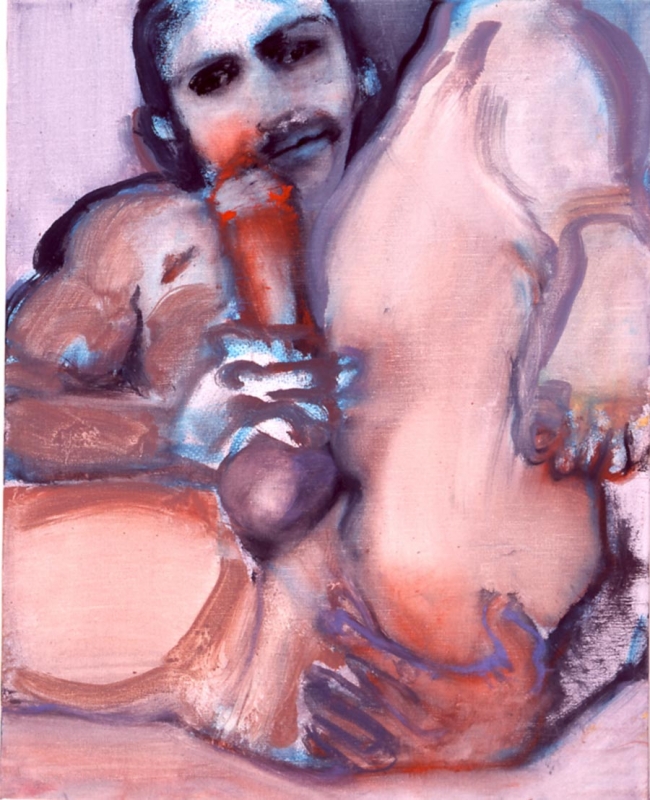 1999
1999
Oil on canvas, 50 x 40 cm
astrid seriese – yesterday is here
My cat, the hunter
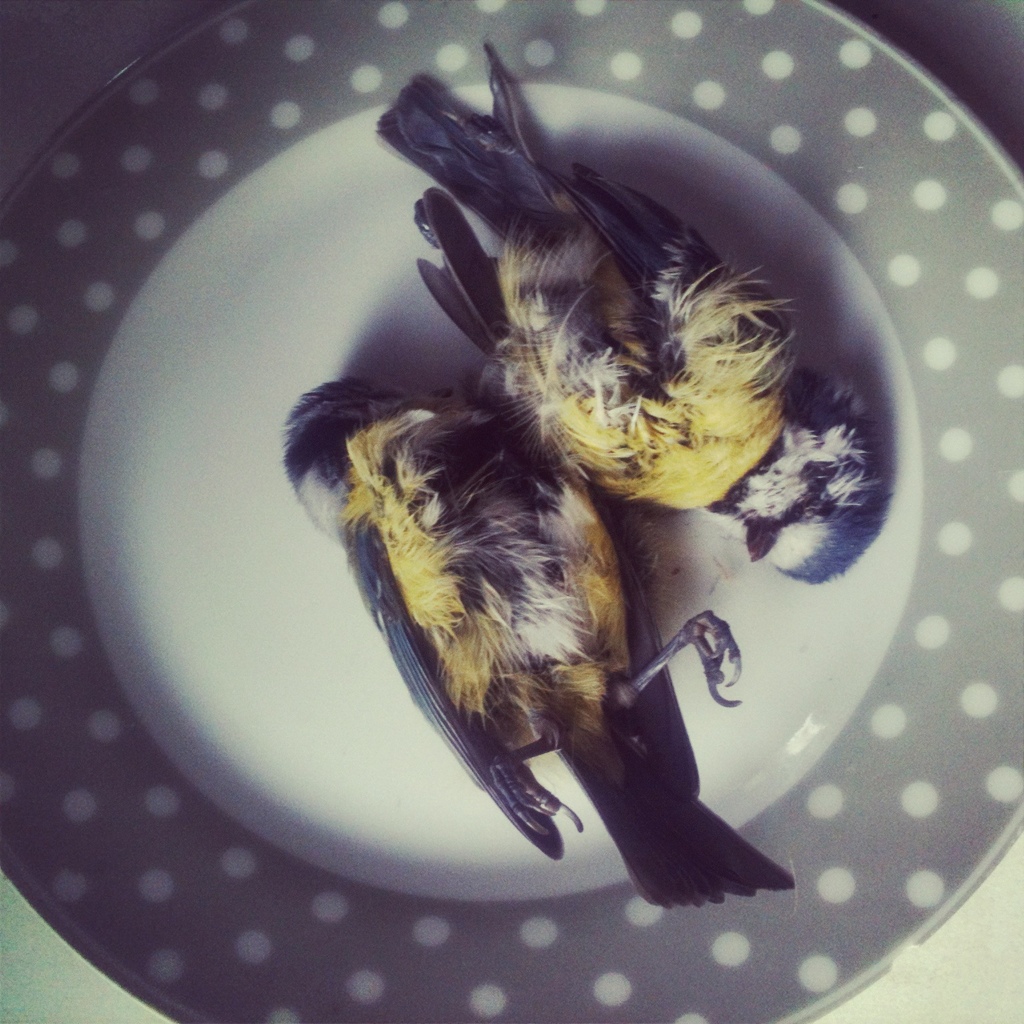
I am a cliché
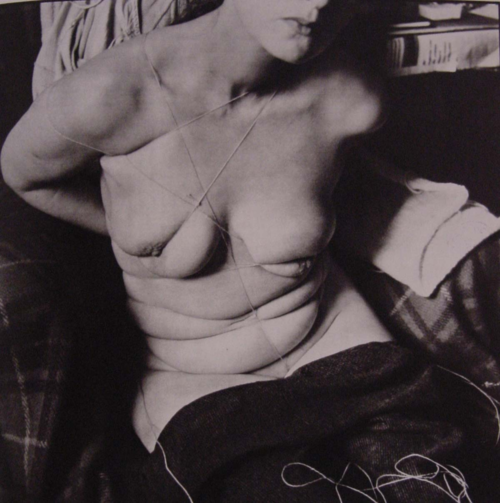
unica zurn by hans bellmer
the fury of god´s goodbye by anne sexton
One day He
tipped His top hat
and walked
out of the room,
ending the argument.
He stomped off
saying:
I don’t give guarantees.
I was left
quite alone
using up the darkness
I rolled up
my sweater,
up in a ball,
and took it
to bed with me,
a kind of stand-in
for God,
that washerwoman
who walks out
when you’re clean
but not ironed.
When I woke up
the sweater
had turned to
bricks of gold.
I’d won the world
but like a
forsaken explorer,
I’d lost
my map.
matriarch
 Eva and Irina Ionesco
black cat
black belt, huh? nuh-uh…
(If you weren’t in South Africa in the early 1980s, you won’t get that reference. The ad is not on Youtube. I hunted.)
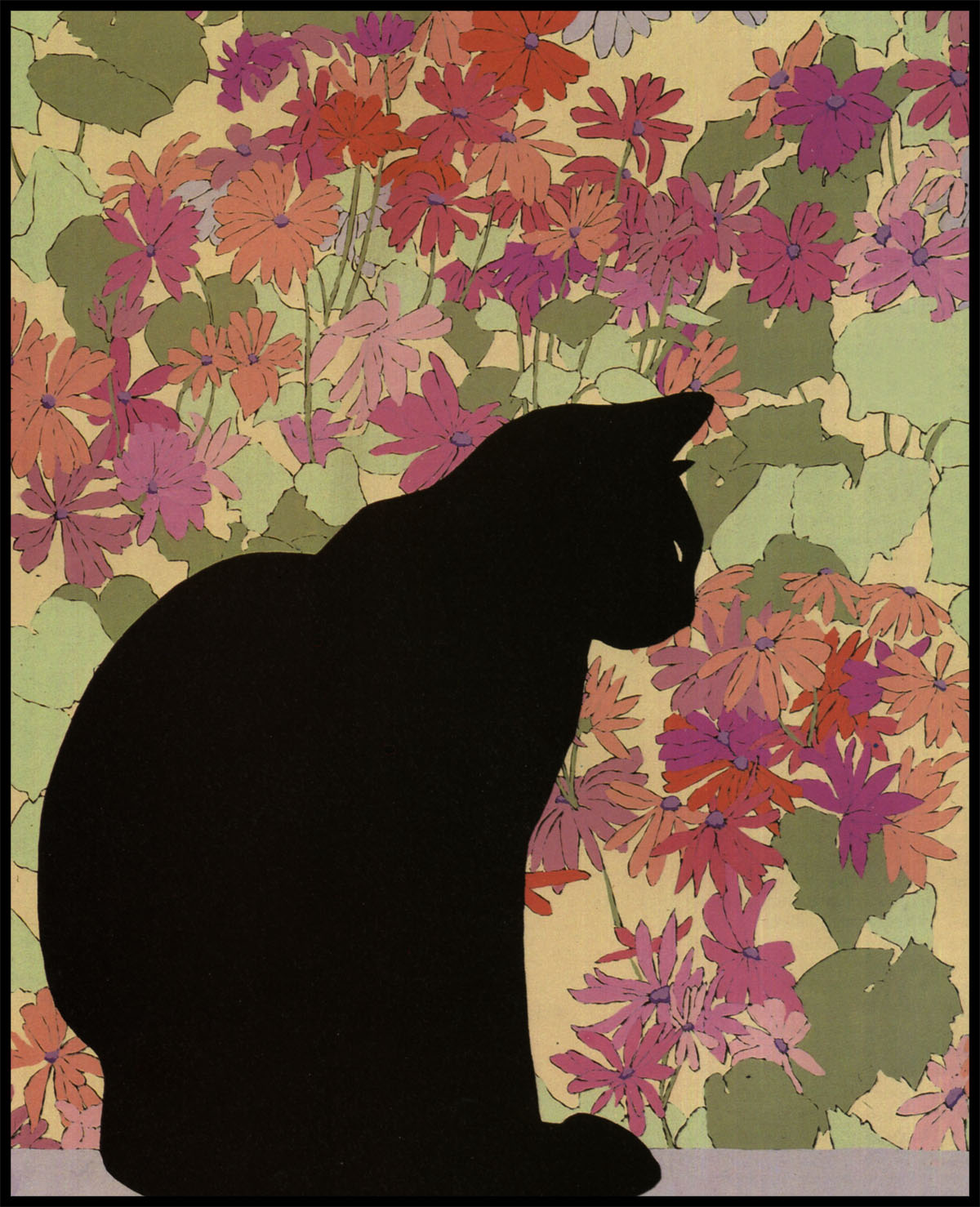
Meg Dawson – Black Cat
kuroneko (1968) showing tonight in cape town
Showing tonight at 20h15 at Labia on Orange, in association with the Good Film Society.
In this poetic and atmospheric horror fable, set in a village in war-torn medieval Japan, a malevolent spirit has been ripping out the throats of itinerant samurai. When a military hero is sent to dispatch the unseen force, he finds that he must struggle with his own personal demons as well. From Kaneto Shindo, director of the terror classic Onibaba, Kuroneko (Black Cat) is a spectacularly eerie twilight tale with a shocking feminist angle, evoked through ghostly special effects and mindblowingly awesome visuals.
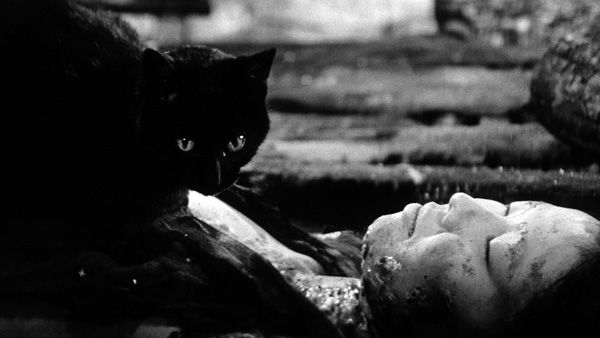
Maitland McDonagh on Kuroneko: The Mark of the Cat
Scratch the surface of a contemporary J-horror classic like Ringu (1998) or any of the Ju-on films (2000–03) and you’ll glimpse Yabu no naka no kuroneko (Black Cat from the Grove), released in the U.S. as simply Kuroneko (1968). Shot in shimmering, widescreen black and white and suffused with an unsettling eroticism, Kaneto Shindo’s elegant nightmare of earthbound violence and otherworldly revenge wasn’t the first film to be rooted in Japanese folk stories about onryo, the vengeful spirits of those who were abused in life, usually women, whose rage is so great it can’t be contained.
The Ghost of Yotsuya (Nobuo Nakagawa, 1959) and Kwaidan (Masaki Kobayashi, 1965) both preceded it, and other classics of Japan’s golden age of filmmaking—notably Kenji Mizoguchi’s Ugetsu (1953)—featured female spirits. And supernatural cats had appeared in Black Cat Mansion (Nakagawa, 1958) and The Ghost Cat of Otama Pond (Yoshihiro Ishikawa, 1960). But Shindo drew those threads together and wove them into Kuroneko’s unprecedentedly unnerving women, whose descendents are now many, and into a terrifically spooky story whose resonance extends beyond the satisfying chill of an exotic campfire tale and whose wrenching psychological anguish transcends specific cultural traditions…
… Western folklore regularly puts cats in general, and black cats in particular, in league with witches and other dark forces, but Japanese folktales are more ambiguous, starting with the fact that, while all felines are suspected of being more than handy mousers and cute house pets, they allow for two kinds of supernatural cats, the manekineko and the bakeneko. Anyone who has eaten in a Japanese restaurant knows what a manekineko looks like: perched somewhere near the cash register, it sits with one paw raised in greeting and the other resting on a coin, benevolently beckoning good fortune to come on in and stay awhile—Hello, Hello Kitty! Thebakeneko, by contrast, is kissing cousin to the shape-shifting fox (kitsune) and the sly, mischievous tanuki (a small, scruffily kawaii canid native to East Asia): none are inherently evil, but all are capable of using their supernatural knack for mimicking other creatures—including human beings—to stir up trouble. That said, the fact that bakeneko often eat the person whose form they’ve taken suggests they’re less amusing and more alarming than their fellow shapeshifters, and the shadow of feline malevolence lurks in Kuroneko’s fog-swirled gloom.
Read more of Maitland McDonagh’s article, which discusses the historical context of this horror masterpiece, HERE.
the long wait – part one
Powerful street art by Faith47…
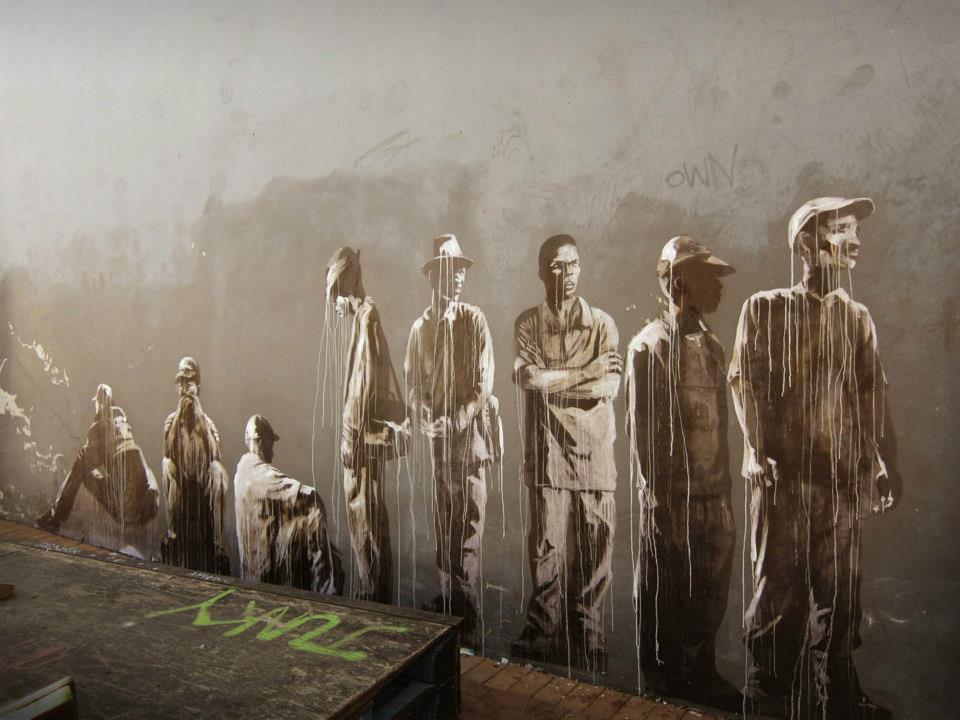
Faith47 – The Long Wait – Part One
2012
“miners are waiting for justice. workers are waiting for a living wage.
people are waiting for service delivery. refugees are waiting for assistance.
men are waiting for jobs. we are all waiting for an honest politician.
“so many people are waiting for others to do things first. to take the blame.
to do things for them. to take the fall. to build the country. to admit defeat.
there has been so much waiting in this country that much time has been lost…”it is the first instalment of my solo exhibition, fragments of a burnt history, which will soon unfold at the david krut gallery in johannesburg on november the 8th 2012.”
to do things for them. to take the fall. to build the country. to admit defeat.
there has been so much waiting in this country that much time has been lost…”it is the first instalment of my solo exhibition, fragments of a burnt history, which will soon unfold at the david krut gallery in johannesburg on november the 8th 2012.”
poems for pussy riot e-book coming soon!
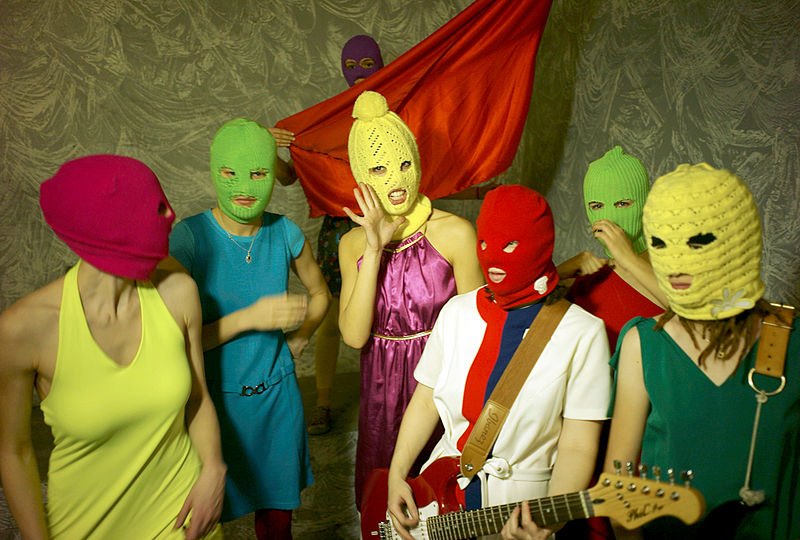
This just in from English PEN:
We are delighted to announce the publication of CATECHISM: POEMS FOR PUSSY RIOT, edited by Mark Burnhope, Sarah Crewe & Sophie Mayer.
There will be ePUB, Kindle and PDF versions available on this page from 00:01hrs on Monday 1st October 2012.
The book is distributed on the ‘Pay What You Think It’s Worth’ model popularised by Radiohead and others. We recommend £5, but any amount is welcome. All revenue will go to the Pussy Riot Legal fund, and the English PEN Writers at Risk Programme.
Get it HERE!
FLEURMACH EDITOR’S NOTE: The e-book will contain a poem by Fleurmach contributor Michelle McGrane (Peony Moon).

