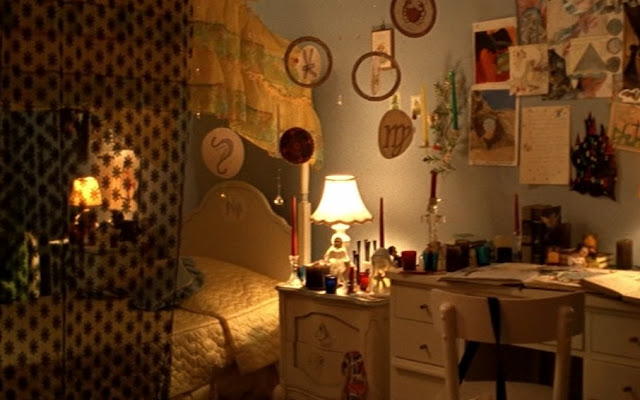
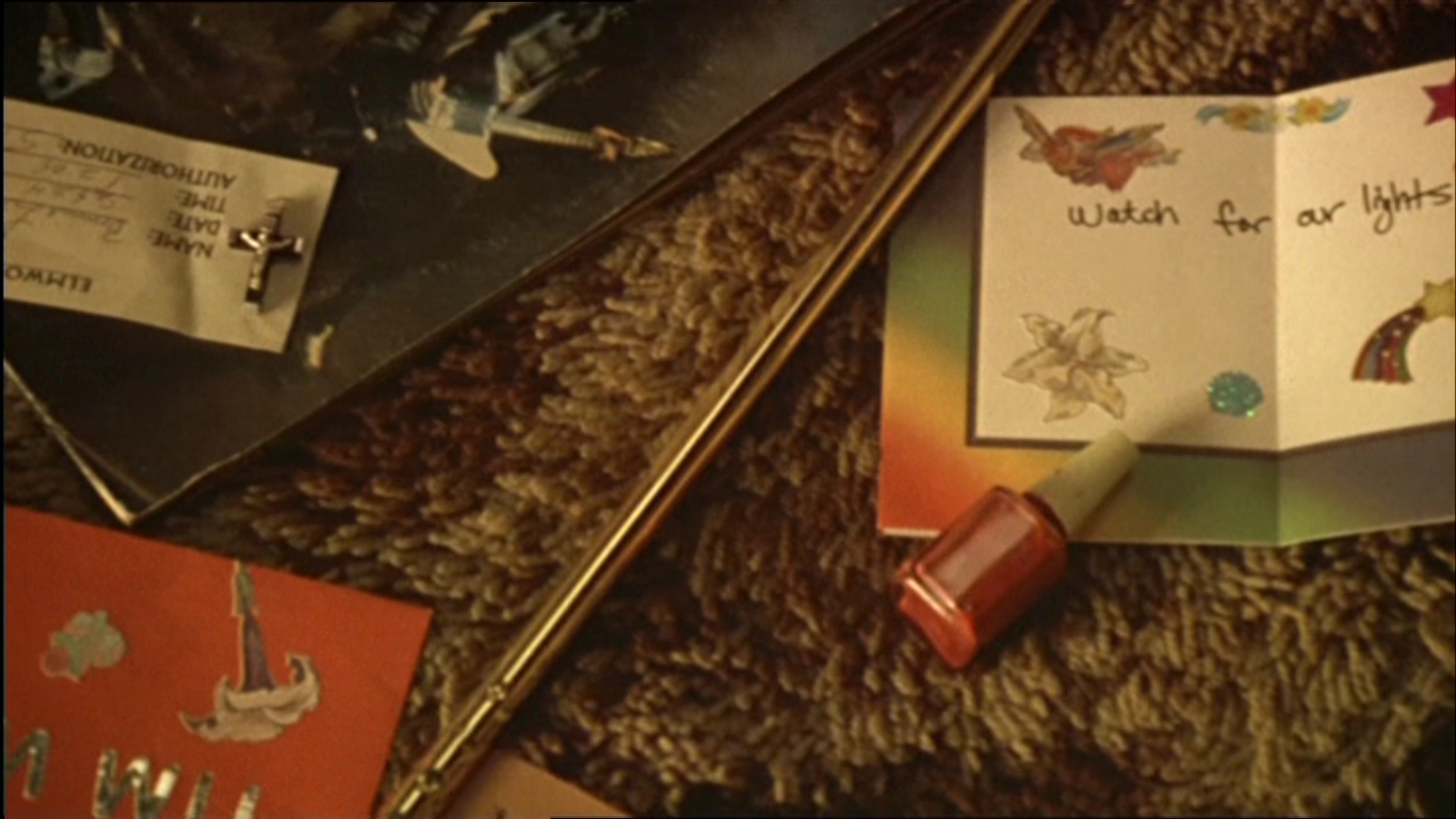
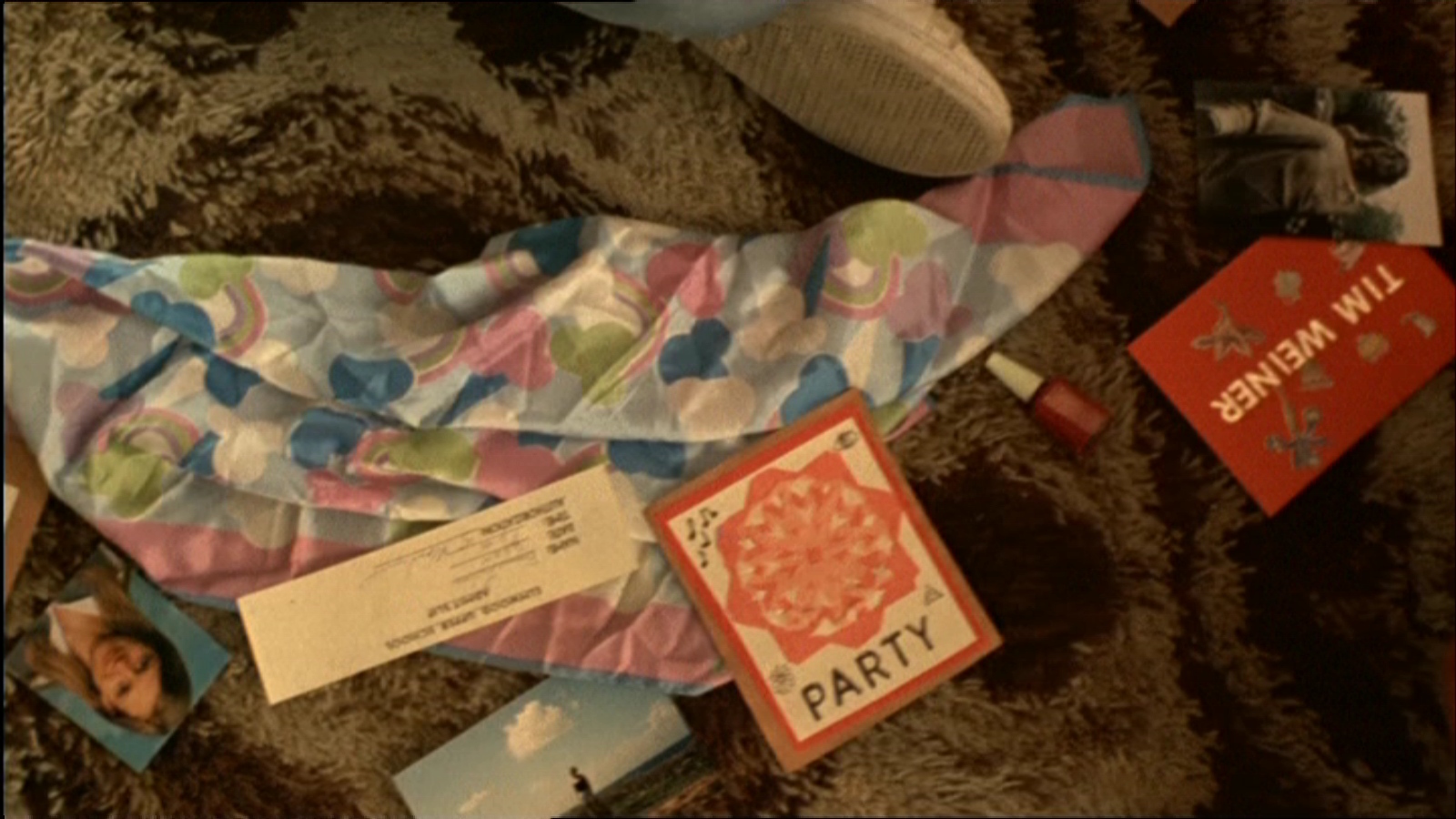
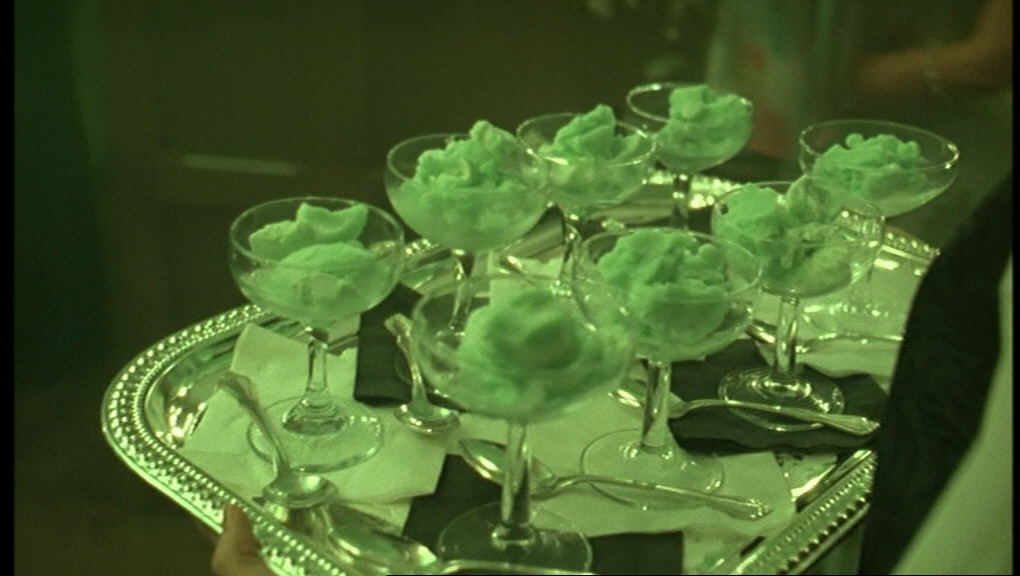
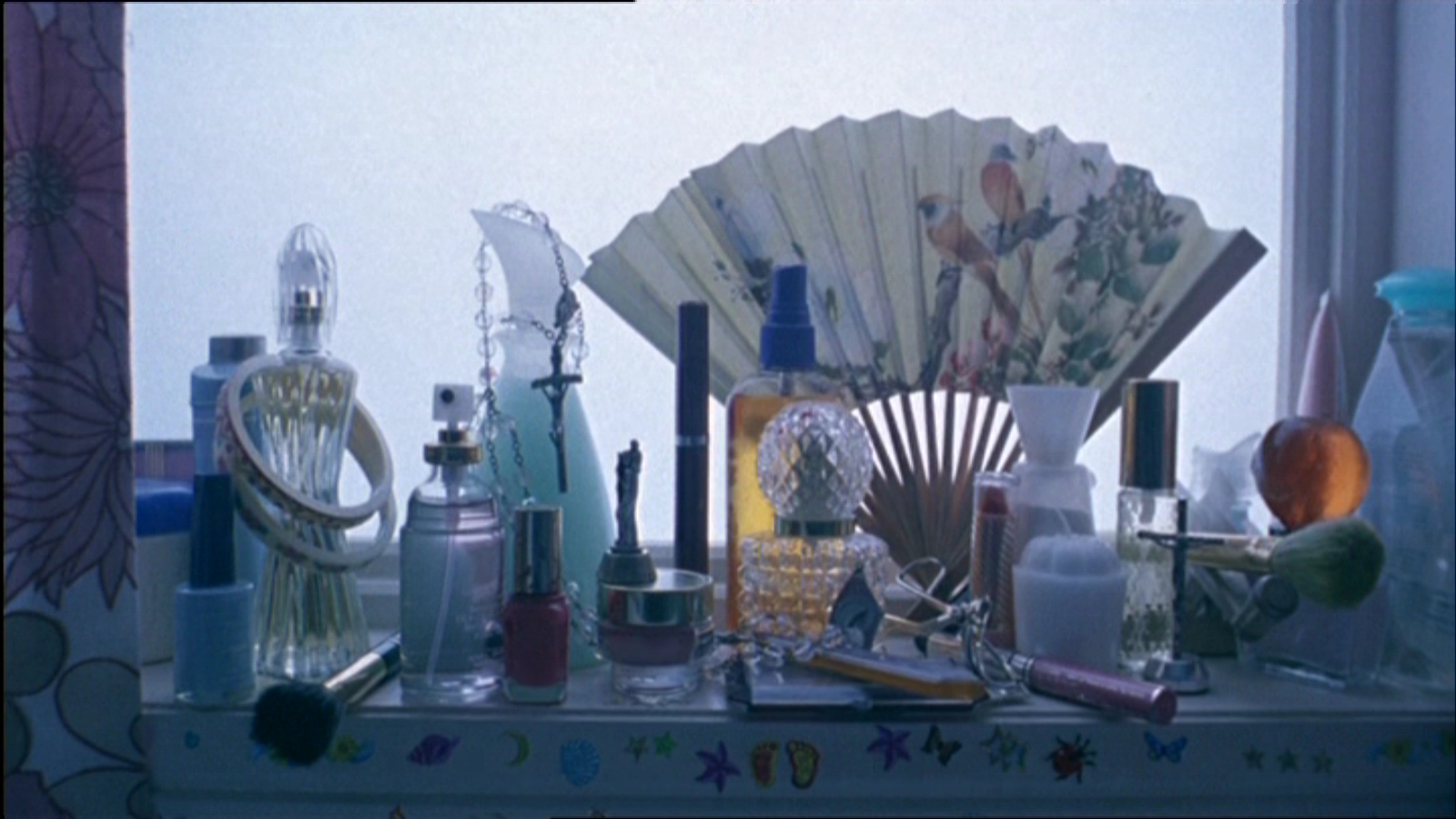
sofia coppola – from “the virgin suicides” (1999)

Narrator:

So much has been said about the girls over the years. But we have never found an answer. It didn’t matter in the end how old they had been, or that they were girls… but only that we had loved them, and that they hadn’t heard us calling… still do not hear us, up here in the tree house with our thinning hair and soft bellies, calling them from out of those rooms where they went to be alone for all time… and where we will never find the pieces to put them back together…

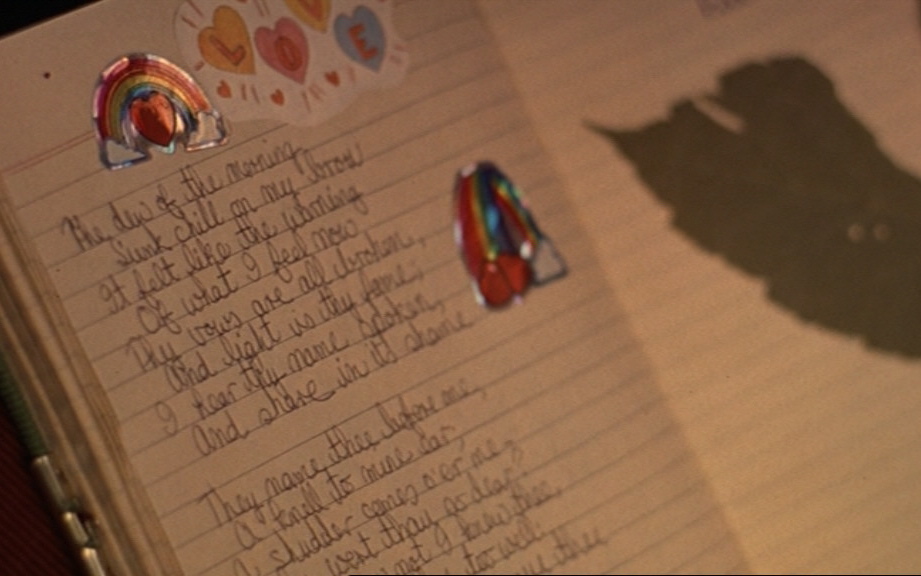
From Cecilia Lisbon’s diary:

Lux lost it over Kevin Haines, the garbage man. She’d wake up at five in the morning
and hang out on the front steps – like it wasn’t completely obvious.

She wrote his name in marker on all her underwear. Mom found them and bleached out the Kevins.
Lux was crying on her bed all day.

The trees like lungs filling with air.
My sister, the mean one, pulling my hair.

Narrator:

And so we started to learn about their lives, coming to hold collective memories of times we hadn’t experienced.

We felt the imprisonment of being a girl, the way it made your mind dreamy… so you ended up knowing
what colours went together.

We knew the girls were really women in disguise… that they understood love and even death… and that our job was merely to create the noise that seemed to fascinate them.

We knew that they knew everything about us. And that we couldn’t fathom them at all.

Screenplay based on the novel by Jeffrey Eugenides.

marie chouinard compagnie – bODY_rEMIX/gOLDBERG_vARIATIONS

An astonishing piece, created for the Venice Biennale’s International Festival of Contemporary Dance, Italy, 2005 by Canadian dancer, choreographer and dance company director Marie Chouinard, OC (born 14 May 1955). Some excerpts from the performance at Place des Arts, Montreal, 2007:

In this work by Marie Chouinard, the company’s ten dancers execute variations on the exercise of freedom. Often, the dancers appear on points: on one, two, and even four at a time. In a spectroscopy of the gesture, we also see them using different devices – crutches, rope, prostheses, horizontal bars, and harnesses – which at times liberate their movements, at others fetter it, and at still others create it.

This use of accessories gives rise to unusual bodily shapes and gestural dynamics and opens onto a universe of meticulous and playful explorations in which solos, duos, trios and group work, in their labour, pleasure and invention, echo the human condition.

An aesthete beyond norms, Marie Chouinard presents her ideas on the way the indefinableness of the Other and the flagrancy of Beauty brush up against one another through an interpretation of Johann Sebastian Bach’s Goldberg Variations. Subtle and extravagant, sumptuous and wild, the work’s movements plumb the insoluble mystery of the body, of the living being.

Watch the whole performance >

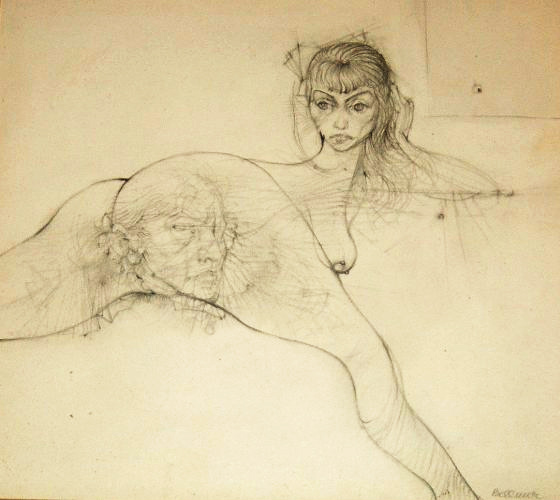
a portrait of hans bellmer, by unica zurn (1965)

HANS BELLMER: The female body…is like an endless sentence that invites us to rearrange it, so that its real meaning becomes clear through a series of endless anagrams. (1)

UNICA ZÜRN: If woman is to put into form the ‘ule’ [Greek: matter] that she is, she must not cut herself off from it nor leave it to maternity, but succeed in creating with that primary material that she is […] Otherwise, she risks using or reusing what man has already put into forms, especially about her, risks remaking what has already been made, and losing herself in that labyrinth. (2)

A Portrait of Hans Bellmer
Unica Zurn, 1965

References
(1) Webb P.& Short R., Hans Bellmer (New York: Quartet Books, 1985). Cited in: Miranda Argyle, “Hans Bellmer and The Games of the Doll” (Online Publication, 2004).
(2) Quote cited in: Subversive Intent: Gender, Politics, and the Avant-Gardex by Susan Rubin Suleiman (Cambridge, MA: Harvard University Press, 1990). 

review by sound fix records (brooklyn)

From time to time a local artist sans record label will come in with a self-released album that blows us away. This is one of those times! Ella Joyce Buckley is a native of South Africa now based in Brooklyn, and the music on her lovely hand-made CD, Blood Finds No Sea, is an enthralling example of how much more a songwriter can be than just a person with songs and an instrument. Existing equally in the acoustic (as in, played instruments — a range of them) and electronic, Blood Finds No Sea is dramatic, intense and, in the most luminous way, Goth as hell. You can imagine her right at home on 4AD in the mid-’80s, when Cocteau Twins and Dead Can Dance were mixing shimmeringly bright colors into darkness (and elsewhere, Danielle Dax was at her best). With vast creativity, Buckley manipulates her  gorgeous vocals into choirs, housefuls of spirits even, while strings both plucked and bowed ebb and swell, and keys poke holes in the darkness. The title track spires upward, like Tolkien’s elvish national anthem (oh, just indulge me), with Buckley’s double-tracked vox fixed in place while the music ascends around her. “Sister” features Buckley’s most extravagant vocal, with a plucked violin (I think?) leading into a howling mix of percussion and electronics. Buckley’s arranging skills are advanced — you could easily picture her scoring theater works (besides films), and perhaps she already does. For now, there is this CD, and it comes highly recommended.

Review from Sound Fix Records – 44 Berry St., Brooklyn New York 11211 – (718) 388-8090 | Williamsburg’s Independent Record store

suspended sentence (2009)

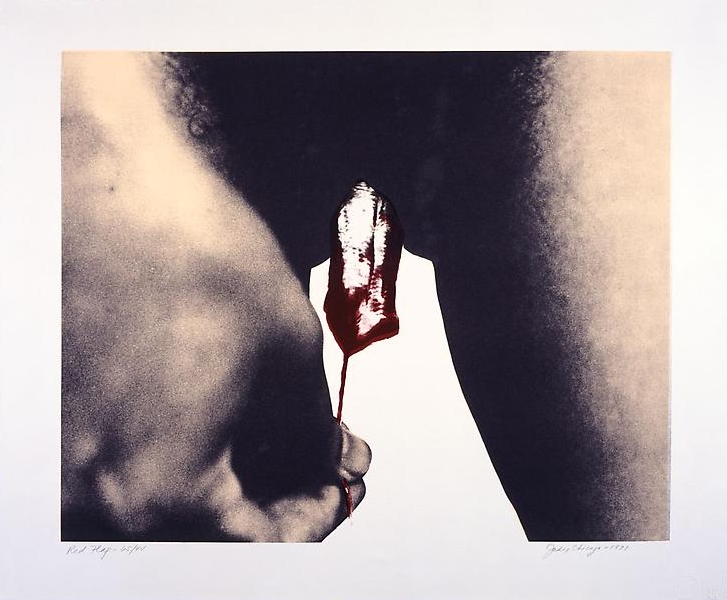
my menstrual blood does not “run”.
it’s too viscous.
it builds up behind the bottleneck of my cervix until the weight of
sloughed-off lining gets too heavy to contain,
then it blurts out
in thick, slimy strands of not-baby,
a cosmic disappointment
smelling of fresh death.
sometimes crimson, still almost fecund,
sometimes older and blacker, a nauseating cousin of bile,
blended with albumen, like broken egg white, like frogspawn frustrated.

inside my insides,
god’s scraping a blunt teaspoon round and round,
clearing the walls of my womb for another hit-and-miss next month.

on a heavy day,
pulling out an incontinent tampon,
i sit there on the loo,
toilet paper wrapped round my fingers,
trying to abbreviate the sentence of clots
my lips are drooling into the toilet bowl water.
it’s not a lake, it’s a suspension,
a hanging paragraph of placental full-stops that goes on and on,
inexorable
and i wipe and shove in another wad of cotton to staunch the ooze for
another few hours of outer peace.

one day, sometime in my forties or fifties
i’ll be paroled,
retired from service.
god will give up on my body
and that will be the end of that.
it’s irrelevant what anyone else wants.

my cunt is me, but it’s also beyond me,
ordained for a purpose beyond my control,
just like your cock is you, but it’s also beyond you,
ordained for a purpose beyond your control.
mostly we are blasphemous.

the obsession with looking into cunts, like the obsession with hard cocks,
is an ontological obsession with discovering and controlling our cosmic origins,
an expression of our raging, impossible desire for omnipotence.
and indeed pornographic images ARE redundant in that they hold no
physical power to alter the workings of sex
those closeups of fucking are nothing more than flat reproductions of
ten centimetres of Life’s copy machine  –
mostly they are over-man-ipulated and bear little resemblance to real
bodies interacting.
porn is the simulacral fantasy of ruling the universe.

Note
I wrote this in 2009 as a comment on this piece:

_20170509_071606

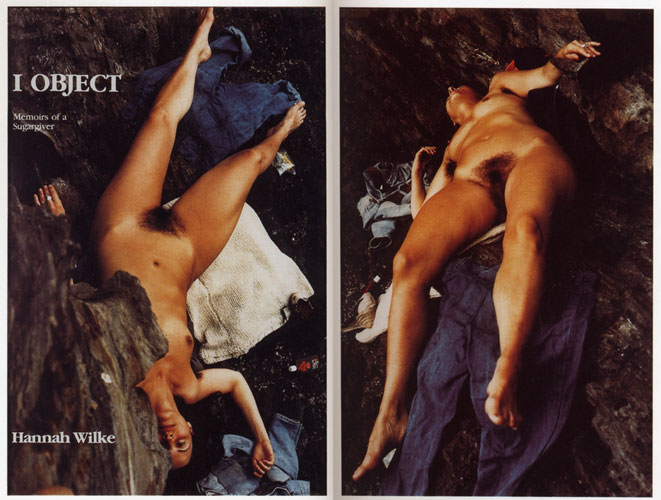
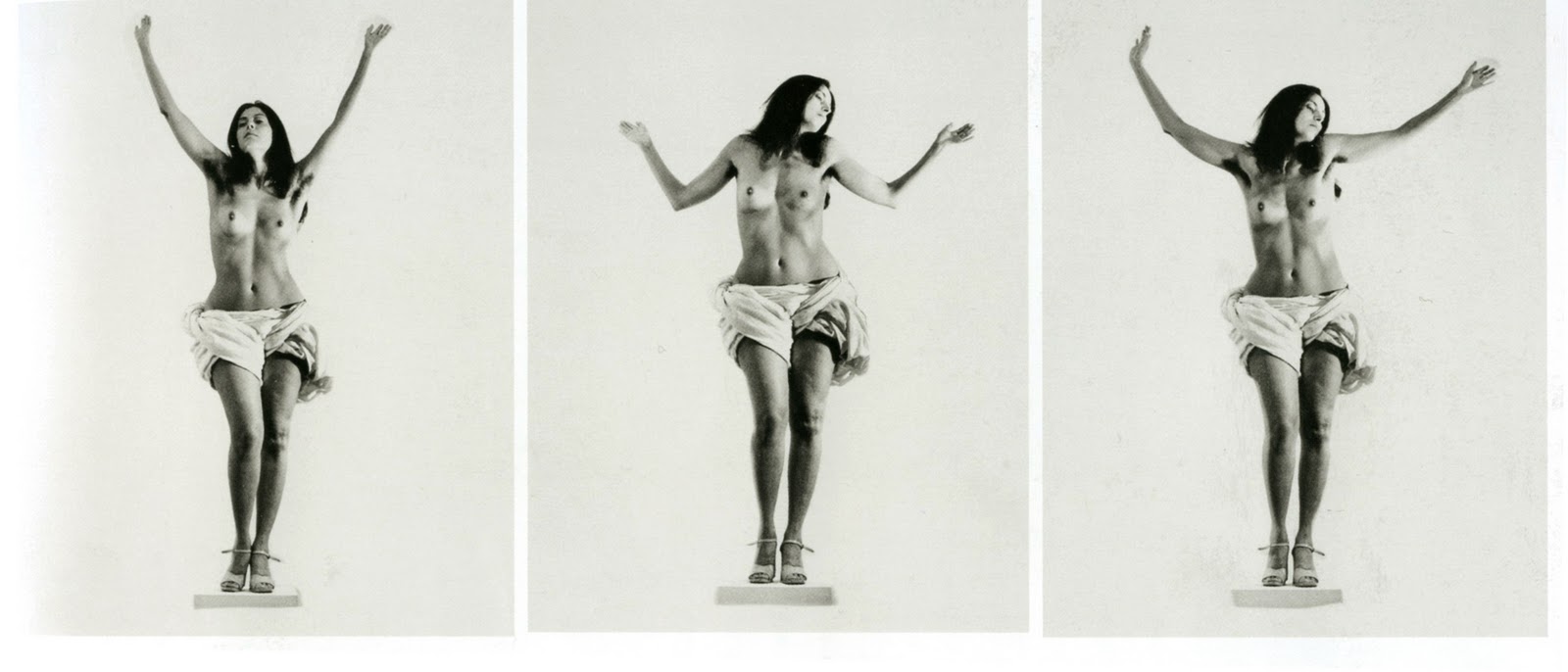
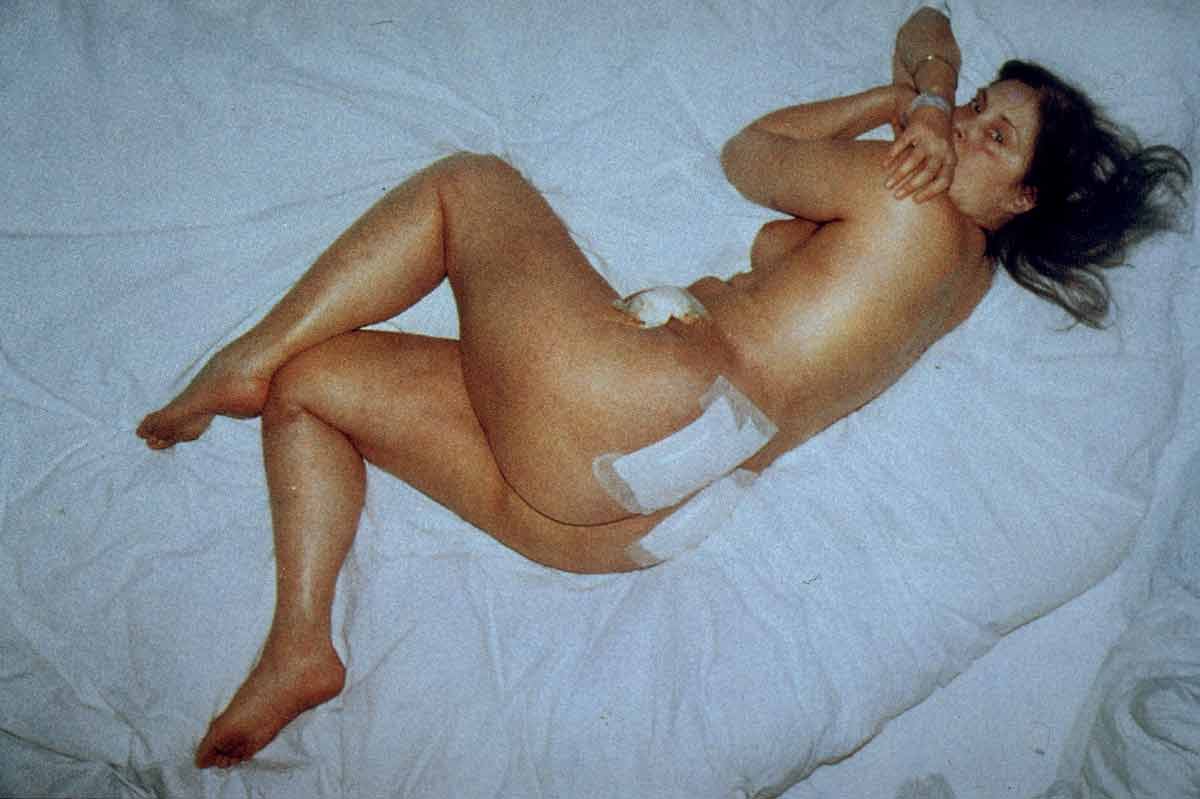
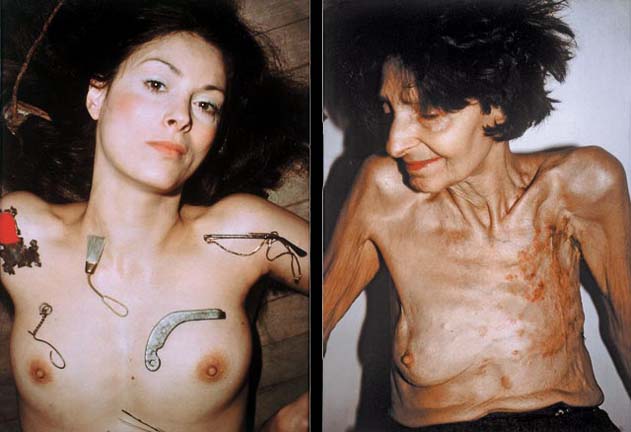
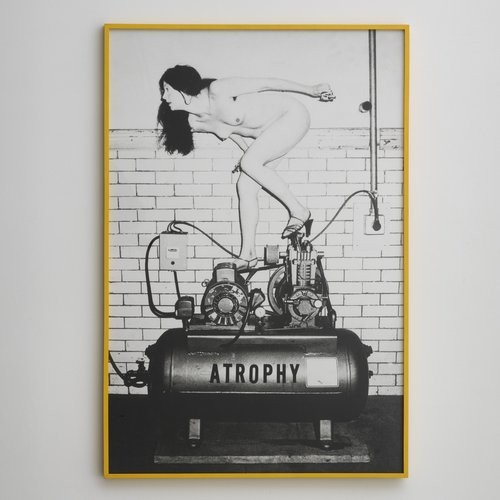
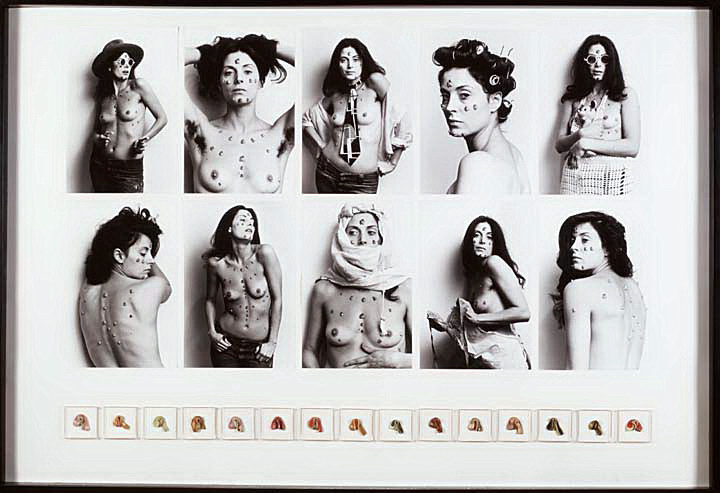
the art of hannah wilke: ‘feminist narcissism’ and the reclamation of the erotic body

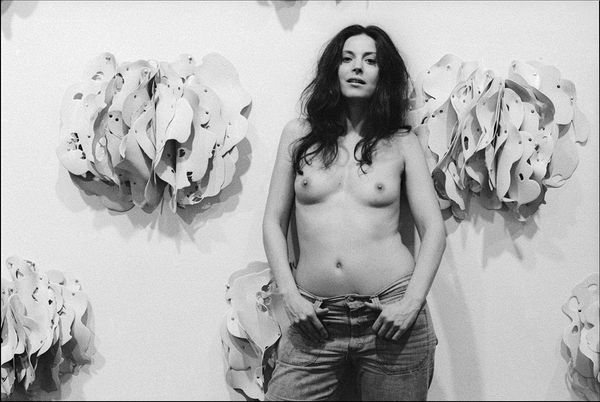
The politics of inclusion that shaped feminist discourse in the 1960s and 1970s spawned a legacy of body-based performance art, much of which was associated with women artists who used their own face as a subject of continual exploration. The self- imaging of women artists such as the provocative American artist Hannah Wilke was frequently attacked and dismissed by art critics as being indulgent exercises in narcissism that only served to reinforce the objectification of the female body. The charge of narcissism leveled on Wilke and her work may have been warranted, however, this should not be considered as a pejorative. Rather, the narcissism of Wilke can be viewed as a shrewd feminist tactic of self-objectification aimed at reclaiming the eroticized female body from the exclusive domain of male sexual desire. The ‘self-love’ of narcissism is a necessary component to this reclaiming of the body and the assertion of a female erotic will as being distinct from that of the male artist. Wilke wielded her narcissistic self-love as a powerful tool of critique, defiantly placing her own image into the hallowed halls of the male-dominated art institution.

The term “narcissism” derives from the ancient Greek myth of Narcissus, a beautiful but arrogant youth who cruelly spurned the love of his admirers. For his cruelty, he was cursed by the goddess Nemesis and fell in love with his own reflection in a pool of water. The doomed Narcissus pined away for his unattainable lover – the image of his own self – and literally died as a result of his amorous longing.

Sigmund Freud bestowed the name of this mythic Greek youth upon his psychoanalytic theory of narcissism, a theory that describes normal personality development. According to Freud, the self-love of narcissism is a normal complement to the development of a healthy ego. Whereas a certain amount of narcissism is desirable, an excess of self-love is considered dysfunctional and indicative of pathology. This latter definition of narcissism, the one of pathological self-absorption, has cast our current understanding of narcissism in a negative light and reinforced the use of the term as a pejorative.

The psychoanalytic theories of Freud suggest that negative or pathological narcissism is a specifically female perversion. Art critic Amelia Jones writes that “[d]rawing loosely on Freud’s definitions – which connect narcissism to both a stage of development and to a form of homosexual neurosis – narcissism has come in everyday parlance to mean simply a kind of “self-love” epitomized through woman’s obsession with her own appearance.” Hence, the charges of narcissism leveled on Hannah Wilke were attempts by the critics to summarily dismiss her work as mere manifestations of a woman’s obsessive self-love and infer, according to Jones, that Wilke’s art was not “successfully feminist.”

Continue reading here

by margaret bertulli

I bleed
I bleed and I wonder
“Will this be the last time?”
I bleed, therefore I am
“What will it be like?
This cessation of menses?”
The unequivocal end of child-bearing.
And my womb, though childless,
Will it feel the end of possibility?
Perhaps.
And then the unforeseen strength,
Promised by gender and age, will come.
The sureness, the wisdom,
The spirit to sing my songs.
I know this as all women before me have known.
We know this as we smile at the moon

`it is necessary for poetry to discard language´

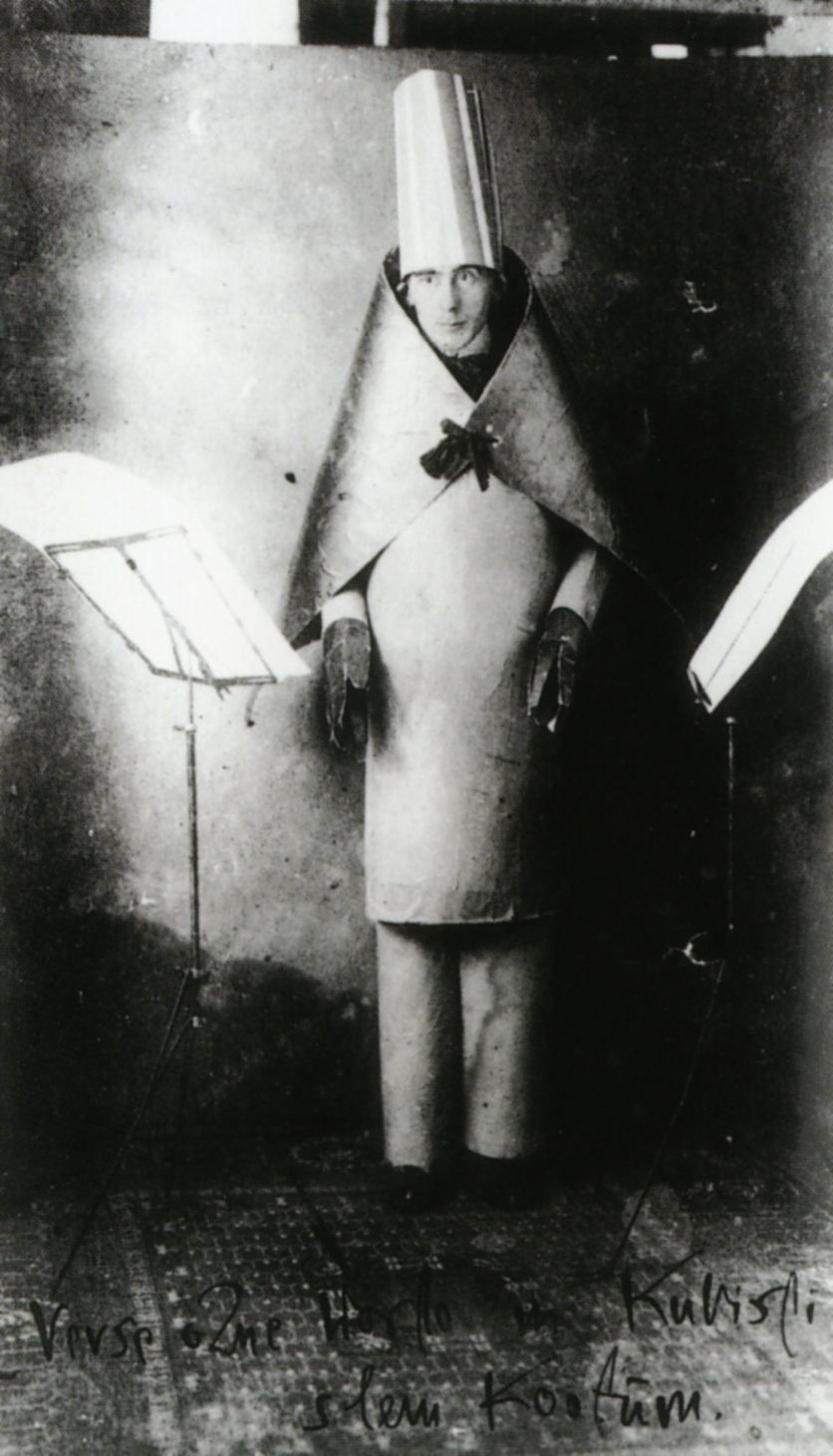
Cabaret Voltaire, Zurich, 1916. Wearing a cardboard costume of blue, scarlet and gold, Hugo Ball is carried to the stage in darkness. As the lights go up, the audience of Swiss bourgeoisie, artists, intellectuals, and refugees from the carnage of WWI, is silent. Ball begins a priestly incantation: ‘gadji beri bimba glandridi laula lonni cadori gadjama gramma berida bimbala glandri galassassa laulitalomini…’. The place to be, Spiegelgasse 1: simultaneous sound poems, noise music, ‘primitivist’ chants and drums, masked dancers, the absurd, the irrational, improvisation, chance, confrontation and cacophony. The lights dim. The audience responds with bewilderment and rage, and Ball disappears into the darkness. ‘It is necessary for poetry to discard language’, he writes,  ‘as painting has discarded the object’.

dada manifesto by hugo ball, zurich, july 14, 1916.

Dada is a new tendency in art. One can tell this from the fact that until now nobody knew anything about it, and tomorrow everyone in Zurich will be talking about it. Dada comes from the dictionary. It is terribly simple. In French it means “hobby horse”. In German it means “good-bye”, “Get off my back”, “Be seeing you sometime”. In Romanian: “Yes, indeed, you are right, that’s it. But of course, yes, definitely, right”. And so forth.

An International word. Just a word, and the word a movement. Very easy to understand. Quite terribly simple. To make of it an artistic tendency must mean that one is anticipating complications. Dada psychology, dada Germany cum indigestion and fog paroxysm, dada literature, dada bourgeoisie, and yourselves, honoured poets, who are always writing with words but never writing the word itself, who are always writing around the actual point. Dada world war without end, dada revolution without beginning, dada, you friends and also-poets, esteemed sirs, manufacturers, and evangelists. Dada Tzara, dada Huelsenbeck, dada m’dada, dada m’dada dada mhm, dada dera dada, dada Hue, dada Tza.

How does one achieve eternal bliss? By saying dada. How does one become famous? By saying dada. With a noble gesture and delicate propriety. Till one goes crazy. Till one loses consciousness. How can one get rid of everything that smacks of journalism, worms, everything nice and right, blinkered, moralistic, europeanised, enervated? By saying dada. Dada is the world soul, dada is the pawnshop. Dada is the world’s best lily-milk soap. Dada Mr Rubiner, dada Mr Korrodi. Dada Mr Anastasius Lilienstein. In plain language: the hospitality of the Swiss is something to be profoundly appreciated. And in questions of aesthetics the key is quality.

I shall be reading poems that are meant to dispense with conventional language, no less, and to have done with it. Dada Johann Fuchsgang Goethe. Dada Stendhal. Dada Dalai Lama, Buddha, Bible, and Nietzsche. Dada m’dada. Dada mhm dada da. It’s a question of connections, and of loosening them up a bit to start with. I don’t want words that other people have invented. All the words are other people’s inventions. I want my own stuff, my own rhythm, and vowels and consonants too, matching the rhythm and all my own. If this pulsation is seven yards long, I want words for it that are seven yards long. Mr Schulz’s words are only two and a half centimetres long.

It will serve to show how articulated language comes into being. I let the vowels fool around. I let the vowels quite simply occur, as a cat meows … Words emerge, shoulders of words, legs, arms, hands of words. Au, oi, uh. One shouldn’t let too many words out. A line of poetry is a chance to get rid of all the filth that clings to this accursed language, as if put there by stockbrokers’ hands, hands worn smooth by coins. I want the word where it ends and begins. Dada is the heart of words.

Each thing has its word, but the word has become a thing by itself. Why shouldn’t I find it? Why can’t a tree be called Pluplusch, and Pluplubasch when it has been raining? The word, the word, the word outside your domain, your stuffiness, this laughable impotence, your stupendous smugness, outside all the parrotry of your self-evident limitedness. The word, gentlemen, is a public concern of the first importance.
one morning by jamie heckert, 2006

One morning, not that long ago, I answered the door in my dressing gown
to the sight of a man from the energy company. He came to ask me why I had
chosen to switch suppliers. As I explained that I preferred one with a better
environmental policy, I slowly realised that not only did this guy have gorgeous
eyes, he was watching me closely. I went on to say, performing a bit for this
beautiful man, “Of course all corporations and really capitalism in general is bad
for the environment”. He agreed, his eyes glowing with excitement. But, what
could he do? He had a mortgage to pay. I’m not quite sure why, maybe I was
scared of the intensity of my attraction, but suddenly I found myself channeling
some broken record of anarchist propaganda and said, “We need resistance on
the inside, too.” That was it. His beautiful eyes looked away and the connection
was lost.
I feel grief remembering that morning; I would have liked to have listened
with empathy to both his desire for change and for security, to maintained that
beautiful sense of connection. Instead, I tried to recruit him. When I replay the
incident in my mind, it has a different ending. I ask him, “What would you like
to do?”

c p cavafy – ithaka

As you set out for Ithaka
hope your road is a long one,
full of adventure, full of discovery.
Laistrygonians, Cyclops,
angry Poseidon – don’t be afraid of them:
you’ll never find things like that on your way
as long as you keep your thoughts raised high,
as long as a rare excitement
stirs your spirit and your body.
Laistrygonians, Cyclops,
wild Poseidon – you won’t encounter them
unless you bring them along inside your soul,
unless your soul sets them up in front of you.

Hope your road is a long one.
May there be many summer mornings when,
with what pleasure, what joy,
you enter harbours you’re seeing for the first time;
may you stop at Phoenician trading stations
to buy fine things,
mother of pearl and coral, amber and ebony,
sensual perfume of every kind –
as many sensual perfumes as you can;
and may you visit many Egyptian cities
to learn and go on learning from their scholars.

Keep Ithaka always in your mind.
Arriving there is what you’re destined for.
But don’t hurry the journey at all.
Better if it lasts for years,
so you’re old by the time you reach the island,
wealthy with all you’ve gained on the way,
not expecting Ithaka to make you rich.

Ithaka gave you the marvellous journey.
Without her you wouldn’t have set out.
She has nothing left to give you now.

And if you find her poor, Ithaka won’t have fooled you.
Wise as you will have become, so full of experience,
you’ll have understood by then what these Ithakas mean.

*

from C.P. Cavafy’s Collected Poems, trs. Edmund Keeley
and Philip Sherrard (Hogarth Press, 1975)

einstürzende neubauten – interview for japanese tv (1980s)

“The main theme [of what we do] is expanding musical structures to a point where you can’t tell the difference anymore between music and not-music, or expanded to a point where it doesn’t make any difference anymore to you if it is music or not… It’s not going to be simplified into something like simple “destruction”. We don’t want anyone to come to the concerts just to see us destroying something. If we feel an attitude like that coming up we just get in a bad mood!”

Ah, Blixa, you lovely creature!

camus on desire

What distinguishes consciousness of self from the world of nature is not the simple act of contemplation by which it identifies itself with the exterior world and finds oblivion, but the desire it can feel with regard to the world. This desire re-establishes its identity when it demonstrates that the exterior world is something apart. In its desire, the exterior world consists of what it does not possess, but which nevertheless exists, and of what it would like to exist but which no longer does. Consciousness of self is therefore, of necessity, desire. But in order to exist it must be satisfied, and it can only be satisfied by the gratification of its desire. It therefore acts in order to gratify itself and, in so doing, it denies and suppresses its means of gratification. It is the epitome of negation.

from The Rebel

nietzsche on the hard

“Why so hard?” the kitchen coal once said to the diamond. “After all, are we not close kin?” Why so soft? O my brothers, thus I ask you: are you not after all my brothers? Why so soft, so pliant and yielding? Why is there so much denial, self-denial, in your hearts? So little destiny in your eyes? And if you do not want to be destinies and inexorable ones, how can you one day triumph with me? And if your hardness does not wish to flash and cut through, how can you one day create with me? For all creators are hard. And it must seem blessedness to you to impress your hand on millennia as on wax. Blessedness to write on the will of millennia as on bronze — harder than bronze, nobler than bronze. Only the noblest is altogether hard. This new tablet, O my brothers, I place over you: Become hard!

Zarathustra, III: On Old and New Tablets, 29.

process: immaterial proposal by christine eyene

process: immaterial proposal is a curatorial research project focusing on artists creative concepts, studies and works-in-progress.
This project consists of an evolving assembling of images, texts (in English and French), and sound pieces initially presented in a virtual form on art lab. Envisaging sensory experience beyond the physical space, process seeks to explore terrains beyond narrative and representation, be they culturally or geographically-oriented.
Underlying this research is the intention to favour the unexpected and the unknown, over predetermined modes of selection, in an attempt to map out fragments of creative landscapes in current art practice.
First intended as a curatorial proposal for the 10th Dak’Art Biennale, this unrealised (or immaterialised) project partakes of the idea that African biennials have the potential to extend beyond space and time, and adopt a more inclusive approach to contemporary art.
process: immaterial proposal is an open platform. Artists, curators, critics and creative writers wishing to engage in this conversation can contact eyonartmail@gmail.com indicating process in the subject field.
Check out Christene´s blog