“Peter” from Daughter (Elena Tonra). Tales From Shop Session, filmed in Bristol by Tom Swindell, 2010.
margaret durow – sunrise 2

paul celan – you were my death
You were my death:
you I could hold
when all fell away from me.
“The melancholy river bears us on. When the moon comes through the trailing willow boughs, I see your face, I hear your voice. What are you whispering? Sorrow, sorrow. Joy, joy. Woven together in the moonlight.”
~ Virginia Woolf
motel7 – “daydreamers”
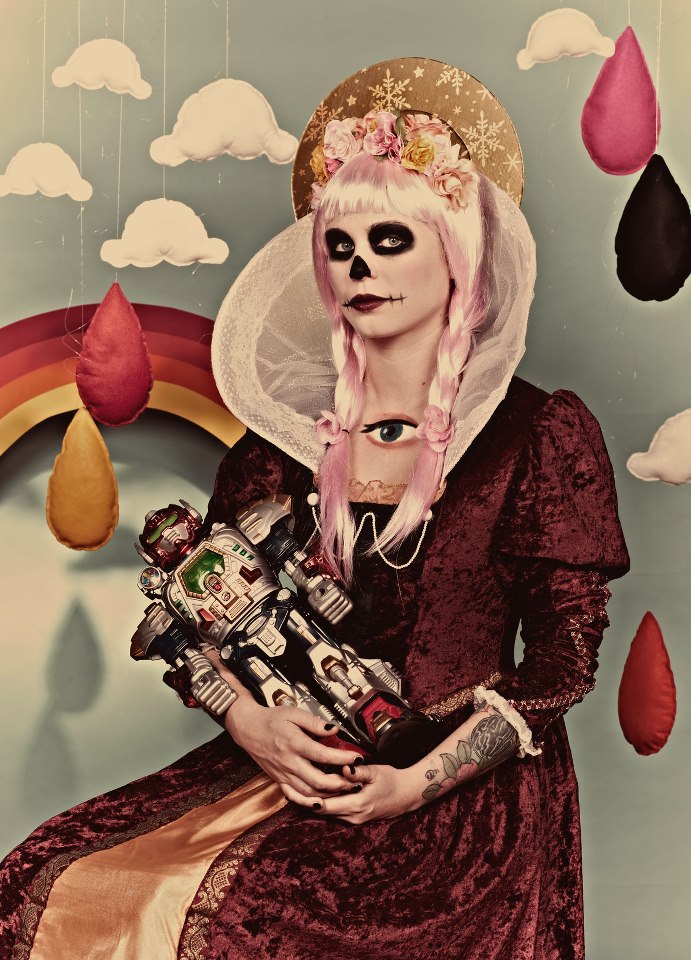
Solo Exhibition at 34FineArt, Cape Town
16 October 2012 – 10 November 2012
After her initial solo exhibition,Tears and Castles, at 34 Long Fine Art in 2009, Motel7 left South Africa to work in Europe and America. Having returned to South Africa she has reclaimed her position on the streets and in the Gallery environment.
Having worked in traditional mediums from an early age, Motel7 moved through the ranks of graffiti to street art and like many international artists, such as Banksy, Mr. Brainwash, Miss Van, Blek le Rat, D*Face and Nick Walker, she has secured her position as an acclaimed urban contemporary artist. Since then her work has been featured in numerous international exhibitions, including the Basel Art Fairs, as well as galleries in Amsterdam and Los Angeles. Motel7 continues to hone her skills in urban spaces whenever and wherever the opportunity presents itself.
Increasingly street artists occupy both urban and fine art environments. In cities like Cape Town, where street art is still illegal, artworks seldom remain on the walls for long enough to be fully appreciated before being cleaned off or defaced. Ironically, while the value of works in urban spaces is often overlooked, within the gallery environment these same works are approached with a more appreciative eye.
Daydreamers, Motel7’s second solo show, affirms the ease with which she straddles the divide between urban and gallery spaces – where the traditional process of work progressing from gallery environment to museum or public commission, is reversed. The exhibition is presented in her unique visual idiom, built-up over years of working in a challenging environment. The seemingly juxtaposed images of sculls, toys, fruit and sweets are complimented by the vintage quality of the paintings… it’s all about symbolizing daydreaming and nostalgia and the past.
Street art and graffiti are closely associated, but are often regarded as vandalism – evidence of urban decay – in stark contrast to gallery art, which is seen as the epitome of artistic achievement. Daydreamers demonstrates that it is not these works themselves which are different, but rather the contexts within which they are viewed.
Don’t miss the opening reception on 16 October. Find out more HERE.
julia mary grey – art of darkness
More about Julia’s music and art HERE.
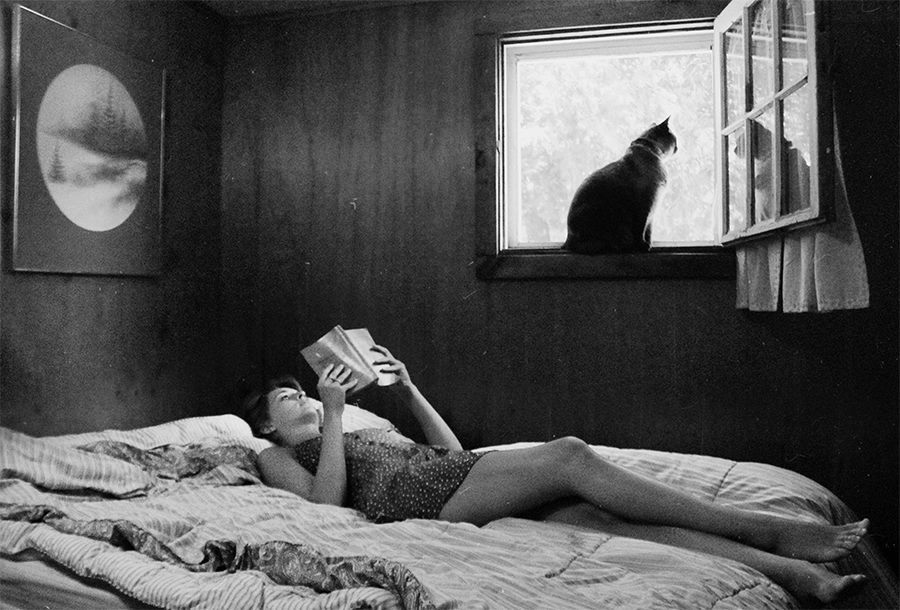
margaret durow
sarah and a tarantula

Sarah and a Tarantula (2012)
Photograph: Caroline Burne
marina tsvetaeva – 6 September 1936
Thinking of somebody else, somebody
Unique, like treasure I’ve yet to discover,
Step by step, and poppy by poppy,
I beheaded the garden, flower by flower.
Exactly thus, some dry summer, one day,
On the edge of the field where I’ll stand,
My own head will also be plucked away
By Death’s absent-minded hand.
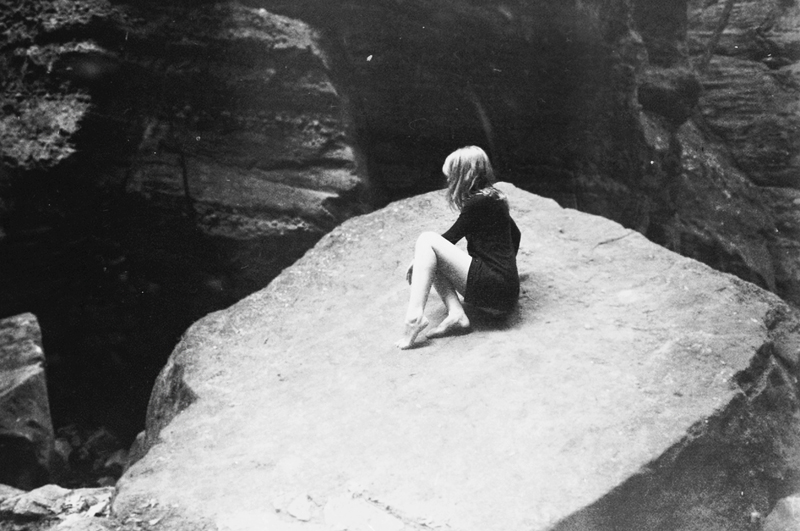
margaret durow – from the “wait” series
helgé janssen – what stands between this and that? (2010)
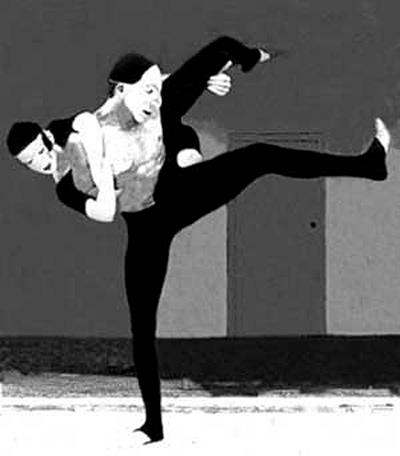
“CATALYST” – masked dance movement piece
Helgé Janssen/Gisele Stafford, Durban beachfront, 1984
Photograph: Peter Hart-Davies
what stands between this and that?
what stands between this and that?
what stands between this and that?
a look?
a glance?
a second fact?
a psychology?
an ideology?
a whim?
a schism?
a hollow dream?
a friend who intervenes?
a plissé
that would rather be
ironed out flat?
what stands between this and that?
what stands between this and that?
what stands between this and that?
a denial?
a pyre?
a burning sphere?
a time?
a place?
a thwarted mess?
a second guess?
a stall for time
that saves you grace?
a space between
a furtive glimpse?
a risk not worth taking?
what stands between this and that?
what stands between this and that?
what stands between this and that?
life as a rehearsal?
a chance to forget?
another escape?
the art of make-up?
a drowning of sorrows?
an always tomorrow?
a never yesterday?
somebody’s off day?
the centre lost?
the plot in recess?
just another day
without redress?
is this a life or just a mistake?
is this a life or just a mistake?
is this a life or just a mistake?
Thanks to Helgé for sharing this poem. Keep abreast of what this multi-talented and influential Durban artist has up his next immaculately designed sleeve HERE.
cherry bomb – gouttes mécaniques (mechanical teardrops) – 2008
king crimson – dig me
Dig me, but don’t bury me
josie field – beating heart (video by juliette jack)
My niece made this. In one day. Knowing absolutely nothing about stop-frame animation.
pamella dlungwana – kapstadt: no lights, fast moving cars, hawkers, cti(finishtheacronymyourdamnselfyouenablingpieceofcityscum)
It’s a piece of turd
On the corner of Plein
And Spin
It lounges there
having steamed once
When it was fresh.
Now, it’s a curly lump
Of brown
With corn flecks
Just a’ chilling on the sidewalk.
Whose shit is this?
In the middle of town?
Who shat here and left?
What did they wipe their ass with?
Who will clean this shit?
What will they eat after?
How many piles of city shit will they clean in their lifetime?
Who will honor them with an award?
Who gets the award, ‘most shitty city turds evicted’?
Who gives the award?
Who sits on the crappy panel judging who deserves the accolade?
What is the criteria?
How do those who do not get the award feel?
I should have run after more shitty city turds and made my family proud?
What runs through the winners’ mind?
“I’d like to thank my mother, God, my teachers for never letting me forget
that all I’d ever be worth was a pile of shit?”
see the winner shitty shuffle off stage
shame the winner for taking home,
a fecal-fashioned piece of wood.
martha graham on artists (in a letter to agnes de mille)
“there is a vitality, a life force, a quickening that is translated through you into action, and because there is only one of you in all time, this expression is unique. and if you block it, it will never exist through any other medium, and will be lost. the world will not have it. it is not your business to determine how good it is, nor how valuable it is, nor how it compares with other expressions. it’s your business to keep it yours clearly and directly, to keep the channel open.
you do not even have to believe in yourself or your work. you have to keep open and aware directly to the urges that motivate you. keep the channel open. no artist is pleased. there is no satisfaction whatever at any time. there is only a queer, divine dissatisfaction, a blessed unrest that keeps us marching and makes us more alive than the others.”
from http://kagablog.com/
ari sitas – marikana*
The digital images fold as the TV screen tires
The cops, rifles in cabinet, past their third beer are edging towards bed
The night is quiet as the smelter has been closed,
the only music is of the wind on razor wire
the ears are too shut to hear the ancestral thuds on goatskin
humanity has somehow died in Marikana
who said what to whom remains a detailed trifle
the fury of the day has to congeal, the blood has to congeal
I reverse the footage bringing the miners back to life
in vain, the footage surges back and the first bullet
reappears and the next and the next and the next
and I reverse the footage in vain, again and again in vain
The image of the man in the green shroud endures
Who wove the blanket and what was his name?
There are no subtitles under the clump of bodies, no names
stapled on their unformed skull
A mist of ignorance also endures, a winter fog
woven into the fabric of the kill
The loom endures too, the weaver is asleep
The land of the high winds will receive the man naked
The earth will eat the stitch back to a thread
What will remain is the image and I in vain
Reversing him back to life to lead the hill to song
In vain, the footage surges back
another Mpondo, another Nquza Hill, another Wonder Hill
the shooting quietens: another anthill
My love, did I not gift you a necklace with a wondrous bird
pure royal platinum to mark our bond?- was it not the work of the
most reckless angel of craft and ingenuity? Was it not pretty?
Didn’t the bird have an enticing beak of orange with green tint?
Throw it away quickly, tonight it will turn nasty and gouge
a shaft into your slender neck
And it will hurt because our metals are the hardest- gold, pig iron, manganese
yes, platinum
Humanity has somehow died in Marikana
What is that uMzimu staring back at us tonight?
Darken the mirrors
Switch off the moon
Asphalt the lakes
At dawn, the driveway to the Master’s mansion
Is aflame with flower, so radiant from the superphosphates
of bone
of surplus oxygen and cash,
such flames, such a raw sun
such mourning by the shacks that squat in sulphur’s bracken
and I wait for the storm, the torrent, the lava of restitution
the avenger spirits that blunt the helicopter blades in vain
these also endure: the game and trout fishing of their elective chores
the auctions of diamond, art and share
the prized stallions of their dreams
their supple fingers fingering oriental skins and their silver crystals
counting the scalps of politicians in their vault
The meerkat paces through the scent of blood
I want it to pace through the scent of blood,
she is the mascot, the living totem
of the mine’s deep rock,
the one who guards the clans from the night’s devil
she is there as the restless ghosts of ancestors
by the rock-face
feeding her sinew and pap
goading her on:
the women who have loved the dead alive
the homesteads that have earned their sweat and glands
impassive nature that has heard their songs
the miners of our daily wealth that still defy
the harsh landscape of new furies
the meerkat endures-
torn certainties of class endure
the weaver also endures: there-
green blankets of our shrouded dreams
humanity has died in Marikana
The strike is over
The dead must return
to work
*(after a tough two weeks and seeing Pitika’s miner sculpture with the
green corrugated iron blanket)
Thanks to Ari for sharing this poem.
card on spokes – disguises
New video by Ari Kruger for Shane Cooper’s Card on Spokes project.
silver shoes
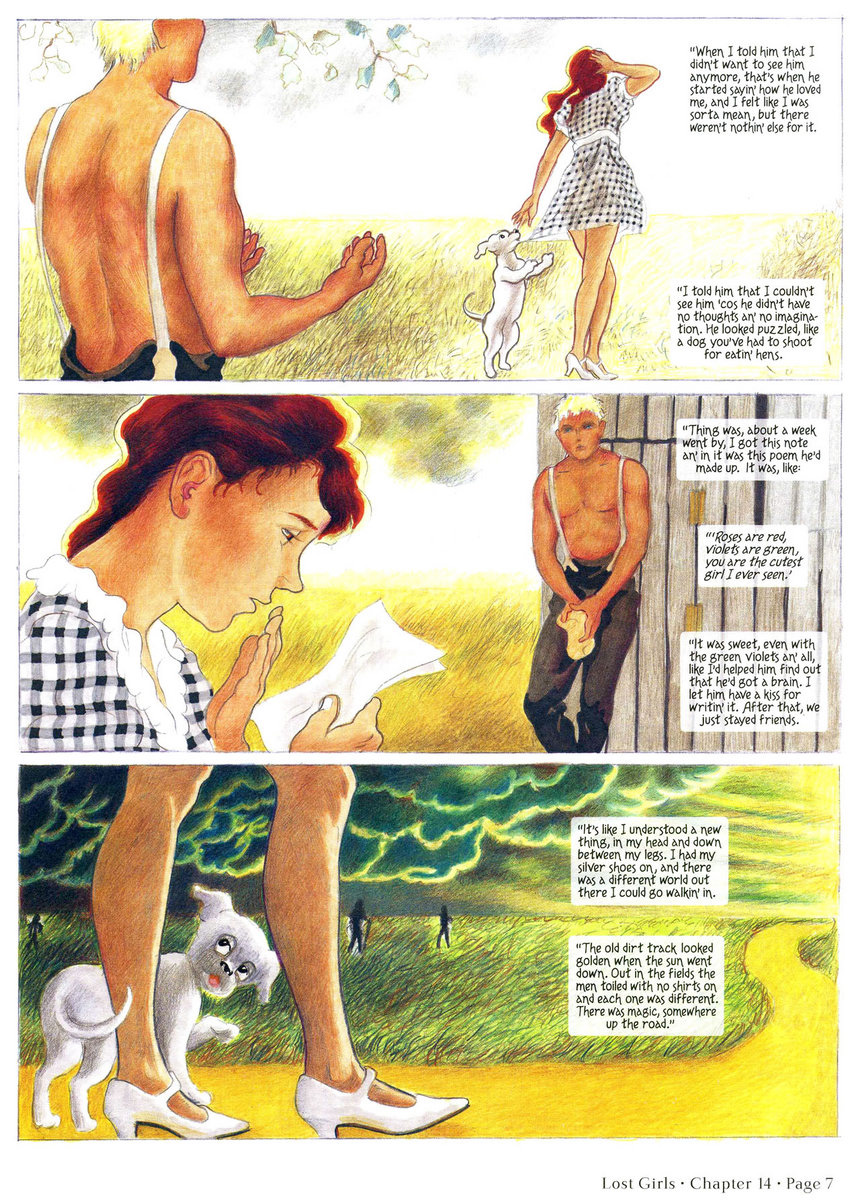 Illustration by Melinda Gebbie out of ´Lost Girls´by Allan Moore
william bolcom’s lost lady rag
Album: William Bolcom – The Complete Rags for Piano
Pianist: John Murphy
Albany Records, 1998, TROY 325/26
“lost girls” by alan moore, illustrated by melinda gebbie
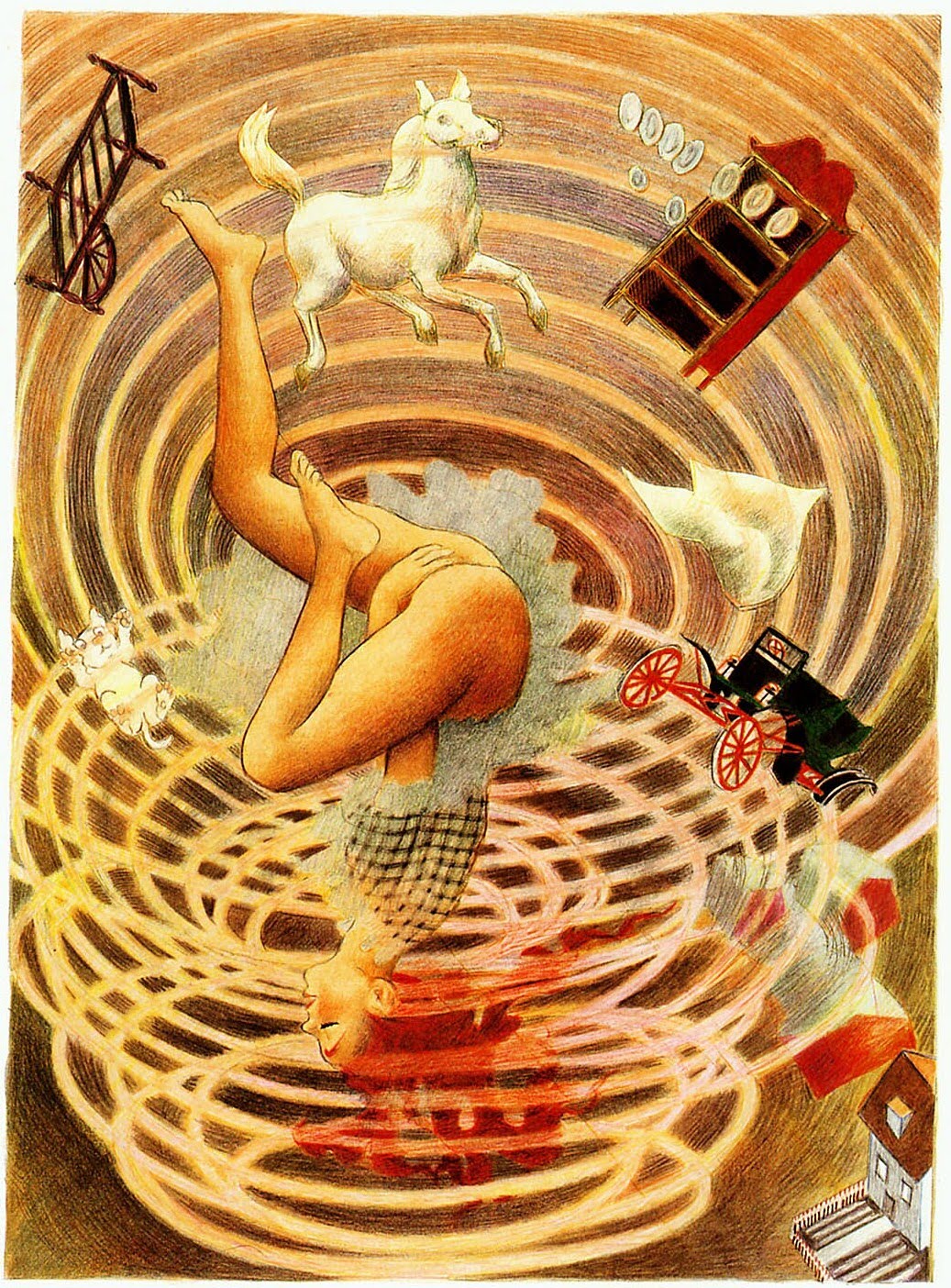
“When I first started writing comics for adults, I found myself forever needing to explain that, no, I wasn’t writing those kind of adult stories.
The boundary between pornography and erotica is an ambiguous one, and it changes depending on where you’re standing. For some, perhaps, it’s a matter of whatever turns you on (my erotica, your pornography), for some the distinction occurs in class (i.e. erotica is pornography for rich people). Perhaps it’s also something to do with the means of distribution – internet pornography is unquestionably porn, while an Edwardian publication, on creamy paper, bought by connoisseurs, part works bound into expensive volumes, must be erotica.
Alan Moore knows his words.”
Read the rest of this review by Neil Gaiman here
Download Lost Girls here
le journal de personne – je sans frontières
Machine translation with a bit of editing (my French is not great and will never do poetry justice – help and corrections most welcome!):
The world is a village… What a shame! A universe reduced to a bunch of earthworms, wandering without crossing borders … we are all orphans of the light … it’s dead … it died giving us that day …. in 1789.
We are not brothers and sisters, but solitary tapeworms with more discomfort and just one eye … yes … yes … we are homogenous, even our genes!
We import love, we export hate…
The world is visible … there is no invisible world … yes … yes …
Predictable … we are all predictable … every man for himself … and we’re all for something.
Whether we like it or not.
Me, I do not go out.
I vibrate … but I’m not free …
In a world where we speak of free movement of capital, goods, services and people …
You put it politely when you say nomadism is back in fashion … “neocapitalism” is the code name of that planetary lie … where money acts as identity… I’m dollar, you’re yen, he’s euro … it’s all close to zero!
Temporary identity … illusory … ridiculous … it’s sick …
No identity madness please; everything is all and for all those who want access to it WITHOUT BORDERS on the basis of a universal constitution … the rights of every man and dog.
Why the dog?
Because it is necessary that someone speaks. No, I’m not talking about my dog … he is dead and buried … but of myself … I’ve replaced him in barking … barking … always knowing that I do not impede the caravan from passing.
Read it the original French.
tiqqun – notes on the local (2001)
Everything which today constitutes an acceptable landscape for us is the result of bloody violences and conflicts of rare brutality.
One can thus summarize that the demokratic government wants to make us forget. Forget that the suburbs have devoured the countryside, that the factory has devoured the suburbs, that the metropolis—tentacled, deafening and without repose—has devoured everything.
This observation doesn’t imply regret, this observation implies: seize everything. In the past, in the present.
The controlled territory where our life passes, between the supermarket and the digital lock on the lobby door, between the traffic signals and the pedestrian pathways, forms us. We are moreover inhabited by the space in which we live. Especially when everything, or nearly everything, from now on, functions there like a subliminal message. We don’t do certain things at certain places because we do not do those things.
Street furniture for example has almost no utility—how often, to our surprise, do we wonder who exactly could fill the benches of a neo-square without succumbing to more violent despair?—it has precisely one meaning and one function, and these are dissuasive. Their mission/charter “You are only home when at home, or where you pay, or where you are monitored.”
The world is becoming global, but it is shrinking.
The physical landscape we traverse each day with great speed (by car, using public transportation, on foot, in a rush) has effectively an unreal character because while there, no one lives as anything at all, nor could anyone possibly live as anything there. It’s a type of micro-desert where one is like an exile, between one private property and another, between one obligation and another.
The virtual landscape seems much more welcoming to us. The liquid crstal screen of the computer, internet navigation, the tele-visual or the play-station universes—these are infinitely more familiar to us than the streets of our neighborhood, populated at night by the moonlight of the streetlamps and the metal gates of closed stores.
It is not the global which opposes the local, it is the virtual.
The global is so little opposed to the local that actually the global creates it. The global only designates a certain distribution of differences from an homogenizing norm. Folklore is the product of cosmopolitanism. If we didn’t know that the local was local, it would be for us a little globality. The local is revealed as the global makes itself possible, and necessary. Go to work, do your shopping, travel far from home: this is what constitutes the local, which otherwise would more modestly be the place where we live.
All the same, we live strictly speaking nowhere. Our existence is simply divided into layers of schedules and topologies, in slices of tailored life.
But this isn’t all. They presently would like to make us live in the virtual, definitively deported. There, the life they wish for us would recompose into a curious unity of non-time and non-place. The virtual, says one Internet publicity, is ” the place where you do all that you cannot do in reality.” But when “everything is permitted,” it is the mechanism of the transfer from the power to act which is under surveillance. In other words” the virtual is the place where possibilities never become real, but remain indefinitely in the virtual state. Here, prevention has won over intervention: if everything is possible in the virtual it’s because the mechanism ensures that everything remains unchanged in our real life
Already, we tele-work and tele-consume. In tele-life, we will no longer be afflicted by the feelings of suffering from avoiding the possibilities which still dwell in public spaces, at each glance crossed and so soon abandoned. The unease, the embarrassing immersion among our contemporaries, for the better part unknown, in the streets or elsewhere, will be abolished. The local, expelled from the global, will itself be projected into the virtual in order to make us believe definitively that only the global exists. Draping this uniformity of multi-ethnicity and multi-culturalism will be necessary, to ensure the pill is swallowed.
As we wait for the tele-life, we post the hypothesis that our bodies in space have a political meaning and that the dominant ones maneuver permanently to hide this fact.
Shouting a slogan at home is not the same as shouting it in the stairwell or in the street. Doing it alone is not the same as doing it wit many others, and so on.
Space is political and space is alive, because space is populated, populated with our bodies which transform it by the simple fact that it contains them. And this is why it is monitored, and this is why it is closed.
Whoever imagines it as a void soon to fill up with objects, bodies, and things has a false idea of space. On the contrary, this idea of space is obtained by mentally removing from a tangible space of all the objects, of all the bodies, of all the things which dwell in it. The powers that be have now materialized this idea in their plazas, their highways, their architecture. But its threatened without pause by its birth defect. Should something take place inside the space it controls, should—thanks to some event—one end of the this space become a place, making an unexpected crease, this is what the Global Order wants to prevent. And against this, it has invented “the local,” in the sense of continuous adjustment of all input, capture, and management devices.
That is why I say that the local is political; because it is the place of present confrontation.
From Tiqqun 2.
lyrics by alan moore
(performed by David J, lyrics by Alan Moore)
They say that there’s a broken light for every heart on Broadway.
They say that life’s a game, then they take the board away.
They give you masks and costumes and an outline of the story
Then leave you all to improvise their vicious cabaret…
In no-longer-pretty cities there are fingers in kitties.
There are warrants, forms, and chitties and a jackboot on the stair.
Sex and death and human grime, in monochrome for one thin dime,
But at least the trains all run on time but they don’t go anywhere.
Facing their Responsibilities either on their backs or on their knees
There are ladies who just simply freeze and dare not turn away
And the widows who refuse to cry will be dressed in garter and bow-tie
And be taught to kick their legs up high in this vicious cabaret.
At last! The 1998 Show!
The ballet on the burning stage.
The documentary see
Upon the fractured screen
The dreadful poem scrawled upon the crumpled page…
There’s a policeman with an honest soul that has seen whose head is on the pole
And he grunts and fills his briar bowl with a feeling of unease.
But he briskly frisks the torn remains for a fingerprint or crimson stains
And endeavours to ignore the chins that he walks in to his knees.
while his master in the dark nearby inspects the hands, with a brutal eye,
That have never brushed a lover’s thigh but have squeezed a nation’s threat.
But he hungers in his secret dreams for the harsh embrace of cruel machines
But his lover is not what she seems and she will not leave a note.
At last! The 1998 Show!
The Situation Tragedy
Grand Opera slick with soap
Cliffhangers with no hope
The water-colour in the flooded gallery…
There’s a girl who’ll push but not shove and is desperate for her father’s love
She believes the hand beneath the glove maybe one she needs to hold.
Though she doubts her hosts moralities she decides she is more at ease
In the Land Of Doing What You Please than outside in the cold.
But the backdrop’s peel and the sets give way and the cast gets eaten by the play
There’s a murderer at the Matinee, there are dead men in the aisles
And the patrons and actors too are uncertain if the show is through
And with side-long looks await their cue but the frozen mask just smiles.
At last! The 1998 Show!
The torch-song no one ever sings
The curfew chorus line
The comedy divine
The bulging eyes of puppets strangled by their strings
There’s thrills and chills and girls galore, sing-songs and surprises
There’s something hear for everyone (reserve your seat today)
There’s mischief and malarkies but no queers or yids or darkies
Within this bastard’s carnival, this vicious cabaret.
Read more about Alan Moore on record here
the star and the hammerkop …
“the star knows the time when our heart no longer breathes,
and then it shoots, it falls down as our heart falls down,
and the star’s noise, dying away, takes our heart away”
— ‘The Star and the Hammerkop are Those that Tell Us that One of our People Has Died’
(Bleed, Lloyd; reworked Alan James)
San/Bushman Tradition, ? – 1910
richard cheese – down with the sickness
Disturbed cover, from the soundtrack to Dawn of the Dead.
juuj & braydz – hey daddy!
A very naughty voicenote!
charles baudelaire – le crépuscule du soir (evening twilight)
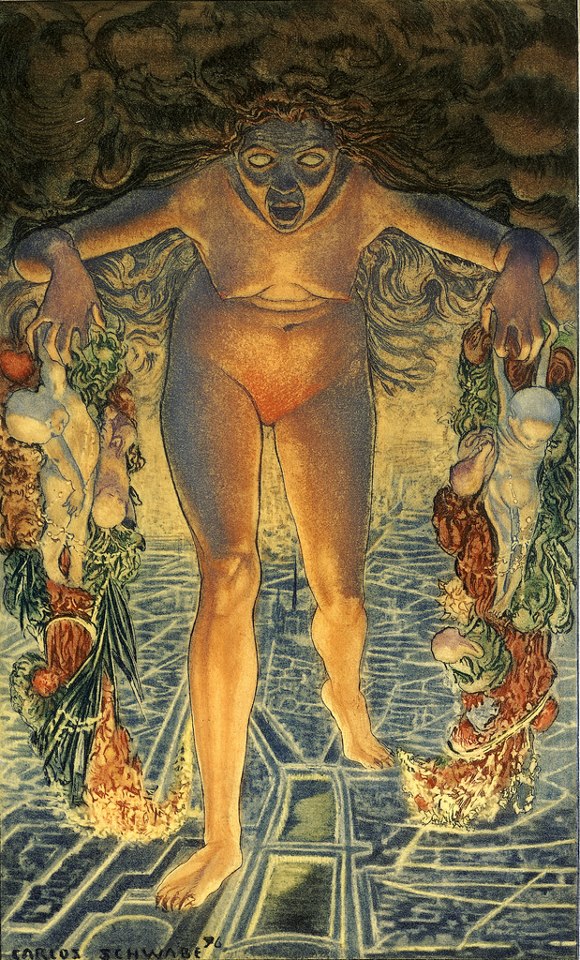
Carlos Schwabe
“Le crépuscule du soir”
from Fleurs du Mal (1900)
This poem is from Baudelaire’s 1861 masterpiece, Les Fleurs du Mal (read the original French, as well as two more, quite divergent, translations HERE):
Evening Twilight
Delightful evening, partner of the crook,
Steals in, wolf-padded, like a complice: look:
Heaven, like a garret, closes to the day,
And Man, impatient, turns a beast of prey.
Sweet evening, loved by those whose arms can tell,
Without a lie, “Today we’ve laboured well:”
Sweet evening, it is she who brings relief
To men with souls devoured by one fierce grief,
Obstinate thinkers drowsy in the head,
And toil-bent workmen groping to their bed.
But insalubrious demons of the airs,
Like business people, wake to their affairs
And, flying, knock, like bats, on walls and shutters.
Now Prostitution lights up in the gutters
Across the glimmering jets the wind torments.
Like a huge ant-hive it unseals its vents.
On every side it weaves its hidden tracks
Like enemies preparing night-attacks.
It squirms within the City’s breast of mire,
A worm that steals the food that men desire.
One hears the kitchens hissing here and there,
Operas squealing, orchestras ablare.
Cheap tables d’hôte, where gaming lights the eyes,
Fill up with whores, and sharpers, their allies:
And thieves, whose office knows no truce nor rest,
Will shortly now start working, too, with zest,
Gently unhinging doors and forcing tills,
To live some days and buy their sweethearts frills.
Collect yourself, my soul, in this grave hour
And shut your ears against the din and stour.
It is the hour when sick men’s pains increase.
Death grips them by the throat, and soon they cease
Their destined task, to find the common pit.
The ward is filled with sighings. Out of it
Not all return the scented soup to taste,
Warm at the hearthside, by some loved-one placed.
But then how few among them can recall
Joys of the hearth, or ever lived at all!
— translated by Roy Campbell, Poems of Baudelaire (New York: Pantheon Books, 1952)
dax riggs – the beast in me
egghead (2004)
I sleep with one eye open, so I can see them coming.
I can’t get away, but at least I can see them coming and steel myself.
Ideas like bunnies fuck me in my bed.
Sometimes they bounce in uninvited, coquettish, and it’s almost fun. They keep me up till morning. I writhe, giggle hysterically, chase them pillow to post. Fluff tickles, a humid sneeze, and I’m knocked up, swelling anaphylactically. On colder nights I’m gang-raped, tied down and stabbed, bloating with high-pressure jets of rabid spores.
However it happens, the thoughts germinate in swarms, another and another and another sprouting.
I’m weepy again. Exhausted.
I don’t want the mutants that grow from these unions. I wish there was a contraceptive. A chastity belt. Anything to stop this brood, to render my imagination infertile. The pills are useless.
I can feel my chemistry changing inexorably as the cells divide. Thalidomide embryos kick with vestigial limbs, opposable pink stubs. Leprous digits dropping off and repropagating like mitotic cacti. Opaque eyes, squamous ear buds, mouths filmed over with milky membrane. Foreheads bulging with gestating thoughts trapped in undifferentiated tissue, crying out restlessly in underwater bubbles before they can even breathe. They’re so ugly!
Fruitless and multiplying.
I have to abort them all.
Distended oxygen thieves.
They mustn’t breathe.
They mustn’t breed.
Halt the assembly line!
I wish I could give these little niggling creations a chance, the benefit of my doubt. Wish I were able to carry them to term, to quietly, patiently allow them to ripen inside me till they could live by themselves. If only human nature could be allowed to take its organicky course… I cry for their inchoateness as I spew them out. It seems such a pity that I’m allergic to them.
Yes, they’re poisoning me.
Yes, I make myself sick.
Yellow serum oozes the truth of what I’m doing. I’m bleeding inside, putrescing slowly.
Maybe I’ve succeeded this time in gouging free? I wonder every time if what I’ve done will make me barren.
But no, the root won’t be cauterised. I still malfunction just fine afterwards. Each time I pick at the raw scab over the umbilical entrance, each time I lance the pus, another swelling surfaces elsewhere, ballooning mercilessly with the filth that I’m never able to excise completely, swimming with stillborn nonsense.
I’m leaking rotten discharge out of every opening. I don’t even try to hide the bulimic blurts any more. Everyone knows. I can’t stay home ALL the time. I’ve become inured to their “Shut up!” “Shut up!”… I like to believe they’d be more sympathetic if only they understood the advanced state of septicaemia I’m living with. Then again, no one likes someone else’s bloody vomit on their shoes I s’pose… They recoil, grimaces masked with grins.
I smile beatifically.
Plop!
Another black clot of afterthought.
Malformed.
Malignant.
It smells disgusting.
And oh, the cramp!
The nausea rises, throbbing.
Heave. Swallow. Metallic post-nasal drip.
Rises again…
I can’t down another millilitre of this bloody mucus, eat one more word.
BLAAAAAAAAAAAAAAAAAHAHAHAHA
Sorry.
I’ll go home now.
Lock the door.
Lie down. Palms up.
Oh it’s quiet.
Teeth chattering.
SHUT UP!
Baby talk.
Stupidness.
Stupor.
Smooth and cool… So serene. So sterile for a few moments.
But the sweet stench is creeping back. I turn on my side, hug my legs up to my chest. And my cheek is wet with the dark patch spreading on my sheets. Squirming with infection, with congealing dread. I scrub and scrub, but the stain is under my nails.
So? I’ll paint them vamp red then.
I click on the hundred-watt bulb, swinging futile against the darkness, awaiting the cuddly incubi’s return. I can hear them breathing behind the curtains.
First published at http://www.africans.co.za, april 22, 2004
 fleurmach