Live from Paris, St Merry Church, March 25th, 2011. Ensemble Le Balcon (Paris), Stephen O’Malley, conducted by the composer, Romanian hyper-spectral composer, conductor and pianist Ana-Maria Avram.
Monthly Archives: October 2012
breathe sparingly
“Silently, Siddhartha exposed himself to burning rays of the sun directly
above, glowing with pain, glowing with thirst, and stood there, until he
neither felt any pain nor thirst any more. Silently, he stood there in
the rainy season, from his hair the water was dripping over freezing
shoulders, over freezing hips and legs, and the penitent stood there,
until he could not feel the cold in his shoulders and legs any more,
until they were silent, until they were quiet. Silently, he cowered in
the thorny bushes, blood dripped from the burning skin, from festering
wounds dripped pus, and Siddhartha stayed rigidly, stayed motionless,
until no blood flowed any more, until nothing stung any more, until
nothing burned any more.
Siddhartha sat upright and learned to breathe sparingly, learned to
get along with only few breaths, learned to stop breathing. He
learned, beginning with the breath, to calm the beat of his heart,
leaned to reduce the beats of his heart, until they were only a few and
almost none.”
– from Siddhartha by Hermann Hesse
cyber (bloodless)
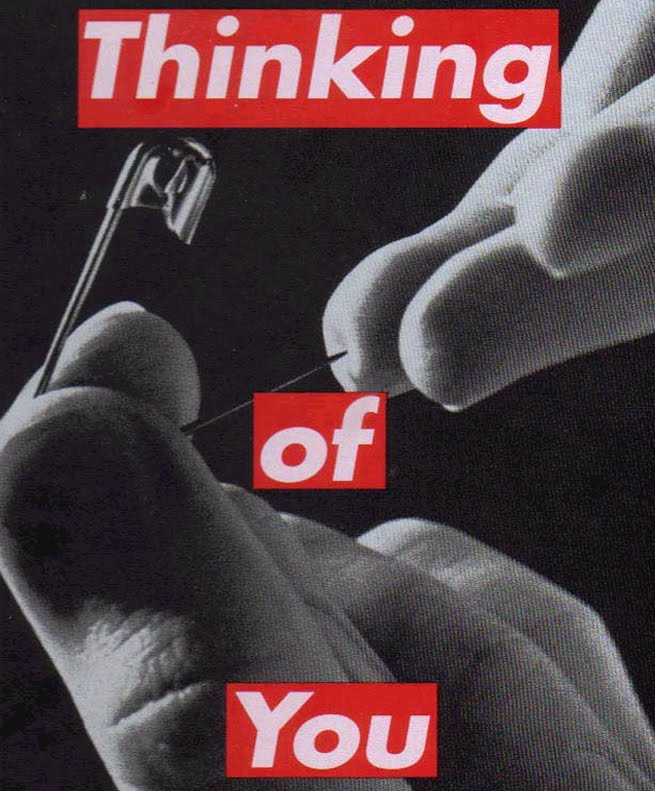
Barbara Kruger, Untitled (Thinking of You), 1999-2000
Photographic screenprint on vinyl
two inch punch – moonstruck
Taken from Saturn: The Slow Jams EP, released on 16th July 2012 on PMR Records.
Footage of Jane Fonda from Barbarella (1968, directed by Roger Vadim), re-edited by Matt Cronin.
valentine – evelyne axell
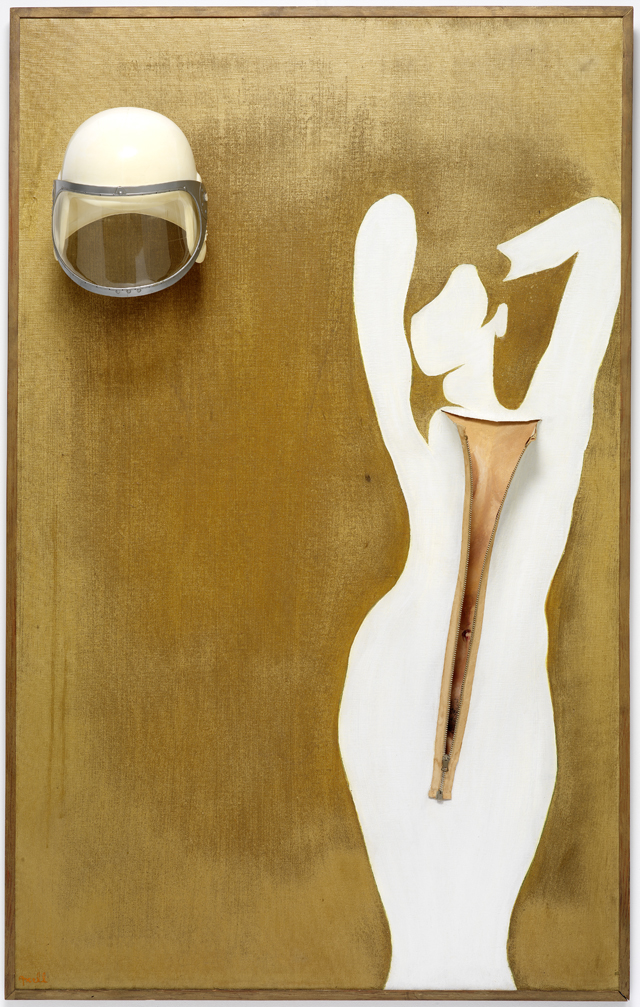 “Valentine” (1966) by pop artist Evelyne Axell. The work is a homage to Valentina Tereshkova, who, on June 16, 1963, became the first woman to fly into space.
the crazy state of affairs
it’s like tetris, when the shapes are raining down, apocollapse from the sky, and you have the wrong shape for the chasm you need to fill and it blocks the hole and then the right one comes along and shit shit shit it has nowhere to go and it touches the ceiling and you’re dead.
siberian russian folk chorus – age-old pines above the shusha
Astonishingly beautiful and powerful crescendo. More information about this 1969 recording HERE.
emily brontë – wuthering heights
Heaven did not seem to be my home; and I broke my heart with weeping to come back to earth; and the angels were so angry that they flung me out into the middle of the heath on the top of Wuthering Heights; where I woke sobbing for joy. That will do to explain my secret, as well as the other. I’ve no more business to marry Edgar Linton than I have to be in heaven; and if the wicked man in there had not brought Heathcliff so low I shouldn’t have thought of it. It would degrade me to marry Heathcliff now; so he shall never know how I love him; and that not because he’s handsome, Nelly, but because he’s more myself than I am. Whatever our souls are made of, his and mine are the same, and Linton’s is as different as a moonbeam from lightning, or frost from fire…
… I cannot express it; but surely you and everybody have a notion that there is, or should be an existence of yours beyond you. What were the use of creation if I were entirely contained here? My great miseries in this world have been Heathcliff’s miseries, and I watched and felt each from the beginning; my great thought in living is himself. If all else perished, and he remained, I should still continue to be; and all else remained, and he were annihilated, the universe would turn to a mighty stranger; I should not seem a part of it. My love for Linton is like the foliage in the woods. Time will change it, I’m well aware, as winter changes the trees — my love for Heathcliff resembles the eternal rocks beneath — a source of little visible delight, but necessary. Nelly, I am Heathcliff — he’s always, always in my mind — not as a pleasure, any more than I am always a pleasure to myself — but as my own being — so, don’t talk of our separation again — it is impracticable.
~ Catherine Earnshaw (Ch. IX).
_____
Wuthering Heights is the only published novel by Emily Brontë, written between October 1845 and June 1846 and published in July of the following year. It was not printed until December 1847 under the pseudonym Ellis Bell, after the success of her sister Charlotte Brontë’s novel Jane Eyre. A posthumous second edition was edited by Charlotte in 1850.
kate bush – wuthering heights
Official music video (version 1) for the single “Wuthering Heights” – Kate’s debut single. Released in January 1978, it became a No.1 hit in the UK singles chart and remains Kate’s biggest-selling single. The song appears on Kate’s 1978 debut album, The Kick Inside, and was also re-recorded in 1986 for the greatest-hits album The Whole Story.
infinite body collapse
Screening of new video delay works by Alex Carpenter with dancer Alexis Maxwell
Perhaps ghosts don’t exist “between” normal points of focus, but reside at the core of these points. The essence of things lies within the things, not somewhere else. We don’t need to make the things softer and more delicate, just because we imagine an essence that is itself soft and delicate. If anything, we need to make the things LOUDER, MORE forceful, MORE singular. Maybe then, once our perception tires of the surface layers, becomes exhausted, we will at last see the fragile core that has always eluded us.
“Infinite Body Collapse” is a collection of new works by Alex Carpenter, drawn from recent video delay sessions with dancer Alexis Maxwell, as well as audio delay recordings made this summer in an allegedly haunted house in Alexandria, Virginia.
Through Alex’s video delay system, performed actions (danced, drawn, light-operated) are captured and layered continuously upon playback with previous cyclical generations, providing material for the performer to build on in a largely “unthinking” way. The system engages the performer in a focused, ecstatic process of observing and responding, as normal points of focus are saturated, obliterated, and a space is cleared for the unfolding of activity on a different scale.
This excerpt demonstrates perfectly how the best video delay material is built – with an emphasis on potential within the material, rather than a creator’s plan realized “through” material. This is not “composition”, it is excavation – a digging through to something normally invisible…
Microscope Gallery
4 Charles Place, Brooklyn
Saturday October 6th, 7pm ($6)
michaël borremans: identity is a retrograde myth
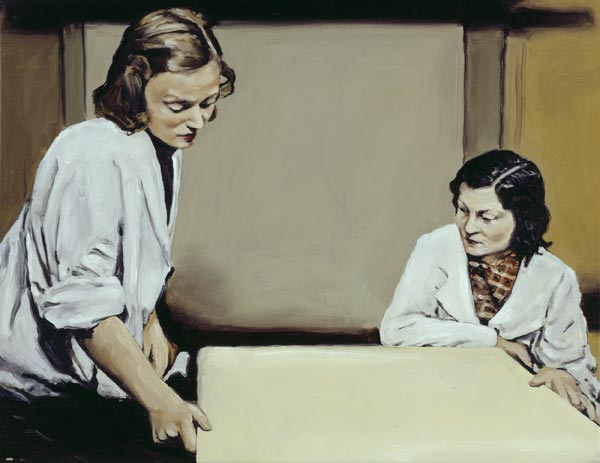
Belgian Artist Michaël Borremans insists that his figurative works and portraits do not depict individuals. He aspires to the archetypal, the generic and the anonymous. Identity is a retrograde myth, social function and structural determination are the defining human conditions. So it goes. But Borremans’ figures invite a kind of sympathetic response which undermines his arguments against the dignity of the individual.
David Coggins interviews Michael Borremans: David Coggins Your new exhibition features a number of recent films. What can people who only know your paintings expect to see?
Michaël Borremans I’m showing a couple of older films. Add and Remove [2002] is based on a painting from my first show at David’s gallery. What I try to do with films comes out of the paintings. While painting, I had the feeling that I needed a different element of light or movement. My interest in film has always been there since I was young, so I started experimenting. The Storm [2006] is a 35mm projection of a live image. But the work is still more painting than film—the medium is film, but the way I approach it is like painting. That’s why the films are so unusual. When people ask me if they can screen the films publicly, I can’t agree to it because they’re really not meant for that.
DC Because the films are very slow.
Mb Yes. The rhythm is very important—they have to be as slow as breathing. I’m experimenting in the way I show them—mostly on an LCD flat screen which is framed, and this frame is wooden, so the film is like a framed work.
DC Your paintings have such a physical quality. Was it hard to give up that painterly surface?
MB Not really. A filmed image has another quality—you use lenses, you use lights. I use actual film[not video], so the images are grainy. You can get some painterly qualities even though it’s another language; it has its own poetry. I’m interested in cinematic esthetics, like going in and out of focus.
DC So you can manipulate the cinematic qualities the same way you can manipulate the surface of a canvas or of paper?
MB Yes.
DC In your paintings, you make references to the history of the medium—to Manet and Goya, for example. Do your films likewise refer to a cinematic history with its own traditions and allusions?
MB I don’t refer to these things intentionally—the references are there in all my work. There are references to the history of art that are not specific. They appeal to your consciousness in a very open way. It’s something I think about. All the imagery of the 20th century and earlier is baggage we have to deal with. My work is an answer to that, a dialogue with that.
DC With anyone in particular?
MB Not really. But of course there are figures you pick out, like Manet, who you’re so conscious about. My last show at David Zwirner [“Horse Hunting,” 2006] was really an intentional dialogue with Manet paintings like The Dead Toreador and The Execution of Maximilian.
DC And he appeals to you as the beginning of modernist painting?
MB He’s an interesting figure because he’s seen that way. But at the same time he’s also the last classic painter, and that aspect is just as important.
 DC Can you discuss the difference between narrative in painting and in film? In film we generally expect something to happen, but you seem to resist that expectation.
MB You can look at the films for two seconds or watch them straight through; they’re like a presence. With the paintings, at first you expect a narrative, because the figures are familiar. But then you see that some parts of the paintings don’t match, or don’t make sense. The works don’t come to a conclusion in the way we expect them to. The images are unfinished: they remain open. That makes them durable.
DC There’s a mystery in your paintings that a viewer wants to solve, but it can’t be solved. You invite people in but make an image that’s ultimately unreadable. Is there a tension that you’re looking for?
MB There’s a dichotomy—there are two poles and you’re in between them. There is a tension, but it’s not a game—it’s like research.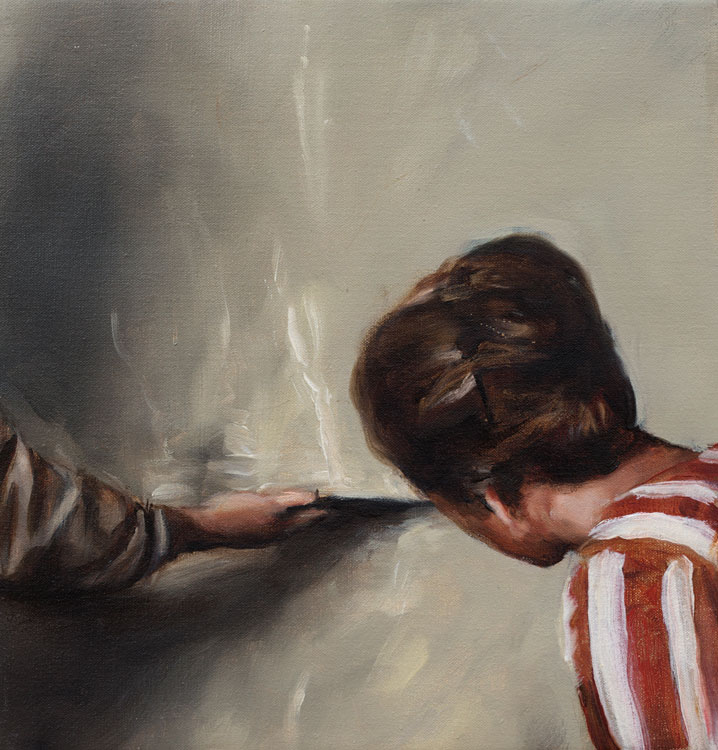
DC Your drawings deal with figures that are extremely small, your paintings can be very large and your films are often projected life-size. Could you address scale, and shifts in scale, in your work?
MB Scale is for reference, for recognition. By playing with that and making it unclear, you provoke a kind of anarchy in the image. In the drawings I use that a lot and make references to models. In our society we use models to try things, to test things; scientists use models. The model as a metaphor for our actions is very appealing to me. That’s why you have these tiny figures.
DC Like an architectural model where a figure shows the scale?
MB Yes, like in architecture, but also in warfare.

DC You often portray people carrying out activities that are fruitless. People have compared your work to Beckett’s. Do you think that your work deals with the absurd so overtly?
MB The actions are often senseless. But the work switches between an aspect of the absurd and a romantic connotation, like a vanitas. That the human being is a victim of his situation and is not free is a conviction of mine.
DC There’s a feeling in your work of invisible power, of things the figures are waiting for and can’t see, or something that’s beyond their control. Continue reading
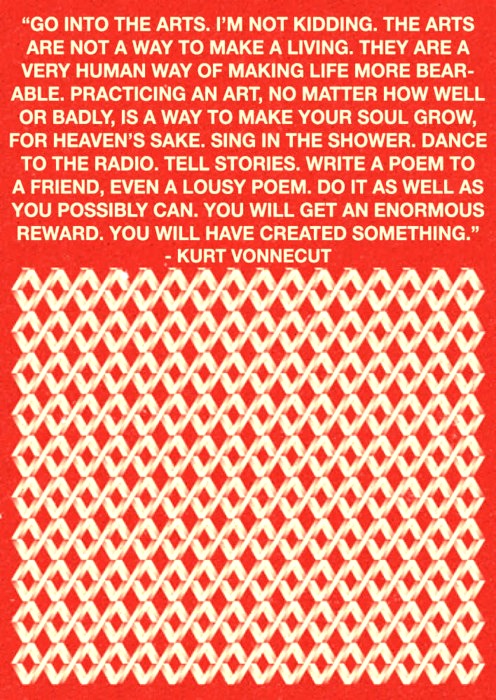
kurt vonnegut on practising art
Reblogged from afropolitanexplosiv.
history by robert lowell
History has to live with what was here,
clutching and close to fumbling all we had–
it is so dull and gruesome how we die,
unlike writing, life never finishes.
Abel was finished; death is not remote,
a flash-in-the-pan electrifies the skeptic,
his cows crowding like skulls against high-voltage wire,
his baby crying all night like a new machine.
As in our Bibles, white-faced, predatory,
the beautiful, mist-drunken hunter’s moon ascends–
a child could give it a face: two holes, two holes,
my eyes, my mouth, between them a skull’s no-nose–
O there’s a terrifying innocence in my face
drenched with the silver salvage of the mornfrost.
clutching and close to fumbling all we had–
it is so dull and gruesome how we die,
unlike writing, life never finishes.
Abel was finished; death is not remote,
a flash-in-the-pan electrifies the skeptic,
his cows crowding like skulls against high-voltage wire,
his baby crying all night like a new machine.
As in our Bibles, white-faced, predatory,
the beautiful, mist-drunken hunter’s moon ascends–
a child could give it a face: two holes, two holes,
my eyes, my mouth, between them a skull’s no-nose–
O there’s a terrifying innocence in my face
drenched with the silver salvage of the mornfrost.
adorno on beauty
It rescues in the object something of the peacefulness of its day of creation.
hollis frampton – a visitation of insomnia
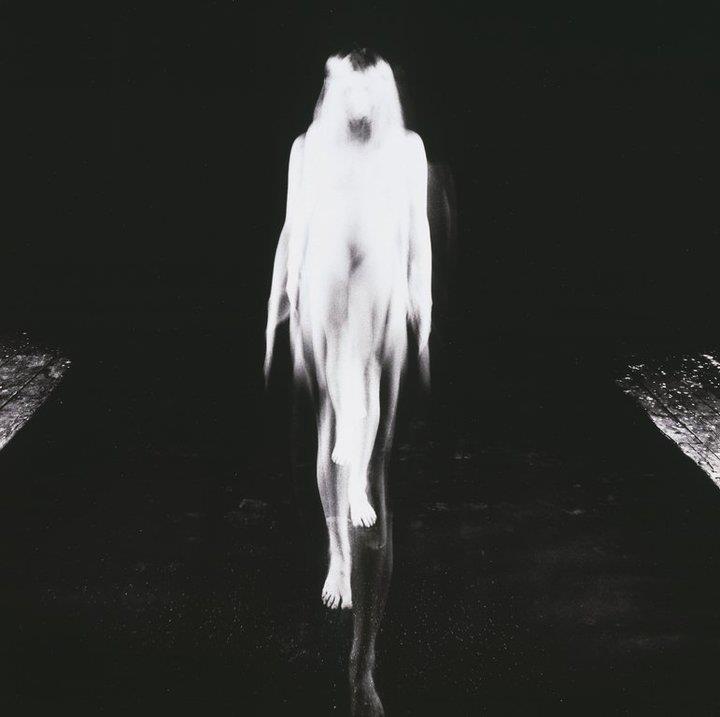
Hollis Frampton – A Visitation of Insomnia (1970-1973)
8|
sunglasses at night

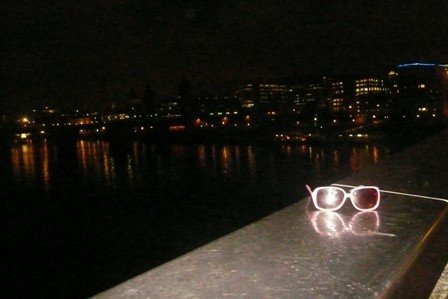
Marga Duggan – “I wear my Sunglasses at Night”
pamella dlungwana – a shadow in the shape of our loss
it is a smile
sleeping in the folds
of a dimple
it is you
swathed in a blanket
of absences
it is my prayers
dressed in a coat
of silences.
lee morse – tain’t no sin to dance around in your bones
My favorite Lee Morse song
…

by Alison Scarpulla
jolie holland – springtime can kill you
lee morse – unemployed sweetheart
A proper profile on Lee Morse to follow when I have more time… I adore her so.
ukulele lady… for cherry bomb
broken harbors
Stars of the Lid – “Broken Harbors” (Parts 1, 2 & 3) from The Tired Sounds Of Stars Of The Lid (Kranky, 2001)
Tom Jurek, writing for AllMusic, said of this recording:
Having always made records that exist at the margins of descriptive language, this project by Austin, Texas’ most spaced-out duo, Stars of the Lid, is their most ambitious to date, featuring 11 tracks parcelled over two CDs (or three LPs), four of which are multi-part suites. Taking a step further down the road they embarked upon with Avec Laudanum, the duo have expanded the pure space and black hole vistas they offered on Music for Nitrous Oxide and The Ballasted Orchestra to embrace small melodic fragments that seemingly endlessly repeat through minimally varying textures. The effect can either be soothing (“Requiem for Dying Mothers”), hypnotic (“Broken Harbors”), or unsettling (“Austin Texas Mental Hospital”). The trademark analogue guitar/tape cut ups are ever present; what would normally be considered the sound of a guitar is nowhere in aural earshot…
…There is a progression in all the music here, but it is so subtle, so quiet and unintrusive, the listener would have to pay very careful attention to everything that is happening. More realistic, however, is for those who take pleasure in SOTL’s music and inner space explorations — for this truly is a music of the inner terrain — to offer themselves little distraction other than a comfortable chair or resting place in order to let this music enter at will, naturally and expand until it takes you over the edge into something resembling sleep, but far more delicious. Despite its more song-like structures, More Tired Songs is actually for those who are tired of songs, period, and are looking for something less, something unspeakably beautiful and determinedly unmentionable in its vast and luxuriant erasure from any musical category.
about me
i talk a lot
i’m better at listening
i hate feeling dispensable
i’ve never felt necessary
i’m used to waiting
i’m not very good at it
i’ve had too much practice
wish you were here by catherine anyango
(for scott of the antarctic)
poor unfortunate souls
“It won’t cost much… Just your voice.”
From Disney’s The Little Mermaid (1989)
anima rising
Joni Mitchell – “Don’t Interrupt the Sorrow”, from The Hissing of Summer Lawns (1975)
“It takes a heart like Mary’s these days when your man gets weak.”
Acoustic guitars – Joni Mitchell
Electric guitars – Larry Carlton
Dobro – Robben Ford
Bass – Wilton Felder
Drums – John Guerin
Congas – Victor Feldman

chiaroscuro
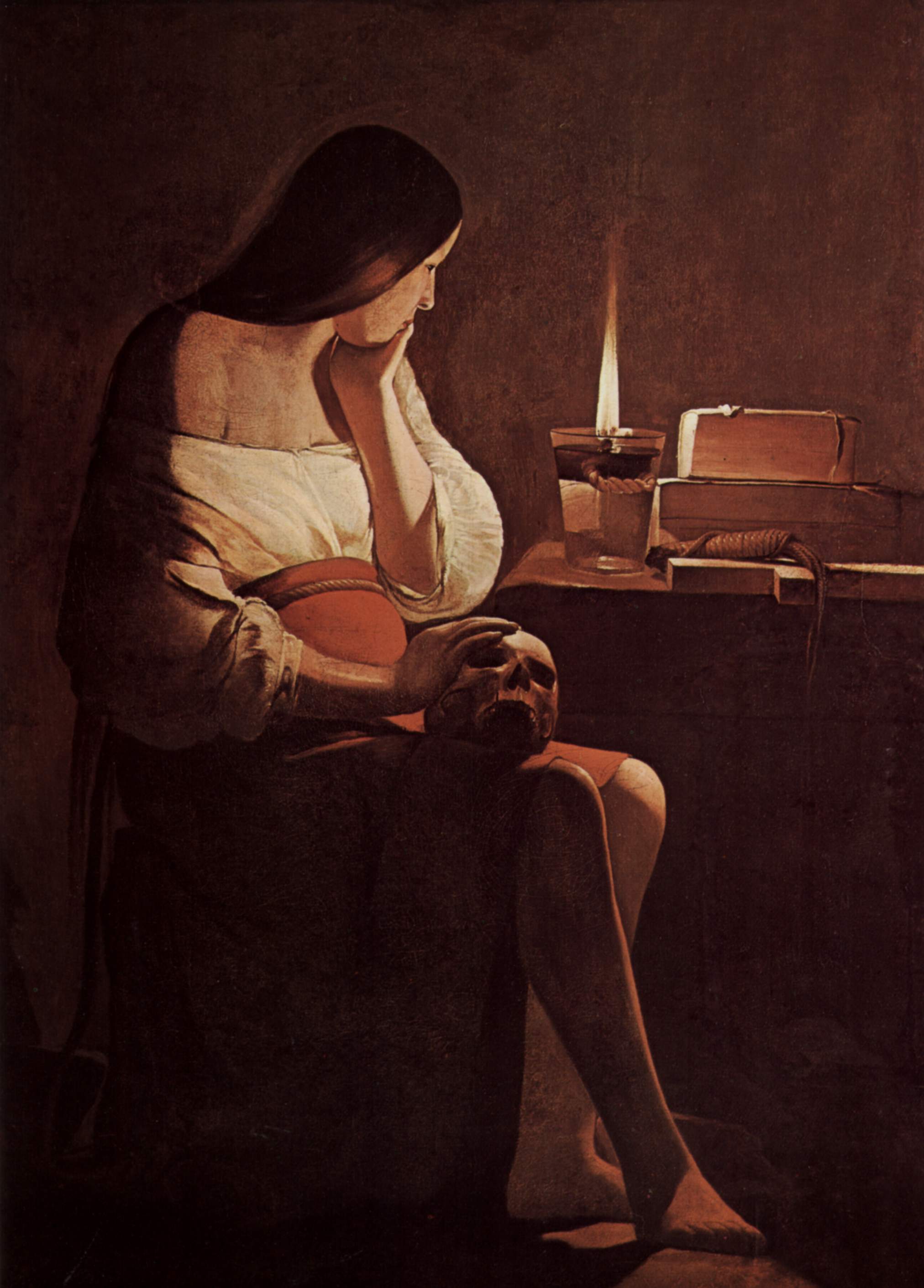
Georges de La Tour
Magdalen with the Smoking Flame
c. 1640
suede – animal nitrate (1993)
 fleurmach