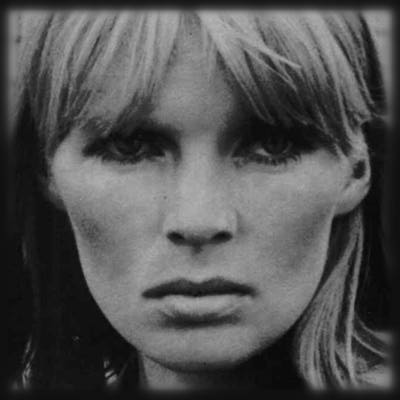
The Velvet Underground & Nico – I’ll Be Your Mirror (acetate version), recorded 25/04/1966 at Scepter Studios, New York.
(An acetate is a very fragile disc, cut prior to the cutting of the master disc used for mass production of records, used in the same way as a proof in photography.)
“Well, I could liken you to a werewolf, the way you left me for dead, but I admit that I provided a full moon.
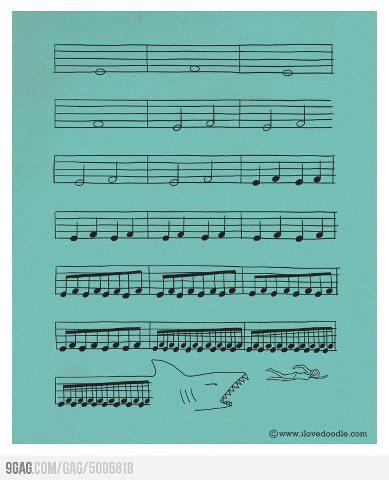
And I could liken you to a shark, the way you bit off my head, but then again I was waving around a bleeding, open wound.”
From The Idler Wheel Is Wiser Than The Driver of The Screw, And Whipping Cords Will Serve You More Than Ropes Will Ever Do (2012) – Fiona Apple/Epic Records.
this is why
i wander the wilderness
beyond the horizon
you meet me round the corner, down the road
that’s not who i am
some old dirty secret
some unclean spirit
cast out into darkness
it’s never been about possession
I left a trail of myself every place that I have been through,
And going bald is the most manly thing that I’m ever gonna do.
I tell the earth, “thanks for the hair, thanks for the skin, thanks for the bone”,
Though I now slowly give it back I still appreciate the loan.
Just tell me that you like me in the same sentence as a mountain side.
‘Cause it would be such a relief to be objectified.
‘Cause who says it’s so important to sort through these thoughts of ours.
Maybe that’s why we love to try to see ourselves from the outside
In photographs and videos and diaries and mirrors.
‘Cause it would be such a relief to be objectified.
And the closest that I ever got still seems to leave a lot to go,
But the horizon seems to be a place that nobody can know.
Looking forth and looking back, our vision can’t extend beyond the quaint vanishing points our bodies recommend,
And I’ll help you move some furniture somewhere it’s never been before, but the room’s so small the dresser drawer won’t let us get back out the door.
Just tell me that you like me in the same sentence as the building.
It would be such a relief to see…
I’m just a natural thing.
We’re only boats,
And the boats are only empty
And you can’t blame an empty boat that’s on a river to the sea.
You can’t blame a billion boats without a sail, without a sailor.
And that’s how we look in photographs, and diaries, and mirrors.
And the plants turn into ants, and the ants turn into plants,
And children are clumsy people, and old people are rotting children.
And I still don’t have a cell phone, but this sea shell gets reception,
And the ocean won’t stop calling, and I want a restraining order.
Just tell me that you like me in the same sentence as a building.
It would be such a relief to see I’m just a natural thing.
We’re just a natural thing.
Just like anything.
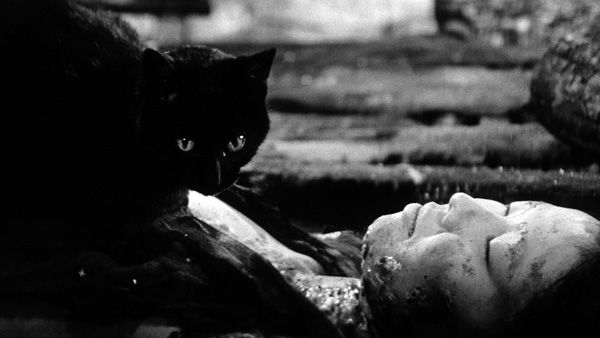
In this poetic and atmospheric horror fable, set in a village in war-torn medieval Japan, a malevolent spirit has been ripping out the throats of itinerant samurai. When a military hero is sent to dispatch the unseen force, he finds that he must struggle with his own personal demons as well. From Kaneto Shindo, director of the terror classic Onibaba, Kuroneko (Black Cat) is a spectacularly eerie twilight tale with a shocking feminist angle, evoked through ghostly special effects and mindblowingly awesome visuals.
Maitland McDonagh on Kuroneko: The Mark of the Cat
Scratch the surface of a contemporary J-horror classic like Ringu (1998) or any of the Ju-on films (2000–03) and you’ll glimpse Yabu no naka no kuroneko (Black Cat from the Grove), released in the U.S. as simply Kuroneko (1968). Shot in shimmering, widescreen black and white and suffused with an unsettling eroticism, Kaneto Shindo’s elegant nightmare of earthbound violence and otherworldly revenge wasn’t the first film to be rooted in Japanese folk stories about onryo, the vengeful spirits of those who were abused in life, usually women, whose rage is so great it can’t be contained.
The Ghost of Yotsuya (Nobuo Nakagawa, 1959) and Kwaidan (Masaki Kobayashi, 1965) both preceded it, and other classics of Japan’s golden age of filmmaking—notably Kenji Mizoguchi’s Ugetsu (1953)—featured female spirits. And supernatural cats had appeared in Black Cat Mansion (Nakagawa, 1958) and The Ghost Cat of Otama Pond (Yoshihiro Ishikawa, 1960). But Shindo drew those threads together and wove them into Kuroneko’s unprecedentedly unnerving women, whose descendents are now many, and into a terrifically spooky story whose resonance extends beyond the satisfying chill of an exotic campfire tale and whose wrenching psychological anguish transcends specific cultural traditions…
… Western folklore regularly puts cats in general, and black cats in particular, in league with witches and other dark forces, but Japanese folktales are more ambiguous, starting with the fact that, while all felines are suspected of being more than handy mousers and cute house pets, they allow for two kinds of supernatural cats, the manekineko and the bakeneko. Anyone who has eaten in a Japanese restaurant knows what a manekineko looks like: perched somewhere near the cash register, it sits with one paw raised in greeting and the other resting on a coin, benevolently beckoning good fortune to come on in and stay awhile—Hello, Hello Kitty! Thebakeneko, by contrast, is kissing cousin to the shape-shifting fox (kitsune) and the sly, mischievous tanuki (a small, scruffily kawaii canid native to East Asia): none are inherently evil, but all are capable of using their supernatural knack for mimicking other creatures—including human beings—to stir up trouble. That said, the fact that bakeneko often eat the person whose form they’ve taken suggests they’re less amusing and more alarming than their fellow shapeshifters, and the shadow of feline malevolence lurks in Kuroneko’s fog-swirled gloom.
Read more of Maitland McDonagh’s article, which discusses the historical context of this horror masterpiece, HERE.
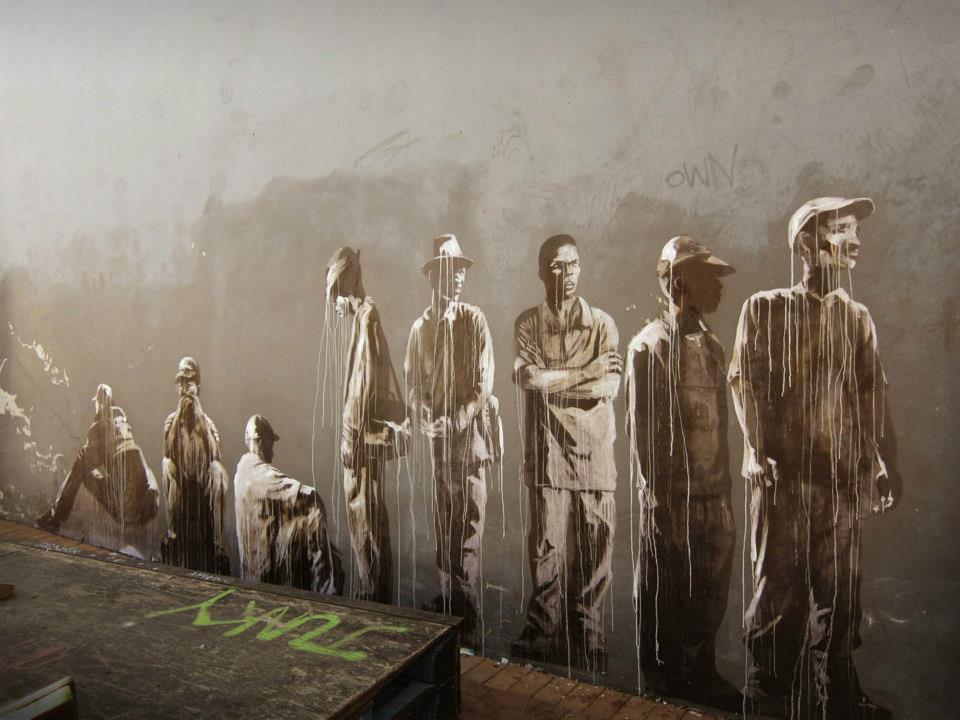
“miners are waiting for justice. workers are waiting for a living wage.
people are waiting for service delivery. refugees are waiting for assistance.
men are waiting for jobs. we are all waiting for an honest politician.
“so many people are waiting for others to do things first. to take the blame.
to do things for them. to take the fall. to build the country. to admit defeat.
there has been so much waiting in this country that much time has been lost…”it is the first instalment of my solo exhibition, fragments of a burnt history, which will soon unfold at the david krut gallery in johannesburg on november the 8th 2012.”
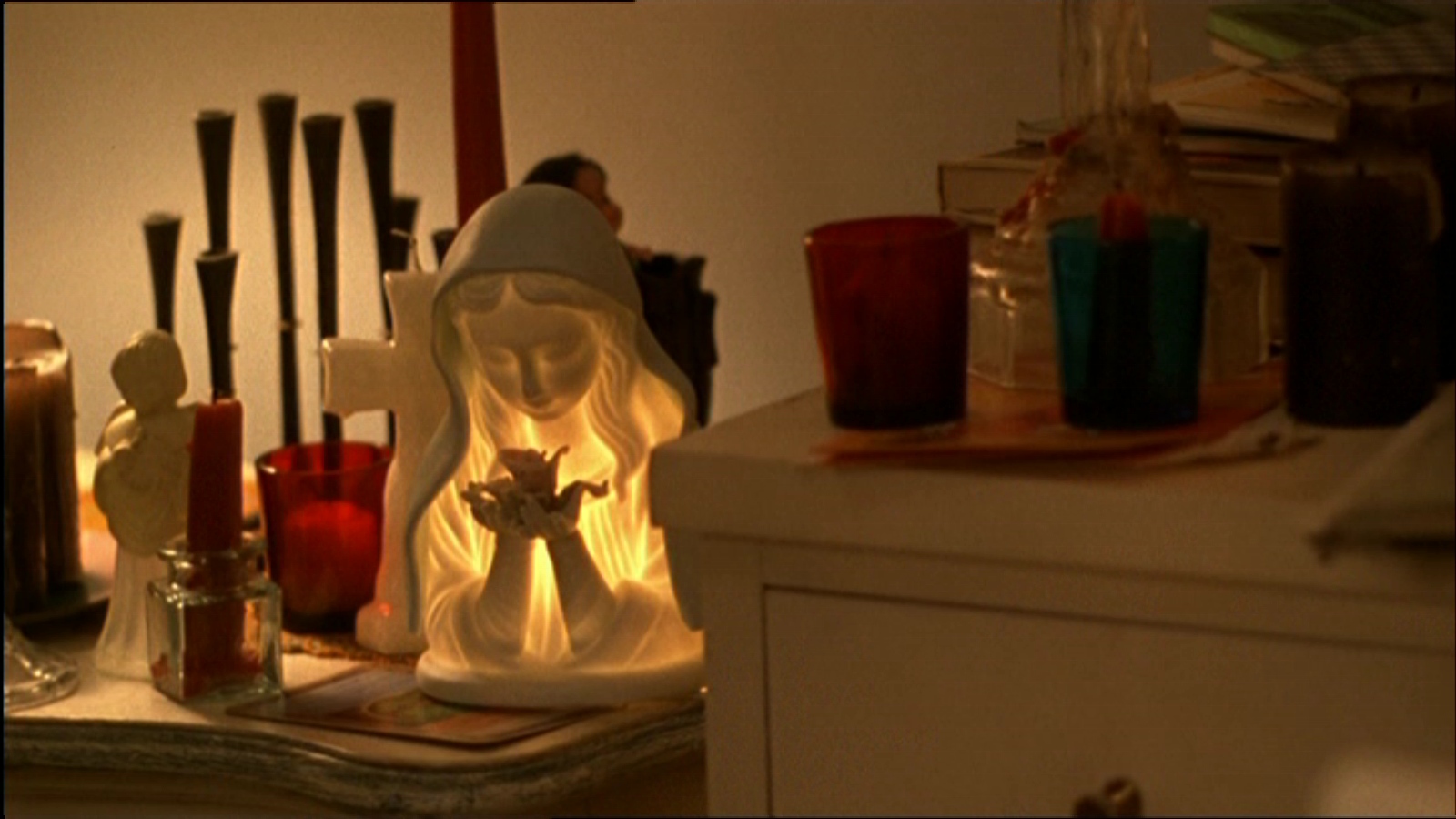
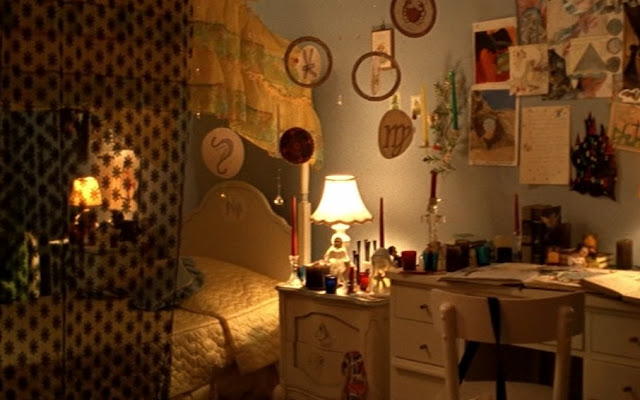
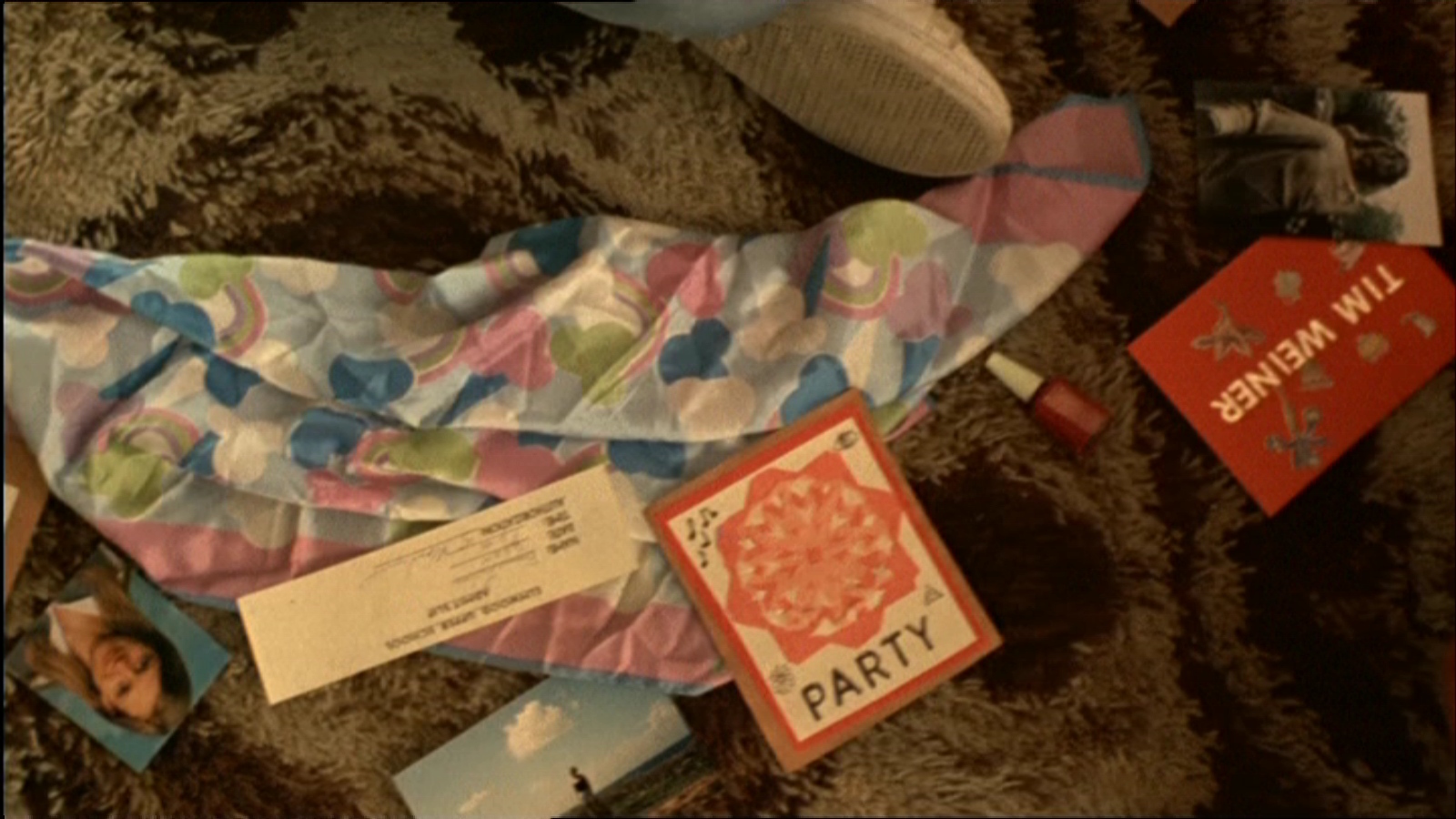
So much has been said about the girls over the years. But we have never found an answer. It didn’t matter in the end how old they had been, or that they were girls… but only that we had loved them, and that they hadn’t heard us calling… still do not hear us, up here in the tree house with our thinning hair and soft bellies, calling them from out of those rooms where they went to be alone for all time… and where we will never find the pieces to put them back together…
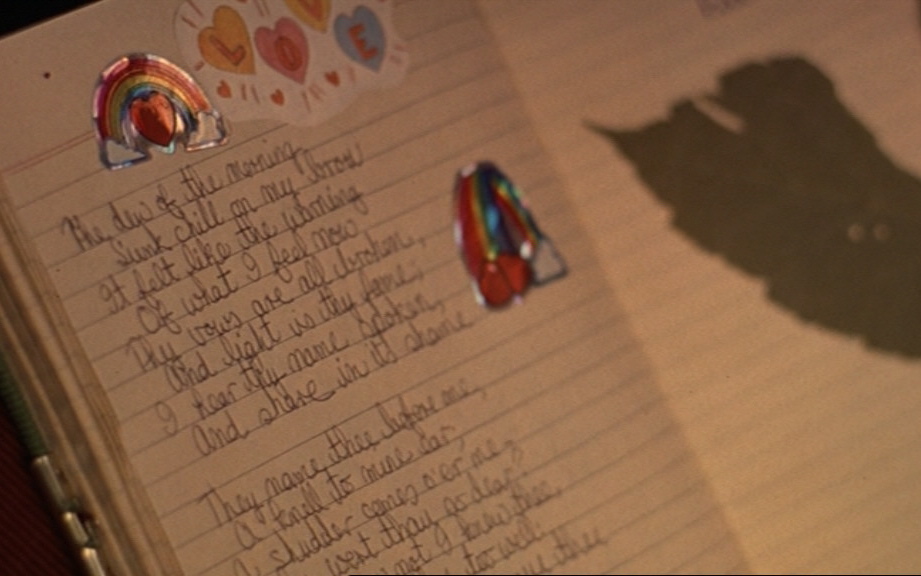
From Cecilia Lisbon’s diary:
Lux lost it over Kevin Haines, the garbage man. She’d wake up at five in the morning
and hang out on the front steps – like it wasn’t completely obvious.
She wrote his name in marker on all her underwear. Mom found them and bleached out the Kevins.
Lux was crying on her bed all day.
The trees like lungs filling with air.
My sister, the mean one, pulling my hair.
Narrator:
And so we started to learn about their lives, coming to hold collective memories of times we hadn’t experienced.
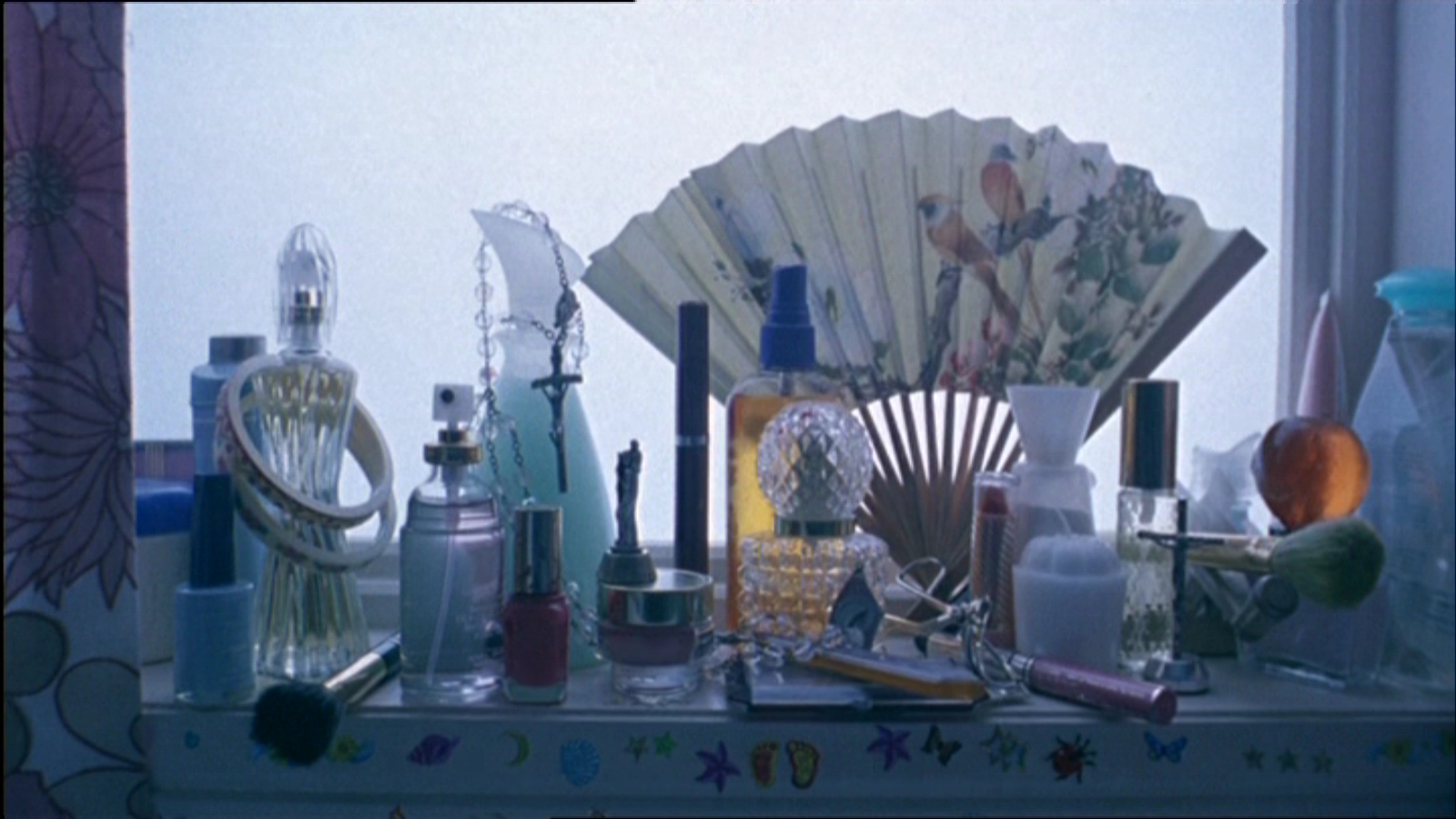
We felt the imprisonment of being a girl, the way it made your mind dreamy… so you ended up knowing
what colours went together.
We knew the girls were really women in disguise… that they understood love and even death… and that our job was merely to create the noise that seemed to fascinate them.
We knew that they knew everything about us. And that we couldn’t fathom them at all.
Screenplay based on the novel by Jeffrey Eugenides.
An astonishing piece, created for the Venice Biennale’s International Festival of Contemporary Dance, Italy, 2005 by Canadian dancer, choreographer and dance company director Marie Chouinard, OC (born 14 May 1955). Some excerpts from the performance at Place des Arts, Montreal, 2007:
In this work by Marie Chouinard, the company’s ten dancers execute variations on the exercise of freedom. Often, the dancers appear on points: on one, two, and even four at a time. In a spectroscopy of the gesture, we also see them using different devices – crutches, rope, prostheses, horizontal bars, and harnesses – which at times liberate their movements, at others fetter it, and at still others create it.
This use of accessories gives rise to unusual bodily shapes and gestural dynamics and opens onto a universe of meticulous and playful explorations in which solos, duos, trios and group work, in their labour, pleasure and invention, echo the human condition.
An aesthete beyond norms, Marie Chouinard presents her ideas on the way the indefinableness of the Other and the flagrancy of Beauty brush up against one another through an interpretation of Johann Sebastian Bach’s Goldberg Variations. Subtle and extravagant, sumptuous and wild, the work’s movements plumb the insoluble mystery of the body, of the living being.
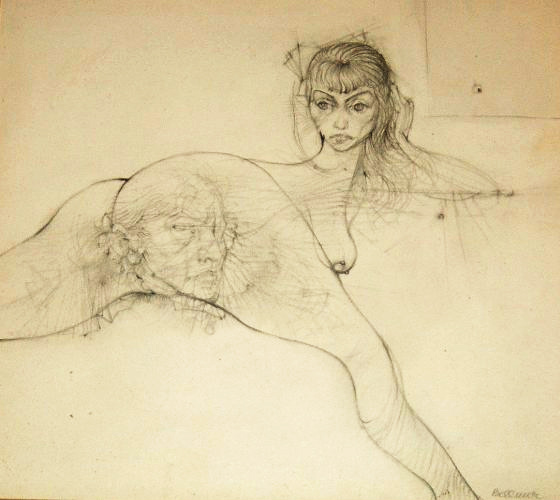
HANS BELLMER: The female body…is like an endless sentence that invites us to rearrange it, so that its real meaning becomes clear through a series of endless anagrams. (1)
UNICA ZÜRN: If woman is to put into form the ‘ule’ [Greek: matter] that she is, she must not cut herself off from it nor leave it to maternity, but succeed in creating with that primary material that she is […] Otherwise, she risks using or reusing what man has already put into forms, especially about her, risks remaking what has already been made, and losing herself in that labyrinth. (2)
my menstrual blood does not “run”.
it’s too viscous.
it builds up behind the bottleneck of my cervix until the weight of
sloughed-off lining gets too heavy to contain,
then it blurts out
in thick, slimy strands of not-baby,
a cosmic disappointment
smelling of fresh death.
sometimes crimson, still almost fecund,
sometimes older and blacker, a nauseating cousin of bile,
blended with albumen, like broken egg white, like frogspawn frustrated.
inside my insides,
god’s scraping a blunt teaspoon round and round,
clearing the walls of my womb for another hit-and-miss next month.
on a heavy day,
pulling out an incontinent tampon,
i sit there on the loo,
toilet paper wrapped round my fingers,
trying to abbreviate the sentence of clots
my lips are drooling into the toilet bowl water.
it’s not a lake, it’s a suspension,
a hanging paragraph of placental full-stops that goes on and on,
inexorable
and i wipe and shove in another wad of cotton to staunch the ooze for
another few hours of outer peace.
one day, sometime in my forties or fifties
i’ll be paroled,
retired from service.
god will give up on my body
and that will be the end of that.
it’s irrelevant what anyone else wants.
my cunt is me, but it’s also beyond me,
ordained for a purpose beyond my control,
just like your cock is you, but it’s also beyond you,
ordained for a purpose beyond your control.
mostly we are blasphemous.
the obsession with looking into cunts, like the obsession with hard cocks,
is an ontological obsession with discovering and controlling our cosmic origins,
an expression of our raging, impossible desire for omnipotence.
and indeed pornographic images ARE redundant in that they hold no
physical power to alter the workings of sex
those closeups of fucking are nothing more than flat reproductions of
ten centimetres of Life’s copy machine –
mostly they are over-man-ipulated and bear little resemblance to real
bodies interacting.
porn is the simulacral fantasy of ruling the universe.
Note I wrote this in 2009 as a comment on this piece:
“The main theme [of what we do] is expanding musical structures to a point where you can’t tell the difference anymore between music and not-music, or expanded to a point where it doesn’t make any difference anymore to you if it is music or not… It’s not going to be simplified into something like simple “destruction”. We don’t want anyone to come to the concerts just to see us destroying something. If we feel an attitude like that coming up we just get in a bad mood!”
I had always believed in Andre Breton’s freedom, to write as one thinks, in the order and disorder in which one feels, to follow sensations and absurd correlations of events and images, to trust to the new realms they lead one into. “The cult of the marvelous.” Also the cult of the unconscious leadership, the cult of mystery, the evasion of false logic. The cult of the unconscious as proclaimed by Rimbaud. It is not madness. It is an effort to transcend the rigidities and the patterns made by the rational mind.
Winter, 1931-1932, from The Diary of Anaïs Nin , Volume One 1931-1934
”I took the puppet, which was myself, and I flung it against the sky. Because light is such a magical, magical thing. See, a bird never flies into the dark, who is built for the light.”
From the Nonesuch Dance Collection.
1976 recording
Introduction by Martha Graham.
Choreography by Martha Graham.
Performed by The Martha Graham Dance Company.



 fleurmach