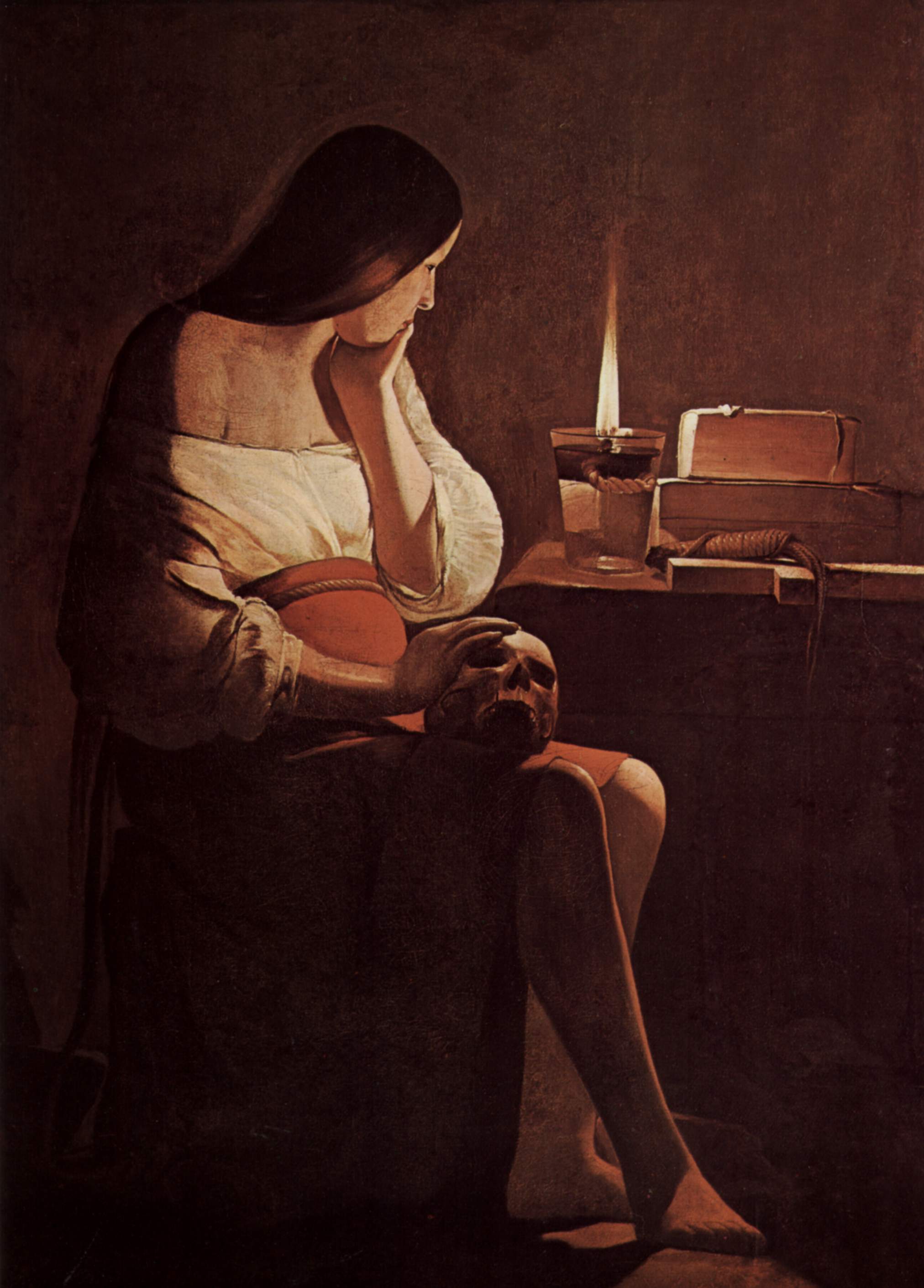
Georges de La Tour
Magdalen with the Smoking Flame
c. 1640
Georges de La Tour
Magdalen with the Smoking Flame
c. 1640
The Velvet Underground & Nico – I’ll Be Your Mirror (acetate version), recorded 25/04/1966 at Scepter Studios, New York.
(An acetate is a very fragile disc, cut prior to the cutting of the master disc used for mass production of records, used in the same way as a proof in photography.)
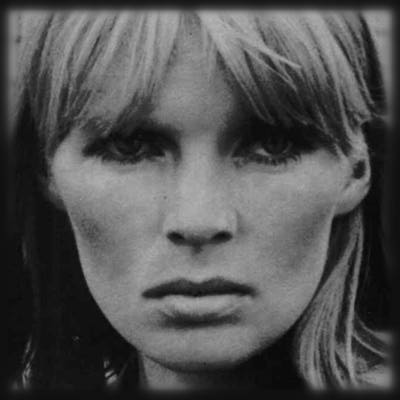
“I feel I’m anonymous in my work. When I look at the pictures, I never see myself; they aren’t self-portraits. Sometimes I disappear.”
“Cindy Sherman has explored different kinds of photography, but she has become one of the most lauded artists of her generation for her photographs of her impersonations. Since she arrived on the scene, in a 1980 exhibition, when she was in her mid-twenties, she has come before her own camera in the guise of hundreds of characters, and as an impersonator—which in her case means being a creator of people, and sometimes people-like creatures, who we encounter only in a single photograph—she has been remarkably inventive. Especially as a portrayer of types of people, whether someone who appears to be a perky suburbanite in town for a matinee, or a woman in a sweatshirt who seems both tired and bristling, or a club singer belting out a note, Sherman—who is now, at fifty-eight, the subject of a retrospective at the Museum of Modern Art—has shown herself as well to be a witty and shrewd social observer. And the sheer human spectacle of someone continually transforming herself into one person after another has proved riveting.”
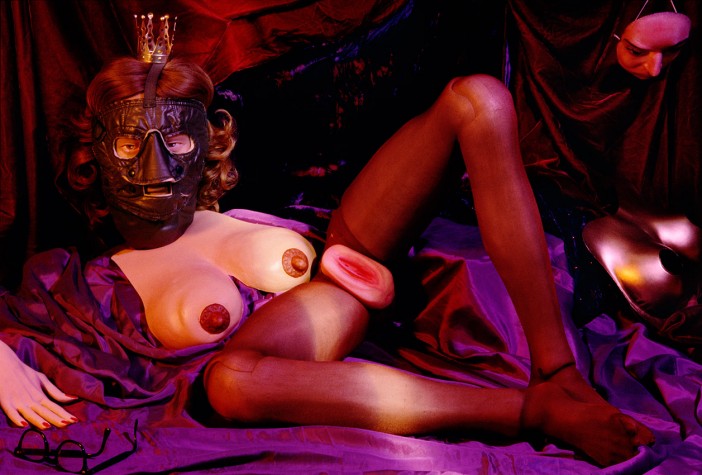 “…Her various accessories and props are appealingly economical and rudimentary, and, given that her art is based on deception, one could say that her large photographs, which sometimes come with transparently cheesy frames, are meant to have the appearance of fake paintings. During much of the 1990s, she also experimented, in pictures she herself was not in, with close cropping and artificial, theatrical color and lighting. But none of this quite erased the way that her pictures in general, and certainly those in which she appears front and center in some disguise, often had the disembodied presence of blown-up shots from one kind of movie or another.”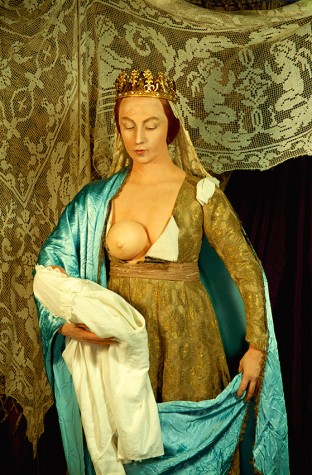
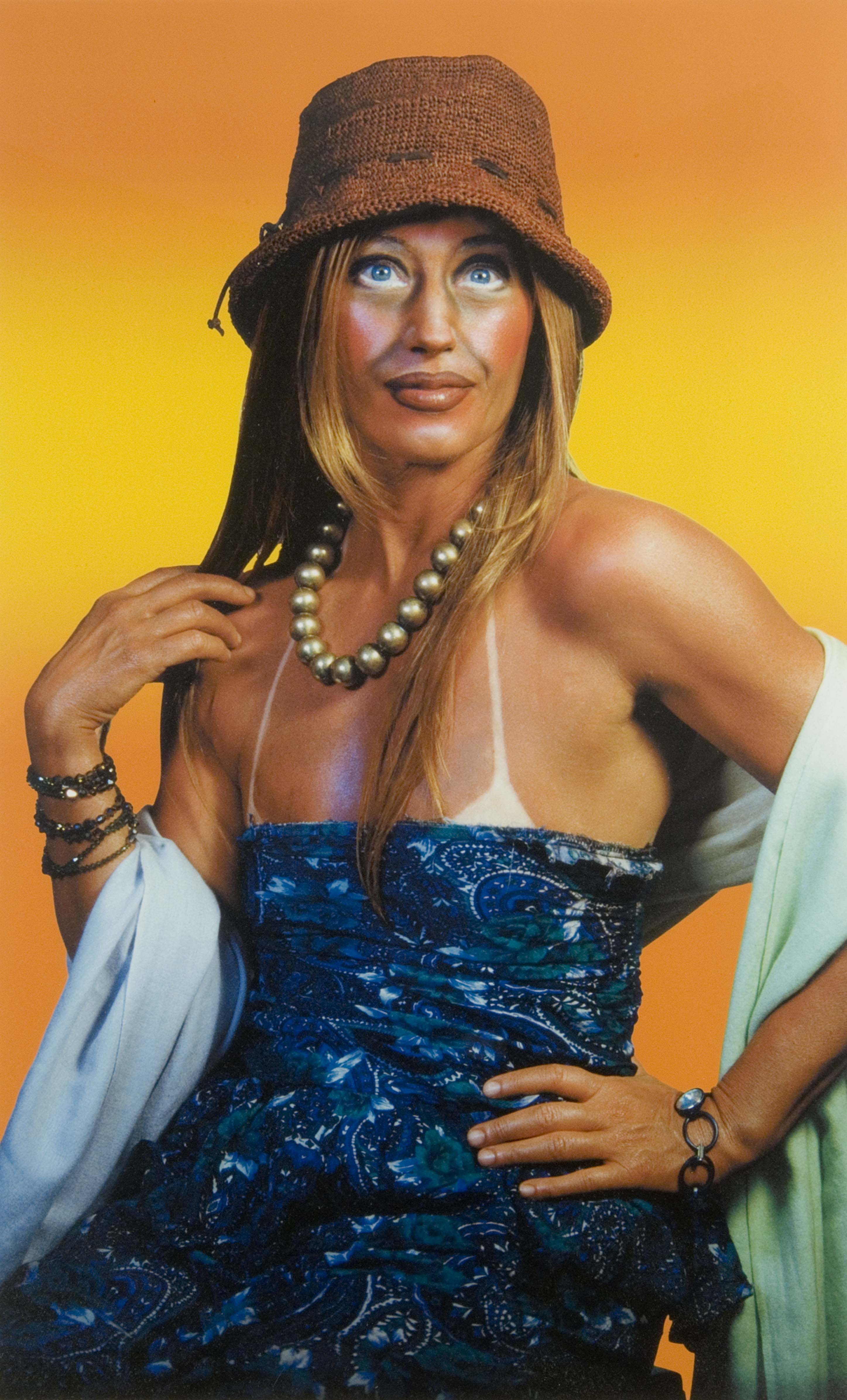
“…The end result of Sherman’s many approaches is a roller coaster of discontent, at times recalling Otto Dix, at other moments Carol Burnett. Sherman can be reproachful and quietly barbed, or merely leaden and gloomy, or showily horrifying, or buoyantly nasty. The works that held me longest were of her strivers and her patronesses. They bring together the poles of Sherman’s thinking: her feeling for contemporary life and for the monstrous. We see people who, carefully but excessively made up, have turned their faces into masks. This can be said of her clowns as well, but they are so fully masked that we have little sense (as we have little sense with actual, professional clowns) of the person underneath the makeup.”
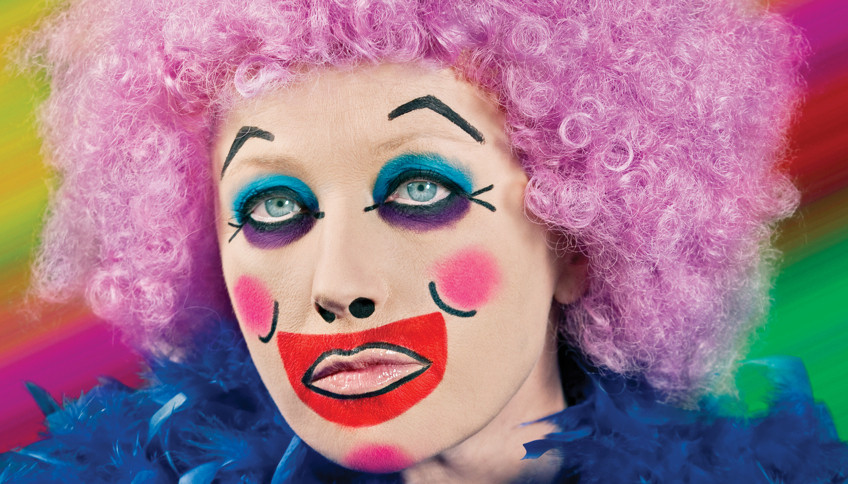
“More crucially, clowns, whether threatening or sad, are so familiar a theme that it is hard to put much stock in Sherman’s versions, which add little to the lore. With her overly avid women and her lionesses of the social scene, however, we feel we look, in each picture, at three people. There is Sherman herself, who, with her fair hair, pale eyebrows, and somewhat pointed features, resembles women in Memling portraits. Then there is her subject, who is clearly hidden behind a protective armor.”
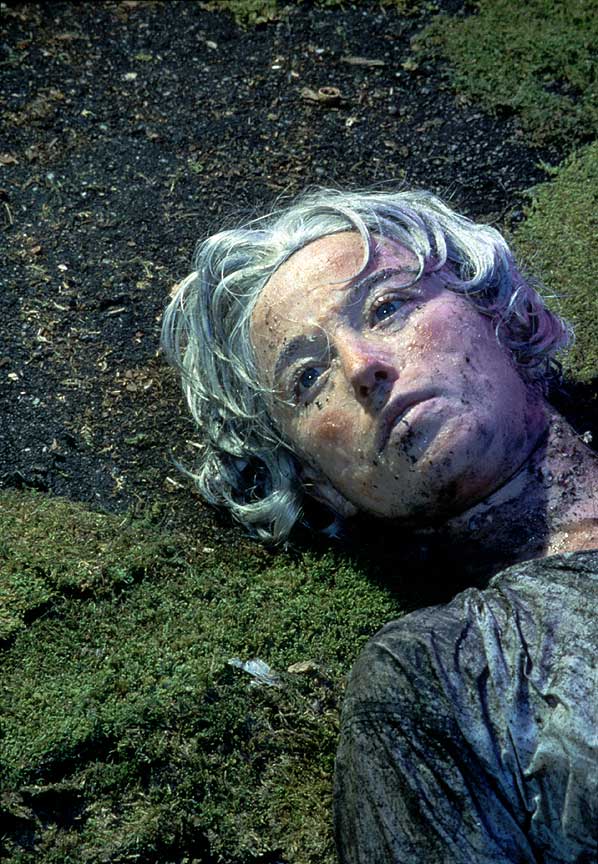 “…Sherman isn’t the first artist to come before the camera in a series of disguises or impersonations. Surely no artist, though, has used the notion as a premise for an entire career, and it creates for her audience a rare sense of intimacy with her and suspense about where she will go next. We seem to look at someone who has indentured her very person for the sake of her art. We can believe we are in this strange lifelong adventure with her, and, especially if we are her age or older, we wonder a little apprehensively how she will handle the issue of aging.”
 “…On the most literal level, though, we look at someone who has a gift for impersonation. Born in New Jersey and raised on Long Island, Sherman went to Buffalo State College in the early 1970s with the idea of becoming a painter. But she had been disguising herself as different people since childhood. There is a photo of her in the Modern’s catalog around age twelve in which, standing on a suburban street along with a friend who is also in masquerade, she appears convincingly as a little old lady. In college she was exposed to conceptual art, which, already supplanting painting as the field that art students wanted to work in, enabled her to see that she could build on her feeling for impersonation.”
 read the whole article here
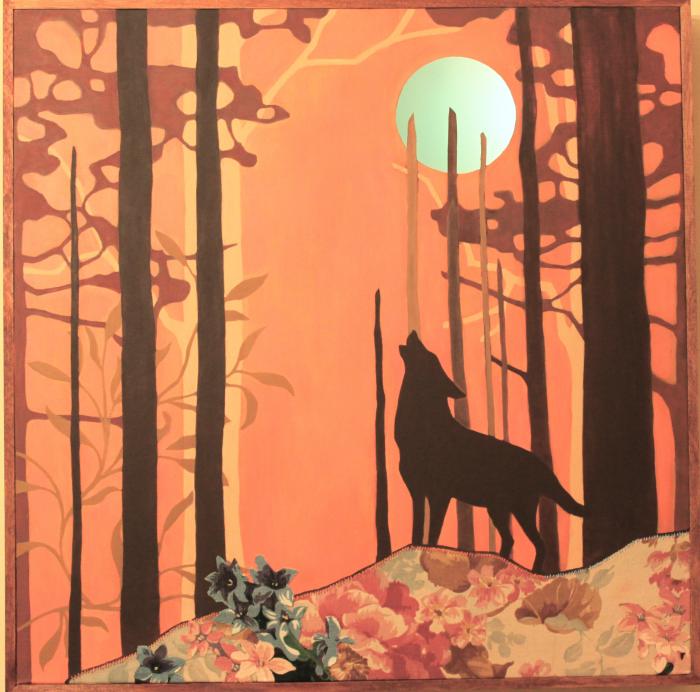
Julia Mary Grey – Lycanthropy in Apricot
I left a trail of myself every place that I have been through,
And going bald is the most manly thing that I’m ever gonna do.
I tell the earth, “thanks for the hair, thanks for the skin, thanks for the bone”,
Though I now slowly give it back I still appreciate the loan.
Just tell me that you like me in the same sentence as a mountain side.
‘Cause it would be such a relief to be objectified.
‘Cause who says it’s so important to sort through these thoughts of ours.
Maybe that’s why we love to try to see ourselves from the outside
In photographs and videos and diaries and mirrors.
‘Cause it would be such a relief to be objectified.
And the closest that I ever got still seems to leave a lot to go,
But the horizon seems to be a place that nobody can know.
Looking forth and looking back, our vision can’t extend beyond the quaint vanishing points our bodies recommend,
And I’ll help you move some furniture somewhere it’s never been before, but the room’s so small the dresser drawer won’t let us get back out the door.
Just tell me that you like me in the same sentence as the building.
It would be such a relief to see…
I’m just a natural thing.
We’re only boats,
And the boats are only empty
And you can’t blame an empty boat that’s on a river to the sea.
You can’t blame a billion boats without a sail, without a sailor.
And that’s how we look in photographs, and diaries, and mirrors.
And the plants turn into ants, and the ants turn into plants,
And children are clumsy people, and old people are rotting children.
And I still don’t have a cell phone, but this sea shell gets reception,
And the ocean won’t stop calling, and I want a restraining order.
Just tell me that you like me in the same sentence as a building.
It would be such a relief to see I’m just a natural thing.
We’re just a natural thing.
Just like anything.
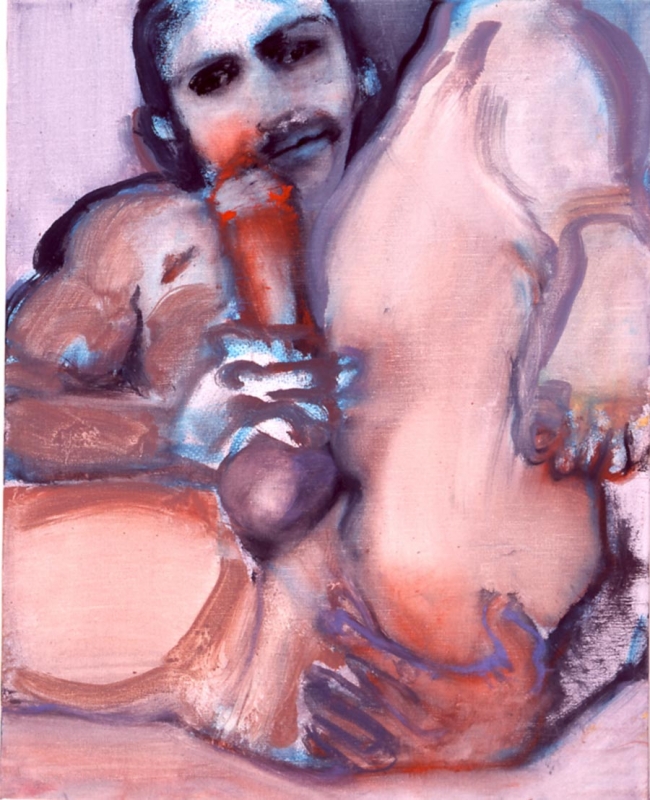 1999
1999
Oil on canvas, 50 x 40 cm
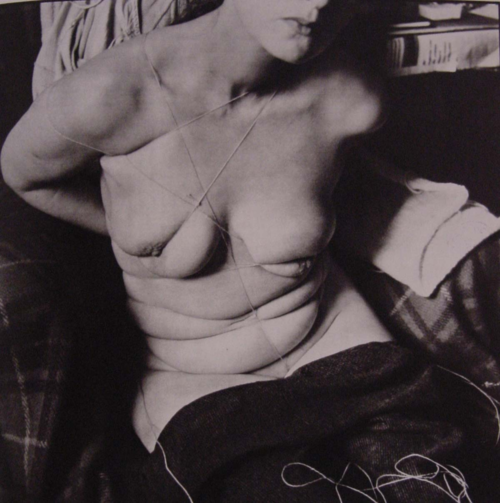
 Eva and Irina Ionesco
(If you weren’t in South Africa in the early 1980s, you won’t get that reference. The ad is not on Youtube. I hunted.)
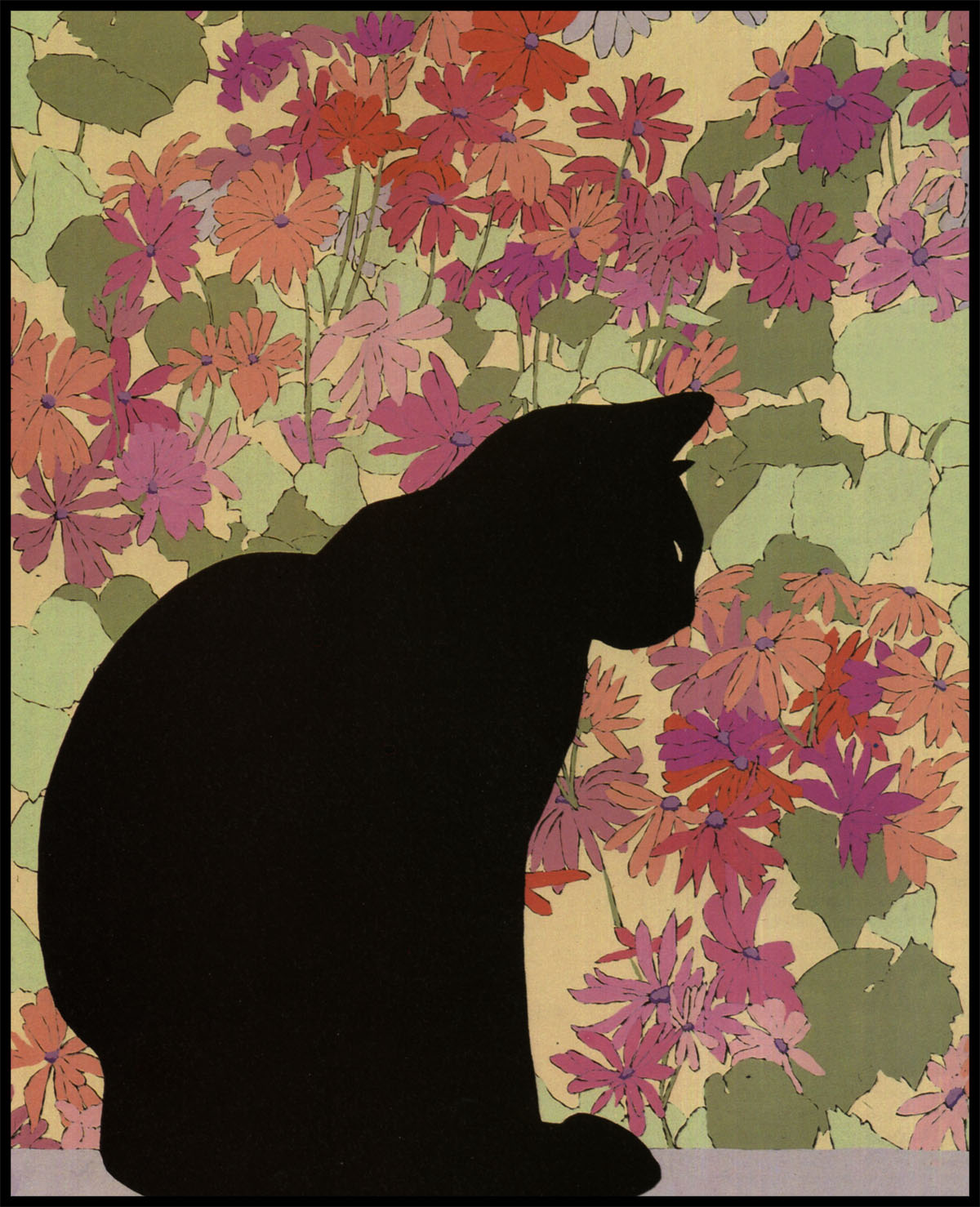
Meg Dawson – Black Cat
Powerful street art by Faith47…
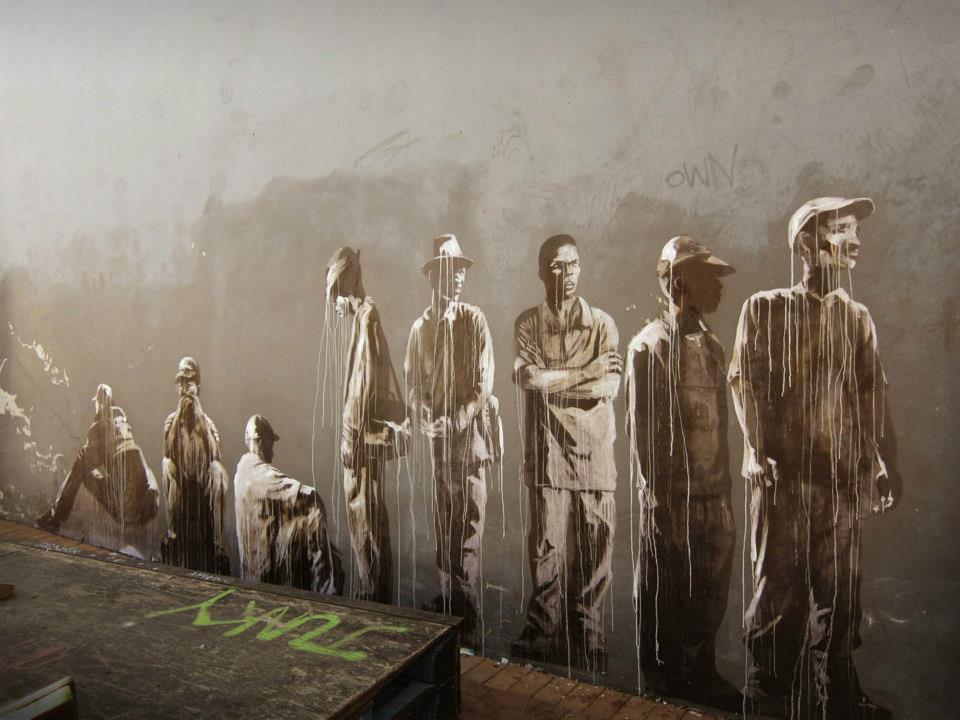
Faith47 – The Long Wait – Part One
2012
“miners are waiting for justice. workers are waiting for a living wage.
people are waiting for service delivery. refugees are waiting for assistance.
men are waiting for jobs. we are all waiting for an honest politician.
HANS BELLMER: The female body…is like an endless sentence that invites us to rearrange it, so that its real meaning becomes clear through a series of endless anagrams. (1)
UNICA ZÜRN: If woman is to put into form the ‘ule’ [Greek: matter] that she is, she must not cut herself off from it nor leave it to maternity, but succeed in creating with that primary material that she is […] Otherwise, she risks using or reusing what man has already put into forms, especially about her, risks remaking what has already been made, and losing herself in that labyrinth. (2)
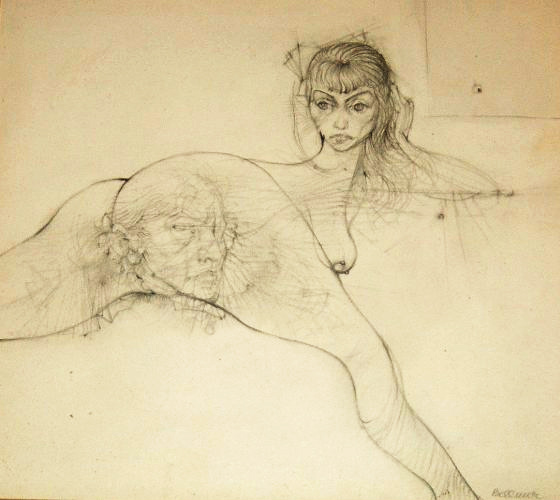
A Portrait of Hans Bellmer
Unica Zurn, 1965
References
(1) Webb P.& Short R., Hans Bellmer (New York: Quartet Books, 1985). Cited in: Miranda Argyle, “Hans Bellmer and The Games of the Doll” (Online Publication, 2004).
(2) Quote cited in: Subversive Intent: Gender, Politics, and the Avant-Gardex by Susan Rubin Suleiman (Cambridge, MA: Harvard University Press, 1990).
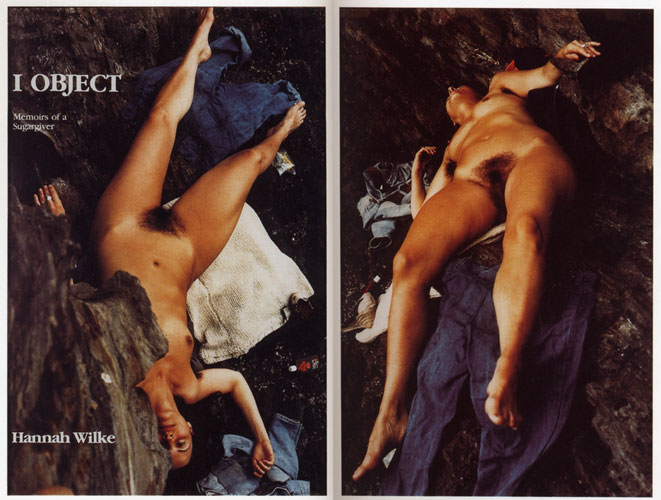
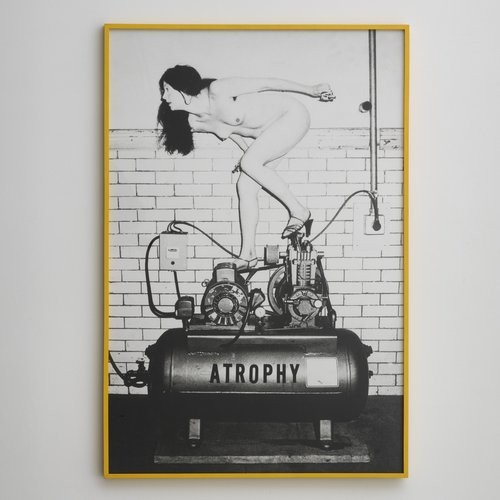
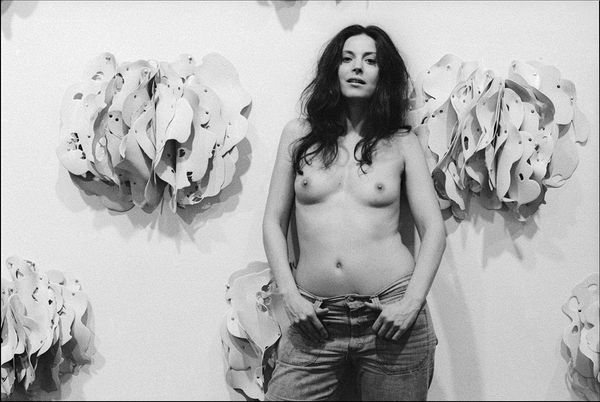
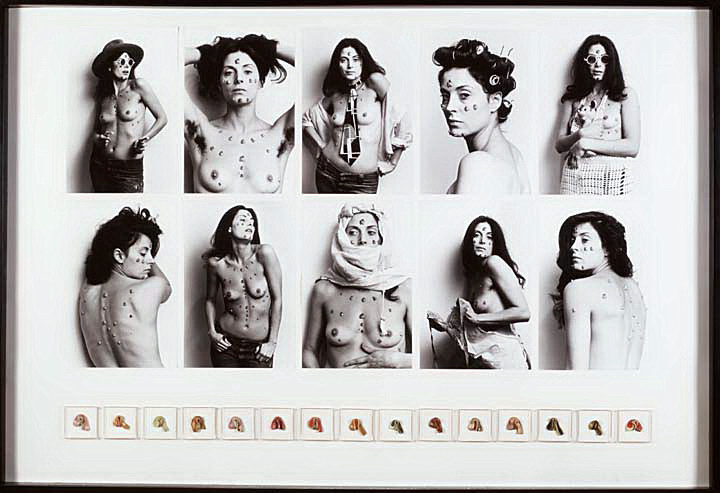
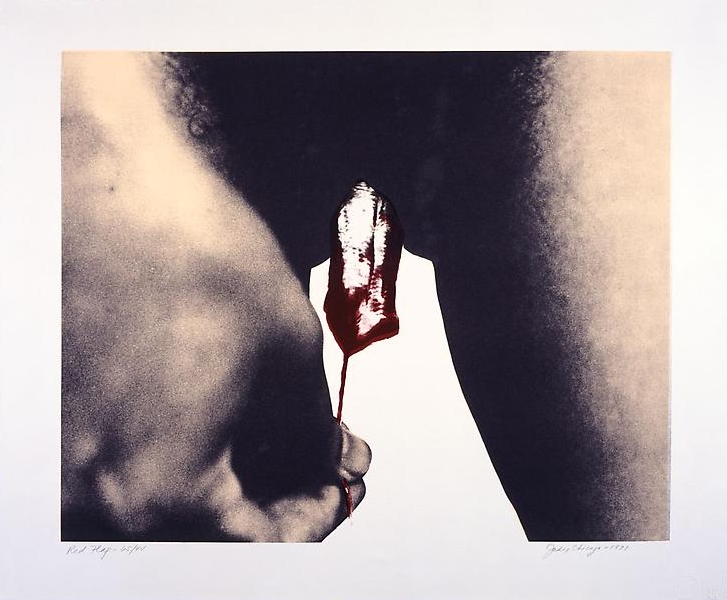
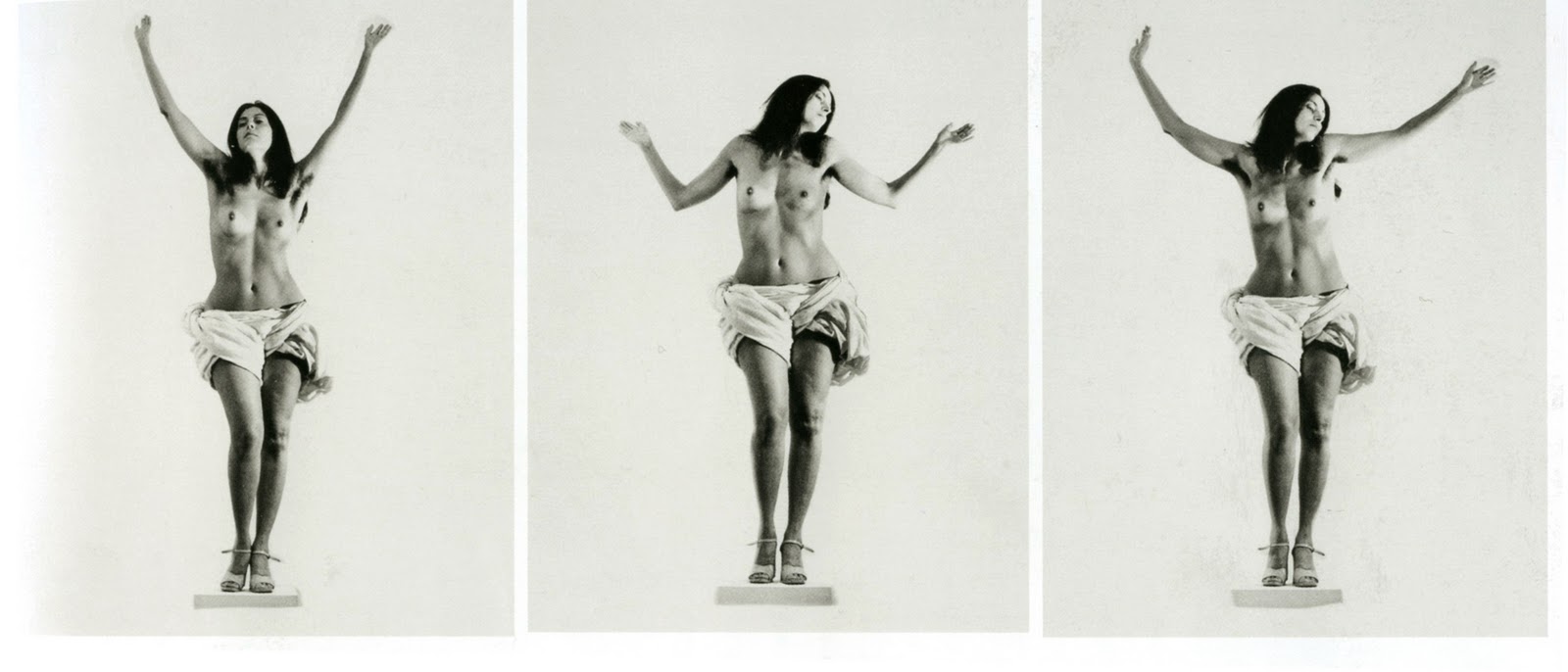 The politics of inclusion that shaped feminist discourse in the 1960s and 1970s spawned a legacy of body-based performance art, much of which was associated with women artists who used their own face as a subject of continual exploration. The self- imaging of women artists such as the provocative American artist Hannah Wilke was frequently attacked and dismissed by art critics as being indulgent exercises in narcissism that only served to reinforce the objectification of the female body. The charge of narcissism leveled on Wilke and her work may have been warranted, however, this should not be considered as a pejorative. Rather, the narcissism of Wilke can be viewed as a shrewd feminist tactic of self-objectification aimed at reclaiming the eroticized female body from the exclusive domain of male sexual desire. The ‘self-love’ of narcissism is a necessary component to this reclaiming of the body and the assertion of a female erotic will as being distinct from that of the male artist. Wilke wielded her narcissistic self-love as a powerful tool of critique, defiantly placing her own image into the hallowed halls of the male-dominated art institution.
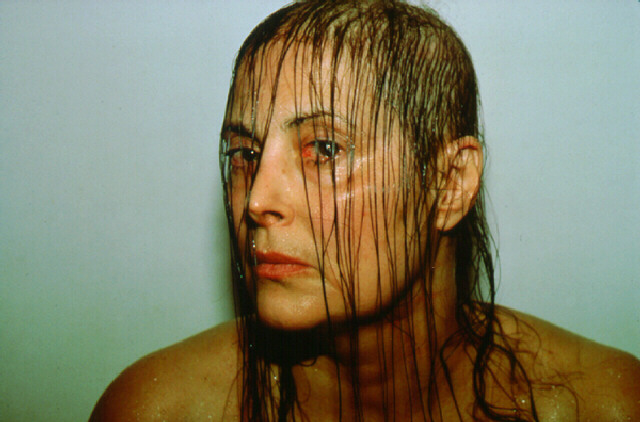
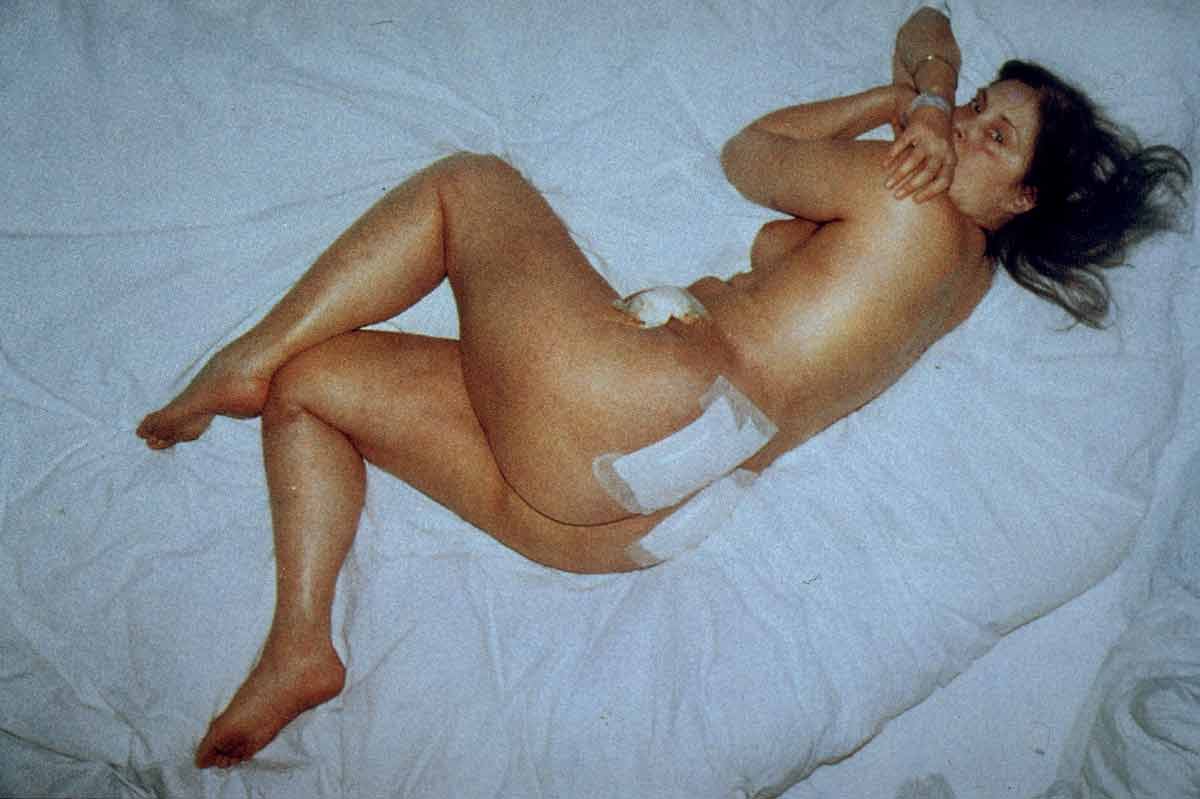
The term “narcissism” derives from the ancient Greek myth of Narcissus, a beautiful but arrogant youth who cruelly spurned the love of his admirers. For his cruelty, he was cursed by the goddess Nemesis and fell in love with his own reflection in a pool of water. The doomed Narcissus pined away for his unattainable lover – the image of his own self – and literally died as a result of his amorous longing.
Sigmund Freud bestowed the name of this mythic Greek youth upon his psychoanalytic theory of narcissism, a theory that describes normal personality development. According to Freud, the self-love of narcissism is a normal complement to the development of a healthy ego. Whereas a certain amount of narcissism is desirable, an excess of self-love is considered dysfunctional and indicative of pathology. This latter definition of narcissism, the one of pathological self-absorption, has cast our current understanding of narcissism in a negative light and reinforced the use of the term as a pejorative.
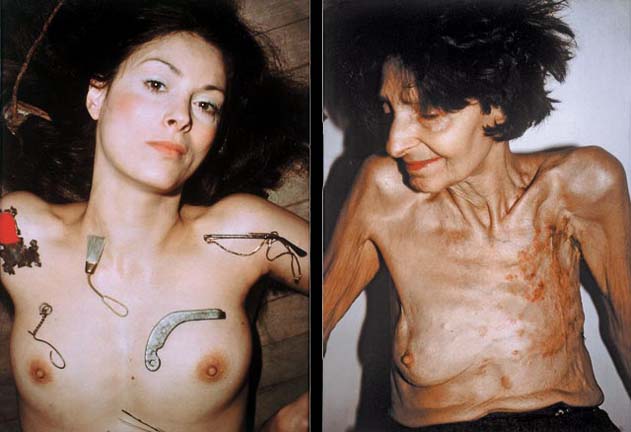
The psychoanalytic theories of Freud suggest that negative or pathological narcissism is a specifically female perversion. Art critic Amelia Jones writes that “[d]rawing loosely on Freud’s definitions – which connect narcissism to both a stage of development and to a form of homosexual neurosis – narcissism has come in everyday parlance to mean simply a kind of “self-love” epitomized through woman’s obsession with her own appearance.” Hence, the charges of narcissism leveled on Hannah Wilke were attempts by the critics to summarily dismiss her work as mere manifestations of a woman’s obsessive self-love and infer, according to Jones, that Wilke’s art was not “successfully feminist.”
Continue reading here

Jill Slabbert – I Can’t Hear My Heart
2012
Check out more of Jill’s beautiful androids HERE.
I accidentally opened two browsers, both playing this video. One started slightly before the other. Having two playing at once enhances the poetry beautifully.
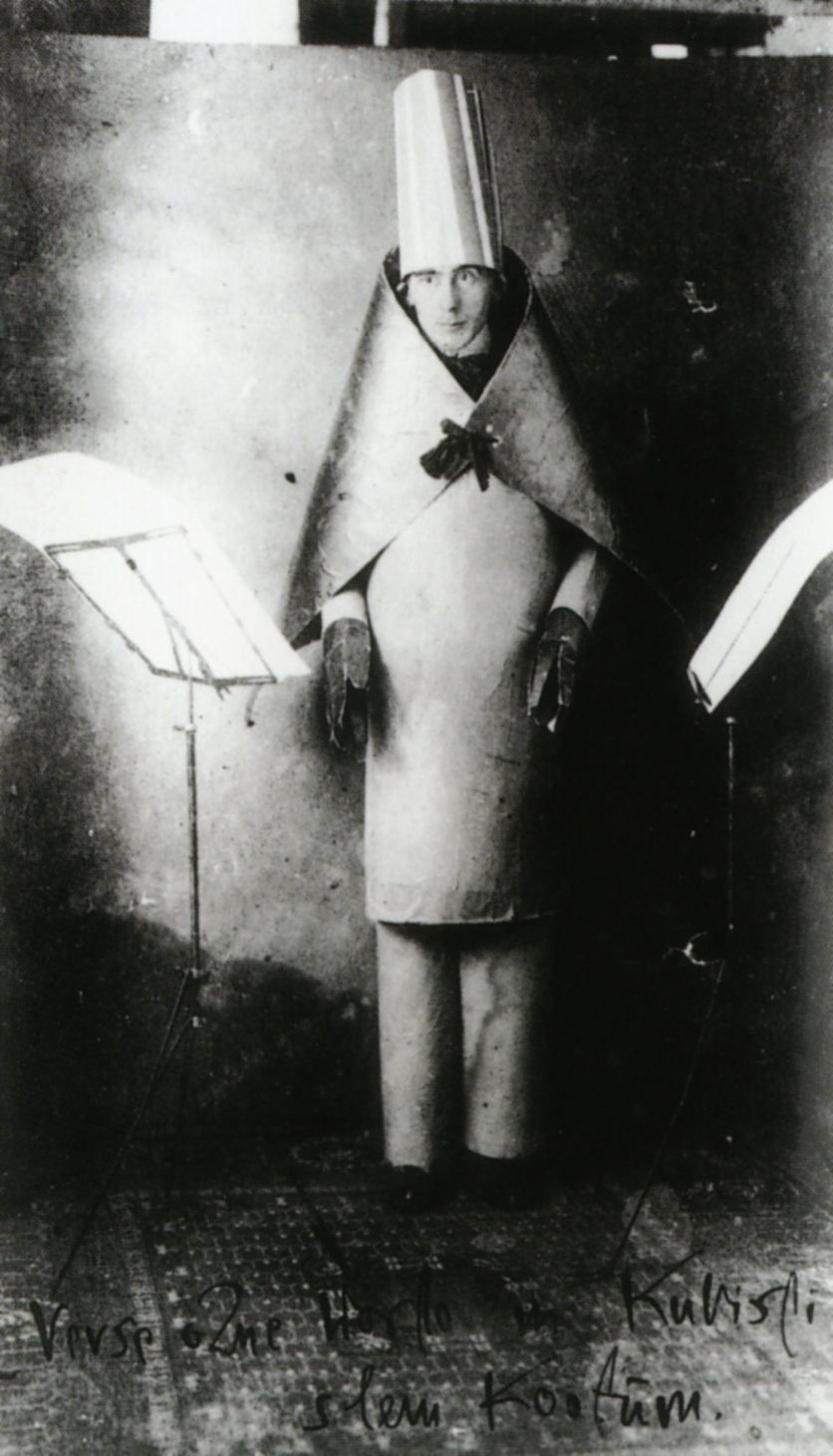 Cabaret Voltaire, Zurich, 1916. Wearing a cardboard costume of blue, scarlet and gold, Hugo Ball is carried to the stage in darkness. As the lights go up, the audience of Swiss bourgeoisie, artists, intellectuals, and refugees from the carnage of WWI, is silent. Ball begins a priestly incantation: ‘gadji beri bimba glandridi laula lonni cadori gadjama gramma berida bimbala glandri galassassa laulitalomini…’. The place to be, Spiegelgasse 1: simultaneous sound poems, noise music, ‘primitivist’ chants and drums, masked dancers, the absurd, the irrational, improvisation, chance, confrontation and cacophony. The lights dim. The audience responds with bewilderment and rage, and Ball disappears into the darkness. ‘It is necessary for poetry to discard language’, he writes, ‘as painting has discarded the object’.
Dada is a new tendency in art. One can tell this from the fact that until now nobody knew anything about it, and tomorrow everyone in Zurich will be talking about it. Dada comes from the dictionary. It is terribly simple. In French it means “hobby horse”. In German it means “good-bye”, “Get off my back”, “Be seeing you sometime”. In Romanian: “Yes, indeed, you are right, that’s it. But of course, yes, definitely, right”. And so forth.
An International word. Just a word, and the word a movement. Very easy to understand. Quite terribly simple. To make of it an artistic tendency must mean that one is anticipating complications. Dada psychology, dada Germany cum indigestion and fog paroxysm, dada literature, dada bourgeoisie, and yourselves, honoured poets, who are always writing with words but never writing the word itself, who are always writing around the actual point. Dada world war without end, dada revolution without beginning, dada, you friends and also-poets, esteemed sirs, manufacturers, and evangelists. Dada Tzara, dada Huelsenbeck, dada m’dada, dada m’dada dada mhm, dada dera dada, dada Hue, dada Tza.
How does one achieve eternal bliss? By saying dada. How does one become famous? By saying dada. With a noble gesture and delicate propriety. Till one goes crazy. Till one loses consciousness. How can one get rid of everything that smacks of journalism, worms, everything nice and right, blinkered, moralistic, europeanised, enervated? By saying dada. Dada is the world soul, dada is the pawnshop. Dada is the world’s best lily-milk soap. Dada Mr Rubiner, dada Mr Korrodi. Dada Mr Anastasius Lilienstein. In plain language: the hospitality of the Swiss is something to be profoundly appreciated. And in questions of aesthetics the key is quality.
I shall be reading poems that are meant to dispense with conventional language, no less, and to have done with it. Dada Johann Fuchsgang Goethe. Dada Stendhal. Dada Dalai Lama, Buddha, Bible, and Nietzsche. Dada m’dada. Dada mhm dada da. It’s a question of connections, and of loosening them up a bit to start with. I don’t want words that other people have invented. All the words are other people’s inventions. I want my own stuff, my own rhythm, and vowels and consonants too, matching the rhythm and all my own. If this pulsation is seven yards long, I want words for it that are seven yards long. Mr Schulz’s words are only two and a half centimetres long.
It will serve to show how articulated language comes into being. I let the vowels fool around. I let the vowels quite simply occur, as a cat meows … Words emerge, shoulders of words, legs, arms, hands of words. Au, oi, uh. One shouldn’t let too many words out. A line of poetry is a chance to get rid of all the filth that clings to this accursed language, as if put there by stockbrokers’ hands, hands worn smooth by coins. I want the word where it ends and begins. Dada is the heart of words.
Each thing has its word, but the word has become a thing by itself. Why shouldn’t I find it? Why can’t a tree be called Pluplusch, and Pluplubasch when it has been raining? The word, the word, the word outside your domain, your stuffiness, this laughable impotence, your stupendous smugness, outside all the parrotry of your self-evident limitedness. The word, gentlemen, is a public concern of the first importance.
On fighting, on self-knowledge, on honest expression, on balance… such an articulate man. “Be water, my friend.”
“Why so hard?” the kitchen coal once said to the diamond. “After all, are we not close kin?” Why so soft? O my brothers, thus I ask you: are you not after all my brothers? Why so soft, so pliant and yielding? Why is there so much denial, self-denial, in your hearts? So little destiny in your eyes? And if you do not want to be destinies and inexorable ones, how can you one day triumph with me? And if your hardness does not wish to flash and cut through, how can you one day create with me? For all creators are hard. And it must seem blessedness to you to impress your hand on millennia as on wax. Blessedness to write on the will of millennia as on bronze — harder than bronze, nobler than bronze. Only the noblest is altogether hard. This new tablet, O my brothers, I place over you: Become hard!
— Zarathustra, III: On Old and New Tablets, 29.
”I took the puppet, which was myself, and I flung it against the sky. Because light is such a magical, magical thing. See, a bird never flies into the dark, who is built for the light.”
From the Nonesuch Dance Collection.
1976 recording
Introduction by Martha Graham.
Choreography by Martha Graham.
Performed by The Martha Graham Dance Company.
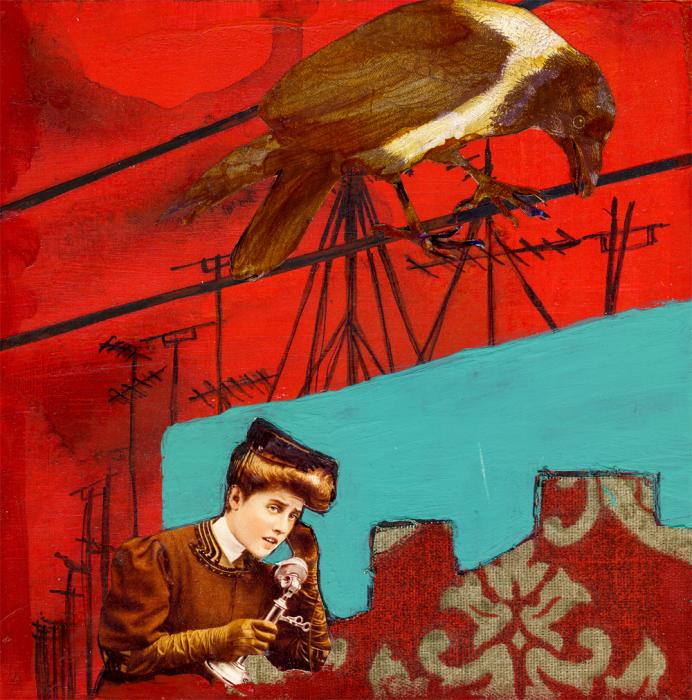
Julia Mary Grey – Crow

Albane Simon/DyN – Eternal Sunshine of the Spotless Mind
More warped collages HERE.
Cinema is identical to life, because each one of us has a virtual and invisible camera which follows us from when we’re born to when we die. In reality, cinema is an infinite film sequence-shot. Each individual film interrupts and rearranges this infinite sequence-shot and thus creates meaning, which is what happens to us when we die. It is only at our moment of death that our life, to that point undecipherable, ambiguous, suspended, acquires a meaning. Montage thus plays the same role in cinema as death does in life.
~ Pier Paolo Pasolini, “Ora tutto è chiaro, voluto, non imposto dal destino”, Cineforum 68 October 1967, p. 609. 
I have been thinking about the similarities between editing and blogging, about how in juxtaposition meaning comes to light, and this comment from Pasolini that I just came across resonated with my thoughts. An online archive of everyday apprehension, a place to pin the things floating amorphous just behind my eyes… It is powerfully transformative to be able to reflect, live, with others, on chains of thoughts, connections, coincidences, concatenations… More powerful for clarity than a diary. Although the public nature of this grappling is uncomfortable for me, it prevents me from dismissing my thoughts as solipsistic delusions, something to which I am prone, especially because sketching them out in a simple A to B trajectory is often impossible, rendering attempts at expression incomprehensible to others in ordinary conversation.
What I like about the montage inherent in blogging, as distinct from other more traditional types of montage, is that the possibilities of hypertext allow me not to foreclose other meanings, not to narrow connections and paths of interpretation down, as is inevitable when making a film, or a music mix, or any object concrete and discrete in itself. The intertextual permeability and wild openness of virtuality is so exciting in this sense… The possibility of creating and reshaping meaning without having to be final or definitive, which necessarily involves the murder of other meanings in the process… This I love, though it makes me dizzy.
Oh, please don’t give me that!
Yes, I’m a witch,
I’m a bitch
I don’t care what you say,
My voice is real.
My voice speaks truth,
I don’t fit in your ways.
I’m not gonna die for you,
You might as well face the truth,
I’m gonna stick around for quite awhile.
We’re gonna say,
We’re gonna try,
We’re gonna try it our way.
We’ve been repressed,
We’ve been depressed,
Suppression all the way.
We’re not gonna die for you,
We’re not seeking vengeance,
But we’re not gonna kill ourselves for your convenience.
Each time we don’t say what we wanna say, we’re dying.
Each time we close our minds to how we feel, we’re dying.
Each time we gotta do what we wanna do, we’re living.
Each time were open to what we see and hear, we’re living.
We’ll free you from the ghettos of your minds,
We’ll free you from your fears and binds,
We know you want things to stay as it is,
It’s gonna change, baby.
It’s gonna change, baby doll,
It’s gonna change, honey ball,
It’s gonna change, sugar cane,
It’s gonna change, sweetie legs.
So don’t try to make cock-pecked people out of us.

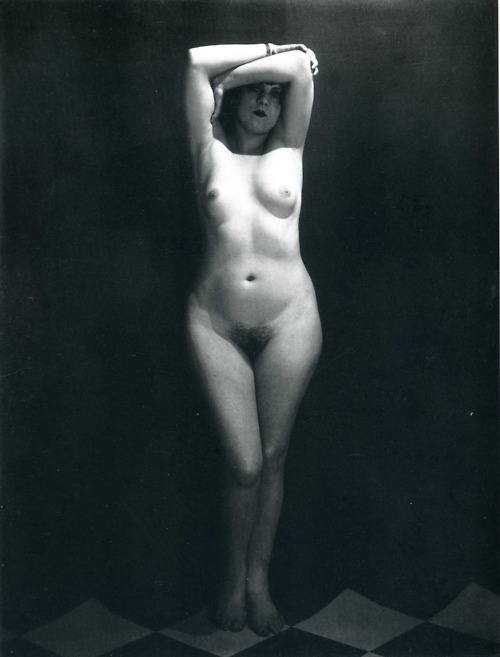
 fleurmach