Complete Notes on the Dissection of Cadavers is an Edo-period Japanese anatomical atlas by Kawaguchi Shinnin (1736-1811) with woodcut illustrations by Aoki Shukuya (d. 1802), published in Kyoto in 1772.


More illustrations from the book HERE.
More illustrations from the book HERE.
Note on the author: Olivier Chow is a former senior protection officer of the International Committee of the Red Cross (ICRC) and has led investigations on war crimes in Afghanistan, Cambodia, the Democratic Republic of the Congo and Macedonia. He is currently finishing a PhD in critical theory at the School of Oriental and African Studies (SOAS), London University, working on the theory and visual mediation of cruelty. His main interests concern French theory and in particular the work of Georges Bataille, fetishism, violence, popular culture and tribal arts. He has also worked for UNESCO, Sotheby’s and a private collection of surrealist art. The following article was first published HERE.
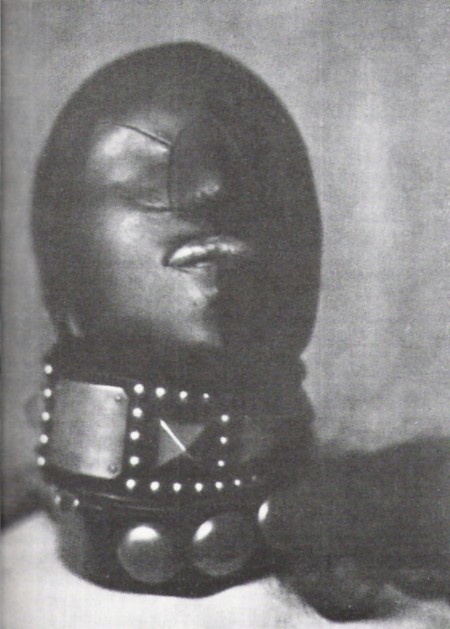
Jacques-André Boiffard, Untitled, Article “Le Caput Mortuum ou la Femme de l’Alchimiste”, Documents, 1930, No 8
In this paper we shall explore desire from the perspective of transgression and, to be precise, desire generated by the transgressive space born from the oscillation between attraction and repulsion, or what the French surrealist Georges Bataille named ‘inter-repulsion’. We shall argue that the ultimate object of inter-repulsion is death itself and, as such, inter-repulsion brings forth not only the subject and its discontents but also the social with its taboos and prohibitions. Inter-repulsion will be discussed in relation to the visual culture of Documents, a dissident and short-lived surrealist journal (1929-1930) that has recently come back to life at the Hayward in the exhibition “Undercover Surrealism.” [1] One of the pièces maîtresses in the main hall of the exhibition is a photograph by Jean-Jacques Boiffard, the most prominent photographer of the journal: a photograph of a magnified big toe around which our discussion will centre. This photograph has become an emblem for a surrealism that has done away with the ‘marvellous’ – which it literally shat on – and that has shamelessly promoted the ‘low’ (bassesse ) and the ordure: the surrealism of Georges Bataille which opposed the impossible of the real to Breton’s possible of the imagination. The big toes had a task – for Bataille, words and images always had to do something: to bring forth through the sensations of visceral reactions and gut feelings what had remained hidden and repressed. The object of repression staged in Documents was a desire rooted in death. Thus we shall argue that inter-repulsion creates a pornography of death since it shows us our darkest and most obscene object of desire. Our discussion will be divided into two sections: first we shall explore the big toe as ‘idol’, second as ‘ordure’.
Documents was initially intended as a scientific review, albeit one with a unique and innovative twist. It brought together high and popular art (beaux arts and variétés), archaeology and ethnographic art. Documents’ ambiguous mission statement already contained the seeds of its undoing: “the most provoking as yet unclassified works of art and certain unusual productions, neglected until now, will be the object of studies as rigorous and scientific as those of archaeologists.” As early as issue four, the provocative, disturbing and frankly monstrous became the focus of the journal and it quickly became a war machine against surrealism: “Documents made clear what surrealism was not; what, under the aegis of Breton, it could not be.” [2] It would be “the abscess burst each month from surrealism.” [3]Documents elaborated a common theoretical front against positivism and idealism reducing all images and objects (dead animals, big toes, abattoirs, ancient coins, high and ‘primitive art’) to document status. It promoted a fragmenting, magnifying and anti-aesthetic gaze on the world, privileging the monstrous and corporeal. Facts from ethnography, faits divers andvariétés , religion and culture, were artificially ‘planted’ in order to anchor images and discourse in a reality that was both familiar and yet complete fantasy and fabrication. This mock reality was largely one of distortion and pastiche; a distortion that was also applied to constituted forms (mainly the human body and its architecture). Here the positivism of factual documentation, like the body itself, was perversely subverted: reality was deformed and this was placed in the service of sensations such as vertigo and disgust. The ‘facts’ that were revealed were closer to what Francis Bacon understood as facts: a brutal revelation of a hidden truth about the human condition. These were inseparable from the brutal sensations they imposed on the viewer. These visceral facts, or ‘visual instincts’, fashioned a new and powerful reality where differences between a subject and object were brutally collapsed. This is the sensational reality that the big toes managed to bring about, or in the words of Bataille: “a return to reality…means that one is seduced in a base manner, without transpositions and to the point of screaming, opening his eyes wide: opening them wide, then, before a big toe.”[4] Inter-repulsion inaugurates a brutal return to sensation – not pleasant sensations, rather as we shall demonstrate, sensations of death.
Jacques-André Boiffard’s ‘Big Toes’ were published in Documents number 6, 1929, with a text by Bataille titled ‘Le Gros Orteil’. The two male big toes that appeared here are actually part of a series. Altogether there are three (two male and one female), a sort of “friendly trinity”. [5]The chiaroscuro isolates the toe from the body, providing it with a fetishistic and almost godly aura. Whereas most of the other photographs published in the journal were usually juxtaposed together in a sort of montage that reminded the viewer of the random and haphazard juxtapositions of a newspaper, the big toes stand alone in the magazine, occupying a full page. The visual brutality of the big toes and the mocking tone of the text that accompany the image, are typical of Documents: the provocative and almost ethnographic enterprise on the big toes was not dissimilar to the exploration of eccentric artistic productions, exotic cultures, sacrificial rituals and dismissed historical periods that defined Documents’ anthropological realm.
In his “Gros Orteil”, Bataille describes how feet, for some individuals, are sexually charged. Here Bataille cites the example of the Count of Villamediana who burnt a house in order to carry the queen and stroke her feet or foreign cultures like China where the feet of women are both deformed and venerated. As a fetish, feet and toes are abstracted from the body and turned into independent wholes charged with desire: idols. We shall name these idolised fragments of the body, ‘part-objects’ – a term that designs parts of the body, real or fantasised (penis, breast, food, faeces, toes, et cetera) invested with desire. The destiny of part-objects or ‘érotique combinatoire‘ [6] to use Roland Barthes’ expression, was one of Bataille’s favourite anthropological and symbolic explorations. Part-objects are celebrated in Bataille’s pornographic novels from Histoire de l’Oeil to Madame Edwarda . In Bataille’s Histoire de l’Oeil, the eye is set within a symbolic matrix and a system of correspondences. Histoire de l’Oeil, as Roland Barthes noted, is really the history of an object, its migration and metamorphosis into its symbolic equivalents. Every metamorphosis is like a new station within the migration of the object/organ. The part-object is recited throughout the novel (eye, sun, egg, and their respective seminal liquids), revealing the humid substance of a round phallicism. In Madame Edwarda, Madame Edwarda asks the narrator if he wants to sees her ‘vilaines guenilles’. She exposes her ‘old rags’, a source of anxious fascination. From within these revolting guenilles emanates a dirty gaze that stares at the narrator like a Medusean ‘pieuvre répugnante’ . When the narrator asks her why she does this, she tells him: “Tu vois…je suis DIEU”. [7] In Madame Edwarda, God is a genital revelation. Madame Edwarda’s ‘gazing beast’ is god-like: totemic and sovereign. The big toe photographed by Boiffard is also staged like a genital, repugnant and sovereign creature.
Binet’s seminal essay on fetishism, Le Fétichisme dans l’Amour (1887) was well known to Bataille. It dedicated a few pages to the account of various forms of fetishism related to inanimate objects or fractions of the body, real or symbolic such as hand, feet, hair, eye, voice and smell. Binet combines his theory of fetishism as a sexual perversion with the aesthetics of fetishism. According to Binet, fetishism tends to detach and isolate the part-object from the person to which it belongs. The fetishist tends to transform this part-object into an independent whole. The part-object is thus an abstraction according to Binet. This tendency towards abstraction is also supplemented by a tendency towards generalisation: the cult of the fetishist is not oriented towards a part-object belonging to one specific person. On the contrary, the part-object stands for a sort of genre or ‘monotheism’ to use Binet’s expression that is not attached to one individual specifically but to one abstracted fragment. Finally, Binet observes that there is a tendency towards exaggeration: the volume or the importance of the part-object is enhanced.
 Jacques-André Boiffard, Big Toe, feminine subject, twenty-four years old , Documents, No6, 1929
 Jacques-André Boiffard, Big Toe, masculine subject, thirty years old , Documents, No6, 1929
 Jacques-André Boiffard, Big Toe, masculine subject, thirty years old , Documents, No6, 1929
The fetishistic photographic process confers the big toe with a new status as part-object ready to be mapped out by desire and sexualised. The big toe’s sexual persona is here evidently exposed as obscene. Boiffard has mimicked the fetishist gaze observed by Binet. The toes are isolated from their bodies, fragmented, enlarged, staged and dramatised. The magnified, blown-up toes seem impossibly real: ugly, hairy, genital-like. We are literally put face to face with their excessive and nauseous reality. The photographs are cropped, the angle imposes a violent deformation on the toe – they are upside down, brought down if such an operation were possible. It is a portrait that transgresses and subverts the very idea of what a portrait should be: the highest and most noble part of the body has been thrown away and transformed into a grotesque, absurd and scandalous ‘other face’.
The framing of the toe is an act of violence set against the human figure. Bataille’s text refers to material and visual operations of abuse and violence such as “deformation”, “infection”, “tortures”, “pain”, “brutal”. Those forces that deform the human figure are violent forces that Bataille equates with forces of entropy and decomposition, such as those that attack the corpse. The deformation or “alteration” of the human figure was an essential strategy in Bataillean aesthetics: “the word alteration provides the double advantage of expressing a partial decomposition similar to that of corpses and at the same time the expression of the passage to a perfectly heterogeneous state that the protestant professor Otto named the ‘wholly other’, that is the sacred.” [8]
In his classic study of the Holy, the German theologian, philosopher and historian of religions Rudolf Otto (1869-1937), situates the sacred in relation to an a priori emotional structure, the numinosum . In the experience of the numinous, the subject experiences a feeling of intimate dependence towards a higher and independent force. The experience of the “wholly other” [9]: is what Otto describes as “creature-consciousness”. This “creature-feeling” is “the emotion of a creature, abased and overwhelmed by its own nothingness in contrast to that which is supreme above all creatures.” [10] This experience is fundamentally ambivalent, a mélange of attraction and repulsion: this mysterium tremendum is an uncanny experience of awfulness, an awfulness that lies beyond the realm of knowledge, producing a feeling of peculiar dread, a “terror fraught with inward shuddering.” [11] The big toes reek of these creepy “creature feelings”.
Boiffard has also captured the fetish’s destiny as fixation. William Pietz, one of the leading commentators on fetishism, defines the fetish in the following terms: “The fetish is always a meaningful fixation of a singular event; it is above all a ‘historical’ object, the enduring material form and force of an unrepeatable event.” [12] This unrepeatable and traumatic event could be rooted in early childhood beliefs and complexes. Freud and psychoanalysis argue fetishism is linked to the experience of shock that comes about once the absence of a maternal penis is revealed. The fetish becomes a substitute for the penis and a disavowal of that lack. The captions for this big toe could be: “it is not really gone as long as I’m here”. The body as site of revelation of the phallus was a common surrealist visual strategy. One of its most famous expressions is Man Ray’s anatomies (1930). The idea behind that specific visual operation was to de-territorialise bodies, rendering them polymorphously perverse and ‘genital’ by liberating desire from the conventional and limiting mappings of the erogenous zones.
 Jacques-André Boiffard, Untitled , Article “Le Caput Mortuum ou la Femme
de l’Alchimiste », Documents, 1930, No8
We are now going to discuss another famous image of Documents by Boiffard where the body turns into phallus: his untitled image that features a mask by W.B. Seabrook. Michel Leiris in his “Le Caput Mortuum ou la Femme de la l’Alchimiste” published in Documents in 1931, discusses the photograph portraying a woman wearing a mask. The image brings forth both fetishistic memories of desire (sado-masochistic fantasies) and mystic possibilities of religious revelation (could that mask be the face of God, Leiris wonders). For Leiris, a mask can thus open up to desire and the sacred: the mask opens towards what is both foreign and intimate within us. What the mask manages in true fetishistic form is to abstract and concentrate body parts – making them more as well as less real, that is, schematic. Boiffard’s woman becomes more mysterious but also more threatening as her features are disguised by her second leather skin. The woman becomes an abstraction, a generality, a thing or essence (“ chose-en-soi ”). Her severity is tinged with suffering, appealing to our sadism as Leiris argues: “in addition to suffering under the leather skin, being subjected and mortified (which satisfies our will to power and our fundamental cruelty), her head – sign of her intelligence and individuality – is insulted and negated.” [13]Her mouth is reduced to a wound and her body transgressed: the body is naked and the face is masked, an obscene and forced inversion that associates violence to desire. The figure of the woman is profoundly ambiguous and can be seen as either a perpetrator (“ bourreau ”) or a beheaded queen (“reine décapitée ”).
We have now witnessed the uncanny connection between desire and death. This connection is also active in the photographs of big toes. Boiffard restitution of the lost phallus has only been possible through the castrating use of picture cropping that has separated the toe from the foot. The sight of these big toes is not very comforting: on the contrary they signify pain, mutilation and danger. The big toe is a monument to castration: the nail suggests endless cuttings, a ‘thousand cuts’. Continue reading
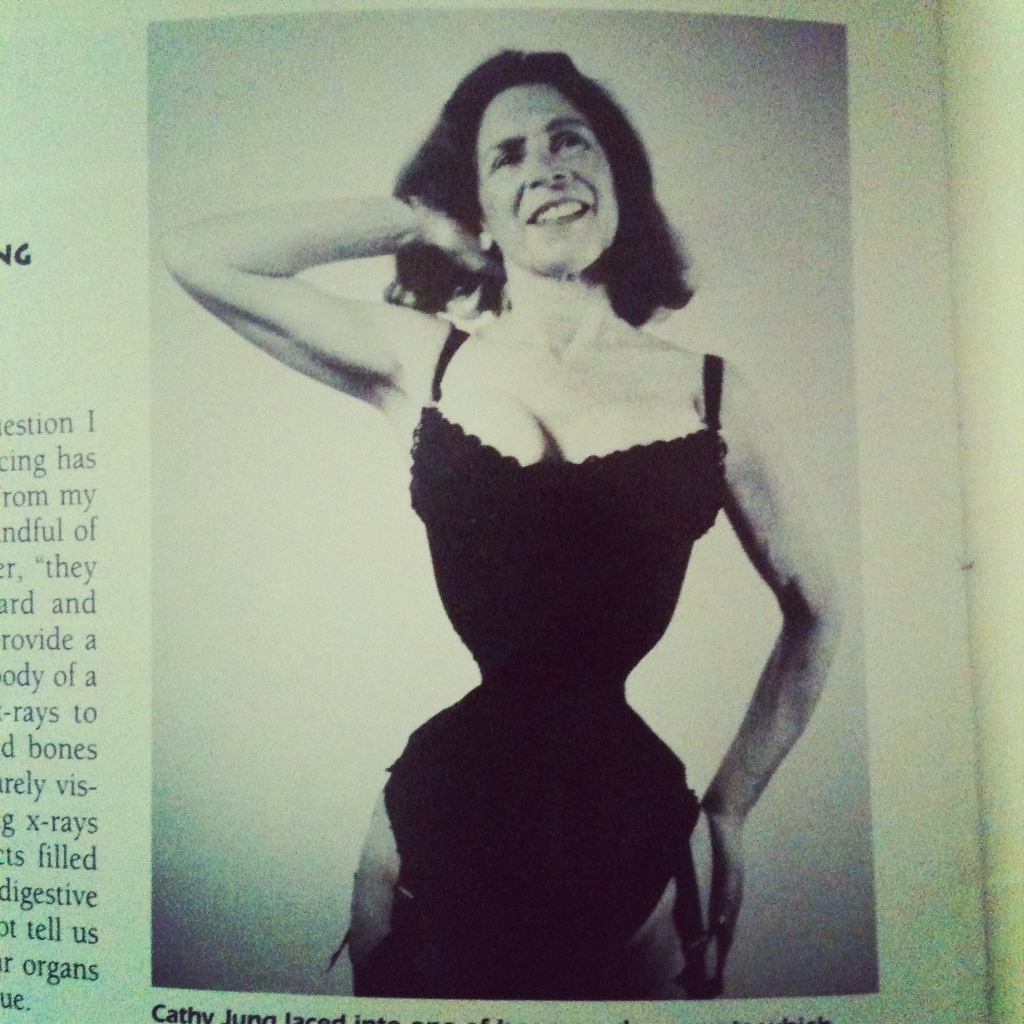
The following videos are posted by very young teenage girls looking for validation from strangers online in the face of negative comments about their appearance… There are MANY, MANY videos like this on Youtube – it’s become a strange sort of meme.
The exact motives for making these movies are mixed, but if you read the comments under the videos, you’ll see how mean people can be under the cloak of anonymity – meaner, probably, than the unkindness at school that the girls are hoping to drown out with the “objective” opinions of strangers online, for this is what all the videos have in common.
I don’t think I will ever understand how hurting someone else, even if it is because you yourself are hurting, could help you feel better at all… which I guess is what always made me an easy target for bullies myself. I don’t retaliate because it doesn’t make sense to me to do so. That’s lethal bully-bait when coupled with the conviction to stand up for oneself, to speak back. I hit people teasing me a few times when I was a kid, mainly to get them out of my face. It made me feel sick to do that, and it didn’t help. Mostly I would just try to shout them down.
My mom’s mantra, “Sticks and stones may break my bones, but words will never harm me,” roared uselessly.
It took me years and years to figure out how futile and dangerous it is to try to shout, to speak, to whisper back, to appeal to sense and truth, to reason with cruelty. It doesn’t work, because cruelty isn’t rational. It is senseless. Cruelty is fed by any and every reaction. These girls won’t realise until the damage is already done and they have lost their voices completely. It hurts to watch them exposing themselves to so much pain.
“I feel like I could just go away and never come back. I feel like I’ve been standing all these years and keep getting torn down… Deep down inside, all girls know that other people’s opinions don’t matter, but we still go to other people for help because we don’t believe what people say.”
~ Faye (13). More on her story HERE.
more HERE.
Si quieres puede ser puro
Pero para mí puro es salvaje
Como el primer día del sol
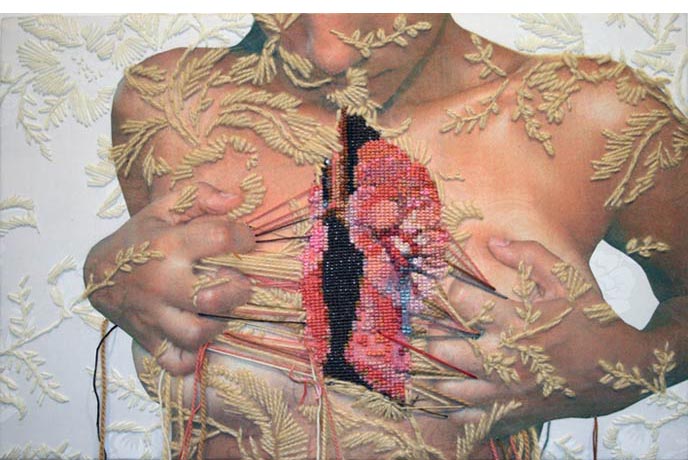
Ana Teresa Barboza – embroidery and photo transfer on fabric
Check out more of Peruvian artist Ana Teresa Barboza’s fascinating work on her blog, HERE.
Fire in My Belly (1987): David Wojnarowicz
Music: Diamanda Galas
Made by David Wojnarowicz for Rosa von Praunheim’s Silence = Death (1990).
A positive diagnosis for HIV in 1987 didn’t leave you with many options. The pharmaceuticals that have extended life spans for many of those now infected were not then available. Hostility and fear were rampant. It was reasonable to assume not only that you had received a death sentence, but that there was no hope on the horizon for those who, inevitably, would follow in your footsteps: an anguished decision to be tested, an excruciating wait for the results, a terrifying trip to the testing centre, and a life-shattering conversation with a grim-faced nurse or social worker.
Some turned to holistic medicine and yoga. Others to activism. Many just returned to their apartments, curled up in the corner, and waited to die.
But some, like David Wojnarowicz, who died in 1992 at the age of 37, used art to keep a grip on the world. He was the quintessential East Village figure, a bit of a loner, a bit crazy, ferociously brilliant and anarchic. He was a self-educated dropout who made art on garbage can lids, who painted inside the West Side piers where men met for anonymous sex, who pressed friends into lookout duty while he covered the walls of New York with graffiti. In 1987, his former lover and best friend, Peter Hujar, died of complications from AIDS, and Wojnarowicz learned that he, too, was infected with HIV.
Wojnarowicz, whose video A Fire in My Belly was removed from an exhibition of gay portraiture at the Smithsonian’s National Portrait Gallery last week after protests from a right-wing Catholic group and members of Congress, was an artist well before AIDS shattered his existence. But AIDS sharpened his anger, condensed his imagery and fueled his writing, which became at least as important as his visual work in the years before he died. In the video that has now been censored from the prominent and critically lauded exhibition Hide/Seek: Difference and Desire in American Portraiture, Wojnarowicz perfectly captured a raw Gothic, rage-filled sensibility that defined a style of outsider art that was moving into the mainstream in the late 1980s.
It may feel excessive now, but like other classic examples of excessive art – Allen Ginsberg’s 1955 poem, Howl, Krzyzstof Penderecki’s 1960 symphonic work, Threnody for the Victims of Hiroshima, or Pier Paolo Pasolini’s 1975 film, Salo – it is an invaluable emotional snapshot. Not simply a cry of anguish or protest, Wojnarowicz’s work captures the contradiction, speed and phantasmagoria of a time when it was reasonable to assume that all the political and social progress gay people had achieved in the 1960s and ’70s was being revoked – against the surreal, Reagan-era backdrop of Morning in America, and a feel-good surge of American nostalgia and triumphalism.
Read more of this 2010 article by Philip Kennicott, from the Washington Post, HERE.
Tiqqun – La Congiura Sacra – Operation Acephale 2 – San Francisco Bay Blues
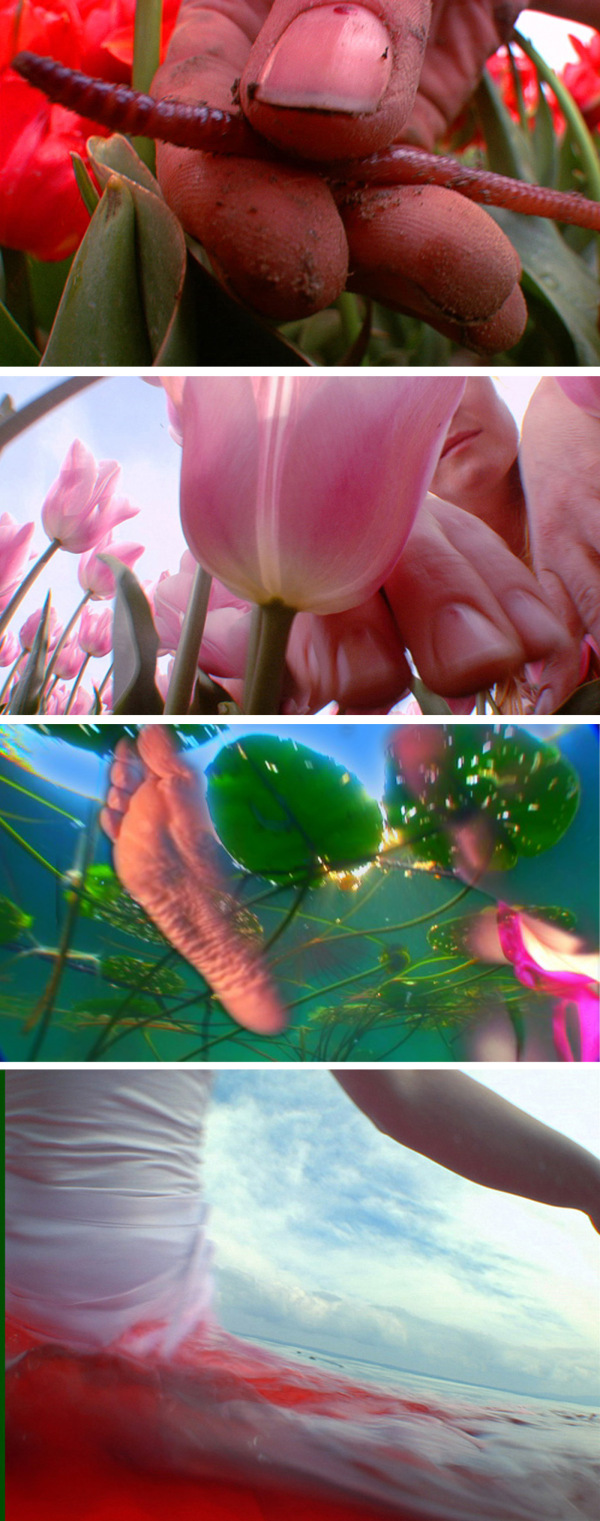 Pipilotti Rist’s “Pour Your Body Out” is an immersive large-scale projection, a shifting vanitas symbolizing the transience of earthly pleasures. Ripe apples, luscious strawberries and fields of pink tulips are bitten, crushed and plucked as wide-eyed delight turns to disgust.

The photographs in this post are of an abandoned hot springs resort/health spa, taken by me in July 2009. The resort is situated in Aliwal North, a tiny town on the border of South Africa’s Free State and Eastern Cape provinces. During Victorian times, and continuing into the dark era of Apartheid, this settlement on the Orange River was a popular holiday destination (whose amenities would have been available to whites only). I was stuck here for several days following a car accident, so I went exploring. I was told by a local that the resort had fallen into disrepair only recently, in the past decade, due to mismanagement of the allocated maintenance funds. I wondered to what extent this might reflect a rejection of the resort’s oppressive past by its post-1994 custodians.
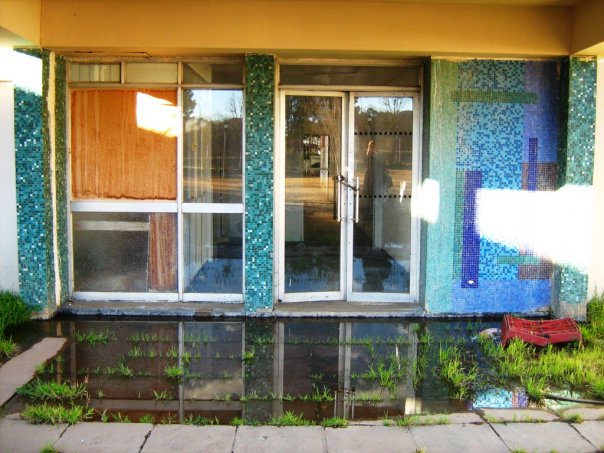
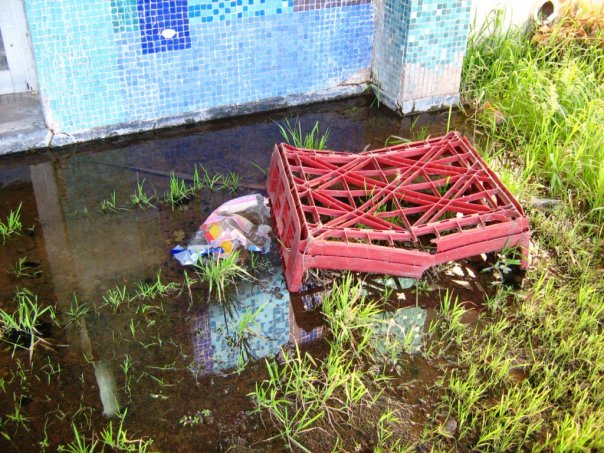
I share the fascination with documenting ruins and decay that is the subject of the following excerpt from the excellent blog, Archaeology and Material Culture:
An astounding number of web pages document abandoned materiality, encompassing a broad range of architectural spaces including asylums, bowling alleys,industrial sites, Cold War sites, and roadside motels as well as smaller things like pianosand even scale models of abandonment. This ruination lust is not simply the province of a small handful of visual artists, hipsters colonizing Detroit, or recalcitrant trespassers; instead, it invokes something that reaches far deeper socially, has international dimensions, extends well into the past, and reflects a deep-seated fascination with—if not apprehension of—abandonment. The question is what explains our apparently sudden collective fascination with abandonment, ruination, and decay. The answers are exceptionally complex and highly individual, but there seem to be some recurrent metaphors in these discourses.
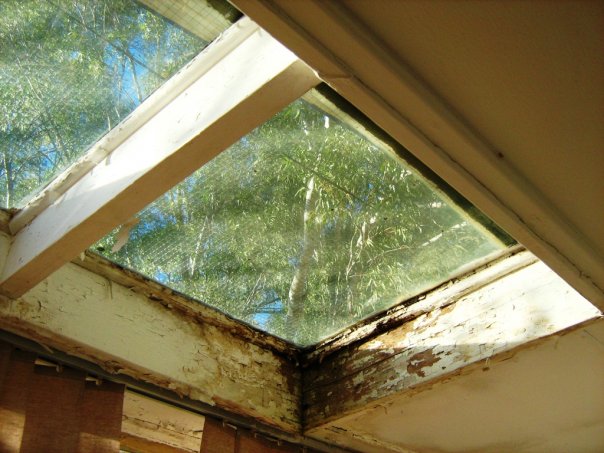
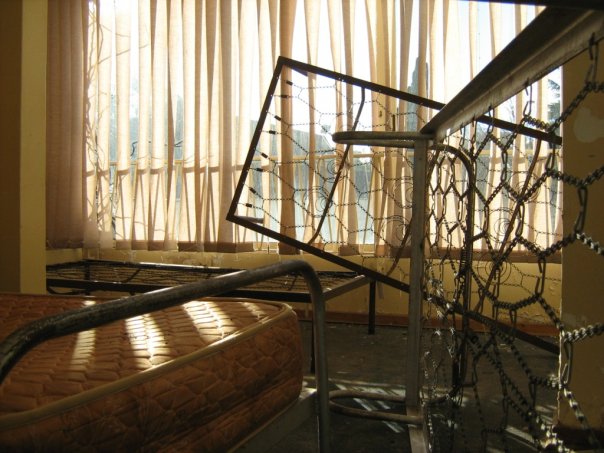
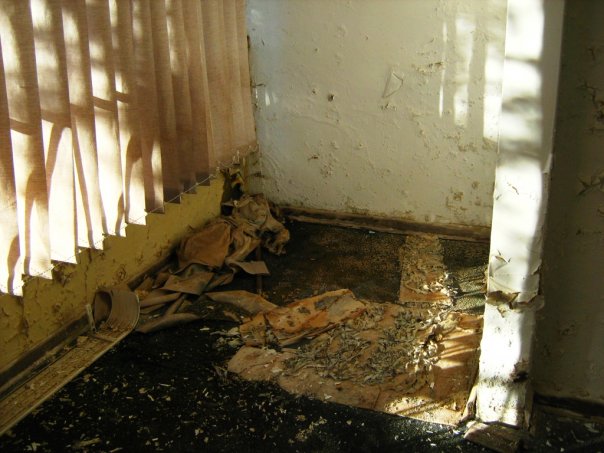
For “urban explorers” (a term that might loosely include artists, photographers, archaeologists, and curious folks alike), such journeys seek out “abandoned, unseen, and off-limits” spaces that imagine ruination in a wide range of artistic, emotional, scholarly, and political forms. Many of these urban explorers and artists see themselves as visual historians, documenting the architectural and community heritage reflected in abandoned spaces. For instance, Jonathan Haeber’s urban exploration blog Bearings explains that “I’m just an eye. I’m just a camera. … An urban explorer is just a documentarian. … We only appreciate the creations that are overlooked. … It is what remains that is the democratic equivalent of a revolution.” Continue reading
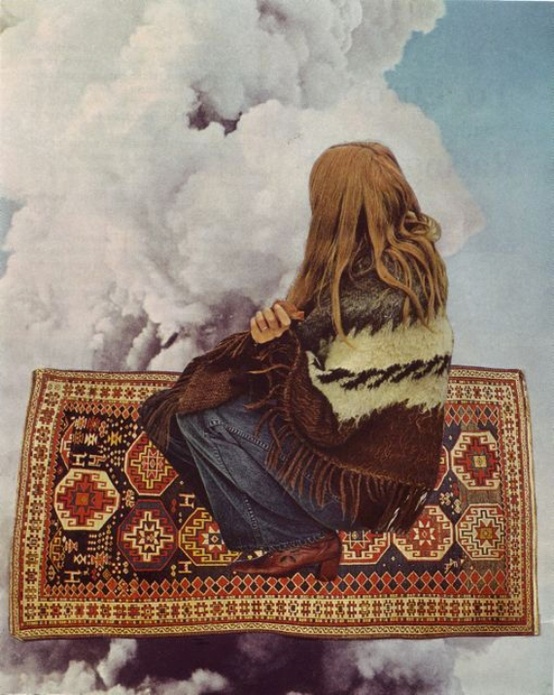 I’ll be in Turkey and Ireland for a month from today, so Fleurmach posts from me may be random and/or rare… Catch you on the flipside (with a high knot-per-square-inch count. ;)
I have just been unreliably and earnestly informed that Lady Gaga’s fragrance, Fame, will impregnate the wearer with demons.
 JOHN LAROCHE:
You know why I like plants?
SUSAN ORLEAN:
Nuh uh.
JOHN LAROCHE:
Because they’re so mutable. Adaptation is a profound process. Means you figure out how to thrive in the world.
SUSAN ORLEAN:
[pause] Yeah but it’s easier for plants. I mean they have no memory. They just move on to whatever’s next. With a person though, adapting’s almost shameful. It’s like running away.
___
CHARLIE KAUFMAN: [voice-over]
I am pathetic, I am a loser…
ROBERT MCKEE:
So what is the substance of writing?
CHARLIE KAUFMAN: [voice-over]
I have failed, I am panicked. I’ve sold out, I am worthless, I… What the fuck am I doing here? What the fuck am I doing here? Fuck. It is my weakness, my ultimate lack of conviction that brings me here… And here I am because my jump into the abysmal well – isn’t that just a risk one takes when attempting something new? I should leave here right now. I’ll start over. I need to face this project head on and…
ROBERT MCKEE:
…and God help you if you use voice-over in your work, my friends. God help you. That’s flaccid, sloppy writing. Any idiot can write a voice-over narration to explain the thoughts of a character.
___
SUSAN ORLEAN:
There are too many ideas and things and people. Too many directions to go. I was starting to believe the reason it matters to care passionately about something, is that it whittles the world down to a more manageable size.
___
SUSAN ORLEAN:
Do you ever get lonely sometimes, Johnny?
JOHN LAROCHE:
Well, I was a weird kid. Nobody liked me. But I had this idea. If I waited long enough, someone would come around and just, you know… understand me. Like my mom, except someone else. She’d look at me and quietly say: “Yes.” Just like that. And I wouldn’t be alone anymore.
___
CHARLIE KAUFMAN:
There are no rules, Donald. And anyone who says there are is just, you know…
DONALD KAUFMAN:
Not rules, principles. McKee writes that a rule says you *must* do it this way. A principle says, this *works* and has through all remembered time.
___
JOHN LAROCHE:
Point is, what’s so wonderful is that every one of these flowers has a specific relationship with the insect that pollinates it. There’s a certain orchid looks exactly like a certain insect so the insect is drawn to this flower, its double, its soul mate, and wants nothing more than to make love to it. And after the insect flies off, spots another soul-mate flower and makes love to it, thus pollinating it. And neither the flower nor the insect will ever understand the significance of their lovemaking. I mean, how could they know that because of their little dance the world lives? But it does. By simply doing what they’re designed to do, something large and magnificent happens. In this sense they show us how to live – how the only barometer you have is your heart. How, when you spot your flower, you can’t let anything get in your way.
___
SUSAN ORLEAN:
What I came to understand is that change is not a choice. Not for a species of plant, and not for me.
___
CHARLIE KAUFMAN:
I have to go right home. I know how to finish the script now. It ends with Kaufman driving home after his lunch with Amelia, thinking he knows how to finish the script. Shit, that’s voice-over. McKee would not approve. How else can I show his thoughts? I don’t know. Oh, who cares what McKee says? It feels right. Conclusive. I wonder who’s gonna play me. Someone not too fat. I liked that Gerard Depardieu, but can he not do the accent? Anyway, it’s done. And that’s something. So: “Kaufman drives off from his encounter with Amelia, filled for the first time with hope.” I like this. This is good.
“WARNING: The following picture might be considered obscene because subject is not thin. And we all know that only skinny people can show their stomachs and celebrate themselves. Well I’m not going to stand for that. This is my body. Not yours. MINE. Meaning the choices I make about it are none of your fucking business. Meaning my size IS NONE OF YOUR FUCKING BUSINESS.
If my big belly and fat arms and stretch marks and thick thighs offend you, then that’s okay. I’m not going to hide my body and my being to benefit your delicate sensitivities.
This picture is for the strange man at my nanny’s church who told me my belly was too big when I was five.
This picture is for my horseback riding trainer telling me I was too fat when I was nine.
This picture is for the girl from summer camp who told me I’d be really pretty if I just lost a few pounds
This picture is for all the fucking stupid advertising agents who are selling us cream to get rid of our stretch marks, a perfectly normal thing most people have (I got mine during puberty)
This picture is for the boy at the party who told me I looked like a beached whale.
This picture is for Emily from middle school, who bullied me incessantly, made mocking videos about me, sent me nasty emails, and called me “lard”. She made me feel like I didn’t deserve to exist. Just because I happened to be bigger than her. I was 12. And she continued to bully me via social media into high school.
MOST OF ALL, this picture is for me. For the girl who hated her body so much she took extreme measures to try to change it. Who cried for hours over the fact she would never be thin. Who was teased and tormented and hurt just for being who she was.
I’m so over that.
THIS IS MY BODY, DEAL WITH IT.”
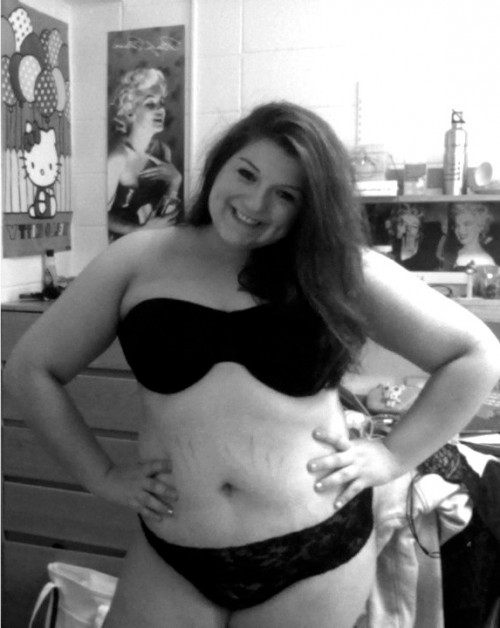
Self-portrait by Stella
reblogged from thebodyloveblog.tumblr.com.
 And, as Jean-Pierre de la Porte adds, “if he wants your tongue, your snout and your anus, send him to McDonald’s.”
“REFLECTION: LOVE BETWEEN BODIES
They are two people by mistake. The night corrects that.-Eduardo Galeano
The purpose of the reflection that follows is simple. Starting with what has been considered, it is a matter of noting the unsettled relationship with one’s own body and with other bodies (particularly with those that are objects of desire) imposed by the passing of time, a perspective that for reasons indicated in the chapter, our protagonists didn’t even have the possibility of considering.
In an initial very general overview of the subject, one thing that would immediately be noticed by someone who was questioning the place and the importance of the body in our lives is the fact that over the years the body loses its role of opportunity for pleasure, an attribute that it possesses almost spontaneously during one’s youth, and, in its place, it increasingly and unstoppably acquires the role of obstacle to the peaceable development of one’s very existence. With the passing of time, the body in effect turns precisely into that which resists us, which agitates us and reminds us of its existence through symptoms such as pain, discomfort or, of course, illness. In his book The Arc of Words, Andrés Trapiello has expressed this thought with a brilliant aphorism: “The body is like style: the less noticed it is, the healthier it is”.
In other terms, if we agree to call age that specific time that speaks through the body, one could affirm that the greatest characteristic of youth with regards to the relationship that it maintains with corporal physicality is precisely its fluidity, its immediacy, its transience. In this sense, a young person is someone who can call on his or her body with the knowledge that the body will rapidly return the call. On the other hand in a mature age everything is slow as Coetzee has pointed out, sometimes even extremely slow. So much so that even words end up acquiring this calm and slow rhythm and they take time to reach our lips. As I understand it, it was what an old friend of his commented to the great Fernando Fernán-Gómez, remembering the old times nostalgically: “Do you remember when we spoke rapidly?”.
Nevertheless, if it were only that, one could reassuringly maintain that in the last resort living is finding an accommodation —even if paradoxically it is an uncomfortable accommodation— in one’s own body. The problem, at least with respect to one of the subjects that our society thinks about with greatest difficulty (in this regard I could give as an example any of the novels of Michel Houellebecq), lies in the fact that in addition to that intra-subjective dimension to which I have just referred and which each one of us has to take on, there also exists a specific and particular material inter-subjectivity one of whose most prominent expressions is shown through desire.
I note that the most forceful commentaries these days tend to judge with an attitude that to my taste is frankly hypocritical —somewhere between indifference and paternalism— specifically the older the bodies involved are. It looks as if the maximum threshold which those of us who have definitely left behind the condition of glorious bodies find correct to accept, is that of tenderness barely covered by a gentle pastel color of residual passion. But maybe the body responds to a logic that is totally missed by those commentaries. Maybe just like the word remembers the soul, desire preserves the memory of the body.
Or maybe it is that the body has its own memory and is capable of seeing in the body that lies next to it what it was, even though now it may no longer be; it rescues from obscurity the shine of the past and it brings it with loving delicacy to the present, redeeming it from the ravages of time, the unmerciful punishment of evolution. Those who believe that bodies accept, are resigned, agree with what is handed to them are wrong. No. The body remembers the fulfillment that the other, with whom it is now melding with, had. The body preserves the memory —its own memory— of what it knew, of what once was its own. I am not referring to a dreamlike state or a fantasy. All those who do not know this experience: the feel of the violent stab of lust on recognizing in this body that has changed so radically, that almost in no way resembles that of the past, its contours lost, the fresh scent that identified it gone, the now faded smoothness of the skin, all of them should avoid smiling disdainfully, plentiful in their ignorance. Only from that memory of body which I have been referring to can such a revealing experience be understood. Those who do know it will not only know with perfect exactitude —with total precision— what I have been talking about. They will also enjoy an additional privilege: they will understand the deep significance of what is happening to them and, to a similar extent, maybe they will be able to reconcile with it, discarding in one fell swoop the sense of shame and blame that this society insists on placing on their consciences for committing the crime of desiring freely.
To summarize, I have never been able to understand why people limit themselves to swear eternal love to each other (though they do so less and less; that I do know). They ought to have the courage in certain circumstances to swear eternal desire. With luck and sensibility they might even be able to keep their promise. Certainly the mystics believed that. And, much closer to us, André Gorz expressed it at the beginning of a long letter that he wrote to his wife soon after finding out that she was ill, with some moving words embedded with sensitivity and tenderness:
You have just had your 82nd birthday. You have shrunk 6 cm, you don’t weigh more than 45 kg and you continue to be beautiful, elegant and desirable. We have lived together for 58 years and I love you more than ever. Once again I feel in my breast a consuming emptiness that is only eased by the warmth of your body next to mine.”
From I love, therefore I exist.
Love and the philosophers.
by Manuel Cruz
Translated by Gabriel Baum
I am hopelessly in love with Blixa, and I will be forever.
(Thanks to 웃웃 for posting this on Fleurmach’s Facebook page.)
Download this track HERE.
From the Self Non Self EP, 1989.
The extreme era in the ’80s. From the A Long Slow Screw video tape. Cathartic performance, mountains of sound without melody!
“As though you were stretching inside your own skin…”
Choreography: Martha Graham
Music by: Zoltan Kodaly
Danced by: Peggy Lyman
Created in 1930, filmed in 1976.
Martha Graham Dance Company
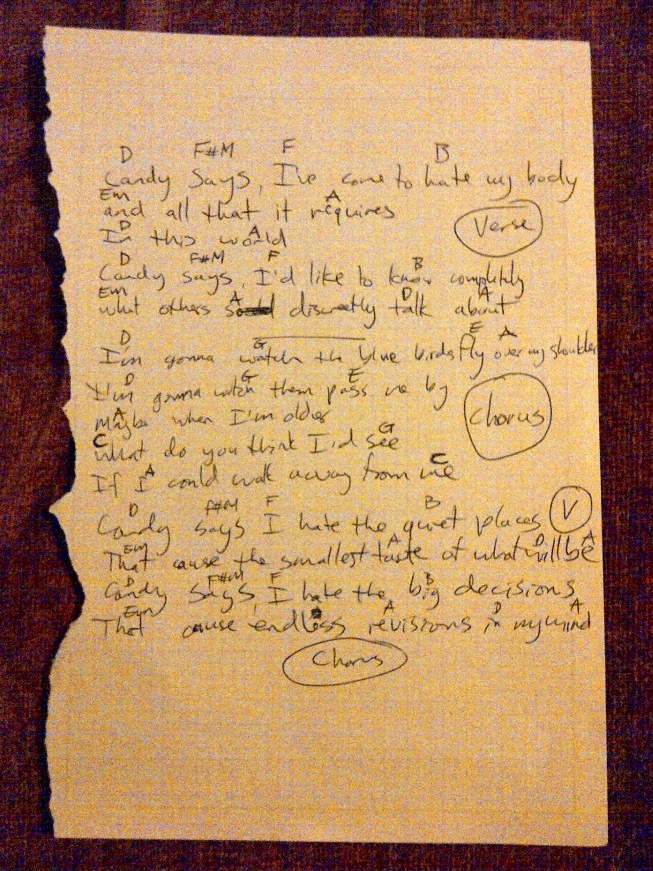
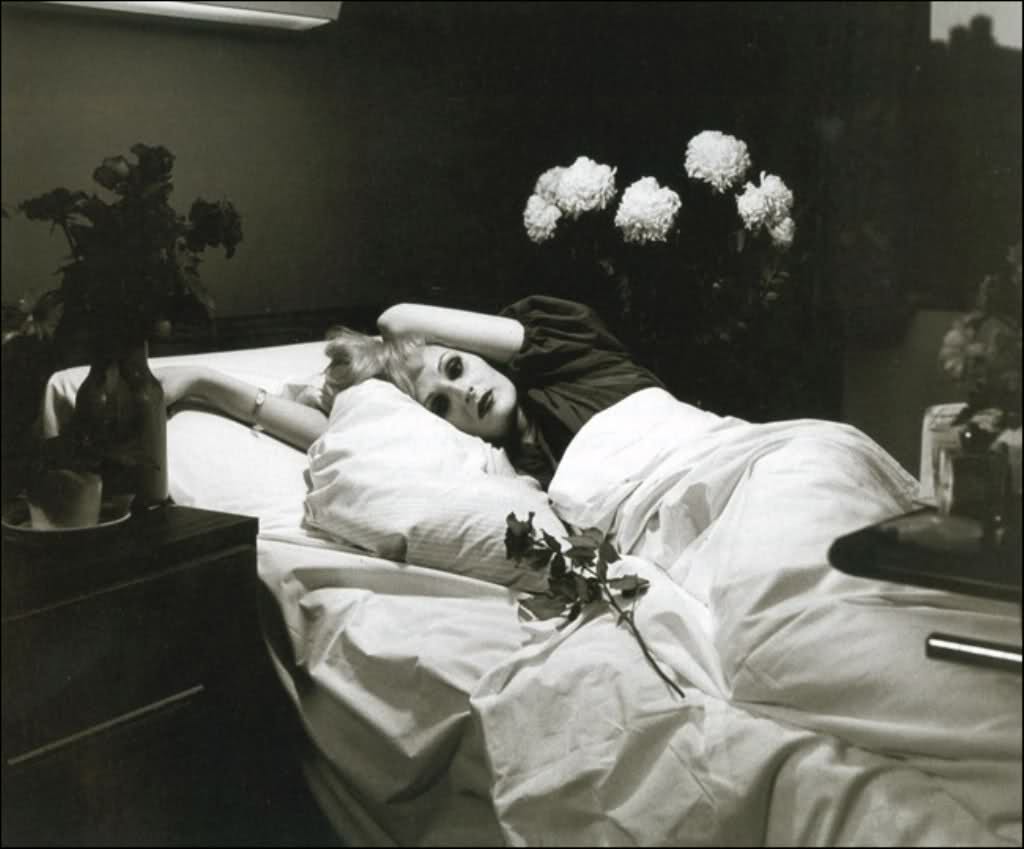
Peter Hujar – “Candy Darling on Her Deathbed”
1974, gelatin-silver print
Candy Darling (November 24, 1944 – March 21, 1974), born James Lawrence Slattery, was an American actress, best known as a Warhol Superstar. A male-to-female transsexual, she starred in Andy Warhol’s films Flesh (1968) and Women in Revolt (1971), and was a muse of the band The Velvet Underground.
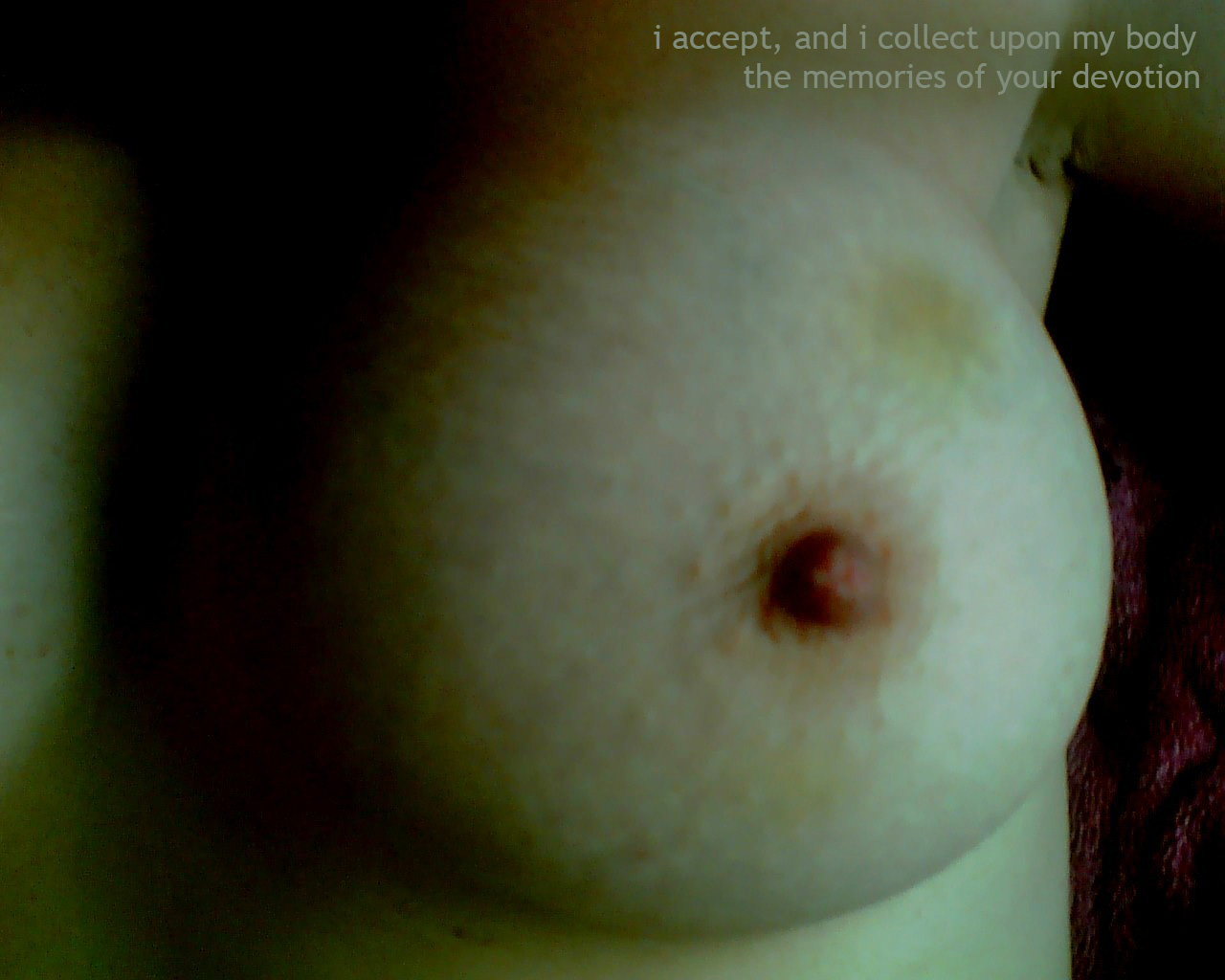
© cherry bomb
“I feel your burning eyes, burning holes straight through my heart…”
Antony & the Johnsons, from The Lake EP (Secretly Canadian, 2004).
To be born a woman is to be born, within an allotted and confined space, into the keeping of men. The social presence of women is developed as a result of their ingenuity in living under such tutelage within such a limited space. But this has been at the cost of a woman’s self being split into two.
A woman must continually watch herself. She is almost continually accompanied by her own image of herself. Whilst she is walking across a room or whilst she is weeping at the death of her father, she can scarcely avoid envisaging herself walking or weeping. From earliest childhood she has been taught and persuaded to survey herself continually. And so she comes to consider the surveyor and the surveyed within her as the two constituent yet always distinct elements of her identity as a woman. She has to survey everything she is and everything she does, because how she appears to men is of crucial importance for what is normally thought of as the success of her life. Her own sense of being in herself is supplanted by a sense of being appreciated as herself by another…
One might simplify this by saying: men act and women appear. Men look at women. Women watch themselves being looked at. This determines not only most relations between men and women but also the relation of women to themselves. The surveyor of woman in herself is male: the surveyed female. Thus she turns herself into an object — and most particularly an object of vision: a sight.
― John Berger, from Ways of Seeing.
 fleurmach