i love therefore i exist

REFLECTION: LOVE BETWEEN BODIES

They are two people by mistake. The night corrects that.-Eduardo Galeano

The purpose of the reflection that follows is simple. Starting with what has been considered, it is a matter of noting the unsettled relationship with one’s own body and with other bodies (particularly with those that are objects of desire) imposed by the passing of time, a perspective that for reasons indicated in the chapter, our protagonists didn’t even have the possibility of considering.

In an initial very general overview of the subject, one thing that would immediately be noticed by someone who was questioning the place and the importance of the body in our lives is the fact that over the years the body loses its role of opportunity for pleasure, an attribute that it possesses almost spontaneously during one’s youth, and, in its place, it increasingly and unstoppably acquires the role of obstacle to the peaceable development of one’s very existence. With the passing of time, the body in effect turns precisely into that which resists us, which agitates us and reminds us of its existence through symptoms such as pain, discomfort or, of course, illness. In his book The Arc of Words, Andrés Trapiello has expressed this thought with a brilliant aphorism: “The body is like style: the less noticed it is, the healthier it is”.

In other terms, if we agree to call age that specific time that speaks through the body, one could affirm that the greatest characteristic of youth with regards to the relationship that it maintains with corporal physicality is precisely its fluidity, its immediacy, its transience. In this sense, a young person is someone who can call on his or her body with the knowledge that the body will rapidly return the call. On the other hand in a mature age everything is slow as Coetzee has pointed out, sometimes even extremely slow. So much so that even words end up acquiring this calm and slow rhythm and they take time to reach our lips. As I understand it, it was what an old friend of his commented to the great Fernando Fernán-Gómez, remembering the old times nostalgically: “Do you remember when we spoke rapidly?”.

Nevertheless, if it were only that, one could reassuringly maintain that in the last resort living is finding an accommodation —even if paradoxically it is an uncomfortable accommodation— in one’s own body. The problem, at least with respect to one of the subjects that our society thinks about with greatest difficulty (in this regard I could give as an example any of the novels of Michel Houellebecq), lies in the fact that in addition to that intra-subjective dimension to which I have just referred and which each one of us has to take on, there also exists a specific and particular material inter-subjectivity one of whose most prominent expressions is shown through desire.

I note that the most forceful commentaries these days tend to judge with an attitude that to my taste is frankly hypocritical —somewhere between indifference and paternalism— specifically the older the bodies involved are. It looks as if the maximum threshold which those of us who have definitely left behind the condition of glorious bodies find correct to accept, is that of tenderness barely covered by a gentle pastel color of residual passion. But maybe the body responds to a logic that is totally missed by those commentaries. Maybe just like the word remembers the soul, desire preserves the memory of the body.

Or maybe it is that the body has its own memory and is capable of seeing in the body that lies next to it what it was, even though now it may no longer be; it rescues from obscurity the shine of the past and it brings it with loving delicacy to the present, redeeming it from the ravages of time, the unmerciful punishment of evolution. Those who believe that bodies accept, are resigned, agree with what is handed to them are wrong. No. The body remembers the fulfillment that the other, with whom it is now melding with, had. The body preserves the memory —its own memory— of what it knew, of what once was its own. I am not referring to a dreamlike state or a fantasy. All those who do not know this experience: the feel of the violent stab of lust on recognizing in this body that has changed so radically, that almost in no way resembles that of the past, its contours lost, the fresh scent that identified it gone, the now faded smoothness of the skin, all of them should avoid smiling disdainfully, plentiful in their ignorance. Only from that memory of body which I have been referring to can such a revealing experience be understood. Those who do know it will not only know with perfect exactitude —with total precision— what I have been talking about. They will also enjoy an additional privilege: they will understand the deep significance of what is happening to them and, to a similar extent, maybe they will be able to reconcile with it, discarding in one fell swoop the sense of shame and blame that this society insists on placing on their consciences for committing the crime of desiring freely.

To summarize, I have never been able to understand why people limit themselves to swear eternal love to each other (though they do so less and less; that I do know). They ought to have the courage in certain circumstances to swear eternal desire. With luck and sensibility they might even be able to keep their promise. Certainly the mystics believed that. And, much closer to us, André Gorz expressed it at the beginning of a long letter that he wrote to his wife soon after finding out that she was ill, with some moving words embedded with sensitivity and tenderness:

You have just had your 82nd birthday. You have shrunk 6 cm, you don’t weigh more than 45 kg and you continue to be beautiful, elegant and desirable. We have lived together for 58 years and I love you more than ever. Once again I feel in my breast a consuming emptiness that is only eased by the warmth of your body next to mine.”

From I love, therefore I exist.
Love and the philosophers.

by Manuel Cruz
Translated by Gabriel Baum
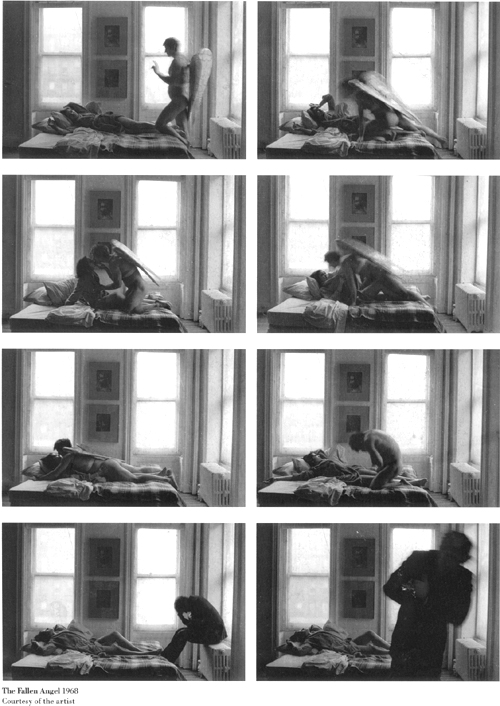
daughter – youth

Thank you to Stella Star for sending me this.

Shadows settle on the place that you left
Our minds are troubled by the emptiness
Destroy the middle, it’s a waste of time
From the perfect start to the finish line

And if you’re still breathing, you’re the lucky ones
‘Cause most of us are heaving through corrupted lungs
Setting fire to our insides for fun
Collecting names of the lovers that went wrong
The lovers that went wrong

We are the reckless
We are the wild youth
Chasing visions of our futures
One day we’ll reveal the truth
That one will die before he gets there
And if you’re still bleeding, you’re the lucky ones
‘Cause most of our feelings, they are dead and they are gone
We’re setting fire to our insides for fun
Collecting pictures from the flood that wrecked our home
It was a flood that wrecked this

And you caused it

Well I’ve lost it all, I’m just a silhouette
A lifeless face that you’ll soon forget
My eyes are damp from the words you left
Ringing in my head, when you broke my chest

And if you’re in love, then you are the lucky one
‘Cause most of us are bitter over someone
Setting fire to our insides for fun
To distract our hearts from ever missing them
But I’m forever missing him

And you caused it

janine tilley – why chicks dig nihilists… an old wives’ tale from 2005

(We miss you, Gerdtjie)

After years of indulging in martyrdom, I got to thinking, there must be reasons behind all this nonsensical adoration of worthless flesh, complete with limp cock.

Fucking a deadbeat? this is probably why…

1. They stay out of the sun so their skin is all soft

2. They don’t bath as much as other boys so we get to smell the real them and can pretend we are fucking mineworkers.

3. They cant always get it up, posing a challenge and a chance to giggle about them with your girlfriends.

4. When a nihilist is sweet to you, it feels like a blade of sunshine has pierced an angry sky, as it hardly ever happens.

Not as glamorous as one would think…
5. They are incredibly needy, and co-dependent tarts everywhere rejoice in the glory of this.

6. They don’t talk much, letting you rat a tat about all sorts of arb crap, which fuels their negativity.

7. Nihilists take loads of drugs and have massive come downs, making us feel less guilty about our own consumption and general bullshit.

8. They have decent music collections and there is no chance of catching them with oakley’s on their heads.

9. Say one measly nice thing to them, and they will use it as a weapon against you, exciting.

10. A nihilist will never believe you when you say you love them, giving you an opportunity to change your mind whenever you fancy without getting in to trouble.

11. They cant really talk properly, preferring to screech and wail and shout a lot, but write beautiful, tragic love letters that we keep forever and are the envy of our friends.

12. The constant negativity makes us feel that in contrast, we are bursting with positivism and are living fabulous, tanned lives.

13. They have such a low self image, there is very little chance of them upstaging us.

14. Their general incorrigible and juvenile vibe prevents other sluts from moving in until they get to know them, and by that time you have them by their weak ineffectual balls and they cant live without you.

15. ..They will never stand in front of the mirror going “christ, i am gorgeous”

16. They admire your bitching and complaining and actually get a rise out of it, rare and satisfying.

17. We can take out our frustrations on them using inappropriate verbal abuse and kick and scratch them as much as we want.

18. Their suicidal bollocks turns us on, as there is nothing like a kicked pathetic dog to bring out the old maternal instincts.

19. And, in the end, girls really enjoy being treated badly.

smog – a river ain’t too much to love

The first two tracks from A River Ain’t Too Much To Love (Domino Records, 2005):

Palimpsest

Winter weather is not my soul
But the biding for spring…

Say Valley Maker

With the grace of a corpse
In a riptide
I let go
And I slide slide slide
Downriver
With an empty case by my side
An empty case
That’s my crime

And I sing
To keep from cursing
Yes I sing
To keep from cursing

River Oh
River End
River Oh
River End
River Go
River Bend

Take me through the sweet valley
Where your heart blooms
Take me through the sweet valley
Where your heart is covered in dew
And when the river dries
Will you bury me in wood?
Where the river dries
Will you bury me in stone?

Oh I never really realized
Death is what it meant
To make it on my own

Because there is no love
Where there is no obstacle
And there is no love
Where there is no bramble
There is no love
On the hacked away plateau
And there is no love
In the unerring
And there is no love
On the one true path

Oh I cantered out here
Now I’m galloping back

So bury me in wood
And I will splinter
Bury me in stone
And I will quake
Bury me in water
And I will geyser
Bury me in fire
And I’m gonna phoenix
I’m gonna phoenix

leonard cohen – avalanche

From Songs Of Love And Hate (1971).

Well I stepped into an avalanche,
It covered up my soul;
When I am not this hunchback that you see,
I sleep beneath the golden hill.
You who wish to conquer pain,
You must learn, learn to serve me well.You strike my side by accident
As you go down for your gold.
The cripple here that you clothe and feed
Is neither starved nor cold;
He does not ask for your company,
Not at the centre, the centre of the world.

When I am on a pedestal,
You did not raise me there.
Your laws do not compel me
To kneel grotesque and bare.
I myself am the pedestal
For this ugly hump at which you stare.

You who wish to conquer pain,
You must learn what makes me kind;
The crumbs of love that you offer me,
They’re the crumbs I’ve left behind.
Your pain is no credential here,
It’s just the shadow, shadow of my wound.

I have begun to long for you,
I who have no greed;
I have begun to ask for you,
I who have no need.
You say you’ve gone away from me,
But I can feel you when you breathe.

Do not dress in those rags for me,
I know you are not poor;
Don’t love me quite so fiercely now
When you know that you are not sure,
It is your turn, beloved,
It is your flesh that I wear.

Avalanche lyrics © Universal Music Publishing Group, Sony/ATV Music Publishing LLC

gregory david roberts — shantaram

“It took me a long time and most of the world to learn what I know about love and fate and the choices we make, but the heart of it came to me in an instant, while I was chained to a wall and being tortured. I realised, somehow, through the screaming in my mind, that even in that shackled, bloody helplessness, I was still free: free to hate the men who were torturing me, or to forgive them. It doesn’t sound like much, I know. But in the flinch and bite of the chain, when it’s all you’ve got, that freedom is a universe of possibility. And the choice you make, between hating and forgiving, can become the story of your life.”

“The past reflects eternally between two mirrors—the bright mirror of words and deeds, and the dark one, full of things we didn’t do or say.”

“The ancient Sanskrit legends speak of a destined love, a karmic connection between souls that are fated to meet and collide and enrapture one another. The legends say that the loved one is instantly recognised because she’s loved in every gesture, every expression of thought, every movement, every sound, and every mood that prays in her eyes. The legends say that we know her by her wings—the wings that only we can see—and because wanting her kills every other desire of love.

The same legends also carry warnings that such fated love may, sometimes, be the possession and obsession of one, and only one, of the two souls twinned by destiny. But wisdom, in one sense, is the opposite of love. Love survives in us precisely because it isn’t wise.”

” … the soul has no culture. The soul has no nations. The soul has no colour or accent or way of life. The soul is forever. The soul is one. And when the heart has its moment of truth and sorrow, the soul can’t be stilled.”

“It’s forgiveness that makes us what we are. Without forgiveness, our species would’ve annihilated itself in endless retributions. Without forgiveness, there would be no history. Without that hope, there would be no art, for every work of art is in some way an act of forgiveness. Without that dream, there would be no love, for every act of love is in some way a promise to forgive. We live on because we can love, and we love because we can forgive.”

“They claim a hidden corner of our hearts, all those moments that stay with us unscreamed. That’s where loves, like elephants, drag themselves to die. It’s the place where pride allows itself to cry.”

“You can’t kill love. You can’t even kill it with hate. You can kill in-love, and loving, and even loveliness. You can kill them all, or numb them into dense, leaden regret, but you can’t kill love itself. Love is the passionate search for a truth other than your own; and once you feel it, honestly and completely, love is forever. Every act of love, every moment of the heart reaching out, is a part of the universal good: it’s a part of God, or what we call God, and it can never die.”

“The cloak of the past is cut from patches of feelings, and sewn with rebus threads. Most of the time, the best we can do is wrap it around ourselves for comfort or drag it behind us as we struggle to go on. But everything has its cause and its meaning. Every life, every love, every action and feeling and thought has its reason and significance: its beginning, and the part it plays in the end. Sometimes, we do see. Sometimes, we see the past so clearly, and read the legend of its parts with such acuity, that every stitch of time reveals its purpose, and a kind of message is enfolded in it. Nothing in any life, no matter how well or poorly lived, is wiser than failure or clearer than sorrow. And in the tiny, precious wisdom that they give to us, even those dread and hated enemies, suffering and failure, have their reason and their right to be.”

emily brontë – wuthering heights

Heaven did not seem to be my home; and I broke my heart with weeping to come back to earth; and the angels were so angry that they flung me out into the middle of the heath on the top of Wuthering Heights; where I woke sobbing for joy. That will do to explain my secret, as well as the other. I’ve no more business to marry Edgar Linton than I have to be in heaven; and if the wicked man in there had not brought Heathcliff so low I shouldn’t have thought of it. It would degrade me to marry Heathcliff now; so he shall never know how I love him; and that not because he’s handsome, Nelly, but because he’s more myself than I am. Whatever our souls are made of, his and mine are the same, and Linton’s is as different as a moonbeam from lightning, or frost from fire…

… I cannot express it; but surely you and everybody have a notion that there is, or should be an existence of yours beyond you. What were the use of creation if I were entirely contained here? My great miseries in this world have been Heathcliff’s miseries, and I watched and felt each from the beginning; my great thought in living is himself. If all else perished, and he remained, I should still continue to be; and all else remained, and he were annihilated, the universe would turn to a mighty stranger; I should not seem a part of it. My love for Linton is like the foliage in the woods. Time will change it, I’m well aware, as winter changes the trees — my love for Heathcliff resembles the eternal rocks beneath — a source of little visible delight, but necessary. Nelly, I am Heathcliff — he’s always, always in my mind — not as a pleasure, any more than I am always a pleasure to myself — but as my own being — so, don’t talk of our separation again — it is impracticable.
~ Catherine Earnshaw (Ch. IX).

_____
Wuthering Heights is the only published novel by Emily Brontë, written between October 1845 and June 1846 and published in July of the following year. It was not printed until December 1847 under the pseudonym Ellis Bell, after the success of her sister Charlotte Brontë’s novel Jane Eyre. A posthumous second edition was edited by Charlotte in 1850.

kate bush – wuthering heights

Official music video (version 1) for the single “Wuthering Heights” – Kate’s debut single. Released in January 1978, it became a No.1 hit in the UK singles chart and remains Kate’s biggest-selling single. The song appears on Kate’s 1978 debut album, The Kick Inside, and was also re-recorded in 1986 for the greatest-hits album The Whole Story.

pablo neruda – ode and burgeonings (1952)

I

The taste of your mouth and the color of your skin,
skin, mouth, fruit of these swift days,
tell me, were they always beside you
through years and journeys and moons and suns
and earth and weeping and rain and joy
or is it only now that
they come from your roots,
only as water brings to the dry earth
burgeonings that it did not know,
or as to the lips of the forgotten jug
the taste of the earth rises in the water?

I don’t know, don’t tell me, you don’t know.
Nobody knows these things.
But bringing all my senses close
to the light of your skin, you disappear,
you melt like the acid
aroma of a fruit
and the heat of a road,
and the smell of corn being stripped,
the honeysuckle of the pure afternoon,
the names of the dusty earth,
the infinite perfume of our country:
magnolia and thicket, blood and flour,
the gallop of horses,
the village’s dusty moon,
newborn bread:
ah from your skin everything comes back to my mouth,
comes back to my heart, comes back to my body,
and with you I become again
the earth that you are:
you are deep spring in me:
in you I know again how I am born.

2

Years of yours that I should have felt
growing near me like clusters
until you had seen how the sun and the earth
had destined you for my hands of stone,
until grape by grape you had made
the wine sing in my veins.
The wind or the horse
swerving were able
to make me pass through your childhood,
you have seen the same sky each day,
the same dark winter mud,
the endless branching of the plum trees
and their dark-purple sweetness.
Only a few miles of night,
the drenched distances
of the country dawn,
a handful of earth separated us, the transparent
walls
that we did not cross, so that life,
afterward, could put all
the seas and the earth
between us, and we could come together
in spite of space,
step by step seeking each other,
from one ocean to another,
until I saw that the sky was aflame
and your hair was flying in the light
and you came to my kisses with the fire
of an unchained meteor
and as you melted in my blood, the sweetness
of the wild plum
of our childhood I received in my mouth,
and I clutched you to my breast as
if I were regaining earth and life.

3

My wild girl, we have had
to regain time
and march backward, in the distance
of our lives, kiss after kiss,
gathering from one place what we gave
without joy, discovering in another
the secret road
that gradually brought your feet close to mine,
and so beneath my mouth
you see again the unfulfilled plant
of your life putting out its roots
toward my heart that was waiting for you.
And one by one the nights
between our separated cities
are joined to the night that unites us.
The light of each day,
its flame or its repose,
they deliver to us, taking them from time,
and so our treasure
is disinterred in shadow or light,
and so our kisses kiss life:
all love is enclosed in our love:
all thirst ends in our embrace.
Here we are at last face to face,
we have met,
we have lost nothing.
We have felt each other lip to lip,
we have changed a thousand times
between us death and life,
all that we were bringing
like dead medals
we threw to the bottom of the sea,
all that we learned
was of no use to us:
we begin again,
we end again
death and life.
And here we survive,
pure, with the purity that we created,
broader than the earth that could not lead us astray,
eternal as the fire that will burn
as long as life endures.

Continue reading

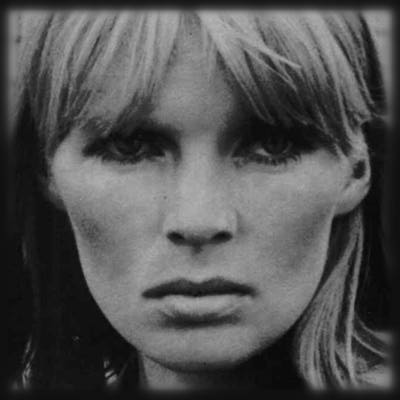
i’ll be your mirror

The Velvet Underground & Nico – I’ll Be Your Mirror (acetate version), recorded 25/04/1966 at Scepter Studios, New York.

(An acetate is a very fragile disc, cut prior to the cutting of the master disc used for mass production of records, used in the same way as a proof in photography.)

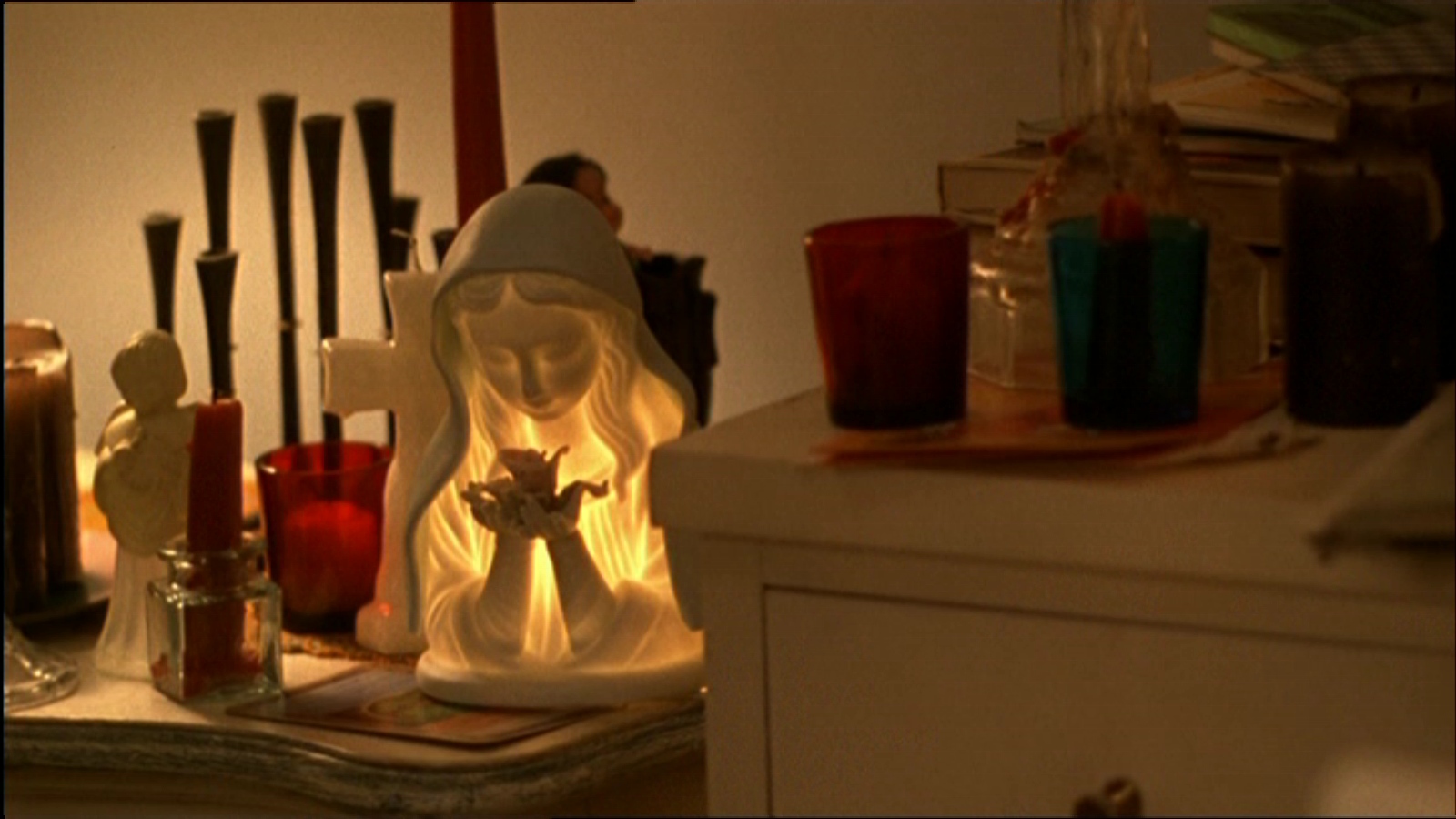
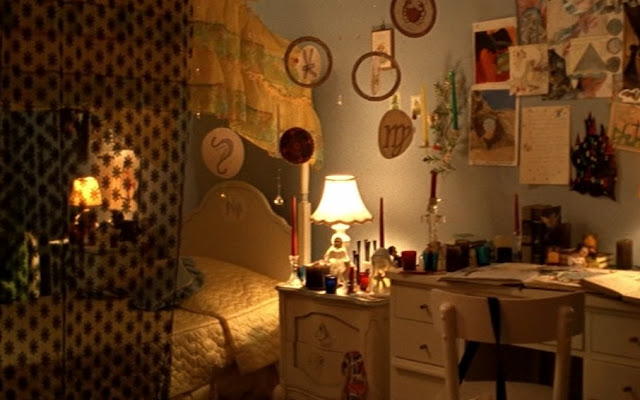
sofia coppola – from “the virgin suicides” (1999)

Narrator:

So much has been said about the girls over the years. But we have never found an answer. It didn’t matter in the end how old they had been, or that they were girls… but only that we had loved them, and that they hadn’t heard us calling… still do not hear us, up here in the tree house with our thinning hair and soft bellies, calling them from out of those rooms where they went to be alone for all time… and where we will never find the pieces to put them back together…

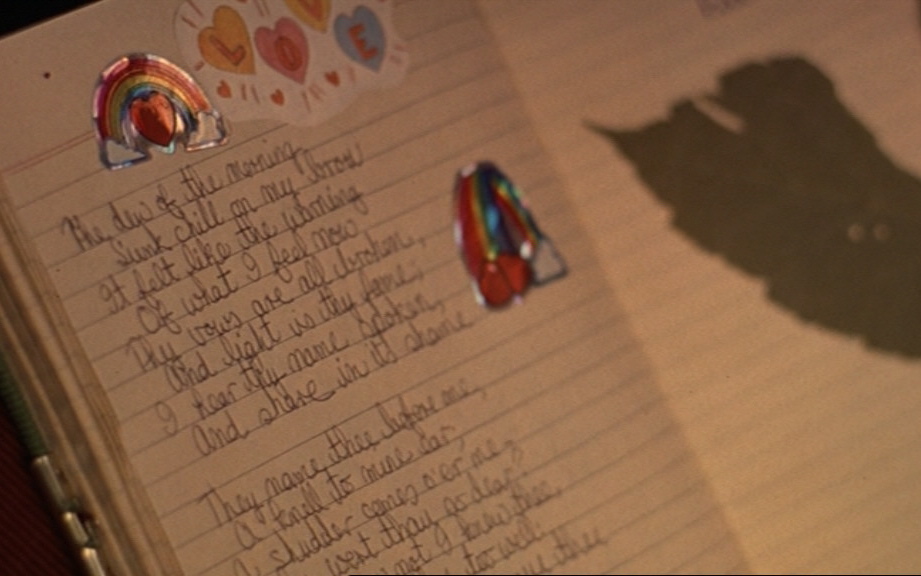
From Cecilia Lisbon’s diary:

Lux lost it over Kevin Haines, the garbage man. She’d wake up at five in the morning
and hang out on the front steps – like it wasn’t completely obvious.

She wrote his name in marker on all her underwear. Mom found them and bleached out the Kevins.
Lux was crying on her bed all day.

The trees like lungs filling with air.
My sister, the mean one, pulling my hair.

Narrator:

And so we started to learn about their lives, coming to hold collective memories of times we hadn’t experienced.

We felt the imprisonment of being a girl, the way it made your mind dreamy… so you ended up knowing
what colours went together.

We knew the girls were really women in disguise… that they understood love and even death… and that our job was merely to create the noise that seemed to fascinate them.

We knew that they knew everything about us. And that we couldn’t fathom them at all.

Screenplay based on the novel by Jeffrey Eugenides.