A piece of music worked on in the Red Bull studios in Cape Town some time ago. Red Bull have put it up on Soundcloud.
Category Archives: love
the books feat. jose gonzalez – cello song
Nick Drake cover, performed by The Books and Jose Gonzalez (2009).
essentially

If only a change of heart could magically repair the concrete effects of centuries of evil and dispossession overnight… It can’t, but thank you, Nelson Rolihlahla Mandela, for holding on to hope; for leading by example. If we all started living from an unselfish basis of love and respect, things WOULD shift.
marimba memories
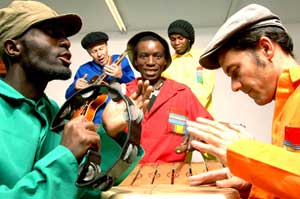
In the year 2000 I stopped my beat-up old car to help two guys who were carrying marimbas and gave them a lift up to Melville. On the way we got to chatting, discovered we were all musos, and I decided to come and jam with them while they busked, which I did, a few nights later.
This pair used to come all the way in from Orange Farm township in the Vaal, almost 40km out of Joburg, to busk until midnight outside Melville’s clubs and restaurants, then take a taxi or train home again. So whatever they earned, which was often a pittance, had to cover considerable transport costs – one of apartheid’s architectural legacies, which will take generations to change.
I kept playing with these two guys on the streets, for a couple of years, through winter and summer, on my djembe, cos it was quite something to experience. We were all from Zim, so we had something in common. It wasn’t the first time I had played with so-called black musicians, having played djembe with a maskande outfit called Abafana Bakwa Zulu a couple of years previous to this, but busking was new to me.
Busking is quite a cool way to get really fit on your instrument, and tight as a band. It’s kind of halfway between practicing and performing … sometimes you have an audience, and you have to step it up, and sometimes you don’t, and you can experiment with new songs and licks. If a crowd gathers you can hit on a song for like, 10 or 15 minutes, as long as they are getting into it, which can create some pretty deep calluses if you happen to be a drummer.
In winter, it got so cold that I used to play with a T-shirt, long-sleeve shirt, jersey and leather biker jacket on, plus a hat, even though I was drumming full-tilt. The crap thing about playing a djembe drum outside in the cold is that your hands are moving, creating wind, so even though they are hitting the goatskin hard, on the way up and down they are cooling off, and never really warm up.
Time passed and our little group, which we called Chapungu – meaning ‘whirlwind’ in Shona – apparently it has other, mystical connotations – became fairly good. The dudes found a place to store their instruments, or they would store them at my place, making getting to and from our favourite busking place on the corner of 7th and 4th in Melville much easier. We started getting better tips – we even got a R200 note from a tourist once – and we made a free one-day recording dubbed Sons of the Sun with a guy called Adrian Ziller, bless his heart. My friends helped to design the album cover and print it.
I started visiting the dudes in Orange Farm, which was a full-on jol. Many so-called whites think townships are miserable places, full of suffering and hardship. I’m sure they can be, especially at night in winter, or when the wind howls through Orange Farm, whipping up the dust.
But on my visits, I found a tangible sense of community; neighbours would wander in while we played and get into the vibe. Gangs of kids and dogs would pass by; fences were few and far between. I was uplifted by the music, which was, I guess, our common language, and started playing at events with the dudes, at schools, cultural gatherings, sports meetings, weddings.
There were quite a few kids who used to come and play with the adults; generally the girls would dance and the boys would drum or play on the marimbas, which were all handmade. We started making uniforms for them, with cloth supplied by my friends, or gathered from here and there in the township. The singer’s partner was carving out dance routines for the girls. Things were gathering momentum.
There was a couple in Joburg who were also keen to help our band; they had access to a trust fund, and donated some money which was used to buy tools, which were to be used for making marimbas. We also tried making drums, but it’s not an easy thing to make a good drum.
This couple took us on a trip to visit the Khomani San, who had been granted land by the SA government – but not the means to make a living from it. This couple, they were trying to set things up for some of the Bushmen, a camp which tourists could sleep at, a place to grow indigenous plants, that kind of thing. We met Dawid Kruiper, who was quite famous for his role in getting the land, and a couple of San sangomas. We slept in the camp, which was full of large, black scorpions, and read Tarot cards on the roof of the Landrover, while high on Sceletium, which gives you loads of energy, a natural speed. We dropped our pants and gave brown-eye to the bottle store. It was quite a trip.
Then the couple organised a group of musicians and performers to go on a country-wide tour to advertise a new MTN product. It was called the Multi-Talented Nomad tour, but I didn’t go on it, cos I was working full-time and couldn’t get two weeks’ leave. The guys went on the tour, made a couple of thousand bucks, and decided to go and visit the same Bushmen again, but this return trip didn’t go too well. They apparently shagged some of the Bushmen prostitutes and at least one of them caught AIDS. The singer, a short, fiery character with only one eye – died a few years later. He didn’t make it to the era of ARVs, when having AIDS is no longer a death sentence.
Things had started falling apart even before he died. As soon as we got funding, he and the bassist started arguing about who owned what, and the tools bought with the funding were kept at the singer’s place, and the whole positive vibe started crumbling.
Sometimes they would bitch at me about each other and I just hated being the middle. Fuck that. I really didn’t want to take sides. I was trying to help, not because I thought I should, but because I had just ended up getting involved in the music with these guys and I often had the means to help – the access to transport, to money, to the media. It was unavoidable, but sometimes it had unforeseen consequences.
Eventually, Chapungu broke up, and shortly afterward I was invited to take part in a musical play at the Aardklop festival in Potchefstroom, with the bassist and a group of performers from Orange Farm. We had a teacher who had toured Germany and he knocked our performance into shape, around the idea of a Magic Marimba Tree, from which music came, and provided nourishment to a parched land. I was the white priest, and wore a dog-collar for the role.
When we drove down to Potch I was the only so-called white in the cast of about 14 people. We played on the fringe of the festival and did workshops in the townships. I ate and slept in a room full of blacks, who seldom spoke English … my fault for not knowing Zulu, I guess. The best part was between gigs, as we jammed all day at the backpackers we were staying in, often with outsiders from the festival, who heard us and joined in.
Our mentor came to watch our final performance, hated it, and crapped all over us. We were totally dispirited. Then he wanted to ride back to Joburg in my car, not the overloaded minibus the rest of the crew were to travel in. I split before he could get in, pissed off with his attitude. We had tried our hardest to do a good show. Then we couldn’t get our money out of him. We only got paid after I threatened to put a debt collector on his ass.
The most vivid memory from the whole show, which went on for about a week, was when a beautiful young woman in the cast, who I had been eyeing from the start, stood behind me on the stage and softly put her hands on my shoulders, during the encore. Nothing more happened, but it was an intimate acknowledgment. I see you.
After Aardklop, some of the performers started congregating round the bassist’s place, practicing on the marimbas, and continuing with coaching kids, who would come in after school to play. They were also playing at a nearby school, the kids were winning prizes for their performances, it was all very organic and grassroots. I set up a website for the group. We started playing gigs at cultural events like the Green Africa Party, and then got onto the books of booking agencies, and began playing at corporate events like year-end parties. We made business cards, bought bright uniforms, and started playing quite regularly. This was before the recession, which killed the golden goose of regular corporate gigs, for us and loads of other musicians, including my drum teacher.
I was still doing a day-job, and was asked to write a piece on jazz experimental maestro Zim Ngqawana by the Daily Sun. I met his agent at the Zimology Institute, which he had set up for his jazz students, ironically right next to Orange Farm township. I got to know his agent better, and she helped us to set up an NGO for the musical training of the township kids. After some applications – again, with the help of a friend – we obtained funding, enough to provide the adults with salaries for a couple of years, and to buy some better musical instruments.
This era was our peak. Both the kids and the adults were getting lots of gigs. The kids took part in the FNB Dance Festival a couple of times and won prizes at the National Marimba Competition. They appeared on TV shows and in newspapers; soon we had an entire album of photos and clippings.
The adult group was traveling all over Gauteng and beyond, playing at weddings and parties and openings. A really good (so-called white) guitarist joined the crew, adding an extra car and skilled licks. I evolved a new style of playing the drums, with the djembe where the snare usually stands, and the snare off to the left. I could switch fast between snare and djembe, and play hi-hat and bass foot with both.
We had a huge repertoire of songs, way over 50 songs; some were covers, but many were originals, which had evolved over years of playing. We were playing gospel songs, African jazz, traditional African songs, including some Chimurenga stuff (Zim protest music) and some more bluesy and reggae stuff.
We got a trailer to put the marimbas in; slept over in posh places and demanded, and got, proper meals and treatment from clients, via the contracts with our agencies. Achimota also brought out a CD, recorded free of charge by Brendan Jury, called Ukuxolelana (Forgiveness).
But, after a time, cracks began to show. A key member of the group left to pursue his own musical career. His replacement had less energy and the group, already low on vibrancy, started losing impetus. The recession provided less jobs … the funding for the NGO dried up. The problem of getting to practices, when the guys were 40km out of town, was a thorn in our flesh from the start, but it didn’t matter when we were all into the whole thing – we basically practiced when we played at gigs. Now it was just this massive divide. We weren’t learning new songs, and things were getting stale.
I started standing back, trying to get the other members of the band involved in setting up gigs, obtaining funding, running things themselves. But no-one seemed willing, or able, to keep the ball rolling. I became tired of putting in time and effort, to make things happen: organising gigs, drawing money, sorting paperwork, dealing with clients, auditors and agents.
There were two final straws which made me pull out after twelve years of playing with my marimba mates. On both occasions, we were booked to play for corporate clients, and the guys didn’t pitch on time. I was left carrying the can, got crapped out by the agent and client both times, and, on the last gig, we lost our one remaining agent in the process. That was it.
I had so many experiences with these guys. We travelled thousands of kilometres together, listening to reggae and world music, dreaming of the day when Mugabe would finally die and we could visit Zim to dance on his grave. We often slept in the same room en route to gigs, and I even shared the same bed with them a couple of times.
We played to ecstatic, wildly dancing audiences, and totally bored executives, who would have likely preferred wallflowers to our presence… the catering staff at events was usually our best audience! We fixed broken trailers, cars, instruments, egos and homes together. We busked in Newtown for the whole of the Fifa World Cup. I even did sweat lodges and took psychedelics with some of the dudes.
But there was always that line, that divide, between black and white, between middle-class and poor, between living in town and living in township. It was crossed at times, but it always returned. I count myself lucky that I caught a glimpse of a totally different type of lifestyle and culture to that of white urban Johannesburg.
The door to Orange Farm is still slightly open. I still see the bassist now and then; he is teaching marimbas at a school in Joburg, and is now playing with his uncle, from Zim, who taught him how to play. That sounds innarestin. Me and the guitarist are going to go check it out one of these days. Because there is something utterly organic and magical about playing marimba music. No getting round that.
There were times when I grew frustrated, because things didn’t pan out the way I hoped they would, but overall I don’t regret the experience. Things are born and then they die. I read, in an article on South African NGOs, that you never know what effect you are going to have when you set up structures in poor communities. You have an idea of things going one way; they end up going in another. There might be one or two kids who become brilliant performers after having played with Achimota or Chapungu, or perhaps it changed their lives in some other way, a way which I couldn’t possibly have predicted. That would be enough. For me, my life and music were sure as hell enriched.
Having reread what I just wrote, I realise how much my friends and partners helped me, every step along the way with this crazy adventure, and if they ever read this, thanks a ton guys. We couldn’t have done it without you. At base, at heart, people want to help each other; often, they just don’t know how, but there channels, if you look, or if they find you. This whole dog-eat-dog system that’s been forced down our throats, it’s a load of balls. A lot of us are learning to see past that now. I hope it keeps spreading.
howard zinn: “you can’t be neutral on a moving train”
“Civil disobedience is not our problem. Our problem is civil obedience. Our problem is that people all over the world have obeyed the dictates of leaders…and millions have been killed because of this obedience… Our problem is that people are obedient all over the world in the face of poverty and starvation and stupidity, and war, and cruelty. Our problem is that people are obedient while the jails are full of petty thieves, and all the while the grand thieves are running the country. That’s our problem.”
Watch this documentary:
turkish protest music
The rhythm of outrage…
“What do a park in Istanbul, a baby in Sarajevo, a security chief in Sofia, a TV station in Athens and bus tickets in Sao Paulo have in common? However random the sequence may seem at first, a common theme runs through and connects all of them. Each reveals, in its own particular way, the deepening crisis of representative democracy at the heart of the modern nation state. And each has, as a result, given rise to popular protests that have in turn sparked nationwide demonstrations, occupations and confrontations between the people and the state.” Read more HERE.

Brazilian solidarity poster
lush – light from a dead star
The first track off the album Split (4AD, 1994).
frida boccara – les moulins de mon coeur
My dad was a fan of Frida Boccara and I grew up hearing this wonderful interpretation of Michel Legrand’s most popular composition, “Les Moulins de Mon Coeur”/”The Windmills of Your Mind”.
michael leunig – on falling
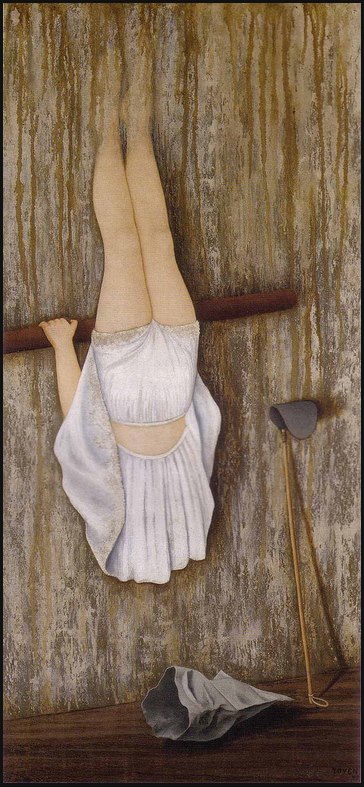
Toyen (Marie Čermínová) – “Relâche”, 1943
Dear God,
When we fall, let us fall inwards.
Let us fall freely and completely:
that we may find our depth and humility:
the solid earth from which we may rise up and love again.
Amen.
— Michael Leunig
emmylou harris – coat of many colors
Written by Dolly Parton, from a live broadcast on German TV in 1977.
paul simon and wes anderson go cuckoo in april
From Sounds of Silence, Simon and Garfunkel’s second album, released on January 17, 1966. It had also appeared prior to this on a UK-only release, The Paul Simon Songbook, in August 1965.
The song bears a structural resemblance to a traditional English rhyme, “Cuckoo, cuckoo, what do you do?”, a phenology of the Common Cuckoo from April to September:
Cuckoo, Cuckoo, what do you do?
“In April I open my bill;
In May I sing night and day;
In June I change my tune
In July far far I fly;
In August away I must.”
Cuckoo, Cuckoo!
This choral version of the rhyme was featured on the soundtrack to Wes Anderson’s 2012 film, Moonrise Kingdom:
søren kierkegaard on loving one’s neighbour
This was the commandment, ‘Thou shalt love thy neighbour as thyself,’ but when the commandment is rightly understood it also says the converse, ‘Thou shalt love thyself in the right way.’ If anyone, therefore, will not learn… to love himself in the right way, then neither can he love his neighbour; he may perhaps, as we say, ‘for life and death’ cling to one or several human beings, but this is by no means loving one’s neighbour. To love one’s self in the right way and to love one’s neighbour are absolutely analogous concepts, are at bottom one and the same.
~ Søren Kierkegaard, from Works of Love (1847)
lauren bacall on companionship
Lauren Bacall interviewed in 1994. Honest and smart… And how!
rebecca west on sadomasochism (1933)
 “I loathe the way the two cancers of sadism and masochism eat into the sexual life of humanity, so that the one lifts the lash and the other offers blood to the blow, and both are drunken with the beastly pleasure of misery and do not proceed with love’s business of building a shelter from the cruelty of the universe.”
— Rebecca West, Letter to a Grandfather (1933), pg 34.
Read more about the formidable Dame West HERE.
mark lanegan – strange religion
Off the album Bubblegum (Beggars Banquet, 2004), featuring Izzy Stradlin and Duff McKagan.
* Thank you, Stella. *
russell brand on margaret thatcher
‘The blunt, pathetic reality today is that a little old lady has died, who in the winter of her life had to water roses alone under police supervision. If you behave like there’s no such thing as society, in the end there isn’t. Her death must be sad for the handful of people she was nice to and the rich people who got richer under her stewardship. It isn’t sad for anyone else.’
‘Barack Obama, interestingly, said in his statement that she had “broken the glass ceiling for other women”. Only in the sense that all the women beneath her were blinded by falling shards. She is an icon of individualism, not of feminism.’

Russell Brand has an intelligent, evocative way with reflection. I remember the piece he wrote when Amy Winehouse died — the fine-grained, personal memories, the honesty. THIS BIT OF WRITING, on a very different sort of figure in his life, has that same quality.
hacia dos veranos – i’ll be your mirror
A lovely, instrumental version of this song from an Argentinian covers compilation paying tribute to The Velvet Underground and Nico album. You can download the album free from HERE: click the green arrow; hopefully it still works!
the tea company – you keep me hangin’ on
Psychedelic cover of the Holland-Dozier-Holland penned hit, off this US psych band’s record, Come And Have Some Tea With The Tea Company (1968).
girl on the bridge (1999)
Vanessa Paradis’ opening monologue (with English subtitles)
Review by Michael Dequina at filmthreat.com, 11/21/00:
“Very few actors, let alone young ones, can pull off what 20-something chanteuse-turned-actress Vanessa Paradis does in the opening minutes of Patrice Leconte’s romantic drama. In a single take broken only by an occasional white-on-black credit card, Paradis’ Adele confides to an unseen interrogator the reasons for her depression. It is never explained exactly to whom she is speaking and in what type of situation, but that is of little consequence—in these scant minutes, the audience instantly is given a vivid portrait of what the character is all about: her youthful recklessness and naïveté, her sexual abandon and her romantic soul. While kudos go to writer Serge Frydman, it is Paradis who brings the scene and Adele to robust life.
“However, in Adele’s eyes, her life isn’t quite so healthy, and as such she becomes the titular girl on the bridge, ready to jump when she meets Gabor (Daniel Auteuil), a knife thrower in need of a new target. Since she clearly has no fear of danger, Adele is a perfect match—though it comes as a surprise to both of them just how well they complement each other, for these two historically down-on-their-luck characters find themselves on an incredible streak of good fortune as they wow crowds throughout Europe. But as with all things, what goes up must come down.
“La Fille sur le Pont is a magical film in all senses. On a literal level, the surreal psychic bond that develops between Adele and Gabor pushes the film into the realm of magical realism, and their knife throwing scenes bear a not-so-subtle, otherworldly erotic charge. But the real magic comes in watching the warm sparks between Paradis and Auteuil and following their eccentric characters’ beautiful, unconventional relationship. Jean-Marie Dreujou’s stunning black-and-white cinematography and Leconte’s smart choices in music (there is no original composed score) add to the film’s whimsical, timeless spell.”
screen test/bang bang
James Dean and Lois Smith: screen test for East of Eden.
Nancy Sinatra – “Bang Bang (My Baby Shot Me Down)” – piano remix.
francis bacon on friendship
A principal fruit of friendship is the ease and discharge of the fullness and swellings of the heart, which passions of all kinds do cause and induce. We know diseases of stoppings and suffocations are the most dangerous in the body, and it is not much otherwise in the mind: you may take sarza to open the liver, steel to open the spleen, flowers of sulphur for the lungs, castoreum for the brain; but no receipt openeth the heart but a true friend, to whom you may impart griefs, joys, fears, hopes, suspicions, counsels, and whatsoever lieth upon the heart to oppress it, in a kind of civil shrift or confession.

…[C]ommunicating of a man’s self to his friend works two contrary effects, for it redoubleth joys, and cutteth griefs in halves. For there is no man that imparteth his joys to his friend, but he joyeth the more; and no man that imparteth his griefs to his friend, but he grieveth the less. So that it is in truth of operation upon a man’s mind, of like virtue as the alchemists use to attribute to their stone for man’s body, that it worketh all contrary effects, but still to the good and benefit of nature. But yet without praying in aid of alchemists, there is a manifest image of this in the ordinary course of nature. For in bodies, union strengtheneth and cherisheth any natural action, and on the other side weakeneth and dulleth any violent impression; and even so it is of minds…
…The second fruit of friendship is healthful and sovereign for the understanding, as the first is for the affections. For friendship maketh indeed a fair day in the affections, from storm and tempests; but it maketh daylight in the understanding, out of darkness, and confusion of thoughts. Neither is this to be understood only of faithful counsel, which a man receiveth from his friend; but before you come to that, certain it is that whosoever hath his mind fraught with many thoughts, his wits and understanding do clarify and break up, in the communicating and discoursing with another: he tosseth his thoughts more easily; he marshalleth them more orderly; he seeth how they look when they are turned into words; finally, he waxeth wiser than himself; and that more by an hour’s discourse, than by a day’s meditation…
… How many things are there which a man cannot, with any face or comeliness, say or do himself? A man can scarce allege his own merits with modesty, much less extol them; a man cannot sometimes brook to supplicate or beg; and a number of the like. But all these things are graceful in a friend’s mouth, which are blushing in a man’s own. So again, a man’s person hath many proper relations which he cannot put off. A man cannot speak to his son but as a father; to his wife but as a husband; to his enemy but upon terms: whereas a friend may speak as the case requires, and not as it sorteth with the person. But to enumerate these things were endless. I have given the rule, where a man cannot fitly play his own part; if he have not a friend, he may quit the stage.
Read the whole of this essay by Francis Bacon (the 16th century thinker) HERE.
eaten up by nothing

melody nelson (full film)
… And, while we’re on the lugubrious, seamy baritone tip, it would be remiss not to make a turn past l’original, Monsieur Serge Gainsbourg:
Watch Melody Nelson, a short film directed Jean-Christophe Avery, starring Serge Gainsbourg and Jane Birkin, based on Gainsbourg’s seminal (ahem, heheh) 1971 album. More information HERE.
tindersticks – my oblivion
The edges of our love are in the stars
And on the balcony
She waits for me
Out on the boundary
She smiles
Make this alive
Good days are back
Open your eyes when it falls
Come back to the air
I can’t tell you what you already know
I can’t make you feel what you already feel
I can’t show you what’s in front of you
I can’t heal those scars
björk – prayer of the heart
John Tavener composed this specifically for Björk. She chants a prayer from the Eastern Orthodox Christian tradition, “Prayer of The Heart”, accompanied by the Brodsky Quartet.
“Prayer of The Heart” is a short, simple prayer that has been widely used, taught and discussed throughout the history of Eastern Orthodox Christianity. It is, for the Orthodox, one of the most profound and mystical prayers, and is often repeated endlessly as part of personal ascetic practice. It is particularly used in the practice of the spiritual life known as hesychasm. Based on Christ’s injunction in the Gospel of Matthew, “when thou prayest, enter into thy closet, and when thou hast shut thy door, pray”, hesychasm in tradition has been the process of retiring inward by ceasing to register the senses, in order to achieve an experiential knowledge of God. The prayer is particularly esteemed by the spiritual fathers of this tradition as a method of opening the heart.
Greek: Κύριε Ἰησοῦ Χριστέ, Υἱὲ τοῦ Θεοῦ, ἐλέησόν με (τὸν ἁμαρτωλόν).
English: Lord Jesus Christ, Son of God, have mercy on me (a sinner).
More info from Wikipedia HERE, and from Orthodox Wiki HERE.
love is stronger than death

the tragedy of first position
This is so, so beautiful.
t.s. eliot – the cocktail party
 It will do you no harm to find yourself ridiculous.
Resign yourself to be the fool you are.
You will find that you survive humiliation
And that’s an experience of incalculable value.
That is the worst moment, when you feel you have lost
The desires for all that was most desirable,
Before you are contented with what you can desire;
Before you know what is left to be desired;
And you go on wishing that you could desire
What desire has left behind. But you cannot understand.
How could you understand what it is to feel old?
We die to each other daily.
What we know of other people
Is only our memory of the moments
During which we knew them. And they have changed since then.
To pretend that they and we are the same
Is a useful and convenient social convention
Which must sometimes be broken. We must also remember
That at every meeting we are meeting a stranger.
There was a door
And I could not open it. I could not touch the handle.
Why could I not walk out of my prison?
What is hell? Hell is oneself.
Hell is alone, the other figures in it
Merely projections. There is nothing to escape from
And nothing to escape to. One is always alone.
Half the harm that is done in this world
Is due to people who want to feel important.
They don’t mean to do harm — but the harm does not interest them.
Or they do not see it, or they justify it
Because they are absorbed in the endless struggle
To think well of themselves.
There are several symptoms
Which must occur together, and to a marked degree,
To qualify a patient for my sanitorium:
And one of them is an honest mind. That is one of the causes of their suffering.
To men of a certain type
The suspicion that they are incapable of loving
Is as disturbing to their self-esteem
As, in cruder men, the fear of impotence.
I must tell you
That I should really like to think there’s something wrong with me —
Because, if there isn’t, then there’s something wrong
With the world itself — and that’s much more frightening!
That would be terrible.
So, I’d rather believe there’s something wrong with me, that could be put right.
Everyone’s alone — or so it seems to me.
They make noises, and think they are talking to each other;
They make faces, and think they understand each other.
And I’m sure they don’t. Is that a delusion?
Can we only love
Something created in our own imaginations?
Are we all in fact unloving and unloveable?
Then one is alone, and if one is alone
Then lover and beloved are equally unreal
And the dreamer is no more real than his dreams.
I shall be left with the inconsolable memory
Of the treasure I went into the forest to find
And never found, and which was not there
And is perhaps not anywhere? But if not anywhere
Why do I feel guilty at not having found it?
Disillusion can become itself an illusion
If we rest in it.
Two people who know they do not understand each other,
Breeding children whom they do not understand
And who will never understand them.
There is another way, if you have the courage.
The first I could describe in familiar terms
Because you have seen it, as we all have seen it,
Illustrated, more or less, in lives of those about us.
The second is unknown, and so requires faith —
The kind of faith that issues from despair.
The destination cannot be described;
You will know very little until you get there;
You will journey blind. But the way leads towards possession
Of what you have sought for in the wrong place.
We must always take risks. That is our destiny.
If we all were judged according to the consequences
Of all our words and deeds, beyond the intention
And beyond our limited understanding
Of ourselves and others, we should all be condemned.
Only by acceptance of the past will you alter its meaning.
All cases are unique, and very similar to others.
Every moment is a fresh beginning.
__
Excerpted from T.S. Eliot’s 1949 play, The Cocktail Party
from “before sunset” – taxi scene
“There’s gotta be something more to love than commitment”…
… “Why are you telling me all this?”
 fleurmach