Zeena Parkins – arpa elettrica, pianoforte, elettronica
Ikue Mori – percussioni elettroniche, computer
Risonanze 2004-2005
Rassegna di nuove musiche contemporanee
Venezia, Teatro Fondamenta Nuove
1 dicembre 2004
Riprese video – Mauro Sambo
Zeena Parkins – arpa elettrica, pianoforte, elettronica
Ikue Mori – percussioni elettroniche, computer
Risonanze 2004-2005
Rassegna di nuove musiche contemporanee
Venezia, Teatro Fondamenta Nuove
1 dicembre 2004
Riprese video – Mauro Sambo
A prayer.
“I’m aimin’ at a mirror…”
This video from Mica Levi (of Micachu and the Shapes) is my favourite discovery this week.
Breathe a balloon full of kisses
Let it go where it will
And it will
🎈

Have to post this next to the Relaxed Muscle.
Have to post this next to the Sharon van Etten.
<3
This is incredible.
A cover of the 2009 Vic Chesnutt song, from the Fantasy Covers: The 2000s Part Two podcast.
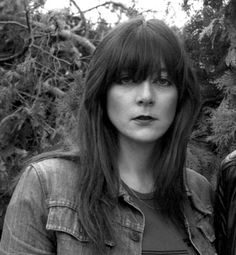 A TEST IN TRUST
“For a brief moment my belief in myself is yours to take and assimilate as you will. My innermost thoughts and private ideals are laid before you in trust.”
I still believe we are sensitive. To hide behind defensive faces for so long has buried our souls. The need to communicate feelings and express experience is, for some, becoming more difficult. Suppressing the natural instincts leads to eventual emotional breakdown. Our only true way to communicate is through our emotions. I only give you what I believe, what I know and what I live. We can all offer something to one another.
I have always thought of Georges Bataille’s work as being very private, yet he shared it with us all, somehow retaining that private feeling that only you had read this piece. Not sensationalist when it could so easily have been. He has always left me with a feeling of warmth and reassurance that life is as complicated as I began to believe but still worth living to the full, experiencing more and more as you grow older, not less and less. A fine writer to me, he communicates guiltless fantasy.
— Cosey Fanni Tutti for Georges Bataille Festival, Violent Silence,1984.
“One must live in the environment of the day and make that environment as free as possible, to as many people as possible. To give people what they already have, but that which has been buried by years of varying human ideals and standards. All COUM asks is that people once more work with themselves, their feelings, and in doing so, become aware of others. It is simple, yet very difficult. The simplest things are the most difficult.”
From the record Charles Mingus Presents C.M., recorded 20 October, 1960at Nola Penthouse Sound Studios, New York, with the wild Eric Dolphy on alto/bass clarinet, Danny Richmond on drums, and Ted Curson on trumpet.
Produced by Tom Thomas Organization for Philco-Ford Corp, and starring Marj Dusay, this 1967 film imagines the future (which is now in the past).
Read this for contrast.
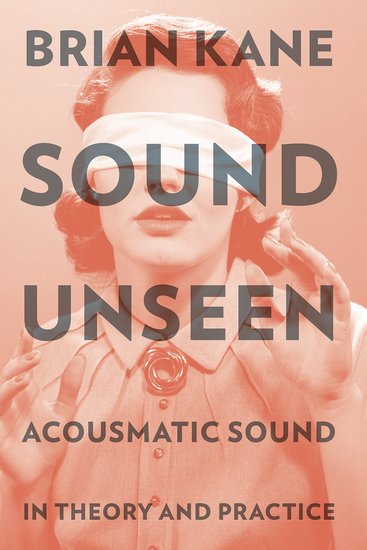 Sound coming from outside the field of vision, from somewhere beyond, holds a privileged place in the Western imagination. When separated from their source, sounds seem to manifest transcendent realms, divine powers, or supernatural forces. According to legend, the philosopher Pythagoras lectured to his disciples from behind a veil, and two thousand years later, in the age of absolute music, listeners were similarly fascinated with disembodied sounds, employing various techniques to isolate sounds from their sources. With recording and radio came spatial and temporal separation of sounds from sources, and new ways of composing music.
Sound Unseen: Acousmatic Sound in Theory and Practice explores the phenomenon of acousmatic sound. An unusual and neglected word, “acousmatic” was first introduced into modern parlance in the mid-1960s by avant garde composer of musique concrète Pierre Schaeffer to describe the experience of hearing a sound without seeing its cause. Working through, and often against, Schaeffer’s ideas, Brian Kane presents a powerful argument for the central yet overlooked role of acousmatic sound in music aesthetics, sound studies, literature, philosophy and the history of the senses. Kane investigates acousmatic sound from a number of methodological perspectives — historical, cultural, philosophical and musical — and provides a framework that makes sense of the many surprising and paradoxical ways that unseen sound has been understood. Finely detailed and thoroughly researched, Sound Unseen pursues unseen sounds through a stunning array of cases — from Bayreuth to Kafka’s “Burrow,” Apollinaire to Zizek, music and metaphysics to architecture and automata, and from Pythagoras to the present-to offer the definitive account of acousmatic sound in theory and practice.
The first major study in English of Pierre Schaeffer’s theory of “acousmatics,” Sound Unseen is an essential text for scholars of philosophy of music, electronic music, sound studies, and the history of the senses.
Exquisite.
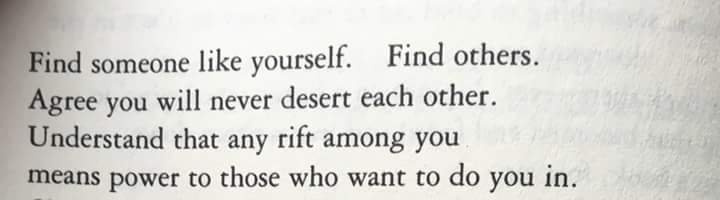
Adrienne Rich – from “Yom Kippur 1984”
MBIZO DAY – today, Wednesday 30th November
The Pan African Space Station (PASS) will host a 24 hour live broadcast of music written and/or performed by healer, musician, composer and painter Johnny Mbizo Dyani (30 November 1945 – 24 October 1986), as well as rare interviews with the artist and comments by people who knew and worked with him.
TUNE IN HERE from 12:00 midday (GMT+2) today, Wednesday 30 November till midday on Thursday 1 December.
This listening session is in celebration of Mbizo’s life work and in commemoration of 30 years of his passing.
During his short life, Mbizo helped to establish the Blue Notes, a group he co-founded with Chris McGregor, Louis Moholo, Mongezi Feza, Dudu Pukwana and Nic Moyake, as the one of the most innovative and powerful forces in jazz. Or more precisely, what he called the SKANGA (a family of black creative musics). Mbizo was a highly sought-after bass player and vocalist who performed with some of the music’s most important figures, including Don Cherry, Abdullah Ibrahim, David Murray, Mal Waldron, Famoudou Don Moye, Khan Jamal and many more. He recorded over 70 albums.
In addition to Chimurenga people, selectors and speakers include Keorapetse Kgositsile, Lefifi Tladi, Marcus Wyatt/Blue Notes Tribute Orkestra, Louis Moholo, Lesego Rampolokeng, Ikapa Jazz Movement, Tete Mbambisa, Maakomele Manaka, DJ Mighty, Tumi Mogorosi, Dala Flat, and many more.
And check out this wonderful performance from July 1971, broadcast live on French television.
This song is just the best. It has helped me to keep putting one foot in front of the other on really difficult days.
Another Thought was originally released in 1994, just two years after Arthur Russell’s death from AIDS in 1992. At that time the enigmatic downtown NYC cellist/composer’s work appeared to be in danger of fading into obscurity, with nearly all of his recorded material either hopelessly out-of-print or unreleased entirely…
… As most of his fans have doubtless noticed by now, Russell was an artist whose career defies easy synopsis. Formally trained as a cellist, his music seemed to effortlessly draw links between the outwardly incompatible vocabularies of No Wave/post-punk, space disco, and avant-garde modern composition. So it is probably for the best that Another Thought was never intended as greatest hits package or a comprehensive career overview. The collection was instead compiled by producer Don Christensen from the countless hours of unreleased tapes that Russell had recorded over the final decade of his life. Most of this material consists of eccentric, deceptively simple solo pop songs for voice and cello. And as suggested by the album’s cover photo– which depicts Russell nonchalantly sporting a newspaper pirate hat– there’s a boyish innocence and playful romanticism to many of these tracks, resulting in some of the warmest and most intimate performances of his career.
‘Like many a critical humanist before him, from Michel de Montaigne to Jonathan Swift, Calvino seems to wonder if our best intellectual efforts, even the sciences, fall subject to “the foibles and fancies of humans,” and to the askew narrative logic of folklore.’ I found this wonderful thing via Open Culture. I had to go and find the story on which the animation is based, and when I did, I had to share it with you, at new moon.
The Distance of the Moon
At one time, according to Sir George H. Darwin, the Moon was very close to the Earth. Then the tides gradually pushed her far away: the tides that the Moon herself causes in the Earth’s waters, where the Earth slowly loses energy.
How well I know! — old Qfwfq cried,– the rest of you can’t remember, but I can. We had her on top of us all the time, that enormous Moon: when she was full — nights as bright as day, but with a butter-colored light — it looked as if she were going to crush us; when she was new, she rolled around the sky like a black umbrella blown by the wind; and when she was waxing, she came forward with her horns so low she seemed about to stick into the peak of a promontory and get caught there. But the whole business of the Moon’s phases worked in a different way then: because the distances from the Sun were different, and the orbits, and the angle of something or other, I forget what; as for eclipses, with Earth and Moon stuck together the way they were, why, we had eclipses every minute: naturally, those two big monsters managed to put each other in the shade constantly, first one, then the other.
Orbit? Oh, elliptical, of course: for a while it would huddle against us and then it would take flight for a while. The tides, when the Moon swung closer, rose so high nobody could hold them back. There were nights when the Moon was full and very, very low, and the tide was so high that the Moon missed a ducking in the sea by a hair’s breadth; well, let’s say a few yards anyway. Climb up on the Moon? Of course we did. All you had to do was row out to it in a boat and, when you were underneath, prop a ladder against her and scramble up.
The spot where the Moon was lowest, as she went by, was off the Zinc Cliffs. We used to go out with those little rowboats they had in those days, round and flat, made of cork. They held quite a few of us: me, Captain Vhd Vhd, his wife, my deaf cousin, and sometimes little Xlthlx — she was twelve or so at that time. On those nights the water was very calm, so silvery it looked like mercury, and the fish in it, violet-colored, unable to resist the Moon’s attraction, rose to the surface, all of them, and so did the octopuses and the saffron medusas. There was always a flight of tiny creatures — little crabs, squid, and even some weeds, light and filmy, and coral plants — that broke from the sea and ended up on the Moon, hanging down from that lime-white ceiling, or else they stayed in midair, a phosphorescent swarm we had to drive off, waving banana leaves at them.
This is how we did the job: in the boat we had a ladder: one of us held it, another climbed to the top, and a third, at the oars, rowed until we were right under the Moon; that’s why there had to be so many of us (I only mentioned the main ones). The man at the top of the ladder, as the boat approached the Moon, would become scared and start shouting: “Stop! Stop! I’m going to bang my head!” That was the impression you had, seeing her on top of you, immense, and all rough with sharp spikes and jagged, saw-tooth edges. It may be different now, but then the Moon, or rather the bottom, the underbelly of the Moon, the part that passed closest to the Earth and almost scraped it, was covered with a crust of sharp scales. It had come to resemble the belly of a fish, and the smell too, as I recall, if not downright fishy, was faintly similar, like smoked salmon.
In reality, from the top of the ladder, standing erect on the last rung, you could just touch the Moon if you held your arms up. We had taken the measurements carefully (we didn’t yet suspect that she was moving away from us); the only thing you had to be very careful about was where you put your hands. I always chose a scale that seemed fast (we climbed up in groups of five or six at a time), then I would cling first with one hand, then with both, and immediately I would feel ladder and boat drifting away from below me, and the motion of the Moon would tear me from the Earth’s attraction. Yes, the Moon was so strong that she pulled you up; you realized this the moment you passed from one to the other: you had to swing up abruptly, with a kind of somersault, grabbing the scales, throwing your legs over your head, until your feet were on the Moon’s surface. Seen from the Earth, you looked as if you were hanging there with your head down, but for you, it was the normal position, and the only odd thing was that when you raised your eyes you saw the sea above you, glistening, with the boat and the others upside down, hanging like a bunch of grapes from the vine.
My cousin, the Deaf One, showed a special talent for making those leaps. His clumsy hands, as soon as they touched the lunar surface (he was always the first to jump up from the ladder), suddenly became deft and sensitive. They found immediately the spot where he could hoist himself up; in fact just the pressure of his palms seemed enough to make him stick to the satellite’s crust. Once I even thought I saw the Moon come toward him, as he held out his hands.
He was just as dextrous in coming back down to Earth, an operation still more difficult. For us, it consisted in jumping, as high as we could, our arms upraised (seen from the Moon, that is, because seen from the Earth it looked more like a dive, or like swimming downwards, arms at our sides), like jumping up from the Earth in other words, only now we were without the ladder, because there was nothing to prop it against on the Moon. But instead of jumping with his arms out, my cousin bent toward the Moon’s surface, his head down as if for a somersault, then made a leap, pushing with his hands. From the boat we watched him, erect in the air as if he were supporting the Moon’s enormous ball and were tossing it, striking it with his palms; then, when his legs came within reach, we managed to grab his ankles and pull him down on board.
Now, you will ask me what in the world we went up on the Moon for; I’ll explain it to you. We went to collect the milk, with a big spoon and a bucket. Moon-milk was very thick, like a kind of cream cheese. It formed in the crevices between one scale and the next, through the fermentation of various bodies and substances of terrestrial origin which had flown up from the prairies and forests and lakes, as the Moon sailed over them. It was composed chiefly of vegetal juices, tadpoles, bitumen, lentils, honey, starch crystals, sturgeon eggs, molds, pollens, gelatinous matter, worms, resins, pepper, mineral salts, combustion residue. You had only to dip the spoon under the scales that covered the Moon’s scabby terrain, and you brought it out filled with that precious muck. Not in the pure state, obviously; there was a lot of refuse. In the fermentation (which took place as the Moon passed over the expanses of hot air above the deserts) not all the bodies melted; some remained stuck in it: fingernails and cartilage, bolts, sea horses, nuts and peduncles, shards of crockery, fishhooks, at times even a comb. So this paste, after it was collected, had to be refined, filtered. But that wasn’t the difficulty: the hard part was transporting it down to the Earth. This is how we did it: we hurled each spoonful into the air with both hands, using the spoon as a catapult. The cheese flew, and if we had thrown it hard enough, it stuck to the ceiling, I mean the surface of the sea. Once there, it floated, and it was easy enough to pull it into the boat. In this operation, too, my deaf cousin displayed a special gift; he had strength and a good aim; with a single, sharp throw, he could send the cheese straight into a bucket we held up to him from the boat. As for me, I occasionally misfired; the contents of the spoon would fail to overcome the Moon’s attraction and they would fall back into my eye.
I still haven’t told you everything, about the things my cousin was good at. That job of extracting lunar milk from the Moon’s scales was child’s play to him: instead of the spoon, at times he had only to thrust his bare hand under the scales, or even one finger. He didn’t proceed in any orderly way, but went to isolated places, jumping from one to the other, as if he were playing tricks on the Moon, surprising her, or perhaps tickling her. And wherever he put his hand, the milk spurted out as if from a nanny goat’s teats. So the rest of us had only to follow him and collect with our spoons the substance that he was pressing out, first here, then there, but always as if by chance, since the Deaf One’s movements seemed to have no clear, practical sense.
There were places, for example, that he touched merely for the fun of touching them: gaps between two scales, naked and tender folds of lunar flesh. At times my cousin pressed not only his fingers but — in a carefully gauged leap — his big toe (he climbed onto the Moon barefoot) and this seemed to be the height of amusement for him, if we could judge by the chirping sounds that came from his throat as he went on leaping. The soil of the Moon was not uniformly scaly, but revealed irregular bare patches of pale, slippery clay.
These soft areas inspired the Deaf One to turn somersaults or to fly almost like a bird, as if he wanted to impress his whole body into the Moon’s pulp. As he ventured farther in this way, we lost sight of him at one point. On the Moon there were vast areas we had never had any reason or curiosity to explore, and that was where my cousin vanished; I had suspected that all those somersaults and nudges he indulged in before our eyes were only a preparation, a prelude to something secret meant to take place in the hidden zones.
We fell into a special mood on those nights off the Zinc Cliffs: gay, but with a touch of suspense, as if inside our skulls, instead of the brain, we felt a fish, floating, attracted by the Moon. And so we navigated, playing and singing. The Captain’s wife played the harp; she had very long arms, silvery as eels on those nights, and armpits as dark and mysterious as sea urchins; and the sound of the harp was sweet and piercing, so sweet and piercing it was almost unbearable, and we were forced to let out long cries, not so much to accompany the music as to protect our hearing from it. Continue reading
2016, haven’t you taken enough from us for one year now?
Here is a clip of this brilliant composer and experimental sound artist speaking about the difference between hearing and listening last year:
“In hearing, the ears take in all the sound waves and particles and deliver them to the audio cortex where the listening takes place. We cannot turn off our ears–the ears are always taking in sound information–but we can turn off our listening. I feel that listening is the basis of creativity and culture. How you’re listening, is how you develop a culture, and how a community of people listens, is what creates their culture.”

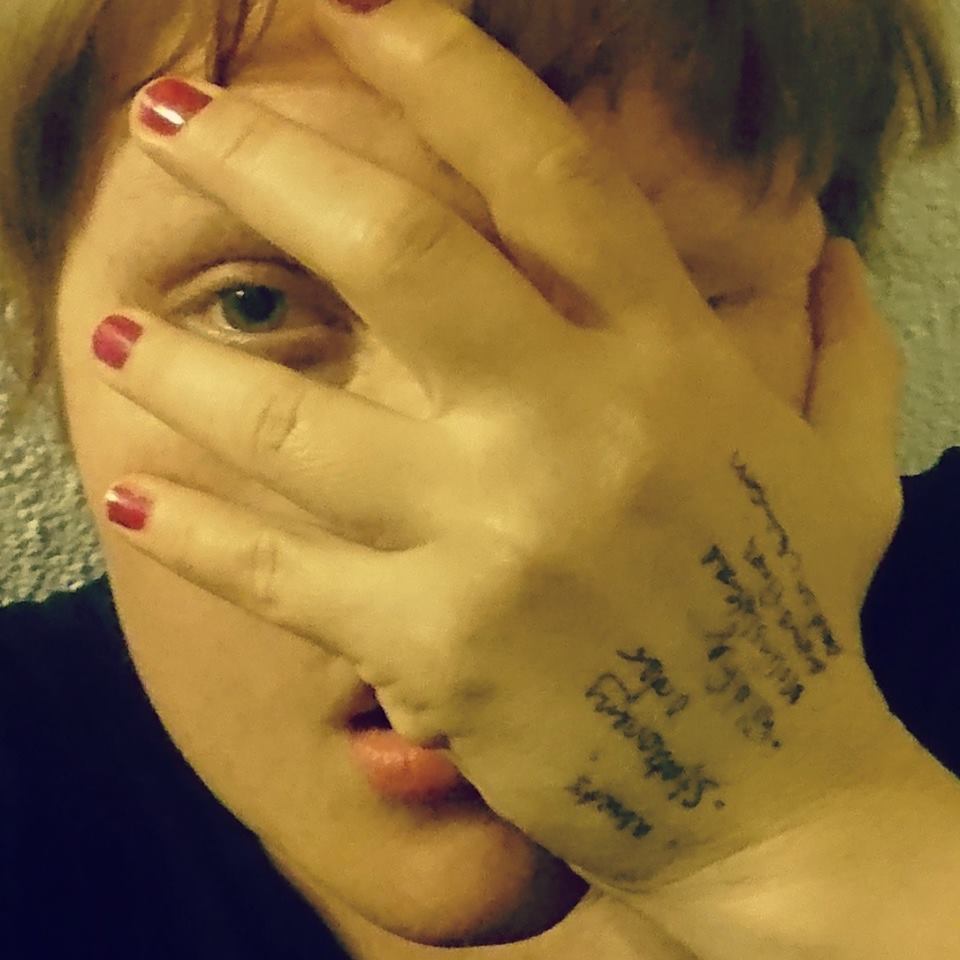
If we want to be in solidarity, to support change,
Our centuries-old vampirism must die.
Beyond the pale of empire’s pronouncements,
We need to stop feeding off the pain of others,
Stop sucking it up and spitting it back in our projects, our projections.
Your voice cannot undo its own violence. It can only stop continuing it.
So drive a stake through your tongue before you speak in public, and swallow your own blood, privately, and
Listen.
Listening, not offering your perspective, not taking up space, is the act of revolutionary solidarity that will change the status quo now. We have a multigenerational debt of attention to pay. This is not immaterial.
Show up, be fully present but stay out of the fucking spotlight. You accomplish this by putting your ego aside and listening, quietly, intentionally. It’s quite simple, so why do so many of us find it so hard?
We, the ashes,
We spent our days like matches
And burned ourselves as black as
The end.
We know not the fire in which we burn
But we sing and we sing
And the flames grow higher.
We read not the pages which we turn
But we sing, and we sing, and we sing, and we sing
We, the wrong,
We the sewn up and long gone,
Were before and all along
Like this
We, the drowned
The lost and found out,
We are all finished again.
let’s say it out loud
about the other day
how we were talking
about that Comrade X
who went home
and gave his wife
a blue eye,
and we’d all clapped
an hour before
for the liberation
speech he gave
with such conviction.
Listen. This woman’s words will transport you beyond the brutality, the sordid pettiness of humanity, and restore to you the depth of timeless Truth, which is Love. Give thanks with every atom of your being.
The stone is a room
Without windows or doors
Or floors.
The stone is a fist – holds
Captive a handful of broken bones
And perfect thorns.
The body of the stone does not conceive
She is a muted womb, a blunt fallopian tube
With a uterus like Jericho,
Her walls are always seven days
Away from falling.
She lies submerged
In an ocean without borders,
A stranger to shores.
Even the bulldozing tide cannot breach her pores,
What! with her lungs unravelled and
Worn like second skin to seal herself
From the influence of
The Spirit which hovers outside like breath.
She no longer desires to
Shatter surfaces and float.
A student to necessities of survival
She has taught herself to harness tornadoes like cattle and
To plow the dark and
Bury her solitude in the saline barrenness
Of the ocean floor –
The silence of the deep
Is graveyard.
From between tombstone lips she counts each body by name:
There is buried Faith.
There rests what is left of Peace,
In that corner is Love
In all its inglorious manifestations
And here lies Hope. Cremated.
She makes home in the company of ghosts
Where she once prayed for their resurrection.
Finds comfort
In the erosion and corrosion
Of a current without conscience
Surrendering to her inability to preserve things
To keep them from hitchhiking
On the tide and sailing away.
She is rooted in shadows here
Is undisturbed here
Wounds are familiar here
Healing is unwelcome here
Pain is a refugee here
Pretends to the point of believing
That the water in her lungs is air. Here.
Who would recognise
The tears of a stone submerged
In an ocean, without borders?
In this reluctant baptism
How can she know, that
She has all of God’s attention?
A Sculptor in love with a drowning stone.
In the beginning was a message in a bottle. He writes:
You say
To face God uncensored
Feels like almost dying
Feels like dying, almost.
Of course, life is a curse to those at
Peace with their death.
You ask
Who could love a stone without form
In the darkness, in the deep?
I have had feelings for you
Since before existence.
I have only created time to mark
Our first encounter.
This first love will not be relegated
To forgetfulness the tombs of memory.
Just
Give me six days to woo you.
For your sake, I will
Disguise myself as language.
My voice is a birth canal
Each word born a seed
That sprouts in speech
Each letter a bristle on a broom
To clear the air
I have always seen you
Crocheted and crafted you
In imagination
Every thread of DNA was designed
In thought
You are what I intended
Let there be light – that you might
See Me too
Hands First
Let them be home
Here the universe sleeps
Without anxiety and
Your name is a constellation that
Pre-dates the stars
Tattooed in nails
These palms are promises
Eager to cradle a rolling stone
These palms are day and revelation
They will anchor you in untethered night
When you do not see me
Acquaint yourself with the fingerprint of my works.
I will abolish the waters at the compulsion
Of my tongue, like a staff
Under the sea my word forges dry ground
And the tide will not go further
Than my command.
I could offer bouquets of flowers exiled from their roots
Or carpet petals at your feet
But the borders of my affection
Traverse generations
That the children of a stone
Might not forget the attention of Sculptor
You will buckle under the weight of my tenderness
Until you transform into flesh then spirit
And the spirit is clay, is soil, is field is fertility.
Let me dress you up from within
Make you an anchor for roots
Here you will yield fruit
like Russian dolls
You will bear
Seeds within seeds within seeds
Within season. A stone will be paradise.
For living things to gather
The site of resurrection for buried things
Wild and tame,
By air or on land.
The stone is a mine
Of precious things
The stone is mine.
Here are two rings
Their names are sun and moon
Sprinkled with galaxies and stars for gemstones
Encased in velvet heavens
This my proposal
In balls of fire and light
Wear them day or night
Until we reunite.
Now rest.
It is Sabbath.
****
The value of a precious stone
Lies in its cost to the one who will find it
Ask the Saviour of this blue and green culprit
Exchanged His life just to mine it
Day 6 set aside to carve it
With His hands until He fit it
Into His image. There can be no counterfeit
Not when the price was God in
A human outfit
Tell a poet
Who chisels words
Between papers and pens
But she will never be the Word
Only its subsidiary
Remind her
A stone can never earn or diminish
The love of a Rock
That stood before the beginning
All her attempts to give herself value
Are dust. Now mud. Now wrinkled.
The philosophies of one who has
Been in the water too long.
We are stones submerged
In the distortion of waters
Our separations from God are sirens
Singing us into
Resistance and suicide.
Tell that stone resident under your ribs
It is only precious
Because of the love of a Sculptor
7 billion stones drowning
In an ocean without borders
Some reluctant for rescue
Even if we refuse the proposal
The love of an ageless Rock will outlast
The extinction of time itself.
___
Siphokazi’s website is HERE.
Rest in peace. 💛
Rest in peace, Sharon Jones. 💛
 fleurmach