connie converse – talkin’ like you (c. 1950s)
During the 1950s, Converse worked for the Academy Photo Offset printing house in New York’s Flatiron District. She initially lived in Greenwich Village, but would later take up residency in the Hell’s Kitchen and Harlem areas. She started calling herself Connie, a nickname she had acquired in New York. She began writing songs and performing them for friends, accompanying herself on guitar. During this time, she adopted smoking and drinking, which starkly went against her strict Baptist upbringing; her still-religious parents rejected her music career, and her father died without having heard a single one of Connie’s songs. Converse’s only known public performance was a brief television appearance in 1954 on The Morning Show on CBS with Walter Cronkite, which artist Gene Deitch helped to arrange. By 1961 (the same year that Bob Dylan moved to Greenwich Village and quickly met mainstream success), Converse had grown frustrated trying to sell her music in New York. That year, she moved to Ann Arbor, Michigan, where her brother Philip Converse was a professor of political science at the University of Michigan. She worked in a secretarial job, and then as Managing Editor of the Journal of Conflict Resolution in 1963 which she also wrote for. Following her move to the midwest, Converse appears to have mostly ceased writing new songs. She disappeared in 1974. [Read more here.]
molly drake – i remember (c. 1950s)
Molly Drake (1915 – 1993) was Nick Drake‘s mother – clearly his talent was hereditary. This recording was made during the 1950s at the family home in Tanworth-in-Arden by her husband, Rodney Drake, on a home Ferrograph recorder. A collection of these recordings and poems was released by Bryter Music as a limited privately-pressed edition of 500 copies in 2011. It came out as a single CD with a booklet of poetry housed in a black card portfolio. The album was later released by Squirrel Thing Records in March 2013. The released versions of the recordings were engineered by John Wood and produced by Cally Callomon. John Wood was the sound engineer on her son, Nick Drake‘s albums.
rowland s howard – shivers (live, 1999)
He took the song he wrote at 16 back from Nick Cave.
dirty beaches – lord knows best (2011)
Francoise Hardy sampled to lovely effect.
soko – sweet sound of ignorance (2017)
evaspook – lonely
tom petty – only a broken heart (1994)
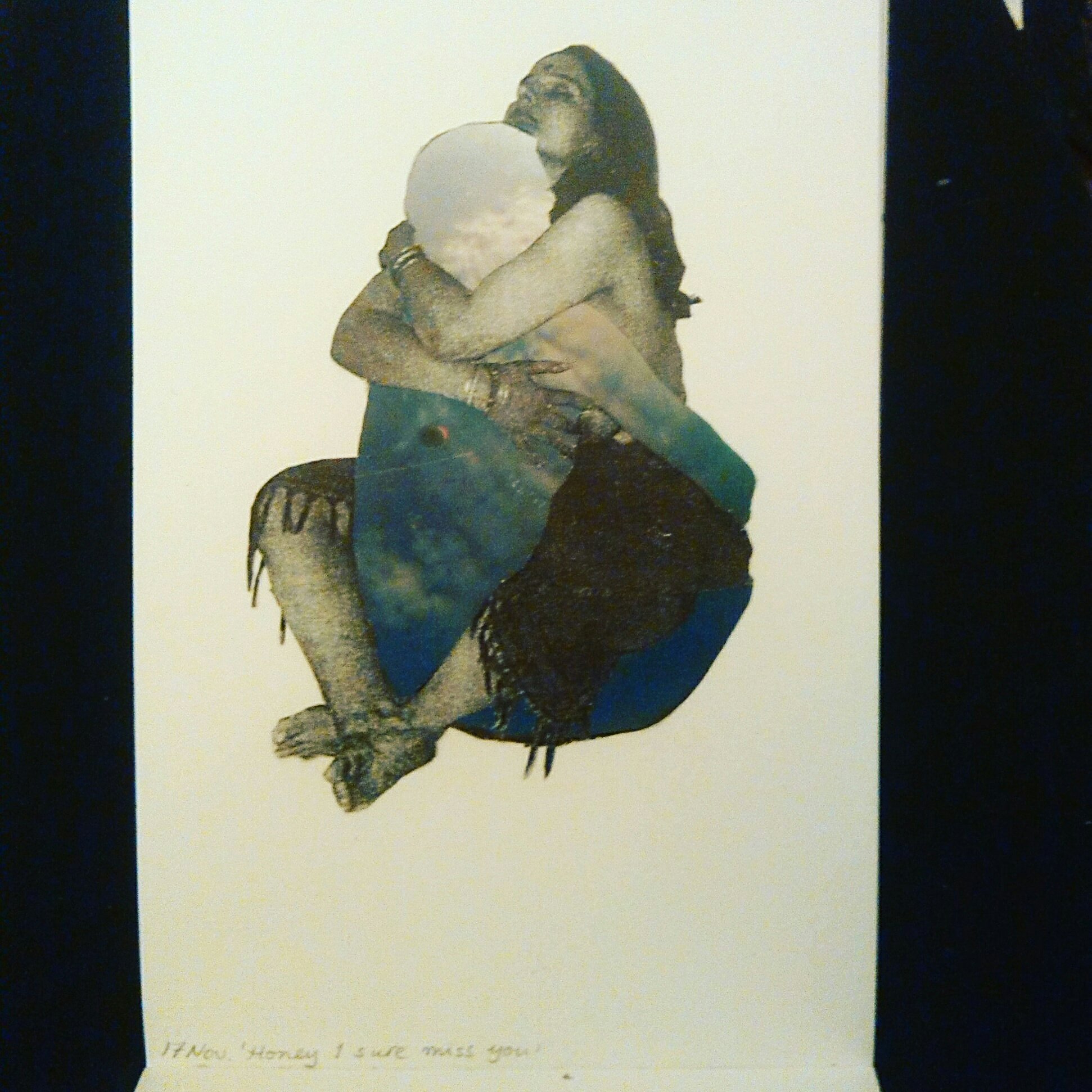
Something about the perfect production here reminds me of Big Star and The Shins… who made albums almost 40 years apart… Maybe this Tom Petty from the ’90s is the missing link between the two!
peteski – yes (2017)
swedemason – trump vs talking heads (2017)
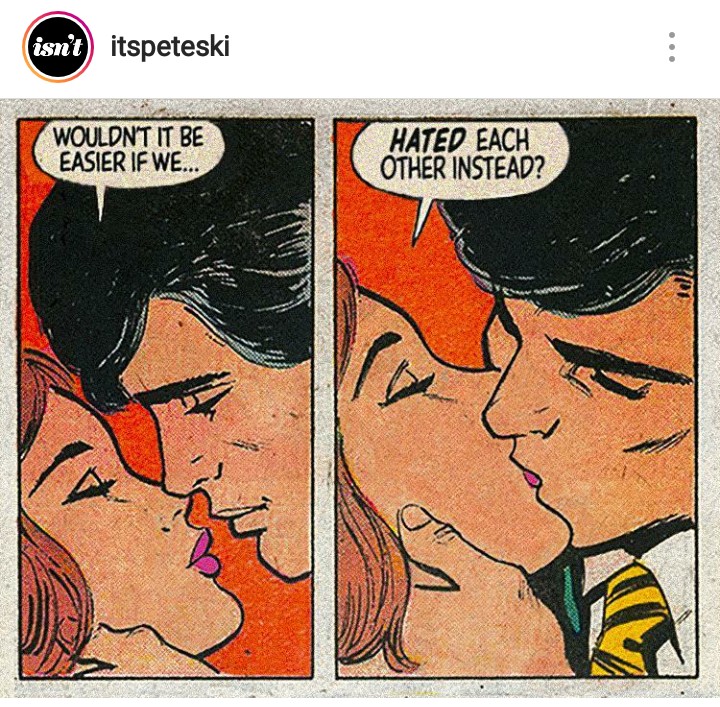
Détournement par excellence.
rachid alexander, bellydancer (2017)
Phenomenal performance by Rashid Alexander at Orientalicious Bellydance festival, Amsterdam 2017
jonathan glazer – flake (banned ad, 2010)
“Succumb to the crumb…”
the she’s – gold soundz (2016)
“And you can never quarantine the past…”
Also, pink hydrangeas.
billy bragg, natalie merchant & wilco – way over yonder in the minor key (1998)
Mermaid Avenue is a 1998 album of previously unheard lyrics written by Woody Guthrie, put to music written and performed by Billy Bragg and Wilco. The project was organized by Guthrie’s daughter, Nora Guthrie. Mermaid Avenue was released on June 23, 1998. The project is named after a song “Mermaid’s Avenue” written by Guthrie. This was also the street in Coney Island, Brooklyn, New York on which Guthrie lived. According to American Songwriter Magazine, “The Mermaid Avenue project is essential for showing that Woody Guthrie could illuminate what was going on inside of him as well as he could detail the plight of his fellow man.”
During the spring of 1992, Woody Guthrie’s daughter Nora contacted Billy Bragg about writing music for a selection of completed Guthrie lyrics after Bragg played a Guthrie tribute concert in New York City’s Central Park. Her father had left behind over a thousand sets of complete lyrics written between 1939 and 1967; none of these lyrics had any music other than a vague stylistic notation. Nora Guthrie’s liner notes in Mermaid Avenue indicate that it was her intention that the songs be given to a new generation of musicians who would be able to make the songs relevant to a younger generation. Nora Guthrie contacted Bragg, who in turn approached Wilco and asked them to participate in the project as well. Wilco agreed, and in addition to recording with Bragg in Ireland, they were given their own share of songs to finish.
Rather than recreating tunes in Guthrie’s style, Bragg and Wilco created new, contemporary music for the lyrics. What seemed like a risky enterprise surprised everyone; released in 1998 as Mermaid Avenue, the results were met with universal acclaim. The album received a Grammy nomination for Best Contemporary Folk Album, and went on to place fourth on the Pazz & Jop Critics Poll for 1998. In 2008, Jonatha Brooke released The Works, a project that similarly drew on the trove of unpublished Guthrie material. According to Bob Dylan’s autobiography, Chronicles, Woody Guthrie offered his unpublished songs to Dylan but was unable to enter the house to obtain them as Arlo Guthrie would not let him in. Man in the Sand, a documentary about the collaboration between Billy Bragg and Wilco, was released in 1999.
cluster and eno – cluster and eno (1977)
sufjan stevens – i should have known better (2015)
siouxsie and the banshees – helter skelter (peel session, 1978)
tuxedomoon – no tears (1978)
juliette lombard – beginning to heal (2017)
chrysta bell & david lynch – angel star (2011)
artboffin/alexander reben – deeply artificial trees (excerpt) (2017)
william shakespeare – sonnet 103 (1609)
Alack! what poverty my Muse brings forth,
That having such a scope to show her pride,
The argument all bare is of more worth
Than when it hath my added praise beside!
O! blame me not, if I no more can write!
Look in your glass, and there appears a face
That over-goes my blunt invention quite,
Dulling my lines, and doing me disgrace.
Were it not sinful then, striving to mend,
To mar the subject that before was well?
For to no other pass my verses tend
Than of your graces and your gifts to tell;
And more, much more, than in my verse can sit,
Your own glass shows you when you look in it.
louis armstrong and his hot five – king of the zulus (1925)
Written by Lil Armstrong.
(I found this wonderful version from 1956 on 10″ a few weeks ago. The whistling in the outro is something else!)
tom waits – a little rain (1992)
There used to be a beautiful version of this on Youtube by Jolie Holland that I looked for to post, but it’s been blocked. Here’s the original instead, from Waits’ 1992 Bone Machine album, the first of his I ever heard.
watermelon scene from “hausu” (1977)
jacqueline du pré rehearsing with daniel barenboim (c. late 1960s)
fats domino – it keeps raining (1961)
the raymond scott quintette – powerhouse (1955)
psalm 51 performed in aramaic (2016)
Orthodox priest Father Seraphim and his choir (the young girl singing is Keti Iliaeva) on 30 September 2016 during Pope Francis’s visit to Georgia.
hannes coetzee
I love this!
 fleurmach