
A moment from millennia ago is frozen in amber…
A moment from millennia ago is frozen in amber…

Bill Henson – Untitled #20 (2003-3)
C-type print, Roslyn Oxley Gallery, Sydney
Bill Henson (born 1955) is an Australian contemporary art photographer.
Henson’s photographs reflect an interest in ambiguity and transition. The use of chiaroscuro is common throughout his works. His photographs are painterly and often presented as diptychs, triptychs and other groupings.
Henson’s works often meditate on the categories of and relationships between male and female; youth and adulthood; day and night; light and dark; nature and civilisation. His images often use flattened perspective and tend towards abstraction. The faces of the subjects are often blurred or partly shadowed and do not directly face the viewer.
According to Crawford, Henson presents “adolescents in their states of despair, intoxication and immature ribaldry”. He has said that these “moments of transition and metamorphosis are important in everyone’s lives”.
Information taken from HERE.
Check out more of Henson’s work HERE.
Jazztage Leverkusen / Germany, 4th November 2007
Avishai Cohen – Bass
Shai Maestro – Piano
Mark Guiliana – Drums
As soon as I desire I am asking to be considered. I am not merely here-and-now, sealed into thingness. I am for somewhere else and for something else. I demand that notice be taken of my negating activity insofar as I pursue something other than life; insofar as I do battle for the creation of a human world – that is, of a world of reciprocal recognitions. He who is reluctant to recognize me opposes me. In a savage struggle I am willing to accept convulsions of death, invincible dissolution, but also the possibility of the impossible.
~ Frantz Fanon: Black Skin White Masks. New York: Grove Press (1967)
My favourite version of this Weill/Brecht classic, ever.
“Pirate Jenny” (German: “Seeräuberjenny”) is a well-known song from The Threepenny Opera by Kurt Weill, with lyrics by Bertolt Brecht. The English lyrics are by Marc Blitzstein. This cover by Shilpa Ray, Nick Cave and Warren Ellis was published in February 2013 on Sons of Rogues Gallery: Pirate Ballads, Sea Songs and Chanteys, a Hal Willner-produced compilation album of songs performed by a roster of artists which also includes Tom Waits, Shane MacGowan, Iggy Pop, Patti Smith, Macy Grey, Johnny Depp, Frank Zappa and Richard Thompson.
Marina Abramovic and Ulay shared an intense love in the 1970s, performing art out of the van they lived in. When they felt the relationship had run its course (after almost 12 years), they decided to walk the Great Wall of China, each from one end, meeting for one last big hug in the middle and never seeing each other again.

At her 2010 MoMa retrospective, Marina performed ‘The Artist Is Present’ as part of the show, where she shared a minute of silence with each stranger who sat in front of her. Ulay arrived without her knowing and this is what happened:
(Background information from HERE.)
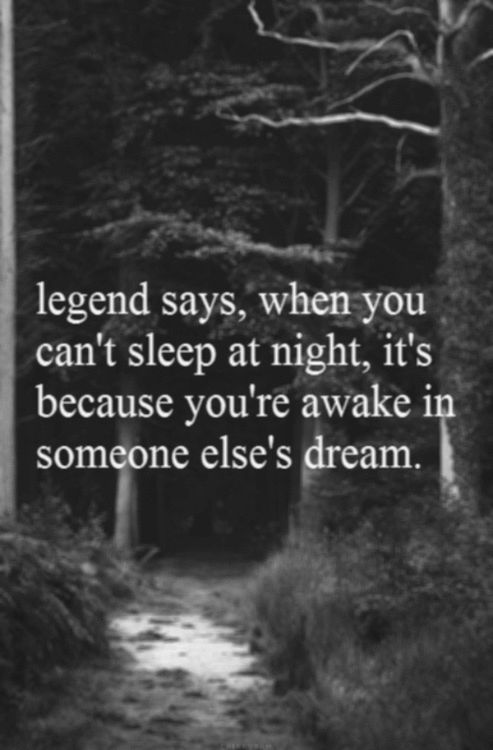
Not to be confused with the group of the same name from the UK. From Melbourne, these guys unfortunately disbanded in 2001 after having self-released an EP, and then two albums produced by Steve Shelley (Sonic Youth). This track is taken from the album Alone Alone (2000).
Shot in 1996 and edited in 2000, this is a short documentary about a group of 13-year-old riot grrrls who were socially ostracized at school by their peers and upperclassmen. Everyone in the schoolyard held strong opinions about these so-called “dirty girls,” and meanwhile the “dirty girls” themselves aimed to get their message across by distributing their zine across campus. Directed by Michael Lucid. Music: “Batmobile” by Liz Phair.
![The Garden of Earthly Delights [detail].Date 1480-1510](https://fleurmach.com/wp-content/uploads/2013/03/hieronymus_bosch_garden_of_earthly_delights_tryptich_centre_panel_-_detail_9.jpg)
Hieronymous Bosch – The Garden of Earthly Delights [detail].
1480-1510
“The best moments in reading are when you come across something — a thought, a feeling, a way of looking at things — which you had thought special and particular to you. And now, here it is, set down by someone else, a person you have never met, someone, even, who is long dead. And it is as if a hand has come out, and taken yours.”
— Alan Bennett
The full movie is here:
(or was…)
Archival interview with David Cronenberg from Bombsite (1986)
Bette Gordon (BG) Are your nightmares like your movies? Do you actually see your movie images in your dreams?
David Cronenberg (DC) Rarely. My images come out of the process of making film. I do really think that movies work on the level of dream logic. However realistic or narrative they might like to think they are, they are dreamlike.
BG You, as a director, have an incredible ability to tap into the unconscious.
DC I was once on a talk show with a psychiatrist who worked at the Clark Institute with criminals. He had seen my film, Videodrome and said to me, “I’m almost afraid to be sitting here next to you.” He was totally mystified as to how I could empathize with those states of mind and he obviously, could not. It is mostly intuitive with me. One of the reasons I make a movie is that I’m then in a position where I have to analyze and I enjoy that process.
BG In They Came from Within there was a line of dialogue—”Man thinks too much, he’s lost touch with the body, with instincts. Too much brain and not enough guts.” Do you think the mind is stronger than the body?
DC No. I think the quote is particular to that film. What interests me is the mind/body schism.
BG What do you mean by mind/body schism?
DC I think the mind grows out of the body. I don’t believe in an afterlife. I don’t see the mind or the spirit or the soul continuing after our body dies. The mind and body are completely dependent and interrelated. The mind is somehow organic and physical. It’s only our perception and our culture that keeps them separate.
BG What about the mind creating its own monsters in a sense, that the monster comes from within the mind. Like in Dead Ringers for example, or in Videodrome where it’s the mind that is completely in charge of the body.
DC In as much as the mind is ever in charge of anything. I don’t think it is always in control.
BG Or in Scanners where through mind control, you can . . .
DC Affect the body. But you see, I think everybody does that. I don’t think it’s just Western culture, other cultures even accentuate it more by saying the body’s nothing; it’s only temporary and the mind and the spirit are eternal. I think that’s very destructive. It’s not true. All philosophical, metaphysical and religious forces should be concentrating on trying to form a perception and reality for ourselves that integrates the two. And that would include coming to terms with death as a physical event rather than trying to evade it.
BG So how would you come to terms with death?
DC There’s a Japanese religion that thinks of all of life as a preparation for death, which to the Western mind seems like a very morbid approach to life. But if you think of death as a true end of something, of a process, it makes perfect sense. There we get into the old idea of Western culture being death denying, but I actually think Eastern culture is too. Because they try to trivialize death as being not important.
BG So it falls somewhere between the two as being very important and not important at all.
DC One of the main subjects of all of my films is exactly that. In Dead Ringers you get a body split into two (the twins) with basically, one mind. Just doing that is like an experiment in a lab—which all my movies really are. I set out to see how they work, to illuminate something for myself by doing these experiments.

Videodrome – with James Woods and Debbie Harry
BG There is something about the medical profession in all of your films.
DC Scientists and doctors to me, are at the leading edge of what all human beings do all of the time; which is to change, everything. We’ve never been satisfied with what we’re given. We don’t accept the earth as a given. We change our body chemistry, our physiology, our biology, our biochemistry. We clear the forest, we build our own environment, we climate control it . . . And, the interface between that impulse and the human body often is doctors, biologists, and biochemists.
BG Were you a biochemist?
DC I did go into biochemistry at the University of Toronto. But when I came face to face with what science required, I realized that my temperament was much more suited to some form of art; writing or whatever. I didn’t think of film at the time. I found I would prefer to invent my own science rather than spend two years with rats in a lab getting results.
BG There’s an ambivalence for the medical/science profession in all of your films. You don’t really have villains in the film, nobody’s quite evil . . .
DC That’s right. It is ambivalence. Because I think that they’re heroic even when they’re crazed. I think that being crazed and obsessed is part of being heroic. You don’t get one without the other. Ambition is something else. It’s not ambition in the material sense. My characters are obsessed with discovery and that does excite me and I do identify with that. A good creative scientist is as good as a good creative artist. No question in my mind.
BG What is your notion of the hero? You said your characters are heroic even when they are crazed.
DC Yes, maybe even especially because they’re crazed. I’m obviously drawn to people as main characters who are not embedded so completely in their culture that they can’t see any . . . a visionary’s process . . . people who are jarred into being outside. Continue reading
Amanda Palmer “I Want You, But I Don’t Need You” (Momus cover) – Live at The Music Box at The Henry Fonda Theatre – Los Angeles, CA – December 16, 2008.
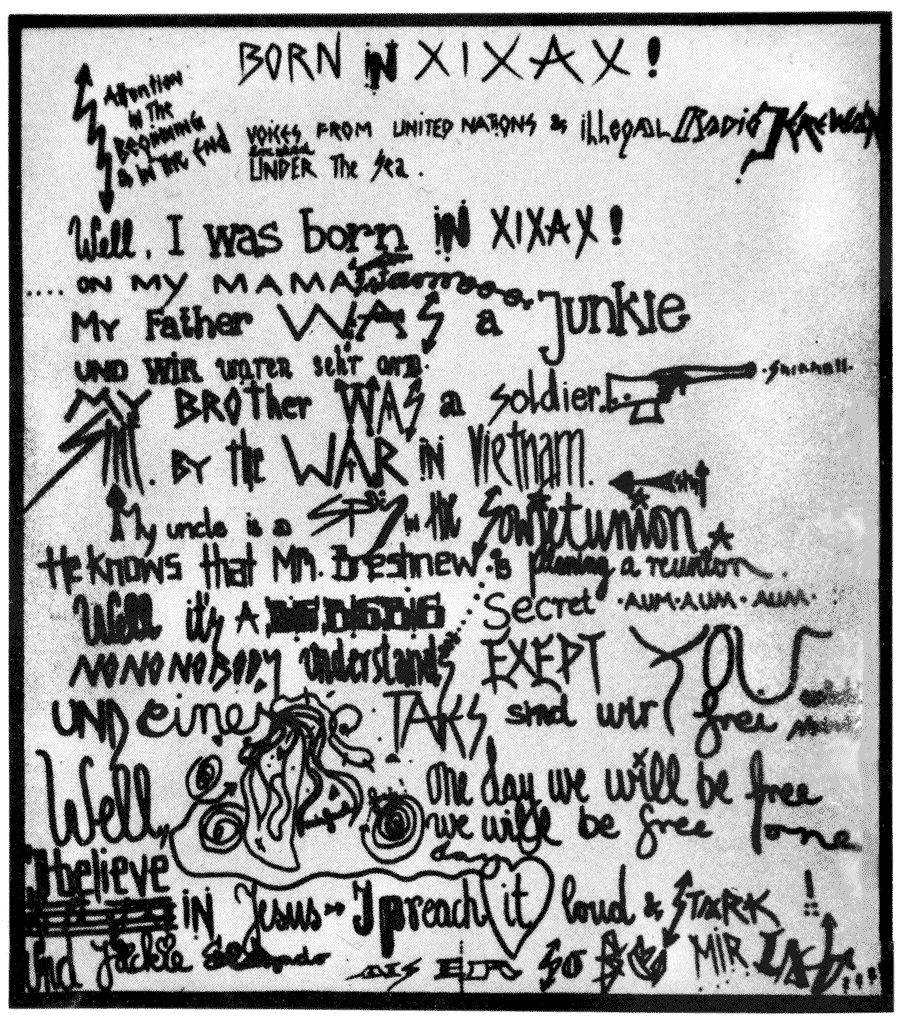
This is again radio Yerevan with… our news (claps)
Oh, I’m sorry, you should turn on the machine
This is radio Yerevan, (laughs)
my name is Hans Ivanovich (laughs) Hagen and this is…
The news (laughs)
Continue reading
And entering towns the guns had missed,
towns out of storybooks,
we saw the constellation of the Snake
but we were afraid to look at each other.
The earth smelled like an orphanage — potatoes,
disinfectant, shoes — I thought
Time walked next to us, years, centuries.
And someone shook a tambourine, someone we couldn’t see.
There were noises and tiny bluish-yellow lights.
What did they mean, those fireflies
signaling to us in the dark?
I even thought those noises were the lights.
And we walked on together. I was with you, you were with me.
It was like that dream I had: the corpse of an old man
shone in the dark, a baby clung to his chest, both wrapped in a cocoon.
I could see the awful, delicate, wax-like hands of the baby
dabbling at the man’s chin. The moon slid out,
suddenly. We met, we said goodbye.
If you remember that night, as I do,
wherever you are now, whatever fate
steers your life, know what I know: the time
we had was sacred like a great king’s dream
turned by his people into a myth they use
to keep themselves from believing life’s a dream.
Whatever I looked at was alive, everything had a voice,
but I never found out were you a friend, an enemy,
was it winter, summer? Smoke, singing, midnight heat.
I wrote thousands of lines. Not one told me.
This version is from the ‘I Want to Touch You’ 12″ #1 (Fontana CW 312, 1992). It is far rawer than the version on the album Chrome.
This is just how I am feeling today.

Jessica Harrison – “Grace Ann” (porcelain)
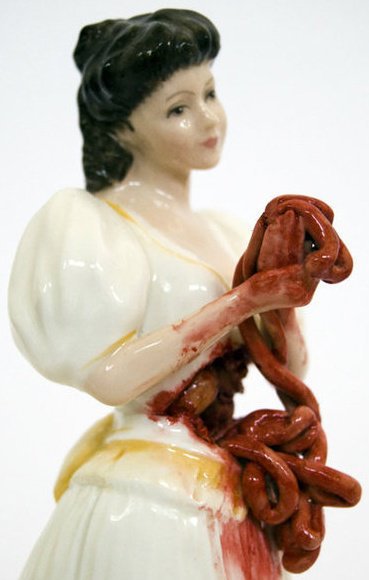
Jessica Harrison – “Rosamund” (porcelain)
More HERE.
Herr Bargeld <3 <3 <3 makes a soundtrack for autobahn drive time radio, using only his voice and a looper (and some funny, funny patter) in this performance from 2006.

© Germaine de Larch Images. First published on http://www.life-writ-large.posterous.com
A sizzling mash-up!
Song from Fiona Apple’s 2012 album The Idler Wheel Is Wiser Than the Driver of the Screw and Whipping Cords Will Serve You More Than Ropes Will Ever Do.
Video excerpted from Fritz’s Lang’s 1926 sci-fi masterpiece, Metropolis.
From the Weed Forestin’ LP (Homestead Records, 1990), to end the weekend on a less sad note! ;)
From The Freed Weed (Homestead Records, 1990).
From The Argument (2001).
congratulations. stop. wish i could be there. stop. tell me something i don’t know.
is there anything left to know? stop. stop. stop. stop. stop.
accessory, accessory, accessory, accessory, accessory, accessory
we regret to inform. stop. miss you dearly, signed sincerely. stop.
tell me something that i don’t know is there anything left to know?
stop. stop. stop. stop. stop. accessory, accessory, accessory, accessory, accessory, accessory to the time. time. time. time.
i’ve got this epic problem; this epic problem’s not a problem for me
and inside i know i’m broken, but i’m working as far as you can see
i’ve got this epic problem this epic problem’s not a problem for me
and inside i know i’m broken but i’m working as far as you can see
and outside it’s all production; it’s all illusion, it’s set scenery
i’ve got this epic problem; this epic problem’s not a problem for me
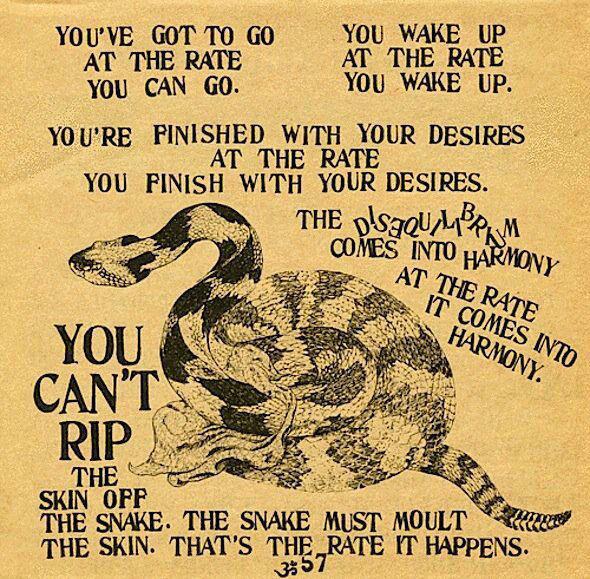
From 1000 Hurts (2000).
One of the most beautifully orchestrated of all Morrissey’s abject songs about self-pity. From the 1992 album, Your Arsenal.
Aimee Mann in 1999.
With diegetic sound from the denouement montage in Paul Thomas Anderson’s Magnolia, to which the song is central.
Aimee Mann in 1986.
Linda Stupart wrote this about Reeva Steenkamp, and also the YOU DECIDE billboard and corpses and objects and women.
 Africa is a Country (Old Site)
 Since Valentine’s Day everyone has been talking about the murder of Reeva Steenkamp, although rarely in those terms. We know that her boyfriend, Oscar Pistorius, shot her four times and killed her while she was behind a locked door in their bathroom in a gated estate. We know that he has a history of domestic violence, a penchant for shooting things. We know absolutely everything about his extensive sporting achievements. The main thing, however, that we know about Steenkamp is that she was a model, and that she was really hot.
View original post 1,866 more words
 fleurmach