david foster wallace on interiority (1989)

We all have our little solipsistic delusions, ghastly intuitions of utter singularity: that we are the only one in the house who ever fills the ice-cube tray, who unloads the clean dishwasher, who occasionally pees in the shower, whose eyelid twitches on first dates; that only we take casualness terribly seriously; that only we fashion supplication into courtesy; that only we hear the whiny pathos in a dog’s yawn, the timeless sigh in the opening of the hermetically-sealed jar, the splattered laugh in the frying egg, the minor-D lament in the vacuum’s scream; that only we feel the panic at sunset the rookie kindergartner feels at his mother’s retreat. That only we love the only-we. That only we need the only-we. Solipsism binds us together, J.D. knows. That we feel lonely in a crowd; stop not to dwell on what’s brought the crowd into being. That we are, always, faces in a crowd.

–  from “Westward The Course Of Empire Takes Its Way”, a short story in the collection Girl With Curious Hair (1989)

fruits and veggies – a clean page

Fruits and Veggies are vocalist Purity, guitarist Jimbo, bassist Loopy, drummer Justin, violinist Hezron and guitarist Cameron Lofstrand. They hail from Durban, South Africa and this song, “A Clean Page” is from their upcoming album. The band were filmed at shows around SA including Oppikoppi and Splashy Fen by Pascal Bennett, Sarah Dawson, Grant Payne and Kobus van Heerden and the video was edited by Michael Cross at Rogue Productions. The track was recorded at LYD Productions.

jessie mae hemphill – she wolf

As I stepped into Jessie Mae Hemphill’s trailer, my eyes fell upon Sweet Pea (her dog) and a revolver. By the end of that first meeting, I couldn’t help thinking that this was the allure of Jessie Mae. She is sweetness incarnate, but you really wouldn’t want to mess with her either.

This same duality is present in her music. Listen to her voice and you can hear a lilting quality, bringing to mind a Billie Holiday. But listen to the lyrics, and you sense a woman who’s seen a thing or two of the world. As she pulled a hollow-tip bullet out of her blouse she spoke loudly so the young “punks” hanging out near her trailer could hear. “A bullet like this one here will put a hole in you this big,” she said, making a circle with her good arm.

As it turns out, the revolver plays a practical role. Ever since a stroke left Jessie Mae partially paralyzed, she knows a vulnerability that she had clearly never experienced. This same stroke rendered her unable to play guitar, effectively ending a successful career that was on the rise.

Read more about Jessie Mae Hemphill HERE.

she wolf

“If your heart is pounding, think upon a child’s most obscene moments.

With a child, different moments are separated–

ingenuousness
joyful games
dirtiness.

An adult links these moments together: in dirtiness he attains an ingenuous joy.

Dirtiness without a childish shame, games without a child’s joy, ingenuousness without the thoughtless reflex by which it is characterized in children–all of these are but comedies staged by adulthood’s reductive seriousness. Health, on the other hand, maintains childhood’s burning flame. The worst impotence coincides with the domination of seriousness.

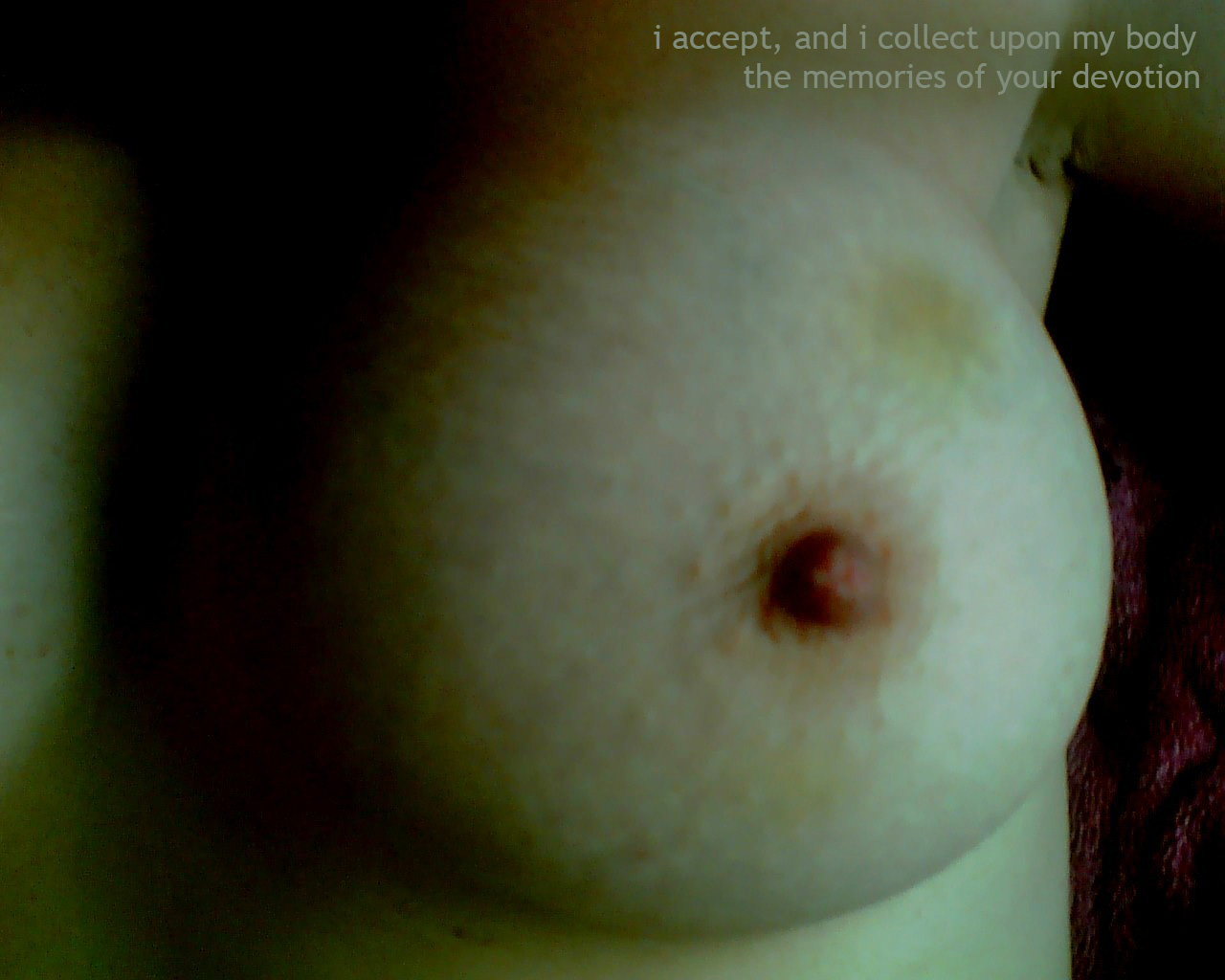
Naked breasts and the obscenity of your sex have the power to bring about that which as a little girl, able to do nothing, you could only dream.

—III.—

Battered by frozen despair, by the majestic horrors of life! At exasperation’s end. Today I find myself at the edge of the abyss. At the limit of disaster and an intolerable happiness. At the very peak of a vertiginous height I sing a HALLELUIAH: the purest, most dolorous you could hear.

Calamity’s solitude is a halo, a veil of tears with which you will be able to cover your dog’s nakedness.

Listen to me. I speak softly in your ear. But don’t misunderstand my soft tone. Go out into the anguished night, naked, go to the place where the path turns.

Press your fingers into your moist folds. It will be sweet to smell upon you the viscous, bitter scent of pleasure: the damp, stale odor of flesh made happy. Voluptuousness contracts the lips burning to open out onto anguish. The wind upon the small of your back makes you feel more than naked as you quake and quiver with the cartilaginous snap of your spine–that snapping which makes the whites of your eyes roll up to fill the voids between your eyelids.

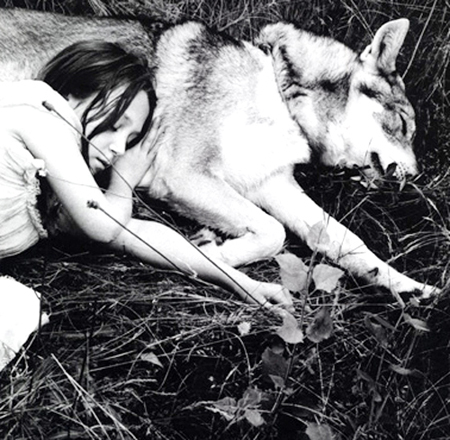
In a lonely forest far from your abandoned clothing will you hunch down carefully like a she-wolf.

Lightning with its fierce stench and pounding rain are the companions of anguish and obscenity.

Get up, and flee: childish, abandoned, howling in frightened laughter.”

-From Halleluiah! The Catechism of dianus by Georges Bataille

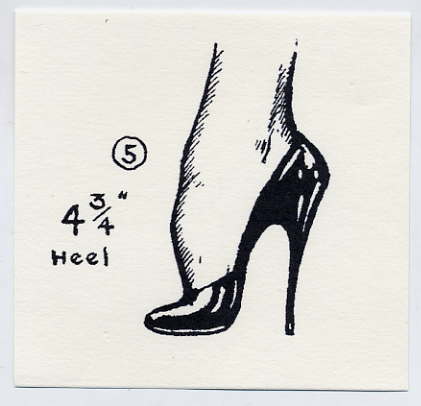
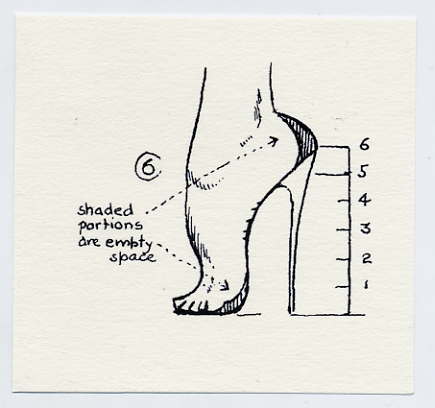
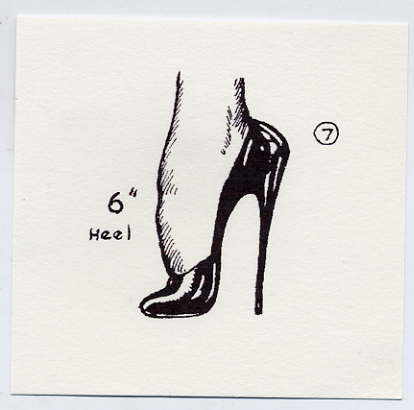
tiga – shoes

Directed by Alex & Liane, the video for Tiga’s ‘Shoes’ “imagines a horrifying dystopia in which people other than myself are interviewed,” says the Man of Music Future, “I had to calm myself down by staring at my MySpace photos for a couple of hours.” (This was, after all, 2009 ;)

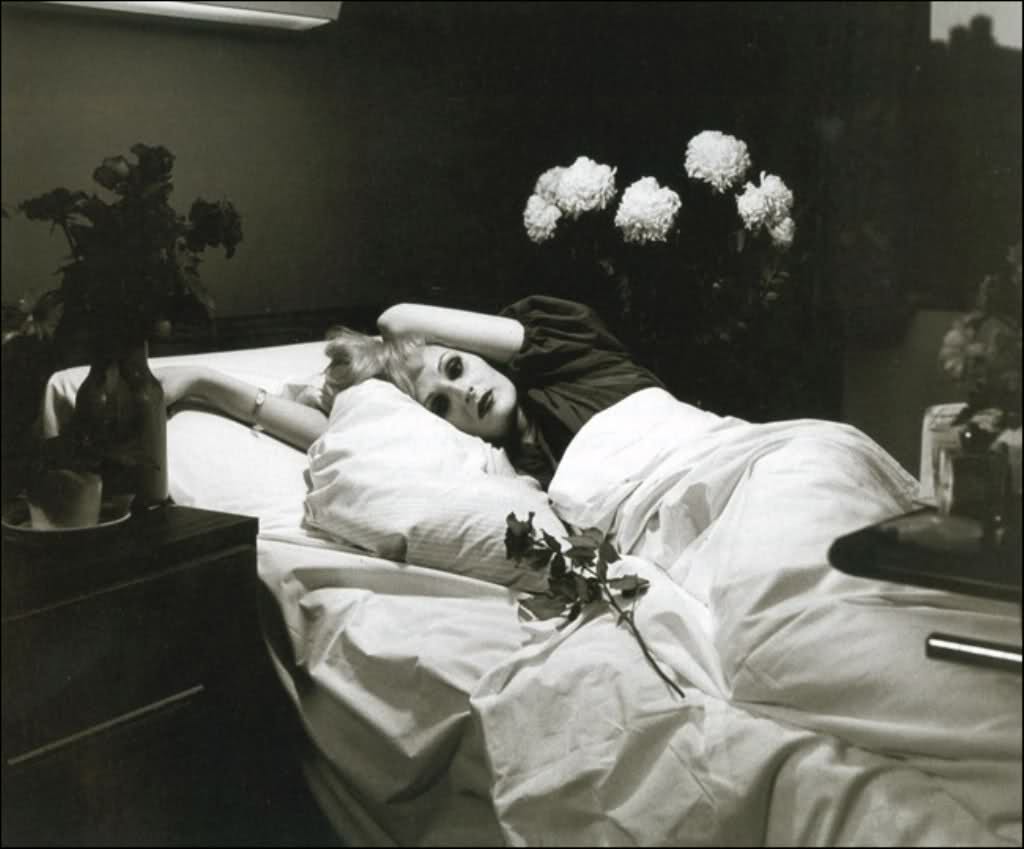
candy darling on her deathbed

Peter Hujar – “Candy Darling on Her Deathbed”
1974, gelatin-silver print

Candy Darling (November 24, 1944 – March 21, 1974), born James Lawrence Slattery, was an American actress, best known as a Warhol Superstar. A male-to-female transsexual, she starred in Andy Warhol’s films Flesh (1968) and Women in Revolt (1971), and was a muse of the band The Velvet Underground.

on making oneself visible in the world

There is a lovely root to the word humiliation – from the latin word humus, meaning soil or ground. When we are humiliated, we are in effect returning to the ground of our being.

Shedding the carapace we have been building so assiduously on the surface, we must by definition give up exactly what we thought was necessary to protect us from further harm. The outlaw is the radical, the one close to the roots of existence. The one who refuses to forget their humanity and, in remembering, helps everyone else remember too.

To die inside is to rob our outside life of any sense of arrival from that interior. Our work is to make ourselves visible in the world. This is the soul’s individual journey, and the soul would much rather fail at its own life than succeed at someone else’s.

David Whyte, from Crossing the Unknown Sea

john berger on being born a woman

To be born a woman is to be born, within an allotted and confined space, into the keeping of men. The social presence of women is developed as a result of their ingenuity in living under such tutelage within such a limited space. But this has been at the cost of a woman’s self being split into two.

A woman must continually watch herself. She is almost continually accompanied by her own image of herself. Whilst she is walking across a room or whilst she is weeping at the death of her father, she can scarcely avoid envisaging herself walking or weeping. From earliest childhood she has been taught and persuaded to survey herself continually. And so she comes to consider the surveyor and the surveyed within her as the two constituent yet always distinct elements of her identity as a woman. She has to survey everything she is and everything she does, because how she appears to men is of crucial importance for what is normally thought of as the success of her life. Her own sense of being in herself is supplanted by a sense of being appreciated as herself by another…

One might simplify this by saying: men act and women appear. Men look at women. Women watch themselves being looked at. This determines not only most relations between men and women but also the relation of women to themselves. The surveyor of woman in herself is male: the surveyed female. Thus she turns herself into an object — and most particularly an object of vision: a sight.

― John Berger, from Ways of Seeing.

jolie holland – alley flowers

From her debut album, Catalpa (2003). It’s my favourite album of hers, I think – gorgeously hypnotic, and impossible to place in space and time. It’s like she’s channelling the voice of a ghost out of early 20th century America’s Deep South… The words from her milk-white throat weave an occult journey, harking back even further – the lolloping, liquid rhythm of this song could be straight out of West Africa.

Quote from Amazon.com:
“If you didn’t know what it was, you’d swear it was recorded in the field 70 years ago. The outright primitive audio quality, acoustic instruments, the little mistakes and coughs left in… it’s a diamond in the rough, left uncut because there’s so much beauty in the imperfections.

“Then you notice the opening track’s [“Alley Flowers”] muffled frame-drum percussion is playing a “cabalistic” 12/8 against the guitar and vocal’s 4/4, the lyrical fantistical concreteness reminiscent of Syd Barrett or Hank Williams, the fluid soprano that sounds utterly self-taught, and you know it’s not an ordinary folk album at all.

“This is very, very different music from almost anything you’re likely to hear, especially in this day of cheap semi-pro equipment and easy software editing. But it’s truly miraculous.”

madrugada

What makes you sing so sweetly in the dark, White-eyes, hours before dawn? I want to know. Is it your sureness of the imminent arrival of the light? Or is it to wake the sun, in case it’s forgotten its appointment with the day? I want to know, because right now things are cold and dark here, and your song is puncturing the silence with a conviction I do not share.

gregory david roberts — shantaram

“It took me a long time and most of the world to learn what I know about love and fate and the choices we make, but the heart of it came to me in an instant, while I was chained to a wall and being tortured. I realised, somehow, through the screaming in my mind, that even in that shackled, bloody helplessness, I was still free: free to hate the men who were torturing me, or to forgive them. It doesn’t sound like much, I know. But in the flinch and bite of the chain, when it’s all you’ve got, that freedom is a universe of possibility. And the choice you make, between hating and forgiving, can become the story of your life.”

“The past reflects eternally between two mirrors—the bright mirror of words and deeds, and the dark one, full of things we didn’t do or say.”

“The ancient Sanskrit legends speak of a destined love, a karmic connection between souls that are fated to meet and collide and enrapture one another. The legends say that the loved one is instantly recognised because she’s loved in every gesture, every expression of thought, every movement, every sound, and every mood that prays in her eyes. The legends say that we know her by her wings—the wings that only we can see—and because wanting her kills every other desire of love.

The same legends also carry warnings that such fated love may, sometimes, be the possession and obsession of one, and only one, of the two souls twinned by destiny. But wisdom, in one sense, is the opposite of love. Love survives in us precisely because it isn’t wise.”

” … the soul has no culture. The soul has no nations. The soul has no colour or accent or way of life. The soul is forever. The soul is one. And when the heart has its moment of truth and sorrow, the soul can’t be stilled.”

“It’s forgiveness that makes us what we are. Without forgiveness, our species would’ve annihilated itself in endless retributions. Without forgiveness, there would be no history. Without that hope, there would be no art, for every work of art is in some way an act of forgiveness. Without that dream, there would be no love, for every act of love is in some way a promise to forgive. We live on because we can love, and we love because we can forgive.”

“They claim a hidden corner of our hearts, all those moments that stay with us unscreamed. That’s where loves, like elephants, drag themselves to die. It’s the place where pride allows itself to cry.”

“You can’t kill love. You can’t even kill it with hate. You can kill in-love, and loving, and even loveliness. You can kill them all, or numb them into dense, leaden regret, but you can’t kill love itself. Love is the passionate search for a truth other than your own; and once you feel it, honestly and completely, love is forever. Every act of love, every moment of the heart reaching out, is a part of the universal good: it’s a part of God, or what we call God, and it can never die.”

“The cloak of the past is cut from patches of feelings, and sewn with rebus threads. Most of the time, the best we can do is wrap it around ourselves for comfort or drag it behind us as we struggle to go on. But everything has its cause and its meaning. Every life, every love, every action and feeling and thought has its reason and significance: its beginning, and the part it plays in the end. Sometimes, we do see. Sometimes, we see the past so clearly, and read the legend of its parts with such acuity, that every stitch of time reveals its purpose, and a kind of message is enfolded in it. Nothing in any life, no matter how well or poorly lived, is wiser than failure or clearer than sorrow. And in the tiny, precious wisdom that they give to us, even those dread and hated enemies, suffering and failure, have their reason and their right to be.”