sugarman’s been found

rodriguez

I’ve never seen the entire audience at a movie theatre sit through all the titles at the end, until I saw Searching for Sugarman a couple of nights ago. The film had been showing at Rosebank’s Cinema Nouveau for months – the first time I went to see documentary it was chock-full – but, incredibly, there was still a sizeable collection of people gathered to pay homage to Sixto “Jesus” Rodriguez..
The story of how Rodriguez, who lived in complete obscurity in his Detroit home in the US, and was “found” by two South African fans more than 25 years after his albums were released, has a fairy-tale quality to it. This is – apart from the fact that it’s a great documentary – no doubt why it has received numerous awards and critical acclaim across the globe.
The singer is not only a huge talent, but also a genuinely humble, nice guy, so he was able to quietly step into the role of long-lost hero with style and aplomb in the one country that reveres his music. This was in total contrast to his fans, who, when he finally appeared onstage in 1998, screamed without stopping for around frenzied 10 minutes, before he was finally able to sing his first song.
To give an outsider an idea of what Rodriguez meant to so-called white South Africans, he apparently sold half a million albums here (for which he received, I believe, no royalties). There are only four or five million so-called whites in this country, which means around one in 10 of them must have bought his music since 1971, when his albums came out.
And that’s not counting the countless others who taped the albums back in the days of cassettes. And if you also factor in how many whities heard his music from people who bought or taped it, it means practically an entire generation heard and grew up on his songs. He is part of our collective psyche, and is probably the most influential artist on white South African consciousness of the last quarter of the last century.
For those who weren’t here back in the bad old days, Malik Bendjelloul’s documentary explains pretty clearly, through interviews with South Africans, just why Rodriguez’s lyrics had such a massive, profound impact on those living under the oppression of apartheid. Many of his songs were banned, and never made it onto the radio, all of which merely encouraged people to acquire them.
I don’t want to give away too much, because this is a movie I think everyone should see, whether one hails from South Africa or not. It’s a universal theme, and it happens that every now and then that late in an artist’s life someone discovers their art in some other country, a la Buena Vista Social Club, or he or she discovers they are ‘big in Japan’ just when they were thinking of giving up on their art. Many South African artists only ‘made it’ in their own country when they returned from successful tours overseas.
And in the case of Rodriguez there’s the added irony that he isn’t ‘white’ at all – he’s the product of American Indian and Mexican parentage. Most white army conscripts’ musical collections in the 80s, I recall, were well stocked with Rodriguez and Bob Marley, both of whom conveyed messages entirely antithetical war and racism. Did the conscripts, rocking to these grooves in the heat of the Angolan or Namibian sun, know this at a conscious, or at some deeper level?
I guess no one will ever know. What I know for sure is that I am going to see Rodriguez’s fifth South African concert next year. Sugarman is still sweet music to my ears.

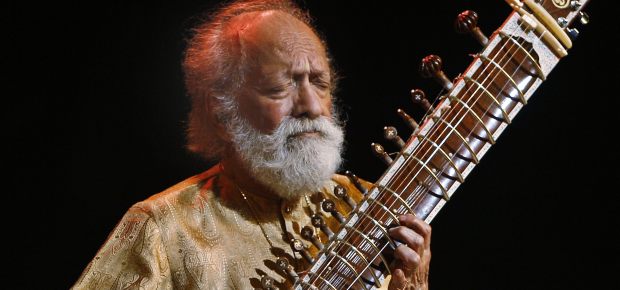
ravi shankar, go in peace and thank you for the sound

7 April 1920 – 11 December 2012

Pandit Ravi Shankar –  Raga Asa Bhairav (আশা ভৈরব রাগ) from the album Maestro’s Choice. পণ্ডিত রবি শংকরের সেতারে আশা ভৈরব রাগ…ravi shankar

Listen to the entire Transmigration Macabre (1973) HERETransmigration Macabre was composed by Ravi Shankar for the British art film Viola, which tells of the growth and eventual victory of a possessed man’s belief that his dead wife has returned to life in the form of a cat that pursues him. The music traces his emotional turmoil as the man, dominated by his wife during her lifetime, struggles against her baneful influence after her death. ~ Richie Unterberger

charles bukowski – pull a string, a puppet moves

puppeteach man must realize
that it can all disappear very
quickly:
the cat, the woman, the job,
the front tire,
the bed, the walls, the
room; all our necessities
including love,
rest on foundations of sand –
and any given cause,
no matter how unrelated:
the death of a boy in Hong Kong
or a blizzard in Omaha …
can serve as your undoing.
all your chinaware crashing to the
kitchen floor, your girl will enter
and you’ll be standing, drunk,
in the center of it and she’ll ask:
my god, what’s the matter?
and you’ll answer: i don’t know,
i don’t know…

rilke – the dragon princess

Still from Kwaidan (Kobayashi, 1964)

Still from Kwaidan (Kobayashi, 1964)

To speak of solitude again, it becomes always clearer that this is at bottom not something that one can take or leave. We are solitary. We may delude ourselves and act as though this were not so. That is all. But how much better it is to realize that we are so, yes, even to begin by assuming it. We shall indeed turn dizzy then; for all points upon which our eye has been accustomed to rest are taken from us, there is nothing near any more and everything far is infinitely far. A person removed from his own room, almost without preparation and transition, and set upon the height of a great mountain range, would feel something of the sort; an unparalleled insecurity, an abandonment to something inexpressible would almost annihilate him. He would think himself falling or hurled into space, or exploded into a thousand pieces: what a monstrous lie his brain would have to invent to catch up with and explain the state of his senses!

So for him who becomes solitary all distances, all measures change; of these changes many take place suddenly, and then, as with the man on the mountaintop, extraordinary imaginings and singular sensations arise that seem to grow out beyond all bearing. But it is necessary for us to experience that too. We must assume our existence as broadly as we in any way can; everything, even the unheard-of, must be possible in it. That is at bottom the only courage that is demanded of us: to have the courage for the most strange, the most singular, and the most inexplicable that we may encounter. That mankind has in this sense been cowardly has done life endless harm; the experiences that are called “visions,” the whole so-called “spirit-world,” death, all those things that are so closely akin to us, have by daily parrying been so crowded out of life that the senses with which we could have grasped them are atrophied. To say nothing of God.

But fear of the inexplicable has not alone impoverished the existence of the individual; the relationship between one human being and another has also been cramped by it, as though it had been lifted out of the riverbed of endless possibilities and set down in a fallow spot on the bank, to which nothing happens. For it is not inertia alone that is responsible for human relationships repeating themselves from case to case, indescribably monotonous and unrenewed; it is shyness before any sort of new, unforeseeable experience with which one does not think oneself able to cope. But only someone who is ready for everything, who excludes nothing, not even the most enigmatical, will live the relation to another as something alive and will himself draw exhaustively from his own existence. For if we think of this existence of the individual as a larger or smaller room, it appears evident that most people learn to know only a corner of their room, a place by the window, a strip of floor on which they walk up and down. Thus they have a certain security. And yet that dangerous insecurity is so much more human which drives the prisoners in Poe’s stories to feel out the shapes of their horrible dungeons and not be strangers to the unspeakable terror of their abode.

We, however, are not prisoners. No traps or snares are set about us, and there is nothing which should intimidate or worry us. We are set down in life as in the element to which we best correspond, and over and above this we have through thousands of years of accommodation become so like this life, that when we hold still we are, through a happy mimicry, scarcely to be distinguished from all that surrounds us. We have no reason to mistrust our world, for it is not against us. Has it terrors, they are our terrors; has it abysses, those abysses belong to us; are dangers at hand, we must try to love them.

And if only we arrange our life according to that principle which counsels us that we must always hold to the difficult, then that which now still seems to us the most alien will become what we most trust and find most faithful. How should we be able to forget those ancient myths that are at the beginning of all peoples, the myths about dragons that at the last moment turn into princesses. Perhaps all the dragons in our lives are princesses who are only waiting to see us act, just once, with beauty and courage. Perhaps everything that frightens us is, in its deepest essence, something helpless that wants our love.

From Rilke on Love and Other Difficulties: Translations and Considerations of Rainer Maria Rilke by John J L Mood. Norton, 1993.

a moment of clarity

in this world
i don’t belong to anywhere or anyone
and i should stop looking for anywhere or anyone
or getting hopeful when someone tells me they understand me
that they feel the same as me
when i feel like we “see” or “hear” each other
like no one else does
those are precisely the situations most dangerous to me
because we don’t belong,
together,
and it will always tear me
apart

feminism: the stereotyping and disempowerment of dominant gender roles – jada pinkett smith

Jada Pinkett-Smith: “The War on Men Through the Degradation of Woman” – “How is man to recognize his full self, his full power through the eyes of an incomplete woman? The woman who has been stripped of Goddess recognition and diminished to a big ass and full breast for physical comfort only. The woman who has been silenced so she may forget her spiritual essence because her words stir too much thought outside of the pleasure space. The woman who has been diminished to covering all that rots inside of her with weaves and red bottom shoes.I am sure the men, who restructured our societies from cultures that honored woman, had no idea of the outcome. They had no idea that eventually, even men would render themselves empty and longing for meaning, depth and connection.

There is a deep sadness when I witness a man that can’t recognize the emptiness he feels when he objectifies himself as a bank and truly believes he can buy love with things and status. It is painful to witness the betrayal when a woman takes him up on that offer.

He doesn’t recognize that the [creation] of a half woman has contributed to his repressed anger and frustration of feeling he is not enough. He then may love no woman or keep many half women as his prize.

He doesn’t recognize that it’s his submersion in the imbalanced warrior culture, where violence is the means of getting respect and power, as the reason he can break the face of the woman who bore him 4 four children.

When woman is lost, so is man. The truth is, woman is the window to a man’s heart and a man’s heart is the gateway to his soul.

Power and control will NEVER out weigh love.

May we all find our way.

~ Jada Pinkett-Smith, published in Sinuous Magazine (http://www.sinuousmag.com/). Originally published on her Facebook page.Image

nina hagen – du hast den farbfilm vergessen

Nina Hagen & Automobil (1974). One of her first performances on film. There’s a version with English subtitles HERE.

Raised by her mother, well-known film and TV actress Eva-Maria Hagen and her stepfather, dissident singer-songwriter Wolf Biermann (who was a big influence on her political views and a big nuisance to the GDR), Hagen began singing professionally at a young age. Backed by her group, Automobil, her 1974 single, “Du Hast den Farbfilm Vergessen” (“You forgot the color film”) became a huge hit in the GDR and made Hagen a big star. The seemingly innocent-sounding lyrics (a girlfriend berating her boyfriend for not bringing color film on their vacation) were a subtle dig mocking the sterile, gray, Communist state. The fluffy-sounding ditty became one the most popular songs of 1974 and the double meaning of the comical lyrics was apparently well-understood by both the general population and the Politbüro elites.

In 1976, Wolf Biermann was stripped of his citizenship and refused re-admittance into the GDR after he’d played a TV concert in Cologne. When her mother left to join her husband, Nina claimed to be Biermann’s biological daughter. However, the thing that probably got her visa stamped stat was her threat to the authorities that she would become “the next Wolf Biermann.”

Four days later she was living in the West. I wonder how many people were thrown OUT of East Germany? That’s punk! (from dangerousminds.net)

And here’s a version from 1985 (in full, garish colour):

“imagination has turned into hallucination”

The following are excerpts from Vilém Flusser’s Towards a Philosophy of Photography (London: Reaktion Books, 2000).

The Image
Images are mediations between the world and human beings. Human beings ‘ex-ist’, i.e. the world is not immediately accessible to them and therefore images are needed to make it comprehensible. However, as soon as this happens, images come between the world and human beings. They are supposed to be maps but they turn into screens: Instead of representing the world, they obscure it until human beings’ lives finally become a function of the images they create. Human beings cease to decode the images and instead project them, still encoded, into the world ‘out there’, which meanwhile itself becomes like an image – a context of scenes, of state of things. This reversal of function of the image can be called ‘idolatry’; we can observe the process at work in the present day: The technical images currently all around us are in the process of magically reconstructing our ‘reality’ and turning it into a ‘global image scenario’. Essentially this is a question of ‘amnesia’. Human beings forget they created the images in order to orient themselves in the world. Since they are no longer able to decode them, their lives become a function of their own images: Imagination has turned into hallucination. (pp 9-10)

22hr38min [photo: Niklas Zimmer]C-type print 120x99,4cm (Ed.3) and 60x49,7cm (Ed.7)

22hr38min [photo: Niklas Zimmer]
C-type print 120×99,4cm (Ed.3) and 60×49,7cm (Ed.7)

The struggle of writing against the image – historical consciousness against magic – runs throughout history. With writing, a new ability was born called ‘conceptual thinking’ which consisted of abstracting lines from surfaces, i.e. producing and decoding them. Conceptual thought is more abstract than imaginative thought as all dimensions are abstract from phenomena – with the exception of straight lines. Thus with the invention of writing, human beings took one step further back from the world. Texts do not signify the world; they signify the images they tear up. Hence, to decode texts means to discover the images signified by them. The intention of texts is to explain images, while that of concepts is to make ideas comprehensible. In this way, texts are a metacode of images.

This raises the question of the relationship between texts and images – a crucial question for history. In the medieval period, there appears to have been a struggle on the part of Christianity, faithful to the text, against idolaters or pagans; in modern times, a struggle on the part of textual science against image-bound ideologies. The struggle is a dialectical one. To the extent that Christianity struggled against paganism, it absorbed images and itself became pagan; to the extent that science struggled against ideologies, it absorbed ideas and itself became ideological. The explanation for this is as follows: Texts admittedly explain images in order to explain them away, but images also illuminate texts in order to make them comprehensible. Conceptual thinking admittedly analyze magical thought in order to clear it out of the way, but magical thought creeps into conceptual thought so as to bestow significance on it. In the course of this dialectical process, conceptual and imaginative thought mutually reinforce one another. In other words, images become more and more conceptual, texts more and more imaginative. Nowadays, the greatest conceptual abstraction is to be found in conceptual images (in computer images, for example); the greatest imagination is to be found in scientific texts. Thus, behind one’s back, the hierarchy of codes is overturned. Texts, originally a metacode of images, can themselves have images as a metacode.

That is not all, however. Writing itself is a mediation – just like images – and is subject to the same internal dialectic. In this way, it is not only externally in conflict with images but is also torn apart by an internal conflict. If it is the intention of writing to mediate between human beings and their images, it can also obscure images instead of representing them and insinuate itself between human beings and their images. If this happens, human beings become unable to decode their texts and reconstruct the images signified in them. If the texts, however, become incomprehensible as images, human beings’ lives become a function of their texts. There arises a state of ‘textolatry’ that is no less hallucinatory than idolatry. Examples of textolatry, of ‘faithfulness to the text’, are Christianity and Marxism. Texts are then projected into the world out there, and the world is experienced, known and evaluated as a function of these texts. A particularly impressive example of the incomprehensible nature of texts it provided nowadays by scientific discourse. Any ideas we may have of the scientific universe (signified by these texts) are unsound: If we do form ideas about scientific discourse, we have decoded it ‘wrongly’: anyone who tries to imagine anything, for example, using the equation of the theory of relativity, has not understood it. But as, in the end, all concepts signify ideas, the scientific, incomprehensible universe is an ’empty’ universe.

Textolatry reached a critical level in the nineteenth century. To be exact, with it history came to an end. History, in the precise meaning of the world, is a progressive transcoding of images into concepts, a progressive elucidation of ideas, a progressive disenchantment (taking the magic out of things), a progressive process of comprehension. If texts become incomprehensible, however, there is nothing left to explain, and history has come to an end. During this crisis of texts, technical images were invented: in order to make texts comprehensible again, to put them under a magic spell – to overcome the crisis of history. (pp 11 – 13)

++++++++++

To summarize: Photographs are received as objects without value that everyone can produce and that everyone can do what they like with. In fact, however, we are manipulated by photographs and programmed to act in a ritual fashion in the service of a feedback mechanism for the benefit of cameras. Photographs suppress our critical awareness in order to make us forget the mindless absurdity of the process of functionality, and it is only thanks to this suppression that functionality is possible at all. Thus photographs form a magic circle around us in the shape of the photographic universe. What we need is to break this circle. (pg 64)

++++++++++

Why a Philosophy of Photography is Necessary
With one exception: so-called experimental photographers – those photographers in the sense of the word intended here. They are conscious that image, apparatus, program and information are the basic problems that they have to come to terms with. They are in fact consciously attempting to create unpredictable information, i.e. to release themselves from the camera, and to place within the image something that is not in its program. They know they are playing against the camera. Yet even they are not conscious of the consequence of their practice: They are not aware that they are attempting to address the question of freedom in the context of apparatus in general.  (pg 81)

A philosophy of photography is necessary for raising photographic practice to the level of consciousness, and this is again because this practice gives rise to a model of freedom in the post-industrial context in general. A philosophy of photography must reveal the fact that there is no place for human freedom within the area of automated, programmed and programming apparatuses, in order finally to show a way in which it is nevertheless possible to open up a space for freedom. The task of a philosophy of photography is to reflect upon this possibility of freedom  – and thus its significance – in a world dominated by apparatuses; to reflect upon the ways in which, despite everything, it is possible for human beings to give significance to their lives in face of the chance necessity of death. Such a philosophy is necessary because it is the only form of revolution left open to us. (pp 81-82)

Read more excerpts from Flusser’s text HERE.

sylvia plath – cut

For Susan O’Neill Roe

What a thrill —
My thumb instead of an onion.
The top quite gone
Except for a sort of a hinge

Of skin,
A flap like a hat,
Dead white.
Then that red plush.

Little pilgrim,
The Indian’s axed your scalp.
Your turkey wattle
Carpet rolls

Straight from the heart.
I step on it,
Clutching my bottle
Of pink fizz.

A celebration, this is.
Out of a gap
A million soldiers run,
Redcoats, every one.

Whose side are they on?
O my
Homunculus, I am ill.
I have taken a pill to kill

The thin
Papery feeling.
Saboteur,
Kamikaze man —

The stain on your
Gauze Ku Klux Klan
Babushka
Darkens and tarnishes and when

The balled
Pulp of your heart
Confronts its small
Mill of silence

How you jump —
Trepanned veteran,
Dirty girl,
Thumb stump.

on being human

Being human is a raw experience. I have bouts of not feeling fully human. It’s always connected to a horrible sensation of being very distant from my body, like I’m disintegrating. I feel like this today. I think it is the result of too much time alone in thought and on the internet this weekend. I look on my body’s workings numbly, from a great distance, as though through the wrong end of a telescope. My hand resting on the mouse is a heavy foreign instrument. When I walk around town, I feel very far from everything and everyone. People’s voices, including my own when I speak, come at me down a funnel. It’s hard to get work done in such a state. It takes great effort to appear coordinated.

I slipped and fell and gashed my shin open the other day. It felt so good, the sting and the blood oozing out, like proof of real contact with something outside myself. I noticed that I felt more alive than in weeks, as if I had been pulled back into my body at the moment of impact.

14 April, 2009

joan didion on life and death

joan didion“I’m not telling you to make the world better, because I don’t think that progress is necessarily part of the package. I’m just telling you to live in it. Not just to endure it, not just to suffer it, not just to pass through it, but to live in it. To look at it. To try to get the picture. To live recklessly. To take chances. To make your own work and take pride in it. To seize the moment. And if you ask me why you should bother to do that, I could tell you that the grave’s a fine and private place, but none I think do there embrace. Nor do they sing there, or write, or argue, or see the tidal bore on the Amazon, or touch their children. And that’s what there is to do and get it while you can and good luck at it.”

~ Joan Didion,  from a commencement speech she gave at the University of California in 1975.

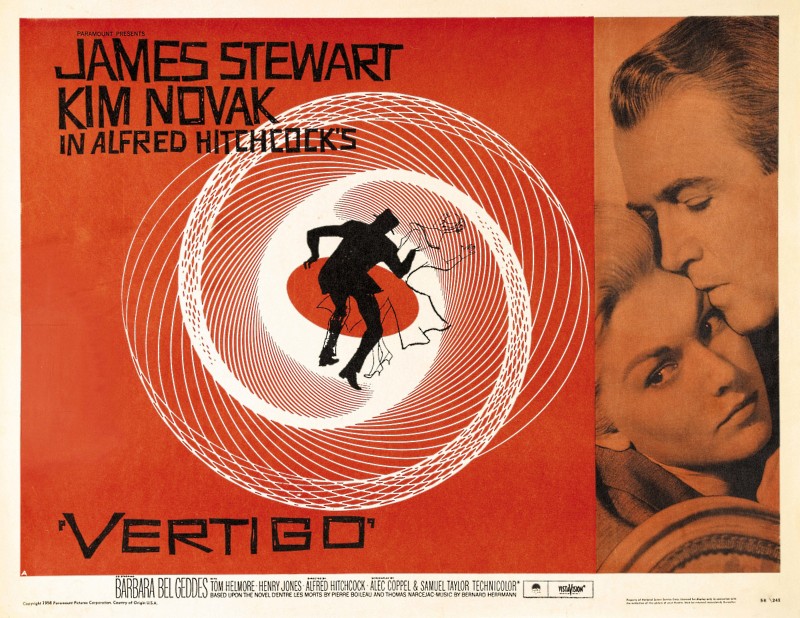
vertigo

Cape Town’s Good Film Society presents this Alfred Hitchcock masterpiece, on at the Labia Theatre at 20h15 tonight.

Vertigo_06

Recently voted in Sight and Sound’s definitive poll as the greatest film ever made (the only film to surpass Orson Welles’ Citizen Kane in many a decade), come to this Sunday’s one-off screening and decide for yourself if it’s worthy of the accolade!

Vertigo is the spellbinding tale of an ex-policeman with a fear of heights, Scottie Ferguson (James Stewart), who is hired by an old friend to investigate his wife (Kim Novak). But it’s no ordinary case – the woman is suspected of being possessed by the malignant spirit of a suicide victim. As the mystery leads to a spiral into paranoia and obsession, Scottie is forced to encounter the most painful truth: He has fallen in love with a woman who may not exist. Stylistically breathtaking, intellectually complex and profound, the film is a startlingly experimental exploration of desire, a psychological spider-web woven with unusual compassion by the master of nightmares. With this touchstone of psychological thrillers – his most personal masterpiece – Hitchcock defined not only a genre, but an entire era of filmmaking and art.  Continue reading

bob dylan – blind willie mctell

“Well, God is in His heaven
And we all want what’s His
But power and greed and corruptible seed
Seem to be all that there is
I’m gazing out the window
Of the St. James Hotel
And I know no one can sing the blues
Like Blind Willie McTell.”

Copyright © 1983 by Special Rider Music, from The Bootleg Series, Vol 1-3: Rare & Unreleased 1961-1991