
What our politics has become
What our politics has become

“Freedom’s just another word for ‘nothing left to lose’…”

Raoul Ubac – Tête du Mannequin d’Andre Masson
Silver Print, 11-5/8 x 9-3/8 in.
1938 (Colour tweaked by Cherry Bomb)
Sadly, this is a far more profound symbolic critique of Roman Catholic oppression than anything FEMEN is ever likely to pull off (notwithstanding their tops)!
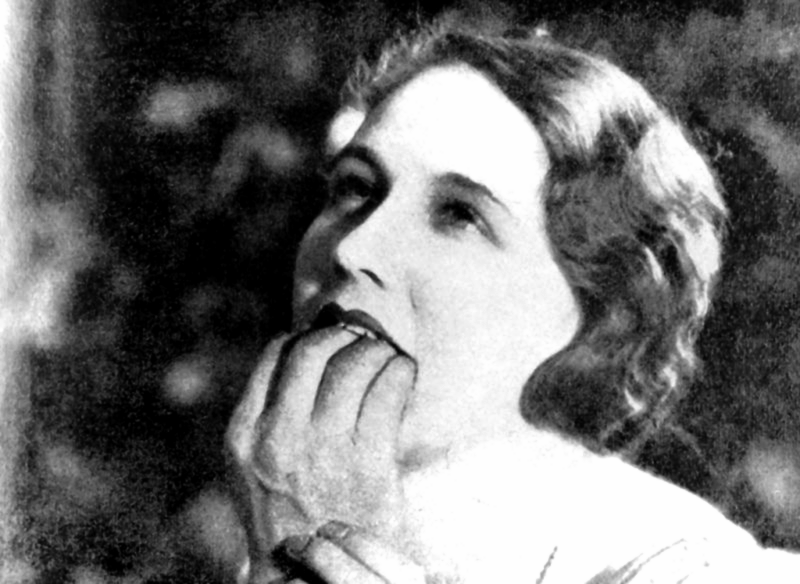 L’Age d’or or The Golden Age (1930), directed by Luis Buñuel, a French surrealist comedy, and one of the first films with synchronous sound ever made in France, was about the insanities of modern life, the hypocrisy of the sexual mores of bourgeois society and the value system of the Roman Catholic Church. Salvador Dalí and Buñuel wrote the screenplay together.
The BBC called it “an exhilarating, irrational masterpiece of censor-baiting chutzpah.”
Read more about the political project of surrealism HERE. Watch the film (in the original French) HERE – turn on the Youtube captions for English subtitles.
Regarding the response of the establishment to the film, from Wikipedia:
Upon receiving a cinematic exhibition permit from the Board of Censors, L’Âge d’or had its premiere presentation at Studio 28, Paris, on 29 November 1930. Later, on 3 December 1930, the great popular success of the film provoked attacks by the right-wing Ligue des Patriotes (League of Patriots), whose angry viewers took umbrage at the story told by Buñuel and Dalí. The reactionary French Patriots interrupted the screening by throwing ink at the cinema screen and assaulting viewers who opposed them; they then went to the lobby and destroyed art works by Dalí, Joan Miró, Man Ray, Yves Tanguy, and others. On 10 December 1930, the Prefect of Police of Paris, Jean Chiappe, arranged to have the film banned from further public exhibition after the Board of Censors re-reviewed the film.
A contemporary right-wing Spanish newspaper published a condemnation of the film and of Buñuel and Dalí, which described the content of the film as “…the most repulsive corruption of our age … the new poison which Judaism, Masonry, and rabid, revolutionary sectarianism want to use in order to corrupt the people”. In response, the de Noailles family withdrew L’Âge d’or from commercial distribution and public exhibition for more than forty years; nonetheless, three years later, in 1933, the film was privately exhibited at the Museum of Modern Art, in New York City. Forty-nine years later, from 1-15 November 1979, the film had its legal U.S. premiere at the Roxie Cinema in San Francisco.
The film critic Robert Short said that the scalp-decorated crucifix and the scenes of socially repressive violence, wherein the love-struck protagonist is manhandled by two men, indicate that the social and psychological repression of the libido and of romantic passion and emotion, by the sexual mores of bourgeois society and by the value system of the Roman Catholic Church, breed violence in the relations among people, and violence by men against women. The opening sequence of the film alludes to that interpretation, by Dalí and Buñuel, with an excerpt from a natural science film about the scorpion, which is a predatory arthropod whose tail is composed of five prismatic articulations that culminate in a stinger with which it injects venom to the prey. Film critic Ado Kyrou said that the five vignettes in the tale of L’Âge d’Or correspond to the five sections of the tail of the scorpion.
Images from Lot in Sodom (1933) directed by James Sibley Watson and Melville Webber.
Music by Click Click, available on the album Lung Function (Rotorbabe Recordings, 2004).
From the album Greed/Holy Money (K.422, 1992).
Released on ECM in 1974.
From cLOUDDEAD (2001).
Only one man ever understood me, and he didn’t understand me.
— Johann Gottlieb Fichte
Richie Havens’ famous improvised performance of “Freedom”, riffing on “Sometimes I Feel Like a Motherless Child”, during his opening set at the Woodstock Festival in 1969.
There is a collection of other great performances recorded over the course of his almost five-decade-long career that you can watch HERE. May his soul rest in peace.
Happy 449th birthday, Willy!
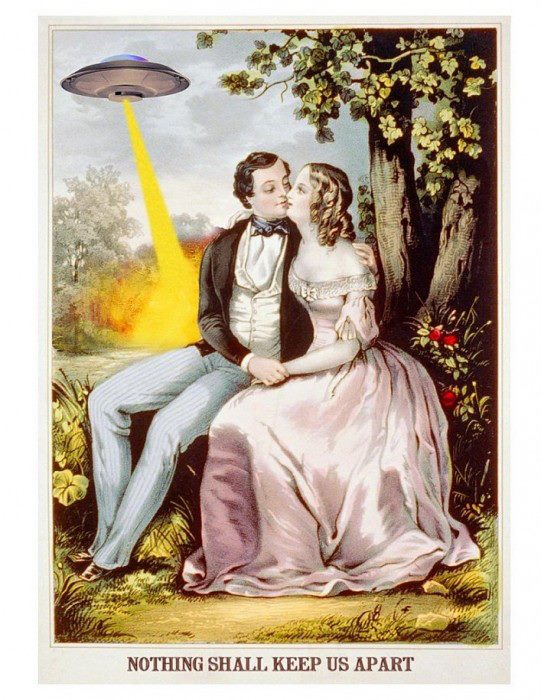
Sigh no more, ladies, sigh no more;
Men were deceivers ever;
One foot in sea and one on shore,
To one thing constant never;
Then sigh not so,
But let them go,
And be you blithe and bonny;
Converting all your sounds of woe
Into “Hey nonny, nonny.”
Sing no more ditties, sing no mo,
Of dumps so dull and heavy;
The fraud of men was ever so,
Since summer first was leavy.
Then sigh not so,
But let them go,
And be you blithe and bonny,
Converting all your sounds of woe
Into “Hey, nonny, nonny.”
(From Much Ado about Nothing)

Erin Case:”Rose Window”
Digital collage, 2013
Erin Case is an award winning visual artist based in Midland, Michigan, with a focus in collage. Working in both analog and digital methods, she is regarded for the marriage of surrealism, sincerity, and evocativeness that is present throughout her body of work. Check out more of her work HERE.
Shot on Location in London & Cut by Isaac Ssebandeke of I am Freshcold. 2012. More of Yrsa’s work can be found on Soundcloud and on Tumblr.
Thanks to Clair Cantrell for sharing this with me.
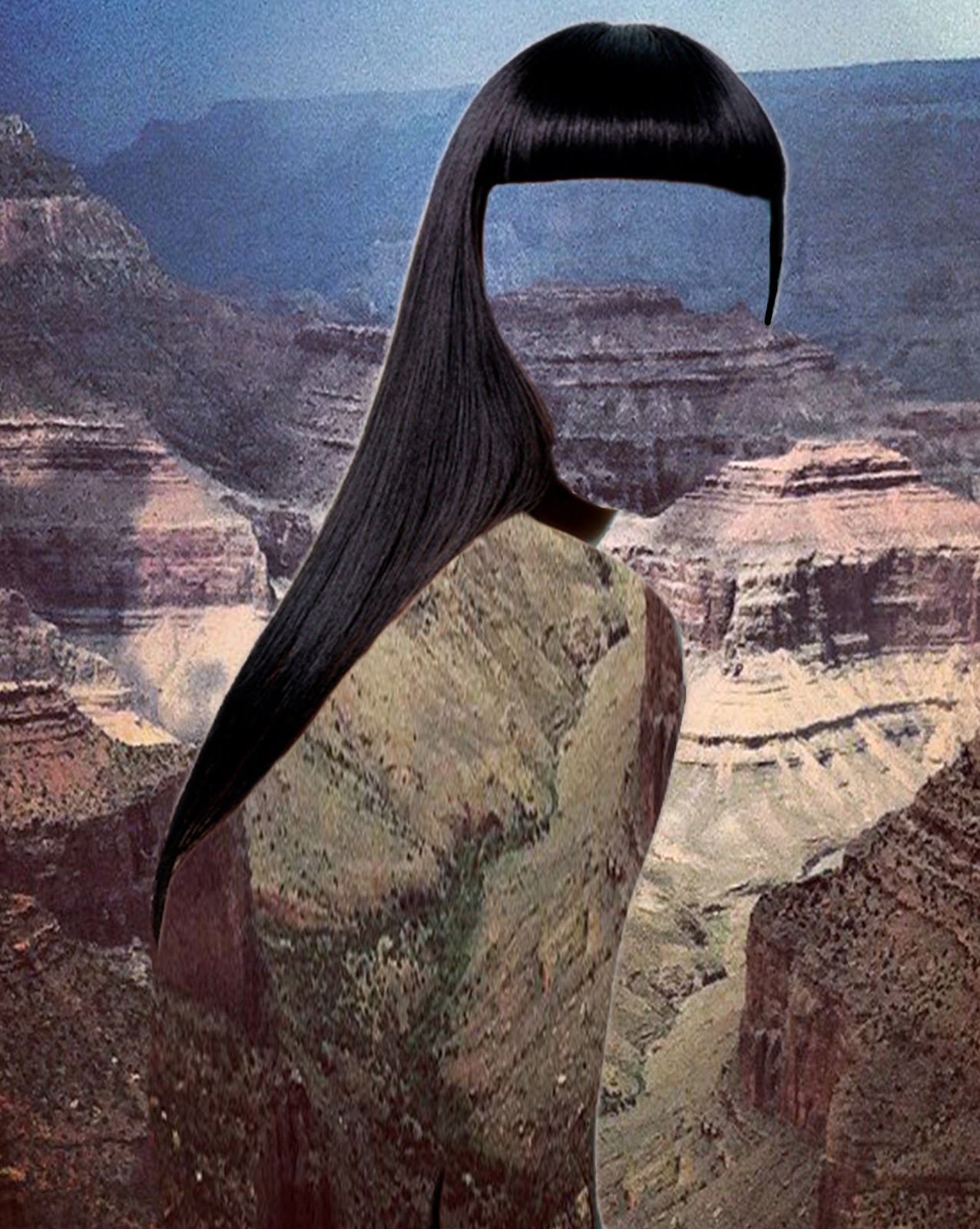
Erin Case: “Haircut 8”
Digital collage with Andrew Tamlyn, 2012
Erin Case is an award winning visual artist based in Midland, Michigan, with a focus in collage. Working in both analog and digital methods, she is regarded for the marriage of surrealism, sincerity, and evocativeness that is present throughout her body of work. Check out more of her work HERE.
“Wrong about you; right about me…”
From their second collaborative album together, Trio II (Asylum Records, 1999).

Photo: Stella Trochalis
View more of Stella’s work on Instagram, HERE.
Flamenco flash mob staged by anti-capitalist group flo6x8 inside a bank in Sevilla, Spain, to express anger and frustration at the economic crisis. Flamenco began as an art form centred around protest and social awareness. In the late 18th and early 19th centuries, flamenco songs were largely about poverty, suffering and the hardships of everyday life.
Read more HERE about how flash mobs are reconnecting flamenco to its roots, or watch a 25 minute BBC documentary on the phenomenon.
(Thanks to Lizza Littlewort for posting the featured link on Facebook this morning.)

Jack Daniels promo girls at the Cape Town book launch for “The Shining Girls”, while author Lauren Beukes was reading. Photo: Rosemary Lombard
 For more wickedly puerile perversions of classic album covers, visit BargainBinBlasphemy.
From Sounds of Silence, Simon and Garfunkel’s second album, released on January 17, 1966. It had also appeared prior to this on a UK-only release, The Paul Simon Songbook, in August 1965.
The song bears a structural resemblance to a traditional English rhyme, “Cuckoo, cuckoo, what do you do?”, a phenology of the Common Cuckoo from April to September:
Cuckoo, Cuckoo, what do you do?
“In April I open my bill;
In May I sing night and day;
In June I change my tune
In July far far I fly;
In August away I must.”
Cuckoo, Cuckoo!
This choral version of the rhyme was featured on the soundtrack to Wes Anderson’s 2012 film, Moonrise Kingdom:

BettleWings

Shintaro Kago – “The Memories of Others”

Shintaro Kago

Shintaro Kago
Ag, BLESS!
Watch more of this Australian Broadcasting Corporation insert from February 2013 – Nick talks about creativity, inspiration, his characters and his penchant for observation – HERE.
This was the commandment, ‘Thou shalt love thy neighbour as thyself,’ but when the commandment is rightly understood it also says the converse, ‘Thou shalt love thyself in the right way.’ If anyone, therefore, will not learn… to love himself in the right way, then neither can he love his neighbour; he may perhaps, as we say, ‘for life and death’ cling to one or several human beings, but this is by no means loving one’s neighbour. To love one’s self in the right way and to love one’s neighbour are absolutely analogous concepts, are at bottom one and the same.
~ Søren Kierkegaard, from Works of Love (1847)
Lauren Bacall interviewed in 1994. Honest and smart… And how!
 “I loathe the way the two cancers of sadism and masochism eat into the sexual life of humanity, so that the one lifts the lash and the other offers blood to the blow, and both are drunken with the beastly pleasure of misery and do not proceed with love’s business of building a shelter from the cruelty of the universe.”
— Rebecca West, Letter to a Grandfather (1933), pg 34.
Read more about the formidable Dame West HERE.
Off the album Bubblegum (Beggars Banquet, 2004), featuring Izzy Stradlin and Duff McKagan.
 Thanks to Abdul Dube for this.
“It Ain’t What You Do (It’s the Way That You Do It)” was a calypso song written by jazz musicians Melvin “Sy” Oliver and James “Trummy” Young, first recorded in 1939 by Jimmie Lunceford, Harry James, and Ella Fitzgerald.
This is a madly infectious ska-pop version recorded in 1982.
 fleurmach