“The small town is plagued with alcoholism, marital infidelity, unbridled masculinity, violence, and moral ambivalence. Mouchette’s father and brother, we have already seen, operate by selling liquor on the black market, with complicit police that turn an indifferent eye to a crate left behind. They, like other townsfolk, are paid in shots of alcohol, consumed without speech. Following Sunday mass, the village parishioners leave church and hastily head to the bar before the bells cease to toll. Mouchette’s dying mother has to hide gin from her abusive spouse. Even the town’s interdependent poacher/warden pair, Arsène and Mathieu, bring an end to their cat-and-mouse charade in the woods by sharing a drink from Arsène’s canteen full of gin. The motif of alcohol and its abuse stands as a distinctive mark of the moral decay of Mouchette’s society; however, the corruption of this town is not limited to alcoholism… Indeed, Mouchette’s society is one of extreme decadence and lawlessness, one that is ripe for a scapegoat upon whose back it can collectively discharge the burden of its vice and one from which the victim will gladly depart.”
“My hate is general, I detest all men;
Some because they are wicked and do evil,
Others because they tolerate the wicked,
Refusing them the active vigorous scorn
Which vice should stimulate in virtuous minds.”
I read an article on Thursday morning. It said: “The victim had been sliced open from her stomach to her genitals and dumped.” The radio is full of this story. Full of politicians and posers, trying to outdo one another. Like funeral criers. But it will end, the show. And there will be marches and petitions. There will be statements and rage. But it will happen again. Until we are inured to shock. It will happen again. Until our bones are worn into dust and our teeth crushed into the sand. It will happen and happen. Until we invent a way to stop being women. Until we find a way for our blood to no longer bleed between our legs. As long as we exist, we will be raped.
So, no, I will not march. I don’t believe my marching will stop this war. I will cry, as I have been already this morning. And maybe, I will begin to feel my way out of the lurching, heavy knowing after I have spoken with others. With the mothers and the sisters, the brothers and fathers – those like me, who have girls.
There is only this: a dead, hollow knowing that has always been knocking at my heart. From the minute she was born, it fell in step with the rhythm of my breath: to raise a girl in this world, to raise her strong and healthy and proud, to ensure that she survives and then to insist ferociously that she laugh and dance and think and dream, is to choose the most heartbreaking and joyous path. It is to tempt fate every single day, it is to fear that her breath will be strangled by a stranger. It is to live with the horrible possibility that this could be your child.
Anene was raped and mutilated because she was a girl. It was her vagina and her breasts that they wanted to destroy. It was her walk and her talk. It was her girl-ness. These parts of her were broken and sliced and pulled apart, not by monsters, but by friends. Each of her 10 fingers were broken.
Ten fingers and 10 toes. I kiss my baby girl goodnight. Ten fingers and 10 toes, I counted them when she was born just to be sure that she was real. I found love in the spaces between each. I cried at the weight of her. Tiny and strong.
Tonight, I will kiss her neck in the bath and she will wiggle away from me. ‘Stop it Mama’, and I will pinch her wet bum and she will sparkle. Tonight, she will be safe. But they will not stop killing girls.
And I will die defending her. Let them wear my bones into dust. Let them crush my teeth into the sand. Only this will stop the war. That we be prepared to die – our bodies barricades against the fingers that should not be there. The knives that slit. The guns that lodge. Let them lodge in me. In us.
Anene’s mother said that if she hadn’t seen her shoes, she wouldn’t have known that it was her own child. Her intestines? Her intestines.
God help us. And if God will not, Let the women be the barricades. The men, surely will follow.
Sisonke Msimang writes and comments on gender, race and politics. She works with Sonke Gender Justice Network, and is a Yale World Fellow.
Download “Wat Die Reën Bring” by Neil Sandilands, with music by Riku Lätti, recorded by Riku Lätti at Koptoe, Magaliesberg. It is one of the tracks I found most beautiful from the collection of recordings Lätti has been gradually accumulating, which he has entitled “Die Wasgoedlyn” (The Washing Line). The whole album can be downloaded from HERE.
Some background from Riku Lätti:
“It started off a long time ago when I began my own recording studio “Radio Lava” and every now and then I recorded my friends (who happened to be good musicians) in all kinds of odd locations and precarious states of sobriety. Most of these artists have pristine studio albums which I kind of think of as “the front of the house” (facade). Nice and fancy, polished spotless. Die Wasgoedlyn are those other recordings of all of these artists as they really are at home. Unpolished, stubbled, raw with their underwear on “die wasgoedlyn” blowing in the wind now for all to hear.
“Anywhere I find somebody is keen to play music of quality, I will be interested in capturing it, bottling it and setting it free so that music doesn’t have to be stuck in an inhumane, sorry, un-humanly state of untouchable perfection. I want to hear the breath before the beat starts, the bird in the background, the train leaving the station, the clanging of the friends’ glasses as they celebrate being there when they spot their favourite artist playing a tune he really meant and felt like playing. We are not putting our best foot forward, we are just “human beings being”, if I may quote Loit Sôls, Goema poet who is also featured on “Die Wasgoedlyn”.
Check out the beautiful (Afrikaans) lyrics to Neil Sandiland’s track after the jump. Oh, and thanks to Toast Coetzer of Bush Radio’s Unhappy Hour Show for stelling my in kennis.
Herk Harvey’s low-budget yet influential 1962 cult horror film that relied more heavily on its organ-based score by Gene Moore than it did on special effects for its spookiness… to chilling effect!
“When I was fourteen, I discovered the sound of iniquity on a long-playing record for the blind from the Library of Congress. I listened to Paradise Lost, and sometimes after hours of playing the story of Satan I’d walk to the driveway’s edge and feel the elaborate work of sunlight and wind and imagine, the way only a teenager can, the falling of Satan in a blackness so pure you could feel it in the bones of your face… I’d discovered the gift of Milton: the soul’s path is in the ear – not the mirror.”
~ Stephen Kuusisto, from Eavesdropping: A Memoir of Blindness and Listening (W. W. Norton & Company, 2006)
That is the motto of the group Passing Stones, which is also referred to as “the most offensive musician’s group of the 20th century.” or “The MOMsGOT20THC”.
I remember being happy and carefree until about the year I turned 10. That was the year everyone around me became aware of something called “coolness”. It seemed you had to do certain things a certain way to be deemed “cool”. It didn’t make much sense to me. I collected stamps and pressed indigenous flowers. The other girls were really into pastel writing paper (blank). I was in the school choir. I had takkies instead of hockey boots (I hated hockey; why waste my parents’ money?). I read voraciously — National Geographics, Rumer Godden, Lucy Maud Montgomery. There was always a queue to read the next Sweet Valley High that I never joined.
While others were playing handstands and kissing catchers, I liked to walk further out, past the squeals, put my sandwich out on the grass, lie down and wait for a yellow-billed kite to spy it. I loved to feel the wind from its wings as it swooped down right over me from way up high… in the next second, bird and morsel would be gone; a tiny shadow, a cry far, far out of reach.
Almost all my time inside and outside school was spent dreaming up elaborate, exotic worlds and cobbling approximations of them together from whatever was at hand: cardboard, tablecloths, our little red wagon, press-ganged siblings, pets. Some games took weeks. Gypsy caravans morphed into Voortrekker laagers morphed into hunter-gatherers in the Drakensberg morphed into refugee camps morphed into townships morphed into castles under siege. Ways of being that were other than mine held endless fascination for me; every scenario a mystery I longed to inhabit. Engrossed with historical detail, with exact measurements, with flavours and textures and smells, I would be nowhere but there in my head – not exactly germane to making flesh-and-blood friends. Maybe worst of all, though, when the teacher asked questions in class and I was actually paying attention, I would put up my hand and answer, or even disagree with her.
I found out that my differences did not endear me to others, did not interest them. In fact, the things that made me different made me actively UNcool. At first I didn’t really care, but then it started to hurt. I was frozen out, systematically. The nastiest kids used to make me cry. They would pass notes warning their cronies not to borrow my scissors because I had “AIDS”. This was 1987. We didn’t really know what it was, only that it was worse than leprosy… and the lepers we’d heard about at Sunday School were pretty abhorrent.
One day I punched a boy called Stuart Urquhart when he had kicked my school bag, put Prestik in my hair and called me “ginger”, “fatty” and “freckles” one too many times. So what, I had freckles (show me a redhead who doesn’t… I quite liked mine, and I always liked my hair), but “fatty” I couldn’t accept. (It stuck regardless though. Around 16 I was weighing all my food to make sure I knew how many kilojoules I was swallowing.) Stuart came off with a respectably-sized purple and yellow bruise. The teacher made me stay in at big break and beat chalkboard dusters while Stuart got on with “getting off” with girls behind the change rooms on the far side of the field, where the myopic staff member on duty couldn’t make out that there were boys on the girls’ side. It was a Belle & Sebastian song just waiting to happen.
(This is a Youtube playlist I made to go with this piece.)
Fast forward to a year or two later, when I discovered The Smiths, the Pixies, U2 and the House of Love through a mix tape copied for me by the Std 7 boy I (and everyone else, it seemed) had a devastating crush on. He saved my life. Inadvertently, of course. He was the minister’s son, a gymnast with beautiful arms. Sitting outside, vestigial and bored at the Std 5 leavers’ disco, I imagined those taut biceps encircling my pubescent torso, crushing my stonies to him, exquisite pain as we slow-danced to Richard Marx, eternal reverie in the fuggy November night…
“Whatever it takes, or how my heart breaks, I will be right here waiting for you.”
When, oh when, would a boy sing that to me? (Note to younger self: “Don’t hold your breath, girlie.”) Only one boy had ever been sweet (or brave?) enough to ask me to dance at the handful of parties to which I was invited. The time he did, it wasn’t a slow song. He wasn’t that sweet (or brave?). His name was Francis and he flapped his elbows like a chicken. I was staying outside. I hadn’t developed a sense of irony yet.
“Close your eyes, gimme your hand, darlin'” … “Lay a whisper on my pillow” … “Huh-ush, hush, keep it down now, voices carry…”
Back then, those numbers induced in me a wild yearning for a reason to empathise with the girls from my Pop Shop tapes, and an overwhelming sense of hopelessness that things were not moving in that direction. That was before I discovered The Smiths, Depeche Mode, The Cure, Tears for Fears. What? Bands who were singing about how I really felt, instead of what I would never be?! Singing, in fact, about the precise feeling of inadequacy that perfect pop had provoked in me! They left me standing alone with a smirk, instead of the sigh of an outcast. The relief I felt was immediate.
“Sheila take a, Sheila take a bow/ Boot the grime of this world in the crotch, dear/ Throw your homework onto the fire/ Go out and find the one you love”
I wished I’d brought my rollerskates that night. I wanted to glide away down the smooth, concrete walkways, eerie dark tunnels ringing silently with the monitors’ “No running on the corridors!” refrain, the illicit rumble of my wheels propelling me far from all the clammy paired-off hands and Bon Jovi… I slipped out across the moonlit playing fields, the dew muddying both pairs of roll-down lumo-pink and white nylon socks I was wearing, my black takkies squeaking with every step. Grasping the perimeter fence, I pressed my face against the diamond mesh until it patterned my cheeks, and the dog barking at me from across the road forced the preternatural image that had projected itself into the sky — the minister’s son, away at boarding school in ‘Maritzburg, straw boater cocked rakishly — to dissipate.
The crush passed, though not until after I had wasted more than a year of stupefying Fridays at youth group watching the blonde chicks compete for his attention. I never tried. I had learned that tragedy was also cool. And anyway, Morrissey said I was the one for him (fatty). Who needed 15-year-old zitfarms when you had Morrissey’s alabaster chest and bruised daffodils, and Robert Smith’s bleeding mouth? So hot. So beyond sex. So beyond my stupid suburban world.
I ditched the stamps and started collecting Melody Makers & NMEs with religious fervour. Plastered my room with Joy Division, Bowie, Bauhaus, Jim Morrison, Sinead o’ Connor, Jesus & Mary Chain posters. Cultivated a floppy fringe and faraway eyes. Whined for Docs. A couple of years on my mom would be despairing at the puddles of black kohl staining my pillow. Every day, regardless of Natal’s weather, I wore the darkest parts of my school uniform: the navy jersey and dark stockings. Every day, I packed the same cabbage salad in my lunchbox, skimping on the mayo, trying to suppress my burgeoning curves, to look tortured, sick, blank, cold, mechanical, monosyllabic. Like I was inside.
The new wave music in my head deflected everything irrelevant. And everything felt irrelevant. I could identify with nothing around me. With no one — certainly not white South Africa in 1993! The violence. The confusion. The fear. The news explained nothing. I could taste the lies.
“Ich möchte ein Eisbär sein/ Im kalten Polar/ Dann müßte ich nicht mehr schrei’n/ Alles wär’ so klar.”
“All we ever wanted was everything/ All we ever got was cold/ Get up, eat jelly, Sandwich bars and barbed wire/ Squash every week into a day.”
“I could turn and walk away, or I could fire the gun/ Staring at the sky, staring at the sun/ Whatever I do, it amounts to the same: Absolutely nothing/ I’m alive/ I’m dead/ I am the stranger/ Killing an Arab.”
“Me… I disconnect from you…”
“I belong to the blank generation, and I can take or leave it each time.”
“I see liberals; I am just a fashion accessory… La tristessa durera, scream to a si-i-igh, to a si-i-igh…”
“Rock ‘n’ roll is our epiphany: culture, alienation, boredom and despair,” the Manic Street Preachers howled. I was in love with fragile, callow Richey Manic, with the leather, leopard print and makeup. We scrawled copycat slogans on our Std 9 history teacher’s blackboard before class. Mr Mundell was a Springbok walker (yes, a competitive WALKER) with a tight arse and vindictive streak a mile wide towards any “non-athlete”, his term for anyone who preferred house plays to hayfever. We spent our time in his classes on Bismarck and the Cold War and Botha VS Smuts writing rainbow pages in advance for “forgetting” our P.E. kits. Notice I say “we”, for by then the other angry girls in dark stockings had deigned to notice me. They were rebels. They’d nicked the template from their elder sisters who’d been in London.
Penny and Olwen were in love with their horses, and also with Dave Gahan and Brett Anderson. They had tails: long, snarled strands of hair that they had to keep rolled up and clipped under the other short hair to avoid being bust. When they got bored with those, they got undercuts. Anything to cause shit, to push the limits, to be different. I didn’t really get the point of that at high school. I had my mom do me a tight plait down my back most days. I made her do it over if it wasn’t perfect.
I tagged along with them, mostly for the music I could sponge off their connections. Penny had given me the Stone Roses record her sister bought her in London, for example. She’d scorned it cos it was “too pop”. She couldn’t see that part of its brilliance lay in the way the shambling prettiness cloaked the meticulous cruelty beneath:
“You’ve been bought and paid/ You’re a whore and a slave/ Your dark star holy shrine/ Come taste the end, you’re mine/ Here he comes/ Got no questions, got no love/ I’m throwing stones at you man/ I want you black and blue and/ I’m gonna make you bleed/ Gonna bring you down to your knees/ Bye bye badman/ Ooh, bye bye/ I’ve got a bad intention/ I intend to/ Knock you down/ These stones I throw/ Oh these French kisses/ Are the only way I’ve found…”
Swigging vodka and crème soda out of a juice bottle under the stands on Sports Day, keeping cave while they smoked, I couldn’t quite buy in to group rebellion. Drinking was fun. Cigarettes were siff. Dagga was a chance I was nervous of taking. I heard rumours that it could make you schizo. I already doubted my sanity too often. Also, I was pretty sure dagga definitely killed brain cells, and, well, I was coming top in the standard, and my parents expected me to continue doing so… My parents were the only people in the world I knew really did love me. Didn’t mean we liked each other much but I felt like I shouldn’t fuck that up…
Rewind a couple of years again: “You can all just kiss off into the air/ behind my back I can see them stare/ They’ll hurt me bad, but I won’t mind/ They’ll hurt me bad, they do it all the time, yeah, yeah, they do it all the time…”
The Violent Femmes! Never had I heard anything like them! Pasty, whiny smalltown nerds. They wrote lonely, ugly songs, about masturbation and Jesus and killing your daughters and wanting to fuck black girls. They broke the rules in a way I could dig. They broke them because they had to. But what really got me was the rock ‘n’ roll. Deadpan-venomous-breakneck-shake-a-chicken-rock’n’roll, baybeh. The fattest, twangiest bass… and a marimba! I wanted to be defiled! I hadn’t felt like dancing this much since I was about 9 or 10 and Dad used to stick on the Beatles’ Red Album for us when it was raining and we couldn’t play outside.
It was in a marquee on the beach at Kenton-on-Sea in the Eastern Cape that I noticed the first boy I would ever kiss watching me, kinda slo-mo headbanging to “American Music”. I remember he seemed passably cute. He lurched over, wordlessly, and pulled me close. Dizzy from my Cure-style flailings and a couple of Hunter’s Golds, I collapsed on top of him on a hay bale and his tongue found mouth. It busied itself deep in my nonplussed oral cavity for a while. It was all a bit too gross to feel like the miracle I had anticipated for years, but boy was I stoked. My necklace popped undone. Tiny, cold beads rolled down between my breasts, between my shoulder blades, adding to the strange, electric shivers as the foreign hand inched up, up under my Rattle & Hum t-shirt, fumbling round to the front. I think he pulled away because he had to burp.
His plaque was flavoured with curdled Black Label and zol, and the rest of him with that purple Ego deodorant – what was it called? Bahama Mist? Afterwards, back from my holiday, I would go into Spar with my mom, loiter around the mens’ toiletries while she was in another aisle, spray Bahama Mist nonchalantly into the lid, take a hit of sweaty rapture on my isle of romance, over and over again.
I don’t recall a word he said. I forgot his name years ago. But his friend’s, who had set about ravishing my younger sister in similar fashion, is indelibly etched in my mind. It was Geoff. You see, for weeks afterwards she and I chanted the Pixies’ refrain, “Jefrey-with-one-ef-Jefrey”, when alluding to the escapade in front of Mom and Dad. We were convinced if they found out what naughty things we’d got up to right under their noses, we’d NEVER be allowed to go to parties unchaperoned again.
Jef was a surfer, a boarder at a boys’ high school in King William’s Town. Suave. Told us he had a mattress in the back of his bakkie. (HIS bakkie? How old were they??) We shat ourselves. When they staggered off to find more dop, we skedaddled home to my grandparents’ house via the most brightly lit street. Out of breath with giggles, we picked the straw from our tresses, only a little more relieved than regretful that we had been sensible. Ooh, but hadn’t they given us their phone numbers?! When we dialled them from a tickiebox next day we got the out-of-order tone. And making a getaway the night before, I had forgotten to retrieve my beloved velvet hat from whence it had tumbled as I fell into first base. The first brutal abandonment, and there’d be too many down the years to keep count.
“A sad fact widely known/ The most impassioned song to a lonely soul/ Is so easily outgrown/ But don’t forget the songs that made you smile/ And the songs that made you cry/ As you lay in awe on your bedroom floor/ And said ‘Oh! Oh! Smother me, Mother…’/ Yes, you’re older now and you’re a clever swine/ But they were the only ones who ever stood by you…/ I’m here with the cause; I’m holding the torch/ In the corner of your room, can you hear me? And when you’re dancing, and laughing, and finally living/ Hear my voice in your head and think of me kindly.”
I do, Steven Patrick, you whiny old git, every now and then I really do. And you can consider this one such paean of my gratitude to your ilk. (2004)
Anyone who wants to know the human psyche will learn next to nothing from experimental psychology. He would be better advised to abandon exact science, put away his scholar’s gown, bid farewell to his study, and wander with human heart throughout the world. There in the horrors of prisons, lunatic asylums and hospitals, in drab suburban pubs, in brothels and gambling-hells, in the salons of the elegant, the stock exchanges, socialist meetings, churches, revivalist gatherings and ecstatic sects, through love and hate, through the experience of passion in every form in his own body, he would reap richer stores of knowledge than text-books a foot thick could give him, and he will know how to doctor the sick with a real knowledge of the human soul.
~ C.G. Jung
The past clicks us into focus.
There’s a slid-hinge to the edit.
In this photo, your father frames you
like a fish he wants to remember—
slipped and tin, temporarily pliable,
propped on his knee.
Let’s take your brother, here,
blue-faced and stuffed, full of berries out the
bottom of the backyard, off the bramble
of his foot, rolling from the cabinet’s
carpet like a gum to its tongue,
small and sand-favoured;
his cheek still a linen chest of flesh
before he turned himself down
for girls who developed with their legs poised
stern as oars. They were his wife. Their skirts
unassailable septums, bone-walled. And their
factory-lit health, a tythe
I find myself paying,
and saying, “What’s honest is what lines it,
is the advertorial milk blanket of your insides,”
while my friends ask, “Is this how shit always is?”
and listen, and wonder, what fresh therapist
will chug the construction belt of their counsel,
tap court shoes square and cocked, to knock
the Morse code of medication, and send us
nearing ourselves, for three months, or about.
So, I smoke the scalpel of memory, instead,
and scour love in its clot, as time consults
like a ruler. And each inch knows this
is the telling. This is the business of my life:
to talk that bread out of its dripping
with the small, sauced animal of my knife.
Righard Kapp performing “Moloch” in Cape Town, 21 January 2013. Check out more high quality videos of performances by underground South African musicians on the new Cheap Seats Vlog.
each and every one one of us has a book of narratives, that we read write and become part of. each chapter verse and paragraph tells our stories and as time passes, we become familiar with our own characters and our own cast of characters become familiar with us.
there is the longing, the dreaming, the ambition, the beauty and the ugliness and above all, there is the love.. the love of others, the love of others like self and the love of self..
the hardest part though, is to be and become part of the narrative..beauty.. to not negate from its positivity its validity as a document to the light rays streaming through our windows of hope and courage to go forward.
the sun rises and sets in a distant sky, as trees bend, bow, blow leaves, jingling. we are hushed into our own simplicities, the grace of intelligence..
man woman or child is the subtotal of a life lived and hoped for.. the narrative of distant and close dreams are but moments, in our own being, where we are awake and know and overstand that it is in the power of our being that we learn that our own empowerment is the storehouse.. that we are capable of more than the small parts that make up the whole.
love, romance, career, children are all part of the course of our own destined future, but the inner self, the inner voice is the calling to follow your own path, all love, and in doing so .. this becomes a mantra, a calling even..
It’s New Year’s Day, away for the weekend with a smallish group of friends… people on different continents, in one place in my mind. We leftovers – avatars of Stella, Michelle, Marco and me, I think it might be – wander back through in the early morning to the communal lapa sort of place where all the dancing had been, the remains of last night’s party trodden into the ground, our affect similarly flattened. The day is wrapped in a quiet mist blanket, grey and clammy. All the couples are still in bed.
“OK, we need music.”
I pick my way over to the old boombox, there on a table surrounded by empty cups, the dregs of stale liquor… Scratching around blearily, I find a Nina Simone tape. (CASSETTE TAPES? WTF, dreambrain?) Anyway, I want to put on “He’s Got the Whole World in His Hands” for we souls with nowhere to be curled into.
I slide the wonky cassette into the player, reach out to press play, and my finger can’t. The buttons are melted, changed into some unearthly goo. Not sticky, not hot, not cold, just melted, uncooperative and soft in an alien, irreparable way. This weird flux will crust over, re-harden as the day wears on into a single mass of equally unbiddable plastic.
Someone must have been using a lighter to illuminate what they were doing during last night’s revelry, I suppose. What a bright idea it must have seemed in that moment, but now we can’t hear the one song that I was hoping might make us feel sort of OK about living through another year alone on Earth.
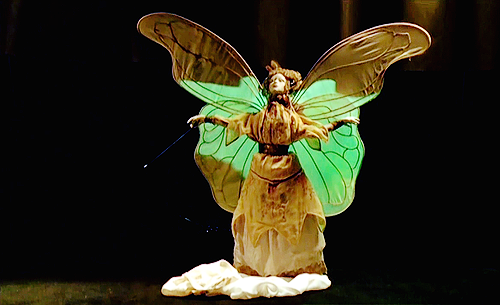
The marionette scene from Krzysztof Kieslowski’s The Double Life of Veronique (1991).Watch the full film HERE.
“The director’s international breakthrough remains one of his most beloved films, a ravishing, mysterious rumination on identity, love, and human intuition. Irène Jacob is incandescent as both Weronika, a Polish choir soprano, and her double, Véronique, a French music teacher. Though unknown to each other, the two women share a mysterious and emotional bond that transcends language and geography, which Kieslowski details in gorgeous reflections, colours, and movements. Aided by Slawomir Idziak’s shimmering cinematography and Zbigniew Preisner’s haunting, operatic score, Kieslowski creates one of cinema’s most purely metaphysical works. The Double Life of Veronique is an unforgettable symphony of feeling.
“Krzysztof Kieslowski focuses on identity using actress Irene Jacobs in the dual role of French music teacher Veronique and Polish soprano Weronika – both born on the same day. Metaphysically they are aware of each other’s counterpart – this harkens back to the director’s penchant for fate, chance and circumstance,and we envision a possible meeting of the intertwined souls… Our unspoken desire for a mirrored being – who can non-verbally share our most intimate loves and joys – is the ultimate expression of personal support… Overall, an ambiguous and enigmatic offering, this is a film that clings to you for years after viewing. A true masterpiece of cinema.”
~ Gary W. Tooze





 fleurmach