molly drake – how wild the wind blows

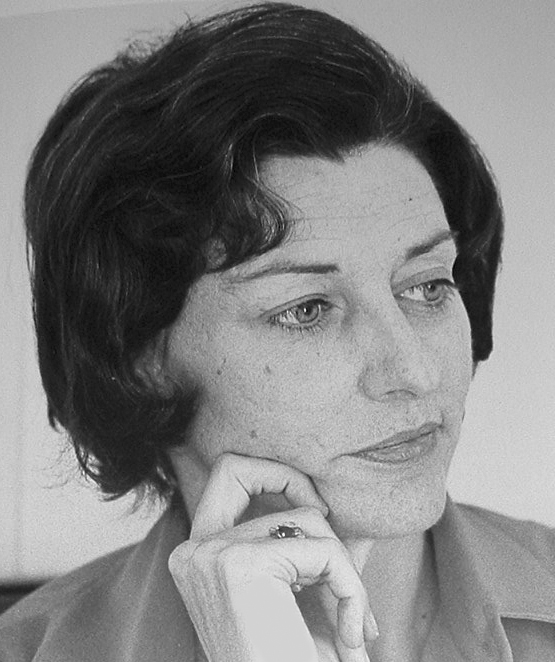
Molly Drake (1915 – 1993) was Nick Drake‘s mother – clearly his talent was hereditary.

The acorn carries an oak tree
Sleeping but for a little while
Winter lies in the arms of spring
As a mother carries her child
And never knows
How wild the wind blows
A thought carries a universe
A seed carries a field of grain
Love lies in the arms of change
As a joy carries a pain
And no one knows
How wild the wind blows.

molly drake1

And here’s an article in The Guardian.

david bowie – lazarus

I was listening to David Bowie’s brand new album last night, thinking about how much I still love him. I can’t even begin to engage with how important Bowie and his work have been to me since I was a very young teenager. It’s washing over me in waves.

He felt like my guardian angel at times, transcending the vulgarity of the mundane, making alienation tangible and difference something to celebrate wildly… How strange to think of him as mortal.

Sayonara, Starman. What a gut-wrenchingly perfect exit.


laurie anderson’s new film, “heart of a dog”

“And finally I saw it: the connection between love and death, and that the purpose of death is the release of love.”

laurie anderson heart of a dogHere is a review, and here is the trailer for Laurie Anderson’s new film, Heart of a Dog, which premiered in September. I really hope I get to see it somewhere on a big screen.

And Robert Christgau had this to say about the soundtrack:

The soundtrack to a film I missed is also Anderson’a simplest and finest album, accruing power and complexity as you relisten and relisten again: 75 minutes of sparsely but gorgeously and aptly orchestrated tales about a) her beloved rat terrier Lolabelle and b) the experience of death. There are few detours—even her old fascination with the surveillance state packs conceptual weight. Often she’s wry, but never is she satiric; occasionally she varies spoken word with singsong, but never is her voice distorted. She’s just telling us stories about life and death and what comes in the middle when you do them right, which is love.

There’s a lot of Buddhism, a lot of mom, a whole lot of Lolabelle, and no Lou Reed at all beyond a few casual “we”s. Only he’s there in all this love and death talk—you can feel him. And then suddenly the finale is all Lou, singing a rough, wise, abstruse song about the meaning of love that first appeared on his last great album, Ecstasy—a song that was dubious there yet is perfect here. One side of the CD insert is portraits of Lolabelle. But on the other side there’s a note: “dedicated to the magnificent spirit/of my husband, Lou Reed/1942-2013.” I know I should see the movie. But I bet it’d be an anticlimax. A PLUS

EDIT 6/11/15. And here’s a beautiful interview with Anderson about the film:

rilke – from the first duino elegy

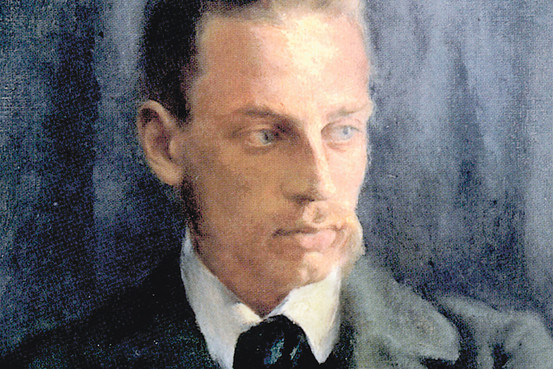
rilkeIsn’t it time that we lovingly freed ourselves from the beloved and,
quivering, endured: as the arrow endures the bowstring’s tension,
so that gathered in the snap of release it can be more than itself?
For there is no place where we can remain.

Voices. Voices. Listen, my heart, as only saints have listened:
until the gigantic call lifted them off the ground;
yet they kept on, impossibly, kneeling and didn’t notice at all: so complete was their listening.
Not that you could endure God’s voice – far from it.
But listen to the voice of the wind and the ceaseless message that forms itself out of silence…

Of course, it is strange to inhabit the earth no longer,
to give up customs one barely had time to learn,
not to see roses and other promising Things in terms of a human future;
no longer to be what one was in infinitely anxious hands;
to leave even one’s own first name behind,
forgetting it as easily as a child abandons a broken toy.
Strange to no longer desire one’s desires.
Strange to see meanings that clung together once, floating away in every direction.
And being dead is hard work and full of retrieval before one can gradually feel a trace of eternity.
Though the living are wrong to believe in the too-sharp distinctions which
they themselves have created.
Angels (they say) don’t know whether it is the living they are moving among, or the dead.
The eternal torrent whirls all ages along in it, through both realms forever,
and their voices are drowned out in its thunderous roar.

serendipity

It was a lovely surprise to be able to meet up for lunch with my dad, Ray, at O R Tambo International Airport yesterday, while on my way back from an in-out visit to the Swedish embassy in Pretoria. He was on his way back to KZN after an expo. Time with parents is precious and finite — this really hit me hard when he almost died of heart failure in 2013.

Photo: Rosemary Lombard, Johannesburg, 23 June 2015.

Photo: Rosemary Lombard, Johannesburg, 23 June 2015.

louise gluck – celestial music

I have a friend who still believes in heaven.
Not a stupid person, yet with all she knows, she literally talks to God.
She thinks someone listens in heaven.
On earth she’s unusually competent.
Brave too, able to face unpleasantness.

We found a caterpillar dying in the dirt, greedy ants crawling over it.
I’m always moved by disaster, always eager to oppose vitality
But timid also, quick to shut my eyes.
Whereas my friend was able to watch, to let events play out
According to nature. For my sake she intervened
Brushing a few ants off the torn thing, and set it down
Across the road.

My friend says I shut my eyes to God, that nothing else explains
My aversion to reality. She says I’m like the child who
Buries her head in the pillow
So as not to see, the child who tells herself
That light causes sadness-
My friend is like the mother. Patient, urging me
To wake up an adult like herself, a courageous person-

In my dreams, my friend reproaches me. We’re walking
On the same road, except it’s winter now;
She’s telling me that when you love the world you hear celestial music:
Look up, she says. When I look up, nothing.
Only clouds, snow, a white business in the trees
Like brides leaping to a great height-
Then I’m afraid for her; I see her
Caught in a net deliberately cast over the earth-

In reality, we sit by the side of the road, watching the sun set;
From time to time, the silence pierced by a birdcall.
It’s this moment we’re trying to explain, the fact
That we’re at ease with death, with solitude.
My friend draws a circle in the dirt; inside, the caterpillar doesn’t move.
She’s always trying to make something whole, something beautiful, an image
Capable of life apart from her.
We’re very quiet. It’s peaceful sitting here, not speaking, the composition
Fixed, the road turning suddenly dark, the air
Going cool, here and there the rocks shining and glittering-
It’s this stillness we both love.
The love of form is a love of endings.
louise glück on the unsaid

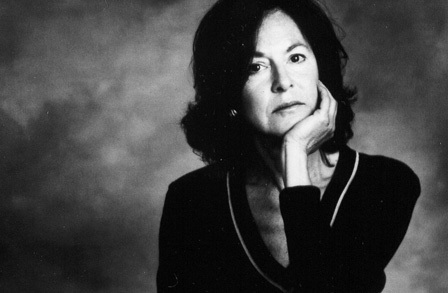
louise-gluckI am attracted to ellipsis, to the unsaid, to suggestion, to eloquent, deliberate silence. The unsaid, for me, exerts great power: often I wish an entire poem could be made in this vocabulary. It is analogous to the unseen for example, to the power of ruins, to works of art either damaged or incomplete. Such works inevitably allude to larger contexts; they haunt because they are not whole, though wholeness is implied: another time, a world in which they were whole, or were to have been whole, is implied. There is no moment in which their first home is felt to be the museum. …

… It seems to me that what is wanted, in art, is to harness the power of the unfinished. All earthly experience is partial. Not simply because it is subjective, but because that which we do not know, of the universe, of mortality, is so much more vast than that which we do know. What is unfinished or has been destroyed participates in these mysteries. The problem is to make a whole that does not forfeit this power.

— From Louise Glück, “Disruption, Hesitation, Silence” in Proofs & Theories: Essays on Poetry (New York: Ecco, 1994) 74-75.

lata mangeshkar – mujh ko iss raat ki tanhai mei

I’ve been listening to old Lata Mangeshkar records on my new, very old His Master’s Voice (model HMV 88a) gramophone. Indescribably magical, to listen to something powered only by the twist of your own wrist.

This song is from the film Dil Bhi Tera Hum Bhi Tere (1960).

https://youtu.be/BXVEmg0ToqQ

Don’t call out to me in the stillness of the night
Don’t play that music which brings tears to my eyes
Don’t play it
Don’t call out to me

arundhati roy on living well

Arundhati_Roy

Photo: Jean-Baptiste Labrune, 2010

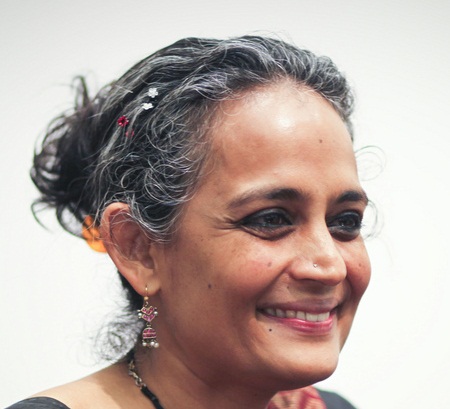
“The only dream worth having is to dream that you will live while you are alive, and die only when you are dead. To love, to be loved. To never forget your own insignificance. To never get used to the unspeakable violence and vulgar disparity of the life around you. To seek joy in the saddest places. To pursue beauty to its lair. To never simplify what is complicated or complicate what is simple. To respect strength, never power. Above all to watch. To try and understand. To never look away. And never, never to forget.”

― Arundhati Roy

anne sexton – a story for rose on the midnight flight to boston

annesextonUntil tonight they were separate specialties, different stories, the best of their own worst.

Riding my warm cabin home, I remember Betsy’s laughter; she laughed as you did, Rose, at the first story. Someday, I promised her, I’ll be someone going somewhere, and we plotted it in the humdrum school for proper girls. The next April the plane bucked me like a horse, my elevators turned and fear blew down my throat, that last profane gauge of a stomach coming up. And then returned to land, as unlovely as any seasick sailor, sincerely eighteen; my first story, my funny failure.

Maybe, Rose, there is always another story, better unsaid, grim or flat or predatory.

Half a mile down the lights of the in-between cities turn up their eyes at me. And I remember Betsy’s story, the April night of the civilian air crash and her sudden name misspelled in the evening paper, the interior of shock and the paper gone in the trash ten years now. She used the return ticket I gave her.

This was the rude kill of her; two planes cracking in mid-air over Washington, like blind birds. And the picking up afterwards, the morticians tracking bodies in the Potomac and piecing them like boards to make a leg or a face. There is only her miniature photograph left, too long now for fear to remember. Special tonight because I made her into a story that I grew to know and savor. A reason to worry, Rose, when you fix an old death like that, and outliving the impact, to find you’ve pretended.

We bank over Boston. I am safe. I put on my hat. I am almost someone going home. The story has ended.