Category Archives: memory
astrid seriese – yesterday is here
sofia coppola – from “the virgin suicides” (1999)
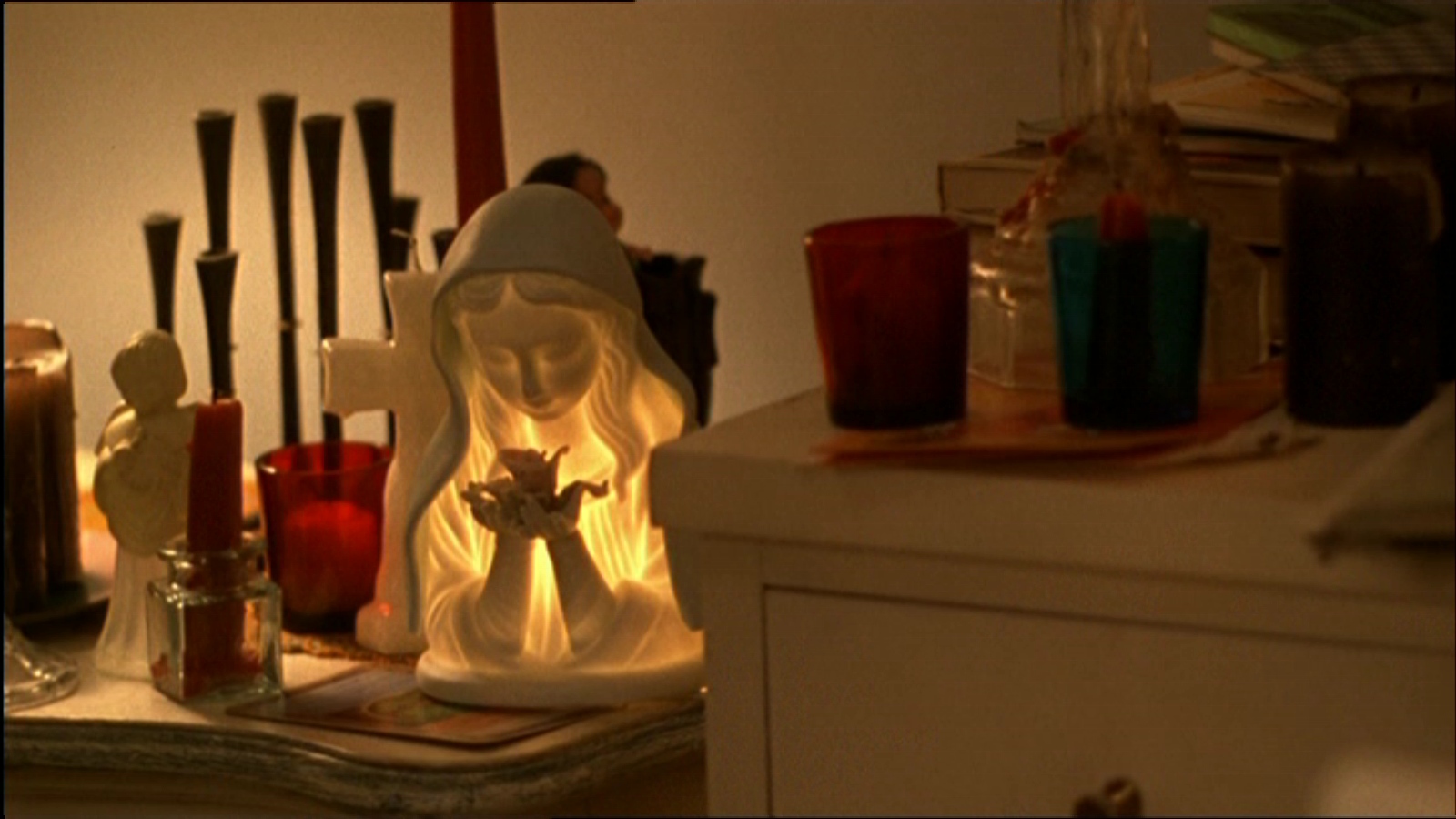 Narrator:
So much has been said about the girls over the years. But we have never found an answer. It didn’t matter in the end how old they had been, or that they were girls… but only that we had loved them, and that they hadn’t heard us calling… still do not hear us, up here in the tree house with our thinning hair and soft bellies, calling them from out of those rooms where they went to be alone for all time… and where we will never find the pieces to put them back together…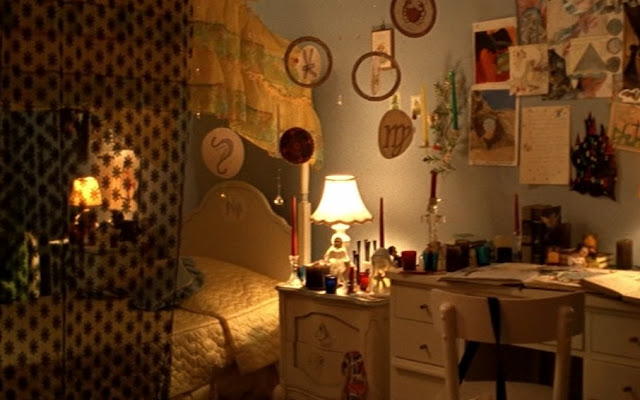
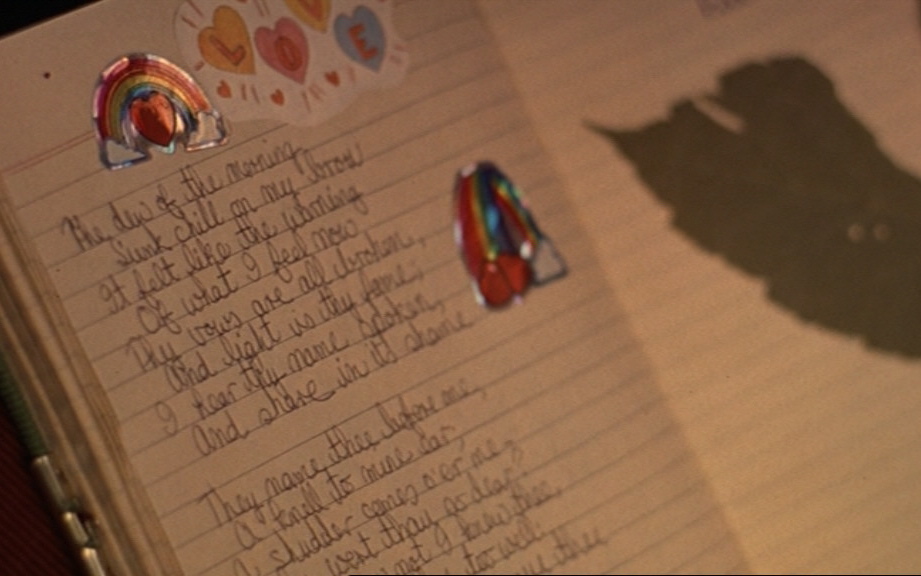
From Cecilia Lisbon’s diary:
Lux lost it over Kevin Haines, the garbage man. She’d wake up at five in the morning
and hang out on the front steps – like it wasn’t completely obvious.
She wrote his name in marker on all her underwear. Mom found them and bleached out the Kevins.
Lux was crying on her bed all day.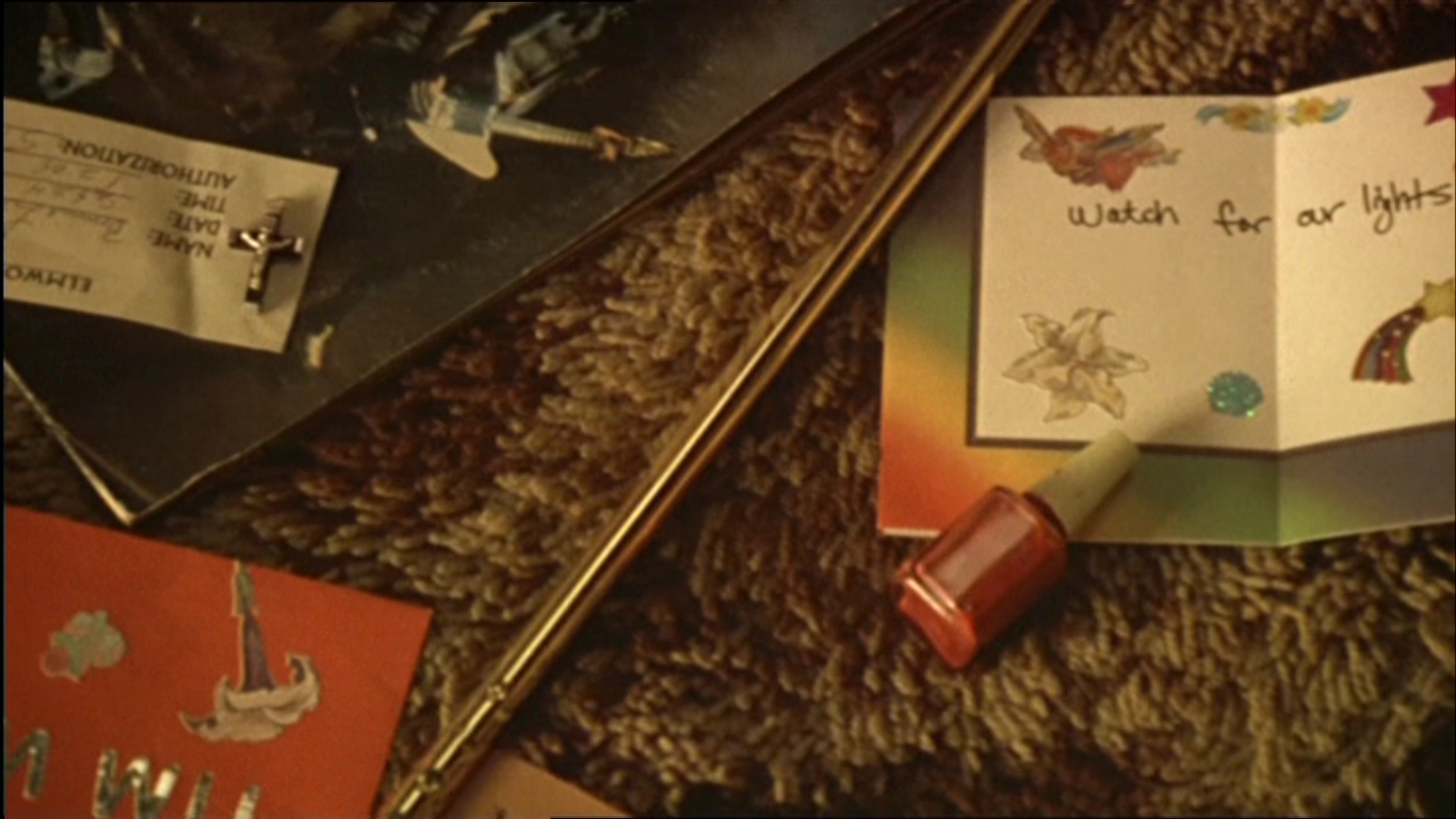
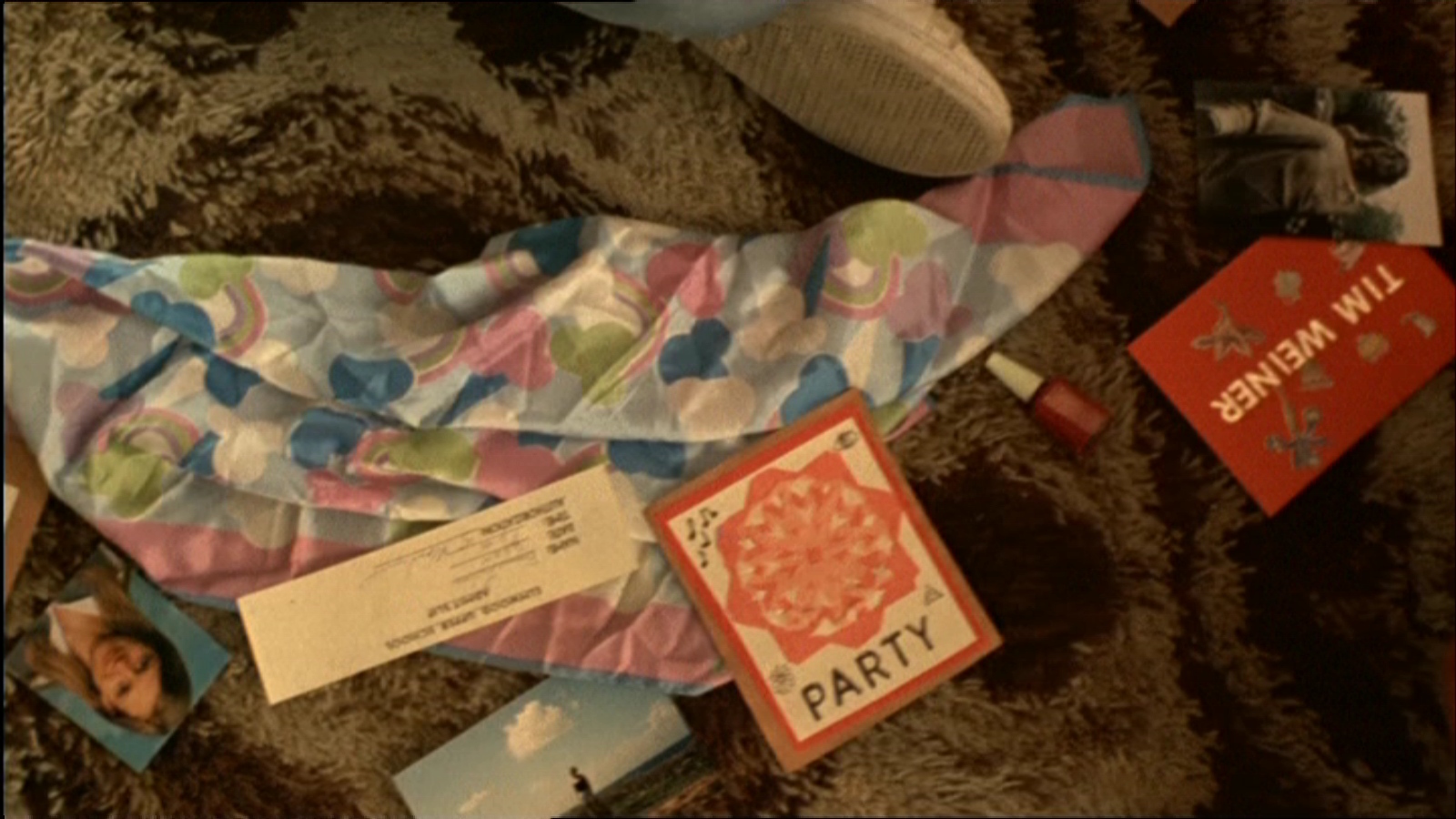
The trees like lungs filling with air.
My sister, the mean one, pulling my hair.
Narrator:
And so we started to learn about their lives, coming to hold collective memories of times we hadn’t experienced.
We felt the imprisonment of being a girl, the way it made your mind dreamy… so you ended up knowing
what colours went together.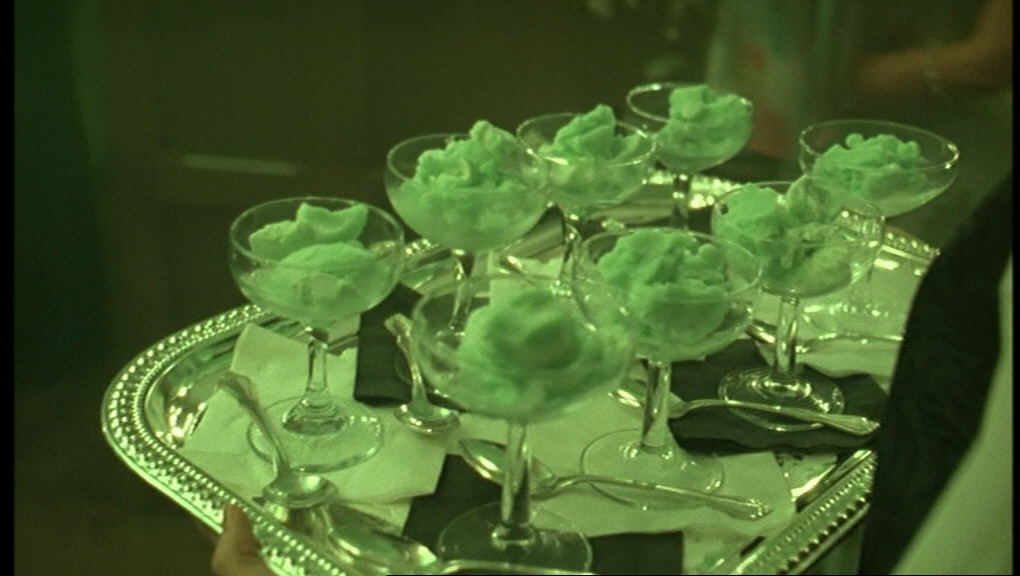

We knew the girls were really women in disguise… that they understood love and even death… and that our job was merely to create the noise that seemed to fascinate them.
We knew that they knew everything about us. And that we couldn’t fathom them at all.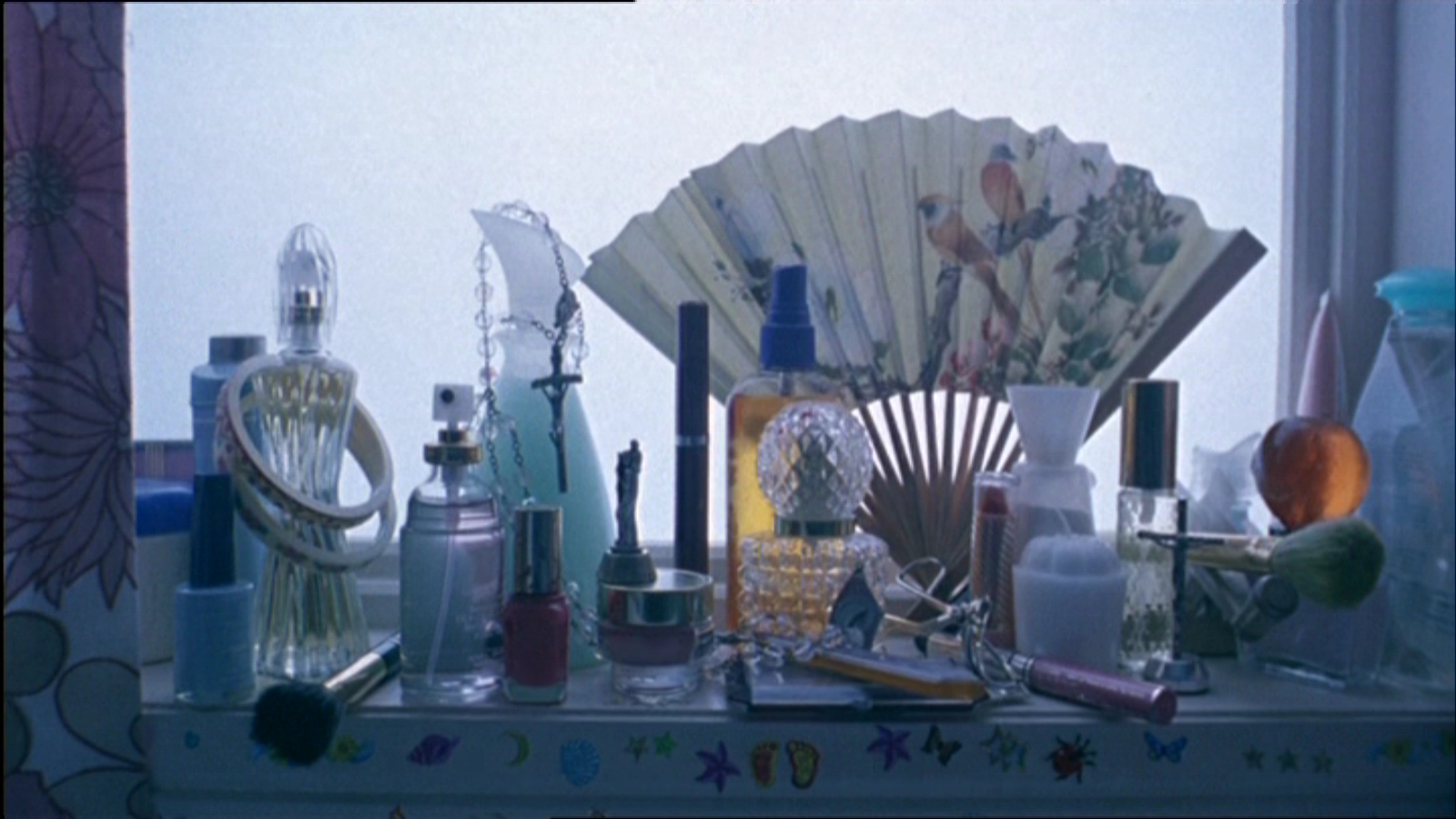
Screenplay based on the novel by Jeffrey Eugenides.
molly nilsson – wounds itch when they heal
“Can’t seem to stop the bleeding; my skin is too thin…”
albane simon/dyn – eternal sunshine of the spotless mind

Albane Simon/DyN – Eternal Sunshine of the Spotless Mind
More warped collages HERE.
niklas zimmer – thinking aloud through the archives that sound
Along with Niklas, I attended a fascinating workshop at UCT last month – these are his reflections:
From August 22 to 24 this year, the Archive and Public Culture research initiative hosted a workshop, led by research fellow Dr Anette Hoffmann, under the title ‘sound/archive/voice/object.’ True to the trans-disciplinary spirit of APC, the range of academic positions present was heterogeneous, but beyond that, this workshop attracted a significant set of participants from beyond the institution: over three days in the much-loved Jon Berndt thought space, the voices of radio activism, sound art, turntablism and composition for film and theatre cross-faded with those of ethnomusicology, social anthropology, fine art and historical studies.
Dr Hoffmann’s carefully staged set of daily readings, gentle chairing and inspiring listening experiences of samples of ethnographic phonograph-recordings from Berlin’s Lautarchiv enabled us to begin thinking through the subject of sound in all its complexity. While ‘visual culture’ with its associated tropes has become commonplace, the same cannot be said for ‘sonic’ or ‘aural culture’ – the need for understanding sound (historically, psychologically, physiologically, etc.) is immanent, particularly when dealing with records of human subject research in the archive.
‘… sound is a product of the human senses and not a thing in the world apart from humans. Sound is a little piece of the vibrating world.’ (Jonathan Sterne)
As with other investigations into reproduction technologies developed in the 19th century (such as photography), a detailed understanding of the political, scientific and cultural drives that gave birth to them in the first place is key to surfacing relevant, contemporary perspectives on the audio archive. Studies into sound – and in particular the ethnographic voice recording – have so far remained in relative specialist isolation. In contrast to this, studies of visuality – and in particular ethnographic photographic portraiture – have been gaining interdisciplinary popularity. Beyond the misalignments of comparison between the two, and despite the multitude of overlaps between the orders of the eye and the ear, it becomes clear that the realms of the aural (or sonic) and the visual do require different sets of analytical tools.
‘The vocabulary may well distinguish nuances of meaning, but words fail us when we are faced with the intimate shades of the voice, which infinitely exceed meaning. (…) faced with the voice, words structurally fail.’ (Mladen Dolar)
Passive hearing and active listening involve a complex range of affective and cognitive processes which are incomparable to those associated with any other sense (other than perhaps touch) – any discussion of differences in technology for the capture and representation of aural as opposed to visual phenomena can only be secondary to this. In the shared process of active listening at the beginning of each workshop morning, the group sensed its way into some of the qualities of sound, particularly those of the speaking voice. We discovered that we are able to hear much more than we tend to trust ourselves to. The ethnographic and linguistic phonographic recordings of prisoners of war in WWI Germany from the Humboldt University’s Lautarchiv in Berlin revealed to us as listeners a small, but powerful glimpse into the potential of a different way of working with archival material. Because the transcripts and translations of the recordings were withheld until after the first listening-through, we relied on our own emotional and intellectual inferences in order to engage the questions that these ‘sound objects’ from the past carried into our present space. Listening engages us in a different way of knowing, as Dr Hoffmann pointed out, and ‘if the process of enunciation points at the locus of subjectivity in language, then voice also sustains an intimate link with the very notion of the subject.’ (Mladen Dolar)
Generally, the bigger paradigm of any research interest will at first tend towards sacrificing the individual voice to generalisation and dissection rather than a ‘regime of care’ as Prof Hamilton would remind us: sounds, in particular human voices on record are always re-presented in a web of power-relations, some of which are near-impossible to address, let alone shift. This becomes most paradoxical in thinking though the subaltern speaking position in the archive, where not only the act of recording has been an act of violence, but where the act of listening itself can be an act of othering and continued silencing. In view of this (in sound of this?), the best possible approach to reaching the necessary ‘audio condition’ from which to push at the limits of subaltern positionalities in the archive seems to be continuum of analysis, a reverence paid to the minutiae of humanity in the material. This was a recurring moment, a leitmotiv in our three days of sound studies: only a wide range of disciplines working together can actually achieve the description of the necessary aspects (aesthetic, ethical, cultural, historical, political, psychological) from which to consider a relevant engagement with the archive that sounds.
the beautiful music all around us: field recordings and the american experience, by stephen wade
The Beautiful Music All Around Us presents the extraordinarily rich backstories of thirteen performances captured on Library of Congress field recordings between 1934 and 1942 in locations reaching from Southern Appalachia to the Mississippi Delta and the Great Plains. Including the children’s play song “Shortenin’ Bread,” the fiddle tune “Bonaparte’s Retreat,” the blues “Another Man Done Gone,” and the spiritual “Ain’t No Grave Can Hold My Body Down,” these performances were recorded in kitchens and churches, on porches and in prisons, in hotel rooms and school auditoriums. Documented during the golden age of the Library of Congress recordings, they capture not only the words and tunes of traditional songs but also the sounds of life in which the performances were embedded: children laugh, neighbors comment, trucks pass by.
Musician and researcher Stephen Wade sought out the performers on these recordings, their families, fellow musicians, and others who remembered them. He reconstructs the sights and sounds of the recording sessions themselves and how the music worked in all their lives. Some of these performers developed musical reputations beyond these field recordings, but for many, these tracks represent their only appearances on record: prisoners at the Arkansas State Penitentiary jumping on “the Library’s recording machine” in a rendering of “Rock Island Line”; Ora Dell Graham being called away from the schoolyard to sing the jump-rope rhyme “Pullin’ the Skiff”; Luther Strong shaking off a hungover night in jail and borrowing a fiddle to rip into “Glory in the Meetinghouse.”
Reflecting decades of research and detective work, the profiles and abundant photos in The Beautiful Music All Around Us bring to life largely unheralded individuals–domestics, farm laborers, state prisoners, schoolchildren, cowboys, housewives and mothers, loggers and miners–whose music has become part of the wider American musical soundscape. The book also includes an accompanying CD that presents these thirteen performances, songs and sounds of America in the 1930s and ’40s. By exploring how these singers and instrumentalists exerted their own creativity on inherited forms, “amplifying tradition’s gifts,” Wade shows how a single artist can make a difference within a democracy.
Musician, recording artist, and writer Stephen Wade is best known for his long-running stage performances of Banjo Dancing and On the Way Home. He also produced and annotated the Rounder CD collection that gave rise to this book, A Treasury of Library of Congress Field Recordings. Since 1996 his occasional commentaries on folksongs and traditional tunes have appeared on National Public Radio’s All Things Considered.
For more information, go to http://www.go.illinois.edu/StephenWade
*****
Video Produced by The Prairie Production Group
509 S. Country Fair Drive
Champaign, IL 61820
http://www.prairie-production.com
Videography and Editing by Sam Ambler
*****
pamella dlungwana – sweets for thohoyandou
I was seven and she was six. She had came to visit, spend time with her big sister. I was too busy to spend all my days with her. She loved to play outside, roam the rivers and catch frogs and fireflies like she did at home with our sister and brother but that wasn’t my scene. She tried to teach me games, skipping rope, umagalobha and amatshe but I sucked at every one. I always wanted to be inside, alone. I felt bad, not being able to join in on her fun and so everyday I’d come home with a sherbet, a lollipop, something she could squeeze from a wrapper and eat in the dark. Ayanda would rush to the gate to greet me in the afternoon or I’d find her at the bus stop waiting to walk me home, her arms open for a hug. I thought at first that she was after the sweeties in my jumper but discovered that she was excited to have me back. This devotion was new to me. I didn’t know how to hug her back or say simple things like, “I’ll miss you” or “I love you too.”
In the evenings as she washed getting into her nightie I would tell my sister stories. I would lie to her and she would laugh. When I was attacked by a waif of a girl who took me for everything, I told my sister I had met a giant on my way home. I told her he had fangs. I said I’d fought him till he broke down and told me he had a sick child and so I decided to give him everything I had. She thought that I was brave, that I was kind. She told me this as she pressed toothpaste onto the brush, I stopped her before she could wet the brush, reached into the front pocket of my jumper and pressed two socks of sherbet into her wet palm. I leaned in and kissed someone else, for the first time in my life.
Today my sister is at the dentist. I can imagine her panic and fear but I’m glad she’s old enough to brave it on her own.
motel7 – “daydreamers”

Solo Exhibition at 34FineArt, Cape Town
16 October 2012 – 10 November 2012
After her initial solo exhibition,Tears and Castles, at 34 Long Fine Art in 2009, Motel7 left South Africa to work in Europe and America. Having returned to South Africa she has reclaimed her position on the streets and in the Gallery environment.
Having worked in traditional mediums from an early age, Motel7 moved through the ranks of graffiti to street art and like many international artists, such as Banksy, Mr. Brainwash, Miss Van, Blek le Rat, D*Face and Nick Walker, she has secured her position as an acclaimed urban contemporary artist. Since then her work has been featured in numerous international exhibitions, including the Basel Art Fairs, as well as galleries in Amsterdam and Los Angeles. Motel7 continues to hone her skills in urban spaces whenever and wherever the opportunity presents itself.
Increasingly street artists occupy both urban and fine art environments. In cities like Cape Town, where street art is still illegal, artworks seldom remain on the walls for long enough to be fully appreciated before being cleaned off or defaced. Ironically, while the value of works in urban spaces is often overlooked, within the gallery environment these same works are approached with a more appreciative eye.
Daydreamers, Motel7’s second solo show, affirms the ease with which she straddles the divide between urban and gallery spaces – where the traditional process of work progressing from gallery environment to museum or public commission, is reversed. The exhibition is presented in her unique visual idiom, built-up over years of working in a challenging environment. The seemingly juxtaposed images of sculls, toys, fruit and sweets are complimented by the vintage quality of the paintings… it’s all about symbolizing daydreaming and nostalgia and the past.
Street art and graffiti are closely associated, but are often regarded as vandalism – evidence of urban decay – in stark contrast to gallery art, which is seen as the epitome of artistic achievement. Daydreamers demonstrates that it is not these works themselves which are different, but rather the contexts within which they are viewed.
Don’t miss the opening reception on 16 October. Find out more HERE.
william bolcom’s lost lady rag
Album: William Bolcom – The Complete Rags for Piano
Pianist: John Murphy
Albany Records, 1998, TROY 325/26
the caretaker – we cannot escape the past
Imagery from Carl Theodor Dreyer’s The Passion of Joan of Arc (1928)
about to forget (2005) by berni searle
See it here
the clock struck
My earliest childhood memory is of my second birthday.
It’s a sunny winter afternoon. The dry grass smells stubbly and brown. The pelargoniums smell interesting too. I know what they are called because Nana always shouts at me when I pick the glowing red flowers. The slasto paving is warm and there are stripy lizards that scuttle away.
Mommy has made me a Hickory Dickory Dock cake, and set it on the outside table (which is white moulded asbestos/concrete in the shape of a faux slice through a tree trunk…I remember this well because it was around for several years). Standing next to the table, I am only able to see the side of the cake. Pink and white marshmallows encircle it, magically turned into mice with little cardboard ears and liquorice bootlace tails, and when I am picked up to blow out the candles, the clock’s face on top of the cake is made from liquorice too, and glacé cherries. The liquorice doesn’t taste very nice. I like the cherries.
Yes please, thank you very much, Nana. I say it after her because if I don’t she won’t give me what I want. Don’t put your feet on the table. No. That’s very naughty. If you do it again Nana will smack you. The threat makes me dissolve into tears. The frustration! I’m learning about manners. Manners are annoying.
I feel very big. I have a brand new baby sister, a month and a bit old. She is in a navy blue vinyl pram nearby. If I pull myself up on the side of it, I can juuust see over into her tiny, swaddled world.

Pelargoniums. Photo by Rosemary Lombard
on the fetish function of the same old music – a conversation, 2-3 march 2009
A conversation about recorded music and nostalgia that arose on another blog with which I was involved for over half a decade. It’s no longer there now, but the discussion is interesting enough to deserve a repost, I feel.
aryan kaganof says:
i notice that many people of my age just give up listening to new music and go back to what they know (what they knew)
but it’s wonderful to keep on discovering
perhaps people who stop listening to new music don’t love the music but merely love their youth
so they want to keep on being reminded of their youth
the youth that for them is already over
and that the music now symbolizes
and this of course makes them very old!
helgé janssen says:
and again you have given that totally insightful take on why people listen to music from their youth
this has perplexed me for sooooo long….
i have known that they are obviously stuck (i’ve seen it happen before my very eyes and as young as 19!)
but i had never thought of it this way
this throws enormous light on the entire process!!
for quite obviously there comes a cut-off point
from which their youth no longer ‘happened’
so they pay for their compartmentalizing, categorizing and (worse) their lack of imagination!!!
eva spook says:
ah so what is it then when you listen to music from times before you’re born? i’m now listening to blind blake…i’m beyond old, i’m digging into previous lives to feel alive again
cherry bomb says:
ha! that’s where i’m at too, eva… i’m listening a lot to wax cylinder recordings, caruso, world war one torch songs… that are hardly even a record of what happened in those three minutes that somebody sang into that funnel. drowned in scratches and static, devoid of bass timbre, they sound nothing like what the actual performance must have. i think the palpable ephemerality is what attracts me. it *is* about feeling alive. the voracious desire to live lives i am not living comes into it too, i think. only listening to contemporary stuff is terribly restrictive!
music does have a fetishistic quality: part of this lies in its power to transport you temporarily outside of the confines of spacetime. while it is playing, music gives you the immediate abiity to alter present-tense context radically; whether to propel yourself into the future, or zoom back into a dark and sordid or halcyon past, back into the arms of an ex-lover, or be transported out of your body and into a vacuum beyond everything. you just close your eyes and press play.
we all love nostalgia: saudades, real or imagined – one of the most easily accessible sources of a sense of meaningful connection, paradoxically because it’s in the absence of the original context and referent, which intensifies the desire for that inaccessible experience, real or imagined.
i reckon people who listen to the ‘same old music’ simply lack a vivid enough imagination to meaningfully access worlds of possibility not tied securely by memory to their previous experiences, to repetition. the “same old songs” are invariably hits that they heard a billion times on the radio, that they kissed girls to, that played at rugby matches, that their dad played in the car on road trips (hands up those who were kids in the south african ’80s that don’t have a special place in their hearts for paul simon’s graceland album?)…
i am forever trying to understand what makes the few handfuls of songs that really stick in those jukebox playlists stick. songs from the likes of creedence clearwater revival, iggy pop, counting crows, bowie, the clash, green day, soft cell… what is the lowest common denominator? they are not all well-written songs with catchy riffs. they are not all from the same era. there are songs with very weird content for the average homophobic barfly to groove on. “holly came from miami, f.l.a… shaved her legs, then he was a she…” there are songs which really, truly suck (e.g. any of the bombast by nickelback!). are they there due to an inane feedback loop: there because they have been there for years, and they have been there for years because they happened always to be there? or is it something innate about the content? i don’t know.
here’s a good example of a song that has been an instant ‘classic’ from the day it came out: “mr jones” by the counting crows:
i have always hated this whiny song, yet it has never stopped playing in pool bars and at supermarkets and weddings. why??? listening to it now – and actually listening, rather than blocking it out, as i always have done – i am struck by how eloquently the lyrics fake meaning in a non-threatening way… a warm, fuzzy yearning with no uncomfortable aftertaste. the simply strummed guitar lends a soothing, ersatz familiarity. “have you ever seen the rain?” by creedence clearwater revival (another one of those jukebox standards) is remarkably similar.
i don’t think people given to listening to “the same old music” necessarily think about how old they are at all, or how life was better back when that song came out (though that is undoubtedly a common dronkverdriet thought). yes, they do feel connected to the past through it. but i don’t reckon this is necessarily examined. i reckon the familiarity mostly just makes them feel warm and comfy and vaguely meaningful. it makes them feel like they belong when everyone is singing along with them in unison. it goes down well with the beer. and that’s what the main function of music is for them. it’s pretty simple. “ah yay! i love this song! this place is cool. want another jagerbomb? let’s go dance!”
“i was down at the new amsterdam staring at this yellow-haired girl
mr. jones strikes up a conversation with this black-haired flamenco dancer
she dances while his father plays guitar
she’s suddenly beautiful
we all want something beautiful
i wish i was beautiful
so come dance this silence down through the morning
cut maria! show me some of them spanish dances
pass me a bottle, mr. jones
believe in me
help me believe in anything
i want to be someone who believes
mr. jones and me tell each other fairy tales
stare at the beautiful women
“she’s looking at you. ah, no, no, she’s looking at me.”
smiling in the bright lights
coming through in stereo
when everybody loves you, you can never be lonely
i will paint my picture
paint myself in blue and red and black and gray
all of the beautiful colors are very very meaningful
grey is my favorite color
i felt so symbolic yesterday
if i knew picasso
i would buy myself a gray guitar and play
mr. jones and me look into the future
stare at the beautiful women
“she’s looking at you.
uh, i don’t think so. she’s looking at me.”
standing in the spotlight
i bought myself a gray guitar
when everybody loves me, i will never be lonely
i want to be a lion
everybody wants to pass as cats
we all want to be big big stars, but we got different reasons for that
believe in me because i don’t believe in anything
and i want to be someone to believe
mr. jones and me stumbling through the barrio
yeah we stare at the beautiful women
“she’s perfect for you, man, there’s got to be somebody for me.”
i want to be bob dylan
mr. jones wishes he was someone just a little more funky
when everybody loves you, son, that’s just about as funky as you can be
mr. jones and me staring at the video
when i look at the television, i want to see me staring right back at me
we all want to be big stars, but we don’t know why and we don’t know how
but when everybody loves me, i’m going to be just about as happy as can be
mr. jones and me, we’re gonna be big stars…”
“yesterday, and days before, sun is cold and rain is hard,
i know; been that way for all my time.
til forever, on it goes through the circle, fast and slow,
i know; it can’t stop, i wonder.”
mick says:
ah mz bomb – your opinions on this and that are both eloquent and exciting, which is a purdy rare combo, purdy, and rare. chi in.
eva spook says:
thanks to the internet and the loss of my cd collection many years ago ( all of them stolen)… not only can’t i listen to the music of my youth, but addictive myspace (among others) make it pretty much impossible not to find and hear new music on a daily basis… i hear new and exciting music every single day…
for this entry i did a little search to the music that warps me back in time and because i lack imagination i will just post the link:
amália rodrigues – barco negro
Amália Rodrigues sings the fado “Barco Negro” in a scene from Henri Verneuil’s 1955 film LES AMANTS DU TAGE.
Translation of the French conversation in the scene (which paraphrases the Portuguese lyrics of the song being performed by Amália behind it):
Child — Do you like it?
Woman — Very much. I’m sorry I don’t understand Portuguese. It must be beautiful.
Child — It’s the wife of a fisherman who died at sea. She goes down to the beach every night and talks to him as if he were alive. She tells him… She tells him… love things.
Man — [paraphrasing the singer] “I woke up this morning trembling next to you, afraid that I was less beautiful than yesterday. But your eyes told me, ‘No.’
“When you opened the door, the sun was gliding along the sea and your black boat was dancing in the light. Standing on the rocks, I saw you hoist sail and turn towards the open sea, while waving happily.
“The women praying at night along the shore say that you never returned. Madwomen, my love, madwomen! You never left. You’re everywhere around me, as always… In the wind, throwing sand against the windowpanes; in the water, singing on the fire; in the empty chair, staring at me; in the dark of the hearth; in the warmth of the bed; in the crook of my shoulder… You are there always. Always there. Always.”
friedrich nietzsche – in the horizon of the infinite (1882)
We have left the land and have embarked. We have burned our bridges behind us—indeed, we have gone farther and destroyed the land behind us. Now, little ship, look out! Beside you is the ocean: to be sure, it does not always roar, and at times it lies spread out like silk and gold and reveries of graciousness. But hours will come when you will realize that it is infinite and that there is nothing more awesome than infinity. Oh, the poor bird that felt free and now strikes the walls of this cage! Woe, when you feel homesick for the land as if it had offered more freedom—and there is no longer any “land”.
~ From Friedrich Nietzsche’s Die fröhliche Wissenschaft (The Joyful Science) (1882/1887); translation by Walter Kaufmann.
 fleurmach