One of the hottest garage girl bands ever.
And then they say the same thing a bit differently.
One of the hottest garage girl bands ever.
And then they say the same thing a bit differently.
Off Come Again II, a Japanese noise compilation released on Furnace Records in 1993, put together by Michio Teshima, head of Vanilla Records, who released the Tawamure – Come Again compilation in 1991.
The liners to the second Come Again compilation call the Japanese noise genre “an exorcism of limits as performed under the clever disguise of music,” a description which effectively negates the idea that the bands which fall under this banner are all about aggression.
These are the days of the open hand
They will not be the last
Look around now
These are the days of the beggars and the choosers
This is the year of the hungry man
Whose place is in the past
Hand in hand with ignorance
And legitimate excuses
The rich declare themselves poor
And most of us are not sure
If we have too much
But we’ll take our chances
Because god’s stopped keeping score
I guess somewhere along the way
He must have let us alt out to play
Turned his back and all God’s children
Crept out the back door
And it’s hard to love, there’s so much to hate
Hanging on to hope
When there is no hope to speak of
And the wounded skies above say it’s much too late
Well maybe we should all be praying for time
These are the days of the empty hand
Oh you hold on to what you can
And charity is a coat you wear twice a year
This is the year of the guilty man
Your television takes a stand
And you find that what was over there is over here
So you scream from behind your door
Say “what’s mine is mine and not yours”
I may have too much but i’ll take my chances
Because God’s stopped keeping score
And you cling to the things they sold you
Did you cover your eyes when they told you
That he can’t come back
Because he has no children to come back for
It’s hard to love there’s so much to hate
Hanging on to hope when there is no hope to speak of
And the wounded skies above say it’s much too late
So maybe we should all be praying for time
In the, in the countryside, under the stream
Suck the, suck the marrow out of her bones
Inject, inject, inject me with chemotherapies
Suck the, suck the money out of her face
We are, we are all Americans now
Africa, Iceland, Europe and Brazil
China, Thailand, India and Great Britain
Australia, Borneo and Nigeria
We are, we are all Americans now
Suck the, suck the oil out of her face
Burn her, burn her hair, boil her skin
We are, we are all Americans now
Taken from the CD ‘Early Works 1967 – 1982’ (EM), “Tiger Balm” is a piece originally released as a 10″ with Issue No. 9 of SOURCE magazine, USA 1970. More Annea Lockwood HERE.
From Phantom Orchard (Mego, 2004).
Zeena Parkins – arpa elettrica, pianoforte, elettronica
Ikue Mori – percussioni elettroniche, computer
Risonanze 2004-2005
Rassegna di nuove musiche contemporanee
Venezia, Teatro Fondamenta Nuove
1 dicembre 2004
Riprese video – Mauro Sambo
A prayer.
“I’m aimin’ at a mirror…”
This video from Mica Levi (of Micachu and the Shapes) is my favourite discovery this week.
Breathe a balloon full of kisses
Let it go where it will
And it will
🎈
Have to post this next to the Relaxed Muscle.
Have to post this next to the Sharon van Etten.
<3
This is incredible.
A cover of the 2009 Vic Chesnutt song, from the Fantasy Covers: The 2000s Part Two podcast.
 A TEST IN TRUST
“For a brief moment my belief in myself is yours to take and assimilate as you will. My innermost thoughts and private ideals are laid before you in trust.”
I still believe we are sensitive. To hide behind defensive faces for so long has buried our souls. The need to communicate feelings and express experience is, for some, becoming more difficult. Suppressing the natural instincts leads to eventual emotional breakdown. Our only true way to communicate is through our emotions. I only give you what I believe, what I know and what I live. We can all offer something to one another.
I have always thought of Georges Bataille’s work as being very private, yet he shared it with us all, somehow retaining that private feeling that only you had read this piece. Not sensationalist when it could so easily have been. He has always left me with a feeling of warmth and reassurance that life is as complicated as I began to believe but still worth living to the full, experiencing more and more as you grow older, not less and less. A fine writer to me, he communicates guiltless fantasy.
— Cosey Fanni Tutti for Georges Bataille Festival, Violent Silence,1984.
“One must live in the environment of the day and make that environment as free as possible, to as many people as possible. To give people what they already have, but that which has been buried by years of varying human ideals and standards. All COUM asks is that people once more work with themselves, their feelings, and in doing so, become aware of others. It is simple, yet very difficult. The simplest things are the most difficult.”
From the record Charles Mingus Presents C.M., recorded 20 October, 1960at Nola Penthouse Sound Studios, New York, with the wild Eric Dolphy on alto/bass clarinet, Danny Richmond on drums, and Ted Curson on trumpet.
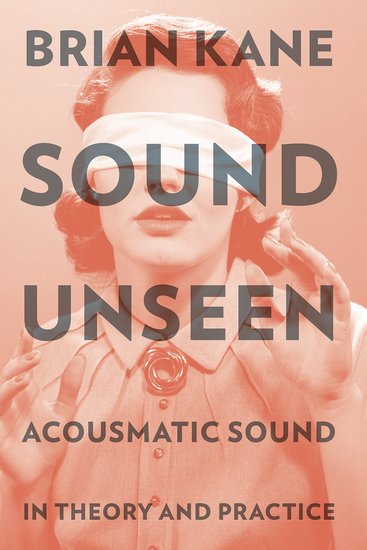 Sound coming from outside the field of vision, from somewhere beyond, holds a privileged place in the Western imagination. When separated from their source, sounds seem to manifest transcendent realms, divine powers, or supernatural forces. According to legend, the philosopher Pythagoras lectured to his disciples from behind a veil, and two thousand years later, in the age of absolute music, listeners were similarly fascinated with disembodied sounds, employing various techniques to isolate sounds from their sources. With recording and radio came spatial and temporal separation of sounds from sources, and new ways of composing music.
Sound Unseen: Acousmatic Sound in Theory and Practice explores the phenomenon of acousmatic sound. An unusual and neglected word, “acousmatic” was first introduced into modern parlance in the mid-1960s by avant garde composer of musique concrète Pierre Schaeffer to describe the experience of hearing a sound without seeing its cause. Working through, and often against, Schaeffer’s ideas, Brian Kane presents a powerful argument for the central yet overlooked role of acousmatic sound in music aesthetics, sound studies, literature, philosophy and the history of the senses. Kane investigates acousmatic sound from a number of methodological perspectives — historical, cultural, philosophical and musical — and provides a framework that makes sense of the many surprising and paradoxical ways that unseen sound has been understood. Finely detailed and thoroughly researched, Sound Unseen pursues unseen sounds through a stunning array of cases — from Bayreuth to Kafka’s “Burrow,” Apollinaire to Zizek, music and metaphysics to architecture and automata, and from Pythagoras to the present-to offer the definitive account of acousmatic sound in theory and practice.
The first major study in English of Pierre Schaeffer’s theory of “acousmatics,” Sound Unseen is an essential text for scholars of philosophy of music, electronic music, sound studies, and the history of the senses.
Exquisite.
MBIZO DAY – today, Wednesday 30th November
The Pan African Space Station (PASS) will host a 24 hour live broadcast of music written and/or performed by healer, musician, composer and painter Johnny Mbizo Dyani (30 November 1945 – 24 October 1986), as well as rare interviews with the artist and comments by people who knew and worked with him.
TUNE IN HERE from 12:00 midday (GMT+2) today, Wednesday 30 November till midday on Thursday 1 December.
This listening session is in celebration of Mbizo’s life work and in commemoration of 30 years of his passing.
During his short life, Mbizo helped to establish the Blue Notes, a group he co-founded with Chris McGregor, Louis Moholo, Mongezi Feza, Dudu Pukwana and Nic Moyake, as the one of the most innovative and powerful forces in jazz. Or more precisely, what he called the SKANGA (a family of black creative musics). Mbizo was a highly sought-after bass player and vocalist who performed with some of the music’s most important figures, including Don Cherry, Abdullah Ibrahim, David Murray, Mal Waldron, Famoudou Don Moye, Khan Jamal and many more. He recorded over 70 albums.
In addition to Chimurenga people, selectors and speakers include Keorapetse Kgositsile, Lefifi Tladi, Marcus Wyatt/Blue Notes Tribute Orkestra, Louis Moholo, Lesego Rampolokeng, Ikapa Jazz Movement, Tete Mbambisa, Maakomele Manaka, DJ Mighty, Tumi Mogorosi, Dala Flat, and many more.
And check out this wonderful performance from July 1971, broadcast live on French television.
This song is just the best. It has helped me to keep putting one foot in front of the other on really difficult days.
Another Thought was originally released in 1994, just two years after Arthur Russell’s death from AIDS in 1992. At that time the enigmatic downtown NYC cellist/composer’s work appeared to be in danger of fading into obscurity, with nearly all of his recorded material either hopelessly out-of-print or unreleased entirely…
… As most of his fans have doubtless noticed by now, Russell was an artist whose career defies easy synopsis. Formally trained as a cellist, his music seemed to effortlessly draw links between the outwardly incompatible vocabularies of No Wave/post-punk, space disco, and avant-garde modern composition. So it is probably for the best that Another Thought was never intended as greatest hits package or a comprehensive career overview. The collection was instead compiled by producer Don Christensen from the countless hours of unreleased tapes that Russell had recorded over the final decade of his life. Most of this material consists of eccentric, deceptively simple solo pop songs for voice and cello. And as suggested by the album’s cover photo– which depicts Russell nonchalantly sporting a newspaper pirate hat– there’s a boyish innocence and playful romanticism to many of these tracks, resulting in some of the warmest and most intimate performances of his career.
2016, haven’t you taken enough from us for one year now?
Here is a clip of this brilliant composer and experimental sound artist speaking about the difference between hearing and listening last year:
“In hearing, the ears take in all the sound waves and particles and deliver them to the audio cortex where the listening takes place. We cannot turn off our ears–the ears are always taking in sound information–but we can turn off our listening. I feel that listening is the basis of creativity and culture. How you’re listening, is how you develop a culture, and how a community of people listens, is what creates their culture.”
We, the ashes,
We spent our days like matches
And burned ourselves as black as
The end.
We know not the fire in which we burn
But we sing and we sing
And the flames grow higher.
We read not the pages which we turn
But we sing, and we sing, and we sing, and we sing
We, the wrong,
We the sewn up and long gone,
Were before and all along
Like this
We, the drowned
The lost and found out,
We are all finished again.
Rest in peace. 💛
Rest in peace, Sharon Jones. 💛
 fleurmach