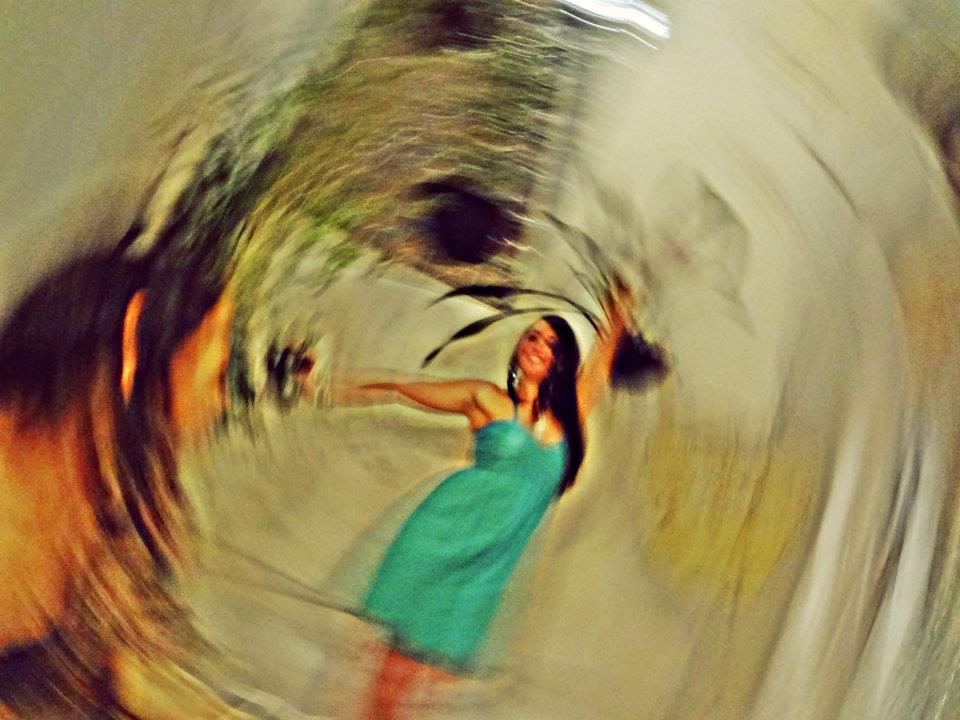
cherry bomb – gouttes mécaniques (mechanical teardrops) – 2008

“We’re all Frankie…”

A détournement: Fernand Léger – ‘Ballet Mécanique‘ (1924) versus Ordo Ecclesiae Mortis – ‘Frankie Teardrop‘ (cover of original by Martin Rev & Alan Vega’s Suicide in 1977).

Read more about détournement HERE. Watch the original  Ballet Mécanique HERE.

ari sitas – marikana*

The digital images fold as the TV screen tires
The cops, rifles in cabinet, past their third beer are edging towards bed
The night is quiet as the smelter has been closed,
the only music is of the wind on razor wire
the ears are too shut to hear the ancestral thuds on goatskin
humanity has somehow died in Marikana
who said what to whom remains a detailed trifle
the fury of the day has to congeal, the blood has to congeal
I reverse the footage bringing the miners back to life
in vain, the footage surges back and the first bullet
reappears and the next and the next and the next
and I reverse the footage in vain, again and again in vain
The image of the man in the green shroud endures
Who wove the blanket and what was his name?
There are no subtitles under the clump of bodies, no names
stapled on their unformed skull
A mist of ignorance also endures, a winter fog
woven into the fabric of the kill
The loom endures too, the weaver is asleep
The land of the high winds will receive the man naked
The earth will eat the stitch back to a thread
What will remain is the image and I in vain
Reversing him back to life to lead the hill to song
In vain, the footage surges back
another Mpondo, another Nquza Hill, another Wonder Hill
the shooting quietens: another anthill
My love, did I not gift you a necklace with a wondrous bird
pure royal platinum to mark our bond?- was it not the work of the
most reckless angel of craft and ingenuity? Was it not pretty?
Didn’t the bird have an enticing beak of orange with green tint?
Throw it away quickly, tonight it will turn nasty and gouge
a shaft into your slender neck
And it will hurt because our metals are the hardest- gold, pig iron, manganese
yes, platinum
Humanity has somehow died in Marikana
What is that uMzimu staring back at us tonight?
Darken the mirrors
Switch off the moon
Asphalt the lakes

At dawn, the driveway to the Master’s mansion
Is aflame with flower, so radiant from the superphosphates
of bone
of surplus oxygen and cash,
such flames, such a raw sun
such mourning by the shacks that squat in sulphur’s bracken
and I wait for the storm, the torrent, the lava of restitution
the avenger spirits that blunt the helicopter blades in vain
these also endure: the game and trout fishing of their elective chores
the auctions of diamond, art and share
the prized stallions of their dreams
their supple fingers fingering oriental skins and their silver crystals
counting the scalps of politicians in their vault
The meerkat paces through the scent of blood
I want it to pace through the scent of blood,
she is the mascot, the living totem
of the mine’s deep rock,
the one who guards the clans from the night’s devil
she is there as the restless ghosts of ancestors
by the rock-face
feeding her sinew and pap
goading her on:
the women who have loved the dead alive
the homesteads that have earned their sweat and glands
impassive nature that has heard their songs
the miners of our daily wealth that still defy
the harsh landscape of new furies
the meerkat endures-
torn certainties of class endure
the weaver also endures: there-
green blankets of our shrouded dreams
humanity has died in Marikana
The strike is over
The dead must return
to work

*(after a tough two weeks and seeing Pitika’s miner sculpture with the
green corrugated iron blanket)

Thanks to Ari for sharing this poem.

le journal de personne – je sans frontières

Machine translation with a bit of editing (my French is not great and will never do poetry justice – help and corrections most welcome!):

The world is a village… What a shame! A universe reduced to a bunch of earthworms, wandering without crossing borders … we are all orphans of the light …   it’s dead … it died giving us that day …. in 1789.

We are not brothers and sisters, but solitary tapeworms with more discomfort and just one eye … yes … yes … we are homogenous, even our genes!

We import love, we export hate…
The world is visible … there is no invisible world … yes … yes …
Predictable … we are all predictable … every man for himself … and we’re all for something.
Whether we like it or not.

Me, I do not go out.
I vibrate … but I’m not free …
In a world where we speak of free movement of capital, goods, services and people …
You put it politely when you say nomadism is back in fashion … “neocapitalism” is the code name of that planetary lie … where money acts as identity… I’m dollar, you’re yen, he’s euro … it’s all close to zero!
Temporary identity … illusory … ridiculous … it’s sick …
No identity madness please; everything is all and for all those who want access to it WITHOUT BORDERS on the basis of a universal constitution … the rights of every man and dog.
Why the dog?
Because it is necessary that someone speaks. No, I’m not talking about my dog … he is dead and buried … but of myself … I’ve replaced him in barking … barking … always knowing that I do not impede the caravan from passing.

Read it the original French.

tiqqun – notes on the local (2001)

Everything which today constitutes an acceptable landscape for us is the result of bloody violences and conflicts of rare brutality.
One can thus summarize that the demokratic government wants to make us forget. Forget that the suburbs have devoured the countryside, that the factory has devoured the suburbs, that the metropolis—tentacled, deafening and without repose—has devoured everything.
This observation doesn’t imply regret, this observation implies: seize everything. In the past, in the present.
The controlled territory where our life passes, between the supermarket and the digital lock on the lobby door, between the traffic signals and the pedestrian pathways, forms us. We are moreover inhabited by the space in which we live. Especially when everything, or nearly everything, from now on, functions there like a subliminal message. We don’t do certain things at certain places because we do not do those things.
Street furniture for example has almost no utility—how often, to our surprise, do we wonder who exactly could fill the benches of a neo-square without succumbing to more violent despair?—it has precisely one meaning and one function, and these are dissuasive. Their mission/charter “You are only home when at home, or where you pay, or where you are monitored.”

The world is becoming global, but it is shrinking.
The physical landscape we traverse each day with great speed (by car, using public transportation, on foot, in a rush) has effectively an unreal character because while there, no one lives as anything at all, nor could anyone possibly live as anything there. It’s a type of micro-desert where one is like an exile, between one private property and another, between one obligation and another.
The virtual landscape seems much more welcoming to us. The liquid crstal screen of the computer, internet navigation, the tele-visual or the play-station universes—these are infinitely more familiar to us than the streets of our neighborhood, populated at night by the moonlight of the streetlamps and the metal gates of closed stores.
It is not the global which opposes the local, it is the virtual.

The global is so little opposed to the local that actually the global creates it. The global only designates a certain distribution of differences from an homogenizing norm. Folklore is the product of cosmopolitanism. If we didn’t know that the local was local, it would be for us a little globality. The local is revealed as the global makes itself possible, and necessary. Go to work, do your shopping, travel far from home: this is what constitutes the local, which otherwise would more modestly be the place where we live.

All the same, we live strictly speaking nowhere. Our existence is simply divided into layers of schedules and topologies, in slices of tailored life.

But this isn’t all. They presently would like to make us live in the virtual, definitively deported. There, the life they wish for us would recompose into a curious unity of non-time and non-place. The virtual, says one Internet publicity, is ” the place where you do all that you cannot do in reality.” But when “everything is permitted,” it is the mechanism of the transfer from the power to act which is under surveillance. In other words” the virtual is the place where possibilities never become real, but remain indefinitely in the virtual state. Here, prevention has won over intervention: if everything is possible in the virtual it’s because the mechanism ensures that everything remains unchanged in our real life

Already, we tele-work and tele-consume. In tele-life, we will no longer be afflicted by the feelings of suffering from avoiding the possibilities which still dwell in public spaces, at each glance crossed and so soon abandoned. The unease, the embarrassing immersion among our contemporaries, for the better part unknown, in the streets or elsewhere, will be abolished. The local, expelled from the global, will itself be projected into the virtual in order to make us believe definitively that only the global exists. Draping this uniformity of multi-ethnicity and multi-culturalism will be necessary, to ensure the pill is swallowed.

As we wait for the tele-life, we post the hypothesis that our bodies in space have a political meaning and that the dominant ones maneuver permanently to hide this fact.
Shouting a slogan at home is not the same as shouting it in the stairwell or in the street. Doing it alone is not the same as doing it wit many others, and so on.

Space is political and space is alive, because space is populated, populated with our bodies which transform it by the simple fact that it contains them. And this is why it is monitored, and this is why it is closed.
Whoever imagines it as a void soon to fill up with objects, bodies, and things has a false idea of space. On the contrary, this idea of space is obtained by mentally removing from a tangible space of all the objects, of all the bodies, of all the things which dwell in it. The powers that be have now materialized this idea in their plazas, their highways, their architecture. But its threatened without pause by its birth defect. Should something take place inside the space it controls, should—thanks to some event—one end of the this space become a place, making an unexpected crease, this is what the Global Order wants to prevent. And against this, it has invented “the local,” in the sense of continuous adjustment of all input, capture, and management devices.

That is why I say that the local is political; because it is the place of present confrontation.

From Tiqqun 2.
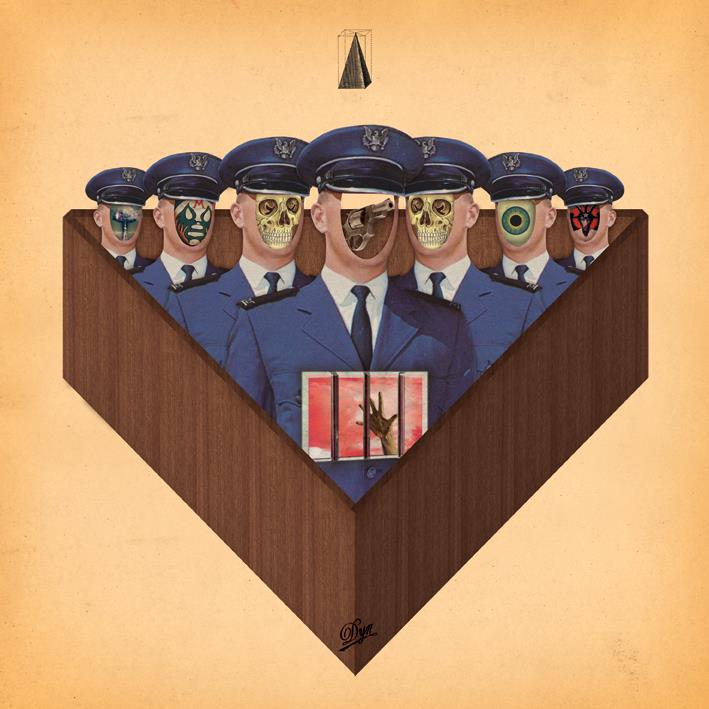
3. affectivity

on why we often desire what makes us miserable (to where we often come to regret the good old days of arranged marriages) and on why women don’t say what they think.

13. Within the terrible community, emotional education is based on systematic humiliation, and the pulverization of its members’ self-esteem. No one must be able to believe themselves to be a carrier of that kind of affectivity which would have the right to a place inside the community.The hegemonic type of affectivity inside the terrible community corresponds, paradoxically, to what is seen outside of it as the most backwards form. The tribe, the village, the clan, the gang, the army, the family; these are the human formations universally acknowledged as being the most cruel and the least gratifying, and yet in spite of all they persist within the terrible communities. And in them, women must take on a kind of virility that even males disclaim now in biopolitical democracies, all the while seeing themselves as women whose femininity has lost out to the masculine fantasy dominant at the very heart of the terrible community: the fantasy of plastic “sexy” woman (in the image of the Young-Girl, that carnal envelope) ready for use and consumption by genital sexuality.

14. In the terrible communities, women, because they cannot actually become men, must become like men, while remaining furiously heterosexual and prisoners of the most worn-out stereotypes. If nobody has the right, in the terrible community, to say the truth about human relations, that’s doubly true for women: any woman that undertakes parrhesia within the terrible community will be immediately classed as just some hysteric.

from Tiqqun 2: Theses on the terrible community.

from teqqun 2 – theses on the terrible community (2001)

(POST SCRIPTUM)

Everyone knows the terrible communities, whether because they’ve spent some time in them or because they’re still there. Or simply because they’re still stronger than the others, and so some of us have still partly remained in them – while at the same time being outside of them. The family, the school, work, prison – these are the classical faces of this contemporary form of hell, but they are the least interesting because they belong to a bygone depiction of commodity evolution, and are at present merely surviving on. There are some terrible communities, however, that fight against the existing state of things, and that are simultaneously quite attractive and much better than “this world.” And at the same time their way of approximating truth – and thus joy – distances them more than anything else from freedom.

The question that arises for us, in a final manner, is more of an ethical than a political nature, because the classical forms of politics are at the low water-mark, and their categories are leaving us, like the habits of childhood. The question is whether we prefer the possibility of unknown dangers to the certainty of the present misery. That is, whether we want to go on living and talking in accord (in a dissident manner, of course, but always in accord) with what has been done up to now – and thus with the terrible communities – or whether we want to really put to the test that little part of our desires that culture has still not managed to infest with its cumbersome quagmire and try to start out on a different path – in the name of a totally new kind of happiness.

This text was born as a contribution to that new journey.

Read the whole of this publication, translated from the original French, HERE.

le journal de personne – inside woman

(machine translation, with a little editing)

My name is Nobody
Listen carefully to what I say
because I pick my words on the fly
And I never repeat myself
I told you what I call myself; this settles the question of WHO
The WHERE meanwhile could easily be described as the wall of a cell of a post entitled: “Inside woman”
But there is a clear difference between ending up trapped in a narrow cell and ending up trapped in one’s own desire to settle all accounts.
WHAT is easy too: Lately I have designed and begun to implement a mechanism to take over the Internet. The most perfect break in on the planet!
but WHEN? today or maybe tomorrow.
Regarding WHY… besides the obvious motivation of exacting justice, the reason is very simple: Because I decided to.
… Which leaves us with the HOW to resolve:
To be true to myself, I would say: No comment!

Read the text in French.

zbigniew herbert – the envoy of mr cogito

Go where those others went to the dark boundary
for the golden fleece of nothingness your last prize

go upright among those who are on their knees
among those with their backs turned and those toppled in the dust

you were saved not in order to live
you have little time you must give testimony

be courageous when the mind deceives you be courageous
in the final account only this is important

and let your helpless Anger be like the sea
whenever you hear the voice of the insulted and beaten

let your sister Scorn not leave you
for the informers executioners cowards—they will win
they will go to your funeral and with relief will throw a lump of earth
the woodborer will write your smoothed-over biography

and do not forgive truly it is not in your power
to forgive in the name of those betrayed at dawn

beware however of unnecessary pride
keep looking at your clown’s face in the mirror
repeat: I was called—weren’t there better ones than I

beware of dryness of heart love the morning spring
the bird with an unknown name the winter oak

light on a wall the splendour of the sky
they don’t need your warm breath
they are there to say: no one will console you

be vigilant—when the light on the mountains gives the sign—arise and go
as long as blood turns in the breast your dark star

repeat old incantations of humanity fables and legends
because this is how you will attain the good you will not attain
repeat great words repeat them stubbornly
like those crossing the desert who perished in the sand

and they will reward you with what they have at hand
with the whip of laughter with murder on a garbage heap

go because only in this way will you be admitted to the company of cold skulls
to the company of your ancestors: Gilgamesh Hector Roland
the defenders of the kingdom without limit and the city of ashes

Be faithful Go

~ Zbigniew Herbert, translated by Bogdana and John Carpenter, from Selected Poems of Zbigniew Herbert. Source: Mr Cogito (1993). Oxford University Press, Ltd.

Thanks to poet and journalist Fiona Zerbst for sharing this on her Facebook page today. You can check out Fiona’s blog HERE.

shabbir banoobhai on steve biko, julius malema and corruption

“I knew Steve Biko,” I say again, thinking no one has heard me.

“We heard you the first time,” you reply. “So you knew Steve Biko – who is dead. We are looking for someone who knows Julius Malema – who is alive. The dead are of no use to budding entrepreneurs – except if you are inheriting from them.”

“Malema thinks only of himself,” I say. “Steve Biko thought of everyone except himself.”

“That’s why he is dead – and you are poor,” you reply. “The good disciple mirrors the master. So before you become a disciple, choose the right master.”

“What about the master?” I ask. “Can the master be good, if his disciples are poor?”

“Ah!” you say. “That’s a trick-question. If you give me some silver coins I might answer that.”

“Where will a poor man find silver coins to pay to learn whether his master is poor if he is poor?” I ask.

“Why does a poor man ask such a question when he cannot afford to know the answer?” you say.

“On reflection, I may be able to help you,” I say. “I may already be Malema’s disciple. The Imam at my mosque says we are all corrupt if we do not fight corruption.”

“I don’t have time to help you resolve your confusion,” you say.

“I prefer to confuse my enemies; not my friends.”

~ Shabbir Banoobhai
(thanks to Mphutlane wa Bofelo for sharing this on Facebook)

simphiwe dana: “stand for the fire in your heart”

“The most potent weapon of the oppressor is the mind of the oppressed.”

~ Bantu Steven Biko

It’s 35 years today since Biko was murdered by apartheid security police. The cause for which he died has been sold out by the very leaders who should have been at the vanguard of change he speaks about in this interview from German TV:

Simphiwe Dana sings about the tragedy of the lack of material change for the majority of South Africa’s poor since the transition to “democracy” in 2004:

on chaos, creation and destruction

From Principia Discordia:

CONVENTIONAL CHAOS – GREYFACE

In the year 1166 B.C., a malcontented hunchbrain by the name of Greyface got it into his head that the universe was as humorless as he, and he began to teach that play was sinful because it contradicted the ways of Serious Order. “Look at all the order around you,” he said. And from that, he deluded honest men to believe that reality was a straightjacket affair and not the happy romance as men had known it.

It is not presently understood why men were so gullible at that particular time, for absolutely no one thought to observe all the disorder around them and conclude just the opposite. But anyway, Greyface and his followers took the game of playing at life more seriously than they took life itself and were known even to destroy other living beings whose ways of life differed from their own.

The unfortunate result of this is that mankind has since been suffering from a psychological and spiritual imbalance. Imbalance causes frustration, and frustration causes fear. And fear makes for a bad trip. Man has been on a bad trip for a long time now.

It is called THE CURSE OF GREYFACE.

Bullshit makes
the flowers grow
& that’s beautiful.

Photo: Motlatsi Khosi

THE CURSE OF GREYFACE AND THE INTRODUCTION OF NEGATIVISM

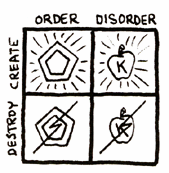
To choose order over disorder, or disorder over order, is to accept a trip composed of both the creative and the destructive. But to choose the creative over the destructive is an all-creative trip composed of both order and disorder. To accomplish this, one need only accept creative disorder along with, and equal to, creative order, and also be willing to reject destructive order as an undesirable equal to destructive disorder.

The Curse of Greyface included the division of life into order/disorder as the essential positive/negative polarity, instead of building a game foundation with creative/destructive as the essential positive/negative. He has thereby caused man to endure the destructive aspects of order and has prevented man from effectively participating in the creative uses of disorder. Civilization reflects this unfortunate division.

POEE proclaims that the other division is preferable, and we work toward the proposition that creative disorder, like creative order, is possible and desirable; and that destructive order, like destructive disorder, is unnecessary and undesirable.

Seek the Sacred Chao – therein you will find the foolishness of all ORDER/DISORDER. They are the same!

Read the whole text of POEE’s “Principia Discordia” here.