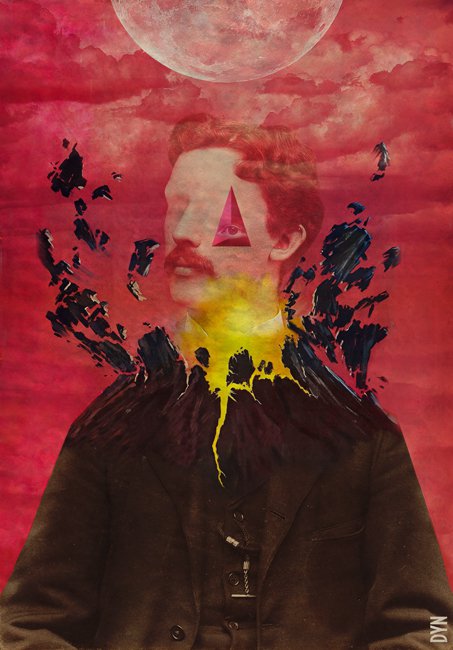
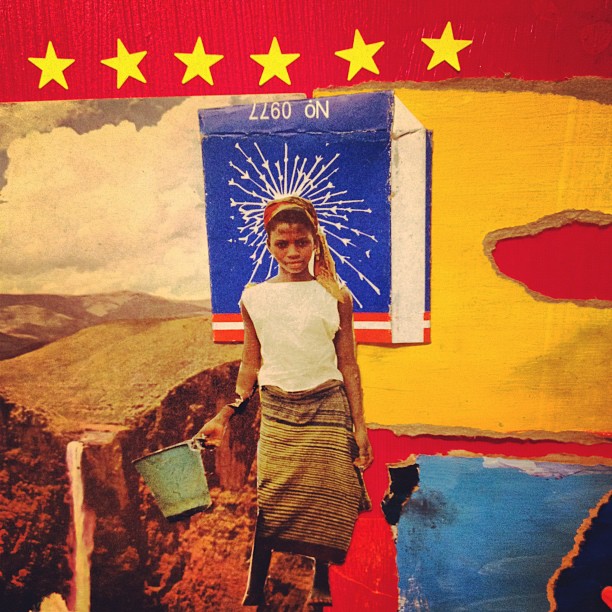
gramsci on being immersed in life

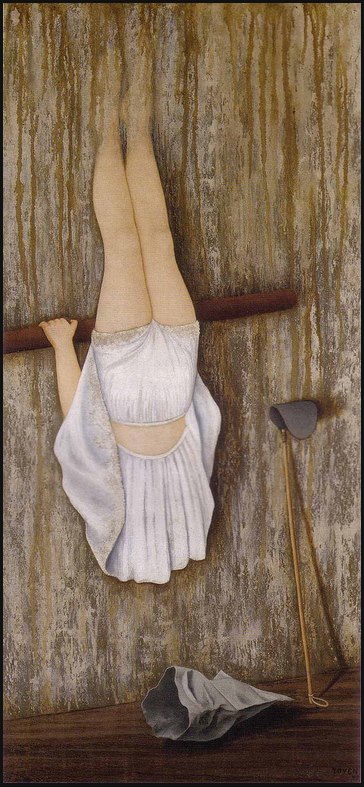
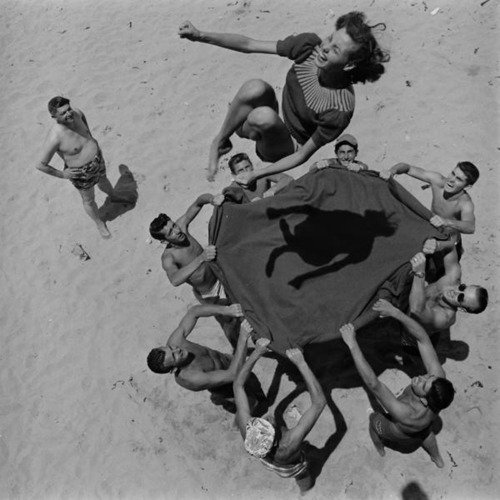
human trampoline

“Give up to life your every action, every ounce of faith. Throw all your best energies, sincerely and disinterestedly, into life. Immerse yourself, living creatures that you are, in the live, pulsing tide of human existence, until you feel at one with it, until it floods through you, and you feel your individual personality as an atom within a body, a vibrating particle within a whole, a violin-string which receives and echoes all the symphonies of history; of that history which, in this way, you’re helping to create.”

– Antonio Gramsci

written on waking with a spinning head

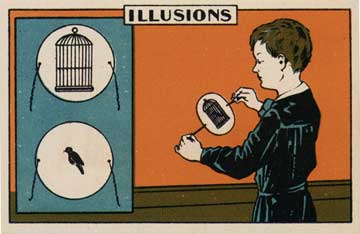
birdcage thaumatrope

[7 may 2012]

i am a dervish
a thaumaturge
i spin very fast
bore downwards
pour stuff out of the top of me churned rich like butter as i whirl
why do i spin so?
see
the thing about spinning
is that it is an oscillation between opposites that generates the movement
it’s how motors work
it’s how hard drives work
it’s how atoms work
the spin is ambi-valence made physical
attracted/repulsed/attracted/repulsed
so i am always moving fast yet can seem to be going nowhere
in my indecision, in the swinging tension between irreconcilable polar opposites
i can actually drill down deeper
because i am always spinning, seeing both sides almost, but not quite,
simultaneously
it’s impossible to see both sides simultaneously
but the quicker you are at seeing multiple perspectives
eddying off on fractal tangents
the faster you spin
(and the dizzier it can make you and others)
how do you solve a problem like maria?

i am not moving linearly
not climbing a ladder
it does not mean i am unproductive
it does not mean i am trapped
the hum is just my motor running at a higher frequency than the
general populace
a powerful magnet
drawing stuff in constantly
flipping it over and over
360 degrees of perspective, 365 days a year
a thaumatrope

it’s a funny thing
i can actually spin, physically, round and round for ages and not get dizzy
i think this is how i manage to get through life, mentally
i am mostly able to tune out the vertigo
i have learned
others can’t
they can’t take how fast i am going all the time
the spinning keeps me upright
in perpetual motion but never able to choose only one definite course
drawing straws
in perfect tension
twirling thread
spinning gold
activates
sigils
semiotics
polarity
magnetism
solenoids
speakers
the speed of sound
affects aerodynamics
flow
determinism and chaos
it’s all connected
all ways
in the dance of particles

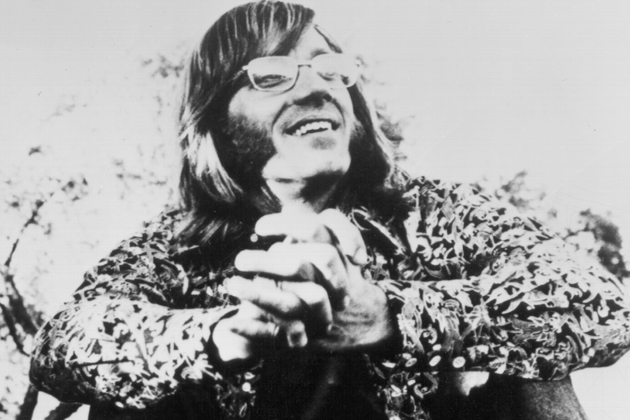
goodbye, ray manzarek

The Doors, live in Copenhagen,1968. Ray, I was always even more in love with you than I was with Jim…  That organ of yours is what really hypnotised me (that’s what she said).

doors-Michael-Ochs-Archives

From Michael Ochs’ archive

As my friend Carlo Germeshuys just put it, “Goodbye, Ray Manzarek – without your swirly lounge keyboard old Jimbo wouldn’t have gotten far with his whole bozo Dionysus act.” Oh wait, Carlo says he was referencing a diss by Lester Bangs. Well, whatever. “Bozo Dionysus” = best description of Jim Morrison ever.

HERE‘s an obituary from Rolling Stone.

where the echoes stop

Julie Loen - Title Unknown

Julie Loen – Title Unknown

Erwin Raphael McManus – Where the Echoes Stop

I want to stand where the echoes stop.
Far past where sound has abandoned thought.
Where silence reigns over redundancy.
Where once well said is more than enough.

I want to stand where the echoes stop.
Where words must be born to be heard.
Where speech is a gift and not a curse.
Where there is more of the unique and less of the mundane.

I want to stand where the echoes stop.
Where meaning is rescued from noise…
Where conviction replaces thoughtless repetition…
Where what everyone is saying surrenders to what needs to be said.

I want to stand where the echoes stop.
Where the shouting of the masses falls silent to the whisper of the one…
Where the voice of the majority submits to the voice of reason…
Where “they” do not exist; but “we” do.

I want to stand where the echoes stop.
Where substance overthrows the superficial…
Where courage conquers compliance and conformity…
Where words do not travel farther than the person who speaks them.

I want to stand where the echoes stop.
Where I only say what I believe.
Where I only repeat what changes me.
Where empty words finally rest in peace.

“Be still and know that I am God…” — Psalm 46:10a

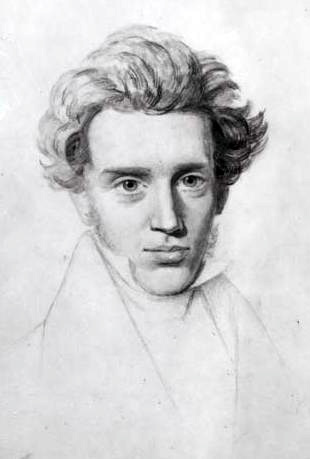
happy 200th birthday, søren kierkegaard

Sketch of Søren Kierkegaard. Based on a sketch by Niels Christian Kierkegaard (1806-1882)

Sketch of Søren Kierkegaard. Based on a sketch by Niels Christian Kierkegaard (1806-1882)

Hegel was the great system-maker. What others viewed as his grand achievement Kierkegaard viewed as his unforgivable crime, the attempt to rationally systematise the whole of existence. The whole of existence cannot be systematised, Kierkegaard insisted, because existence is not yet whole; it is incomplete and in a state of constant development. Hegel attempted to introduce mobility into logic, which, said Kierkegaard, is itself an error in logic. The greatest of Hegel’s errors, however, was his claim that he had established the objective theory of knowledge. Kierkegaard countered with the argument that subjectivity is truth. As he put it, “The objective uncertainty maintained in the most passionate spirit of dedication is truth, the highest truth for one existing.” … Kierkegaard, it remains to be said, is not a systematic theologian. We know what he thought of systems and system makers, of which Hegel was the prime example. There is hardly a page in his writings that does not prompt from the systematically minded reader a protest against disconnections and apparent contradictions. Like Flannery O’Connor, he shouted to the hard of hearing and drew startling pictures for the almost blind.

— Richard John Neuhaus, in Kierkegaard for Grownups (2004)

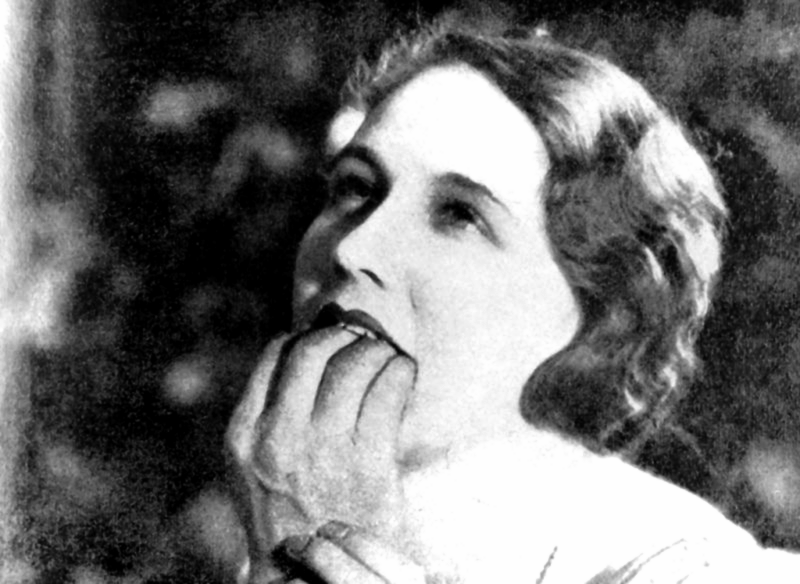
l’age d’or (1930)

Sadly, this is a far more profound symbolic critique of Roman Catholic oppression than anything FEMEN is ever likely to pull off (notwithstanding their tops)!
l'age d'or - bunuelL’Age d’or or The Golden Age (1930), directed by Luis Buñuel, a French surrealist comedy, and one of the first films with synchronous sound ever made in France, was about the insanities of modern life, the hypocrisy of the sexual mores of bourgeois society and the value system of the Roman Catholic Church. Salvador Dalí and Buñuel wrote the screenplay together.

The BBC called it “an exhilarating, irrational masterpiece of censor-baiting chutzpah.”

Read more about the political project of surrealism HERE. Watch the film (in the original French) HERE – turn on the Youtube captions for English subtitles.

Regarding the response of the establishment to the film, from Wikipedia:

Upon receiving a cinematic exhibition permit from the Board of Censors, L’Âge d’or had its premiere presentation at Studio 28, Paris, on 29 November 1930. Later, on 3 December 1930, the great popular success of the film provoked attacks by the right-wing Ligue des Patriotes (League of Patriots), whose angry viewers took umbrage at the story told by Buñuel and Dalí. The reactionary French Patriots interrupted the screening by throwing ink at the cinema screen and assaulting viewers who opposed them; they then went to the lobby and destroyed art works by Dalí, Joan Miró, Man Ray, Yves Tanguy, and others. On 10 December 1930, the Prefect of Police of Paris, Jean Chiappe, arranged to have the film banned from further public exhibition after the Board of Censors re-reviewed the film.

A contemporary right-wing Spanish newspaper published a condemnation of the film and of Buñuel and Dalí, which described the content of the film as “…the most repulsive corruption of our age … the new poison which Judaism, Masonry, and rabid, revolutionary sectarianism want to use in order to corrupt the people”. In response, the de Noailles family withdrew L’Âge d’or from commercial distribution and public exhibition for more than forty years; nonetheless, three years later, in 1933, the film was privately exhibited at the Museum of Modern Art, in New York City. Forty-nine years later, from 1-15 November 1979, the film had its legal U.S. premiere at the Roxie Cinema in San Francisco.

The film critic Robert Short said that the scalp-decorated crucifix and the scenes of socially repressive violence, wherein the love-struck protagonist is manhandled by two men, indicate that the social and psychological repression of the libido and of romantic passion and emotion, by the sexual mores of bourgeois society and by the value system of the Roman Catholic Church, breed violence in the relations among people, and violence by men against women. The opening sequence of the film alludes to that interpretation, by Dalí and Buñuel, with an excerpt from a natural science film about the scorpion, which is a predatory arthropod whose tail is composed of five prismatic articulations that culminate in a stinger with which it injects venom to the prey. Film critic Ado Kyrou said that the five vignettes in the tale of L’Âge d’Or correspond to the five sections of the tail of the scorpion.

francis bacon on friendship

A principal fruit of friendship is the ease and discharge of the fullness and swellings of the heart, which passions of all kinds do cause and induce. We know diseases of stoppings and suffocations are the most dangerous in the body, and it is not much otherwise in the mind: you may take sarza to open the liver, steel to open the spleen, flowers of sulphur for the lungs, castoreum for the brain; but no receipt openeth the heart but a true friend, to whom you may impart griefs, joys, fears, hopes, suspicions, counsels, and whatsoever lieth upon the heart to oppress it, in a kind of civil shrift or confession.

Francis_Bacon

…[C]ommunicating of a man’s self to his friend works two contrary effects, for it redoubleth joys, and cutteth griefs in halves. For there is no man that imparteth his joys to his friend, but he joyeth the more; and no man that imparteth his griefs to his friend, but he grieveth the less. So that it is in truth of operation upon a man’s mind, of like virtue as the alchemists use to attribute to their stone for man’s body, that it worketh all contrary effects, but still to the good and benefit of nature. But yet without praying in aid of alchemists, there is a manifest image of this in the ordinary course of nature. For in bodies, union strengtheneth and cherisheth any natural action, and on the other side weakeneth and dulleth any violent impression; and even so it is of minds…

…The second fruit of friendship is healthful and sovereign for the understanding, as the first is for the affections. For friendship maketh indeed a fair day in the affections, from storm and tempests; but it maketh daylight in the understanding, out of darkness, and confusion of thoughts. Neither is this to be understood only of faithful counsel, which a man receiveth from his friend; but before you come to that, certain it is that whosoever hath his mind fraught with many thoughts, his wits and understanding do clarify and break up, in the communicating and discoursing with another: he tosseth his thoughts more easily; he marshalleth them more orderly; he seeth how they look when they are turned into words; finally, he waxeth wiser than himself; and that more by an hour’s discourse, than by a day’s meditation…

… How many things are there which a man cannot, with any face or comeliness, say or do himself? A man can scarce allege his own merits with modesty, much less extol them; a man cannot sometimes brook to supplicate or beg; and a number of the like. But all these things are graceful in a friend’s mouth, which are blushing in a man’s own. So again, a man’s person hath many proper relations which he cannot put off. A man cannot speak to his son but as a father; to his wife but as a husband; to his enemy but upon terms: whereas a friend may speak as the case requires, and not as it sorteth with the person. But to enumerate these things were endless. I have given the rule, where a man cannot fitly play his own part; if he have not a friend, he may quit the stage.

Read the whole of this essay by Francis Bacon (the 16th century thinker) HERE.

a prayer

Marga Duggan - Highgate Woods (2011)

Marga Duggan – Highgate Woods (2011)

Refuse to fall down
If you cannot refuse to fall down,
refuse to stay down.
If you cannot refuse to stay down,
lift your heart toward heaven,
and like a hungry beggar,
ask that it be filled.
You may be pushed down.
You may be kept from rising.
But no one can keep you from lifting your heart
toward heaven
only you.
It is in the middle of misery
that so much becomes clear.
The one who says nothing good
came of this,
is not yet listening.

― Clarissa Pinkola Estés, The Faithful Gardener: A Wise Tale About That Which Can Never Die**

**Debbie Pryor, thank you for this.

björk – prayer of the heart

John Tavener composed this specifically for Björk. She chants a prayer from the Eastern Orthodox Christian tradition, “Prayer of The Heart”, accompanied by the Brodsky Quartet.

“Prayer of The Heart” is a short, simple prayer that has been widely used, taught and discussed throughout the history of Eastern Orthodox Christianity. It is, for the Orthodox, one of the most profound and mystical prayers, and is often repeated endlessly as part of personal ascetic practice. It is particularly used in the practice of the spiritual life known as hesychasm. Based on Christ’s injunction in the Gospel of Matthew, “when thou prayest, enter into thy closet, and when thou hast shut thy door, pray”, hesychasm in tradition has been the process of retiring inward by ceasing to register the senses, in order to achieve an experiential knowledge of God. The prayer is particularly esteemed by the spiritual fathers of this tradition as a method of opening the heart.

Greek: Κύριε Ἰησοῦ Χριστέ, Υἱὲ τοῦ Θεοῦ, ἐλέησόν με (τὸν ἁμαρτωλόν).
English: Lord Jesus Christ, Son of God, have mercy on me (a sinner).

More info from Wikipedia HERE, and from Orthodox Wiki HERE.

givan lötz – quiet

Like being in church without the creeps:

“I am an artist because I am uncertain. My art-objects are, first and foremost, results of a philosophical inquiry – critical thinking about what it means to be human. The moments of obsession involved in this process of art-making aspire to achieve a mood of catharsis. I have a desire for innovative and dislocating descriptions of life through a willingness to confront it in all its contradiction and complexity.”

Check out more of this Gauteng-based artist’s “Trash-Worship Party-Pooper Snore-Core Buzz-Kill Uneasy-Listening Shoe-Gaze Dream-Brown Drop-Out Dead-Beat Geek-Grind Mind-Melt Kewl-Vybz” on Soundcloud.

stephen levine on growth

“The process of growth is, it seems, the art of falling down. Growth is measured by the gentleness and awareness with which we once again pick ourselves up, the lightness with which we dust ourselves off, the openness with which we continue and take the next unknown step, beyond our edge, beyond our holding, into the remarkable mystery of being.”

— Stephen Levine

moon river – from “breakfast at tiffany’s”

“But there were moments when she played songs that made you wonder where she learned them, where indeed she came from. Harsh-tender, wandering tunes with words that smacked of pinewoods or prairie. One went: Don’t wanna sleep, Don’t wanna die, Just wanna go a-travelin’ through the pastures of the sky; and this one seemed to gratify her the most, for often she continued it long after her hair had dried, after the sun had gone and there were lighted windows in the dusk.”
__
Truman Capote, Breakfast at Tiffany’s

danielle leduc – the anti-preneur manifesto

adbusters_106_antripreneur_SI don’t want to be a designer, a marketer, an illustrator, a brander, a social media consultant, a multi-platform guru, an interface wizard, a writer of copy, a technological assistant, an applicator, an aesthetic king, a notable user, a profit-maximizer, a bottom-line analyzer, a meme generator, a hit tracker, a re-poster, a sponsored blogger, a starred commentator, an online retailer, a viral relayer, a handle, a font or a page. I don’t want to be linked in, tuned in, ‘liked’, incorporated, listed or programmed. I don’t want to be a brand, a representative, an ambassador, a bestseller or a chart-topper. I don’t want to be a human resource or part of your human capital.

I don’t want to be an entrepreneur of myself.

Don’t listen to the founders, the employers, the newspapers, the pundits, the editors, the forecasters, the researchers, the branders, the career counsellors, the prime minister, the job market, Michel Foucault or your haughty brother in finance – there’s something else!

I want to be a lover, a teacher, a wanderer, an assembler of words, a sculptor of immaterial, a maker of instruments, a Socratic philosopher and an erratic muse. I want to be a community centre  a piece of art, a wonky cursive script and an old-growth tree! I want to be a disrupter, a creator, an apocalyptic visionary, a master of reconfiguration, a hypocritical parent, an illegal download and a choose-your-own-adventure! I want to be a renegade agitator! A licker of ice cream! An organiser of mischief! A released charge! A double jump on the trampoline! A wayward youth! A volunteer! A partner.

I want to be a curator of myself, an anti-preneur, a person.

Unlimited availabilities. No followers required. Only friends.

~ Danielle Leduc

First published HERE (thanks to Emma Arogundade for sharing it on Facebook).
Note from the author:
I actually didn’t write this as an ‘anti-preneurial manifesto’ – it was more of a poetic rant written in frustration from combing through the online job market. I meant it as less of a takedown of capitalism and more of a critique of how we are told to sell ourselves as brands, to self-promote, in order to make it in this world, and as such we allow our job titles to define us to a certain extent. I think all of us are many of the things I listed towards the end, but these things don’t appear as marketable skills in a neoliberal economy with a tight and precarious job market. We are not our resumes, is all.

barthes on the other-ache


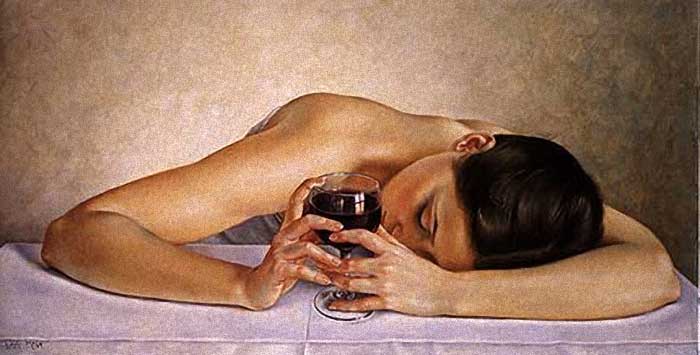
Painting by Francine van Hove

Painting by Francine van Hove

compassion/compassion

The subject experiences a sentiment of violent compassion with regard to the loved object each time he sees, feels, or knows the loved object is unhappy or in danger, for whatever reason external to the amorous relations itself.

1. “Supposing that we experienced the other as he experiences himself — which Schopenhauer calls compassion and which might more accurately be called a union within suffering, a unity of suffering — we should hate the other when he himself, like Pascal, finds himself hateful.” If the other suffers from hallucinations, if he fears going mad, I should myself hallucinate, myself go mad. Now, whatever the power of love, this does not occur: I am moved, anguished, for it is horrible to see those one loves suffering, but at the same time I remain dry, watertight. My identification is imperfect: I am a Mother (the other causes me concern), but an insufficient Mother; I bestir myself too much, in proportion to the profound reserve in which, actually, I remain. For at the same time that I “sincerely” identify myself with the other’s misery, what I read in this misery is that it occurs without me, and that by being miserable by himself, the other abandons me: if he suffers without me being the cause of his suffering, it is because I don’t count for him: his suffering annuls me insofar as it constitutes him outside of myself.

2. Whereupon, a reversal: since the other suffers without me, why suffer in his place? His misery bears him far away from me, I can only exhaust myself running after him, without ever hoping to be able to catch up, to coincide with him. So let us become a little detached, let us undertake the apprenticeship of a certain distance. Let the repressed word appear which rises to the lips of every subject, once he survives another death: Let us live!

3. So I shall suffer with the other, but without pressure, without losing myself. Such behaviour, at once very affective and very controlled, very amorous and very civilised, can be given a name: delicacy; in a sense it is the “healthy” (artistic) form of compassion. (Ate is the goddess of madness, but Plato speaks of Ate’s delicacy: her foot is winged, it touches lightly.)

~ Roland Barthes, from A Lover’s Discourse: Fragments pp. 57-58

joan didion – on self respect

Once, in a dry season, I wrote in large letters across two pages of a notebook that innocence ends when one is stripped of the delusion that one likes oneself. Although now, some years later, I marvel that a mind on the outs with itself should have nonetheless made painstaking record of its every tremor, I recall with embarrassing clarity the flavor of those particular ashes. It was a matter of misplaced self-respect.

I had not been elected to Phi Beta Kappa. This failure could scarcely have been more predictable or less ambiguous (I simply did not have the grades), but I was unnerved by it; I had somehow thought myself a kind of academic Raskolnikov, curiously exempt from the cause-effect relationships which hampered others. Although even the humorless nineteen-year-old that I was must have recognized that the situation lacked real tragic stature, the day that I did not make Phi Beta Kappa nonetheless marked the end of something, and innocence may well be the word for it. I lost the conviction that lights would always turn green for me, the pleasant certainty that those rather passive virtues which had won me approval as a child automatically guaranteed me not only Phi Beta Kappa keys but happiness, honor, and the love of a good man; lost a certain touching faith in the totem power of good manners, clean hair, and proved competence on the Stanford-Binet scale. To such doubtful amulets had my self-respect been pinned, and I faced myself that day with the nonplussed apprehension of someone who has come across a vampire and has no crucifix at hand.

Although to be driven back upon oneself is an uneasy affair at best, rather like trying to cross a border with borrowed credentials, it seems to me now the one condition necessary to the beginnings of real self-respect. Most of our platitudes notwithstanding, self-deception remains the most difficult deception. The tricks that work on others count for nothing in that well-lit back alley where one keeps assignations with oneself; no winning smiles will do here, no prettily drawn lists of good intentions. One shuffles flashily but in vain through one’s marked cards the kindness done for the wrong reason, the apparent triumph which involved no real effort, the seemingly heroic act into which one had been shamed. The dismal fact is that self-respect has nothing to do with the approval of others – who we are, after all, deceived easily enough; has nothing to do with reputation, which, as Rhett Butler told Scarlett O’Hara, is something people with courage can do without.

To do without self-respect, on the other hand, is to be an unwilling audience of one to an interminable documentary that deals one’s failings, both real and imagined, with fresh footage spliced in for every screening. There’s the glass you broke in anger, there’s the hurt on X’s face; watch now, this next scene, the night Y came back from Houston, see how you muff this one. To live without self-respect is to lie awake some night, beyond the reach of warm milk, the Phenobarbital, and the sleeping hand on the coverlet, counting up the sins of commissions and omission, the trusts betrayed, the promises subtly broken, the gifts irrevocably wasted through sloth or cowardice, or carelessness. However long we postpone it, we eventually lie down alone in that notoriously uncomfortable bed, the one we make ourselves. Whether or not we sleep in it depends, of course, on whether or not we respect ourselves.

To protest that some fairly improbable people, some people who could not possibly respect themselves, seem to sleep easily enough is to miss the point entirely, as surely as those people miss it who think that self-respect has necessarily to do with not having safety pins in one’s underwear. There is a common superstition that “self-respect” is a kind of charm against snakes, something that keeps those who have it locked in some unblighted Eden, out of strange beds, ambivalent conversations, and trouble in general. It does not at all. It has nothing to do with the face of things, but concerns instead a separate peace, a private reconciliation. Although the careless, suicidal Julian English in Appointment in Samara and the careless, incurably dishonest Jordan Baker in The Great Gatsby seem equally improbably candidates for self-respect, Jordan Baker had it, Julian English did not. With that genius for accommodation more often seen in women than men, Jordan took her own measure, made her own peace, avoided threats to that peace: “I hate careless people,” she told Nick Carraway. “It takes two to make an accident.”

Like Jordan Baker, people with self-respect have the courage of their mistakes. They know the price of things. If they choose to commit adultery, they do not then go running, in an access of bad conscience, to receive absolution from the wronged parties; nor do they complain unduly of the unfairness, the undeserved embarrassment, of being named co-respondent. In brief, people with self-respect exhibit a certain toughness, a kind of mortal nerve; they display what was once called character, a quality which, although approved in the abstract, sometimes loses ground to other, more instantly negotiable virtues. The measure of its slipping prestige is that one tends to think of it only in connection with homely children and United States senators who have been defeated, preferably in the primary, for reelection. Nonetheless, character – the willingness to accept responsibility for one’s own life – is the source from which self-respect springs.

Self-respect is something that our grandparents, whether or not they had it, knew all about. They had instilled in them, young, a certain discipline, the sense that one lives by doing things one does not particularly want to do, by putting fears and doubts to one side, by weighing immediate comforts against the possibility of larger, even intangible, comforts. It seemed to the nineteenth century admirable, but not remarkable, that Chinese Gordon put on a clean white suit and held Khartoum against the Mahdi; it did not seem unjust that the way to free land in California involved death and difficulty and dirt. In a diary kept during the winter of 1846, an emigrating twelve-yaer-old named Narcissa Cornwall noted coolly: “Father was busy reading and did not notice that the house was being filled with strange Indians until Mother spoke out about it.” Even lacking any clue as to what Mother said, one can scarcely fail to be impressed by the entire incident: the father reading, the Indians filing in, the mother choosing the words that would not alarm, the child duly recording the event and noting further that those particular Indians were not, “fortunately for us,” hostile. Indians were simply part of the donnee.

In one guise or another, Indians always are. Again, it is a question of recognizing that anything worth having has its price. People who respect themselves are willing to accept the risk that the Indians will be hostile, that the venture will go bankrupt, that the liaison may not turn out to be one in which every day is a holiday because you’re married to me. They are willing to invest something of themselves; they may not play at all, but when they do play, they know the odds.

That kind of self-respect is a discipline, a habit of mind that can never be faked but can be developed, trained, coaxed forth. It was once suggested to me that, as an antidote to crying, I put my head in a paper bag. As it happens, there is a sound physiological reason, something to do with oxygen, for doing exactly that, but the psychological effect alone is incalculable: it is difficult in the extreme to continue fancying oneself Cathy in Wuthering Heights with one’s head in a Food Fair bag. There is a similar case for all the small disciplines, unimportant in themselves; imagine maintaining any kind of swoon, commiserative or carnal, in a cold shower.

But those small disciplines are valuable only insofar as they represent larger ones. To say that Waterloo was won on the playing fields of Eton is not to say that Napoleon might have been saved by a crash program in cricket; to give formal dinners in the rain forest would be pointless did not the candlelight flickering on the liana call forth deeper, stronger disciplines, values instilled long before. It is a kind of ritual, helping us to remember who and what we are. In order to remember it, one must have known it.

To have that sense of one’s intrinsic worth which constitutes self-respect is potentially to have everything: the ability to discriminate, to love and to remain indifferent. To lack it is to be locked within oneself, paradoxically incapable of either love or indifference. If we do not respect ourselves, we are the one hand forced to despise those who have so few resources as to consort with us, so little perception as to remain blind to our fatal weaknesses. On the other, we are peculiarly in thrall to everyone we see, curiously determined to live out – since our self-image is untenable – their false notion of us. We flatter ourselves by thinking this compulsion to please others an attractive trait: a gist for imaginative empathy, evidence of our willingness to give. Of course I will play Francesca to your Paolo, Helen Keller to anyone’s Annie Sullivan; no expectation is too misplaced, no role too ludicrous. At the mercy of those we cannot but hold in contempt, we play roles doomed to failure before they are begun, each defeat generating fresh despair at the urgency of divining and meeting the next demand made upon us.

It is the phenomenon sometimes called “alienation from self.” In its advanced stages, we no longer answer the telephone, because someone might want something; that we could say no without drowning in self-reproach is an idea alien to this game. Every encounter demands too much, tears the nerves, drains the will, and the specter of something as small as an unanswered letter arouses such disproportionate guilt that answering it becomes out of the question. To assign unanswered letters their proper weight, to free us from the expectations of others, to give us back to ourselves – there lies the great, the singular power of self-respect. Without it, one eventually discovers the final turn of the screw: one runs away to find oneself, and finds no one at home.

__

This essay first published 1961 in Vogue; reprinted 1968 in Slouching Toward Bethlehem, included in Didion, Collected Works (Norton, 2006).
erica jong – becoming a nun

La Sucette - Cherry Bomb - 2007

“La Sucette” – Cherry Bomb, 2007
Digital photograph manipulated with Microsoft Photo Editor

On cold days
it is easy to be reasonable,
to button the mouth against kisses,
dust the breasts
with talcum powder
& forget
the red pulp meat
of the heart.

On those days
it beats
like a digital clock–
not a beat at all
but a steady whirring
chilly as green neon,
luminous as numerals in the dark,
cool as electricity.

& I think:
I can live without it all–
love with its blood pump,
sex with its messy hungers,
men with their peacock strutting,
their silly sexual baggage,
their wet tongues in my ear
& their words like little sugar suckers
with sour centers.

On such days
I am zipped in my body suit,
I am wearing seven league red suede boots,
I am marching over the cobblestones
as if they were the heads of men,

& I am happy
as a seven-year-old virgin
holding Daddy’s hand.

Don’t touch.
Don’t try to tempt me with your ripe persimmons.
Don’t threaten me with your volcano.
The sky is clearer when I’m not in heat,
& the poems
are colder.

Poem © Erica Mann Jong

“La Sucette” by Rosemary Lombard is licensed under a Creative Commons Attribution-NonCommercial-NoDerivs 3.0 Unported License.

pablo neruda – too many names

32-Eruption

Albane Simon – ‘Eruption’

Mondays are meshed with Tuesdays
and the week with the whole year.
Time cannot be cut
with your weary scissors,
and all the names of the day
are washed out by the waters of night.

No one can claim the name of Pedro,
nobody is Rosa or Maria,
all of us are dust or sand,
all of us are rain under rain.
They have spoken to me of Venezuelas,
of Chiles and of Paraguays;
I have no idea what they are saying.
I know only the skin of the earth
and I know it is without a name.

When I lived amongst the roots
they pleased me more than flowers did,
and when I spoke to a stone
it rang like a bell.

It is so long, the spring
which goes on all winter.
Time lost its shoes.
A year lasts four centuries.

When I sleep every night,
what am I called or not called?
And when I wake, who am I
if I was not I while I slept?

This means to say that scarcely
have we landed into life
than we come as if new-born;
let us not fill our mouths
with so many faltering names,
with so many sad formalities,
with so many pompous letters,
with so much of yours and mine,
with so much signing of papers.

I have a mind to confuse things,
unite them, bring them to birth,
mix them up, undress them,
until the light of the world
has the oneness of the ocean,
a generous, vast wholeness,
a crackling, living fragrance.