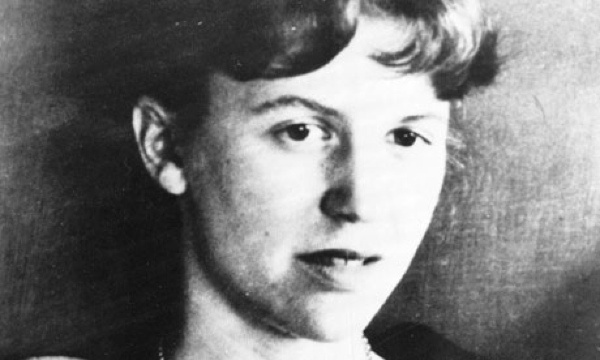
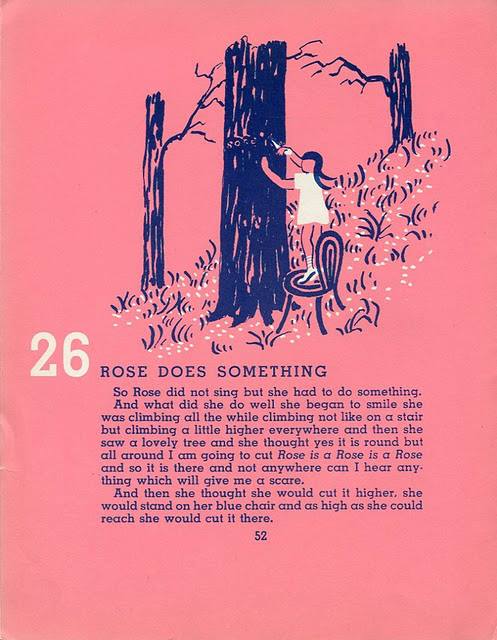
“Being born a woman is an awful tragedy… Yes, my consuming desire to mingle with road crews, sailors and soldiers, bar room regulars – to be a part of a scene, anonymous, listening, recording – all is spoiled by the fact that I am a girl, a female always in danger of assault and battery. My consuming interest in men and their lives is often misconstrued as a desire to seduce them, or as an invitation to intimacy. Yet, God, I want to talk to everybody I can as deeply as I can. I want to be able to sleep in an open field, to travel west, to walk freely at night…”
This is a page taken from FLEURZINE, a zine curated and illustrated by Julia Mary Grey. You can go and download this beautiful work of art for free on her site, HERE.
The name was inspired by Fleurmach, and six pieces of writing from this blog appear in the publication!
Directors: Djuna Wahlrab and Matthew Houck
Producers: Casey McGrath and Joshua Levine
Production Company: Phear Creative
“See, honey, I am not some broken thing
I do not lay here in the dark waiting for thee.
My heart is wild, and my bones are steel
and I could kill you with my bare hands if I was free.”
Born in 1902 in Payneville, Alabama, just outside of Livingston in Sumter County, Vera Hall grew up to establish one of the most stunning bodies of American folk music on record.
Hall married Nash Riddle, a coal miner, in 1917 and gave birth to their daughter, Minnie Ada. Riddle was killed in 1920. Though Hall sang her entire life, learning spirituals such as I Got the Home in the Rock and When Im Standing Wondering, Lord, Show Me the Way from her mother, Agnes, and her father, Efron Zully Hall, it was not until the late 1930s that Halls singing gained national exposure.
John Avery Lomax, ethnomusicologist, met Hall in the 1930s and recorded her for the Library of Congress. Lomax wrote that she had the loveliest voice [he] had ever recorded. The British Broadcasting System played Halls recording of Another Man Done Gone in 1943 as a sampling of American folk music. The Library of Congress played the song the same year in commemoration of the 75th Anniversary of the Emancipation Proclamation. In 1945, Hall recorded with Byron Arnold. In 1984, the recordings were released as a Collection of Folksongs entitled Cornbread Crumbled in Gravy.
In 1948, with the help of Alan Lomax, Hall traveled to New York and performed on May 15 at the American Music Festival at Columbia University. During the course of this trip, Lomax interviewed Hall on several occasions. In 1959, these interviews would be transformed into Rainbow Sign, a thinly- guised biography of Hall. In this book, Lomax stated, her singing is like a deep-voiced shepherds flute, mellow and pure in tone, yet always with hints of the lips and the pleasure-loving flesh… The sound comes from deep within her when she sings, from a source of gold and light, otherwise hidden, and falls directly upon your ear like sunlight. It is a liquid, full contralto, rich in low overtones; but it can leap directly into falsetto and play there as effortlessly as a bird in the wind.
Today, her work still garners attention. In 1999, techno-artist, Moby (Richard Melville Hall), included her voice and song Troubled So Hard in his multi-platinum album Play, thus introducing Halls voice to a whole new generation of listeners. Prized by scholars and folksong enthusiasts, Halls recordings include examples of early blues and folk songs that are found nowhere else. Her masterful renditions of traditional songs and stories are a defining part of Southern Black culture and the Black Belt region.
Carlo Gesualdo Principe di Venosa (1566?-1613): Tenebrae
Tristis est anima mea – Feria V, In coena Domini
In I Nocturno – Responsorium 1 (for Maudy Thursday)
Performed by The King’s Singers (2004)
Tristis est anima mea usque ad mortem:
sustinete hic, et vigilate mecum: nunc videbitis
turbam, quae circumdabit me: Vos fugam
capietis, et ego vadam immolari pro vobis.
Ecce appropinquat hora, et filius hominis
tradetur in manus peccatorum.
———
My soul is sorrowful even unto death: stay here
and watch with me: now shall ye see the crowd
that shall surround me: ye shall take flight, and
I shall go to be offered up for you.
Behold the time draweth nigh, and the son of
man shall be delivered into the hands of sinners.
I know nothing (now that I know you)
My face goes blank
My eyes go open gates
and the world can go (in them)
it can make us wealthy
and take away
so
I hold nothing (now that I hold you)
There’s no place to use our money where we live
The generous world suggests we live generously
so we lay
under low wide branches
of the oldest tree on the dune
or in the hay
where we will stay for so long without moving
that the careful birds finally relax
and make black nests in your black hair
and find ants walking around my unmoving feet
and we will only notice this play of the world
(that long moss is growing on us)
(that that wind has rewritten us)
(the give and take not stopping ever)
for only a moment
and then, having briefly noticed,
let the world roll on
through open gates
In a generous way
I give long walks to the dogs
I put commas and periods in song
I give closed eye to the day
I give peace to the long decay
(we do not need to fear dying)
— Written by Phil Elvrum, from the 2005 Mount Eerie album, “No Flashlight”: Songs of the Fulfilled Night
Let us not think that because we are less brutal, less violent, less inhuman than our opponents we will carry the day. Brutality, violence, and inhumanity have an immense prestige that schoolbooks hide from children, that grown men do not admit, but that everyone bows before. For the opposite virtues to have as much prestige, they must be actively and constantly put into practice. Anyone who is merely incapable of being as brutal, as violent, and as inhuman as someone else, but who does not practice the opposite virtues, is inferior to that person in both inner strength and prestige, and he will not hold out in a confrontation.
I must act “as if”. As if the forces of labour and knowledge may overcome the forces of greed and of proprietary obsession. As if the cognitive workers may overcome the fractalisation of their life and intelligence, and give birth to a process of the self-organisation of collective knowledge. I must resist simply because I cannot know what will happen after the future, and I must preserve the consciousness and sensibility of social solidarity, of human empathy, of gratuitous activity, of freedom, equality and fraternity. Just in case, right? Just because we don’t know what is going to be happening next, in the empty space that comes after the future of modernity. I must resist because this is the only way to be in peace with my self.
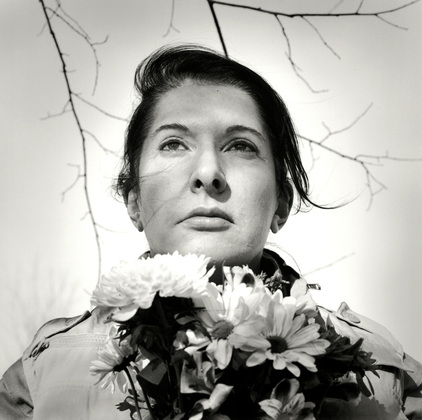
A pioneer of performance art, Marina Abramović has been using her own body as the subject, object, and medium of her work since the early 1970s. In 2011, the Museum of Modern Art (MOMA) in New York put on her retrospective, The Artist is Present. Yesterday, 14 July 2013, again at MOMA, she spoke about how to create a productive union between the arts, science, technology, spirituality and education in the future. GO HERE TO WATCH.
“At the bottom of the heart of every human being, from earliest infancy until the tomb, there is something that goes on indomitably expecting, in the teeth of all experience of crimes committed, suffered, and witnessed, that good and not evil will be done to him. It is this above all that is sacred in every human being. The good is the only source of the sacred. There is nothing sacred except the good and what pertains to it.”
“I think we ought to read only the kind of books that wound and stab us. If the book we are reading doesn’t wake us up with a blow on the head, what are we reading it for? …We need the books that affect us like a disaster, that grieve us deeply, like the death of someone we loved more than ourselves, like being banished into forests far from everyone, like a suicide. A book must be the axe for the frozen sea inside us.”
Courtesy of the most incredible African music blog in existence, Electric Jive:
‘This is the first LP in South Africa on the Troubadour label and is presented as “Sadness and Joy – Dixie Kwankwa in an Evening of African Cabaret”. In a strange way Dixie reminds me of Simphiwe Dana with an assured but quiet and confident delivery and none of the urgency or forcefullness of her peers. In listening to the LP today you can almost visualise this slotting in next to the Harry Belafonte, Bing Crosby and Frank Sinatra records that the white middle classes were enjoying at the the time. Record players that could play 33rpm records were rare and expensive and until at least the mid-sixties the predominant format in South Africa was the 78 single play.
‘There is not a lot more information on Dixie apart from what can be gleaned from the sleeve notes which are written in the quaint and mostly patronising manner of the times. Dixie did win the Miss South Africa title in 1957 and in the following year as part of the show African Bandwagon got her first singing job before being signed to Troubadour Records.’
There is such solitude in that gold.
The moon of these nights is not the moon
The first Adam saw. Long centuries
Of human vigil have filled her with
An old lament. See. She is your mirror.
“Dark Was the Night, Cold Was the Ground” is a gospel-blues song written and performed by Blind Willie Johnson, probably recorded in 1927. The song is primarily an instrumental, featuring Johnson’s self-taught bottleneck slide guitar and picking style accompanied by humming and moaning.
For more about this haunting record, check out the fascinating Wikipedia page.
If only a change of heart could magically repair the concrete effects of centuries of evil and dispossession overnight… It can’t, but thank you, Nelson Rolihlahla Mandela, for holding on to hope; for leading by example. If we all started living from an unselfish basis of love and respect, things WOULD shift.
In each film,Bünger both analyses and plays with the uncanny, magical potency of sound as recorded medium. Everything he does is underpinned by formidable quantities of research, a fondness for outrageously rhizomatic linkages and a wicked sense of humour. Definitely my new art crush of the month! ;)
Here’s a video of Bünger giving a lecture/performance which utilises much of the material presented in the standalone film, Schizophonia. This was recorded at MEDEA, Malmo University, in March 2011, as part of the K3 courses “Music in the Digital Media Landscape” and “Illustrating with Music”.
I really WISH I could find more of The Third Man to share here – it was tremendously entertaining, and, even off on its most questionable, occult-paranoid tangents, bizarrely pertinent to so much of the stuff about performance, recording and playback of music that I’ve been posting and thinking about in the past few years; even down to an hilarious discussion of the “entraining” (his word) power of The Sound Of Music (my post this afternoon prefigured this too, eerily!).
Anyway, you can watch the lecture:
And here’s a bio:
The Swedish artist, composer, musician and writer Erik Bünger (1976) works with re-contextualising existing media in performances, installations and web projects. In ‘Gospels’, sections of Hollywood interviews are removed from their original contexts, interacting to form a new, seemingly coherent whole. Yet these pre-existing works frequently conflict; Bünger explores the disjunction between replaying and experiencing in his ‘Lecture on Schizophonia’. This simultaneously analytical and performative work highlights the relationship between sound and perceived reality, using popular references and familiar footage including Barak Obama and Woody Allen. Similar tensions are exposed in ‘God Moves on the Water’, in which two songs about the sinking of the Titanic are combined to form a third narrative. In ‘The Third Man’, the negative power of music is explored. Displacing and recombining familiar material, Bünger challenges the separation between authentic and simulated experiences.
Bünger may have followed a traditional education in composition at the Stockholm Royal College of Music, but he is hardly a run-of-the-mill composer. His works have increasingly come to approach contemporary conceptual art, but his combination of sound and visual is also linked to literary storytelling. In his performances, installations and web projects, different timelines are superposed, past worlds and present understandings. The most important thing about Bünger’s work is not the art or literature context but the transformation that takes place in the specific works. What may seem trivial and inconsequential suddenly becomes the stuff of dreams. He is attracted to moments when recorded sound and image bridge a space between absolutes, between death and life and between gods and humankind. –
“My heart wants to beat like the wings of the birds that rise from the lake to the trees
My heart wants to sigh like a chime that flies from a church on a breeze
To laugh like a brook when it trips and falls over stones on its way
To sing through the night like a lark who is learning to pray
I go to the hills when my heart is lonely
I know I will hear what I’ve heard before
My heart will be blessed with the sound of music
And I’ll sing once more…”
“Civil disobedience is not our problem. Our problem is civil obedience. Our problem is that people all over the world have obeyed the dictates of leaders…and millions have been killed because of this obedience… Our problem is that people are obedient all over the world in the face of poverty and starvation and stupidity, and war, and cruelty. Our problem is that people are obedient while the jails are full of petty thieves, and all the while the grand thieves are running the country. That’s our problem.”
Sweet, sweet, sweet wind
Burn off this skin
Get it to reach
Sachuest beach
I can never win
With this body I live in
Belly’s Star has been one of my favourite albums since the early 1990s. This is a version of the title track that appeared as a B-side on the “Feed the Tree” single. The version on the album is slower and sparser, and not online, unless you listen to the entire album HERE, which I highly recommend you do!
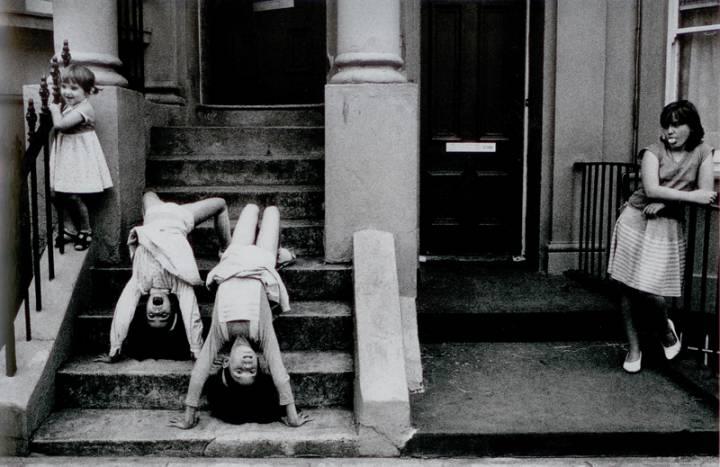
Marketa Luskačová – “Girls upside down, Blenheim Crescent, London, 1984”, from the series ‘Children in Britain’
Born in Prague. Degree in sociology of culture at Charles University, Prague 1967, thesis on traditional religion in Slovakia accompanied with photographs of pilgrims. 1967 – 1969 studied photography at FAMU, Prague. Since 1968, freelance photographer. Check out more of her work HERE.
 “Being born a woman is an awful tragedy… Yes, my consuming desire to mingle with road crews, sailors and soldiers, bar room regulars – to be a part of a scene, anonymous, listening, recording – all is spoiled by the fact that I am a girl, a female always in danger of assault and battery. My consuming interest in men and their lives is often misconstrued as a desire to seduce them, or as an invitation to intimacy. Yet, God, I want to talk to everybody I can as deeply as I can. I want to be able to sleep in an open field, to travel west, to walk freely at night…”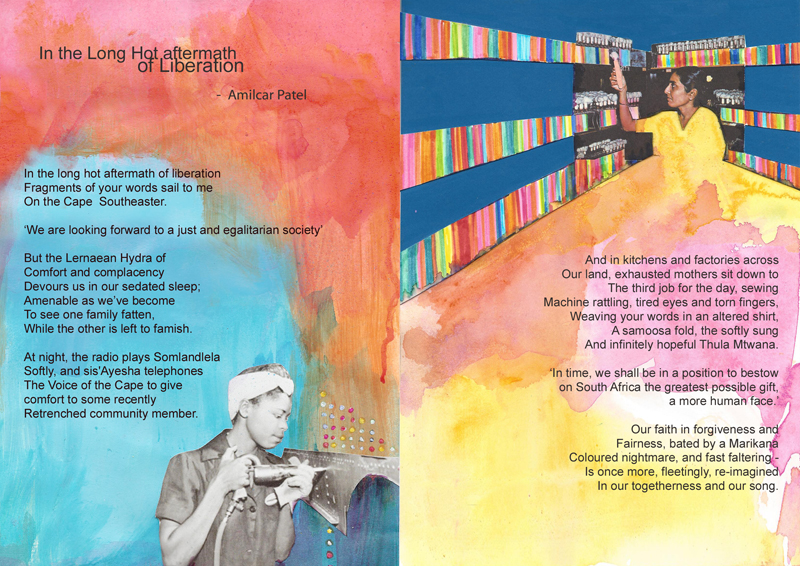






 fleurmach