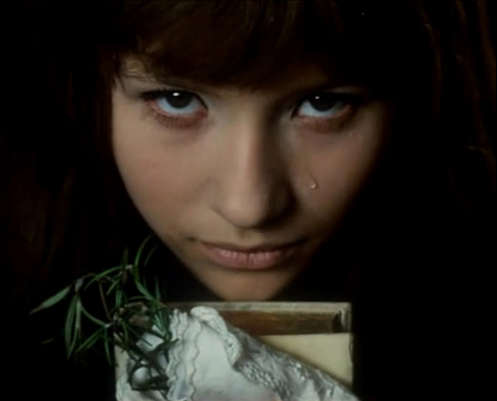
Jaroslava Schallerová in a still from “Valerie a Týden Divu” (Valerie & Her Week of Wonders). Director: Jaromil Jires, 1970
WATCH IT. It’s utterly beautiful.
Jaroslava Schallerová in a still from “Valerie a Týden Divu” (Valerie & Her Week of Wonders). Director: Jaromil Jires, 1970
WATCH IT. It’s utterly beautiful.
“L’homme est né libre, et partout il est dans les fers.”
~ Jean-Jacques Rousseau (1712-1778), from Du contrat social, Préambule (1762).
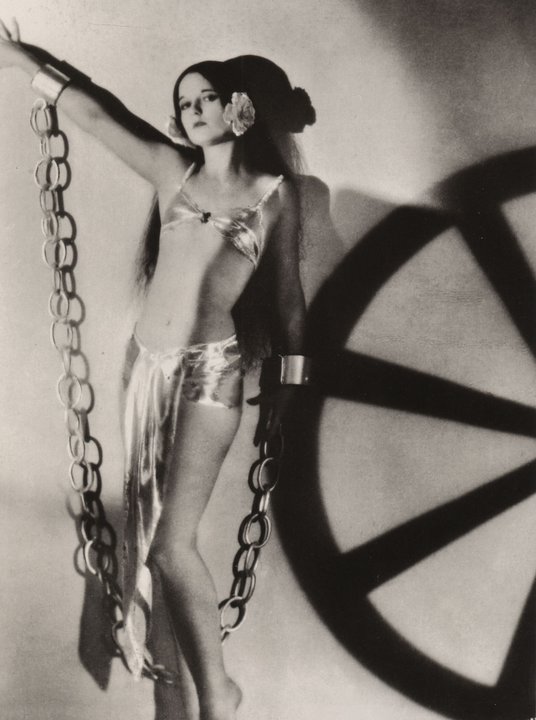
Louise Brooks (photographer and date unknown)
Mia Farrow and John Cassavetes in an excerpt from Rosemary’s Baby (Roman Polanski, 1968). A woman possessed… by her husband, first and foremost.
Jada Pinkett-Smith: “The War on Men Through the Degradation of Woman” – “How is man to recognize his full self, his full power through the eyes of an incomplete woman? The woman who has been stripped of Goddess recognition and diminished to a big ass and full breast for physical comfort only. The woman who has been silenced so she may forget her spiritual essence because her words stir too much thought outside of the pleasure space. The woman who has been diminished to covering all that rots inside of her with weaves and red bottom shoes.I am sure the men, who restructured our societies from cultures that honored woman, had no idea of the outcome. They had no idea that eventually, even men would render themselves empty and longing for meaning, depth and connection.
There is a deep sadness when I witness a man that can’t recognize the emptiness he feels when he objectifies himself as a bank and truly believes he can buy love with things and status. It is painful to witness the betrayal when a woman takes him up on that offer.
He doesn’t recognize that the [creation] of a half woman has contributed to his repressed anger and frustration of feeling he is not enough. He then may love no woman or keep many half women as his prize.
He doesn’t recognize that it’s his submersion in the imbalanced warrior culture, where violence is the means of getting respect and power, as the reason he can break the face of the woman who bore him 4 four children.
When woman is lost, so is man. The truth is, woman is the window to a man’s heart and a man’s heart is the gateway to his soul.
Power and control will NEVER out weigh love.
May we all find our way.
~ Jada Pinkett-Smith, published in Sinuous Magazine (http://www.sinuousmag.com/). Originally published on her Facebook page.
documentary by: Todd Philips
I sometimes listen to GG Allin,but i can never take it too serious. This documentary however is amazing. Warning:explicit content
December 10, 1979: The live recording of a John Peel Session by PiL (Lydon, Levene, Wobble & Atkins) at BBC Maida Vale Studios 4, London. The session is produced by Tony Wilson, and engineered by David Dade.

The following are excerpts from Vilém Flusser’s Towards a Philosophy of Photography (London: Reaktion Books, 2000).
The Image
Images are mediations between the world and human beings. Human beings ‘ex-ist’, i.e. the world is not immediately accessible to them and therefore images are needed to make it comprehensible. However, as soon as this happens, images come between the world and human beings. They are supposed to be maps but they turn into screens: Instead of representing the world, they obscure it until human beings’ lives finally become a function of the images they create. Human beings cease to decode the images and instead project them, still encoded, into the world ‘out there’, which meanwhile itself becomes like an image – a context of scenes, of state of things. This reversal of function of the image can be called ‘idolatry’; we can observe the process at work in the present day: The technical images currently all around us are in the process of magically reconstructing our ‘reality’ and turning it into a ‘global image scenario’. Essentially this is a question of ‘amnesia’. Human beings forget they created the images in order to orient themselves in the world. Since they are no longer able to decode them, their lives become a function of their own images: Imagination has turned into hallucination. (pp 9-10)
![22hr38min [photo: Niklas Zimmer]C-type print 120x99,4cm (Ed.3) and 60x49,7cm (Ed.7)](https://fleurmach.com/wp-content/uploads/2012/12/22hr38min-niklas-zimmer.jpg?w=869)
22hr38min [photo: Niklas Zimmer]
C-type print 120×99,4cm (Ed.3) and 60×49,7cm (Ed.7)
The struggle of writing against the image – historical consciousness against magic – runs throughout history. With writing, a new ability was born called ‘conceptual thinking’ which consisted of abstracting lines from surfaces, i.e. producing and decoding them. Conceptual thought is more abstract than imaginative thought as all dimensions are abstract from phenomena – with the exception of straight lines. Thus with the invention of writing, human beings took one step further back from the world. Texts do not signify the world; they signify the images they tear up. Hence, to decode texts means to discover the images signified by them. The intention of texts is to explain images, while that of concepts is to make ideas comprehensible. In this way, texts are a metacode of images.
This raises the question of the relationship between texts and images – a crucial question for history. In the medieval period, there appears to have been a struggle on the part of Christianity, faithful to the text, against idolaters or pagans; in modern times, a struggle on the part of textual science against image-bound ideologies. The struggle is a dialectical one. To the extent that Christianity struggled against paganism, it absorbed images and itself became pagan; to the extent that science struggled against ideologies, it absorbed ideas and itself became ideological. The explanation for this is as follows: Texts admittedly explain images in order to explain them away, but images also illuminate texts in order to make them comprehensible. Conceptual thinking admittedly analyze magical thought in order to clear it out of the way, but magical thought creeps into conceptual thought so as to bestow significance on it. In the course of this dialectical process, conceptual and imaginative thought mutually reinforce one another. In other words, images become more and more conceptual, texts more and more imaginative. Nowadays, the greatest conceptual abstraction is to be found in conceptual images (in computer images, for example); the greatest imagination is to be found in scientific texts. Thus, behind one’s back, the hierarchy of codes is overturned. Texts, originally a metacode of images, can themselves have images as a metacode.
That is not all, however. Writing itself is a mediation – just like images – and is subject to the same internal dialectic. In this way, it is not only externally in conflict with images but is also torn apart by an internal conflict. If it is the intention of writing to mediate between human beings and their images, it can also obscure images instead of representing them and insinuate itself between human beings and their images. If this happens, human beings become unable to decode their texts and reconstruct the images signified in them. If the texts, however, become incomprehensible as images, human beings’ lives become a function of their texts. There arises a state of ‘textolatry’ that is no less hallucinatory than idolatry. Examples of textolatry, of ‘faithfulness to the text’, are Christianity and Marxism. Texts are then projected into the world out there, and the world is experienced, known and evaluated as a function of these texts. A particularly impressive example of the incomprehensible nature of texts it provided nowadays by scientific discourse. Any ideas we may have of the scientific universe (signified by these texts) are unsound: If we do form ideas about scientific discourse, we have decoded it ‘wrongly’: anyone who tries to imagine anything, for example, using the equation of the theory of relativity, has not understood it. But as, in the end, all concepts signify ideas, the scientific, incomprehensible universe is an ’empty’ universe.
Textolatry reached a critical level in the nineteenth century. To be exact, with it history came to an end. History, in the precise meaning of the world, is a progressive transcoding of images into concepts, a progressive elucidation of ideas, a progressive disenchantment (taking the magic out of things), a progressive process of comprehension. If texts become incomprehensible, however, there is nothing left to explain, and history has come to an end. During this crisis of texts, technical images were invented: in order to make texts comprehensible again, to put them under a magic spell – to overcome the crisis of history. (pp 11 – 13)
++++++++++
To summarize: Photographs are received as objects without value that everyone can produce and that everyone can do what they like with. In fact, however, we are manipulated by photographs and programmed to act in a ritual fashion in the service of a feedback mechanism for the benefit of cameras. Photographs suppress our critical awareness in order to make us forget the mindless absurdity of the process of functionality, and it is only thanks to this suppression that functionality is possible at all. Thus photographs form a magic circle around us in the shape of the photographic universe. What we need is to break this circle. (pg 64)
++++++++++
Why a Philosophy of Photography is Necessary
With one exception: so-called experimental photographers – those photographers in the sense of the word intended here. They are conscious that image, apparatus, program and information are the basic problems that they have to come to terms with. They are in fact consciously attempting to create unpredictable information, i.e. to release themselves from the camera, and to place within the image something that is not in its program. They know they are playing against the camera. Yet even they are not conscious of the consequence of their practice: They are not aware that they are attempting to address the question of freedom in the context of apparatus in general. (pg 81)
A philosophy of photography is necessary for raising photographic practice to the level of consciousness, and this is again because this practice gives rise to a model of freedom in the post-industrial context in general. A philosophy of photography must reveal the fact that there is no place for human freedom within the area of automated, programmed and programming apparatuses, in order finally to show a way in which it is nevertheless possible to open up a space for freedom. The task of a philosophy of photography is to reflect upon this possibility of freedom – and thus its significance – in a world dominated by apparatuses; to reflect upon the ways in which, despite everything, it is possible for human beings to give significance to their lives in face of the chance necessity of death. Such a philosophy is necessary because it is the only form of revolution left open to us. (pp 81-82)
Read more excerpts from Flusser’s text HERE.
Bill Hicks performing live at the Dominion Theatre in London. This is the entire show.
“Well, God is in His heaven
And we all want what’s His
But power and greed and corruptible seed
Seem to be all that there is
I’m gazing out the window
Of the St. James Hotel
And I know no one can sing the blues
Like Blind Willie McTell.”
Copyright © 1983 by Special Rider Music, from The Bootleg Series, Vol 1-3: Rare & Unreleased 1961-1991
Howard Zinn talking about the environmental factors that influence aggression. Excerpt from You Can’t Be Neutral On a Moving Train, 2004 [DVD], available from firstrunfeatures.com.
Note on the author: Olivier Chow is a former senior protection officer of the International Committee of the Red Cross (ICRC) and has led investigations on war crimes in Afghanistan, Cambodia, the Democratic Republic of the Congo and Macedonia. He is currently finishing a PhD in critical theory at the School of Oriental and African Studies (SOAS), London University, working on the theory and visual mediation of cruelty. His main interests concern French theory and in particular the work of Georges Bataille, fetishism, violence, popular culture and tribal arts. He has also worked for UNESCO, Sotheby’s and a private collection of surrealist art. The following article was first published HERE.
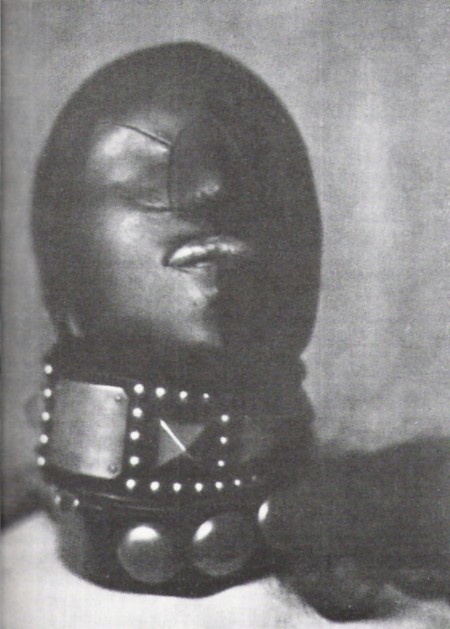
Jacques-André Boiffard, Untitled, Article “Le Caput Mortuum ou la Femme de l’Alchimiste”, Documents, 1930, No 8
In this paper we shall explore desire from the perspective of transgression and, to be precise, desire generated by the transgressive space born from the oscillation between attraction and repulsion, or what the French surrealist Georges Bataille named ‘inter-repulsion’. We shall argue that the ultimate object of inter-repulsion is death itself and, as such, inter-repulsion brings forth not only the subject and its discontents but also the social with its taboos and prohibitions. Inter-repulsion will be discussed in relation to the visual culture of Documents, a dissident and short-lived surrealist journal (1929-1930) that has recently come back to life at the Hayward in the exhibition “Undercover Surrealism.” [1] One of the pièces maîtresses in the main hall of the exhibition is a photograph by Jean-Jacques Boiffard, the most prominent photographer of the journal: a photograph of a magnified big toe around which our discussion will centre. This photograph has become an emblem for a surrealism that has done away with the ‘marvellous’ – which it literally shat on – and that has shamelessly promoted the ‘low’ (bassesse ) and the ordure: the surrealism of Georges Bataille which opposed the impossible of the real to Breton’s possible of the imagination. The big toes had a task – for Bataille, words and images always had to do something: to bring forth through the sensations of visceral reactions and gut feelings what had remained hidden and repressed. The object of repression staged in Documents was a desire rooted in death. Thus we shall argue that inter-repulsion creates a pornography of death since it shows us our darkest and most obscene object of desire. Our discussion will be divided into two sections: first we shall explore the big toe as ‘idol’, second as ‘ordure’.
Documents was initially intended as a scientific review, albeit one with a unique and innovative twist. It brought together high and popular art (beaux arts and variétés), archaeology and ethnographic art. Documents’ ambiguous mission statement already contained the seeds of its undoing: “the most provoking as yet unclassified works of art and certain unusual productions, neglected until now, will be the object of studies as rigorous and scientific as those of archaeologists.” As early as issue four, the provocative, disturbing and frankly monstrous became the focus of the journal and it quickly became a war machine against surrealism: “Documents made clear what surrealism was not; what, under the aegis of Breton, it could not be.” [2] It would be “the abscess burst each month from surrealism.” [3]Documents elaborated a common theoretical front against positivism and idealism reducing all images and objects (dead animals, big toes, abattoirs, ancient coins, high and ‘primitive art’) to document status. It promoted a fragmenting, magnifying and anti-aesthetic gaze on the world, privileging the monstrous and corporeal. Facts from ethnography, faits divers andvariétés , religion and culture, were artificially ‘planted’ in order to anchor images and discourse in a reality that was both familiar and yet complete fantasy and fabrication. This mock reality was largely one of distortion and pastiche; a distortion that was also applied to constituted forms (mainly the human body and its architecture). Here the positivism of factual documentation, like the body itself, was perversely subverted: reality was deformed and this was placed in the service of sensations such as vertigo and disgust. The ‘facts’ that were revealed were closer to what Francis Bacon understood as facts: a brutal revelation of a hidden truth about the human condition. These were inseparable from the brutal sensations they imposed on the viewer. These visceral facts, or ‘visual instincts’, fashioned a new and powerful reality where differences between a subject and object were brutally collapsed. This is the sensational reality that the big toes managed to bring about, or in the words of Bataille: “a return to reality…means that one is seduced in a base manner, without transpositions and to the point of screaming, opening his eyes wide: opening them wide, then, before a big toe.”[4] Inter-repulsion inaugurates a brutal return to sensation – not pleasant sensations, rather as we shall demonstrate, sensations of death.
Jacques-André Boiffard’s ‘Big Toes’ were published in Documents number 6, 1929, with a text by Bataille titled ‘Le Gros Orteil’. The two male big toes that appeared here are actually part of a series. Altogether there are three (two male and one female), a sort of “friendly trinity”. [5]The chiaroscuro isolates the toe from the body, providing it with a fetishistic and almost godly aura. Whereas most of the other photographs published in the journal were usually juxtaposed together in a sort of montage that reminded the viewer of the random and haphazard juxtapositions of a newspaper, the big toes stand alone in the magazine, occupying a full page. The visual brutality of the big toes and the mocking tone of the text that accompany the image, are typical of Documents: the provocative and almost ethnographic enterprise on the big toes was not dissimilar to the exploration of eccentric artistic productions, exotic cultures, sacrificial rituals and dismissed historical periods that defined Documents’ anthropological realm.
In his “Gros Orteil”, Bataille describes how feet, for some individuals, are sexually charged. Here Bataille cites the example of the Count of Villamediana who burnt a house in order to carry the queen and stroke her feet or foreign cultures like China where the feet of women are both deformed and venerated. As a fetish, feet and toes are abstracted from the body and turned into independent wholes charged with desire: idols. We shall name these idolised fragments of the body, ‘part-objects’ – a term that designs parts of the body, real or fantasised (penis, breast, food, faeces, toes, et cetera) invested with desire. The destiny of part-objects or ‘érotique combinatoire‘ [6] to use Roland Barthes’ expression, was one of Bataille’s favourite anthropological and symbolic explorations. Part-objects are celebrated in Bataille’s pornographic novels from Histoire de l’Oeil to Madame Edwarda . In Bataille’s Histoire de l’Oeil, the eye is set within a symbolic matrix and a system of correspondences. Histoire de l’Oeil, as Roland Barthes noted, is really the history of an object, its migration and metamorphosis into its symbolic equivalents. Every metamorphosis is like a new station within the migration of the object/organ. The part-object is recited throughout the novel (eye, sun, egg, and their respective seminal liquids), revealing the humid substance of a round phallicism. In Madame Edwarda, Madame Edwarda asks the narrator if he wants to sees her ‘vilaines guenilles’. She exposes her ‘old rags’, a source of anxious fascination. From within these revolting guenilles emanates a dirty gaze that stares at the narrator like a Medusean ‘pieuvre répugnante’ . When the narrator asks her why she does this, she tells him: “Tu vois…je suis DIEU”. [7] In Madame Edwarda, God is a genital revelation. Madame Edwarda’s ‘gazing beast’ is god-like: totemic and sovereign. The big toe photographed by Boiffard is also staged like a genital, repugnant and sovereign creature.
Binet’s seminal essay on fetishism, Le Fétichisme dans l’Amour (1887) was well known to Bataille. It dedicated a few pages to the account of various forms of fetishism related to inanimate objects or fractions of the body, real or symbolic such as hand, feet, hair, eye, voice and smell. Binet combines his theory of fetishism as a sexual perversion with the aesthetics of fetishism. According to Binet, fetishism tends to detach and isolate the part-object from the person to which it belongs. The fetishist tends to transform this part-object into an independent whole. The part-object is thus an abstraction according to Binet. This tendency towards abstraction is also supplemented by a tendency towards generalisation: the cult of the fetishist is not oriented towards a part-object belonging to one specific person. On the contrary, the part-object stands for a sort of genre or ‘monotheism’ to use Binet’s expression that is not attached to one individual specifically but to one abstracted fragment. Finally, Binet observes that there is a tendency towards exaggeration: the volume or the importance of the part-object is enhanced.
 Jacques-André Boiffard, Big Toe, feminine subject, twenty-four years old , Documents, No6, 1929
 Jacques-André Boiffard, Big Toe, masculine subject, thirty years old , Documents, No6, 1929
 Jacques-André Boiffard, Big Toe, masculine subject, thirty years old , Documents, No6, 1929
The fetishistic photographic process confers the big toe with a new status as part-object ready to be mapped out by desire and sexualised. The big toe’s sexual persona is here evidently exposed as obscene. Boiffard has mimicked the fetishist gaze observed by Binet. The toes are isolated from their bodies, fragmented, enlarged, staged and dramatised. The magnified, blown-up toes seem impossibly real: ugly, hairy, genital-like. We are literally put face to face with their excessive and nauseous reality. The photographs are cropped, the angle imposes a violent deformation on the toe – they are upside down, brought down if such an operation were possible. It is a portrait that transgresses and subverts the very idea of what a portrait should be: the highest and most noble part of the body has been thrown away and transformed into a grotesque, absurd and scandalous ‘other face’.
The framing of the toe is an act of violence set against the human figure. Bataille’s text refers to material and visual operations of abuse and violence such as “deformation”, “infection”, “tortures”, “pain”, “brutal”. Those forces that deform the human figure are violent forces that Bataille equates with forces of entropy and decomposition, such as those that attack the corpse. The deformation or “alteration” of the human figure was an essential strategy in Bataillean aesthetics: “the word alteration provides the double advantage of expressing a partial decomposition similar to that of corpses and at the same time the expression of the passage to a perfectly heterogeneous state that the protestant professor Otto named the ‘wholly other’, that is the sacred.” [8]
In his classic study of the Holy, the German theologian, philosopher and historian of religions Rudolf Otto (1869-1937), situates the sacred in relation to an a priori emotional structure, the numinosum . In the experience of the numinous, the subject experiences a feeling of intimate dependence towards a higher and independent force. The experience of the “wholly other” [9]: is what Otto describes as “creature-consciousness”. This “creature-feeling” is “the emotion of a creature, abased and overwhelmed by its own nothingness in contrast to that which is supreme above all creatures.” [10] This experience is fundamentally ambivalent, a mélange of attraction and repulsion: this mysterium tremendum is an uncanny experience of awfulness, an awfulness that lies beyond the realm of knowledge, producing a feeling of peculiar dread, a “terror fraught with inward shuddering.” [11] The big toes reek of these creepy “creature feelings”.
Boiffard has also captured the fetish’s destiny as fixation. William Pietz, one of the leading commentators on fetishism, defines the fetish in the following terms: “The fetish is always a meaningful fixation of a singular event; it is above all a ‘historical’ object, the enduring material form and force of an unrepeatable event.” [12] This unrepeatable and traumatic event could be rooted in early childhood beliefs and complexes. Freud and psychoanalysis argue fetishism is linked to the experience of shock that comes about once the absence of a maternal penis is revealed. The fetish becomes a substitute for the penis and a disavowal of that lack. The captions for this big toe could be: “it is not really gone as long as I’m here”. The body as site of revelation of the phallus was a common surrealist visual strategy. One of its most famous expressions is Man Ray’s anatomies (1930). The idea behind that specific visual operation was to de-territorialise bodies, rendering them polymorphously perverse and ‘genital’ by liberating desire from the conventional and limiting mappings of the erogenous zones.
 Jacques-André Boiffard, Untitled , Article “Le Caput Mortuum ou la Femme
de l’Alchimiste », Documents, 1930, No8
We are now going to discuss another famous image of Documents by Boiffard where the body turns into phallus: his untitled image that features a mask by W.B. Seabrook. Michel Leiris in his “Le Caput Mortuum ou la Femme de la l’Alchimiste” published in Documents in 1931, discusses the photograph portraying a woman wearing a mask. The image brings forth both fetishistic memories of desire (sado-masochistic fantasies) and mystic possibilities of religious revelation (could that mask be the face of God, Leiris wonders). For Leiris, a mask can thus open up to desire and the sacred: the mask opens towards what is both foreign and intimate within us. What the mask manages in true fetishistic form is to abstract and concentrate body parts – making them more as well as less real, that is, schematic. Boiffard’s woman becomes more mysterious but also more threatening as her features are disguised by her second leather skin. The woman becomes an abstraction, a generality, a thing or essence (“ chose-en-soi ”). Her severity is tinged with suffering, appealing to our sadism as Leiris argues: “in addition to suffering under the leather skin, being subjected and mortified (which satisfies our will to power and our fundamental cruelty), her head – sign of her intelligence and individuality – is insulted and negated.” [13]Her mouth is reduced to a wound and her body transgressed: the body is naked and the face is masked, an obscene and forced inversion that associates violence to desire. The figure of the woman is profoundly ambiguous and can be seen as either a perpetrator (“ bourreau ”) or a beheaded queen (“reine décapitée ”).
We have now witnessed the uncanny connection between desire and death. This connection is also active in the photographs of big toes. Boiffard restitution of the lost phallus has only been possible through the castrating use of picture cropping that has separated the toe from the foot. The sight of these big toes is not very comforting: on the contrary they signify pain, mutilation and danger. The big toe is a monument to castration: the nail suggests endless cuttings, a ‘thousand cuts’. Continue reading
The following videos are posted by very young teenage girls looking for validation from strangers online in the face of negative comments about their appearance… There are MANY, MANY videos like this on Youtube – it’s become a strange sort of meme.
The exact motives for making these movies are mixed, but if you read the comments under the videos, you’ll see how mean people can be under the cloak of anonymity – meaner, probably, than the unkindness at school that the girls are hoping to drown out with the “objective” opinions of strangers online, for this is what all the videos have in common.
I don’t think I will ever understand how hurting someone else, even if it is because you yourself are hurting, could help you feel better at all… which I guess is what always made me an easy target for bullies myself. I don’t retaliate because it doesn’t make sense to me to do so. That’s lethal bully-bait when coupled with the conviction to stand up for oneself, to speak back. I hit people teasing me a few times when I was a kid, mainly to get them out of my face. It made me feel sick to do that, and it didn’t help. Mostly I would just try to shout them down.
My mom’s mantra, “Sticks and stones may break my bones, but words will never harm me,” roared uselessly.
It took me years and years to figure out how futile and dangerous it is to try to shout, to speak, to whisper back, to appeal to sense and truth, to reason with cruelty. It doesn’t work, because cruelty isn’t rational. It is senseless. Cruelty is fed by any and every reaction. These girls won’t realise until the damage is already done and they have lost their voices completely. It hurts to watch them exposing themselves to so much pain.
“I feel like I could just go away and never come back. I feel like I’ve been standing all these years and keep getting torn down… Deep down inside, all girls know that other people’s opinions don’t matter, but we still go to other people for help because we don’t believe what people say.”
~ Faye (13). More on her story HERE.
“Bullying represents a negative form of seeking attention. The bully is an excessively damaged person asking for help in a devastating way. While compassion is a fantastic quality, our society does not have the tools to deal effectively with this scourge. As a victim of bullying throughout my educational career (including, though less frequent, at college) I had absolutely no support from anybody. People thought bullying was ‘funny’. The bully has no control of his bullying and is not going to stop because he is shown ‘compassion’.
“The bully seeks power from the very person most likely to let him have it! It is a very weird psychology. However society does not have any mechanism (certainly not in schools, although there are pockets of greater awareness) to check this hurtful and harmful behaviour because the bully will find a way outside of school environment.
“Usually, the only thing the bully will listen to is if he is challenged directly. Sadly this challenge may come at a time when the VICTIM has lost rationale and has become desperate. Domestic violence is another form of bullying. Once a victim is forced into silent suffering the results become tragic.
“Being bullied taught me how to become INVISIBLE and it took about 10 years of my life AS AN ADULT to work my way out of this ‘death’. This was my only defence. In hind sight this has given me an invaluable tool: I am now an eternal REBEL.”
~ Helge Janssen
Written in response to THIS OPINION PIECE on bullying, published today on the Daily Maverick website.
“Bullying is about rejection and belonging. It stems from the need for a place in the world and the feeling that one has been denied that need. When young people feel properly welcomed in the world, when they feel their gifts being led out, they do not feel the need to claim their place through violence or meanness. When a person bullies, or shoots his bully, it shows us that we did not provide that young person the opportunity to grow his or her gifts.
“Instead of recognising this, our emotional reaction is often to try to reclaim control, to clamp down. It is a reaction that feeds and deepens the roots of alienation in young people – roots that grab in the belly and grow through the heart until they bloom red in schools. In the United States, where I am from, we have experienced school violence at heretofore unknown levels. We have often responded in all the wrong ways and have managed to turn many of our schools into places that more closely resemble prisons than places in which the inherent gifts of each individual person are ushered into the world.”
Read the rest of this opinion piece HERE.
“I’m struggling to stay in this world, because everything just touches me so deeply. I’m not doing this for attention. I’m doing this to be an inspiration and to show that I can be strong. I did things to myself to make pain go away, because I’d rather hurt myself then someone else. Haters are haters but please don’t hate, although I’m sure I’ll get them. I hope I can show you guys that everyone has a story, and everyones future will be bright one day, you just gotta pull through. I’m still here aren’t I ?”
~ Amanda Todd (on making the above video, posted in September 2012)
RIP Amanda Todd: November 27, 1996 – October 10, 2012
Video posted four hours before her suicide.
“I’m sure glad I never… Ain’t you glad I never… Be glad I never owned a gun.”
Lee Hazlewood cover by Lambchop. Original HERE.
Beautiful cover version from Wig In A Box – Songs From And Inspired By Hedwig And The Angry Inch (2003).
This poetic, surrealistic and disturbing Swedish film – sometimes called a “black comedy” – written and directed by Roy Andersson, received a number of awards, including the Swedish Film Critics Award and the Special Jury Prize at the Cannes Film Festival. It makes use of many quotations from the work of the Peruvian poet César Vallejo. It’s like a multiple pile-up where Vallejo is crashed into by Beckett, tail-ended by Bergman… and Monty Python can’t slow down or swerve enough to avoid sandwiching them all together.
Reviewed by Anton Bitel:
“Everything has its day,” says the CEO Lennart (Bengt CW Carlsson), concealed (but for his bare feet) beneath a sunbed, to his flustered sub-manager Pelle (Torbjörn Fahlström) in the opening scene of Roy Andersson’s Songs From The Second Floor. “This is a new day and age, Pelle – you have to realise that.” Faced with the imminent collapse of his business empire and the mass unemployment that will inevitably result, this invisible mogul has already decided to take the money and run, contemplating a better life (or should that be afterlife?) abroad for himself in the future once he has put the past behind him. With blithe disregard for those that he is abandoning, he asks, “What’s the point of staying where there is only misery?” – and yet Andersson’s film offers a dystopian vision of the new millennium, where misery, pain, guilt and despair are the universal condition, where escape is impossible, and where, no matter how much anyone tries to turn their back on the past, somehow it always returns.
If everything has its day, the Songs From The Second Floor was certainly a long time in coming. Andersson first discovered the avant-garde Peruvian poet César Vallejo (19892-1938) back in 1965, and first read his poem Stumble Between Two Stars while working on his second feature Gilliap (1975). In the early Eighties he began preparations for a documentary feature based around the poem, before concluding that the material would be better served by the medium of fiction. So he established an independent film studio in 1981, and devoted the next 15 years of work (in short films and commercials) to inventing and honing an aesthetic style that would make his unique vision for this third feature possible. Production proper began in 1996, and lasted four long years – but the results were well worth the wait, and would indeed win the Swedish writer/director a slew of international awards.
The film is told in a series of stylised, hyperreal tableaux, unfolding in indifferent wideshot before an unmoving camera whose very distance helps convert all the tragedy of human experience on display into a very singular brand of dark comedy. Hence the mannered grey makeup worn by the performers – for while this may reflect their status as spiritual zombies lost to their own moral damnation, it is also the familiar mask of clowns, and all these characters are both the living dead and comic chumps. So it is that when, in one sequence, a stage magician (Lucio Vucina) accidentally saws into the belly of his hapless volunteer (Per Jörnelius), eliciting immediate cries of pain, we share the fictive audience’s initial instinct to laugh, even as we are horrified.
Some of the film’s episodes are self-contained vignettes, while others feature an ensemble of recurring characters in the orbit of Kalle (Lars Nordh). Having just torched his own furniture business, this corpulent, middle-aged salesman must deal with sceptical insurance adjusters and find a new outlet (viz. crucifixes) for his flagging spirit of entrepreneurship, even as a strong sense of guilt, both personal and collective, keeps creeping up on him.
Meanwhile Kalle’s eldest son, the poet Thomas (Peter Roth), suffers in silence in a mental institution, leaving his sensitive younger brother Stefan (Stefan Larsson) to pick up the pieces and hear the depressed confessions of passengers in his taxi cab. In the background of all this grief and anxiety, Andersson reveals a grimly absurd vista of societal breakdown, where acts of racist violence go unchecked, traffic jams go on forever, suited flagellants mortify themselves in the street, the dead walk among the (almost) living, panicking financiers resort to crystal balls, and a virgin is publicly sacrificed in a last-ditch effort to fend off not just economic ruin but the end of days.
“Beloved be the ones who sit down,” reads on-screen text near the beginning of Songs From The Second Floor, cited from Vallejo’s Stumble Between Two Stars – and it will recur, along with other lines from the poem, several times within the film itself. At first there might seem little room for poetry in Andersson’s nightmarish picture of a venal, gloomy and bleakly prosaic metropolis whose only poet, Thomas, whether driven mad by his work or by the world, has been reduced to inarticulate muteness.
And yet, like the ghosts of the dead that continue to haunt Kalle’s heavy conscience, or like the buried Nazi past of the superannuated general (Nils-Åke Olsson) that resurfaces in a torrent of Tourette’s-style outbursts (à la Dr Strangelove), poetry just keeps coming back. Even in a setting as banal as a commuter train, Andersson’s drab characters are apt to burst into choral song (magisterially scored by none other than ABBA’s Benny Andersson).
Much of the film’s poetic humanism derives from the word ‘beloved’ that forms a refrain in Vallejo’s poem. For while Andersson may offer up a monstrous parade of vices and vulnerabilities, he invites us to love his gallery of rogues precisely for the flaws that make them – and all of us – so human. A key, repeating image in the film is of different characters perched on the end of their beds, making each and every one of them “the ones who sit down” – but it is a phrase that rather pointedly describes any viewer as well, ensconced in cinema or on sofa. After all, Andersson’s story of frailty and folly is our story too – and at the end of the extraordinary 10-minute single take that closes Songs From The Second Floor, the look that Kalle gives straight to camera implicates us all in the film’s haunting return of the repressed.
Put simply, the everyday apocalypse envisaged in Songs From The Second Floor is a wonder to behold, an idiosyncratic humanist allegory without parallel in cinema – unless, of course, you include Andersson’s equally astonishing follow-up You, The Living (2007), with which it forms the first two parts of a projected trilogy on the “inadequacy of man”.
Directed and written by: Roy Andersson
Director of Photography: István Borbás, Jesper Klevenås
Music: Benny Andersson
This review was first published HERE.
“I think ahead of you… I think instead of you.”
Performed live, the disjointed conglomerate of sighing, stuttering samples becomes a sunny little menace on Later… with Jools Holland, 1996.
Sometimes I wish I had a penis.
How much simpler it would make things!
We’d hang together,
free flowing,
without ration,
without suspicion,
without tourniquets
to cut off our blood
if it quickened
in each other’s presence.
It’s brutally,
uselessly,
PAINFUL
being confined to this
invisible,
plugged-up
box.
Abîme… Abîme!
Tu as commis le pire des crimes
En faisant de Dieu
L’instrument de ta morsure.
Mon père s’est marié à deux reprises
Une fois à l’Est et une deuxième fois à l’Ouest… de Jérusalem…
Je suis palestinienne
Et ma demi- sœur est israélienne
On ne se parle plus…
Je parle arabe, elle parle hébreu
Mais on ne se comprend plus…
On fait semblant de ne plus se comprendre!
From HERE.
Monty Python’s Flying Circus sketch from Season 2, Episode 10; first aired 1 December 1970; recorded 2 July 1970.

Unofficial video by Erik Innocent for the song “The Way Out Is Through” from the album The Fragile by Nine Inch Nails. This video won the Golden Peace Medallion at the 2007 Berkeley Video and Film Festival.
Pretoria – A 5-year-old girl who was in her mother’s car when it was hijacked by an armed man told the criminal he was being naughty and should take the car back to her mother.
Meanwhile the little girl’s mother, Wendy Lombart, 27, was mad with worry about Angie who had still been strapped into the back seat when she pulled the car out of their Silverton, Pretoria, garage and had a man with a gun tell her to back away, reported Beeld. Lombart told Beeld how she tried to open the door and yelled: “Can I please just take out my child?” but had the gun pointed at her and was told to back off.
But little Angie was far from frightened and later explained how she had told the hijacker he “was naughty” and should take the car back. She also said she kept asking the hijacker where he was going with the car and if he was going to take it back to her mother.
When he dropped her off by the side of the road only a few blocks from home, she protested and said she wanted him to take her – and the car – back to her mom. She apparently tried to open the door again to get back in, ordering him: “Take me back home!” and told him he was being naughty.
A resident called the police and Angie was returned to her mother, safe and sound. “She was very brave, she didn’t even cry,” said her relieved mother.
First published HERE.
 fleurmach