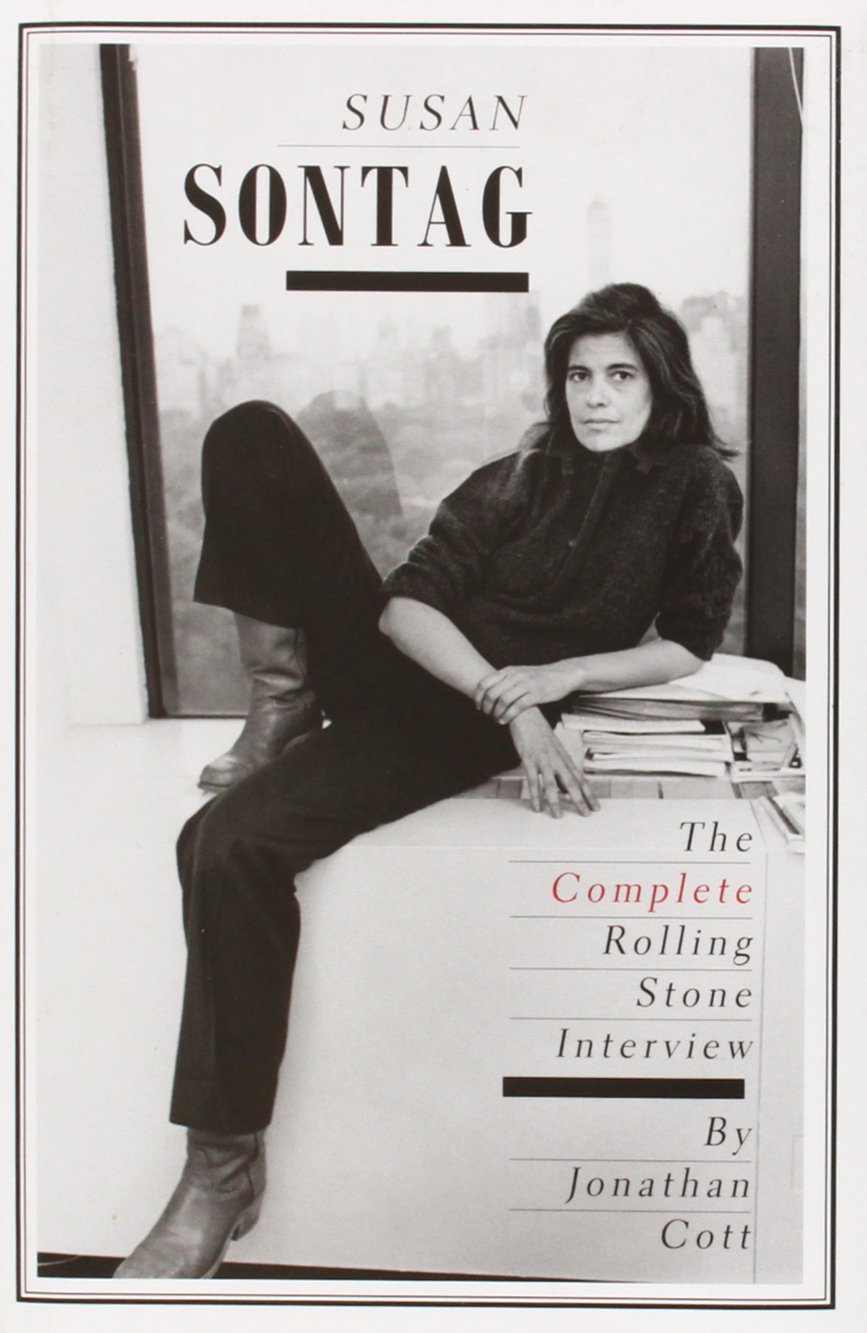
You can’t feel angry at nature. You can’t feel angry at biology. We’re all going to die — that’s a very difficult thing to take in — and we all experience this process.
It feels as if there’s this person — in your head, mainly — trapped in this physiological stock that only survives 70 to 80 years, normally, in any decent condition. It starts deteriorating at a certain point, and then for half of your life, if not more, you watch this material begin to fray. And there’s nothing you can do about it. You’re trapped inside it; and when it goes, you go.
I think the sense of a self trapped in something is impossible to get over. That’s the origin of all dualisms — Platonic, Cartesian or whatever. There’s no way that we can be conscious and not feel ‘I am in my body.’
Of course, you can try to come to terms with death, try to shift the axis of your activities to things that are less body-dependent as you get older: your body neither is as attractive to other people nor does it function in the way that is pleasurable to you.
But it also should be said that a lot of our ideas about what we can do at different ages and what age means are so arbitrary — as arbitrary as sexual stereotypes. People say all the time: ”Oh, I can’t do that. I’m 60. I’m too old.” Or ”I can’t do that. I’m 20. I’m too young.” Why? Who says so?
I think that the old-young polarization and the male-female polarization are perhaps the two leading stereotypes that imprison people. The values associated with youth and with masculinity [and I must add here cis-het whiteness] are considered to be the human norms, and anything else is taken to be at least less worthwhile or inferior. Old people have a terrific sense of inferiority. They’re embarrassed to be old. What you can do when you’re young and what you can do when you’re old is as arbitrary and without much basis as what you can do if you’re a woman or what you can do if you’re a man…
…This may be my limitation — and it probably is — but I cannot understand the truth except as the negation of falsehood. I always discover what I think to be true by seeing that something else is false: the world is basically full of falsehood, and the truth is something carved out by the rejection of falsehood. In a way, the truth is quite empty, but it’s already a fantastic liberation to be free of falsehood.
So I saw this band last night. Thought it would be thirty years too late, but MAN, do they still have it. Twisted. Blistering.
I never did get to see Leonard Cohen, though… something I will always be sad about, with the same tenor as the ache with which I have missed Nina Simone.
Visual creation by Romain Assénat & Ana Silva with the support of Atelier Graphoui. Improvisation with inks on glass and a video-feedback device, captured live without any post-production.
Order the album on CD/2xLP/DL here. www.erasedtapes.com · www.nilsfrahm.com
It’s 1962 March 28th
I’m sitting by the window on the Prague-Berlin train
night is falling
I never knew I liked
night descending like a tired bird on a smoky wet plain
I don’t like
comparing nightfall to a tired bird
I didn’t know I loved the earth
can someone who hasn’t worked the earth love it
I’ve never worked the earth
it must be my only Platonic love
and here I’ve loved rivers all this time
whether motionless like this they curl skirting the hills
European hills crowned with chateaus
or whether stretched out flat as far as the eye can see
I know you can’t wash in the same river even once
I know the river will bring new lights you’ll never see
I know we live slightly longer than a horse but not nearly as long as a crow
I know this has troubled people before
and will trouble those after me
I know all this has been said a thousand times before
and will be said after me
I didn’t know I loved the sky
cloudy or clear
the blue vault Andrei studied on his back at Borodino
in prison I translated both volumes of War and Peace into Turkish
I hear voices
not from the blue vault but from the yard
the guards are beating someone again
I didn’t know I loved trees
bare beeches near Moscow in Peredelkino
they come upon me in winter noble and modest
beeches are Russian the way poplars are Turkish
“the poplars of Izmir
losing their leaves. . .
they call me The Knife. . .
lover like a young tree. . .
I blow stately mansions sky-high”
in the Ilgaz woods in 1920 I tied an embroidered linen handkerchief
to a pine bough for luck
I never knew I loved roads
even the asphalt kind
Vera’s behind the wheel we’re driving from Moscow to the Crimea
Koktebele
formerly “Goktepé ili” in Turkish
the two of us inside a closed box
the world flows past on both sides distant and mute
I was never so close to anyone in my life
bandits stopped me on the red road between Bolu and Geredé
when I was eighteen
apart from my life I didn’t have anything in the wagon they could take
and at eighteen our lives are what we value least
I’ve written this somewhere before
wading through a dark muddy street I’m going to the shadow play
Ramazan night
a paper lantern leading the way
maybe nothing like this ever happened
maybe I read it somewhere an eight-year-old boy
going to the shadow play
Ramazan night in Istanbul holding his grandfather’s hand
his grandfather has on a fez and is wearing the fur coat
with a sable collar over his robe
and there’s a lantern in the servant’s hand
and I can’t contain myself for joy
flowers come to mind for some reason
poppies cactuses jonquils
in the jonquil garden in Kadikoy Istanbul I kissed Marika
fresh almonds on her breath
I was seventeen
my heart on a swing touched the sky
I didn’t know I loved flowers
friends sent me three red carnations in prison
I just remembered the stars
I love them too
whether I’m floored watching them from below
or whether I’m flying at their side
I have some questions for the cosmonauts
were the stars much bigger
did they look like huge jewels on black velvet
or apricots on orange
did you feel proud to get closer to the stars
I saw color photos of the cosmos in Ogonek magazine now don’t
be upset comrades but nonfigurative shall we say or abstract
well some of them looked just like such paintings which is to
say they were terribly figurative and concrete
my heart was in my mouth looking at them
they are our endless desire to grasp things
seeing them I could even think of death and not feel at all sad
I never knew I loved the cosmos
snow flashes in front of my eyes
both heavy wet steady snow and the dry whirling kind
I didn’t know I liked snow
I never knew I loved the sun
even when setting cherry-red as now
in Istanbul too it sometimes sets in postcard colors
but you aren’t about to paint it that way
I didn’t know I loved the sea
except the Sea of Azov
or how much
I didn’t know I loved clouds
whether I’m under or up above them
whether they look like giants or shaggy white beasts
moonlight the falsest the most languid the most petit-bourgeois
strikes me
I like it
I didn’t know I liked rain
whether it falls like a fine net or splatters against the glass my
heart leaves me tangled up in a net or trapped inside a drop
and takes off for uncharted countries I didn’t know I loved
rain but why did I suddenly discover all these passions sitting
by the window on the Prague-Berlin train
is it because I lit my sixth cigarette
one alone could kill me
is it because I’m half dead from thinking about someone back in Moscow
her hair straw-blond eyelashes blue
the train plunges on through the pitch-black night
I never knew I liked the night pitch-black
sparks fly from the engine
I didn’t know I loved sparks
I didn’t know I loved so many things and I had to wait until sixty
to find it out sitting by the window on the Prague-Berlin train
watching the world disappear as if on a journey of no return
19 April 1962
Moscow
__
(Thank you to Lesego Rampolokeng for showing me this poem I didn’t know I loved.❤)
‘Midlife Lazarus’ is taken from the forthcoming Little Annie record “TRACE” out on Tin Angel 20.05.16.
Film created by C Querci & A Bandez
Featuring Ryan Driver
Produced & Directed by C Querci (https://cquerci.com)
Dance & Choreography by Andrew Braddock (https://braddock.website)
… That’s what you had to come back for: the lament that we omitted. Can you hear me? I would like to fling my voice out like a cloth over the fragments of your death, and keep pulling at it until it is torn to pieces, and all my words would have to walk around shivering, in the tatters of that voice; as if lament were enough.
But now I must accuse: not the man who withdrew you from yourself (I cannot find him; he looks like everyone), but in this one man, I accuse: all men. When somewhere, from deep within me, there arises the vivid sense of having been a child, the purity and essence of that childhood where I once lived: then I don’t want to know it. I want to form an angel from that sense and hurl him upward, into the front row of angels who scream out, reminding God.
For this suffering has lasted far too long; none of us can bear it; it is too heavy — this tangled suffering of spurious love which, building on convention like a habit, calls itself just, and fattens on injustice. Show me a man with a right to his possession. Who can possess what cannot hold its own self, but only, now and then, will blissfully catch itself, then quickly throw itself away, like a child playing with a ball. As little as a captain can hold the carved Nike facing outward from his ship’s prow when the lightness of her godhead suddenly lifts her up, into the bright sea-wind: so little can one of us call back the woman who, now no longer seeing us, walks on along the narrow strip of her existence as though by miracle, in perfect safety — unless, that is, he wishes to do wrong. For this is wrong, if anything is wrong: not to enlarge the freedom of a love with all the inner freedom one can summon. We need, in love, to practice only this: letting each other go. For holding on comes easily; we do not need to learn it.
sulamith wolfling – the little mermaid
Are you still here? Are you standing in some corner? You knew so much of all this, you were able to do so much; you passed through life so open to all things, like an early morning. I know: women suffer; for love means being alone; and artists in their work sometimes intuit that they must keep transforming, where they love. You began both; both exist in that which any fame takes from you and disfigures. Oh you were far beyond all fame; were almost invisible; had withdrawn your beauty, softly, as one would lower a brightly colored flag on the gray morning after a holiday. You had just one desire: a year’s long work — which was never finished; was somehow never finished. If you are still here with me, if in this darkness there is still some place where your spirit resonates on the shallow sound waves stirred up by my voice: hear me: help me. We can so easily slip back from what we have struggled to attain, abruptly, into a life we never wanted; can find that we are trapped, as in a dream, and die there, without ever waking up. This can occur. Anyone who has lifted his blood into a years-long work may find that he can’t sustain it, the force of gravity is irresistible, and it falls back, worthless. For somewhere there is an ancient enmity between our daily life and the great work. Help me, in saying it, to understand it.
Do not return. If you can bear to, stay dead with the dead. The dead have their own tasks. But help me, if you can without distraction, since in me what is most distant sometimes helps.
“We will change nothing in the situation of the peoples of the world, if we do not change the belief that identity must be rooted, fixed, exclusive, and unaccommodating.”
– Édouard Glissant, in Introduction à une poétique du divers (Paris: Gallimard, 1996, p. 66)
CN: Chronic illness; Multiple Sclerosis; graphic depictions of bodies and illness.
‘Performance Scale’ is a poem about Genna Gardini’s personal experience of being diagnosed with Multiple Sclerosis (MS). It was adapted into a film by three people close to Gardini and personally affected by MS. The film was created as part of Gardini’s 2016 ICA National Fellowship project MS Independent: Diagnosis.
Written by Genna Gardini
Directed by Gary Hartley
Performed by Amy Louise Wilson
Filmed and edited by Francois Knoetze
A Horses’ Heads Production, created with the assistance of the Institute for Creative Arts.
The startling fact was this: my body was offering a precise physiological equivalent to what had been going on in my mind.
Joan Didion, The White Album.
1:
I spent so many years attacking my body,
finding fault in faint abundance, obsessing over every lack
that it didn’t surprise me when I woke up one morning
to discover that it was finally fighting me back.
2:
This was the year you kept killing all the machines you owned
and that is what we refer to as a “running motif”
(and that is what we refer to as “dramatic irony”).
3:
You’ll come to,
conked out on some strange cistern in a Southern Suburbs mall,
your legs hinging against the plastic billboard of the bathroom door,
angled in the jamb like damp cardboard
folded and forced into a full stop.
4:
This is paper as metaphor and limbs as punctuation.
This is the reverse of writing.
5:
You’ll find your phone lying, lesioned, next to you,
a fissure fresh down its crustacean container
like a phantom crack. Like a mime at a wall,
bucking but flat.
6:
You’re tipped against a nurse
whose prophylactic palm pats nerved and certain on your neck.
You have heard her tell the others that they are good girls.
You are not a good girl
because when she sets you straight on the mat, then the scale,
she only says, “Try not to hurl”, then
“You must make a note of your weight”.
7:
The zinging technology of your mouth
steams against the frosted door of the consultation room.
8:
She is warm and alive as an urn at the Church fete
and you are the Styrofoam cup
leaning at her tap.
9:
“Look at it this way, at least you’ll be skinny!”
is quite a funny thing to say to someone
when you think they could be dying.
10:
You began to let your bob grow unbidden,
split and wrought
because if a part of your physicality still chooses to thrive
who are you cut it short?
10:
You make these kinds of jokes.
11:
You are convinced that the nails and hair of a corpse
inch out past conclusion, intrepid as weeds, eternal as worms,
eyeless and edging in all directions, past even the last right
to scratch into life. This is poetry, I thought,
before I was told that I was wrong.
12:
You retract back into yourself, creating the illusion of growth,
moving like a skirt hitched above the knee, balking as if in shock
pressed against the back of the closest ablution block.
13:
At 27, I became blind in one eye
but didn’t realise, because I only notice my mouth.
I thought perhaps a crack had formed between my head
and the cheese-cloth membrane of my disbelief.
14:
Speaking is uncertain and pinpricked.
It is shrouded. It is grief.
15:
Every bad thing that’d happened to me before
was because a man had decided to teach me a lesson
and this is why, after I found out,
I had to reconsider atheism.
14:
You are turning a manuscript into a
fan with the bridging press of pleats.
You are not Keats.
15:
The good doctor made eye-contact with me for the whole beat
which I know is supposed to convey the meaningfulness of the moment
because of my expensive acting degree.
16:
Raisins injected with water.
17:
Thinned the way paint under the slow drip of turpentine is.
18:
I pick this bed because of its proximity to the TV. I am surrounded by women who are in various states of collapse. One spends each day lamenting the canteen’s slopped and unbroiled chicken ala king, sending voicenotes to her daughters to remember to let the cat in. The others cannot walk. I do not want to know them. I do not want to admit that I am one of them. At first, I shuffle, hesitantly, like it’s a character choice, until I realise I am not performing and the gimmick has stuck, gammy. My legs lurch and twitch beyond me.
19:
I look up and there is nothing.
I look down at my own arm, which the nurse has stuck so repeatedly, finding me false and veinless, that the blood clotted before it gathered, like I was a boring meeting they wanted to leave and this might be the exit.
I look up and she is staring straight at me.
Her face is wide and aimed. I pull out my earphones but she is whispering. I say her name. She is mouthing something and I do not know the words but I know that what she is saying is help me and I cannot even help myself
which is why I am plugged into a wall like a faulty Blackberry on charge
which is why I am connected to wet metal that looks like a clothes horse,
which is why I am making so many Joan Crawford wire hanger jokes.
This means help me.
I thumb the call button. The station, which perpindiculates next to us is unlike, myself, without staff. I use the IV as a cane and I call out but the movement of my voice is as interrupted as my legs, cramped, boned by pain. There is a sound here, it rings out, clean and to the side as a scalpel. Panic is a disinfected metal knife, it slices me from myself, each thought going into the brain instead of the mouth, bounced like an email sent to the incorrect address. The prospect of the seizure is thick and electric in her bones, I can see it. The day before, her family had come to visit. Two of them explained how this latest bout was caused of the evil thoughts she allowed to enter her head. She must lose them. My own – which buzzed, a constant cortex, old and reliable as a Cortina that has been veering for years, cutting breaks and ties with whoever passed me by – stay stuck. I wish I had a demon but I don’t, I have my legs and I run past corn rows of beds to find some assistance
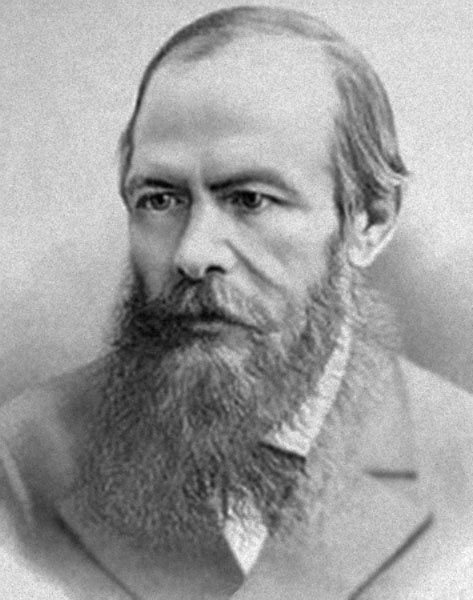
“A man who lies to himself, and believes his own lies, becomes unable to recognise truth, either in himself or in anyone else, and he ends up losing respect for himself and for others. When he has no respect for anyone, he can no longer love, and in him, he yields to his impulses, indulges in the lowest form of pleasure, and behaves in the end like an animal in satisfying his vices. And it all comes from lying–to others and to yourself.”
— Fyodor Dostoevsky (1821-1881), from The Brothers Karamazov
‘The journey has been so humbling! The significance of the search for self and internal happiness has been so clear and i’ve started listening in a big way for the very first time. This is my way of saying to myself “Purity i hear you loud and clear”.
This video embodies everything i believe in and stand for as a woman, as an artist and as an ever growing entity. I’ll let the piece speak for itself…’
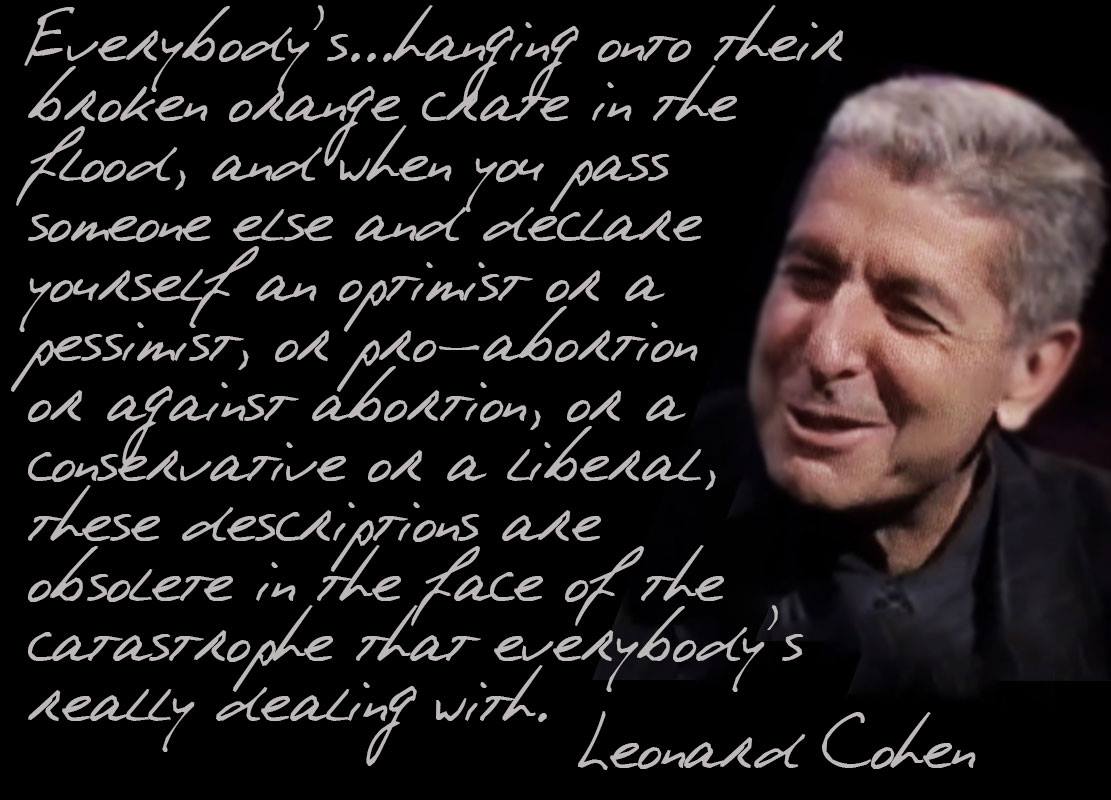
Twenty-four years ago, when Leonard Cohen appeared on the BBC TV show, Later with Jools Holland, the host asked if he believed he was an optimistic person.



 fleurmach