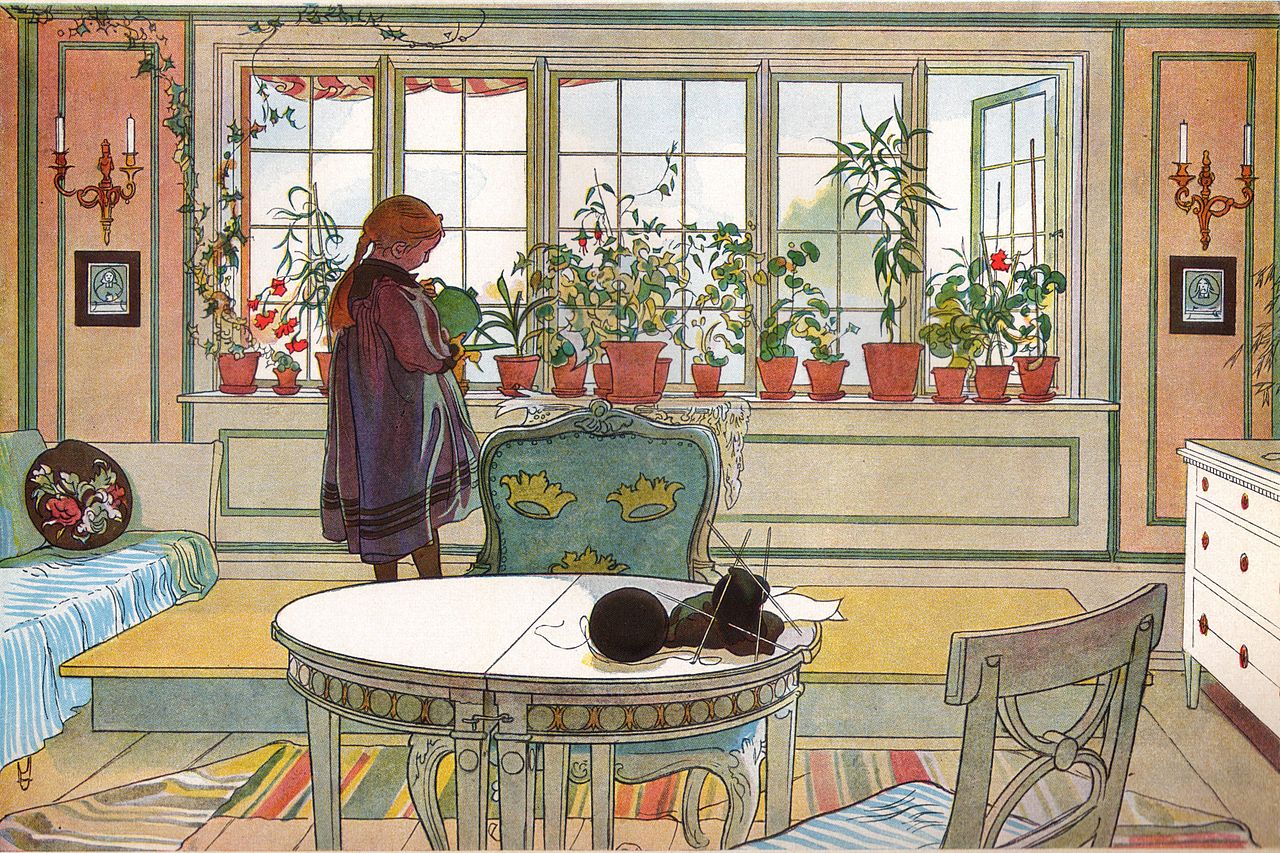
A watercolour from the book “Ett Hem” (A Home). More about Carl Larsson HERE. This is a painting of a room in the Larssons’ home that exists to this day, decorated exactly the same, in Sundborn, about 11 km from where I am living.
A watercolour from the book “Ett Hem” (A Home). More about Carl Larsson HERE. This is a painting of a room in the Larssons’ home that exists to this day, decorated exactly the same, in Sundborn, about 11 km from where I am living.
“The night was mighty dark so you could hardly see, ‘cos the moon refused to shine… ”
From Double Time (1978).

Utterly fascinating documentary on the use of the “Amen Break”, sampled from The Winston’s 1969 soul record, “Amen Brother” (although the narrator has the most boring voice ever, and the images shown are really pointless – it’s actually an audio documentary), looking at the intersection of technology, creativity and copyright.
Luister.
 no one leaves home unless
home is the mouth of a shark
you only run for the border
when you see the whole city running as well
your neighbours running faster than you
breath bloody in their throats
the boy you went to school with
who kissed you dizzy behind the old tin factory
is holding a gun bigger than his body
you only leave home
when home won’t let you stay.
no one leaves home unless home chases you
fire under feet
hot blood in your belly
it’s not something you ever thought of doing
until the blade burnt threats into
your neck
and even then you carried the anthem under
your breath
only tearing up your passport in an airport toilets
sobbing as each mouthful of paper
made it clear that you wouldn’t be going back.
you have to understand,
that no one puts their children in a boat
unless the water is safer than the land
no one burns their palms
under trains
beneath carriages
no one spends days and nights in the stomach of a truck
feeding on newspaper unless the miles travelled
means something more than journey.
no one crawls under fences
no one wants to be beaten
pitied
no one chooses refugee camps
or strip searches where your
body is left aching
or prison,
because prison is safer
than a city of fire
and one prison guard
in the night
is better than a truckload
of men who look like your father
no one could take it
no one could stomach it
no one skin would be tough enough
the
go home blacks
refugees
dirty immigrants
asylum seekers
sucking our country dry
niggers with their hands out
they smell strange
savage
messed up their country and now they want
to mess ours up
how do the words
the dirty looks
roll off your backs
maybe because the blow is softer
than a limb torn off
or the words are more tender
than fourteen men between
your legs
or the insults are easier
to swallow
than rubble
than bone
than your child body
in pieces.
i want to go home,
but home is the mouth of a shark
home is the barrel of the gun
and no one would leave home
unless home chased you to the shore
unless home told you
to quicken your legs
leave your clothes behind
crawl through the desert
wade through the oceans
drown
save
be hunger
beg
forget pride
your survival is more important
no one leaves home until home is a sweaty voice in your ear
saying-
leave,
run away from me now
i dont know what i’ve become
but i know that anywhere
is safer than here
—
Warsan Shire is a Kenyan-born Somali poet, writer and educator based in London. Born in 1988, Warsan has read her work extensively all over Britain and internationally – including recent readings in South Africa, Italy, Germany, Canada, North America and Kenya – and her début book, TEACHING MY MOTHER HOW TO GIVE BIRTH (flipped eye), was published in 2011. Her poems have been published in Wasafiri, Magma and Poetry Review and in the anthology The Salt Book of Younger Poets (Salt, 2011). She is the current poetry editor at SPOOK magazine. In 2012 she represented Somalia at the Poetry Parnassus, the festival of the world poets at the Southbank, London. Warsan is also the unanimous winner of the 2013 Inaugural Brunel University African Poetry Prize.
Ever noticed how when you have to leave a place, time speeds up in the last few days, almost gurgling as it’s sucked into the wormhole of your impending absence?
Luister is a documentary about the lives of students of colour who attend Stellenbosch University, a South African institution of higher learning. In a series of interviews, students recount instances of racial prejudice that they continue to experience in the town of Stellenbosch, and the enormous challenges that they face due to the use of Afrikaans as a language of teaching at the university. Luister is a film about Afrikaans as a language and a culture. It is a film about the continuing racism that exists within a divided society. It is a film about a group of students whose stories have been ignored. Luister is the Afrikaans word for Listen.
Watch Roger Young’s award-winning portrait of white South African male entitlement:
Practically unconscious from a night of drinking, Sebastian is deposited by taxi outside his security complex. Too late he realises that he doesn’t have his keys, wallet or cellphone.
Failing to convince a security guard to just let him in, he sets off into the night to find the taxi driver responsible. Sebastian attempts to bully his way home through a mounting series of micro-aggressions against women and service staff, verging increasingly on violence, unaware of the redemption that lies just outside his grasp.
“A portrait of a young man who, while seemingly popular, has no real relationships, no community, and yet no sense of humility.” – Dylan Valley / Africa Is A Country
“A slick, fierce sociopolitical critique” – Grethe Koen / City Press
Winner: Best South African Short
– DIFF 2014
Official Selection:
– Lights, Camera, Africa (Nigeria)
– AFRIFF (Nigeria)
– Zimbabwe International Film Festival
– Shnit Cape Town (South Africa)
– Lusaka International Film and Music Festival (Zambia)
– Verona Festival Africano (Italy)
– Cap Spartel Film Festival (Morocco)
– XPONorth Film Festival (Scotland)
– Picture Farm Film Festival (USA)
– IMSFF (South Africa)
– Indie Karoo Film Festival (South Africa)
Rhodes Must Fall issue a powerful new statement:
Naomh, 11 August 2015.
Read THIS.
Off their brilliant 1980 debut album, Jeopardy, reissued in 2002 by Renascent Records.
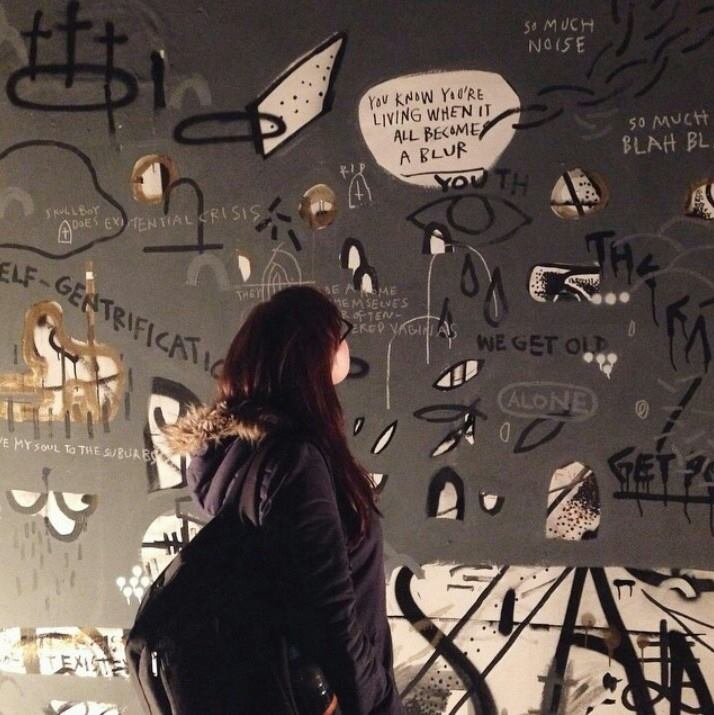
Photo of Rosemary Lombard by Julia Mary Grey. Wall by Skullboy.
More Skullboy HERE.

Fiona is just so achingly wonderful… This is from a 2009 album of Cy Coleman songs, The Best Is Yet to Come – The Songs of Cy Coleman.
The white geek entitlement blues. ;)
The grossness of WASP hegemony… this band just GOT it. Hearing them in my teens in South Africa was truly a godsend.
A formidable collab.
Judy Garland really can break your heart.
The first ever recording of this song with lyrics by Dorothy Parker.

Kay Nielsen, 1914. Illustration from ‘East of the Sun and West of the Moon: Old Tales from the North’.
Check out the whole book at Project Gutenberg.
This song is a thing of horrifying beauty. No empathy, no kindness, just loss.
 HUMA Seminar Series
“’Then you are a man, my son’: Kipling and the Zuma Rape Trial” presented by Lucy Graham (UWC)
When: Thursday, 30 July 2015
Time: 13h00 – 14h30
Venue: HUMA Seminar Room, 4th Floor, The Neville Alexander Building (formerly known as the Humanities Building), University Avenue, Upper Campus, UCT
One of the strangest incidents during the Jacob Zuma rape trial was surely the moment when Judge Willem van der Merwe, handing down his verdict that exonerated Zuma, addressed Zuma with the following words: “Had Rudyard Kipling known of this case at the time he wrote his poem, ‘If’, he might have added the following: ‘And, if you can control your body and your sexual urges, then you are a man, my son’”.
It is now nine years since the Zuma rape trial, and yet this allusion to Kipling’s famous poem has been passed over by other commentators on the trial. Of what exactly is Kipling a spectre as he appeared in the judge’s verdict, and how do we read the judge’s strange politics of (dis)affinity that arises out of his rescripting of Kipling: his insistence on the developmental and racialised difference of boyhood and manhood, while at the same time his possible consolidation of a more absolute difference based on gender? How was discourse and performativity during and around the Zuma rape trial related to the history of “Zuluness”, and to the reception of narratives of intraracial sexual violence by the ANC? What significance does an analysis of the Zuma rape trial that takes into account colonial history have for contemporary South Africa, and specifically for the UCT: Rhodes Must Fall movement at the University of Cape Town? In this paper I am interested in the ways in which spectres of colonial patriarchy continue to haunt the South African present.
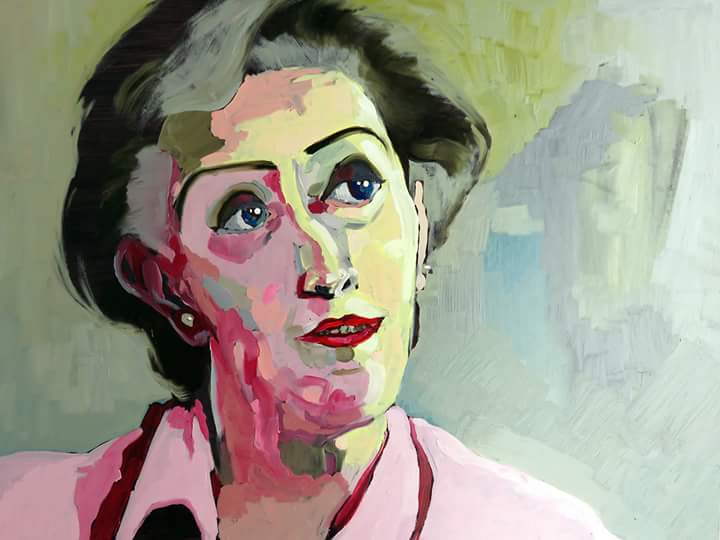
"The Vacillating Liberal" by Lizza Littlewort. 2015.
Just dreamed I was working at a mattress abattoir/factory in some long ago time and place. The mattresses were somehow living organisms. I had to use a guillotine and also sometimes a huge cleaver, if the guillotine didn’t slice all the way through, and chop them cleanly and very systematically, blood pooling on the rushes underfoot. Every blow I dealt nauseated me to tears. There was a foreman forcing me to speed up all the time. There was nothing else to the dream but this enforced, repetitive violence, and all I could do to try to make it better was to do the awful hacking with more precision.
But what does it mean?
Myself, I think it has to do with being inescapably forced to inhabit the violent, corporate machine of colonialism… I’m working on knowledge production about Africa by missionaries and scientists, through looking at archival objects, which are objects but also subjects, violently wrenched from their contexts. The mattress here symbolises something… maybe related to peace of mind, restfulness, not being awake or aware… I don’t know. Whatever it is, it is being violently ruptured. I think this could be about being forced to make one’s bed to lie in, as a researcher and writer inserted into the chain of murderous history, unable to escape perpetuating it even as I try to undo it, still half asleep.
 fleurmach