he is on a journey, during the night…

‘He is on a journey, during the night, the end of which keeps receding. He has a sense of the danger, of the loss that the pseudo-object attracting him represents for him, but he cannot help taking the risk at the very moment he sets himself apart. And the more he strays, the more he is saved.’

– Julia Kristeva, 1982

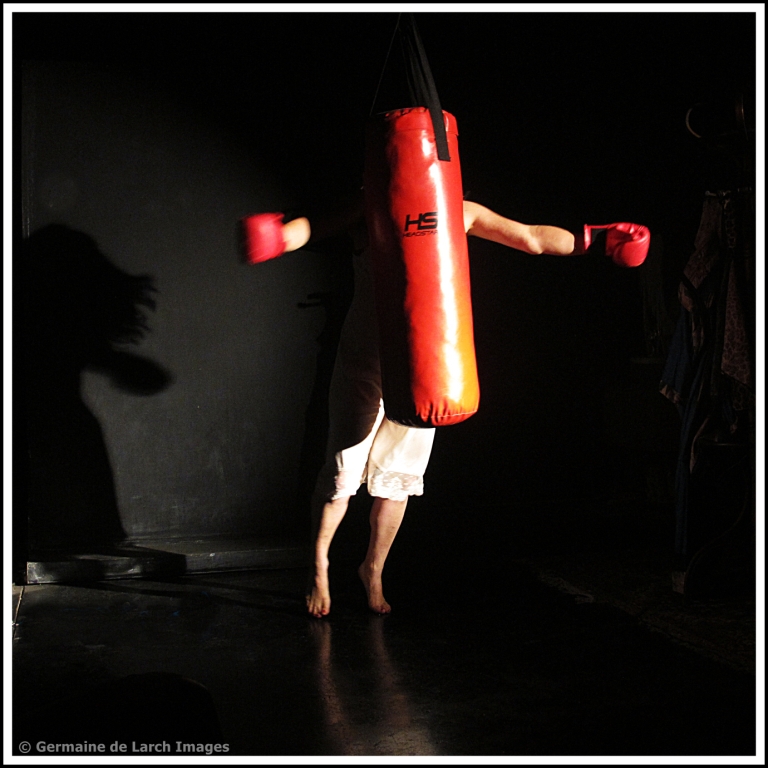
doos (2008)

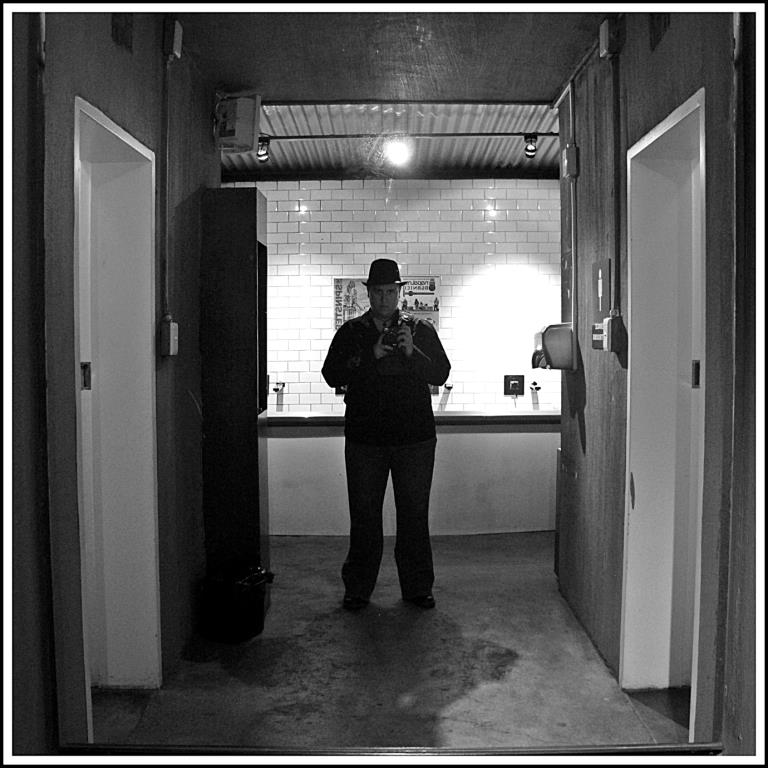
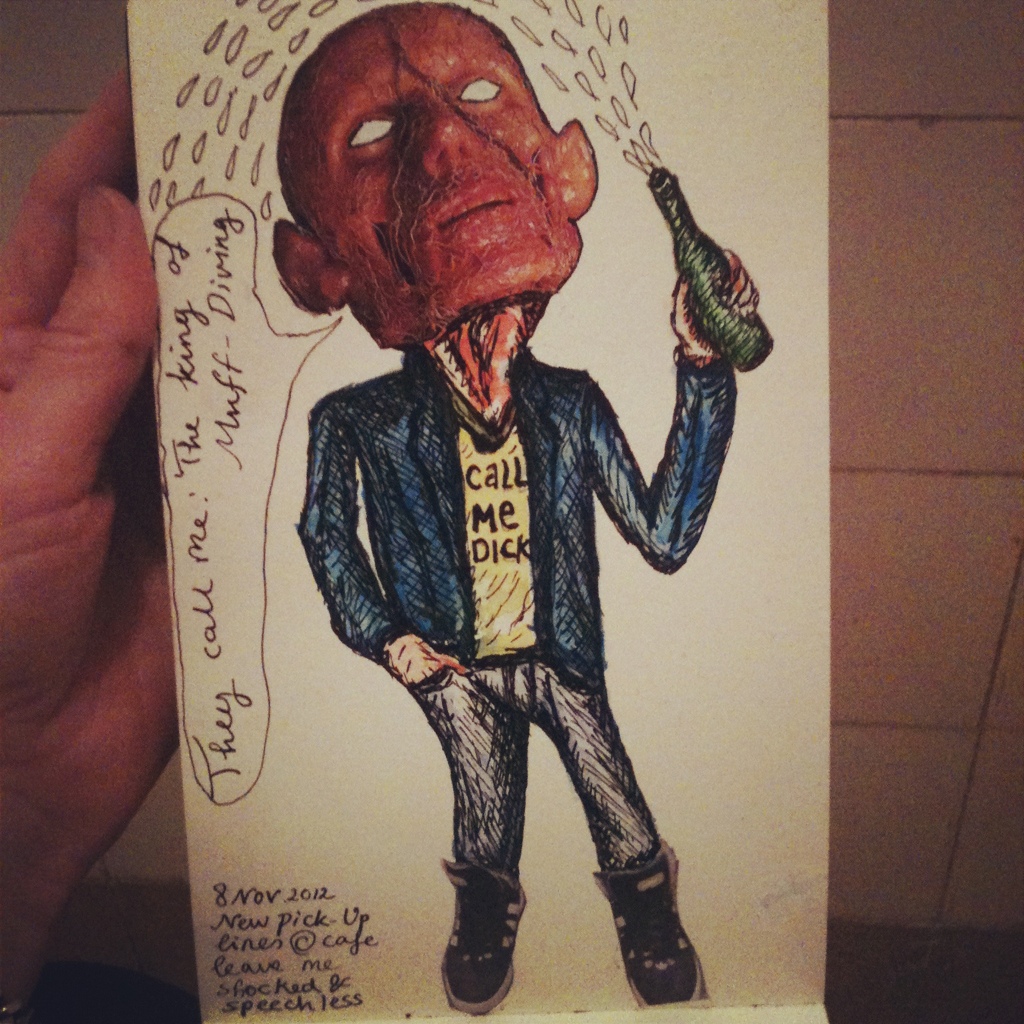
Sometimes I wish I had a penis.
How much simpler it would make things!
We’d hang together,
free flowing,
without ration,
without suspicion,
without tourniquets
to cut off our blood
if it quickened
in each other’s presence.
It’s brutally,
uselessly,
PAINFUL
being confined to this
invisible,
plugged-up
box.

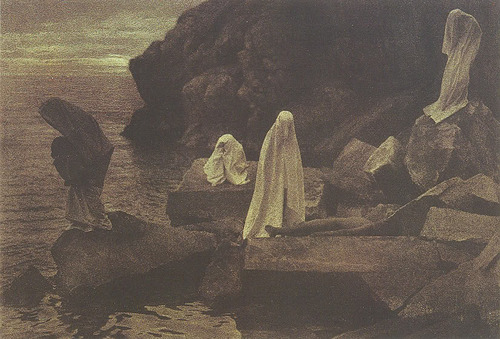
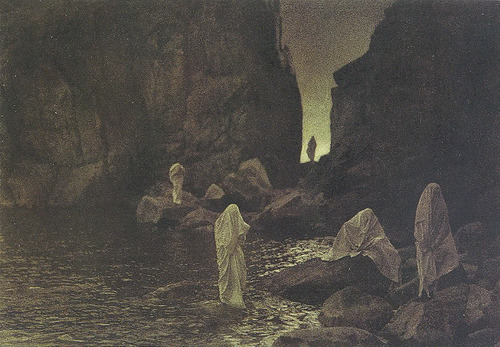
les parcae

Image

Image

las parcas 1 and 3                                                                                                             bromoil transfer on paper (1930)

from a triptych by Spanish photographer Joaquim Pla Janini (1879 – 1970) based on Les Parcae (the Fates).

aldous and kurt on being kind

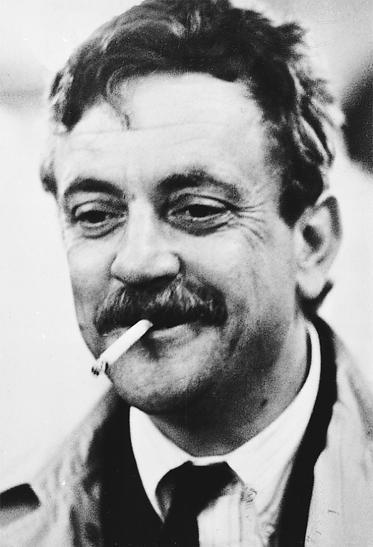
Hello babies. Welcome to Earth. It’s hot in the summer and cold in the winter. It’s round and wet and crowded. On the outside, babies, you’ve got a hundred years here. There’s only one rule that I know of, babies ―”God damn it, you’ve got to be kind”.
― Kurt Vonnegut, from God Bless You, Mr. Rosewater

hafez on loneliness

Don’t surrender your loneliness so quickly.
Let it cut more deeply.
Let it ferment and season you
as few humans and even divine ingredients can.

Something missing in my heart tonight
has made my eyes so soft,
my voice so tender,
my need for God absolutely clear.

~ Hāfez

Biographical note:
Khwāja Šams ud-Dīn Muhammad Hāfez-e Šīrāzī, or simply Hāfez (Persian: خواجه شمس‌الدین محمد حافظ شیرازی), was a Persian mystic and poet. He was born sometime between the years 1310 and 1337. John Payne, who has translated the Diwan Hafez, regards Hafez as one of the three greatest poets of the world. His lyrical poems, known as ghazals, are noted for their beauty and bring to fruition the love, mysticism, and early Sufi themes that had long pervaded Persian poetry. Moreover, his poetry possesses elements of modern surrealism.

le journal de personne – falestine

Abîme… Abîme!
Tu as commis le pire des crimes
En faisant de Dieu
L’instrument de ta morsure.

Mon père s’est marié à deux reprises
Une fois à l’Est et une deuxième fois à l’Ouest… de Jérusalem…
Je suis palestinienne
Et ma demi- sœur est israélienne
On ne se parle plus…
Je parle arabe, elle parle hébreu
Mais on ne se comprend plus…
On fait semblant de ne plus se comprendre!

From HERE.

sezen aksu – hıdrellez (1997)

Turkish language version of the Roma song “Ederlezi”, made famous outside the Balkans via Goran Bregovic’s version in Emir Kusturica’s film, Time of the Gypsies.


The song got its name from Ederlezi (Turkish: Hıdırellez) which is a spring festival celebrated by Roma people in the Balkans, Turkey and elsewhere around the world.

From Wikipedia:
Hıdırellez or Hıdrellez (Turkish: Hıdrellez or Hıdırellez, Azerbaijani: Xıdır İlyas or Xıdır Nəbi, Crimean Tatar: Hıdırlez, Romani language: Ederlezi) is celebrated in Turkey and throughout the Turkic world as the day on which prophets Hızır (Al-Khidr) and Ilyas (Elijah) met on the earth. Hıdırellez starts on May 5 night and falls on May 6 in the Gregorian calendar and on April 23 in the Julian calendar. It celebrates the arrival of spring and is a religious holiday for the Alevi as well. Đurđevdan or the Feast of Saint George is the Christian variety of this spring festival celebrated throughout the Balkans, including Serbia and Bulgaria, notably in areas under the control of the Ottoman Empire by the end of the 16th century.

There are various theories about the origin of Hızır and Hıdırellez. Ceremonies and rituals were performed for various gods with the arrival of the spring or summer in Mesopotamia, Anatolia, Iran and other Mediterranean countries since ancient times. One widespread belief suggests that Hızır attained immortality by drinking the water of life. He often wanders the earth, especially in the spring, helping people in difficulty. People see him as a source of bounty and health, as the festival takes place in Spring, the time of new life.

English translation:
Spring has come,
I’ve tied a red pouch on a rose’s branch,
I’ve vowed a house with two rooms
In the name of a lover
The mountain is green, the branches are green
They’ve awakened for the bayram (festival day)
All hearts are happy
Only my fate is black
The scent of jonquils is everywhere,
It’s time.
This spring, I’m the only one
Whom the bayram has not affected
Don’t cry, Hıdrellez
Don’t cry for me
I’ve sowed pain, and instead of it,
Love will sprout, will sprout
In another spring.
He has neither a way (known) nor a trace
His face is not familiar
The long and short of it,
My wish from the God is love.
I don’t have anyone to love, I don’t have a partner
One more day has dawned.
O my star of luck,
Smile on me!

(Translation based on the one here; not sure how good it is!)

literary cats

There are cats and cats. – Denis Diderot
Patricia Highsmith with “Ripley”
 W.H. Auden with “Pangur”
“Pangur, white Pangur, How happy we are
Alone together, scholar and cat.” 
 Aldous Huxley with “Limbo”
“No man ever dared to manifest his boredom so insolently as does a Siamese tomcat when he yawns in the face of his amorously importunate wife.” – Aldous Huxley
Sylvia Plath with “Daddy”
“And I a smiling woman. 
I am only thirty. 
And like the cat I have nine times to die.”
Doris Lessing with “Black Madonna”
 Samuel Beckett with “Murphy” and “Watt”
 Mark Twain with “Huckleberry”
George Bernard Shaw with “Pygmalion”
 William Carlos Williams with “Adam and Eve”
As the cat
by William Carlos Williams
As the cat
climbed over
the top ofthe jamcloset
first the right
forefootcarefully
then the hind
stepped down
into the pit of
the empty
flowerpot
 Gore Vidal with “Caligula”
 Randall Jarrell with “Little Friend”
Edward Gorey with “Harp, Brown and Company”
 Ezra Pound with his three cats (also tried for high treason after the war)
Tame Cat
by Ezra Pound
It rests me to be among beautiful women
Why should one always lie about such matters?
I repeat:
It rests me to converse with beautiful women
Even though we talk nothing but nonsense,The purring of the invisible antennae
Is both stimulating and delightful.  
 Ernest Hemingway with “Nick”
 
Ernest Hemingway had an affinity for many things, his feline companions being one of them. The “Hemingway Cat,” or polydactyl, is a feline that, instead of the normal 18 toes, has six or more toes on the front feet and sometimes an extra toe on the rear. Hemingway had many talents and interests. He was an extreme cat-lover because he admired the spirit and independence of the species. He acquired his first feline from a ship’s captain in Key West, Florida, where he made his home for many years. Today, around 60 felines live at the Ernest Hemingway Museum and Home in Key West. They are protected by the terms left in his will.  
 
 Raymond Chandler with “Big Sleep”
 Truman Capote with “Tiffany”
“She was still hugging the cat. “Poor slob,” she said, tickling his head, “poor slob without a name. It’s a little inconvenient, his not having a name. But I haven’t any right to give him one: he’ll have to wait until he belongs to somebody. We just sort of took up by the river one day, we don’t belong to each other: he’s an independent, and so am I. I don’t want to own anything until I know I’ve found the place where me and things belong together. I’m not quite sure where that is just yet. But I know what it’s like.” She smiled, and let the cat drop to the floor. “It’s like Tiffany’s,” she said.” 
Elizabeth Bishop with “Minnow”
Lullaby for the Cat
by Elizabeth BishopMinnow go to sleep and dream,
Close your great big eyes:
Round your bed Events prepare
The pleasentest surprise.Darling Minnow, drop that frown,
Just cooperate.
Not a kitten shall be drowned
In the Marxist State.Joy and Love will both be yours,
Minnow, don’t be glum.
Happy days are coming soon –
Sleep, and let them come . . .

Churchill with “Marmelade”

While many bits of trivia might be known about Winston Churchill, his love of felines isn’t necessarily one of them. Nevertheless, he owned several cats and, during his later years, was particularly fond of Jock, who was a “ginger tom” (a “marmalade cat”). During his time as PM, his best-known cat was a grey called Nelson. During a dinner at the PM’s country residence, Chequers, American war correspondent Quentin Reynolds noted Churchill as saying: “Nelson is the bravest cat I ever knew. I once saw him chase a huge dog out of the Admiralty. I decided to adopt him and name him after our great Admiral.” During dinner, Reynolds noted, “When Mrs. Churchill was not looking, the Prime Minister sneaked pieces of salmon to Nelson.” There were even rumors that Nelson sat in with his master during Cabinet meetings, and Churchill once told a colleague that Nelson was doing more than he was for the war effort.
Allen Ginsberg with “Howl”
“I saw the best cats of my generation destroyed by madness.”
 Jack Kerouac with “Tyke”
 ”Holding up my 
purring cat to the moon 
I sighed.”
 William S. Burroughs with “Junkie”
Charles Bukowski with “Factotum”
The History Of One Tough Motherfucker
by Charles Bukowski (last verse)
I shake the cat, hold him up in 
the smoky and drunken light, he’s relaxed he knows… 
it’s then that the interviews end 
although I am proud sometimes when I see the pictures 
later and there I am and there is the cat and we are photo- 
graphed together. 
he too knows it’s bullshit but that somehow it all helps.
 Don Delillo with “Mao II”
Hermann Hesse with “Narciss”
Jorge Luis Borges with “Aleph”
Julio Cortázar with “Bestiario”
 Alberto Moravia with “Agostino”
 Jospeh Brodsky with “Urania”
Haruki Murakami with Kafka
 André Bazin with “Chaplin”
 Louis-Ferdinand Céline with “Mea Culpa”
Françoise Sagan with “Brahms”
Jean-Paul Sartre with “Nothing”
Albert Camus with “Stranger”
Jaques Derrida with “Logos”
“Logos, a living, animate creature, is thus also an organism that has been engendered. An organism: a differentiated body proper, with a center and extremities, joints, a head, and feet.”   (Jaques Derrida, Plato’s Pharmacy)
 Michel Foucault with “Insanity”
Robert Frost
The cat comes into the room.
I put the cat out.
The cat comes in again.
(Robert Frost)
The Ad-dressing of Cats
by T.S. Eliot 

You've read of several kinds of Cat,
And my opinion now is that 
You should need no interpreter 
To understand their character.
You now have learned enough to see
That Cats are much like you and me
And other people whom we find
Possessed of various types of mind.
For some are same and some are mad
And some are good and some are bad
And some are better, some are worse--
But all may be described in verse.
You've seen them both at work and games,
And learnt about their proper names,
Their habits and their habitat:
But how would you ad-dress a Cat?

So first, your memory I'll jog,
And say:  A CAT IS NOT A DOG.

And you might now and then supply
Some caviare, or Strassburg Pie,
Some potted grouse, or salmon paste--
He's sure to have his personal taste.
(I know a Cat, who makes a habit
Of eating nothing else but rabbit,
And when he's finished, licks his paws
So's not to waste the onion sauce.)
A Cat's entitled to expect
These evidences of respect.
And so in time you reach your aim,
And finally call him by his NAME.

So this is this, and that is that:
And there's how you AD-DRESS A CAT.

Jean Gaumy

Beautiful pictures from writersandkitties, entry shared from Weimarart

I feel terribly ashamed. I should rename my poor cat, who was ruined to a life of cuteness with a name like Tempura! I should rename her, or add a sassy surname, like Tempura Trenchett, to regain her literary dignity.

How will she feel if she ever had to come across Jean Paul Sartre’s ghost of a cat, “Nothing”!

I only wish I thought of the idea first.

reblogged from pennysparkle
katibim (üsküdar’a gider iken) – my scribe (going to üsküdar) (1929)


Folk song, recorded in 1949 in Istanbul. Sung by Safiye Ayla. Played with violin, kanun, ud and clarinet. This recording is in the public domain. You can download it HERE.

Background
Üsküdar (Scottary), now a section of Istanbul on the Anatolian (Asian) side, used to be a village/town across the Bosphorus from Istanbul proper, where nursing began during the Crimean War (British and French assisted Turks against Russia, 1854-56).

There is much fascinating debate about the origins of this song. Whose Is This Song? is a documentary made about the subject by Adela Peeva in 2003. Here’s the blurb:

“In her search for the true origins of a haunting melody, the filmmaker travels to Turkey, Greece, Macedonia, Albania, Bosnia, Serbia and Bulgaria. The trip is filled with humour, suspense, tragedy and surprise as each country’s citizens passionately claim the song to be their own and can even furnish elaborate histories for its origins. The tune emerges again and again in different forms: as a love song, a religious hymn, a revolutionary anthem, and even a Scottish military march. The powerful emotions and stubborn nationalism raised by one song seem at times comical and other times, eerily telling. In a region besieged by ethnic hatred and war, what begins as a light-hearted investigation ends as a sociological and historical exploration of the deep misunderstandings between the people of the Balkans.”

You can watch the preview HERE.

Lyrics
Here’s a translation of the Turkish version’s lyrics (a compound I have made from various versions I found online), which have been credited in some places to Nuri Halil Poyraz (1885 – 1950) and Muzaffer Sarisozen (1899 – 1963):

On the way to Üsküdar, it started raining
My scribe (katip) wears a frock coat, its long skirt muddied
He has just woken from sleep: his eyes are languid

The scribe is mine; I am his; hands will intertwine
It looks so lovely on my scribe, that starched shirt of his

On the way to Üsküdar, I found a handkerchief
I filled the handkerchief with Turkish delight (lokum)
As I was looking for my helper, I found him next to me

The scribe is mine; I am his; what is it to others?
It looks so lovely on my clerk, that starched shirt of his.

since i was born, i started to decay

A slow version of “Teenage Angst”  by Placebo, live in Brixton, 1998… They came to South Africa around this time, the support act on a Garbage tour. My boyfriend and I caught a bus up to Jo’burg one day in the middle of end-of-year exams to see them. We had to take the bus back that same night; we couldn’t even stay to see Garbage. It was so worth it… The depth of Brian Molko’s black hole magnetism.