brave new leaders

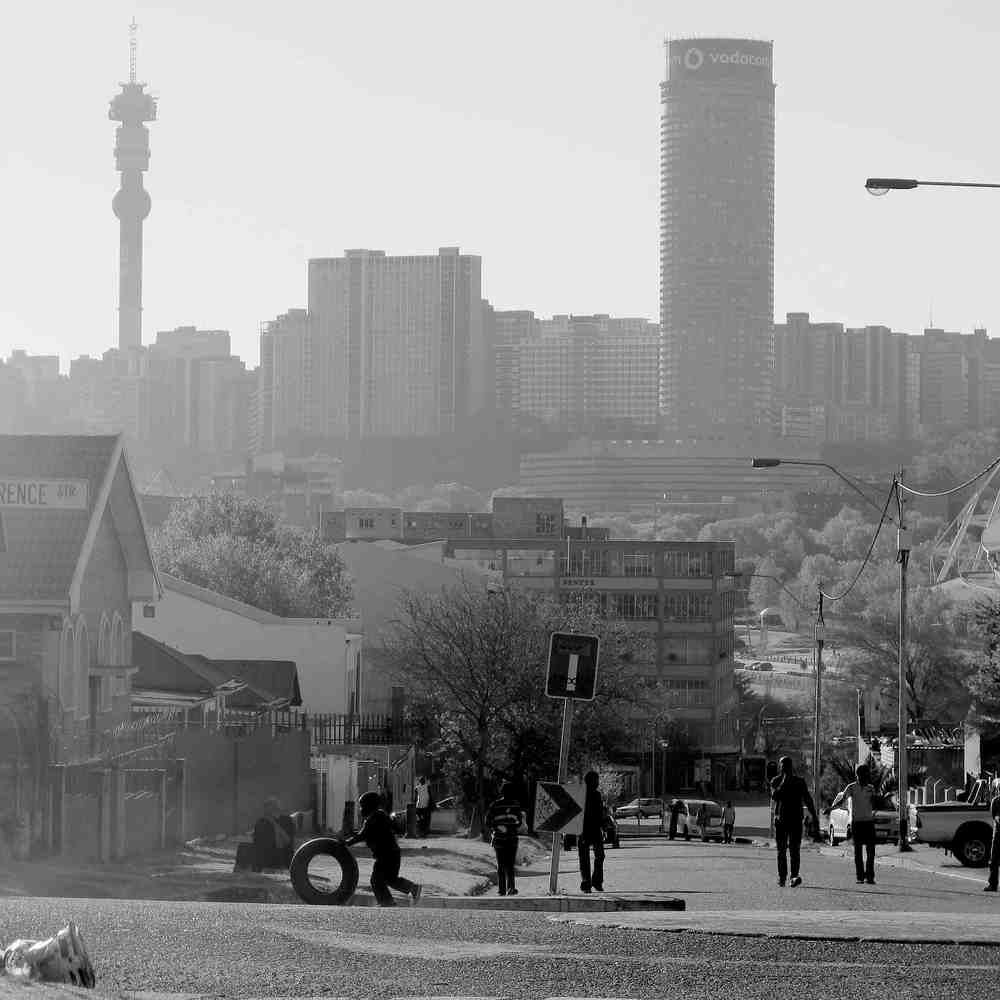
Why is it that people we entrust running our countries to – and therefore, in effect, collectively, the world – don’t need to have a degree? A doctor needs to study for seven gruelling years before he or she is allowed to examine and treat your body, but politicians can somehow take a country to glory or ruin based on being elected on sheer charisma.

Would you let someone operate on you because they have a great smile? No? Strange that we let people run a country who, in South Africa for instance, never even attended high school.

Why not establish a special college , call it Polit School, where those who excel at school – the top academics, head boys and girls, etc – go to, and are groomed for, in order to learn how to run a country? Or, if someone who has already left school wants to run a municipality, province or country, that person could apply to study at this institution.

The most important quality must be integrity; the college must be based on a code similar to that of the knights of the middle ages. The strong are there to protect the weak, chivalry and honour top the list. Any blemish of character relating to dishonesty, cruelty or self-enhancement at the expense of others would disqualify candidates immediately. Thorough background checks are mandatory.

The rigorous selection system and exams run by the college board would ensure these professionals adhere to and adopt a code of ethics every bit as strict as those who study to enter the legal or medical field.

One of the most important subjects at this college would have to be history, since learning from past mistakes is something politicians appear to have little aptitude for. Hopefully this prize team of carefully selected individuals could take the human race past its present, circular set of stumbling blocks, and we can stop banging our heads against the same walls so repetitively.

Come election time, citizens would only be allowed to select Polit School candidates to run their country, cabinet, parliament etc from this pool of highly ethical, trained professionals. Of course, once they qualify, they have to enter the field at the lowest rung – in communities and villages and townships – before making their way to the top.

And they would be subject to screening at every step. And those who do the screening and selections – same goes for the candidates – are simply not allowed to be connected to big business in any way whatsoever. The connection between corporates and politicians has to be severed. It’s a serious business running a country. Let’s turn it into a science.

Leadership is also somewhat of an art. Some of us are just not cut out for it, no matter how hard we would work at Polit School. One would rather rule with love than fear. You have huge responsibilities placed on your shoulders, and you chose them; you as leader have been entrusted with taking care of millions of people, not only in your own country, but those bordering it. Today the human race is a global phenomenon ,so whatsoever actions you chose to implement at home will have ripples abroad.

We are no longer isolated entities and our very survival is at stake because – shame to admit it really, as we do regards ourselves as intelligent creatures – we still don’t know how to get on with each other. So the election of the world’s leadership is critical right now.

We need to do away with greedy leaders who comprise the 1% and start sharing resources because there are enough actually, if shared and managed wisely. Leaders need to lead by example. Their behaviour must be impeccable. If there is any slander against them it must be investigated and cleared immediately. People cannot doubt their leaders, just as small children cannot doubt their parents.

What has changed is leaders can’t bullshit the masses as easily as they used to. In the bad old days you could start a border incident with a few well-placed gold coins, a ship gets sunk or a village torched and bingo, you have your excuse to invade the neighbours because “they started it” and we were “acting in defence”.

After that came control of the media – Goebbels realised its power, so did the apartheid regime, and the mainstream media is massively controlled by the US police state even today. But cracks like Wikileaks are appearing and the forces of opposition – Anonymous etc – grow stronger by the day. We can’t be fooled as easily as we once could.

Our leaders need to unite us all to address the real challenges of the day – the destruction of the environment, water scarcity, food shortages, housing, education, meaningful employment and relation to each other – rather than bullshit like wars and squabbling over resources and territories we all need to now share, or we will perish in large swathes.

If there are disagreements, the one thing the ancient tribes resorted to that I kind of dig is at times a champion from each tribe would be put forward to solve the unsolvable disagreement. Sometimes it was the chief himself … maybe there were even herselfs who fought for the tribe’s honour. Imagine today’s leaders doing something like that? We need brave leaders who can walk the talk, not cower behind their police or armies. They have to be at the frontline.

The old order changeth and the new one emerges. A system of leadership which was based on monarchy which became the lapdog of corporates and was always based on lies and fear and plunder is falling. The only world superpower since WWII is becoming replaced by a number of growing, other superpowers. The monetary system as we know it is in danger of complete global collapse. Its a 2012 scenario and its already started.

What replaces it is the question. If the centre collapses, is it filled by complete chaos, anarchy in its worst form? Things are polarising fast, and those with the most possessions have the most to lose. So, whose side are you on, becomes the question … and who will step forward with the guts to lead a new world, with a new style of leadership, is the big question.

on worshipping little pieces of blazing hell

“Still, American television is full of smiles and more and more perfect-looking teeth. Do these people want us to trust them? No. Do they want us to think they’re good people? No again. The truth is they don’t want anything from us. They just want to show us their teeth, their smiles, and admiration is all they want in return. Admiration. They want us to look at them, that’s all. Their perfect teeth, their perfect bodies, their perfect manners, as if they were constantly breaking away from the sun and they were little pieces of fire, little pieces of blazing hell, here on this planet simply to be worshipped.”
― Roberto Bolaño, 2666

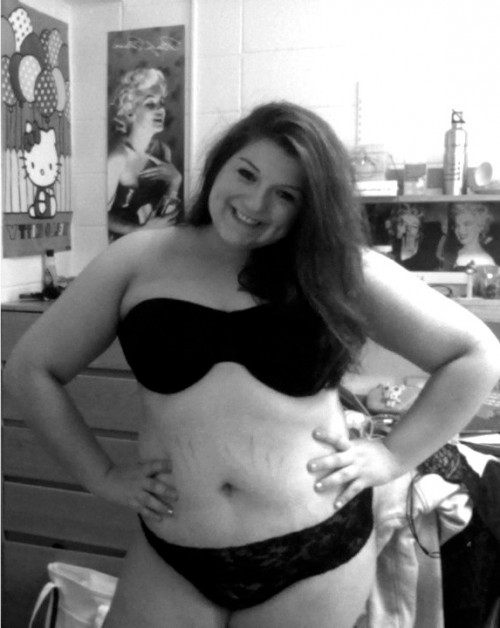
this is my body, deal with it.

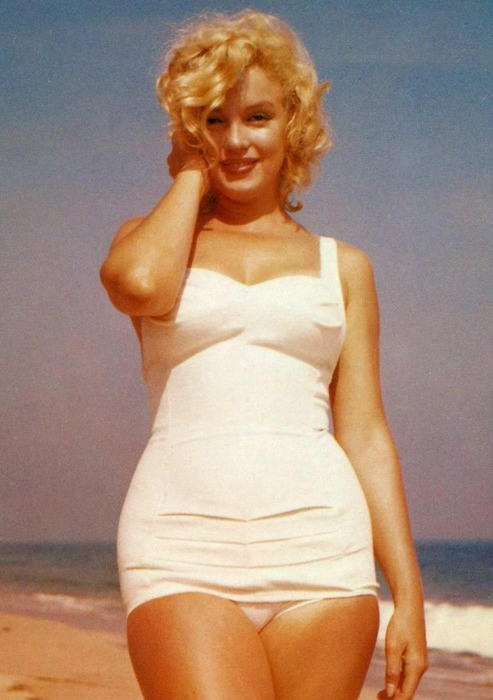
WARNING: The following picture might be considered obscene because subject is not thin. And we all know that only skinny people can show their stomachs and celebrate themselves. Well I’m not going to stand for that. This is my body. Not yours. MINE. Meaning the choices I make about it are none of your fucking business. Meaning my size IS NONE OF YOUR FUCKING BUSINESS.

If my big belly and fat arms and stretch marks and thick thighs offend you, then that’s okay. I’m not going to hide my body and my being to benefit your delicate sensitivities.

This picture is for the strange man at my nanny’s church who told me my belly was too big when I was five.
This picture is for my horseback riding trainer telling me I was too fat when I was nine.
This picture is for the girl from summer camp who told me I’d be really pretty if I just lost a few pounds
This picture is for all the fucking stupid advertising agents who are selling us cream to get rid of our stretch marks, a perfectly normal thing most people have (I got mine during puberty)
This picture is for the boy at the party who told me I looked like a beached whale.
This picture is for Emily from middle school, who bullied me incessantly, made mocking videos about me, sent me nasty emails, and called me “lard”. She made me feel like I didn’t deserve to exist. Just because I happened to be bigger than her. I was 12. And she continued to bully me via social media into high school.

MOST OF ALL, this picture is for me. For the girl who hated her body so much she took extreme measures to try to change it. Who cried for hours over the fact she would never be thin. Who was teased and tormented and hurt just for being who she was.

I’m so over that.

THIS IS MY BODY, DEAL WITH IT.”

Self-portrait by Stella

reblogged from thebodyloveblog.tumblr.com.

About Stella

david whyte – the house of belonging

I awoke
this morning
in the gold light
turning this way
and that

thinking for
a moment
it was one
day
like any other.

But
the veil had gone
from my
darkened heart
and
I thought

it must have been the quiet
candlelight
that filled my room,

it must have been
the first
easy rhythm
with which I breathed
myself to sleep,

it must have been
the prayer I said
speaking to the otherness
of the night.

And
I thought
this is the good day
you could
meet your love,

this is the black day
someone close
to you could die.

This is the day
you realize
how easily the thread
is broken
between this world
and the next

and I found myself
sitting up
in the quiet pathway
of light,

the tawny
close grained cedar
burning round
me like fire
and all the angels of this housely
heaven ascending
through the first
roof of light
the sun has made.

This is the bright home
in which I live,
this is where
I ask
my friends
to come,
this is where I want
to love all the things
it has taken me so long
to learn to love.

This is the temple
of my adult aloneness
and I belong
to that aloneness
as I belong to my life.

There is no house
like the house of belonging.

frank

My mother has a brave and brilliant eco-activist friend, Frank, who has been fighting to save the estuary of the Black River and squatting in an abandoned building in Paarden Eiland, despite being over 80 years old. The other day, the City Council came to deliver an eviction order, and when they got there, Frank was dead. He’d overdosed on heart pills. Well done, Frank, for choosing how to live and how to die. You’re an inspiration.

creative minds “mimic schizophrenia”

By Michelle Roberts – Health reporter, BBC News

Creativity is akin to insanity, say scientists who have been studying how the mind works. Brain scans reveal striking similarities in the thought pathways of highly creative people and those with schizophrenia.

Both groups lack important receptors used to filter and direct thought. It could be this uninhibited processing that allows creative people to “think outside the box”, say experts from Sweden’s Karolinska Institute. In some people, it leads to mental illness. But rather than a clear division, experts suspect a continuum, with some people having psychotic traits but few negative symptoms.

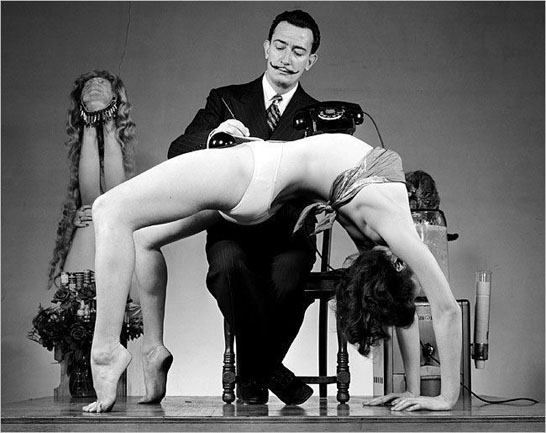
Salvador Dali – “Desk”

Art and suffering
Some of the world’s leading artists, writers and theorists have also had mental illnesses – the Dutch painter Vincent van Gogh and American mathematician John Nash (portrayed by Russell Crowe in the film A Beautiful Mind) to name just two.

Creativity is known to be associated with an increased risk of depression, schizophrenia and bipolar disorder. Similarly, people who have mental illness in their family have a higher chance of being creative.

The thalamus channels thoughts
Associate Professor Fredrik Ullen believes his findings could help explain why. He looked at the brain’s dopamine (D2) receptor genes which experts believe govern divergent thought. He found highly creative people who did well on tests of divergent thought had a lower than expected density of D2 receptors in the thalamus – as do people with schizophrenia. The thalamus serves as a relay centre, filtering information before it reaches areas of the cortex, which is responsible, amongst other things, for cognition and reasoning.

Continue reading

cherry bomb on the wrong rock show

Episode 128 of The Wrong Rock Show, originally broadcast on 15 October 2012 on Bush Radio 89.5FM, Cape Town, South Africa. Listen HERE.

The Wrong Rock Show is “a musical journey beyond the limitations of the mainstream to a place where vintage rock ‘n’ roll can rub shoulders with anarchic post-rock”. Created in April 2010, it broadcasts Monday evenings 10PM – 00AM (GMT+02) on Cape Town’s Bush Radio 89.5FM. It is streamed live at www.bushradio.co.za and shows are uploaded as cloudcasts at Mixcloud. The show is hosted by Greg ‘the Hammer’ Donnelly, Botha Kruger, Danie Marais, Henrik Gustafsson and alternating co-hosts, all of whom bring to the show their unique tastes and personal takes on what makes good, wrong rock music. I co-hosted with Botha Kruger this past Monday evening.

TRACK LIST – 15 October 2012

  1. Beat Girl – John Barry
  2. Manically Panicky – The Great Apes
  3. Turnstile Blues – Autolux
  4. The Only – Lykke Li
  5. The Night – Morphine
  6. Johnny – Paul Hawkins & The Awkward Silences
  7. (Ghost) Riders In The Sky – Starlite Wranglers
  8. City Of Refuge – The Black League
  9. Bending Albert’s Law – Karin Park
  10. In The Same Room – Julia Holter
  11. Show Me The Face – Chinawoman
  12. Heart Full Of Soul – The Yardbirds
  13. A Little Lost – Nat Baldwin
  14. Dancing In The Dark – Tegan And Sara
  15. Praise Be Man – Russian Circles
  16. May The Bridges You Burn Light The Way – Strage
  17. Speed – Moon Duo
  18. Jump Sturdy – Dr John
  19. Grinnin’ In Your Face – The Vespers
  20. 3, 6, 9 – Cat Power
  21. Wetboy Elegy – The Akabane Vulgars On Strong Bypass
  22. Ahab –  Skabengas
  23. Ramblin’ – Murder By Death
  24. Weightless Again – Cerys Matthews
  25. This Is How We Walk On The Moon – Arthur Russell
  26. Ill Fated Lovers Go Time Tripping – Bongwater
  27. She’s In Parties – Bauhaus
  28. Avatar – Swans

Listen HERE.
Duration: 2 hours
Hosts: Botha Kruger and Cherry Bomb
Follow The Wrong Rock Show on Facebook or Twitter.

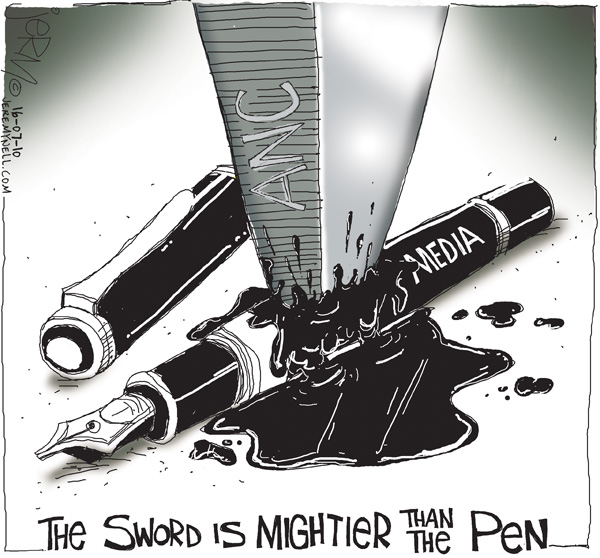
the penis: mightier than the sword – rereading an old quotation at the time of abu ghraib (2004)

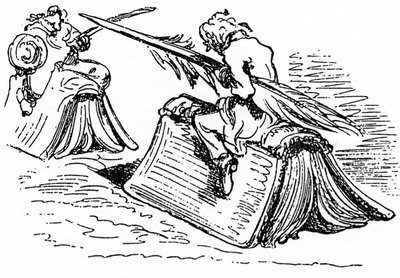
The famous quote ‘the pen is mightier than the sword’ has a different meaning today than it had when the English novelist Edward George Bulwer-Lytton (1803-1873) wrote in 1839: ‘Beneath the rule of men entirely great the pen is mightier than the sword’. Apart from the obvious fact that a sentence fragment cannot convey the same meaning as a full sentence, there are a number of reasons why we can assume there to have been significant changes in the meaning of these frequently quoted words in the last 160-odd years. After an initial non-exhaustive exploration of some of these reasons in order to discuss the contemporary reception of old texts in general, I will present an example of a possible contemporary rereading of the sentence in order to critically approach its form as well as its content in more detail.
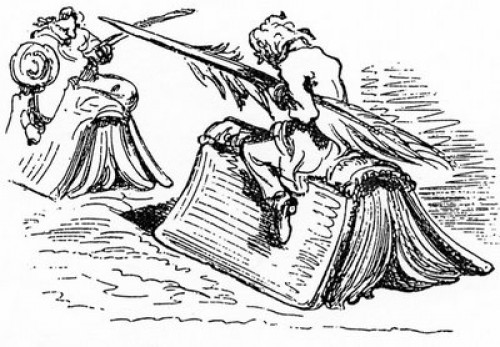
From the 19th through to the 21st century, radical shifts have taken place in the social, political and economic systems of the currently ‘European’ nations like England. Class differences have steadily decreased in importance while the levels of literacy have increased enormously. Nowadays readers of literary, journalistic and other texts come from all walks of life and all classes in society, which was not yet the case in Lytton’s time. Due to the cultural complexity of a postmodern and post-industrialised context, readings of this sentence today are not merely permitted to be different, but are necessarily far more numerous and varied than they would have been expected to be in the 1800s.

In the midst of this new plurality of discourses – which is for reasons of brevity and clarity merely stated here and will not be elaborated on – phrases of such universalising nature are rarely coined by writers and other intellectuals today, whereas in its original context a sentence such as this one may have had only one unmistakeable message to almost anyone reading or hearing it, simply because this context was rather narrow. Those who could read and write of course did not all think alike, but they would all more or less have agreed on what kind of meaning was being transmitted with these words. Nowadays we can observe a very different dynamic unfolding: whatever is said publicly immediately enters a broad field of more or less interconnected discourses, which form more or less homogenous or contradictory opinions as to its meaning within – and its relevance to – their own and possibly other world views.
What any given politician is saying on any given day on any given subject is never entirely opaque to anyone reading about it in the paper who has also read the previous day’s edition, but what effectively stands behind these words is ever more difficult to contextualise constructively in terms of its respective outcomes. ‘Right’ and ‘wrong’ are constructs that have become almost interchangeable or irrelevant, because there are so many equally valid viewpoints on any given subject or utterance, which all have a more or less publicly audible – and thereby already minimally validated – voice.

In order to bring meaning to the signifying remnant ‘the pen is mightier than the sword’ of the 19th century message x (as in ‘unknown’) in this widened, or rather exploded context, it is necessary to – at least initially – ‘misunderstand’ it. ‘Misunderstanding’ here shall refer to the application of an interpretation based on the more or less unspecific world knowledge of an individual living in the 21st century, as opposed to assuming to be in the know about what meaning the text had in 19th century England. At best, in any critical approach the inevitability of this process of ‘misunderstanding’ is acknowledged and problematised; else it is taken for granted, or at worst denied. In the last case lies the danger of laying claims to an absolute truth of sorts. Nowadays certain versions alone – of the infinite number of possible readings – may succeed in presenting certain convincing insights, which do not lay claim to finality or completeness.

The penis: mightier than the sword. This modified version arrived at by simply dropping the space between ‘pen’ and ‘is’ and inserting a colon, crassly illustrates the imagery of pen and sword as charged with concepts of maleness. It is psychoanalytically easily accessible: we are presented with two phalluses holding recourse over their size. The reader is asked to identify with the smaller and therefore supposedly weaker member, and he is told that size not only doesn’t matter, but that he will – on this side of the argument – prevail in the face of overpowering adversity, or better still: competition. The question arises: over what? We do not know. Are we to assume that the sword stands for war and the pen for enlightenment – and in effect peace? If this is the case, what we are led to believe in this statement is that war is bad, and that consequently it is to be regarded as disconnected and even structurally different from everything that has to do with writing and reasoning: as ‘mightier’ human endeavours.
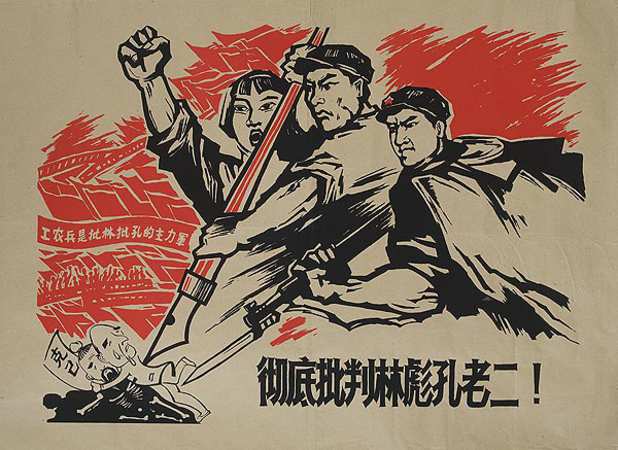
The ‘pen’ here stands for the word, an ideal idea, the thought worth concretising and writing down. The ‘sword’ stands for war, death, planned killing in the name of a higher power or principle. On this literally symbolic level the pen may be mightier than the sword; but moving on from this level it may be argued that the pen harnesses the power that also moves the sword, if less wisely so, and thereby causes greater destruction than the sword alone ever will. Nowadays, if only through the abundance of costume dramas and kung-fu movies, the sword as an image does no longer successfully symbolize chaos and destruction, for in its singularity and crafted clarity it visually far outruns the ill-defined pen. With its size, weight and sharpness, the sword suggests more self-discipline and mental order in its bearer than any pen might afford, which is too often engaged in merely noting down whimsical movements of mental current in forms ranging from scratchy to mannered.

On the surface of the image, pen and sword share the same space, but beyond the rationale of the proposed comparison, which actually draws the argument into one of two courts (where, as we will see later, both parties are at home), another battleground is implied, which stays as empty as it is hidden. Here, logically speaking, the sword has to be fighting with another unmentioned sword in order to be making war. This way the sword is – so to speak: secretly – set up to display its inferiority to the pen; which in turn, firstly as a symbol of a higher order of abstraction, and secondly due to its greater proximity as the first-mentioned in this short and brutal piece of rhetoric, refers more easily and convincingly to an enveloping structure of safety and sense.
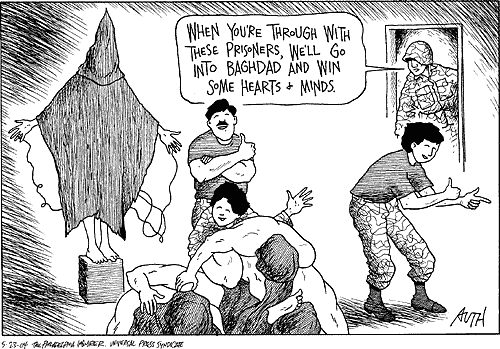
War, in this scenario, is denied any active role in the thinking, conscious persona, and conversely here, the thinking, rational persona is denied all the potency of the fight. The sentiment expressed here is a perfect example of the suppression mechanisms inherent in Western rationalism (‘Civilisation’): Making war, i.e. living out one’s ‘negative’ emotions on a non-intellectual stage – possibly even victoriously – is professedly barbaric, whereas to negate and suppress one’s emotions is constructed as a worthwhile and necessary endeavour. Even in a democratic system that purportedly aims to allow freedom of speech to everyone, there are these cultural limitations of emotional expression. This philosophy in practice may on the one hand be vital for the survival of our species, but the fact that it also provides the breeding ground for arguably the most perverted criminal offences on a daily basis (and has led to the creation of inarguably the most powerful weapons of mass destruction in human history), comes as no surprise when one contemplates how overpowering the restrictive reign of a rationalist culture over the hearts of its members has been. Imperatively, ‘the pen is mightier than the sword’ is voicing pure social conditioning: ‘Do not feel, upon failing at which (inevitable, unless you are dangerously deranged), at least stop yourself from acting on those feelings. Stay distracted, consume continuously according to pre-arranged patterns of perceived needs, and the state will cushion you from fearing death.’
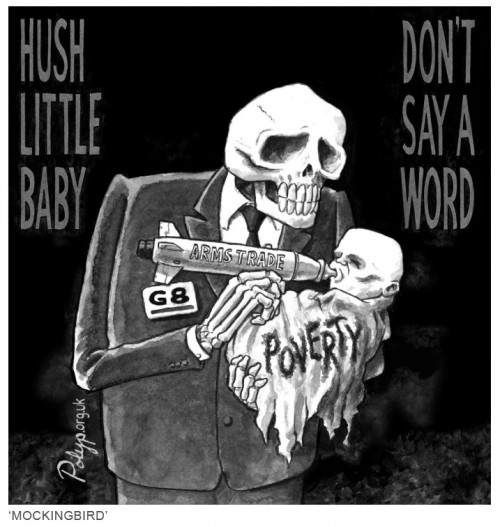
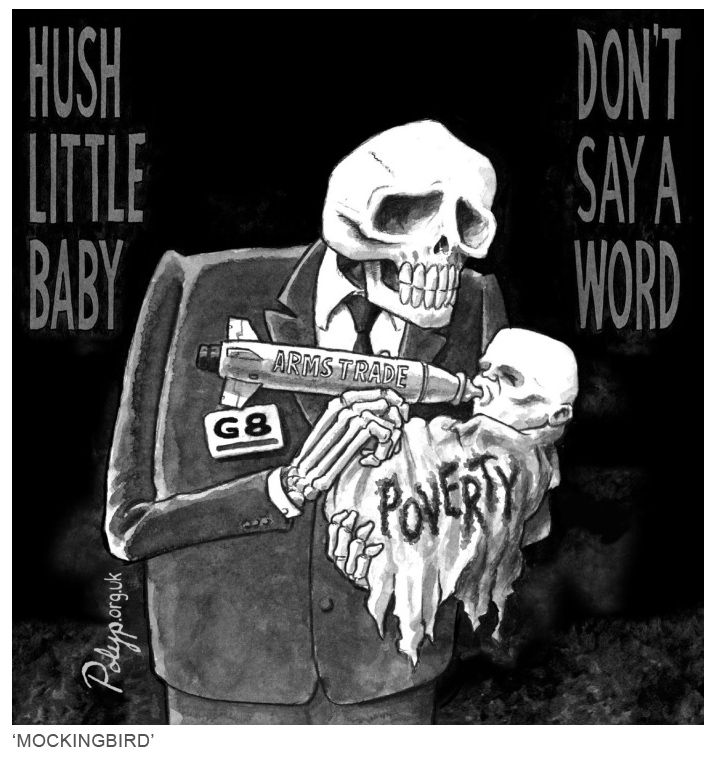
polyp cartoon _ G8 Arms Trade Poverty

It has become clear that, as a result of the immense complexities of our social, political and economic history, not only has the message of this sentence itself – like everything else in the cultural domain – had to change (hence the variety of possible and necessary contemporary readings), but so also has the sentiment that informed this message long vanished and been replaced by a range of new world views and belief systems. At present, what these generally have in common is that they sense themselves to be one of many possible views: heterogeneously scattered outside traditional hierarchies, others always requiring consideration.

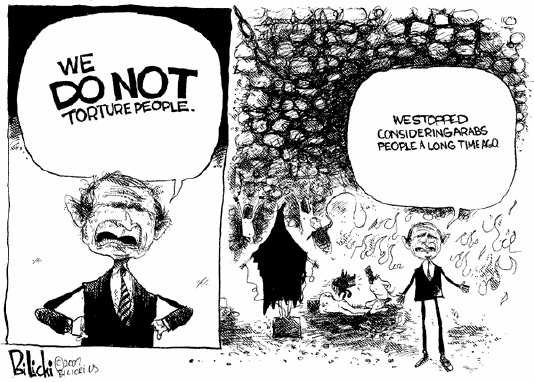
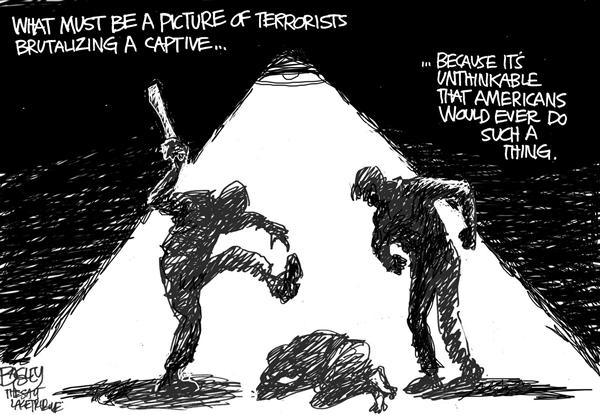
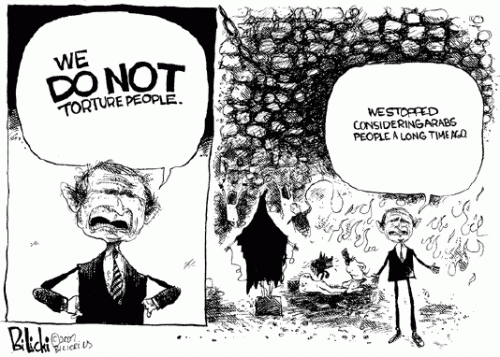
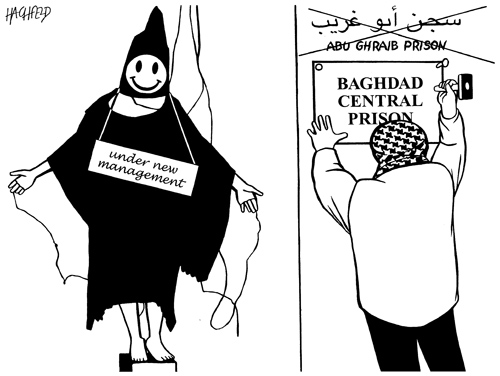
Of course there will always be fundamentalist and self-righteous tendencies in politics and other fields that need to set up an ‘other’ as opposite, with all the horrific consequences that ensue, as in the recent case of ordinary American country folk torturing and killing Iraqi prisoners of war in Abu Ghraib prison. The American defence minister’s public reasoning on this torture is that, far from being the carefully considered act of war between two nations that it was, it was supposedly a dirty deed carried out by rogue individuals. In the terminology of this text: that no ‘sword’ was involved. As a result of this denial the torturers will soon be publicly demonised and punished (under the same principle of othering), thereby serving as scapegoats for all those who have been actively involved in creating a lawless situation in these prisons in the first place. If the idea of a ‘mighty pen’ could be trusted to be referring to a positive pragmatism rather than a positivist idealism, it might now for example be able to symbolise an international military court, which could serve to address this new form of ideological and propagandist warfare. This kind of warfare is reminiscent of the public display of the severed heads of enemy soldiers in the Middle Ages, but it infinitely transcends it in calculation and coldness. That Iraqis are responding ‘in kind’ (with the recent public killing and burning of American tourists), surprises less than the Americans’ refusal to submit their soldiers to said international court of war.
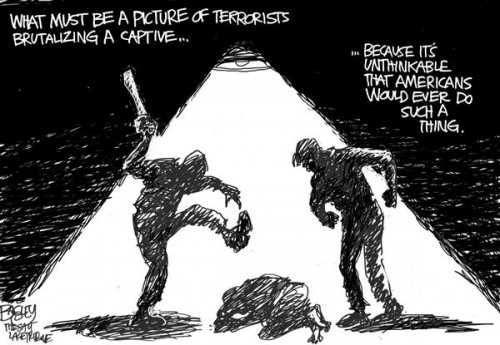
Most people today do not believe that wars are stopped by anything somebody writes with a pen: In fact, we are becoming increasingly sensitised to the demagoguery of the media. The worst wars, the greatest weapons, the most inescapable conflicts, the most far-reaching crimes and deepest infringements of basic human rights are all created on paper, but they are rarely prevented and almost never undone again through the use of that medium.

Once ‘The pen is mightier than the sword’ may actually have been a revolutionary and powerful statement, but nowadays it is merely an overused turn of phrase that invites kitsch sentiments on the one hand and bitter cynicism on the other. Googling this phrase, one comes across fantasy websites, dating chatrooms, reactionary rants by fundamentalist Islamic school children, and all other kinds of intellectually ill-directed verbiage. This selection naturally also has to do with the medium of the internet, and only represents that quantity of writing that has made itself available to us as html code. On the other hand, if ‘mighty’ writing was as easily and readily available today as all that web and magazine copy that likes to borrow this phrase, there would probably be less disillusionment in the mind of today’s reader who comes across it.
Many readers today are not used to enjoying or savouring the tensions and creative spaces offered by a linguistic symbol – they seem to lack the ability to read symbols as such. This is best exemplified by the mass of websites containing most literal readings of the quote. Self-defence sites for women describe a variety of techniques for using a pen as a weapon; crime-writer blogs publish stories investigating the poisonous qualities of ink; ‘Dungeons and Dragons’-fans have ‘webrings’, where the interpretations voted into the top five all delight in ‘setting things right’: the pen would have to be very big and the sword very small… etc. Many readers who have enjoyed the privilege of being exposed to a variety of literary genres may shudder at the shallowness of this method of constructing linguistic communication, but recognising the widespread reality of this practice could also be a less prematurely judgmental process and even bear new creative fruit: new sets of immediately recognisable symbols are forming all the time, including all the potential pitfalls of more or less hidden reactionary sentiments, but far more open to widespread critical discussion.

‘The sword is mightier than the pen’ – a statement that holds true, only rather less surprisingly so, which is why it is nowhere to be found as a quotation. What might have made the quote so long lasting is that it seems to be expressing something unthinkable: a pen battling with a sword and beating it, as it were: a poet wrestling down a soldier.
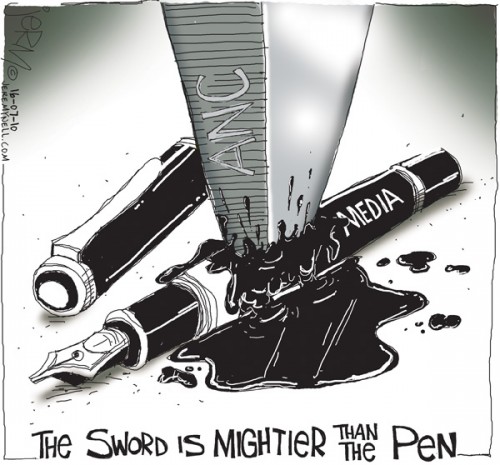
If, hypothetically unencumbered by any knowledge of the quote, a contemporary reader were to come across a sentence expressive of the negative ‘The pen is not mightier than the sword’, they might successfully be moved to contemplate the dynamics of power and information, and the worldwide imbalance regarding the privilege of acquiring knowledge. Installing this modified ‘quote’ publicly in the fashion of, for example, Jenny Holzer’s ‘Truisms’, may serve to draw attention to the Y-generation’s ubiquitous refusal to re-interpret and re-negotiate vital forms of human expression – a refusal structurally inherent in the banality of the practice of ‘sharing’ on (anti-)social networks, of regurgitating and replicating copies of once-historic fragments until the pen is dry.
the flower of seven colours

Cvetik Semicvetik (Flower of Seven Colours) is a beautiful Soviet children’s animation from 1948, based on a beloved folk tale about a little girl who receives a magic flower with seven free wishes from an old crone. None of her wishes leads to happiness, until the last wish, which she doesn’t use for herself, but for someone else. By making someone else happy, she is made happy too.

There are many different illustrated versions out there, but perhaps the most trippy one comes from the mind of Russian artist Benjamin Losin. Losin apparently illustrated two different versions of this book.

but a fleeting touch

But a Fleeting Touch
Jessica Tremp

Melbourne photographer Jessica Tremp captures life in a haunted woodland.

“When I was little I used to dream about being a dancer or that I could fly,” Tremp explains. “And that I would learn to speak the language of the animals in the forest or that of the most dramatic actor. With the click of a finger I’ve found a way to make these things come true.”

north korean children play stupendously creepy music

I found this North Korean children’s ensemble performance disturbing yet also fascinating… Maybe it’s due to my Western bias towards self-determination, but the regimented – no, automated – nature of this; the youngness of the children; their forced smiles, really upset me to watch. Everything is rote, down to the last tilt of the head. It also makes me wonder how much “childhood” they have – how heavy this weighs on their tiny shoulders… Or do they even feel it as oppressive at all? Maybe if you grow up where play (of the spontaneous sort) is not on the cultural menu, you never yearn for it, never feel alienation or exploitation?

Thanks Justin Allart for passing this on.

hoagy carmichael – stardust (original vocal version)

On October 31, 1927, Hoagy Carmichael and His Pals recorded Carmichael’s composition “Stardust” at the Gennett Records studio in Richmond, Indiana. Hoagy’s “pals,” Emil Seidel and His Orchestra, agreed to record the medium-tempo instrumental in between their Sunday evening and Monday matinee performances in Indianapolis, seventy miles away.

In 1928 Carmichael again recorded “Stardust,” this time with lyrics he had written, but Gennett rejected it because the instrumental had sold so poorly. The following year, at Mills Music, Mitchell Parish was asked to set lyrics to coworker Carmichael’s song. The result was the 1929 publication date of “Star Dust” with the music and lyrics we know today. The Mills publication changed the title slightly to “Star Dust” from “Stardust” as it was originally spelled.

This information taken from JazzStandards.com.

django reinhardt – stardust (1935)

Django Reinhardt recorded “Stardust” in 1935.

Stardust, 2/3/35, OLA 349-1 ,”Fremeaux FA 302, JSP 344, Conifer CDHD 230, EMI Jazz Time 790560-2″,” – Paris – Coleman Hawkins (ts), Stephane Grappelly (p), Django Reinhardt (g), Eugene d’Hellemmes (b), Maurice Chaillou (d).”

Chord chart:

| F69/// | F69/// | Fm7/// | Bb7/// | C6/// | A7/// | Dm/ A7/ | Dm/// |
| G7/ F#7/ | G7/// | C6/// | C6/// | D7/// | D7/// | G7/ F#7/ | G7/ G7+/ |
| F69/// | F69/// | Fm7/// | Bb7/// | C6/// | A7/// | Dm/ A7/ | Dm/// |
| Fm7/// | Bb7/// | C6/// | A7/// | Dm7/// | G7b9/// | C69/ Fm7/ | C69/// :||

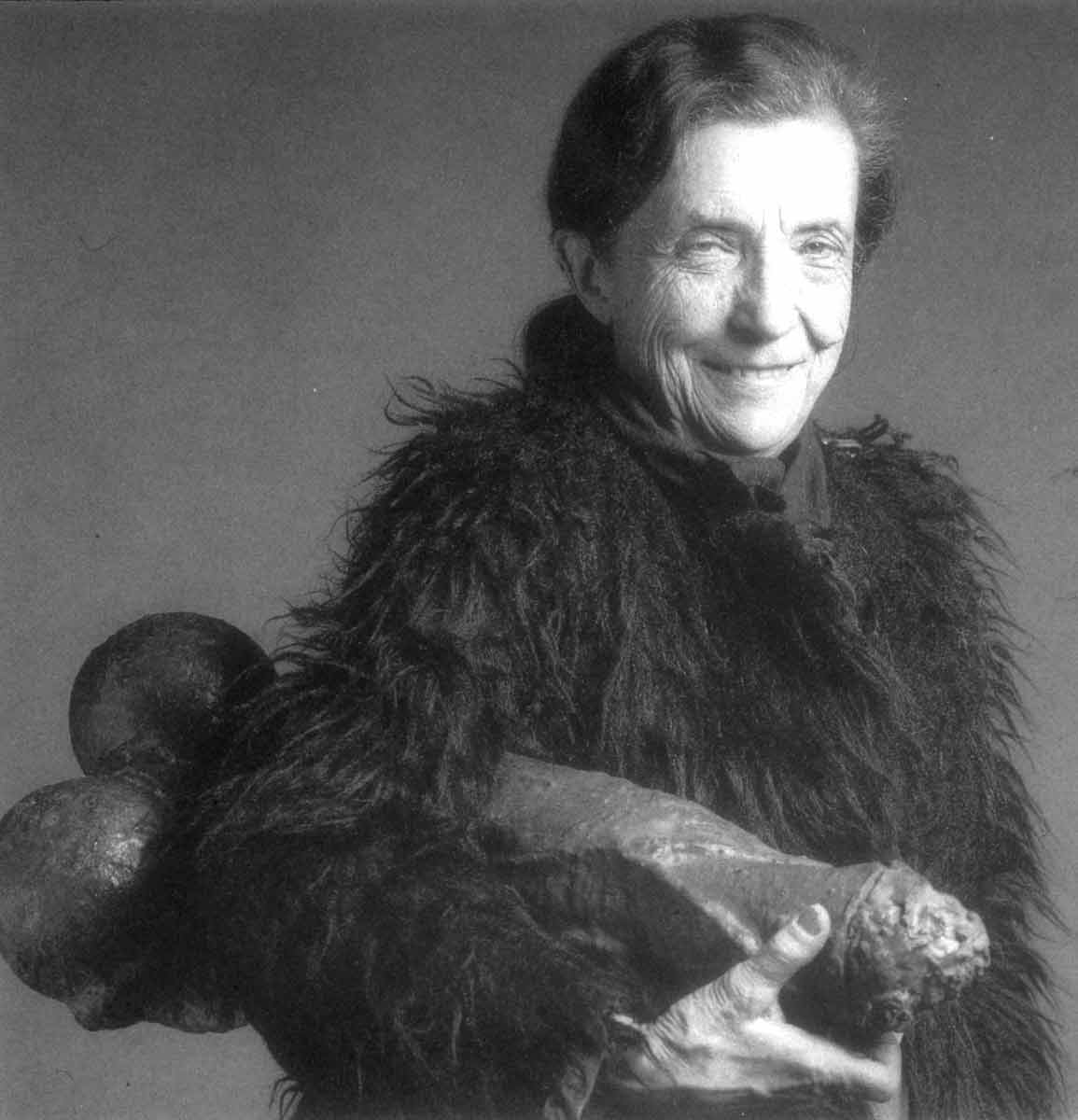
louise bourgeois & tracey emin: do not abandon me

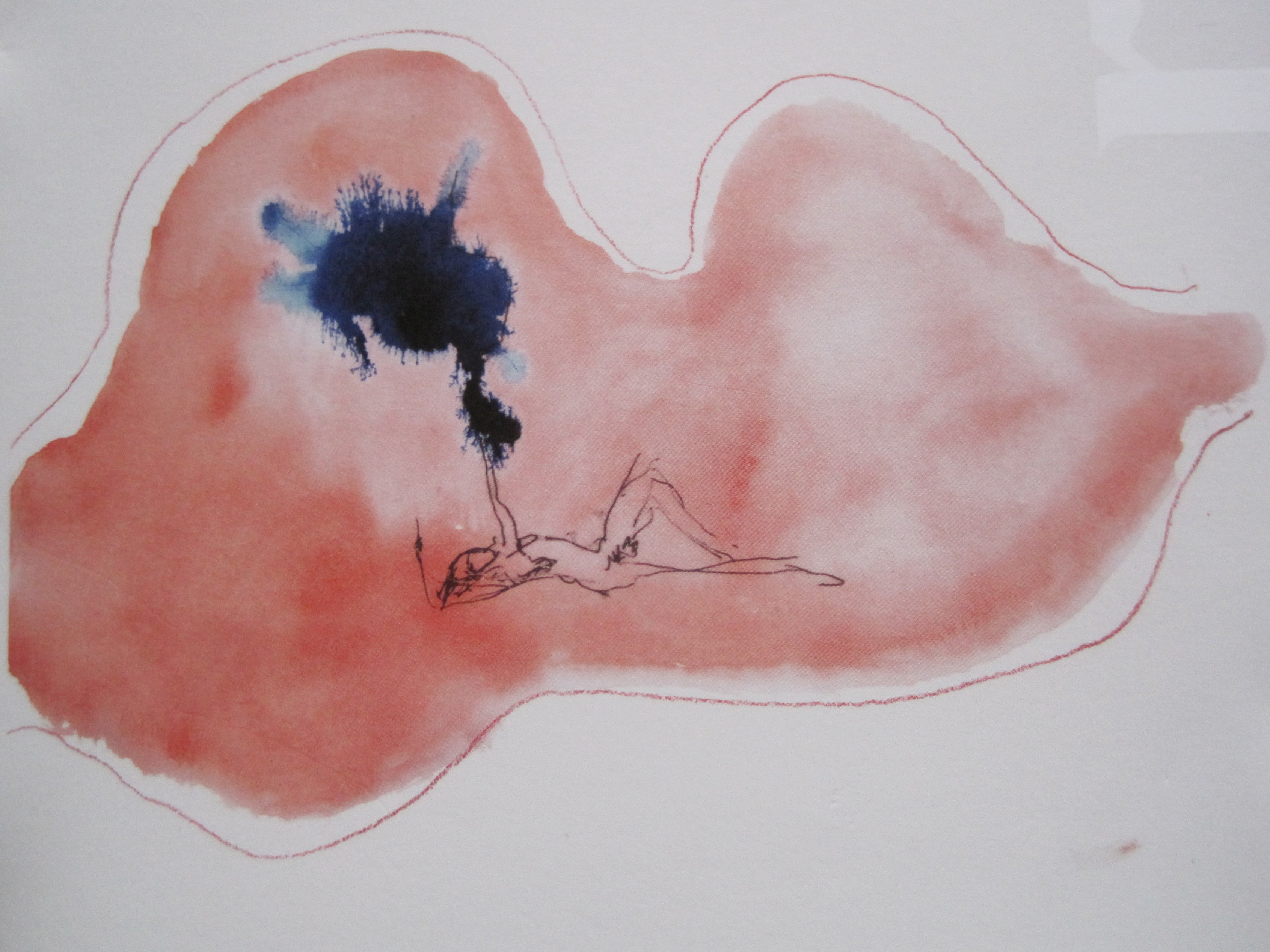
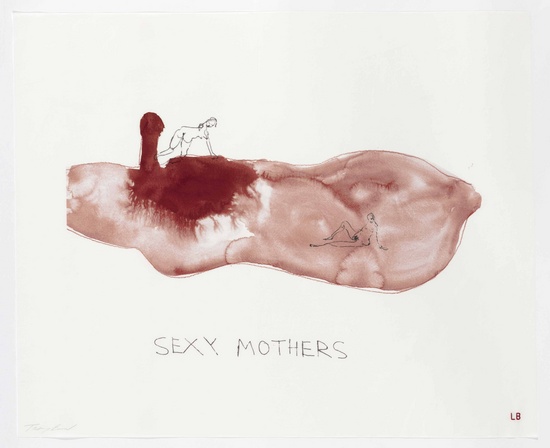
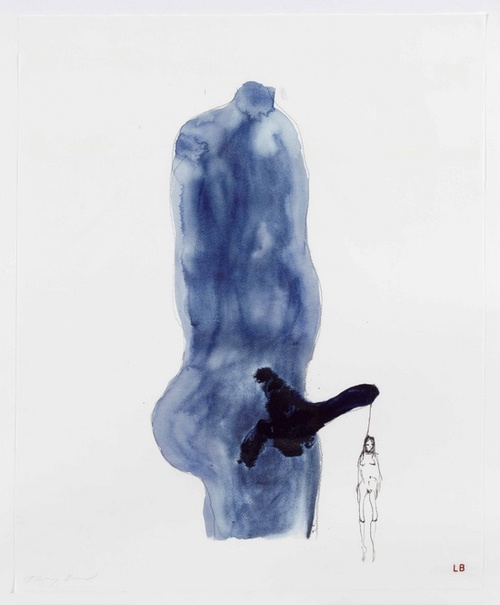
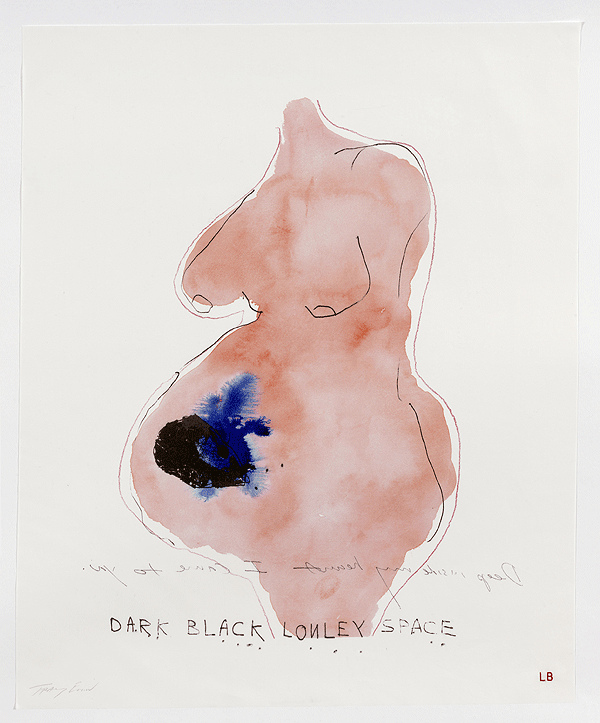
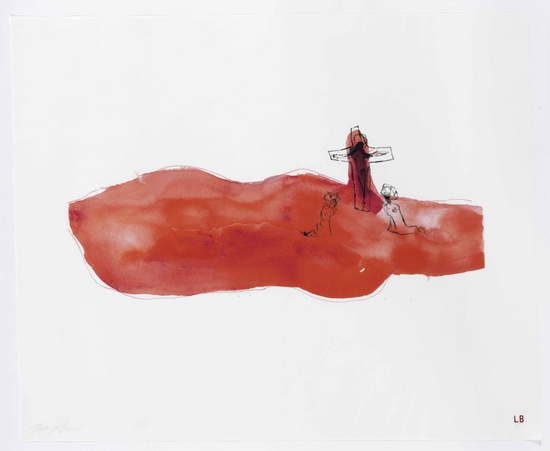
“Louise Bourgeois and Tracey Emin both blur the boundary between art and life is by pouring the turbulent history of an individual’s psyche into the work. The difference between them is that, for Bourgeois, life seeps into art, whereas for Emin, life collides with art. Do Not Abandon Me brings together these two approaches to also blur the boundary between two individuals’ life histories in a moving, sometimes upsetting and admirable collection of work.

Bourgeois began the project by painting male and female torsos on paper; the gouache pigments are combined with water to give fluidity to the mixtures of red, blue and black. All the bodies are depicted in profile, in various positions, presenting delicate silhouettes that form the basis of the final works. These were then passed to Emin for embellishment, who reportedly cradled them like porcelain babies for months on end, until she finally saw beneath the surfaces of the mute bodies. Emin’s contribution consists of smaller figures drawn in pencil and the addition of occasionally coherent, hurriedly scratched out words. The idea is that Emin’s additions tease out the emotions, anxieties, ideas and histories that already lay dormant in Bourgeois’ paintings.

The works are elegant in form and colour; they are simple but playful, and tinged with a wry seriousness. The elegance derives from the delicate hues and the way they are loosely contained within soft lines, which accentuates the simplicity of bodies represented only in outline. The playfulness is in Emin’s characteristically childish scrawl, which sometimes seems unsure of how to respond to nudity so opts to make a joke of it. Come unto Me depicts a man lying on his back, with two miniature women kneeling at the base of his penis on which a third woman hangs on a cross. The serious message that women are subjugated to male sexuality is obscured by the humorous conception of the erect penis as a purely structural accessory to an ancient form of execution.

The forgoing theme is clearly a feminist agenda, and the result of both artists’ preoccupations. The relation between man and woman is characterised as one where the woman is locked in service to the man who rejects her pleas for love, thus having to accept the potency of his sexuality as a form of affection. And So I Kissed You offers a heartbreaking image of male sexual obsession while Just Hanging predicts emotional and physical death as a result of this servitude.

In other works, the female relation to child-bearing is explored as an experience of pain, personal loss and lingering failure. I Wanted to Love You More shows a female figure embedded within the pregnant bulge of a woman, expressing perhaps the desire of an embittered mother to get closer to her unwanted child. Reaching for You shows a woman who has burrowed into her own womb in order to retrieve a lost, perhaps aborted, child.

These are serious, and sometimes harrowing, themes. You get the feeling, however, that Bourgeois meant them to retain the autobiographical subtlety and integrity of artistic form that her meditations on her mother – the huge spider sculptures, titled Maman – possessed. As a child of surrealism, Bourgeois excelled in burying her neurosis under layers of symbolism and maintaining a visceral glee in the materiality of her art. But with Emin, there is no such thing: like in her neon pleas for love that shout desperation through the night sky or her bed that celebrates her frantic degeneracy, her contributions to these works drags the emotions to the surface and screams a blood-curdling cry. At this point of contrast between the two artists’ approaches, Emin begins to look tired, as if repeating her story in the same language of vulgarity is the only way she knows how, having never learned Bourgeois’ subtlety. It looks, then, as if Bourgeois’ invitation to collaboration is also an attempt at tutelage.

Nonetheless, the work derives its brilliance from the contrast between the collaborators, where Emin has mapped her own ideas on to Bourgeois’. If you couldn’t tell where Bourgeois ends and Emin begins, you would lose the sense that two individuals are trying to tell their own stories together precisely because their stories are so remarkably similar. In the end, Bourgeois is responsible for the aesthetic brilliance of these works, while Emin brings the emotions in. Combined, these two elements make a provocative show in which Bourgeois, at the end of her illustrious career, hands her mantel to Emin, securing both of their places in art history as experts in autobiographical art.”

Text By Daniel Barnes blogged from here