i love therefore i exist

REFLECTION: LOVE BETWEEN BODIES

They are two people by mistake. The night corrects that.-Eduardo Galeano

The purpose of the reflection that follows is simple. Starting with what has been considered, it is a matter of noting the unsettled relationship with one’s own body and with other bodies (particularly with those that are objects of desire) imposed by the passing of time, a perspective that for reasons indicated in the chapter, our protagonists didn’t even have the possibility of considering.

In an initial very general overview of the subject, one thing that would immediately be noticed by someone who was questioning the place and the importance of the body in our lives is the fact that over the years the body loses its role of opportunity for pleasure, an attribute that it possesses almost spontaneously during one’s youth, and, in its place, it increasingly and unstoppably acquires the role of obstacle to the peaceable development of one’s very existence. With the passing of time, the body in effect turns precisely into that which resists us, which agitates us and reminds us of its existence through symptoms such as pain, discomfort or, of course, illness. In his book The Arc of Words, Andrés Trapiello has expressed this thought with a brilliant aphorism: “The body is like style: the less noticed it is, the healthier it is”.

In other terms, if we agree to call age that specific time that speaks through the body, one could affirm that the greatest characteristic of youth with regards to the relationship that it maintains with corporal physicality is precisely its fluidity, its immediacy, its transience. In this sense, a young person is someone who can call on his or her body with the knowledge that the body will rapidly return the call. On the other hand in a mature age everything is slow as Coetzee has pointed out, sometimes even extremely slow. So much so that even words end up acquiring this calm and slow rhythm and they take time to reach our lips. As I understand it, it was what an old friend of his commented to the great Fernando Fernán-Gómez, remembering the old times nostalgically: “Do you remember when we spoke rapidly?”.

Nevertheless, if it were only that, one could reassuringly maintain that in the last resort living is finding an accommodation —even if paradoxically it is an uncomfortable accommodation— in one’s own body. The problem, at least with respect to one of the subjects that our society thinks about with greatest difficulty (in this regard I could give as an example any of the novels of Michel Houellebecq), lies in the fact that in addition to that intra-subjective dimension to which I have just referred and which each one of us has to take on, there also exists a specific and particular material inter-subjectivity one of whose most prominent expressions is shown through desire.

I note that the most forceful commentaries these days tend to judge with an attitude that to my taste is frankly hypocritical —somewhere between indifference and paternalism— specifically the older the bodies involved are. It looks as if the maximum threshold which those of us who have definitely left behind the condition of glorious bodies find correct to accept, is that of tenderness barely covered by a gentle pastel color of residual passion. But maybe the body responds to a logic that is totally missed by those commentaries. Maybe just like the word remembers the soul, desire preserves the memory of the body.

Or maybe it is that the body has its own memory and is capable of seeing in the body that lies next to it what it was, even though now it may no longer be; it rescues from obscurity the shine of the past and it brings it with loving delicacy to the present, redeeming it from the ravages of time, the unmerciful punishment of evolution. Those who believe that bodies accept, are resigned, agree with what is handed to them are wrong. No. The body remembers the fulfillment that the other, with whom it is now melding with, had. The body preserves the memory —its own memory— of what it knew, of what once was its own. I am not referring to a dreamlike state or a fantasy. All those who do not know this experience: the feel of the violent stab of lust on recognizing in this body that has changed so radically, that almost in no way resembles that of the past, its contours lost, the fresh scent that identified it gone, the now faded smoothness of the skin, all of them should avoid smiling disdainfully, plentiful in their ignorance. Only from that memory of body which I have been referring to can such a revealing experience be understood. Those who do know it will not only know with perfect exactitude —with total precision— what I have been talking about. They will also enjoy an additional privilege: they will understand the deep significance of what is happening to them and, to a similar extent, maybe they will be able to reconcile with it, discarding in one fell swoop the sense of shame and blame that this society insists on placing on their consciences for committing the crime of desiring freely.

To summarize, I have never been able to understand why people limit themselves to swear eternal love to each other (though they do so less and less; that I do know). They ought to have the courage in certain circumstances to swear eternal desire. With luck and sensibility they might even be able to keep their promise. Certainly the mystics believed that. And, much closer to us, André Gorz expressed it at the beginning of a long letter that he wrote to his wife soon after finding out that she was ill, with some moving words embedded with sensitivity and tenderness:

You have just had your 82nd birthday. You have shrunk 6 cm, you don’t weigh more than 45 kg and you continue to be beautiful, elegant and desirable. We have lived together for 58 years and I love you more than ever. Once again I feel in my breast a consuming emptiness that is only eased by the warmth of your body next to mine.”

From I love, therefore I exist.
Love and the philosophers.

by Manuel Cruz
Translated by Gabriel Baum
the romance of winds

There is a whirlwind in southern Morocco, the aajej, against which the fellahin defend themselves with knives. There is the africo, which has at times reached into the city of Rome. The alm, a fall wind out of Yugoslavia. The arifi, also christened aref or rifi, which scorches with numerous tongues. These are permanent winds that live in the present tense.

There are other, less constant winds that change direction, that can knock down horse and rider and realign themselves anticlockwise. The bist roz leaps into Afghanistan for 170 days, burying villages. There is the hot, dry ghibli from Tunis, which rolls and rolls and produces a nervous condition. The haboob — a Sudan dust storm that dresses in bright yellow walls a thousand metres high and is followed by rain. The harmattan, which blows and eventually drowns itself into the Atlantic. Imbat, a sea breeze in North Africa. Some winds that just sigh towards the sky. Night dust storms that come with the cold. The khamsin, a dust in Egypt from March to May, named after the Arabic word for ‘fifty,’ blooming for fifty days–the ninth plague of Egypt. The datoo out of Gibraltar, which carries fragrance.

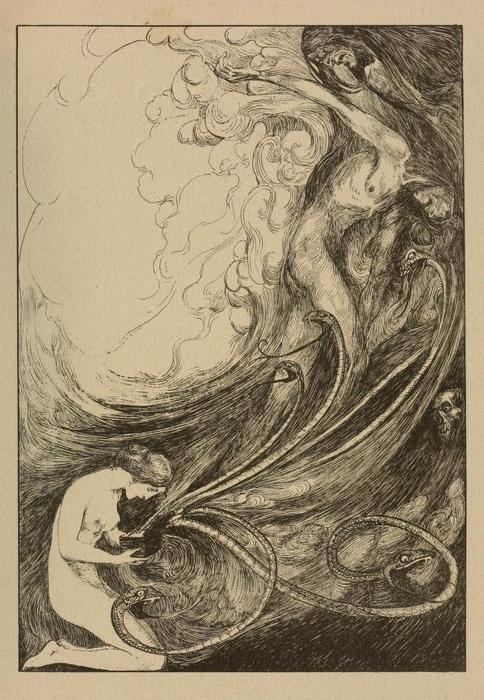
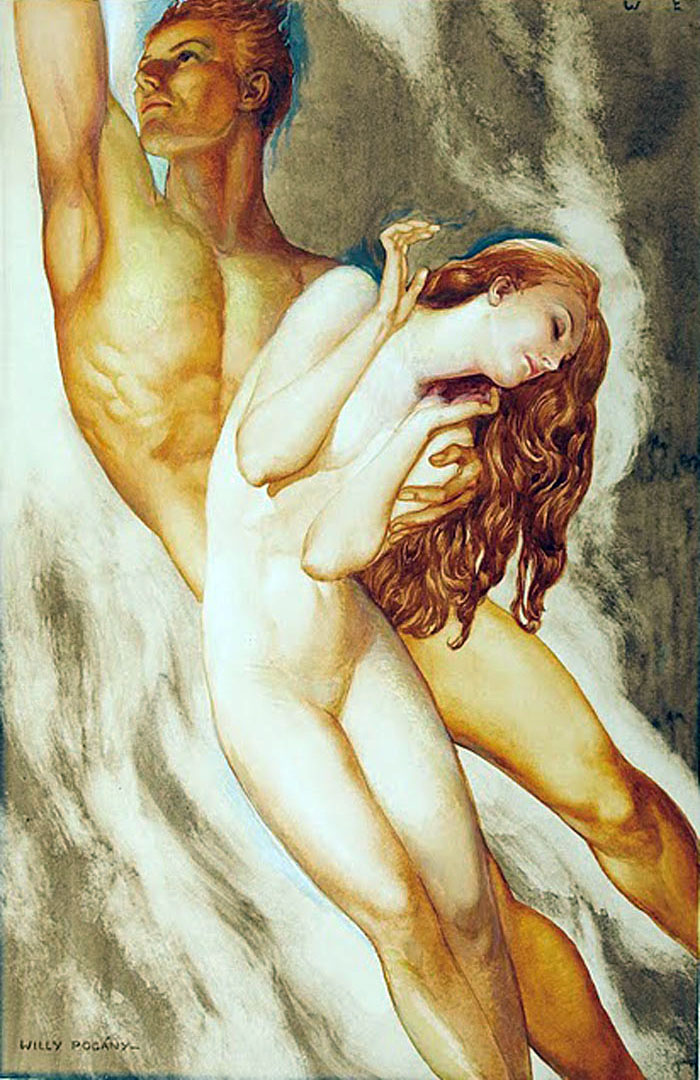
Illustration by Willy Pogany (Hungary, 1882-1955)

There is also the ——, the secret wind of the desert, whose name was erased by a king after his son died within it. And the nafhat — a blast out of Arabia. The mezzar-ifoullousen — a violent and cold southwesterly known to Berbers as ‘that which plucks the fowls.’ The beshabar, a black and dry northeasterly out of the Caucasus, ‘black wind.’ The samiel from Turkey, ‘poison and wind,’ used often in battle. As well as the other ‘poison winds,’ the simoom, of North Africa, and the solano, whose dust plucks off rare petals, causing giddiness.

Other, private winds.

Travelling along the ground like a flood. Blasting off paint, throwing down telephone poles, transporting stones and statue heads. The harmattan blows across the Sahara filled with red dust, dust as fire, as flour, entering and coagulating in the locks of rifles. Mariners called this red wind the ‘sea of darkness.’ Red sand fogs out of the Sahara were deposited as far north as Cornwall and Devon, producing showers of mud so great this was also mistaken for blood. ‘Blood rains were widely reported in Portugal and Spain in 1901.’

There are always millions of tons of dust in the air, just as there are millions of cubes of air in the earth and more living flesh in the soil (worms, beetles, underground creatures) than there is grazing and existing on it. Herodotus records the death of various armies engulfed in the simoom who were never seen again. One nation was ‘so enraged by this evil wind that they declared war on it and marched out in full battle array, only to be rapidly and completely interred.

— Michael Ondaatje, from The English Patient.

wind/poetry

The man sits at one of the
cafes in the hypothetical ghetto. He writes
postcards because breathing prevents him
from writing the poems he’d like to write. I
mean: free poems, no extra tax. His eyes
retain a vision of naked bodies coming slowly
out of the sea. Then all that’s left is
emptiness. “Waiters walking along the beach”
… “The evening light dismantles our sense of
the wind” …

from Antwerp, chapter 2, “The fullness of the wind”, by Roberto Bolaño

schtumm!

Illustration done by Willy Pogany in 1914 for T. W. Rolleston’s Tale of Lohengrin,1914. You can download the whole book from HERE.

Lohengrin is a character in German Arthurian literature. His story, which first appears in Wolfram von Eschenbach’s Parzival, is a version of the Knight of the Swan legend known from a variety of medieval sources.

The son of Parzival (Percival), Lohengrin is a knight of the Holy Grail sent in a boat pulled by swans to rescue a maiden, Elsa, who is the daughter of the Duke of Brabant, and who is forbidden to ask about his identity. At King Arthur’s command he is taken by a swan through the air to Mainz, where he fights for Elsa, overthrows her persecutor, and marries her. He then accompanies the emperor to fight against the Hungarians, and subsequently against the Saracens. On his return home to Cologne, Elsa, contrary to the prohibition, persists in asking him about his origin. After being asked a third time he tells her, but at that instant is carried away by the swan back to the Grail.

Wolfram’s story was expanded in two later romances. In 1848 Richard Wagner adapted the medieval tale into his popular opera Lohengrin, on which Rolleston based his book.

daughter – youth

Thank you to Stella Star for sending me this.

Shadows settle on the place that you left
Our minds are troubled by the emptiness
Destroy the middle, it’s a waste of time
From the perfect start to the finish line

And if you’re still breathing, you’re the lucky ones
‘Cause most of us are heaving through corrupted lungs
Setting fire to our insides for fun
Collecting names of the lovers that went wrong
The lovers that went wrong

We are the reckless
We are the wild youth
Chasing visions of our futures
One day we’ll reveal the truth
That one will die before he gets there
And if you’re still bleeding, you’re the lucky ones
‘Cause most of our feelings, they are dead and they are gone
We’re setting fire to our insides for fun
Collecting pictures from the flood that wrecked our home
It was a flood that wrecked this

And you caused it

Well I’ve lost it all, I’m just a silhouette
A lifeless face that you’ll soon forget
My eyes are damp from the words you left
Ringing in my head, when you broke my chest

And if you’re in love, then you are the lucky one
‘Cause most of us are bitter over someone
Setting fire to our insides for fun
To distract our hearts from ever missing them
But I’m forever missing him

And you caused it

the woman in my life – playing with the concept of the feminine

Image

Rapunzel

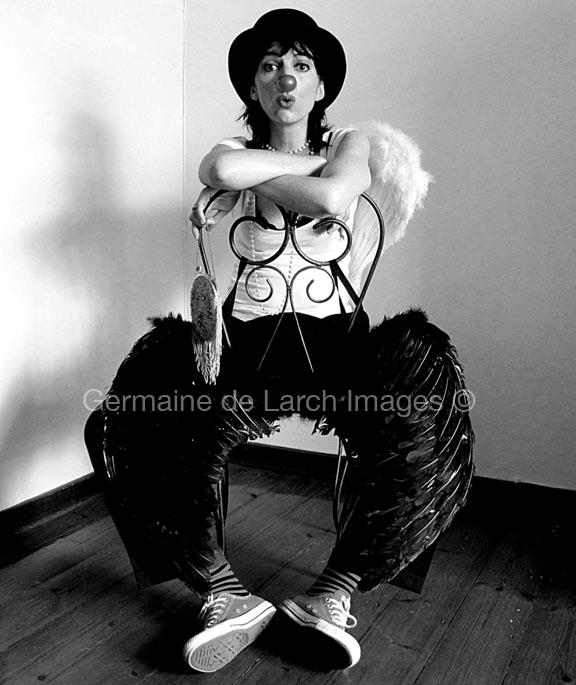
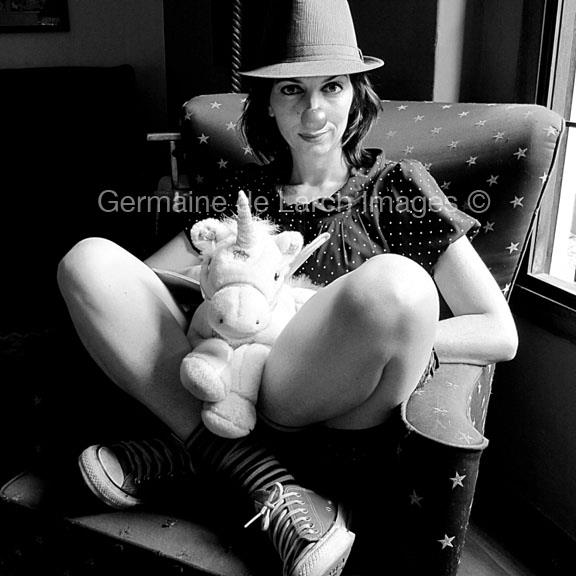
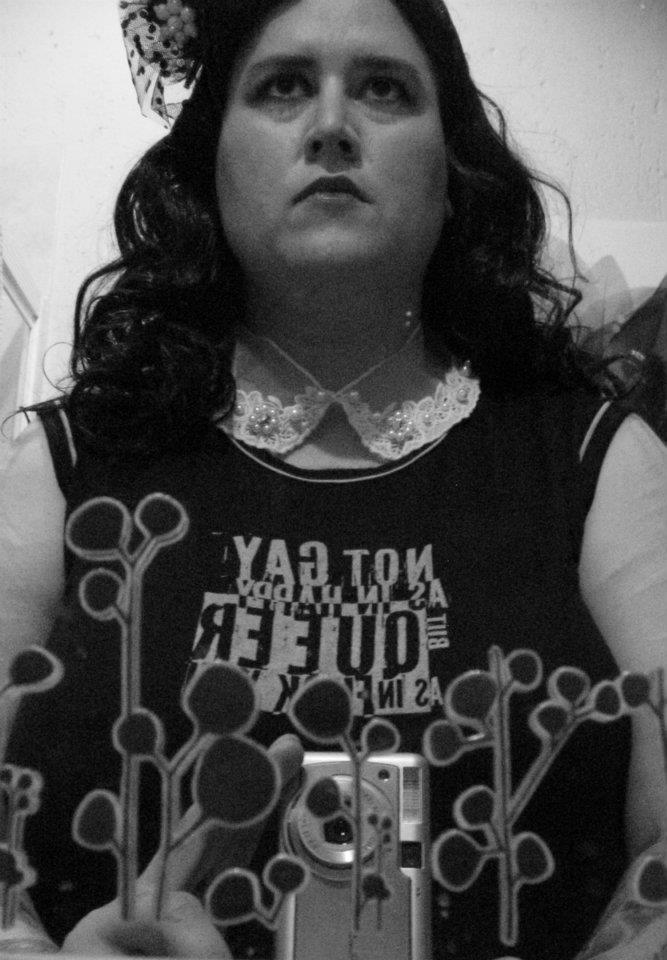
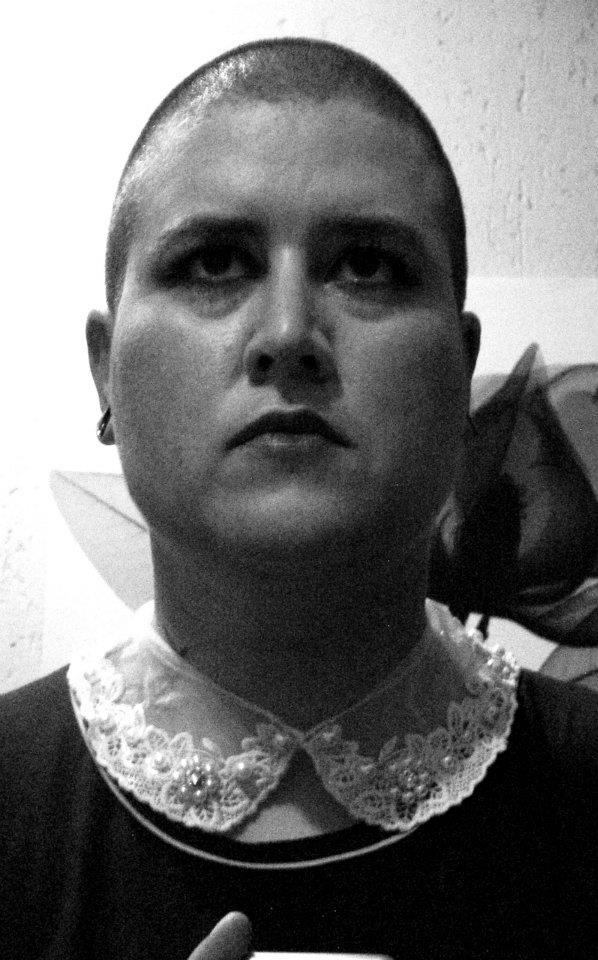
Grabbing my identity by the throat has allowed me to play with other identities in the space of play and performance. Being more secure in how I identify in terms of gender identity, gender expression and sexual orientation has allowed me the freedom to explore my boundaries: what I’m comfortable with and how far I can push myself.

Up until two years ago I found the feminine cloyingly repulsive and unnatural. My mother’s attempts to feminise me always left me feeling exceedingly uncomfortable, and I clearly remember the hideousness of my matric dance outfit and how I felt like a drag queen, and yet not, because it was an enforced drag, not the drag that stems from a place of play and a sense of security in one’s own gender.

Image

Playing the Femme Fatale, I

Since beginning the photographic project of documenting my play with gender, I have experienced conflicting emotions and reactions to placing myself within a feminine frame. Firstly, I found myself approaching the feminine from the space of play, experimentation and boundary testing. The idea of donning the feminine has been more exciting and less frightening, and I’ve truly had fun with and loved the experience of seeing the photographic results. The artistic process has thus been very revelatory and enjoyable.

Image

My Greta Garbo Moment

The physical experience, the experience of my self apart from the artistic process, has been difficult. I’ve been able to perform the feminine to the extent of playing with costume, props and make-up, but have been unable to perform feminine characteristics, behaviours, mannerisms and poses. Along with the wigs, dresses and shoes, I am still visited by those old feelings of intense discomfort, a sense of not being me, of having an otherness enforced on me. Even in the privacy of my own home with only me to witness my transformation, I am unable to express a femininity that stems from me rather than the costume. One interesting thing, though, is that when I’m playing the feminine and photographing myself, I’m able to smile (almost unable not to), while in my other self-portraits smiling feels unnatural and uncomfortable. In the blurb to this blog I say that, “I approach other spaces through fearlessly exploring inner space.” Sometimes the exploration is more brave than fearless. A lot of the time my performances touch a nerve, pointing to something I still need to investigate further, approaching it more carefully in my next encounter with it. Because sometimes when staring into the looking glass, it’s not only unexplored selves that stare back. Sometimes there are demons.

Image

Not Gay as in Happy, Queer as in Fuck You

Looking back on these photos and experiments, I’m very happy with the results, because they denote a bravery that was previously unavailable to me; a sense of adventure I never had; and, a sense of playfulness I’m so grateful to have found.

Image

beatific

© Germaine de Larch Images. First published on www.life-writ-large.posterous.com

alan moore’s invisible girls and phantom ladies (1983)

During the afternoons I teach a small group of highly susceptible kids. They are easily influenced because of their age, which is around 9-12 years. Besides Thursdays and Fridays I have a group of only boys. I have my hands full, but a lot about the male specie becomes clear to me as I watch these boys.  They are forever ranting about Comic Books. Of course I share this passion, so we often discuss certain comic book characters etc. I always tell the boys that violence is bad (I mean, when I give a piece of clay to a girl, she will start kneading it and start problem solving about how she would produce a beautiful item. When I give a ball of clay to a boy, chances are he would threaten to throw another boy with it,or, like one boy actually did, start throwing it to the floor as hard as he can to see if he can flatten it in that manner.) One boy said he is going to draw `Thor´ for me, so I asked if there are no female characters he can draw for me and he replied sure, he´ll draw ´Invisible woman`. I am trying to find ways to teach these boys to become real men. And I´m not so sure the comic books are helping. I really love the work of Alan Moore, and recently came across his Invisible Girls and Phantom Ladies.

In his essay ‘And all right, we need a woman’: victimized heroines and heroic victims in Alan Moore’s quasi-Victorian graphic novels`,  Maciej Sulmicki writes:

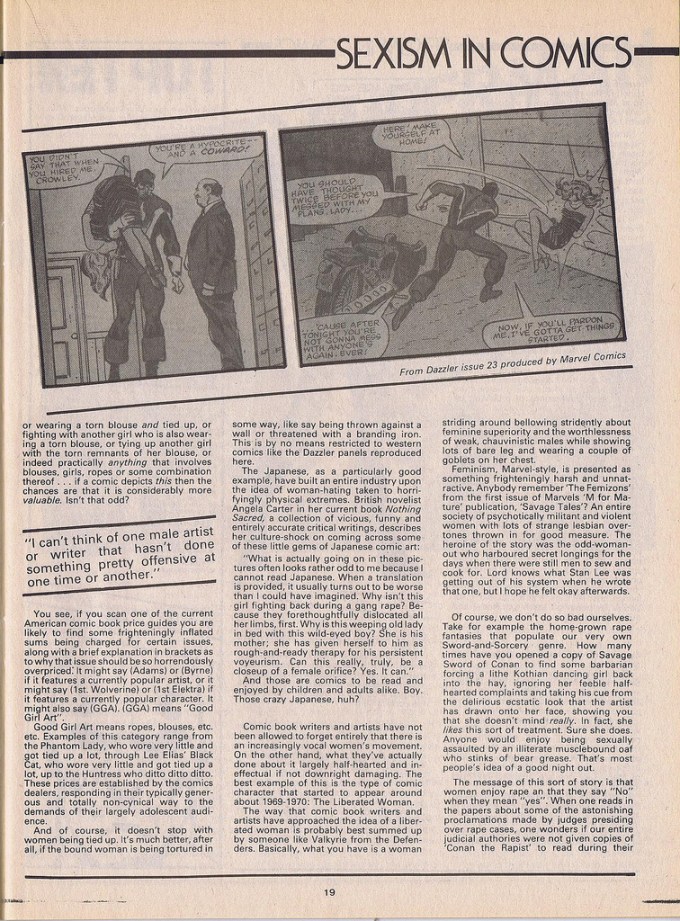
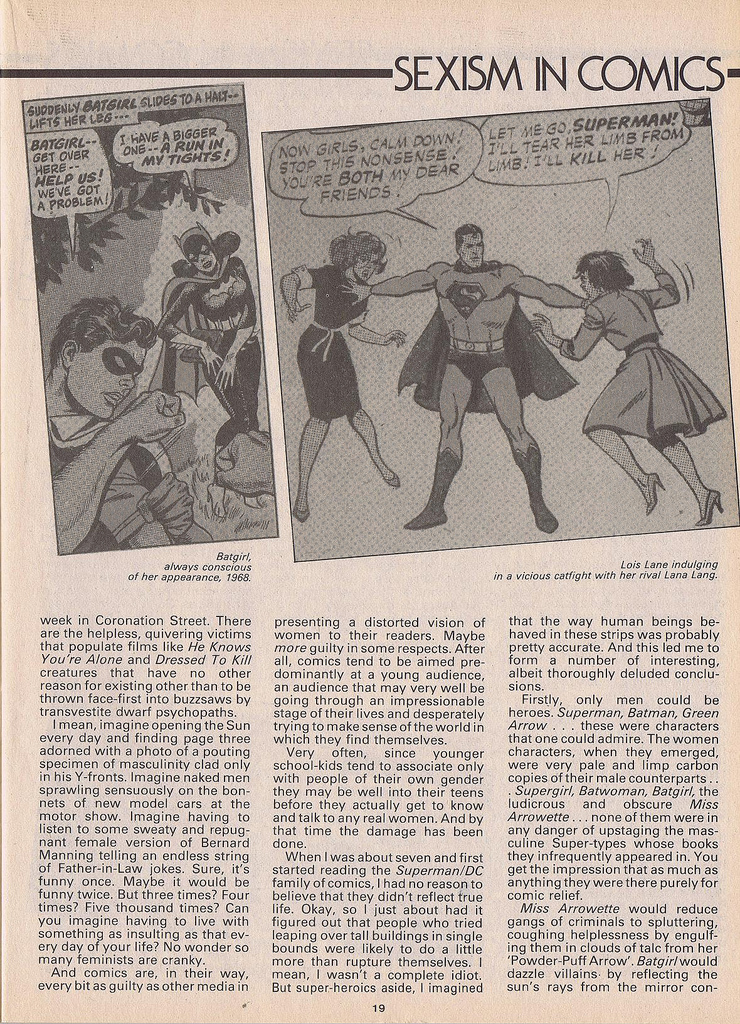
“Moore has long ago declared an interest in the image of women in comics books and recently confirmed that he has always felt ‘that [women’s problems] was an area that needed to be addressed’. 25 years ago, in a three-installment essay in The Daredevils he wrote of ‘Invisible Girls and Phantom Ladies’, i.e. sexism in comics. Although the text is written in a jocular tone, the main message is quite serious: that comics are rather fueling sexism and gender inequality than combating them. Women in mainstream comics are said to serve primarily as decoration, especially in visual terms, this being the case even when the female characters have something important to say. Such an approach to the visual presentation of females is a continuation of a long-standing tradition, visible as early as in comic strips from the first half of the twentieth century. Moore claims, however, that graphic depiction is not as important as the type of character as which the woman is presented. Both ‘helpless quivering victims’ and pale copies of female superheroes, as well as examples of rough ‘Marvel-style’ feminism serve to fuel stereotypes. In the case of the first two, scantily-clad and often captured and tied up heroines are accused of fueling ‘sordid adult fantasies’ and ideas such as women enjoying being raped. In the final installment of the essay Moore opines that the masculine world of comics is unlikely to significantly change its approach in favor of equal rights unless it is motivated from the outside – by the readers.”

Moore´s Invisible Girls and Phantom Ladies: Originally published in The Daredevils #4 – #6 (Marvel UK, April – June 1983)

PART I

Okay. Seeing as this is such a sticky subject suppose I’d better lay my cards on the table straight away.

I’m a wimpy, indecisive, burned-out woolly-minded liberal old hippy who eats quiche, saves whales, is friendly to the Earth and subscribes to Spare Rib, The Black One-Parent Gay Catholic Gazette, and Animal Welfare Against Nuking the Nazis Quarterly and if anybody wants to make anything of it, then I’ll quite cheerfully butt them in the face until their nose is flat enough to rollerskate on.

The reason I’m prepared to make such a candid confession is because I’m pretty sure that after reading the article in hand most of you will be saying pretty much the same things about me anyway and I thought it’d look better if I got in first. And the reason I’m donning my Sou’Wester in preparation for a torrent of abuse is because this feature concerns women, and women don’t seem to be a very popular topic nowadays. There are a couple of possible reasons for this sad state of affairs.

The first is that a small but vocal percentage of feminists are quite obviously as mad as snakes and have hopelessly damaged personalities. They pounce with demented glee upon increasingly trivial and unimportant examples of ‘sexism’, they make outrageously twisted and generalised statements to the Press along the lines of “All men are rapists“, and in general make themselves very difficult to like.

The problem arises when these foaming maniacs are presented in the media as being a representative cross section of the women’s movement, thus reinforcing the image of feminism that most men are only too eager to accept as the truth: an army of crop-haired Amazon gargoyles who chainsmoke untipped Woodbines, shift cement blocks for a living and have a physique somewhere between that of Popeye and a Commer van.

The other reason is that men, over the last few thousand years, have come to enjoy the perks and privileges that are part and parcel of being born into the male gender and are very reluctant to give them up. Men in general are a pretty insecure bunch and when they start to feel threatened by something they tend to respond by hurling forth salvoes of scorn and contempt, or, failing that, they refuse to take the issue seriously at all.

Even generally broadminded people who believe that the abolition of slavery in America was by and large a good thing seem to get very defensive and hysterical when it’s their Sunday Lunch that’s being threatened by the Women’s Movement. My guess is that if these gentlemen had been Southern Plantation owners they’d have felt the same reluctance in forgoing the pleasures of their Negro house-boy bringing them a Mint Julep on the veranda.

All right. So that’s the basic situation, and it’s one that is obscured by a lot of bluster, silliness and ratbrainery on both sides. But once you’ve swept away all the damned lies and statistics, it becomes plain that there really is a serious problem under there somewhere. Women in general are not really getting a fair suck of the sauce-stick, and it’s not just in obvious areas like equal pay for equal work and who brings up baby.

These areas are obviously important, but they’re all symptoms that spring from a central illness, an illness that affects the way it which we see women and the way we treat them in our largely male-oriented society.

The media presents us with a number of different stereotypes to choose from when forming our ideas of womanhood. There’s a wide variety of different designs, and they’re all about as palatable as a lobster with skin cancer. Continue reading

two english poems by jorge luis borges

I

The useless dawn finds me in a deserted street-
corner; I have outlived the night.
Nights are proud waves; darkblue topheavy waves
laden with all the hues of deep spoil, laden with
things unlikely and desirable.
Nights have a habit of mysterious gifts and refusals,
of things half given away, half withheld,
of joys with a dark hemisphere. Nights act
that way, I tell you.
The surge, that night, left me the customary shreds
and odd ends: some hated friends to chat
with, music for dreams, and the smoking of
bitter ashes. The things my hungry heart
has no use for.
The big wave brought you.
Words, any words, your laughter; and you so lazily
and incessantly beautiful. We talked and you
have forgotten the words.
The shattering dawn finds me in a deserted street
of my city.
Your profile turned away, the sounds that go to
make your name, the lilt of your laughter:
these are the illustrious toys you have left me.
I turn them over in the dawn, I lose them, I find
them; I tell them to the few stray dogs and
to the few stray stars of the dawn.
Your dark rich life …
I must get at you, somehow; I put away those
illustrious toys you have left me, I want your
hidden look, your real smile — that lonely,
mocking smile your cool mirror knows.

II

What can I hold you with?
I offer you lean streets, desperate sunsets, the
moon of the jagged suburbs.
I offer you the bitterness of a man who has looked
long and long at the lonely moon.
I offer you my ancestors, my dead men, the ghosts
that living men have honoured in bronze:
my father’s father killed in the frontier of
Buenos Aires, two bullets through his lungs,
bearded and dead, wrapped by his soldiers in
the hide of a cow; my mother’s grandfather
–just twentyfour– heading a charge of
three hundred men in Peru, now ghosts on
vanished horses.
I offer you whatever insight my books may hold,
whatever manliness or humour my life.
I offer you the loyalty of a man who has never
been loyal.

janine tilley – why chicks dig nihilists… an old wives’ tale from 2005

(We miss you, Gerdtjie)

After years of indulging in martyrdom, I got to thinking, there must be reasons behind all this nonsensical adoration of worthless flesh, complete with limp cock.

Fucking a deadbeat? this is probably why…

1. They stay out of the sun so their skin is all soft

2. They don’t bath as much as other boys so we get to smell the real them and can pretend we are fucking mineworkers.

3. They cant always get it up, posing a challenge and a chance to giggle about them with your girlfriends.

4. When a nihilist is sweet to you, it feels like a blade of sunshine has pierced an angry sky, as it hardly ever happens.

Not as glamorous as one would think…
5. They are incredibly needy, and co-dependent tarts everywhere rejoice in the glory of this.

6. They don’t talk much, letting you rat a tat about all sorts of arb crap, which fuels their negativity.

7. Nihilists take loads of drugs and have massive come downs, making us feel less guilty about our own consumption and general bullshit.

8. They have decent music collections and there is no chance of catching them with oakley’s on their heads.

9. Say one measly nice thing to them, and they will use it as a weapon against you, exciting.

10. A nihilist will never believe you when you say you love them, giving you an opportunity to change your mind whenever you fancy without getting in to trouble.

11. They cant really talk properly, preferring to screech and wail and shout a lot, but write beautiful, tragic love letters that we keep forever and are the envy of our friends.

12. The constant negativity makes us feel that in contrast, we are bursting with positivism and are living fabulous, tanned lives.

13. They have such a low self image, there is very little chance of them upstaging us.

14. Their general incorrigible and juvenile vibe prevents other sluts from moving in until they get to know them, and by that time you have them by their weak ineffectual balls and they cant live without you.

15. ..They will never stand in front of the mirror going “christ, i am gorgeous”

16. They admire your bitching and complaining and actually get a rise out of it, rare and satisfying.

17. We can take out our frustrations on them using inappropriate verbal abuse and kick and scratch them as much as we want.

18. Their suicidal bollocks turns us on, as there is nothing like a kicked pathetic dog to bring out the old maternal instincts.

19. And, in the end, girls really enjoy being treated badly.

rabindranath tagore in conversation with albert einstein

AUGUST 19, 1930

TAGORE: I was discussing with Dr. Mendel today the new mathematical discoveries which tell us that in the realm of infinitesimal atoms chance has its play; the drama of existence is not absolutely predestined in character.

EINSTEIN: The facts that make science tend toward this view do not say good-bye to causality.

TAGORE: Maybe not, yet it appears that the idea of causality is not in the elements, but that some other force builds up with them an organized universe.

EINSTEIN: One tries to understand in the higher plane how the order is. The order is there, where the big elements combine and guide existence, but in the minute elements this order is not perceptible.

TAGORE: Thus duality is in the depths of existence, the contradiction of free impulse and the directive will which works upon it and evolves an orderly scheme of things.

EINSTEIN: Modern physics would not say they are contradictory. Clouds look as one from a distance, but if you see them nearby, they show themselves as disorderly drops of water.

TAGORE: I find a parallel in human psychology. Our passions and desires are unruly, but our character subdues these elements into a harmonious whole. Does something similar to this happen in the physical world? Are the elements rebellious, dynamic with individual impulse? And is there a principle in the physical world which dominates them and puts them into an orderly organization?

EINSTEIN: Even the elements are not without statistical order; elements of radium will always maintain their specific order, now and ever onward, just as they have done all along. There is, then, a statistical order in the elements.

TAGORE: Otherwise, the drama of existence would be too desultory. It is the constant harmony of chance and determination which makes it eternally new and living.

EINSTEIN: I believe that whatever we do or live for has its causality; it is good, however, that we cannot see through to it.
Continue reading

big black – l dopa

In memory of Gerdte Terblanche, who left us seven years ago today. Miss your rotten smile!

I got a sickness sweet as a love note
I got a headache like a pillow
Called me Daisy, called me Daisy, called me Daisy, that one
Called me Daisy
I am a sweetheart
I am a prom queen
I am some puppies
What, Daisy?
What, Daisy?
Are we here now?
I am a horror
This is an old one
What, Daisy?
L Dopa fixed me, all right

from Big Black’s 1987 album, Songs About Fucking.

elena filatova – the serpent’s wall

Elena Filatova has created this intriguing site about the defensive walls around Kiev in the Ukraine. They were built before the Mongol invasion in the 12th Century and a huge resistance was mounted in WWII against the Germans there. It’s a fascinating read, despite her not-so-good English.

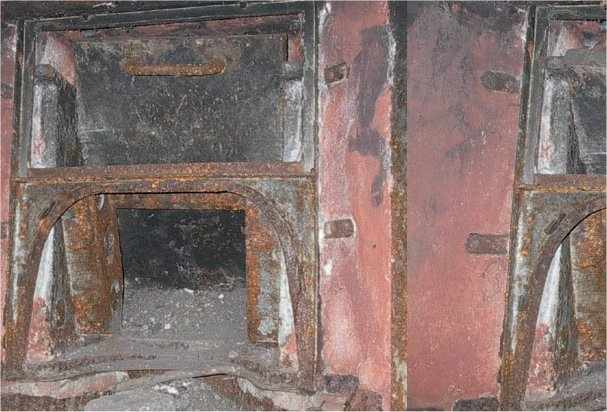
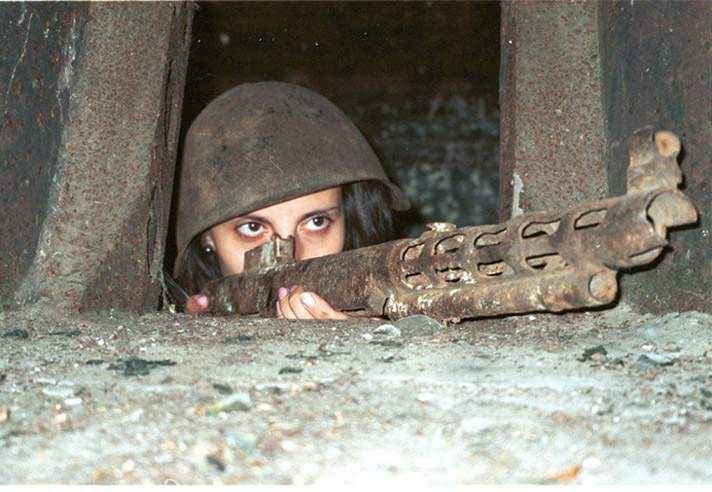
Elena and a bunch of friends spend loads of time digging for relics around Kiev. They take bikes and metal detectors and beers and camp out and play guitar at night, after digging until they drop in the daylight. They’re addicted to the thrill of unearthing old arrowheads and earrings and coins that go back thousands of years, or machine guns or helmets or grenades from massive, half-flooded concrete bunkers from the Second World War.

Elena, whose father was a nuclear physicist, also (apparently) rode through the Chernobyl ‘dead’ site on a fuckoff big motorbike, documenting the destruction that was left behind, including how the ‘liquidators’ were sent in to seal the site and how many died later as a result of massive exposure to radiation. It’s all on kidofspeed.com. There has been a lot of speculation on the Net that Elena didn’t actually ride through the Chernobyl zone on a bike. Some writers on sites like Wikipedia suspect her story is a hoax. But even if she did go as part of a tour, in a car, her photos are nevertheless real, and so are the stories they tell, for instance, of people who refused to leave, who have mostly since died… “I would rather die at home from radiation, than die in an unfamiliar place of home-sickness,” as one old man put it… Stories of an area of the earth that will be polluted for the next 48 000 years…

Elena has also documented experiences of Russian prisoners – you can find these on Echoes of Trapped Voices – with titles like “Shoveling diamonds up the arse of one’s own destiny”. If you do enough trawling on the Net, you’ll find she’s written about a host of topics, from the nuclear disaster in Japan to the London bombings. She is sure one fascinating, free, unusual hell of a woman.

junk males

Eeeuww! I’m a virtual bukkake star. Foreign cock spam’s flying at me from all directions. It’s badly aimed.
It hurts my eyes. It’s just so ridiculous! I’m spluttering with laughter.

___
Hello cherry_bomb
You know you want a bigger cock, dont waste anymore time
derias Hattaway

Wazzup cherry_bomb
girls lover a big, think cock – get yours now!
Stephen Bolduc

Yo man cherry_bomb
African tribes take these herbs all the time, this is why they having such big cocks!
Feras bridgeford

Yo cherry_bomb
imagine the look on your wifes face when she sees the new you
Ragu Lizardo

Wazzup cherry_bomb
A girl once told me i was to small, im the one laughing now
Quyanh Seinzal

Wassup cherry_bomb
Any bigger and i would be in a circus
Merrick Fabris

Dolls always whooped at me and even chaps did in the free WC!
Well, now I whoop at them, because I took Me – ga – Di k
for 3 months and now my phallus is dreadfully best than world.
Attain

You know you want MORE