 “All things are in flux, which is just a balance between the downbeats and the upbeats, and if you are loose enough, you’ll get the dotted note… Otherwise you will fall from either one.”
— Efrain Toro
(Thanks Debbie Pryor for this!)
“All things are in flux, which is just a balance between the downbeats and the upbeats, and if you are loose enough, you’ll get the dotted note… Otherwise you will fall from either one.”
— Efrain Toro
(Thanks Debbie Pryor for this!)
Norwegian improv duo Vertex (Petter Vågan and Tor Andreas Haugerud) collaborate with Capetonian Josh Ginsburg at The Edge Of Wrong festival in Cape Town, February 2013. The venue was The Mahogany Room. This is an edited portion of a longer performance.

Helen Green – “Dorothy and Alice”
Find more of Helen Green’s illustration work HERE.

Photo: Rosemary Lombard
(cc by-nc-sa)
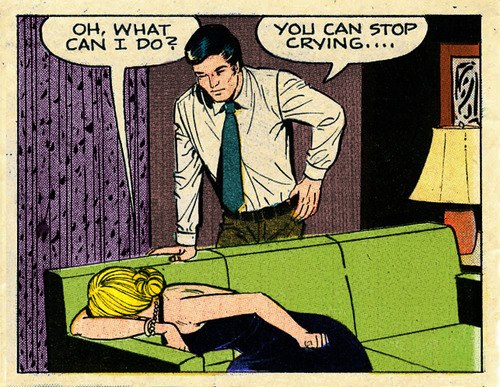
“The political arena leaves one no alternatives, one must be either a dunce or a rogue.”
— Emma Goldman

Illustration by Sarah Lazarovic
THINK first. More at http://longliveirony.com.
The Rolling Stones cover, live on Aligre FM, from Session Planet Claire, recorded on March 3, 2000.
From the single, “Hot Generation/You Don’t Satisfy” (1984, Voxx Records).
‘The blunt, pathetic reality today is that a little old lady has died, who in the winter of her life had to water roses alone under police supervision. If you behave like there’s no such thing as society, in the end there isn’t. Her death must be sad for the handful of people she was nice to and the rich people who got richer under her stewardship. It isn’t sad for anyone else.’
‘Barack Obama, interestingly, said in his statement that she had “broken the glass ceiling for other women”. Only in the sense that all the women beneath her were blinded by falling shards. She is an icon of individualism, not of feminism.’
Russell Brand has an intelligent, evocative way with reflection. I remember the piece he wrote when Amy Winehouse died — the fine-grained, personal memories, the honesty. THIS BIT OF WRITING, on a very different sort of figure in his life, has that same quality.
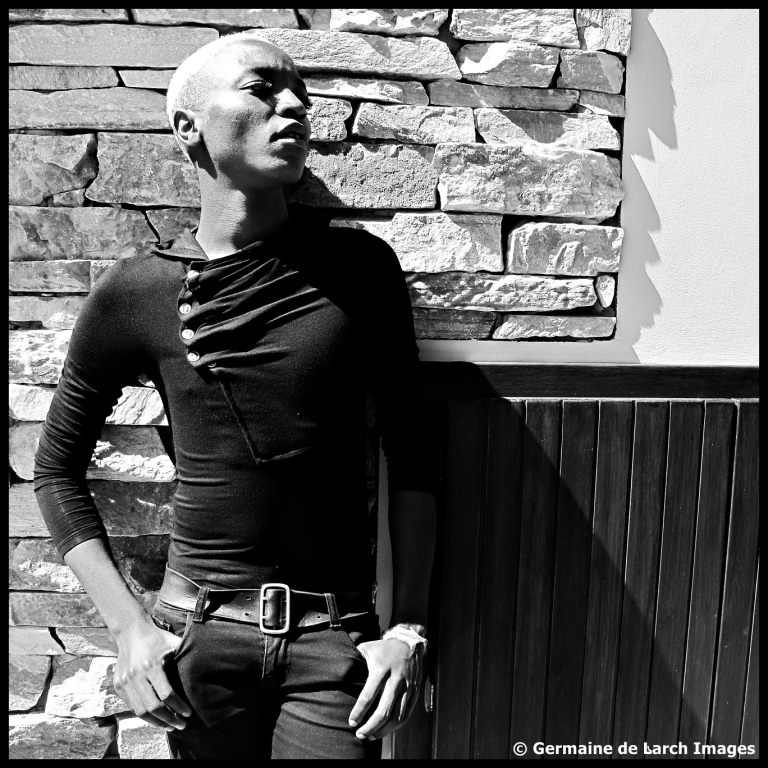
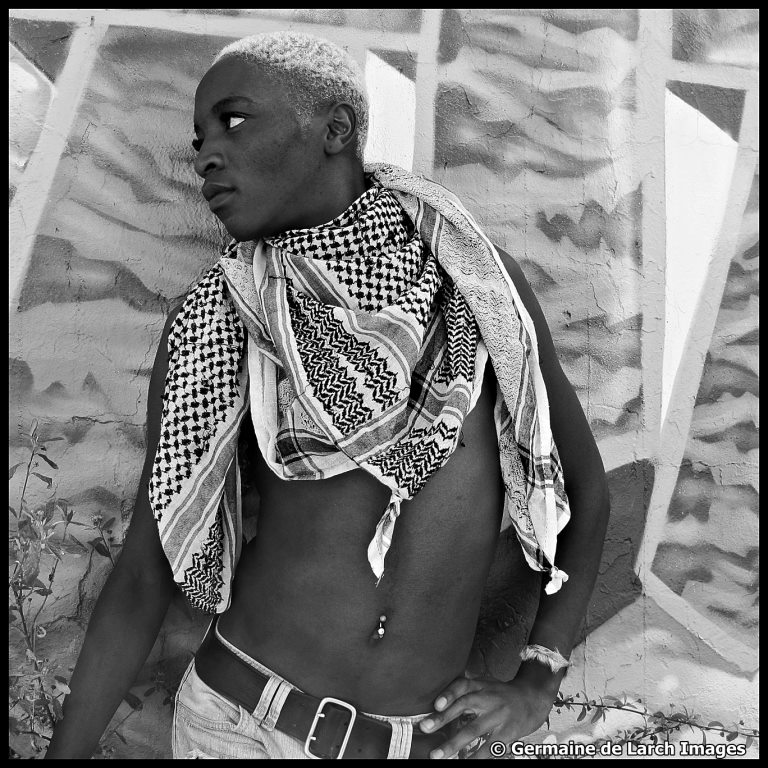
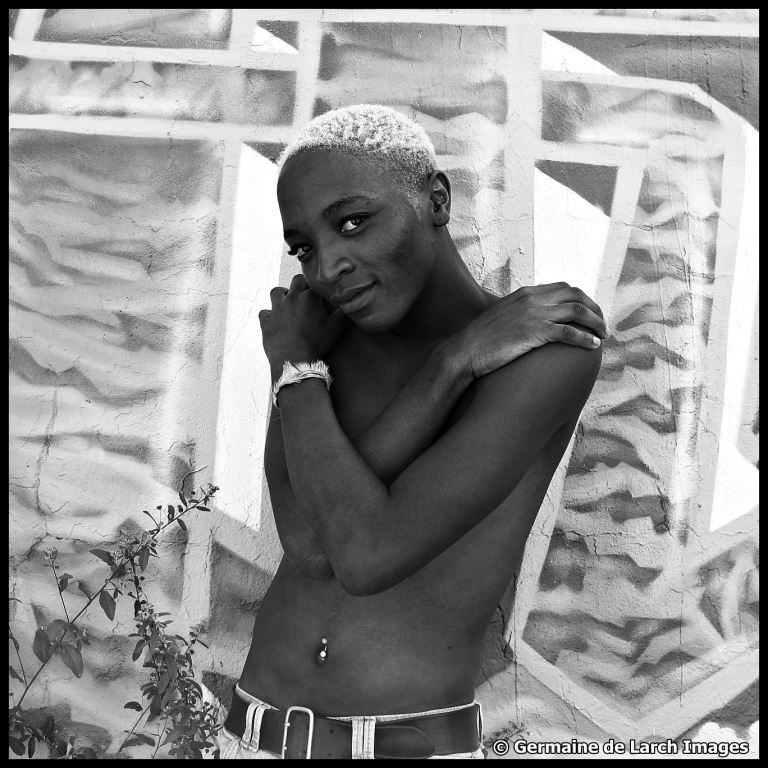
first published on http://www.germainedelarch.tumblr.com
I know this is an awful thing to say, and Alzheimer’s is an awful disease, but I reckon Margaret Thatcher was lucky to lose her mind.
Recorded and mixed in August 1982 at Southern Studios, London. Packaged in a fold-out sleeve with inner sleeve with printed lyrics.
George Barber wrote in The Crass Story:
Crass released another single: ‘How Does It Feel To Be The Mother Of A Thousand Dead?’ A direct attack on Thatcher, it came in a black sleeve decorated with white graveyard crosses. When, during Prime Minister’s Question Time,Thatcher was asked if she’d heard the record, things were getting serious.
‘The Conservative Party attempted to fight back, as the Guardian reported: “The Attorney General, Sir Michael Havers, has been asked by the Conservative MP for Enfield North, Mr. Tim Eggar, to prosecute an Anti-Falklands war record under the Obscene Publications Act. The record, ‘How Does It Feel To Be The Mother of 1,000 Dead?’, by the group Crass, which also owns the record company Crass Records, which released it, is said to have sold 20,000 copies since it was issued last Saturday. It refers to Mrs. Thatcher and the decision to send the Task Force. “You never wanted peace or solution, from the start you lusted after war and destruction… Iron Lady, with your stone heart, so eager that the lesson be taught that you inflicted, you determined, you created, you ordered… It was your decision to have those young boys slaughtered.”
Read more about the history to this recording HERE.
For more protest songs about Maggie Milk-Snatcher, check out the Top 13 Anti-Margaret Thatcher Songs.
Thelonious Monk Quartet performing “Straight No Chaser” in televised performance at the Marquee Club, London, 1965.
Personnel: Charlie Rouse (ts), Thelonious Monk (p), Larry Gales (b), Ben Riley (d)
“Better Git It In Your Soul” performed by Charles Mingus and band. Taken from the 1959 Mingus Ah Um album. Composed by Charles Mingus.
Musicians
John Handy: Alto sax
Booker Ervin: Tenor sax
Shafi Hadi: Tenor sax
Jimmy Knepper: Trombone
Horace Parlan: Piano
Charles Mingus: Bass
Dannie Richmond: Drums
Deeeeeep music from 1970s Ethiopia.
Here’s an interview with Getatchew Mekurya published by Ethiopian Reporter in January 2012. I’ve reproduced it here as it seems it is no longer available at the original location.
The King of Sax Shining on the World Stage
BY TIBEBESELASSIE TIGABU – SATURDAY, 28 JANUARY 2012 08:03
The musicians gave courage to the warriors before these went to the battle through shellela (traditional pep song). The first instrumental recording of the shellela was done by Getachew Mekuria, a veteran saxophone player. With the unforgettable stage performance, in his lion’s mane headgear, he takes the audience on a journey and tells the unique story of patriotism and heroism of fellow countrymen. Despite a negative attitude towards the musicians at the time, Getachew enrolled in the music career in 1948. Many musicians describe him as “exceptional”, with the ability to perform long hours on the stage. He is also perceived as someone innovative, as he brought back the old sounds into a new flavor. Through the years, he produced unforgettable works like Akale Wube, Shellela and others. Now shining on the world stage, Getachew is touring the world with his sax and unique style of music. Inspired by his music, a French music group named their band after one of his songs, Akale Wube. Back from one of his big concerts in London, Tibebeselassie Tigabu of The Reporter takes a peek at his six decades of musical journey. Continue reading
A lovely, instrumental version of this song from an Argentinian covers compilation paying tribute to The Velvet Underground and Nico album. You can download the album free from HERE: click the green arrow; hopefully it still works!
Psychedelic cover of the Holland-Dozier-Holland penned hit, off this US psych band’s record, Come And Have Some Tea With The Tea Company (1968).
This piece by Justine Musk was first published HERE. Thanks to Emma Arogundade for sharing it on Facebook.
Justine Musk – “Well-behaved women seldom make history”: Redefining what it means to be bad
I posed topless for a female photographer who specializes in boudoir. I’m lying on the bed in a man’s velvet smoking jacket, hair blown across my face. I look at the camera. It’s a beautiful portrait (the photographer is very talented) and I’m proud of it. It reminds me slightly of Manet’s Olympia. That painting caused a scandal at the time (1863) — not because the subject was nude — but because of how she stares at the viewer instead of looking away demurely.
It’s that act of shameless eye contact that makes her – according to the moral dictates of the era — truly “bad”.

Édouard Manet – “Olympia” (1863)
I once said to someone, “I don’t know if I’m a good girl with a bad streak, or a bad girl with a good streak.” But I was being ironic. My real point was that, like any other woman (or man), I am both and neither.
In fact, it’s kind of amazing to me that the good girl/bad girl dichotomy still exists. It came up again when movie star Reese Witherspoon accepted an award on television and took her speech as an opportunity to slam other, younger women for being “bad”.
“I understand that it’s cool to be bad, I get it,” she said, in that tone of false camaraderie women sometimes use before they slip in the knife. “But it’s possible to make it in Hollywood without being on a reality show….And when I was coming up, a sex tape was something you hid under your bed…And when you take naked pictures of yourself, you hide your face! Hide your face!” She finished off by declaring that she was going to try to make it “cool” to be a “good girl”.
But imagine this:
Instead of criticizing the same young women for the same things that everybody else is already criticizing them for, she could have slammed reality shows for their misogynist (and monotonous) depiction of women.
She could have criticized the kind of media that turns a girl like Paris Hilton into a celebrity in the first place.
She could have pointed out how advertising – which is so very everywhere that we no longer notice it as we’re breathing it in – co-opts rebellion and sells it back to girls in the “you’ve come a long way, baby” pseudo-liberation supposedly found in a package of cigarettes.
She could have criticized a culture that trains girls to define themselves by their sexual appeal only to punish them for it.
She could have echoed Laurel Ulrich’s famous comment that “well-behaved women seldom make history” and pointed out that ‘bad’ doesn’t have to mean shallow and self-destructive. It can mean cutting against the traditional good-girl dictates of passive and pretty and pleasing and quiet. It can mean speaking up against the status quo, the double standard, the beauty myth. It can mean rejecting the idea that your moral nature depends not on what you do, but on what you don’t do (have sex).
It can mean revolution not rebellion.
She could have said: If you’re going to be ‘bad’, make it MEAN SOMETHING…other than self-sabotage.
Recently I was struck by two different dialogues on Facebook. One was about Charlie Sheen. The other was about Britney Spears. A man posted a status update about going to Sheen’s show, and the thread discussed how smart and funny and talented Sheen is and that despite the controversy and general hubbub, “he’s fine, he’s okay” and “a brilliant marketer” and “totally knows what he’s doing”.
Meanwhile, I’d posted a link to a Britney Spears video on my own Facebook page, partly because I’m fascinated by the way people react to her.
Britney immediately came under fire for being “a poor role model” to young girls everywhere.
No “brilliant marketer” comments for her.
Both Sheen and Spears have a noted history of drug use. Both are sexy and openly sexual. Both are, or have been, at the top of their professions. Both have undergone episodes of bizarre, even tragic behavior that is suggestive of addiction and mental illness.
Yet in the buzz around Charlie Sheen at the height of his notoriety, what I didn’t hear was anything about how he serves as a poor role model for boys.
This is interesting to me, because – unlike Britney, at least to my knowledge – Sheen has a documented history of domestic abuse.
As in: he hits women.
As in: he once shot a woman in the arm.
Let me repeat that: he freaking shot the woman.
But this is no big deal. It gets glossed over. Whenever I brought it up – in person or online – people would lift their virtual shoulders in a virtual shrug and move on.
(Possibly because the women involved were so easily characterized as ‘bad’ girls.
Which in the end comes down to this: slut.
Which means: vile and disposable.)
In comparison to Sheen, Britney did reveal her belly button at a young age. And that, of course, is a threat to civilization as we know it.
Spears is held up as a “poor role model” because we can perceive her as trashy and slutty and “asking for it”. Once you reduce a girl to her sexuality – and god knows that never ever happens in this culture – she becomes less than human, so you no longer have to treat her as a human. Which means the Charlie Sheens of the world – rich, powerful, white – can do with them as they please. If the girls get, you know, a little bit shot — well, it’s their own damn fault. That’s the message that some boys are absorbing from Sheen’s treatment of women and our celebration of him. That attitude, I suspect, will prove more dangerous to girls than any of Britney’s outfits or dance moves or little-girl singing voice.
There’s some irony in the fact that, like Britney, Reese Witherspoon got pregnant at a young age – but unlike Britney, who was married, Reese conceived out of wedlock and had a shotgun wedding.
Also, she said “motherfucker” on stage.
Also, she is still young — and divorced.
Also, she’s an actress (which used to be synonymous with prostitute).
Not so long ago, these things would have pegged her as morally defective. She wouldn’t technically qualify as a “good girl” (which means she’s probably “cooler” than she gives herself credit for).
But what Witherspoon seemed to be getting at in her declaration of herself as a “good girl” has to do with the idea of exposure. Whether it’s a reality TV show or an unfortunate cell phone picture, a good girl does not show herself to the world in this way — or if she does, she “hides her face”.
She guards her shame.
She never makes eye contact.
A “good” girl is not only virginal – and thus qualifies as morally sound, even if, like Jessica Wakefield in the Sweet Valley High novels, she’s kind of a sociopath – but modest and quiet. She covers up. She is seen – without being seen. She talks in a nice voice and smiles a lot. She’s the angel of the house, and stays in the house, which was the historical point of this exercise in the first place.
She’s not loud or opinionated, she doesn’t rock the boat, and she doesn’t draw attention to herself.
All of this is convenient for others. The funny thing about silence is how it tends to favor the dominating person or group. The dominating narrative, the ruling point of view, becomes a sort of truth by default: what we as a culture assume when we’re given no reason to assume otherwise.
It’s the winners who get to write history, after all. The others are silent or silenced.
Which is not my way of saying that appearing on reality TV isn’t a form of evil in its own right, or that a girl should take provocative pictures of herself and post them on the ‘Net. Neither is power so much as a mistaken idea about power (and perhaps too many shots of tequila): when the culture seems to be urging you in one direction (“it’s cool to be ‘bad’”) and you haven’t had time or experience to learn otherwise.
But there does seem to be a link between sexual expression and self-expression, in that a ‘good’ girl is not in full possession of either. Her body doesn’t belong to her: it ‘belongs’ to her father, to her future husband, to the government that decides if she can have an abortion or the religion that decides if she can use birth control.
Her voice doesn’t fully belong to her either: she has to be careful what she says, and how she says it, and who she might offend.
‘Goodness’, then, seems to involve an amputation of the self. You make yourself ‘good’ to be loved and accepted, and in the process sacrifice your authenticity. You give yourself away until you no longer know who you are – assuming you ever did.
I’m not sure what you actually get for this, in the end.
Fitting in, as the wonderful Brene Brown so astutely points out, is not the same as being accepted for who you are – in fact, the one renders the other impossible. Being trained to please and serve leaves you ripe for exploitation; the inability to assert your boundaries makes you easy to abuse in large and small ways.
“Raising a girl to be ‘nice’,” a therapist – a woman in her sixties, married and with daughters — once remarked to me, “is like sending her out into the world with one hand tied behind her back.” She should know. Many of these women turn up in her Beverly Hills office twenty years later: divorced, discarded, aging, with no ability to support themselves and no sense of who they are at core.
So honestly, in the year 2011, these are a girl’s options? She can be ‘bad’ (and disposable) or ‘good’ (and turned in on herself)?
I would like to think that there’s another option.
Not ‘bad’, maybe, but badass.
As in: you get to declare yourself. You get to express your sexuality any way you choose, whether it’s indulging or abstaining, and you’re responsible about it and willing to risk the emotional consequences. When you want or need to speak up — you speak up. You write or blog or paint or dance or study or put on puppet shows or raise your kids or start up your own company or nonprofit or do some combination thereof. You stand for what you believe in. You know what you believe in – and what you don’t. You own your life. You find your tribe. You look out for yourself (ie: you are ‘selfish’). And when you offend people, as anyone with an opinion is bound to do at some point — when people step into your space just to tell you that you suck — you shrug it off and move on, because you know disapproval won’t kill you.
You nurture the fire at your core.
I’m reading the book GAME FRAME, about the rise of social gaming, and came across the idea of “the magic circle”. The circle is the arena in which the game takes place. You step over some kind of threshold and into another world. You participate in a conflict that you recognize as artificial but, for a space of time, accept as reality. You willingly suspend your disbelief.
It struck me that we move in and out of different kinds of magic circles. There are games, yes, but also movies and theater and television and books. There are relationships that become their own world of intimacy. They form a private reality between you and your partner, in which you might ignore your actual experience to buy into an entrancement (“we are soulmates”) or belief system (“he is better and always right, and I am lesser and always wrong”).
And then there’s a magic circle that has to do with language and perception, with how we create our shared reality. The good girl/bad girl labeling strikes me as one of those. Instead of recognizing a woman as a complex and multi-dimensional being, instead of allowing her the flaws, mistakes and happy accidents that come with the trial-and-error process known as the human condition, we stomp her into a cartoon. We accept an artificial conflict (good girl vs bad girl) and make it important. We place her on a pedestal or in the dirt (or on the pedestal so we can knock her off later). We accept this as real instead of a game we can choose not to play.
You could say, instead: We’re all doing the best we can. We all do stupid things from time to time. But we won’t be distracted by this game of blaming and shaming each other. We’ll look to larger forces.
I like this video by Jeffrey Wright, in which he transfers the “willing suspension of disbelief” from the theater to the developing world, from acting to entrepreneurialism and social change.
With the power of your convictions, he says, with the ability to suspend your disbelief and act in the face of uncertainty, you have the chance to reshape reality.
Like Olympia staring out at the viewer — like Manet breaking the rules to paint her — you can reject the game and make a new one.
You can invent a new truth.
Olympia has come down to us through the ages. She refuses to “hide her face”. She is shamelessly comfortable in her own skin. She exudes a badass presence.
Her critics, now, are dust.
Vanessa Paradis’ opening monologue (with English subtitles)
Review by Michael Dequina at filmthreat.com, 11/21/00:
“Very few actors, let alone young ones, can pull off what 20-something chanteuse-turned-actress Vanessa Paradis does in the opening minutes of Patrice Leconte’s romantic drama. In a single take broken only by an occasional white-on-black credit card, Paradis’ Adele confides to an unseen interrogator the reasons for her depression. It is never explained exactly to whom she is speaking and in what type of situation, but that is of little consequence—in these scant minutes, the audience instantly is given a vivid portrait of what the character is all about: her youthful recklessness and naïveté, her sexual abandon and her romantic soul. While kudos go to writer Serge Frydman, it is Paradis who brings the scene and Adele to robust life.
“However, in Adele’s eyes, her life isn’t quite so healthy, and as such she becomes the titular girl on the bridge, ready to jump when she meets Gabor (Daniel Auteuil), a knife thrower in need of a new target. Since she clearly has no fear of danger, Adele is a perfect match—though it comes as a surprise to both of them just how well they complement each other, for these two historically down-on-their-luck characters find themselves on an incredible streak of good fortune as they wow crowds throughout Europe. But as with all things, what goes up must come down.
“La Fille sur le Pont is a magical film in all senses. On a literal level, the surreal psychic bond that develops between Adele and Gabor pushes the film into the realm of magical realism, and their knife throwing scenes bear a not-so-subtle, otherworldly erotic charge. But the real magic comes in watching the warm sparks between Paradis and Auteuil and following their eccentric characters’ beautiful, unconventional relationship. Jean-Marie Dreujou’s stunning black-and-white cinematography and Leconte’s smart choices in music (there is no original composed score) add to the film’s whimsical, timeless spell.”
Judi Dench and Brendan O’Hea perform “Sixteen Going On Seventeen” from The Sound of Music at the London gala event, “Some Enchanted Evening: Richard Rogers”, held on May 12, 2002.
Thanks to Erica Lombard for putting me in stitches with this.

End fight scene from Jackie Chan’s 1978 breakthrough. Craziest foley and 70s soundtrack: As well as original music by Chou Fu-liang, the original version of the film features Jean Michel Jarre’s “Oxygène (Part 2)” and Space’s “Magic Fly”. Like many Hong Kong movies of the era, it also includes samples from western movie scores, including A Fistful Of Dollars, You Only Live Twice, The Spy Who Loved Me, and even the Death Star explosion moment from Star Wars. The English subtitles over (different) English dubbing are great, too.
The full movie is on Youtube, HERE, but if you’re in South Africa, like me, you won’t be able to watch it due to copyright nonsense.
This man does not give a fuck.
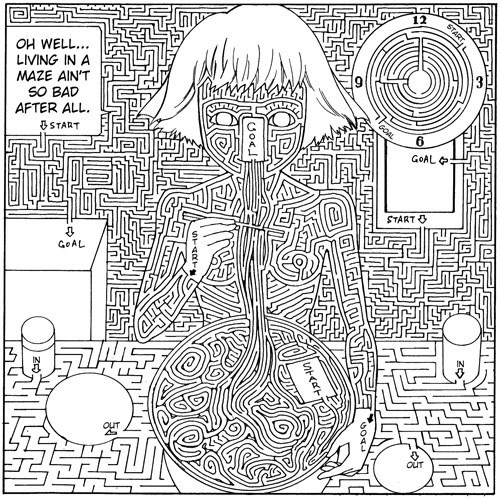
Shintaro Kago – “Living in a Maze”
We are motivated more by aversion to the unpleasant than by a will toward truth, freedom, or healing. We are constantly attempting to escape our life, to avoid rather than enter our pain, and we wonder why it is so difficult to be fully alive.
― Stephen Levine, from A Year to Live: How to Live This Year as If It Were Your Last
James Dean and Lois Smith: screen test for East of Eden.
Nancy Sinatra – “Bang Bang (My Baby Shot Me Down)” – piano remix.
(Trigger warning for domestic violence)
Serbian campaign against domestic abuse.
A principal fruit of friendship is the ease and discharge of the fullness and swellings of the heart, which passions of all kinds do cause and induce. We know diseases of stoppings and suffocations are the most dangerous in the body, and it is not much otherwise in the mind: you may take sarza to open the liver, steel to open the spleen, flowers of sulphur for the lungs, castoreum for the brain; but no receipt openeth the heart but a true friend, to whom you may impart griefs, joys, fears, hopes, suspicions, counsels, and whatsoever lieth upon the heart to oppress it, in a kind of civil shrift or confession.

…[C]ommunicating of a man’s self to his friend works two contrary effects, for it redoubleth joys, and cutteth griefs in halves. For there is no man that imparteth his joys to his friend, but he joyeth the more; and no man that imparteth his griefs to his friend, but he grieveth the less. So that it is in truth of operation upon a man’s mind, of like virtue as the alchemists use to attribute to their stone for man’s body, that it worketh all contrary effects, but still to the good and benefit of nature. But yet without praying in aid of alchemists, there is a manifest image of this in the ordinary course of nature. For in bodies, union strengtheneth and cherisheth any natural action, and on the other side weakeneth and dulleth any violent impression; and even so it is of minds…
…The second fruit of friendship is healthful and sovereign for the understanding, as the first is for the affections. For friendship maketh indeed a fair day in the affections, from storm and tempests; but it maketh daylight in the understanding, out of darkness, and confusion of thoughts. Neither is this to be understood only of faithful counsel, which a man receiveth from his friend; but before you come to that, certain it is that whosoever hath his mind fraught with many thoughts, his wits and understanding do clarify and break up, in the communicating and discoursing with another: he tosseth his thoughts more easily; he marshalleth them more orderly; he seeth how they look when they are turned into words; finally, he waxeth wiser than himself; and that more by an hour’s discourse, than by a day’s meditation…
… How many things are there which a man cannot, with any face or comeliness, say or do himself? A man can scarce allege his own merits with modesty, much less extol them; a man cannot sometimes brook to supplicate or beg; and a number of the like. But all these things are graceful in a friend’s mouth, which are blushing in a man’s own. So again, a man’s person hath many proper relations which he cannot put off. A man cannot speak to his son but as a father; to his wife but as a husband; to his enemy but upon terms: whereas a friend may speak as the case requires, and not as it sorteth with the person. But to enumerate these things were endless. I have given the rule, where a man cannot fitly play his own part; if he have not a friend, he may quit the stage.
Read the whole of this essay by Francis Bacon (the 16th century thinker) HERE.

Those only are happy (I thought) who have their minds fixed on some object other than their own happiness; on the happiness of others, on the improvement of mankind, even on some art or pursuit, followed not as a means, but as itself an ideal end. Aiming thus at something else, they find happiness by the way. The enjoyments of life (such was now my theory) are sufficient to make it a pleasant thing, when they are taken en passant, without being made a principal object. Once make them so, and they are immediately felt to be insufficient. They will not bear a scrutinizing examination.
Ask yourself whether you are happy, and you cease to be so. The only chance is to treat, not happiness, but some end external to it, as the purpose of life. Let your self-consciousness, your scrutiny, your self-interrogation, exhaust themselves on that; and if otherwise fortunately circumstanced you will inhale happiness with the air you breathe, without dwelling on it or thinking about it, without either forestalling it in imagination, or putting it to flight by fatal questioning.
― John Stuart Mill, Autobiography (1873). Read the rest of it HERE.

Aëla Labbé – “Sister Sister” series
Why do you live in your body like you will be given another? As if it were temporary. You starve it, you let anyone touch it, you berate it. Tell it that should be completely different. You tug at your soft flesh, wish it thinner, wish it gone. You fall in love with those who praise the way it sighs under their hands, but who praises the way it holds up your weight, even when you are falling apart?
— Warsan Shire










 fleurmach
