Monthly Archives: March 2016
suicide – dream baby dream
julian cope – jellypop perky jean
“Darling, show me the place where the paint is made that colours the world
where the light is created that makes shine the splendour of the dawn
the lines and shapes of all forms
the sound that fills the orbit
show me the thought that illuminates the darkness of the void…”
Thanks Duane for sending this. :)
syd barrett – baby lemonade
“In the evening sun going down
when the earth streams in, in the morning
send a cage through the post
make your name like a ghost…”
simone weil – imagination which fills the void
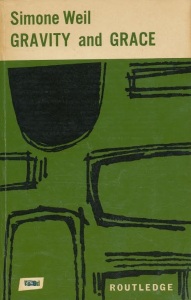 The imagination is continually at work filling up all the fissures through which grace might pass.
Every void (not accepted) produces hatred, sourness, bitterness, spite. The evil we wish for that which we hate, and which we imagine, restores the balance.
The militiamen of the Spanish Testament who invented victories in order to endure death: an example of imagination filling up the void. Although we should gain nothing by the victory, we can bear to die for a cause which is going to triumph, not for one which will be defeated. For something absolutely denuded of power, it would be superhuman (the disciples of Christ). The thought of death calls for a counterweight, and this counterweight—apart from grace—cannot be anything but a lie.
The imagination, filler up of the void, is essentially a liar. It does away with the third dimension, for only real objects have three dimensions. It does away with multiple relationships.
To try to define the things which, while they do indeed happen, yet remain in a sense imaginary. War. Crimes. Acts of revenge. Extreme affliction.
The crimes in Spain were actually perpetrated and yet they resembled mere acts of boastfulness.
Realities which have no more dimensions than a dream.
In the case of evil, as in that of dreams, there are not multiple readings.* Hence the simplicity of criminals.
Crimes flat like dreams on both sides: on the side of the executioner and on the side of the victim. What is more frightful than to die in a nightmare?
Compensations. Marius imagined future retribution. Napoleon thought of posterity. William II wanted a cup of tea. His imagination was not strongly enough attached to power to be able to span the years: it turned towards a cup of tea.
The adoration of the great by the people in the seventeenth century (La Bruyère). This was a result of imagination filling up the void, a result which has disappeared since money has been substituted for it. Two base results, but money the baser of the two.
In no matter what circumstances, if the imagination is stopped from pouring itself out we have a void (the poor in spirit).
In no matter what circumstances (but sometimes at the price of how great a degradation!) imagination can fill the void. This is why average human beings can become prisoners, slaves, prostitutes and pass through no matter what suffering without being purified.
We must continually suspend the work of the imagination filling the void within ourselves.
If we accept no matter what void, what stroke of fate can prevent us from loving the universe?
We have the assurance that, come what may, the universe is full.
__
* For the meaning of this word (lectures) in the vocabulary of Simone Weil, see later chapter on Readings.
__
Excerpted from Simone Weil‘s Gravity and Grace. First French edition 1947. Translated by Emma Crawford. English language edition 1963. Routledge and Kegan Paul, London.
arvo pärt – silentium
The 20th century saw some of the most unspeakable horrors committed by humanity, and Arvo Part reflects this historical burden that we inherit and must carry. The weight of sadness and the need for pensive reflection on our past can be perceived in all of his music. We must remain in light.
simone weil – detachment
Affliction in itself is not enough for the attainment of total detachment. Unconsoled affliction is necessary. There must be no consolation—no apparent consolation. Ineffable consolation then comes down.
To forgive debts. To accept the past without asking for future compensation. To stop time at the present instant. This is also the acceptance of death.
‘He emptied himself of his divinity.’ To empty ourselves of the world. To take the form of a slave. To reduce ourselves to the point we occupy in space and time—that is to say, to nothing.
To strip ourselves of the imaginary royalty of the world.
Absolute solitude. Then we possess the truth of the world.
Two ways of renouncing material possessions:
To give them up with a view to some spiritual advantage.
To conceive of them and feel them as conducive to spiritual well-being (for example: hunger, fatigue and humiliation cloud the mind and hinder meditation) and yet to renounce them.
Only the second kind of renunciation means nakedness of spirit.
Furthermore, material goods would scarcely be dangerous if they were seen in isolation and not bound up with spiritual advantage.
We must give up everything which is not grace and not even desire grace.
The extinction of desire (Buddhism)—or detachment—or amor fati—or desire for the absolute good—these all amount to the same: to empty desire, finality of all content, to desire in the void, to desire without any wishes.
To detach our desire from all good things and to wait. Experience proves that this waiting is satisfied. It is then we touch the absolute good.
Always, beyond the particular object whatever it may be, we have to fix our will on the void—to will the void. For the good which we can neither picture nor define is a void for us. But this void is fuller than all fullnesses.
If we get as far as this we shall come through all right, for God fills the void. It has nothing to do with an intellectual process in the present-day sense. The intelligence has nothing to discover, it has only to clear the ground. It is only good for servile tasks.
The good seems to us as a nothingness, since there is no thing that is good. But this nothingness is not unreal. Compared with it, everything in existence is unreal.
We must leave on one side the beliefs which fill up voids and sweeten what is bitter. The belief in immortality. The belief in the utility of sin: etiampeccata. The belief in the providential ordering of events—in short the ‘consolations’ which are ordinarily sought in religion.
To love God through and across the destruction of Troy and of Carthage—and with no consolation. Love is not consolation, it is light.
The reality of the world is the result of our attachment. It is the reality of the self which we transfer into things. It has nothing to do with independent reality. That is only perceptible through total detachment. Should only one thread remain, there is still attachment.
Affliction which forces us to attach ourselves to the most wretched objects exposes in all its misery the true character of attachment. In this way the necessity for detachment is made more obvious.
Attachment is a manufacturer of illusions and whoever wants reality ought to be detached.
As soon as we know that something is real we can no longer be attached to it.
Attachment is no more nor less than an insufficiency in our sense of reality. We are attached to the possession of a thing because we think that if we cease to possess it, it will cease to exist. A great many people do not feel with their whole soul that there is all the difference in the world between the destruction of a town and their own irremediable exile from that town.
Human misery would be intolerable if it were not diluted in time. We have to prevent it from being diluted in order that it should be intolerable.
‘And when they had had their fill of tears’ (Iliad).—This is another way of making the worst suffering bearable.
We must not weep so that we may not be comforted.*
All suffering which does not detach us is wasted suffering. Nothing is more frightful, a desolate coldness, a warped soul (Ovid. Slaves in Plautus).
Never to think of a thing or being we love but have not actually before our eyes without reflecting that perhaps this thing has been destroyed, or this person is dead.
May our sense of reality not be dissolved by this thought but made more intense.
Each time that we say ‘Thy will be done’ we should have in mind all possible misfortunes added together.
Two ways of killing ourselves: suicide or detachment.
To kill by our thought everything we love: the only way to die. Only what we love, however (‘He who hateth not his father and mother . . .’ but: ‘Love your enemies . . .’).
Not to desire that what we love should be immortal. We should neither desire the immortality nor the death of any human being, whoever he may be, with whom we have to do.
The miser deprives himself of his treasure because of his desire for it. If we can let our whole good rest with something hidden in the ground, why not with God?
But when God has become as full of significance as the treasure is for the miser, we have to tell ourselves insistently that he does not exist. We must experience the fact that we love him, even if he does not exist.
It is he who, through the operation of the dark night, withdraws himself in order not to be loved like the treasure is by the miser.
Electra weeping for the dead Orestes. If we love God while thinking that he does not exist, he will manifest his existence.
__
* Yet Jesus Christ said: ‘Blessed are they that mourn’. But here Simone Weil is only condemning the tears wrung from us by the loss of temporal goods— tears which man sheds over himself. [Editor’s note.]
__
Excerpted from Simone Weil‘s Gravity and Grace. First French edition 1947. Translated by Emma Crawford. English language edition 1963. Routledge and Kegan Paul, London.
the tired sounds of stars of the lid
The Tired Sounds of Stars of the Lid is the sixth studio LP by ambient drone music group Stars of the Lid. It was released in late 2001 on the Kranky label, on two CDs and three LPs. The album features long minimal, droning compositions created from heavily treated guitar, horn, flute, piano, and other classical instruments. An interesting feature of the second track, “Requiem For Dying Mothers, part 2” is that it features a sample from the final scene of Andrei Tarkovsky‘s film Stalker, where the character Monkey pushes a glass across a table by way of telekinesis as a dog whines and a train whistle blows in the distance (watch the film free HERE).
fyodor tyutchev – silentium
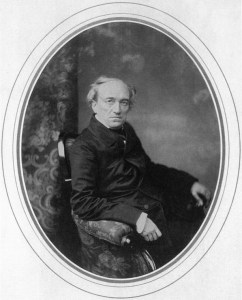
Fyodor Tyutchev, 1856.
Silentium! is an archetypal poem by Tyutchev. Written in 1830, it is remarkable for its rhythm crafted so as to make reading in silence easier than aloud. Like so many of his poems, its images are anthropomorphic and pulsing with pantheism. As one Russian critic put it, “the temporal epochs of human life, its past and its present fluctuate and vacillate in equal measure: the unstoppable current of time erodes the outline of the present.” *
Speak not, lie hidden, and conceal
the way you dream, the things you feel.
Deep in your spirit let them rise
akin to stars in crystal skies
that set before the night is blurred:
delight in them and speak no word.
How can a heart expression find?
How should another know your mind?
Will he discern what quickens you?
A thought, once uttered, is untrue.
Dimmed is the fountainhead when stirred:
drink at the source and speak no word.
Live in your inner self alone
within your soul a world has grown,
the magic of veiled thoughts that might
be blinded by the outer light,
drowned in the noise of day, unheard…
take in their song and speak no word.
(translated by Vladimir Nabokov)
simone weil – to accept the void
‘Tradition teaches us as touching the gods and experience shows us as regards men that, by a necessity of nature, every being invariably exercises all the power of which it is capable’ (Thucydides).
Like a gas, the soul tends to fill the entire space which is given it. A gas which contracted leaving a vacuum—this would be contrary to the law of entropy. It is not so with the God of the Christians. He is a supernatural God, whereas Jehovah is a natural God.
Not to exercise all the power at one’s disposal is to endure the void. This is contrary to all the laws of nature. Grace alone can do it.
Grace fills empty spaces but it can only enter where there is a void to receive it, and it is grace itself which makes this void.
The necessity for a reward, the need to receive the equivalent of what we give. But if, doing violence to this necessity, we leave a vacuum, as it were a suction of air is produced and a supernatural reward results. It does not come if we receive other wages: it is this vacuum which makes it come.
It is the same with the remission of debts (and this applies not only to the harm which others have done us but to the good which we have done them). There again, we accept a void in ourselves.
To accept a void in ourselves is supernatural. Where is the energy to be found for an act which has nothing to counter- balance it? The energy has to come from elsewhere. Yet first there must be a tearing out, something desperate has to take place, the void must be created. Void: the dark night.
Admiration, pity (most of all a mixture of the two) bring real energy. But this we must do without.
A time has to be gone through without any reward, natural or supernatural.
The world must be regarded as containing something of a void in order that it may have need of God. That presupposes evil.
To love truth means to endure the void and, as a result, to accept death. Truth is on the side of death.
Man only escapes from the laws of this world in lightning flashes. Instants when everything stands still, instants of contemplation, of pure intuition, of mental void, of acceptance of the moral void. It is through such instants that he is capable of the supernatural.
Whoever endures a moment of the void either receives the supernatural bread or falls. It is a terrible risk, but one that must be run—even during the instant when hope fails. But we must not throw ourselves into it.
__
Excerpted from Simone Weil‘s Gravity and Grace. First French edition 1947. Translated by Emma Crawford. English language edition 1963. Routledge and Kegan Paul, London.
molly drake – how wild the wind blows
Molly Drake (1915 – 1993) was Nick Drake‘s mother – clearly his talent was hereditary.
The acorn carries an oak tree
Sleeping but for a little while
Winter lies in the arms of spring
As a mother carries her child
And never knows
How wild the wind blows
A thought carries a universe
A seed carries a field of grain
Love lies in the arms of change
As a joy carries a pain
And no one knows
How wild the wind blows.
And here’s an article in The Guardian.
simone weil – void and compensation
Human mechanics. Whoever suffers tries to communicate his suffering (either by ill-treating someone or calling forth their pity) in order to reduce it, and he does really reduce it in this way. In the case of a man in the uttermost depths, whom no one pities, who is without power to ill-treat anyone (if he has no child or being who loves him), the suffering remains within and poisons him.
This is imperative, like gravity. How can one gain deliverance?
How gain deliverance from a force which is like gravity?
The tendency to spread evil beyond oneself: I still have it! Beings and things are not sacred enough to me. May I never sully anything, even though I be utterly transformed into mud. To sully nothing, even in thought. Even in my worst moments I would not destroy a Greek statue or a fresco by Giotto. Why anything else then? Why, for example, a moment in the life of a human being who could have been happy for that moment.
It is impossible to forgive whoever has done us harm if that harm has lowered us. We have to think that it has not lowered us, but has revealed our true level.
The wish to see others suffer exactly what we are suffering. It is because of this that, except in periods of social instability, the spite of those in misfortune is directed against their fellows.
That is a factor making for social stability.
The tendency to spread the suffering beyond ourselves. If through excessive weakness we can neither call forth pity nor do harm to others, we attack what the universe itself represents for us.
Then every good or beautiful thing is like an insult.
To harm a person is to receive something from him. What? What have we gained (and what will have to be repaid) when we have done harm? We have gained in importance. We have expanded. We have filled an emptiness in ourselves by creating one in somebody else.
To be able to hurt others with impunity—for instance to pass our anger on to an inferior who is obliged to be silent—is to spare ourselves from an expenditure of energy, an expenditure which the other person will have to make. It is the same in the case of the unlawful satisfaction of any desire. The energy we economize in this way is immediately debased.
To forgive. We cannot do this. When we are harmed by someone reactions are set up within us. The desire for vengeance is a desire for essential equilibrium. We must seek equilibrium on another plane. We have to go as far as this limit by ourselves. There we reach the void. (Heaven helps those who help themselves…)
Headaches. At a certain moment, the pain is lessened by projecting it into the universe, but the universe is impaired; the pain is more intense when it comes home again, but something in me does not suffer and remains in contact with a universe which is not impaired. Act in the same way with the passions. Make them come down like a deposit, collect them into a point and become detached from them. Especially, treat all sufferings in this way. Prevent them from having access to things.
The search for equilibrium is bad because it is imaginary. Revenge. Even if in fact we kill or torture our enemy it is, in a sense, imaginary.
A man who lived for his city, his family, his friends, to acquire wealth, improve his social position, etc.—a war: he is led away as a slave and henceforth for evermore he must wear himself out to the utmost limit of his strength merely in order to exist.
That is frightful, impossible, and for this reason he will cling to any aim which presents itself no matter how wretched, be it only to have the slave punished who works at his side. He has no more choice about aims. Any aim at all is like a branch to a drowning man.
Those whose city had been destroyed and who were led away into slavery had no longer either past or future: what had they with which to fill their minds? Lies and the meanest and most pitiful of covetous desires. They were perhaps more ready to risk crucifixion for the sake of stealing a chicken than they had formerly been to risk death in battle for the defence of their town. This is surely so, or those frightful tortures would not have been necessary.
Otherwise they had to be able to endure a void in their minds.
In order to have the strength to contemplate affliction when we are afflicted we need supernatural bread.
A situation which is too hard degrades us through the following process: as a general rule the energy supplied by higher emotions is limited. If the situation requires us to go beyond this limit we have to fall back on lower feelings (fear, covetousness, desire to beat the record, love of outward honours) which are richer in energy.
This limitation is the key to many a retrogression.
Tragedy of those who, having been guided by the love of the Good into a road where suffering has to be endured, after a certain time reach their limit and become debased.
A rock in our path. To hurl ourselves upon this rock as though after a certain intensity of desire had been reached it could not exist any more. Or else to retreat as though we ourselves did not exist. Desire contains something of the absolute and if it fails (once its energy has been used up) the absolute is transferred to the obstacle. This produces the state of mind of the defeated, the oppressed.
To grasp (in each thing) that there is a limit and that without supernatural help that limit cannot be passed—or only by very little and at the price of a terrible fall afterwards.
Energy, freed by the disappearance of the objects which provide motives, always tends to go downwards.
Base feelings (envy, resentment) are degraded energy. Every kind of reward constitutes a degradation of energy.
Self-satisfaction over a good action (or a work of art) is a degradation of higher energy. That is why the left hand should not know . . .
A purely imaginary reward (a smile from Louis XIV) is the exact equivalent of what we have expended, for it has exactly the same value as what we have expended—unlike real rewards which, as such, are either of higher or lower value. Hence imaginary advantages alone supply the energy for unlimited effort. But it is necessary that Louis XIV should really smile; if he does not, it is an unutterable deprivation. A king can only pay out imaginary rewards most of the time or he would be insolvent.
It is the same with religion at a certain level. Instead of receiving the smile of Louis XIV, we invent a God who smiles on us.
Or again we praise ourselves. There must be an equivalent reward. This is as inevitable as gravity.
A beloved being who disappoints me. I have written to him. It is impossible that he should not reply by saying what I have said to myself in his name.
Men owe us what we imagine they will give us. We must forgive them this debt.
To accept the fact that they are other than the creatures of our imagination is to imitate the renunciation of God.
I also am other than what I imagine myself to be. To know this is forgiveness.
__
Excerpted from Simone Weil‘s Gravity and Grace. First French edition 1947. Translated by Emma Crawford. English language edition 1963. Routledge and Kegan Paul, London.
björk – one day (live)
simone weil – gravity and grace
All the natural movements of the soul are controlled by laws analogous to those of physical gravity. Grace is the only exception.
We must always expect things to happen in conformity with the laws of gravity unless there is supernatural intervention.
Two forces rule the universe: light and gravity.
Gravity. Generally what we expect of others depends on the effect of gravity upon ourselves, what we receive from them depends on the effect of gravity upon them. Sometimes (by chance) the two coincide, often they do not.
What is the reason that as soon as one human being shows he needs another (no matter whether his need be slight or great) the latter draws back from him? Gravity.
Lear, a tragedy of gravity. Everything we call base is a phenomenon due to gravity. Moreover the word baseness is an indication of this fact.
The object of an action and the level of the energy by which it is carried out are distinct from each other. A certain thing must be done. But where is the energy to be drawn for its accomplishment? A virtuous action can lower a man if there is not enough energy available on the same level.
What is base and what is superficial are on the same level. ‘His love is violent but base’: a possible sentence. ‘His love is deep but base’: an impossible one.
If it be true that the same suffering is much harder to bear for a high motive than for a base one (the people who stood, motionless, from one to eight o’clock in the morning for the sake of having an egg, would have found it very difficult to do so in order to save a human life), a base form of virtue is perhaps in some respects better able to stand the test of difficulties, temptations and misfortunes than a noble one. Napoleon’s soldiers. Hence the use of cruelty in order to sustain or raise the morale of soldiers. Something not to be forgotten in connexion with moral weakness.
This is a particular example of the law which generally puts force on the side of baseness. Gravity is, as it were, a symbol of it.
Queueing for food. The same action is easier if the motive is base than if it is noble. Base motives have in them more energy than noble ones. Problem: in what way can the energy belonging to the base motives be transferred to the noble ones?
I must not forget that at certain times when my headaches were raging I had an intense longing to make another human being suffer by hitting him in exactly the same part of his forehead.
Analogous desires—very frequent in human beings.
When in this state, I have several times succumbed to the temptation at least to say words which cause pain. Obedience to the force of gravity. The greatest sin. Thus we corrupt the function of language, which is to express the relationship between things.
Attitude of supplication: I must necessarily turn to something other than myself since it is a question of being delivered from self.
Any attempt to gain this deliverance by means of my own energy would be like the efforts of a cow which pulls at its hobble and so falls onto its knees.
In making it one liberates a certain amount of energy in oneself by a violence which serves to degrade more energy. Compensation as in thermodynamics; a vicious circle from which one can be delivered only from on high.
The source of man’s moral energy is outside him, like that of his physical energy (food, air etc.). He generally finds it, and that is why he has the illusion—as on the physical plane—that his being carries the principle of its preservation within itself. Privation alone makes him feel his need. And, in the event of privation, he cannot help turning to anything whatever which is edible.
There is only one remedy for that: a chlorophyll conferring the faculty of feeding on light.
Not to judge. All faults are the same. There is only one fault: incapacity to feed upon light, for where capacity to do this has been lost all faults are possible.
‘My meat is to do the will of Him that sent me.’ There is no good apart from this capacity.
To come down by a movement in which gravity plays no part. … Gravity makes things come down, wings make them rise: what wings raised to the second power can make things come down without weight?
Creation is composed of the descending movement of gravity, the ascending movement of grace and the descending movement of the second degree of grace.
Grace is the law of the descending movement.
To lower oneself is to rise in the domain of moral gravity. Moral gravity makes us fall towards the heights.
Too great affliction places a human being beneath pity: it arouses disgust, horror and scorn. Pity goes down to a certain level but not below it. What does charity do in order to descend lower? Have those who have fallen so low pity on themselves?
__
Excerpted from Simone Weil‘s Gravity and Grace. First French edition 1947. Translated by Emma Crawford. English language edition 1963. Routledge and Kegan Paul, London.
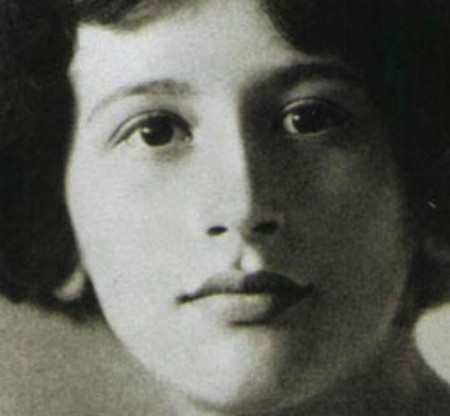
simone weil’s gravity and grace
I picked this book up recently. I’ve always found Simone Weil fascinating, and her writing here has been speaking to me profoundly at this juncture, so I’m going to be posting it in installments over the next while.

 fleurmach