andre breton – nadja (1928)

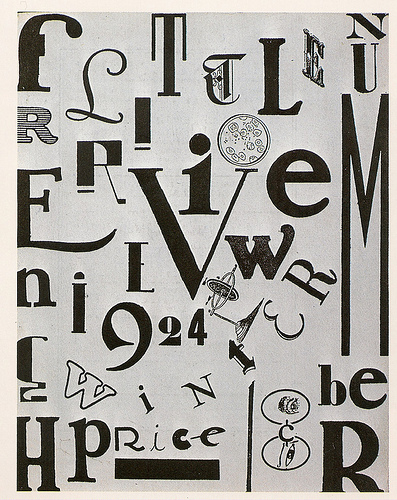
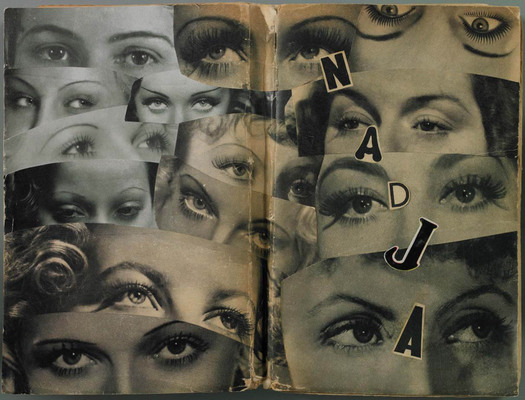
Cover of the 1928 Gallimard edition of Nadja, collaged over by Marcel Mariën, 1938.

Cover of the 1928 Gallimard edition of Nadja, collaged over by Marcel Mariën, 1938.

The narrator, named André, ruminates on a number of Surrealist principles, before ultimately commencing (around a third of the way through the novel) on a narrative account, generally linear, of his brief ten day affair with the titular character Nadja. She is so named “because in Russian it’s the beginning of the word hope, and because it’s only the beginning,” but her name might also evoke the Spanish “Nadie,” which means “No one.” The narrator becomes obsessed with this woman with whom he, upon a chance encounter while walking through the street, strikes up conversation immediately. He becomes reliant on daily rendezvous, occasionally culminating in romance (a kiss here and there).

His true fascination with Nadja, however, is her vision of the world, which is often provoked through a discussion of the work of a number of Surrealist artists, including himself. While her understanding of existence subverts the rigidly authoritarian quotidian, it is later discovered that she is mad and belongs in a sanitarium. After Nadja reveals too many details of her past life, she in a sense becomes demystified, and the narrator realises that he cannot continue their relationship.

In the remaining quarter of the text, André distances himself from her corporeal form and descends into a meandering rumination on her absence, so much so that one wonders if her absence offers him greater inspiration than does her presence. It is, after all, the reification and materialisation of Nadja as an ordinary person that André ultimately despises and cannot tolerate to the point of inducing tears.

There is something about the closeness once felt between the narrator and Nadja that indicated a depth beyond the limits of conscious rationality, waking logic, and sane operations of the everyday. There is something essentially “mysterious, improbable, unique, bewildering” about her; this reinforces the notion that their propinquity serves only to remind André of Nadja’s impenetrability.

Her eventual recession into absence is the fundamental concern of this text, an absence that permits Nadja to live freely in André’s conscious and unconscious, seemingly unbridled, maintaining her paradoxical role as both present and absent. With Nadja’s past fixed within his own memory and consciousness, the narrator is awakened to the impenetrability of reality and perceives a particularly ghostly residue peeking from under its thin veil. Thus, he might better put into practice his theory of Surrealism, predicated on the dreaminess of the experience of reality within reality itself.

Read the book here: Andre Breton – Nadja.

walter benjamin – surrealism: the last snapshot of the european intelligentsia (1929)

012_max_ernst_theredlist

Max Ernst – collage from The Hundred Headless Woman (1929).

… There is always, in such movements, a moment when the original tension of the secret society must either explode in a matter-of-fact, profane struggle for power and domination, or decay as a public demonstration and be transformed. Surrealism is in this phase of transformation at present. But at the time when it broke over its founders as an inspiring dream wave, it seemed the most integral, conclusive, absolute of movements. Everything with which it came into contact was integrated. Life only seemed worth living where the threshold between waking and sleeping was worn away in everyone as by the steps of multitudinous images flooding back and forth, language only seemed itself where, sound and image, image and sound interpenetrated with automatic precision and such felicity that no chink was left for the penny-in-the-slot called ‘meaning’.

Image and language take precedence. Saint-Pol Roux, retiring to bed about daybreak, fixes a notice on his door: ‘Poet at work.’ Breton notes: ‘Quietly. I want to pass where no one yet has passed, quietly! After you, dearest language.’ Language takes precedence. Not only before meaning. Also before the self. In the world’s structure dream loosens individuality like a bad tooth. This loosening of the self by intoxication is, at the same time, precisely the fruitful, living experience that allowed these people to step outside the domain of intoxication.

This is not the place to give an exact definition of Surrealist experience. But anyone who has perceived that the writings of this circle are not literature but something else – demonstrations, watchwords, documents, bluffs, forgeries if you will, but at any rate not literature – will also know, for the same reason, that the writings are concerned literally with experiences, not with theories and still less with phantasms. And these experiences are by no means limited to dreams, hours of hashish eating, or opium smoking. It is a cardinal error to believe that, of ‘Surrealist experiences’, we know only the religious ecstasies or the ecstasies of drugs. The opium of the people, Lenin called religion, and brought the two things closer together than the Surrealists could have liked.

I shall refer later to the bitter, passionate revolt against Catholicism in which Rimbaud, Lautreamont, and Apollinaire brought Surrealism into the world. But the true creative overcoming of religious illumination certainly does not lie in narcotics. It resides in a profane illumination, ‘a materialistic, anthropological inspiration, to which hashish, opium, or whatever else can give an introductory lesson. (But a dangerous one; and the religious lesson is stricter.)

This profane illumination did not always find the Surrealists equal to it, or to themselves, and the very writings that proclaim it most powerfully, Aragon’s incomparable Paysan de Paris and Breton’s Nadja, show very disturbing symptoms of deficiency. For example, there is in Nadja an excellent passage on the ‘delightful days spent looting Paris under the sign of Sacco and Vanzetti’; Breton adds the assurance that in those days Boulevard Bonne-Nouvelle fulfilled the strategic promise of revolt ‘that had always been implicit in its name. But Madame Sacco also appears, not the wife of Fuller’s victim but avoyante, a fortune-teller who lives at 3 rue des Usines and tells Paul Eluard that he can expect no good from Nadja.

Now I concede that the breakneck career of Surrealism over rooftops, lightning conductors, gutters, verandas, weathercocks, stucco work – all ornaments are grist to the cat burglar’s mill-  may have taken it also into the humid backroom of spiritualism. But I am not pleased to hear it cautiously tapping on the window-panes to inquire about its future. Who would not wish to see these adoptive children of revolution most rigorously severed from all the goings-on in the conventicles of down-at-heel dowagers, retired majors, and emigre profiteers?

In other respects Breton’s book illustrates well a number of the basic characteristics of this ‘profane illumination’. He calls Nadja ‘a book with a banging door’. (In Moscow I lived in a hotel in which almost all the rooms were occupied by Tibetan lamas who had come to Moscow for a congress of Buddhist churches. I was struck by the number of doors in the corridors that were always left ajar. What had at first seemed accidental began to be disturbing. I found out that in these rooms lived members of a sect who had sworn never to occupy closed rooms. The shock I had then must be felt by the reader of Nadja.)

To live in a glass house is a revolutionary virtue par excellence. It is also an intoxication, a moral exhibitionism, that we badly need. Discretion concerning one’s own existence, once an aristocratic virtue, has become more and more an affair of petty-bourgeois parvenus. Nadja has achieved the true, creative synthesis between the art novel and the roman-a-clef.

Moreover, one need only take love seriously to recognize in it, too – as Nadja also indicates – a ‘profane illumination’. ‘At just that time’ (i.e., when he knew Nadja), the author tells us, ‘I took a great interest in the epoch of Louis VII, because it was the time of the ‘courts of love’, and I tried to picture with great intensity how people saw life then.’ We have from a recent author quite exact information on Provencal love poetry, which comes surprisingly close to the Surrealist conception of love. ‘All the poets of the ‘new style’,’ Erich Auerback points out in his excellent Dante: Poet of the Secular World, ‘possess a mystical beloved, they all have approximately the same very curious experience of love; to them all Amor bestows or withholds gifts that resemble an illumination more than sensual pleasure; all arc subject to a kind of secret bond that determines their inner and perhaps also their outer-lives’. The dialectics of intoxication are indeed curious. Is not perhaps all ecstasy in one world humiliating sobriety in that complementary to it? What is it that courtly Minne seeks, and it, not love, binds Breton to the telepathic girl, if not to make chastity, too, a transport? Into a world that borders not only on tombs of the Sacred Heart or altars to the Virgin, but also on the morning before a battle or after a victory.

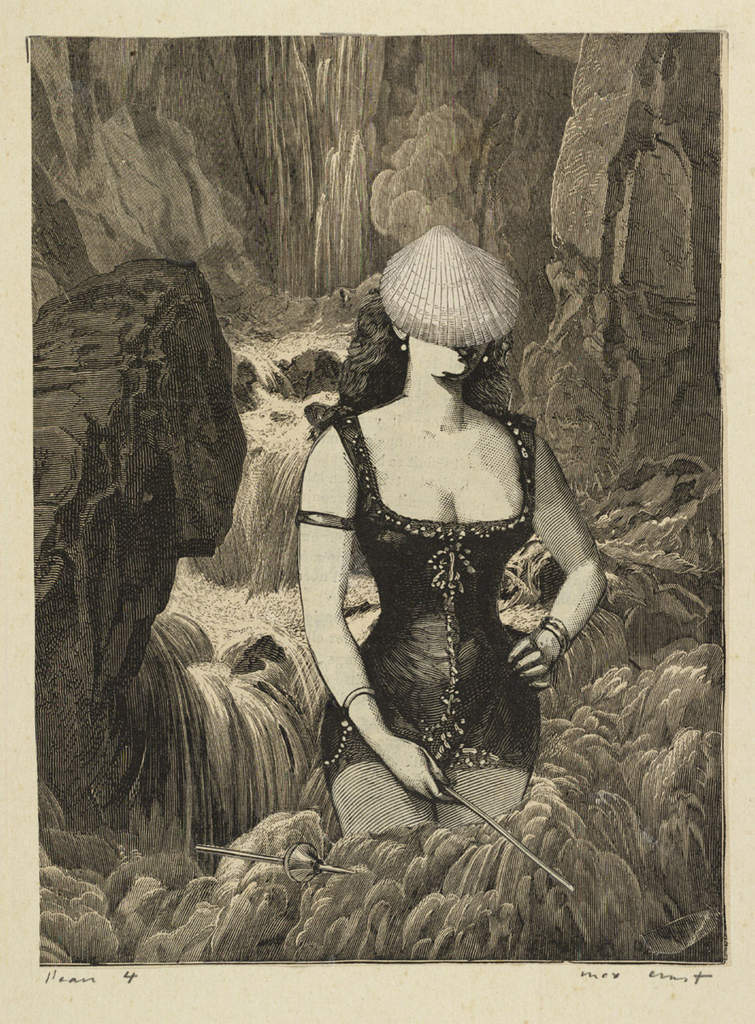
Max Ernst - Une semaine de bonté [A Week of Kindness]. La clé des chants 1 [The Key of Songs 1] 1933

Max Ernst – Une semaine de bonté [A Week of Kindness]. La clé des chants 1 [The Key of Songs 1] 1933

The lady, in esoteric love, matters least. So, too, for Breton. He is closer to the things that Nadja is close to than to her. What are these things? Nothing could reveal more about Surrealism than their canon.Where shall I begin? He can boast an extraordinary discovery. He was the first to perceive the revolutionary energies that appear in the ‘outmoded’, in the first iron constructions, the first factory buildings, the earliest photos, the objects that have begun to be extinct, grand pianos, the dresses of five years ago, fashionable restaurants when the vogue has begun to ebb from them. The relation of these things to revolution, no one can have a more exact concept of it than these authors. No one before these visionaries and augurs perceived how destitution – not only social but architectonic, the poverty of interiors/enslaved and enslaving objects – can be suddenly transformed into revolutionary nihilism. Leaving aside Aragon’s Passage de I’Opera, Breton and Nadja are the lovers who convert everything that we have experienced on mournful railway journeys (railways are beginning to age), on Godforsaken Sunday afternoons in the proletarian quarters of the great cities, in the first glance through the rain-blurred window of a new apartment, into revolutionary experience, if not action. They bring the immense forces of ‘atmosphere’ concealed in these things to the point of explosion. What form do you suppose a life would take that was determined at a decisive moment precisely by the street song last on everyone’s lips?

Continue reading

walter benjamin on reading, telepathy, magic

007_max_ernst_theredlist

Max Ernst (1924).

Near the end of his 1929 essay on surrealism, Walter Benjamin suggests a connection between investigations into reading and into telepathic phenomena, a theme he returns to again, in the context of reading and more ancient traditions of magic, in his 1933 essay “Doctrine of the Similar.”  This connection he suggests between reading practices and the occult is a profound one, both historically and for Benjamin’s own time and work, and not just in terms of telepathy. Some of the earliest practices of reading were not of letters, words, or books, but of stars, entrails, and birds, and these practices had a significant impact on the way reading was understood in the ancient world. And the relations between such ancient magic and reading were still (or again) of crucial importance to the modernists of the early twentieth century, including Benjamin and his sustained interest in what he called ‘das magische Lesen.’

What I will present here is part of a larger project devoted to tracing out the more salient connections in both the ancient and modern worlds between the practices of reading and of magic, and particularly those of magic most closely aligned with practices of divination. I choose to concentrate on those aspects of magic most associated with divination because these seem historically most associated with the reading of both literature and the world, and because I believe that tracing out the often ignored genealogy of this future or fortune-telling aspect of reading reveals one of the most fascinating chapters in the modern reception of antiquity.

Read the whole paper: Eric Downing – Divining Benjamin – Reading Fate, Graphology, Gambling


grimes – flesh without blood/life in the vivid dream (2015)

“I could live in the world just like a stranger
I could tell you the truth or a lie
I could tell you that people are good in the end
But why, why would I?
Angels will cry when it’s raining
Tears that are no longer clean…”

From Art Angels (2015), available for download here. Written, directed, edited, coloured and art directed by Grimes.

And HERE is an interview with her.
grimes-640x361

paul celan – edgar jené and the dream about the dream (1948)

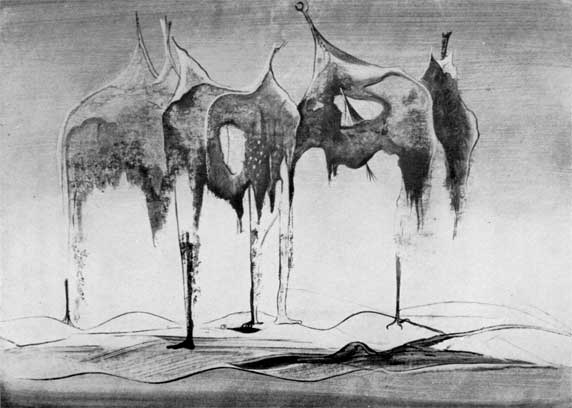
Edgar Jené. The Sea of Blood Covers the Land.

Edgar Jené. The Sea of Blood Covers the Land.

I am supposed to tell you some of the words I heard deep down in the sea where there is so much silence and so much happens. I cut my way through the objects and objections of reality and stood before the sea’s mirror surface. I had to wait until it burst open and allowed me to enter the huge crystal of the inner world. With the large lower star of disconsolate explorers shining above me, I followed Edgar Jené beneath his paintings.

Though I had known the journey would be strenuous, I worried when I had to enter one of the roads alone, without a guide. One of the roads! There were innumerable, all inviting, all offering me different new eyes to look at the beautiful wilderness on the other, deeper side of existence. No wonder that, in this moment when I still had my own stubborn old eyes, I tried to make comparisons in order to be able to choose. My mouth, however, placed higher than my eyes and bolder for having often spoken in my sleep, had moved ahead and mocked me: ‘Well, old identity­ monger, what did you see and recognize, you brave doctor of tautology? What could you recognize, tell me, along this unfamiliar road? An also­-tree or almost-tree, right? And now you are mustering your Latin for a letter to old Linnaeus? You had better haul up a pair of eyes from the bottom of your soul and put them on your chest: then you’ll find out what is happening here.’

Now I am a person who likes simple words. It is true, I had realised long before this journey that there was much evil and injustice in the world I had now left, but I had believed I could shake the foundations if I called things by their proper names. I knew such an enterprise meant returning to absolute naïveté. This naïveté I considered as a primal vision purified of the slag of centuries of hoary lies about the world. I remember a conversation with a friend about Kleist’s Marionette Theatre. How could one regain that original grace, which would become the heading of the last and, I suppose, loftiest chapter in the history of mankind?

It was, my friend held, by letting reason purify our unconscious inner life that we could recapture the immediacy of the beginning – which would in the end give meaning to our life and make it worth living. In this view, beginning and end were one, and a note of mourning for original sin was struck. The wall which separates today from tomorrow must be torn down so that tomorrow could again be yesterday. But what must we actually do now, in our own time, to reach timelessness, eternity, the marriage of tomorrow-and-yesterday? Reason, he said, must prevail. A bath in the aqua regia of intelligence must give their true (primitive) meaning back to words, hence to things, beings, occurrences. A tree must again be a tree, and its branch, on which the rebels of a hundred wars have been hanged, must again flower in spring.

Here my first objection came up. It was simply this: I knew that anything that happened was more than an addition to the given, more than an attribute, more or less difficult to remove from the essence, that it changed the essence in its very being and thus cleared the way for ceaseless transformation.

My friend was stubborn. He claimed that even in the stream of human evolution he could distinguish the constants of the soul, know the limits of the unconscious. All we needed was for reason to go down into the deep and haul the water of the dark well up to the surface. This well, like any other, had a bottom one could reach, and if only the surface were ready to receive the water from the deep, the sun of justice shining, the job would be done. But how can we ever succeed, he said, if you and people like you never come out of the deep, never stop communing with the dark springs?

I saw that this reproach was aimed at my professing that, since we know the world and its institutions are a prison for man and his spirit, we must do all we can to tear down its walls. At the same time, I saw which course this knowledge prescribed. I realised that man was not only languishing in the chains of external life, but was also gagged and unable to speak – and by speaking I mean the entire sphere of human expression – because his words (gestures, movements) groaned under an age-old load of false and distorted sincerity. What could be more dishonest than to claim that words had somehow, at bottom, remained the same! I could not help seeing that the ashes of burned-out meanings (and not only of those) had covered what had, since time immemorial, been striving for expression in man’s inner­ most soul.

How could something new and pure issue from this? It may be from the remotest regions of the spirit that words and figures will come, images and gestures, veiled and unveiled as in a dream. When they meet in their heady course, and the spark of the wonderful is born from the marriage of strange and most strange, then I will know I am facing the new radiance. It will give me a dubious look because, even though I have conjured it up, it exists beyond the concepts of my wakeful thinking; its light is not daylight; it is inhabited by figures which I do not recognise, but know at first sight. Its weight has a different heaviness, its colour speaks to the new eyes which my closed lids have given one another; my hearing has wandered into my fingertips and learns to see; my heart, now that it lives behind my forehead, tastes the laws of a new, unceasing, free motion. I follow my wandering senses into this new world of the spirit and come to know freedom. Here, where I am free, I can see what nasty lies the other side told me. Continue reading

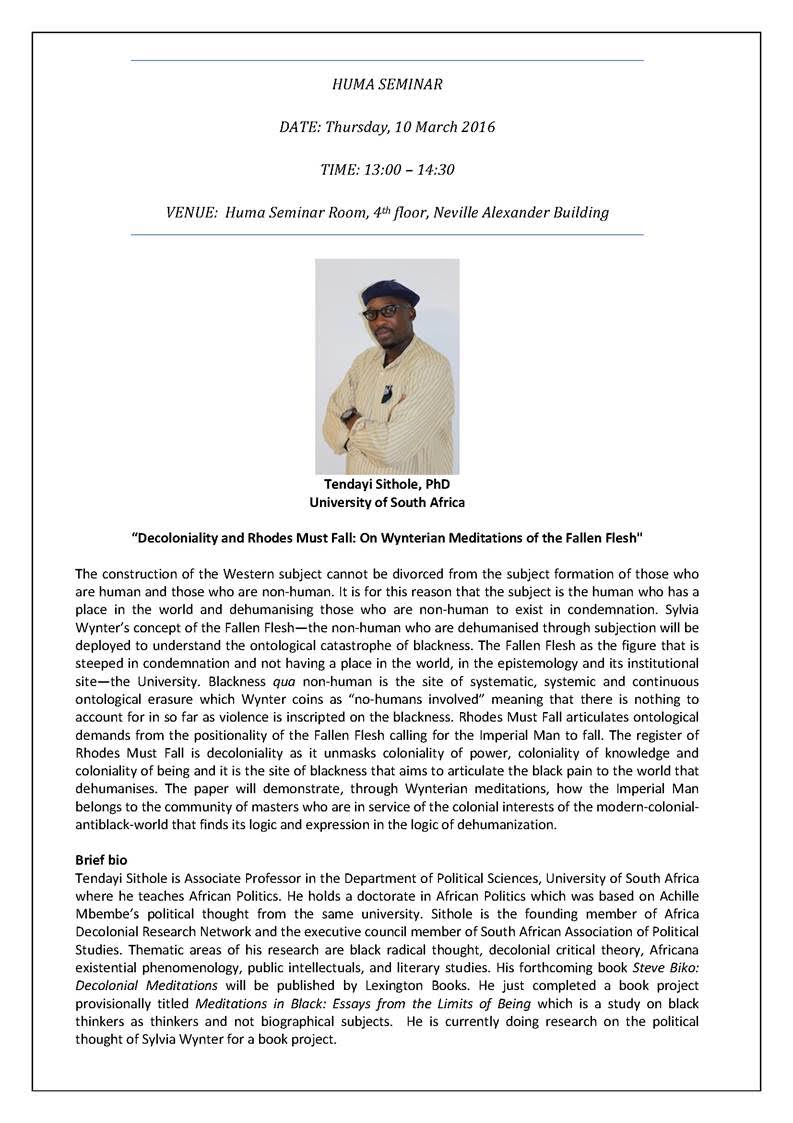
seminar at huma (uct) tomorrow

Tendayi Sithole: “Decoloniality and Rhodes Must Fall: On Wynterian Meditations of the Fallen Flesh” – happening at the University of Cape Town’s Institute for Humanities in Africa (Huma) tomorrow at lunch time.huma seminar

susan buck-morss on work in the age of mechanical reproduction

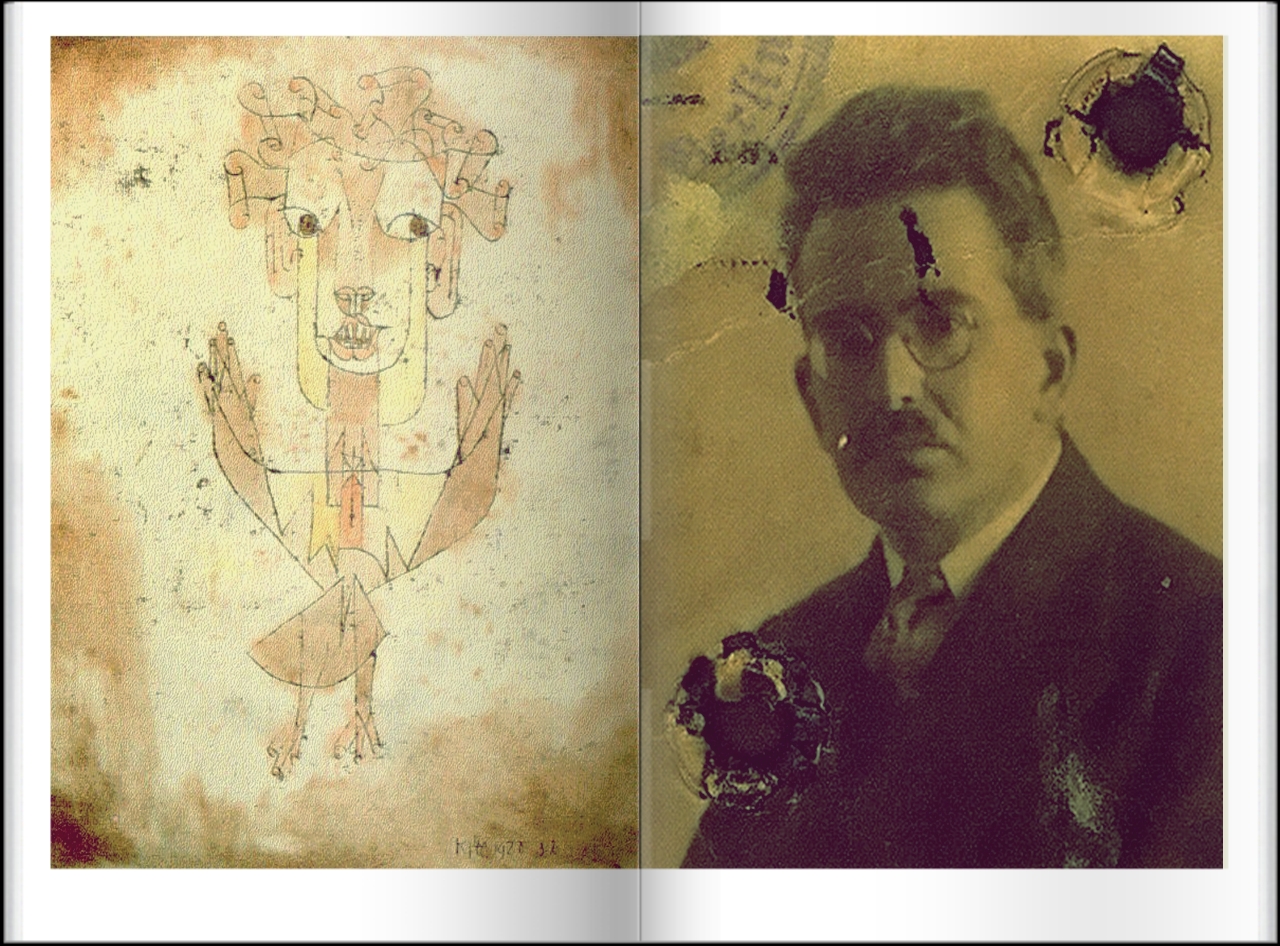
Angelus Novus (Klee)/Walter Benjamin

Angelus Novus (Klee)/Walter Benjamin

Susan Buck-Morss, writing in 2001 on Walter Benjamin’s philosophy of history, marked by the critique of progress in the name of a revolutionary time which interrupts history’s chronological continuum:

The only power available to us as we, riding in the train of history, reach for the emergency brake, is the power that comes from the past… One fact of the past that we particularly are in danger of forgetting is the apparent harmlessness with which the process of cultural capitulation takes place. lt is a matter, simply, of wanting to keep up with the intellectual trends, to compete in the marketplace, to stay relevant, to stay in fashion…

So, what in God’s name are we doing here? The litmus test for intellectual production is how it affects the outside world, not what happens inside an academic enclave such as this one. [Walter] Benjamin himself held up as the criterion for his work that it be “totally useless for the purpose of Fascism.”* Could any of us say of our work that it is totally useless for the purposes of the new global order, in which class exploitation is blatant, but the language to describe it is in ruins? Of course, we would be horrified if decisions on academic hiring and promotion were made on the basis of what our work contributed to the class struggle. The disturbing truth, however, is that these decisions are already being made on the basis of ensuring that our work contributes nothing to the class struggle. And that, my friends, is problematic.
__
*Benjamin, preface to ‘Work in the Age of Mechanical Reproduction”. In: Benjamin 1969: 2 18.

__

In Pandaemonium Germanicum, 5/2001, pp. 73-88. Read the full article: Susan Buck-Morss – Walter Benjamin – between academic fashion and the Avant Garde.

al bowlly – the very thought of you

Al Bowlly sings “The Very Thought of You” (1934). Jazz singer Al Bowlly sings his popular hit “The Very Thought of You” in the Pathe Studios, taken from Lew Stone’s famous ‘Monseigneur Band’. Bowlly was South African (although born in Mozambique) yet he became a great star in both the UK and America during the 1930s.

unholy ghosts

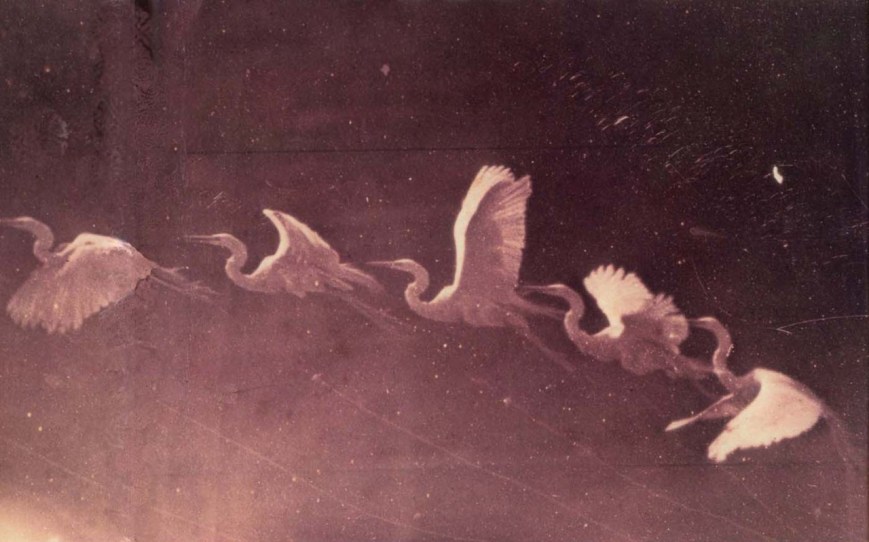
cranesModernity was built upon ‘technologies that made us all ghosts’, and postmodernity could be defined as the succumbing of historical time to the spectral time of recording devices. Postmodernity screens out the spectrality, naturalising the uncanniness of the recording apparatuses. Anyone hearing a recording of their own voice or seeing a photograph of themselves is presented with a double. The uncanny thought, often repressed or forgotten, is that the recordings and the photographs will survive us; that as we contemplate them, we are put in the position of a ghost.

— From “Phonograph Blues” by k-punk, from a decade-old blog I love, HERE.


simone weil – self-effacement

simone weil gravity and graceGod gave me being in order that I should give it back to him. It is like one of those traps whereby the characters are tested in fairy stories and tales on initiation. If I accept this gift it is bad and fatal; its virtue becomes apparent through my refusal of it. God allows me to exist outside himself. It is for me to refuse this authorisation.

Humility is the refusal to exist outside God. It is the queen of virtues.

The self is only the shadow which sin and error cast by stopping the light of God, and I take this shadow for a being.

Even if we could be like God it would be better to be mud which obeys God.

To be what the pencil is for me when, blindfold, I feel the table by means of its point—to be that for Christ. It is possible for us to be mediators between God and the part of creation which is confided to us. Our consent is necessary in order that he may perceive his own creation through us. With our consent he performs this marvel. If I knew how to withdraw from my own soul it would be enough to enable this table in front of me to have the incomparable good fortune of being seen by God. God can love in us only this consent to withdraw in order to make way for him, just as he himself, our creator, withdrew in order that we might come into being. This double operation has no other meaning than love, it is like a father giving his child something which will enable the child to give a present on his father’s birthday. God who is no other thing but love has not created anything other than love.

All the things that I see, hear, breathe, touch, eat; all the beings I meet—I deprive the sum total of all that of contact with God, and I deprive God of contact with all that in so far as something in me says ‘I’.

I can do something for all that and for God—namely, retire and respect the tête-à-tête.

The strict carrying out of ordinary human duty is a condition which makes my withdrawal possible. Little by little it wears away the ropes which fasten me to the spot and prevent me from retiring.

I cannot conceive the necessity for God to love me, when I feel so clearly that even with human beings affection for me can only be a mistake. But I can easily imagine that he loves that perspective of creation which can only be seen from the point where I am. But I act as a screen. I must withdraw so that he may see it.

I must withdraw so that God may make contact with the beings whom chance places in my path and whom he loves. It is tactless for me to be there. It is as though I were placed between two lovers or two friends. I am not the maiden who awaits her betrothed, but the unwelcome third who is with two betrothed lovers and ought to go away so that they can really be together.

If only I knew how to disappear there would be a perfect union of love between God and the earth I tread, the sea I hear…

What do the energy, the gifts, etc. which are in me matter?

I always have enough of them to disappear.

‘Et la mort à mes yeux ravissant la  clarté
Rend au jour qu’ils souillaient toute sa pureté…’*

May I disappear in order that those things that I see may become perfect in their beauty from the very fact that they are no longer things that I see.

I do not in the least wish that this created world should fade from my view, but that it should no longer be to me personally that it shows itself. To me it cannot tell its secret which is too high. If I go, then the creator and the creature will exchange their secrets.

To see a landscape as it is when I am not there…

When I am in any place, I disturb the silence of heaven and earth by my breathing and the beating of my heart.

__
*‘And death, robbing my eyes of their light, restores to the day they sullied all in purity…
__
Excerpted from Simone Weil‘s Gravity and Grace. First French edition 1947. Translated by Emma Crawford. English language edition 1963. Routledge and Kegan Paul, London.
homo sacer

A really clear, simplified explanation of Giorgio Agamben‘s discussion of Homo sacer: someone forcibly reduced to bare life, cf. Simone Weil’s forcible destruction of the “I”.

Read also Achille Mbembe on people reduced to being conceived of as surplus or waste:

“Perhaps to a degree hardly achieved in the rest of the Continent, the human has consistently taken on the form of waste within the peculiar trajectory race and capitalism espoused in South Africa. Traditionally, we speak of “waste” as something produced bodily or socially by humans. In this sense, “waste” is that which is other than the human. Traditionally too, we speak of the intrinsic capacity of capitalism to waste human lives. We speak of how workers are wasted under capitalism in comparable fashion to natural resources. Marx in particular characterizes capitalist production as thoroughly wasteful with what he calls “human material” just as it is with “material resources”. It squanders “human beings, living labour”, “squandering not only flesh and blood, but nerves and brain, life and health as well”, he writes. In order to grasp the particular drama of the human in the history of South Africa, we should broaden this traditional definition of “waste” and consider the human itself as a waste product at the interface of race and capitalism. Squandering and wasting black lives has been an intrinsic part of the logic of capitalism, especially in those contexts in which race is central to the simultaneous production of wealth and of superfluous people…

… One of the most brutal effects of neo-liberalism in South Africa has been the generalization and radicalization of a condition of temporariness for the poor. For many people, the struggle to be alive has taken the form of a struggle against the constant corrosion of the present, both by change and by uncertainty.

In order to reanimate the idea of “the human” in contemporary South African politics and culture, there is therefore no escape from the need to reflect on the thoroughly political and historical character of wealth and property and the extent to which wealth and property have come to be linked with bodily life.”

And HERE is another discussion, by Richard Pithouse, which further sets out the colonial history of the discourse around people in a state of exception (in the context of shack dwellers).

simone weil – the self

simone weil gravity and graceWe possess nothing in the world—a mere chance can strip us of everything—except the power to say ‘I’. That is what we have to give to God—in other words, to destroy. There is absolutely no other free act which it is given us to accomplish—only the destruction of the ‘I’.

Offering: We cannot offer anything but the ‘I’, and all we call an offering is merely a label attached to a compensatory assertion of the ‘I’.

Nothing in the world can rob us of the power to say ‘I’. Nothing except extreme affliction. Nothing is worse than extreme affliction which destroys the ‘I’ from outside, because after that we can no longer destroy it ourselves. What happens to those whose ‘I’ has been destroyed from outside by affliction? It is not pos- sible to imagine anything for them but annihilation according to the atheistic or materialistic conception.

Though they may have lost their ‘I’, it does not mean that they have no more egoism. Quite the reverse. To be sure, this may occasionally happen when a dog-like devotion is brought about, but at other times the being is reduced to naked, vegetative egoism. An egoism without an ‘I’.

So long as we ourselves have begun the process of destroying the ‘I’, we can prevent any affliction from causing harm. For the ‘I’ is not destroyed by external pressure without a violent revolt. If for the love of God we refuse to give ourselves over to this revolt, the destruction does not take place from outside but from within.

Redemptive suffering. If a human being who is in a state of perfection and has through grace completely destroyed the ‘I’ in himself, falls into that degree of affliction which corresponds for him to the destruction of the ‘I’ from outside—we have there the cross in its fullness. Affliction can no longer destroy the ‘I’ in him for the ‘I’ in him no longer exists, having completely disap- peared and left the place to God. But affliction produces an effect which is equivalent, on the plane of perfection, to the exterior destruction of the ‘I’. It produces the absence of God. ‘My God, why hast Thou forsaken me?’

What is this absence of God produced by extreme affliction within the perfect soul? What is the value which is attached to it and which is known as redemptive suffering?

Redemptive suffering is that by which evil really has fullness of being to the utmost extent of its capacity.

By redemptive suffering, God is present in extreme evil. For the absence of God is the mode of divine presence which corresponds to evil—absence which is felt. He who has not God within himself cannot feel his absence.

It is the purity, the perfection, the plenitude, the abyss of evil. Whereas hell is a false abyss (cf. Thibon). Hell is superficial. Hell is a nothingness which has the pretension and gives the illusion of being.

Purely external destruction of the ‘I’ is quasi-infernal suffering. External destruction with which the soul associates itself through love is expiatory suffering. The bringing about of the absence of God in a soul completely emptied of self through love is redemptive suffering.

In affliction the vital instinct survives all the attachments which have been torn away, and blindly fastens itself to everything which can provide it with support, like a plant fastens its tendrils. Gratitude (except in a base form) and justice are not conceivable in this state. Slavery. There is no longer the extra amount of energy required to support free-will by which man takes the measure of things. Affliction, from this point of view, is hideous as life in its nakedness always is, like an amputated stump, like the swarming of insects. Life without form. Survival is then the only attachment. That is where extreme affliction begins—when all other attachments are replaced by that of survival. Attachment appears then in its nakedness without any other object but itself—Hell.

It is by this mechanism that to those in affliction life appears as the one thing desirable, at the very time when their life is in no way preferable to death.

In this state, to accept death is total detachment.

Quasi-hell on earth. Complete uprooting in affliction

Human injustice as a general rule produces not martyrs but quasi-damned souls. Beings who have fallen into this quasi-hell are like someone stripped and wounded by robbers. They have lost the clothing of character.

The greatest suffering which allows any of a man’s roots to remain is at an infinite distance from this quasi-hell.

When we do a service to beings thus uprooted and we receive in exchange discourtesy, ingratitude, betrayal, we are merely enduring a small share of their affliction. It is our duty to expose ourselves to it in a limited measure just as it is our duty to expose ourselves to affliction. When it comes we should endure it as we endure affliction, without referring it back to particular people, for it cannot be referred back to anything. There is something impersonal in quasi-infernal affliction as there is in perfection.

For those whose ‘I’ is dead we can do nothing, absolutely nothing. We never know, however, whether in a particular person the ‘I’ is quite dead or only inanimate. If it is not quite dead, love can reanimate it as though by an injection, but it must be love which is utterly pure without the slightest trace of condescension, for the least shade of contempt drives towards death.

When the ‘I’ is wounded from outside it starts by revolting in the most extreme and bitter manner like an animal at bay. But as soon as the ‘I’ is half dead, it wants to be finished off and allows itself to sink into unconsciousness. If it is then awakened by a touch of love, there is sharp pain which results in anger and sometimes hatred for whoever has provoked this pain. Hence the apparently inexplicable vindictiveness of the fallen towards their benefactors.

It can also happen that the love of the benefactor is not pure. Then, in the ‘I’, awakened by love but immediately wounded afresh by contempt, there surges up the bitterest of hatreds, a hatred which is legitimate.

He, on the contrary, in whom the ‘I’ is quite dead is in no way embarrassed by the love which is shown him. He takes what comes just as dogs and cats receive food, warmth and caresses, and, like them, he is eager to obtain as much as possible. As the case may be, he either attaches himself like a dog or accepts what comes to him with a certain indifference like a cat. Without the slightest scruple he absorbs all the energy of whoever tries to help him.

Unfortunately in every charitable work there is a danger lest the majority of its clients should be composed of people with no scruples, and above all, of people in whom the ‘I’ has been killed.

The weaker the character of him who endures affliction, the more quickly is the ‘I’ destroyed. To be more exact, the limit of the affliction which destroys the ‘I’ is situated at a greater or lesser distance according to the quality of the character, and the further it is the more the character is said to be strong.

The position of this limit, whether near or far, is probably a fact of nature in the same way as a gift for mathematics, and he who, without having any faith, is proud of preserving his morale in difficult circumstances, has no more reason to be so than the youth who is conceited because mathematics come easily to him. He who believes in God is in danger of a still greater illusion—that of attributing to grace what is simply an essentially mechanical effect of nature.

The agony of extreme affliction is the destruction of the ‘I’ from outside: Arnolphe, Phèdre, Lycaon. We are right to fall on our knees, to make abject supplication when that violent death which is going to strike us down threatens to kill the ‘I’ from outside even before life is destroyed.

‘Niobe also, of the beautiful hair, thought of eating.’ That is sublime, in the same way as space in Giotto’s frescoes.

A humiliation which forces us to renounce even despair.

The sin in me says ‘I’.

I am all. But this particular ‘I’ is God. And it is not an ‘I’.

Evil makes distinctions, it prevents God from being equivalent to all.

It is because of my wretchedness that I am ‘I’. It is on account of the wretchedness of the universe that, in a sense, God is ‘I’ (that is to say a person).

The Pharisees were people who relied on their own strength to be virtuous.

Humility consists in knowing that in what we call ‘I’ there is no source of energy by which we can rise.

Everything without exception which is of value in me comes from somewhere other than myself, not as a gift but as a loan which must be ceaselessly renewed. Everything without exception which is in me is absolutely valueless; and, among the gifts which have come to me from elsewhere, everything which I appropriate becomes valueless immediately I do so.

Perfect joy excludes even the very feeling of joy, for in the soul filled by the object no corner is left for saying ‘I’.

We cannot imagine such joys when they are absent, thus the incentive for seeking them is lacking.

__
Excerpted from Simone Weil‘s Gravity and Grace. First French edition 1947. Translated by Emma Crawford. English language edition 1963. Routledge and Kegan Paul, London.
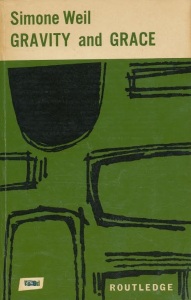
simone weil – to desire without an object

simone weil gravity and gracePurification is the separation of good from covetousness.

We have to go down to the root of our desires in order to tear the energy from its object. That is where the desires are true in so far as they are energy. It is the object which is unreal. But there is an unspeakable wrench in the soul at the separation of a desire from its object.

If we go down into ourselves we find that we possess exactly what we desire.

If we long for a certain being (who is dead), we desire a particular, limited being; therefore, necessarily, a mortal, and we long for that special being ‘who’… ‘to whom’…, etc., in short that being who died at such and such a time on such and such a day. And we have that being—dead.

If we desire money, we want a medium of exchange (institution), something which can only be acquired on certain conditions, so we desire it only ‘in the measure that’… Well, in that measure we have it.

In such cases suffering, emptiness are the mode of existence of the objects of our desire. We only have to draw aside the veil of unreality and we shall see that they are given to us in this way.

When we see that, we still suffer, but we are happy.

To ascertain exactly what the miser whose treasure was stolen lost: thus we should learn much.

Lauzun and the office of Captain of Musketeers. He preferred to be a prisoner and Captain of Musketeers rather than to go free and not be Captain.

These are garments. ‘They were ashamed of their nakedness.’

To lose someone: we suffer because the departed, the absent, has become something imaginary and unreal. But our desire for him is not imaginary. We have to go down into ourselves to the abode of the desire which is not imaginary. Hunger: we imagine kinds of food, but the hunger itself is real: we have to fasten on to the hunger. The presence of the dead person is imaginary, but his absence is very real: henceforward it is his way of appearing.

We must not seek the void, for it would be tempting God if we counted on supernatural bread to fill it.

We must not run away from it either.

The void is the supreme fullness, but man is not permitted to know it. The proof is that Christ himself was at one moment completely unaware of it. One part of the self should know it, but not the other parts, for if they knew it in their base fashion, there would no longer be any void.

Christ experienced all human misery, except sin. But he experienced everything which makes man capable of sin. It is the void which makes man capable of sin. All sins are attempts to fill voids. Thus my life with all its stains is near to his perfectly pure one, and the same is true of much lower lives. However low I fall I shall not go very far from him. But if I fall I shall no longer be able to know this.

The handshake of a friend on meeting again after a long absence. I do not even notice whether it gives pleasure or pain to my sense of touch: like the blind man who feels the objects directly at the end of his stick, I feel the presence of my friend directly. It is the same with life’s circumstances, whatever they may be, and God.

This implies that we should never seek consolation for pain. Because felicity is beyond the realm of consolation and pain. We become aware of it through a sense which is different, just as the perception of objects at the end of a stick or an instrument is different from touch in the strict sense of the word. This other sense is formed by a shifting of the attention through an apprenticeship in which the whole soul and body participate.

That is why we read in the Gospel: ‘I say to you that these have received their reward.’ There must be no compensation. It is the void in our sensibility which carries us beyond sensibility.

Denial of Saint Peter. To say to Christ: ‘I will never deny Thee’ was to deny him already, for it was supposing the source of faithfulness to be in himself and not in grace. Happily, as he was chosen, this denial was made manifest to all and to himself. How many others boast in the same way—and they never understand. It was difficult to be faithful to Christ. A fidelity in the void was needed. It was much easier to be faithful to Napoleon, even if it involved death. It was easier for the martyrs to be Faithful, later on, because the Church was already there, a force with temporal promises. We die for what is strong, not for what is weak, or only for what is weak momentarily and has still kept an aureole of strength. Faithfulness to Napoleon at Saint-Helena was not faithfulness in the void. The fact of dying for what is strong robs death of its bitterness—and at the same time of all its value.

To implore a man is a desperate attempt through sheer intensity to make our system of values pass into him. To implore God is just the contrary: it is an attempt to make the divine values pass into ourselves. Far from thinking with all the intensity of which we are capable of the values to which we are attached, we must preserve an interior void.

__
Excerpted from Simone Weil‘s Gravity and Grace. First French edition 1947. Translated by Emma Crawford. English language edition 1963. Routledge and Kegan Paul, London.

the incredible string band – a very cellular song (1968)

“Nebulous nearnesses cry to me
At this timeless moment
Someone dear to me wants me near, makes me high
I can hear vibrations fly
Through mangoes, pomegranates and planes
All the same
When it reaches me and teaches me
To sigh…

… Oh ah ee oo there’s absolutely no strife
Living the timeless life
I don’t need a wife
Living the timeless life
If I need a friend I just give a wriggle
Split right down the middle
And when I look there’s two of me
Both as handsome as can be
Oh here we go slithering, here we go slithering and squelching on
Oh ah ee oo there’s absolutely no strife
Living the timeless life

Black hair brown hair feather and scale
Seed and stamen and all unnamed lives that live
Turn your quivering nerves in my direction
Feel the energy projection of my cells
Wishes you well.

May the long time sun shine upon you
All love surround you
And the pure light within you
Guide you all the way on.”

Album: The Hangman’s Beautiful Daughter (1968)