victoria de los angeles – dido’s lament

Victoria de los Angeles sings “Thy hand Belinda… When I am laid in earth” from Dido and Aeneas by Henry Purcell (1695-1695) – recorded in 1965.
Derek Simpson, violincello
Colin Tilney, harpsichord
Ambrosian Singers
English Chamber Orchestra
Sir John Barbirolli, conductor

louise glück – the seven ages

In my first dream, the world appeared
the salt, the bitter, the forbidden, the sweet
In my second I descended

I was human, I couldn’t just see a thing
beast that I am

I had to touch, to contain it

I hid in the groves,
I worked in the fields until the fields were bare —

time
that will never come again —
the dry wheat bound, caskets
of figs and olives

I even loved a few times in my disgusting human way

and like every one I called that accomplishment
erotic freedom,
absurd as it seems

The wheat gathered and stored, the last
fruit dried: time

that is hoarded, that is never used,
does it also end?

In my first dream the world appeared
the sweet, the forbidden
but there was no garden, only
raw elements

I was human:
I had to beg to descend
the salt, the bitter, the demanding, the preemptive

And like everyone, I took, I was taken
I dreamed

I was betrayed:

Earth was given to me in a dream
In a dream I possessed it

“i will never forget how to dance”

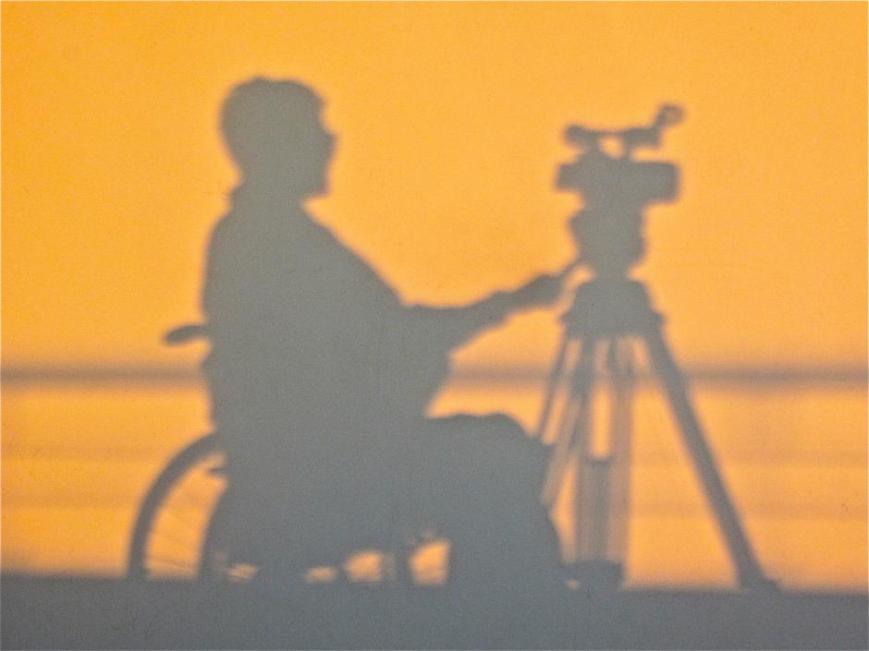
I have been working for the last while as researcher and production manager on a weekly SABC-commissioned TV documentary series, I Am Woman – Leap of Faith. Here’s one of the episodes, directed by Jane Kennedy:

In January 1996 Shelley Barry was 23 and on her way to a job interview in Cape Town when she was caught in the crossfire of taxi violence caused by rival taxi groups battling for ownership of the same routes.

She was sitting next to the taxi driver in the front of his minibus when an assassin pulled up alongside the moving vehicle and opened fire. The driver was shot seven times and was killed instantly. The taxi crashed, injuring many of its passengers.

Shelley was hit by one of the assassin’s bullets and was instantly paralysed. Her life hung in the balance and it was assumed she would not survive. The friend she was travelling with was seriously injured but has recovered, despite the bullet still lodged in her chest. Shelley has been in a wheelchair ever since. Today she is 42.

How does one create a life for oneself after something like this? How does one find work and meaning once again? Importantly, what happened to Shelley Barry’s dream, held close since childhood, of becoming a filmmaker?

Join this remarkable woman, teacher, activist and filmmaker as she describes her life before and after the shooting: The life of a young girl who told her childhood friends that one day her films would be on the big screen and has achieved that, despite a bullet getting in her way and forcing her into a wheelchair for over twenty years… The life of an activist who worked in the Presidency and has made a significant difference to the lives of the disabled in South Africa… The deeply spiritual journey of a sensitive, funny and bolshy woman who, despite her circumstances, is determined to continue making her mark on the world.

Shelley Barry graciously lets us into her world, describing the many Leaps of Faith she has taken so far and continues to take each and every day.

Catch the broadcast of this programme on SABC 3, Sundays at 09h30,  or watch archived episodes on the I AM WOMAN – LEAP OF FAITH WEBSITE.

shelley sunset

i’m sorry i have to post this

TRIGGER WARNINGS: rape; lethal violence; murder.

I have just dreamed again of being Anene Booysen at the moment of her rape and immediately after it, my pooled blood congealing as my insides lie unseamed in the dust outside me, hacked apart from me, the jagged outside slammed inside me, in my last flickers of awareness the spasms of their hate ripping through me, thudding waves of blows, my head a heavy, dull explosion… the swirling, pulsing aftershocks of pain… going cold, knowing I can never be back together again, that I am smeared asunder into the ground like a fly or a cockroach or an ant, irreversibly crushed. It’s that final. I am no longer me, just a slowly drying patch of gore, beyond being gathered up and revived, soothed, cradled, stitched, kissed better, healed. No one can fix this, not my ma, not the hospital, not God. There is no “if” or “but”. I am aware that this is how I have ended.

I have no words strong enough to express the horror of this experience every time it happens to me, this dream. Yet I need to try to write it out of me in the hope that I never dream it again. Shhh, I tell myself, shivering uncontrollably, curled rigid and foetal, it was only a dream.

But it isn’t. This really happened. Really happens. Continues to happen. And that is what is most horrifying of all.

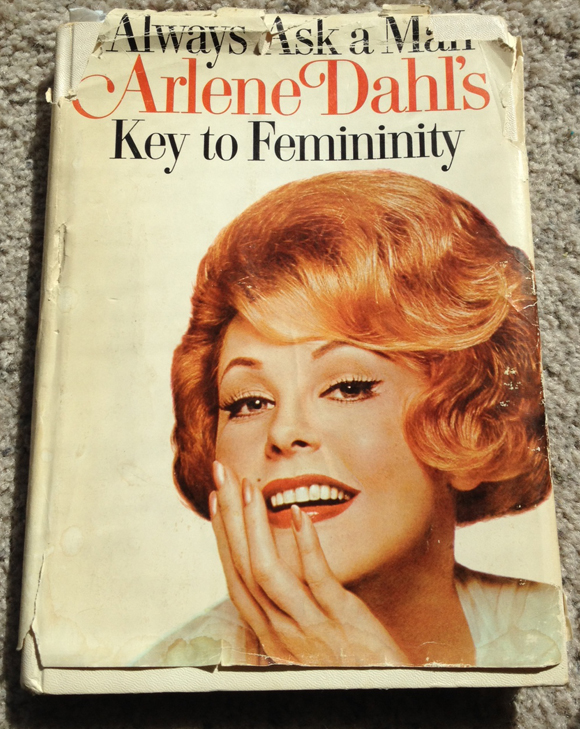
always ask a man (1965)

arlenedahl-always-ask-a-man-key-to-femininity

“Millions of dollars, the statisticians tell us, are spent yearly at beauty salons, cosmetics counters, gymnasiums, and dress shops in woman’s quest for beauty. But beauty for whom? The girls in the office? The women at the club? How can the world progress if women don’t consider men… the man… first?”

— Arlene Dahl, from Always Ask A Man: Arlene Dahl’s Key to Femininity (1965). Read more sage advice transcribed from this minor 1950s screen star’s tome HERE.

mount eerie – i hold nothing

Your love
swells and pounds me

I know nothing (now that I know you)
My face goes blank
My eyes go open gates
and the world can go (in them)
it can make us wealthy
and take away
so
I hold nothing (now that I hold you)

There’s no place to use our money where we live
The generous world suggests we live generously
so we lay
under low wide branches
of the oldest tree on the dune
or in the hay
where we will stay for so long without moving
that the careful birds finally relax
and make black nests in your black hair
and find ants walking around my unmoving feet
and we will only notice this play of the world
(that long moss is growing on us)
(that that wind has rewritten us)
(the give and take not stopping ever)
for only a moment
and then, having briefly noticed,
let the world roll on
through open gates

In a generous way
I give long walks to the dogs
I put commas and periods in song
I give closed eye to the day
I give peace to the long decay
(we do not need to fear dying)

— Written by Phil Elvrum, from the 2005 Mount Eerie album, “No Flashlight”: Songs of the Fulfilled Night

the truth about women

Richard Neill to Bodyform (a maxipad manufacturer), 8 October at 21:30 via Mobile
—————————————-­—————————————-­—–
Hi , as a man I must ask why you have lied to us for all these years . As a child I watched your advertisements with interest as to how at this wonderful time of the month that the female gets to enjoy so many things ,I felt a little jealous. I mean bike riding , rollercoasters, dancing, parachuting, why couldn’t I get to enjoy this time of joy and ‘blue water’ and wings !! Dam my penis!! Then I got a girlfriend, was so happy and couldn’t wait for this joyous adventurous time of the month to happen …..you lied !! There was no joy , no extreme sports , no blue water spilling over wings and no rocking soundtrack oh no no no. Instead I had to fight against every male urge I had to resist screaming wooaaahhhhh bodddyyyyyyfooorrrmmm bodyformed for youuuuuuu as my lady changed from the loving, gentle, normal skin coloured lady to the little girl from the exorcist with added venom and extra 360 degree head spin. Thanks for setting me up for a fall bodyform , you crafty bugger.

Bodyform’s response, via Youtube:

on being here, now

The approach of a man’s life out of the past is history, and the approach of time out of the future is mystery. Their meeting is the present, and it is consciousness, the only time life is alive. The endless wonder of this meeting is what causes the mind, in its inward liberty of a frozen morning, to turn back and question and remember. The world is full of places. Why is it that I am here?

— Wendell Berry, from The Long-Legged House

orphan drift this thursday at bolo’bolo

What do you get if you mix equal parts cutting edge continental philosophy, voodoo, psychedelics, underground dance music, cybernetics and multimedia experimentation? The notorious Orphan Drift!

Happening this Thursday, 25 July, from 20h00, Bolo’bolo Anarchist Info Shop and Vegan Cafe are delighted to announce an evening of Orphan Drift, featuring several short films from founding member Mer Roberts as well as a talk by UWC cyberculture theorist Delphi Carstens, followed by an almost certainly lively open discussion.

Orphan_Drift_540x300Here’s a taste of what you can expect on Thursday evening:

BACKGROUND
In the mid-90s, the legendary Cyber Culture Research Unit at the prestigious Warwick University was formed: their university-funded activities included producing collaged texts of Deleuze and Guattari, William Burroughs and binary code, theorising the occult underpinnings of markets, composing abrasive electronic music and, ostensibly, consuming inhuman doses of psychedelics as often as possible, much of this via the ORPHAN DRIFT collaborative artist project. A few years later, the CCRU was no more; founding member Nick Land – a genius philosopher and agent provocateur – had achieved full meltdown / deterritorialization and Sadie Plant, author of the well-known Writing On Drugs, had disappeared from sight.

The legacy of the CCRU is very much alive today though, a subterranean influence for the very latest movements in philosophy.

ABOUT ORPHAN DRIFT
Mer co-created the collaborative artist and hive mind 0rphan Drift in London in 1994. Although it was predominantly made up of visual artists, it also involved sound designers, concept engineers and media activists.

As an artistic entity, 0rphan Drift is known for immersive and visually complex works which use the sample and the remix extensively, treating information as matter and the image as a unit of contagion. The art produced is science fictional and immersive. It complicates the distinctions between material and immaterial phenomena and dimensions, both in content and media. Much of its work explored mimetic patterns of desire, production and consumption- particularly in relation to the rapid technological changes happening at the time- drawing heavily on cyberpunk fiction, polyrhythmic electronica and the underpinnings of African religious systems. This was the social context in which its shifting layers of frightening, disturbing, abject, schizophrenic, beautiful, deconstructive, poetic and fragmented frequencies were able to take affect.

0rphan Drift is cross-contextual and made extensive contributions from 1994 – 2004 in the social arenas around contemporary art, underground music and cyber-feminism/post-structural philosophy. 0D has participated internationally in over a decade of exhibitions, screenings and performance, exhibiting extensively in the UK, Europe, Canada and the States, including at the Cabinet Gallery and Tate Modern in London; writing the Scifi-theory text ‘Cyberpositive’, and featuring in DJ Spooky’s ‘Sound Unbound’ in the ‘Renegade Academics’ chapter. It contributed cybervisuals to the set of Stephen Speilberg’s ‘AI’ and ‘Minority Report’ features and Leftfield and NIN world tours, worked frequently with Kode 9 and participated in 10 years of international Video art and AV Electronica art events in Norway, Germany, Canada, UK, South Africa and USA.

We now collaborate between Cape Town and San Francisco and continue to make science fictional work which is guided by a neo-futurist sensibility and clearly a progression from our earlier work. Our new video work ‘Wilderness of Elsewheres, Colony 1’, which maps contemporary global concerns with survival, insecurity and the unknown, has been shown in Santiago and San Francisco and we subsequently produced a series of Post Apocalyptic postcards for Shadowshop; Stephanie Syjuco’s parasitic shop at SFMOMA. Recently we made video for Delphi Carsten’s Capetown Tedx Talk, ‘Hyperstition’, and were commissioned make ‘You Its Eyes 94-13’ for screening at CTM13, Berlin.

WHAT WE’LL BE SCREENING / HOSTING THIS THURSDAY EVENING

1: You Its Eyes. 1994-2013, 30 minute video remixing 0D’s earlier work
0D employs different frequencies and overlapping rhythmic patterns to activate submerged regions of the brain and create intimacy and proximity through video-sonic signal. The goal of 0D, writes Simon Reynolds (1996), is “the liberation of texture from its environment, of energy-flux from contoured form with the goal to recreate the intensity of being lost”. 0D describes the individual ‘self’ haunted by a sensory cross-talk of signals from realms beyond the physical. Voices from imagined futures haunt the contemporary technological landscape. Feedback from the machines evolves into an unfamiliarity of speed and complexity, coding the textual body and imagination as tools for change. The invisible, fantastical, and anarchic called upon here are what Deleuze and Guattari define as the essence of virtuality. These intensities carry the sorcerous forces that technology and science unleash as they delve further into the quantum, the chaotic and the abstract.

“Surrounding the human self and its island of experience lies a raging sea of intensities” (D&G). All journeys into this space involve a succession of becomings autistic, mimetic, contagious and machinic.

2: Hyperstition – A talk by Delphi Carstens
Delphi is a lecturer at UWC, as well as half of the duo which makes up Groovy Troopers Productions – creators of temporary autonomous zones in the form of art & trance festivals. Delphi is currently completing a doctorate thesis, and will present on: “hyperstition” — a neologism coined by Nick Land that combines the words ‘superstition’ and ‘hype’ to describe how fictions become fact and how our narratives (stories) shape our world. It also describes, particularly, the narrative of capitalism, which is driven by hype and speculation and, which more importantly, turns fictions into facts. One very important fiction that Delphi will be discussing is the fiction of the apocalypse. Focusing on the current secular meaning of apocalypse as well as how popular culture views our current global crisis and the importance of imagining ourselves differently. Hyperstition also describes the nexus where myth or magic and science meet. Delphi explores the world of hyperstition to describe the manner by which hype and speculation become facts in contemporary society. The future is looking uncertain and how we imagine this future may be more important than we realise. This talk will be both an intellectual and a felt experience.

3: A Wilderness Of Elsewheres. 2009, 10 minutes
A two-screen installation in which dark abstract video spaces flow into bright photographic landscapes (the raw desolate tundras of southern Africa), populated and de-populated by animated collages of architecture and fashion, cut and scanned from contemporary print publications. A deliberate rhythmic awkwardness creates an alien time frame. The screens share a soundscape, made from a wide variety of samples including glaciers melting and rocket launches, composed into a sonic ‘event’. The work is imbued with post-apocalyptic sensibility, urges to the neo-romantic and the science fictional blending of first and third world materiality. At once immersive and deconstructive, the work is collision, co-habitation, evolutionary fever-dream.

Join us in mapping the outer edges — and do come earlyish if you want to sit down while doing so ;) !

expose yourself to reality exposed

Diff-Opening-2Written by Sarah Dawson

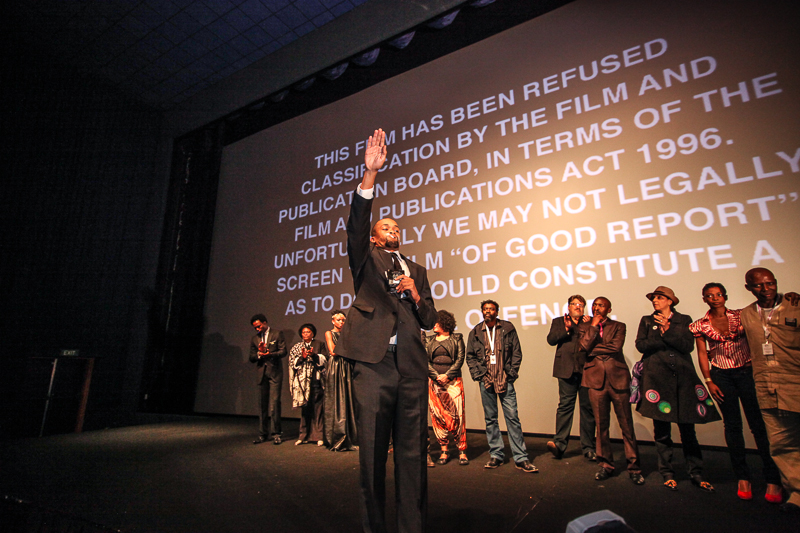
On July 18, the Film and Publication Board’s refusal to classify the would-be opening film of the Durban International Film Festival, Jahmil XT Qubeka’s Of Good Report, became the flint that sparked the latest South African aesthetic controversy.

Unclassified films are illegal to screen, which means that this is a functional ban on the production. The ruling was imposed on the basis of having interpreted the representation of a sexual encounter of a Grade 9 pupil, Nolitha, (played by the 23-year old actress Petronella Tshuma) as being child pornography.

Tongues have been wagging in creative circles and the media, and given that the film is divorced from any overt perspective on political matters (as in the case ofThe Spear), it is clear that this matter relates to some quite primal conflict over the interpretation of a particular image.

In this case, the battle over meaning is taking place in the awkward, sexually liminal space of the moment of the young female character’s transition from archetypal “virgin” to archetypal “whore”, and what she, the figure of the girl, means.

It probably wouldn’t be completely unfair to assume that the film is objectionable to the classification board because of this very liminality, and the way in which the morality embedded in the process clearly regards anything that isn’t exclusively either “virgin” or “whore” as a kind of abomination.

This act of censorship is fundamentally based on a conflict of representation – meaning it’s as much an aesthetic one as it is an ideological one. This means that we need to be asking not the obvious and common question of whether we should or shouldn’t be allowed to depict female children in an erotic light, but rather what actually is a female child, and what is an erotic light?

South African film and South African audiences remain equally conservative. The idea that representations of people, places, things and events can have a lot of different meanings and aren’t consistently, singularly defined is, surprisingly, not taken for granted by the typical South African viewer, practitioner or institution of film.

We aren’t yet comfortable with the multifarious nature of representation, and expend a lot of hot air trying to settle on the one, all-encompassing, so-called “South African voice”, which it turns out, we’re really struggling to locate.

It’s a self-evidently flawed project, because its ridiculous to think that such a thing could ever actually exist in a finite sense.

Read the rest of this article HERE.

busker by-law? there is no busker by-law

For anyone who’s been following what’s been happening since blind busker Lunga Nono was publicly assaulted and arrested by Cape Town police recently… Also watch Nono’s own account of events HERE.

T.O. Molefe's avatarThe Modular Man

Image

This started out as an admonishment of Cape Town residents for our tardy outrage and showboat sense of civic responsibility. We turned up in huge numbers, I was going to say, when city law-enforcement officers publicly assaulted and arrested Lunga Gooodman Nono, but where were we when the laws and regulations he supposedly fell foul of were made? Public participation in law-making, after all, forms one of the key pillars of our constitutional democracy. It’s on us if unjust laws make it into the statute books.

View original post 893 more words

dear daily mail – sincerely, amanda palmer

When the UK’s Daily Mail tabloid paper covered Amanda Palmer’s recent performance at Glastonbury, they didn’t mention anything about the music that she played, choosing to focus only on a brief moment where her breast “escaped her bra”.

Palmer wasn’t thrilled about the lack of coverage her performance received and the extent of attention that was paid to her so-called wardrobe malfunction, and she decided to respond to the paper live on stage. About halfway through her hilarious and cutting song, she strips almost entirely naked. Astute:

marina abramović presentation at moma yesterday

A pioneer of performance art, Marina Abramović has been using her own body as the subject, object, and medium of her work since the early 1970s. In 2011, the Museum of Modern Art (MOMA) in New York put on her retrospective, The Artist is Present. Yesterday, 14 July 2013, again at MOMA, she spoke about how to create a productive union between the arts, science, technology, spirituality and education in the future. GO HERE TO WATCH.

marina

jane elliot’s brown eyes/blue eyes racism experiment

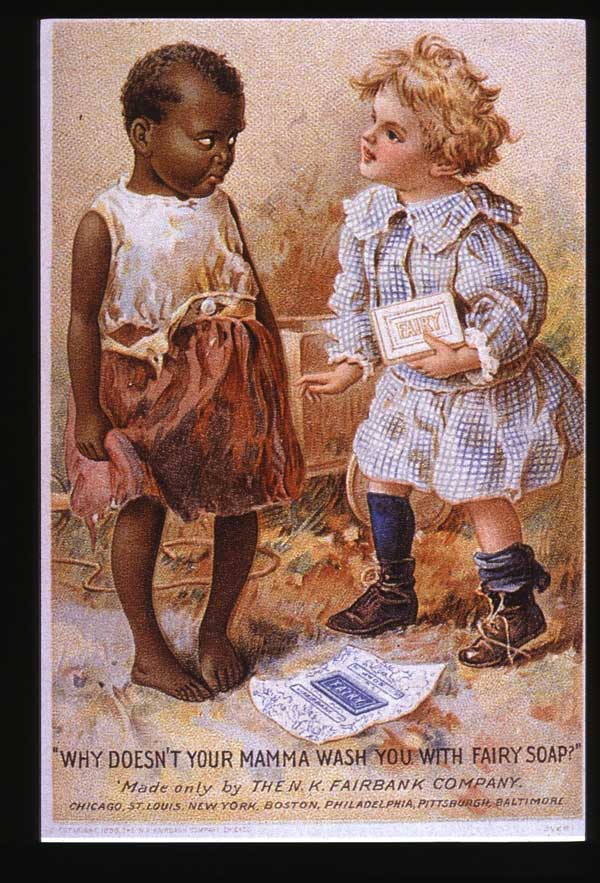
It all seemed like a game at first… Watch this brilliant teacher recreate segregation in her 3rd grade classroom at the end of the 1960s, to demonstrate the arbitrary violence and effects of discrimination. A profound object lesson, and one the world still hasn’t been able to grasp; this is essential viewing. More about Jane Elliot’s work can be found HERE.

fairbanks-fairy-soap

blind willie johnson – dark was the night, cold was the ground

“Dark Was the Night, Cold Was the Ground” is a gospel-blues song written and performed by Blind Willie Johnson, probably recorded in 1927. The song is primarily an instrumental, featuring Johnson’s self-taught bottleneck slide guitar and picking style accompanied by humming and moaning.

For more about this haunting record, check out the fascinating Wikipedia page.

essentially

hate and love

If only a change of heart could magically repair the concrete effects of centuries of evil and dispossession overnight… It can’t, but thank you, Nelson Rolihlahla Mandela, for holding on to hope; for leading by example. If we all started living from an unselfish basis of love and respect, things WOULD shift.

luce irigaray – women on the market

Chapter Eight from This Sex Which Is Not One, 1985. This text was originally published as “Le marche des femmes,” in Sessualita e politica, (Milan: Feltrinelli, 1978).

hands on experience

The society we know, our own culture, is based upon the exchange of women. Without the exchange of women, we are told, we would fall back into the anarchy (?) of the natural world, the randomness (?) of the animal kingdom. The passage into the social order, into the symbolic order, into order as such, is assured by the fact that men, or groups of men, circulate women among themselves, according to a rule known as the incest taboo.

Whatever familial form this prohibition may take in a given state of society, its signification has a much broader impact. It assures the foundation of the economic, social, and cultural order that has been ours for centuries.

Why exchange women? Because they are “scarce [commodities] . . . essential to the life of the group,” the anthropologist tells us.1 Why this characteristic of scarcity, given the biological equilibrium between male and female births? Because the “deep polygamous tendency, which exists among all men, always makes the number of available women seem insufficient. Let us add that even if there were as many women as men, these women would not be equally desirable … and that, by definition. . ., the most desirable women must form a minority. “2

Are men all equally desirable? Do women have no tendency toward polygamy? The good anthropologist does not raise such questions. A fortiori: why are men not objects of exchange among women? It is because women’s bodies – through their use, consumption, and circulation – provide for the condition making social life and culture possible, although they remain an unknown “infrastructure” of the elaboration of that social life and culture. The exploitation of the matter that has been sexualized female is so integral a part of our sociocultural horizon that there is no way to interpret it except within this horizon.

In still other words: all the systems of exchange that organize patriarchal societies and all the modalities of productive work that are recognized, valued, and rewarded in these societies are men’s business. The production of women, signs, and commodities is always referred back to men (when a man buys a girl, he “pays” the father or the brother, not the mother … ), and they always pass from one man to another, from one group of men to another. The work force is thus always assumed to be masculine, and “products” are objects to be used, objects of transaction among men alone.

Which means that the possibility of our social life, of our culture, depends upon a ho(m)mo-sexual monopoly? The law that orders our society is the exclusive valorization of men’s needs/desires, of exchanges among men. What the anthropologist calls the passage from nature to culture thus amounts to the institution of the reign of hom(m)o-sexuality. Not in an “immediate” practice, but in its “social” mediation. From this point on, patriarchal societies might be interpreted as societies functioning in the mode of “semblance.” The value of symbolic and imaginary productions is superimposed upon, and even substituted for, the value of relations of material, natural, and corporal (re)production.

sensualist gif

From “The Sensualist”, Kōshoku Ichidai Otoko’s animated interpretation of the 17th century novel by Ihara Seikaku

In this new matrix of History, in which man begets man as his own likeness, wives, daughters, and sisters have value only in that they serve as the possibility of, and potential benefit in, relations among men. The use of and traffic in women subtend and uphold the reign of masculine hom(m)o-sexuality, even while they maintain that hom(m)o-sexuality in speculations, mirror games, identifications, and more or less rivalrous appropriations, which defer its real practice. Reigning everywhere, although prohibited in practice, hom(m)o-sexuality is played out through the bodies of women, matter, or sign, and heterosexuality has been up to now just an alibi for the smooth workings of man’s relations with himself, of relations among men.

Whose “sociocultural endogamy” excludes the participation of that other, so foreign to the social order: woman. Exogamy doubtless requires that one leave one’s family, tribe, or clan, in order to make alliances. All the same, it does not tolerate marriage with populations that are too far away, too far removed from the prevailing cultural rules. A sociocultural endogamy would thus forbid commerce with women. Men make commerce of them, but they do not enter into any exchanges with them. Is this perhaps all the more true because exogamy is an economic issue, perhaps even subtends economy as such? The exchange of women as goods accompanies and stimulates exchanges of other “wealth” among groups of men. The economy in both the narrow and the broad sense-that is in place in our societies thus requires that women lend themselves to alienation in consumption, and to exchanges in which they do not participate, and that men be exempt from being used and circulated like commodities.

*

Marx’s analysis of commodities as the elementary form of capitalist wealth can thus be understood as an interpretation of the status of woman in so-called partriarchal societies. The organization of such societies, and the operation of the symbolic system on which this organization is based-a symbolic system whose instrument and representative is the proper name: the name of the father, the name of God-contain in a nuclear form the developments that Marx defines as characteristic of a capitalist regime: the submission of “nature” to a “labor” on the part of men who thus constitute “nature” as use value and exchange value; the division of labor among private producer-owners who exchange their women-commodities among themselves, but also among producers and exploiters or exploitees of the social order; the standardization of women according to proper names that determine their equivalences; a tendency to accumulate wealth, that is, a tendency for the representatives of the most “proper” names-the leaders-to capitalize more women than the others; a progression of the social work of the symbolic toward greater and greater abstraction; and so forth.

To be sure, the means of production have evolved, new techniques have been developed, but it does seem that as soon as the father-man was assured of his reproductive power and had marked his products with his name, that is, from the very origin of private property and the patriarchal family, social exploitation occurred. In other words, all the social regimes of “History” are based upon the exploitation of one “class” of producers, namely, women. Whose reproductive use value (reproductive of children and of the labor force) and whose constitution as exchange value underwrite the symbolic order as such, without any compensation in kind going to them for that “work.” For such compensation would imply a double system of exchange, that is, a shattering of the monopolization of the proper name (and of what it signifies as appropriative power) by father-men.

Thus the social body would be redistributed into producer-subjects no longer functioning as commodities because they provided the standard of value for commodities, and into commodity objects that ensured the circulation of exchange without participating in it as subjects.

*

Let us now reconsider a few points (3) in Marx’s analysis of value that seem to describe the social status of women.

Wealth amounts to a subordination of the use of things to their accumulation. Then would the way women are used matter less than their number? The possession of a woman is certainly indispensable to man for the reproductive use value that she represents; but what he desires is to have them all. To “accumulate” them, to be able to count off his conquests, seductions, possessions, both sequentially and cumulatively, as measure or standard(s).

All but one? For if the series could be closed, value might well lie, as Marx says, in the relation among them rather than in the relation to a standard that remains external to them – whether gold or phallus.

The use made of women is thus of less value than their appropriation one by one. And their “usefulness” is not what counts the most. Woman’s price is not determined by the “properties” of her body-although her body constitutes the material support of that price.

But when women are exchanged, woman’s body must be treated as an abstraction. The exchange operation cannot take place in terms of some intrinsic, immanent value of the commodity.

It can only come about when two objects-two women are in a relation of equality with a third term that is neither the one nor the other. It is thus not as “women” that they are exchanged, but as women reduced to some common feature-their current price in gold, or phalluses-and of which they would represent a plus or minus quantity. Not a plus or a minus of feminine qualities, obviously. Since these qualities are abandoned in the long run to the needs of the consumer, woman has value on the market by virtue of one single quality: that of being a product of man’s “labor.”

On this basis, each one looks exactly like every other. They all have the same phantom-like reality. Metamorphosed in identical sublimations, samples of the same indistinguishable work, all these objects now manifest just one thing, namely, that in their production a force of human labor has been expended, that labor has accumulated in them. In their role as crystals of that common social substance, they are deemed to have value.

Liu Jianhua - ceramic

Liu Jianhua – ceramic

As commodities, women are thus two things at once: utilitarian objects and bearers of value. “They manifest themselves therefore as commodities, or have the form of commodities, only in so far as they have two forms, a physical or natural form, and a value form” (p. 55).

But “the reality of the value of commodities differs in respect from Dame Quickly, that we don’t know ‘where to have it”’ (ibid.). Woman, object of exchange, differs from woman, use value, in that one doesn’t know how to take (hold of) her, for since “the value of commodities is the very opposite of the coarse materiality of their substance, not an atom of matter enters into its composition. Turn and examine a single commodity, by itself, as we will. Yet in so far as it remains an object of value, it seems impossible to grasp it” (ibid.). The value of a woman always escapes: black continent, hole in the symbolic, breach in discourse . . . It is only in the operation of exchange among women that something of this-something enigmatic, to be sure-can be felt. Woman thus has value only in that she can be exchanged. In the passage from one to the other, something else finally exists beside the possible utility of the “coarseness” of her body. But this value is not found, is not recaptured, in her. It is only her measurement against a third term that remains external to her, and that makes it possible to compare her with another woman, that permits her to have a relation to another commodity in terms of an equivalence that remains foreign to both.

Women-as-commodities are thus subject to a schism that divides them into the categories of usefulness and exchange value; into matter-body and an envelope that is precious but impenetrable, ungraspable, and not susceptible to appropriation by women themselves; into private use and social use.

In order to have a relative value, a commodity has to be confronted with another commodity that serves as its equivalent.

Its value is never found to lie within itself And the fact that it is worth more or less is not its own doing but comes from that to which it may be equivalent. Its value is transcendent to itself, super-natural, ek-static.

In other words, for the commodity, there is no mirror that copies it so that it may be at once itself and its “own” reflection. One commodity cannot be mirrored in another, as man is mirrored in his fellow man. For when we are dealing with commodities the self-same, mirrored, is not “its” own likeness, contains nothing of its properties, its qualities, its “skin and hair.” The likeness here is only a measure expressing the fabricated character of the commodity, its trans-formation by man’s (social, symbolic) “labor.” The mirror that envelops and paralyzes the commodity specularizes, speculates (on) man’s “labor.” Commodities, women, are a mirror of value of and for man. In order to serve as such, they give up their bodies to men as the supporting material of specularization, of speculation. They yield to him their natural and social value as a locus of imprints, marks, and mirage of his activity.

Commodities among themselves are thus not equal, nor alike, nor different. They only become so when they are compared by and for man. And the prosopopoeia of the relation of commodities among themselves is a projection through which producers exchangers make them reenact before their eyes their operations of specula(riza)tion. Forgetting that in order to reflect (oneself), to speculate (oneself), it is necessary to be a “subject,” and that matter can serve as a support for speculation but cannot itself speculate in any way.

Thus, starting with the simplest relation of equivalence between commodities, starting with the possible exchange of women, the entire enigma of the money form-of the phallic function-is implied. That is, the appropriation-disappropriation by man, for man, of nature and its productive forces, insofar as a certain mirror now divides and travesties both nature and labor. Man endows the commodities he produces with a narcissism that blurs the seriousness of utility, of use.

Desire, as soon as there is exchange, “perverts” need. But that perversion will be attributed to commodities and to their alleged relations. Whereas they can have no relationships except from the perspective of speculating third parties.

The economy of exchange-of desire-is man’s business. For two reasons: the exchange takes place between masculine subjects, and it requires a plus-value added to the body of the commodity, a supplement which gives it a valuable form. That supplement will be found, Marx writes, in another commodity, whose use value becomes, from that point on, a standard of value.

But that surplus-value enjoyed by one of the commodities might vary: ‘Just as many a man strutting about in a gorgeous uniform counts for more than when in mufti” (p. 60). Or just as “A, for instance, cannot be ‘your majesty’ to B, unless at the same time majesty in B’s eyes assume the bodily form of A, and, what is more, with every new father of the people, changes its features, hair, and many other things besides” (ibid.).

Commodities – “things” produced – would thus have the respect due the uniform, majesty, paternal authority. And even God. “The fact that it is value, is made manifest by its equality with the coat, just as the sheep’s nature of a Christian is shown in his resemblance to the Lamb of God” (ibid.).

Commodities thus share in the cult of the father, and never stop striving to resemble, to copy, the one who is his representative. It is from that resemblance, from that imitation of what represents paternal authority, that commodities draw their value – for men. But it is upon commodities that the producers-exchangers bring to bear this power play. “We see, then, all that our analysis of the value of commodities has already told us, is told us by the linen itself, so soon as it comes into communication with another commodity, the coat. Only it betrays its thoughts in that language with which alone it is familiar, the language of commodities. In order to tell us that its own value is created by labour in its abstract character of human labour, it says that the coat, in so far as it is worth as much as the linen, and therefore is value, consists of the same labour as the linen. In order to inform us that its sublime reality as value is not the same as its buckram body, it says that value has the appearance of a coat, and consequently that so far as the linen is value, it and the coat are as like as two peas. We may here remark, that the language of commodities has, besides Hebrew, many other more or less correct dialects. The German ‘werthsein,’ to be worth, for instance, expresses in a less striking manner than the Romance verbs ‘valere,’ ‘valer,’ ‘valoir,’ that the equating of commodity B to commodity A, is commodity A’s own mode of expressing its value. Paris vaut bien une messe” (pp. 60-61).

So commodities speak. To be sure, mostly dialects and patois, languages hard for “subjects” to understand. The important thing is that they be preoccupied with their respective values, that their remarks confirm the exchangers’ plans for them. Continue reading

“kuulumia”

“Kuulumia is an archaic Finnish word that refers to the aural quality of a landscape. Kuuluma denotes how a space, a clearing, or a site sounds. We have reintroduced this old expression because we feel that the term ‘soundscape’ is slightly problematic. The notion of “soundscape” has a tendency to objectify sonic landscapes and often seems to overlook the listener.”

— Tuike and Simo Alitalo

Read more about the pair’s acoustemological explorations HERE.

erik bünger’s schizophonia

I watched two incredible films tonightSchizophonia and The Third Man, courtesy of Anette Hoffmann and the Archive & Public Culture Platform at UCT, with the kind permission of musician, composer and performance artist, Erik Bünger, who made the films.

In each film, Bünger both analyses and plays with the uncanny, magical potency of sound as recorded medium. Everything he does is underpinned by formidable quantities of research, a fondness for outrageously rhizomatic linkages and a wicked sense of humour. Definitely my new art crush of the month! ;)

Here’s a video of Bünger giving a lecture/performance which utilises much of the material presented in the standalone film, Schizophonia. This was recorded at MEDEA, Malmo University, in March 2011, as part of the K3 courses “Music in the Digital Media Landscape” and “Illustrating with Music”.

I really WISH I could find more of The Third Man to share here –  it was tremendously entertaining, and, even off on its most questionable, occult-paranoid tangents, bizarrely pertinent to so much of the stuff about performance, recording and playback of music that I’ve been posting and thinking about in the past few years; even down to an hilarious discussion of the “entraining” (his word) power of The Sound Of Music (my post this afternoon prefigured this too, eerily!).

Anyway, you can watch the lecture:

And here’s a bio:

The Swedish artist, composer, musician and writer Erik Bünger (1976) works with re-contextualising existing media in performances, installations and web projects. In ‘Gospels’, sections of Hollywood interviews are removed from their original contexts, interacting to form a new, seemingly coherent whole. Yet these pre-existing works frequently conflict; Bünger explores the disjunction between replaying and experiencing in his ‘Lecture on Schizophonia’. This simultaneously analytical and performative work highlights the relationship between sound and perceived reality, using popular references and familiar footage including Barak Obama and Woody Allen. Similar tensions are exposed in ‘God Moves on the Water’, in which two songs about the sinking of the Titanic are combined to form a third narrative. In ‘The Third Man’, the negative power of music is explored. Displacing and recombining familiar material, Bünger challenges the separation between authentic and simulated experiences.

Bünger may have followed a traditional education in composition at the Stockholm Royal College of Music, but he is hardly a run-of-the-mill composer. His works have increasingly come to approach contemporary conceptual art, but his combination of sound and visual is also linked to literary storytelling. In his performances, installations and web projects, different timelines are superposed, past worlds and present understandings. The most important thing about Bünger’s work is not the art or literature context but the transformation that takes place in the specific works. What may seem trivial and inconsequential suddenly becomes the stuff of dreams. He is attracted to moments when recorded sound and image bridge a space between absolutes, between death and life and between gods and humankind. –

This info comes from http://expo.argosarts.org/

hmv

Francis Barraud – “Dog Looking At and Listening to a Phonograph”(1898)