©Germaine De Larch Images
First published on http://www.life-writ-large.posterous.com
Directed by Alex & Liane, the video for Tiga’s ‘Shoes’ “imagines a horrifying dystopia in which people other than myself are interviewed,” says the Man of Music Future, “I had to calm myself down by staring at my MySpace photos for a couple of hours.” (This was, after all, 2009 ;)
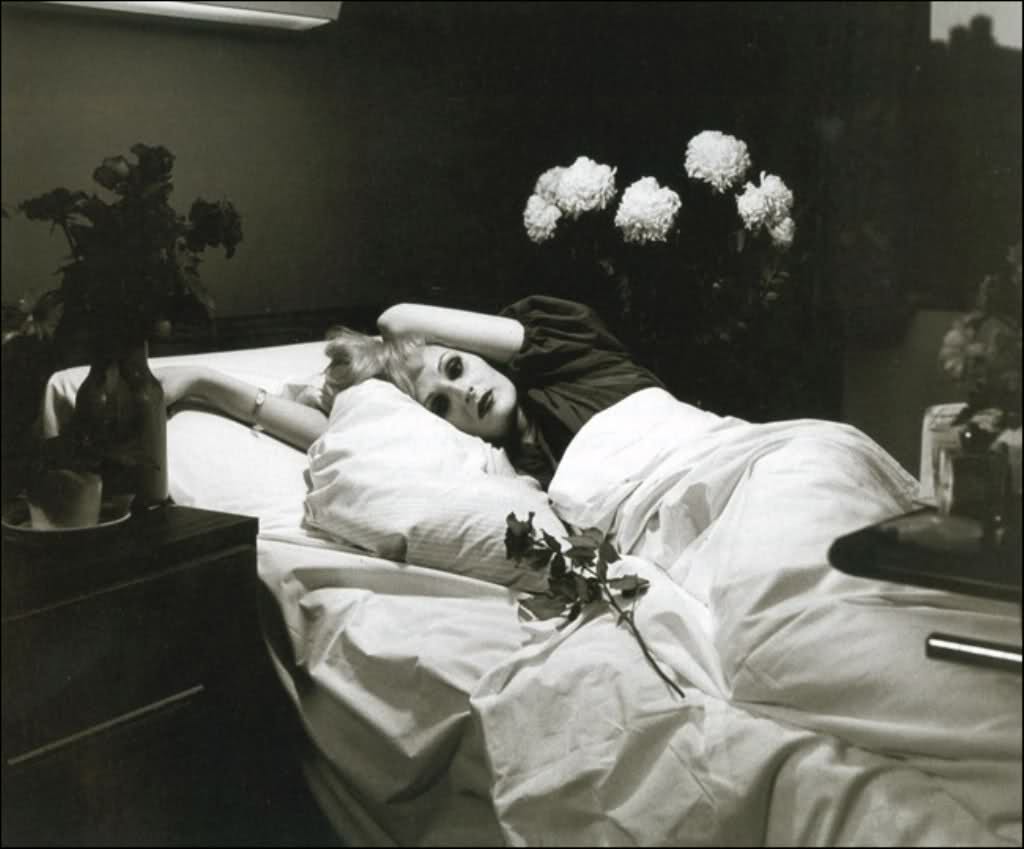
Peter Hujar – “Candy Darling on Her Deathbed”
1974, gelatin-silver print
Candy Darling (November 24, 1944 – March 21, 1974), born James Lawrence Slattery, was an American actress, best known as a Warhol Superstar. A male-to-female transsexual, she starred in Andy Warhol’s films Flesh (1968) and Women in Revolt (1971), and was a muse of the band The Velvet Underground.
© cherry bomb
“I feel your burning eyes, burning holes straight through my heart…”
Antony & the Johnsons, from The Lake EP (Secretly Canadian, 2004).
To be born a woman is to be born, within an allotted and confined space, into the keeping of men. The social presence of women is developed as a result of their ingenuity in living under such tutelage within such a limited space. But this has been at the cost of a woman’s self being split into two.
A woman must continually watch herself. She is almost continually accompanied by her own image of herself. Whilst she is walking across a room or whilst she is weeping at the death of her father, she can scarcely avoid envisaging herself walking or weeping. From earliest childhood she has been taught and persuaded to survey herself continually. And so she comes to consider the surveyor and the surveyed within her as the two constituent yet always distinct elements of her identity as a woman. She has to survey everything she is and everything she does, because how she appears to men is of crucial importance for what is normally thought of as the success of her life. Her own sense of being in herself is supplanted by a sense of being appreciated as herself by another…
One might simplify this by saying: men act and women appear. Men look at women. Women watch themselves being looked at. This determines not only most relations between men and women but also the relation of women to themselves. The surveyor of woman in herself is male: the surveyed female. Thus she turns herself into an object — and most particularly an object of vision: a sight.
― John Berger, from Ways of Seeing.
“It won’t cost much… Just your voice.”
From Disney’s The Little Mermaid (1989)
Joni Mitchell – “Don’t Interrupt the Sorrow”, from The Hissing of Summer Lawns (1975)
“It takes a heart like Mary’s these days when your man gets weak.”
Acoustic guitars – Joni Mitchell
Electric guitars – Larry Carlton
Dobro – Robben Ford
Bass – Wilton Felder
Drums – John Guerin
Congas – Victor Feldman


Even during the scandalous Roaring 20s, when women were bobbing their hair and baring their arms, products for “that time of the month” were advertised only very discreetly in women’s magazines. And until 1928, those ads featured line drawings or pastel paintings of females, never real women. But that taboo ended when photographer Edward Steichen sold a photo he’d shot of model and Voguecover girl Lee Miller to the Kotex Company. Miller’s modeling career in the U.S. was essentially kaput thanks to the scandalous placement of her photograph, and she fled to Paris where she studied photography and eventually became a renowned photographer in her own right.
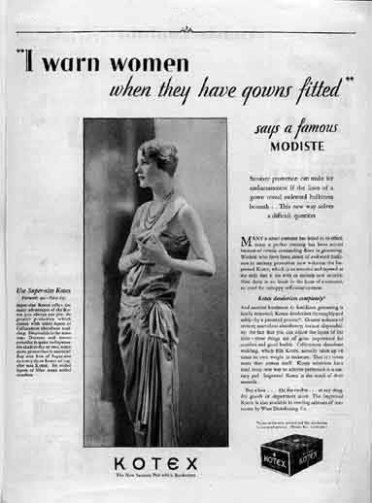 At the outbreak of World War II, Miller was living in Hampstead, London with Roland Penrose when the bombing of the city began. Ignoring pleas from friends and family to return to the US, Miller embarked on a new career in photojournalism as the official war photographer for Vogue, documenting the Blitz. Lee was accredited into the U.S. Army as a war correspondent for Condé Nast Publications from December 1942.
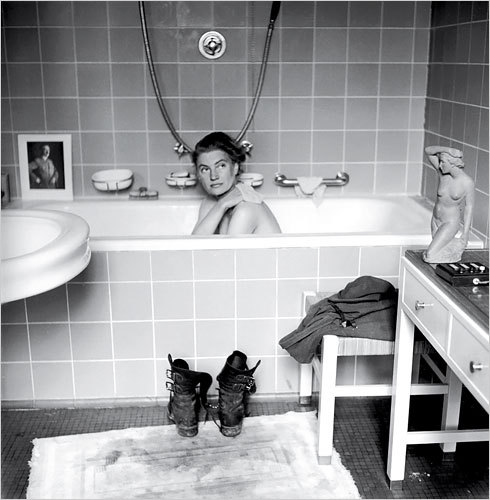 Miller wrote to her Vogue editor Audrey Winters:
“I was living in Hitler’s private apartment when his death was announced, midnight of Mayday … Well, alright, he was dead. He’d never really been alive to me until today. He’d been an evil-machine-monster all these years, until I visited the places he made famous, talked to people who knew him, dug into backstairs gossip and ate and slept in his house. He became less fabulous and therefore more terrible, along with a little evidence of his having some almost human habits; like an ape who embarrasses and humbles you with his gestures, mirroring yourself in caricature. “There, but for the Grace of God, walks I.”
When the photo came out, it was considered an extremely poor judgement. For some, Miller posing nude in the tub of one of the most repulsive men in history was nothing more than a ill-timed reflection of the adage, “To the victor goes the spoils”. For others, it represents the power of life over death, “The living do what they can and the dead suffer what they must”. Lee Miller herself shied away from the controversies but reprouding the image very rarely and noted that she was merely trying to wash the odors of Dachau away.
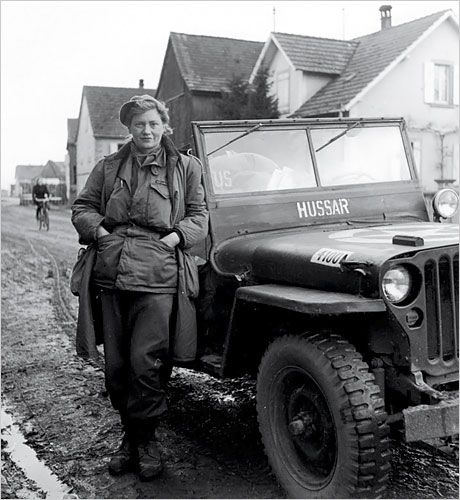 Lee Miller smiles in combat fatigues in Alsace 1944. It was said that no soldier could resist a photographer with a fashion model’s striking beauty. The photo was taken by her friend and colleague, Life magazine’s David E. Scherman.
“I feel I’m anonymous in my work. When I look at the pictures, I never see myself; they aren’t self-portraits. Sometimes I disappear.”
“Cindy Sherman has explored different kinds of photography, but she has become one of the most lauded artists of her generation for her photographs of her impersonations. Since she arrived on the scene, in a 1980 exhibition, when she was in her mid-twenties, she has come before her own camera in the guise of hundreds of characters, and as an impersonator—which in her case means being a creator of people, and sometimes people-like creatures, who we encounter only in a single photograph—she has been remarkably inventive. Especially as a portrayer of types of people, whether someone who appears to be a perky suburbanite in town for a matinee, or a woman in a sweatshirt who seems both tired and bristling, or a club singer belting out a note, Sherman—who is now, at fifty-eight, the subject of a retrospective at the Museum of Modern Art—has shown herself as well to be a witty and shrewd social observer. And the sheer human spectacle of someone continually transforming herself into one person after another has proved riveting.”
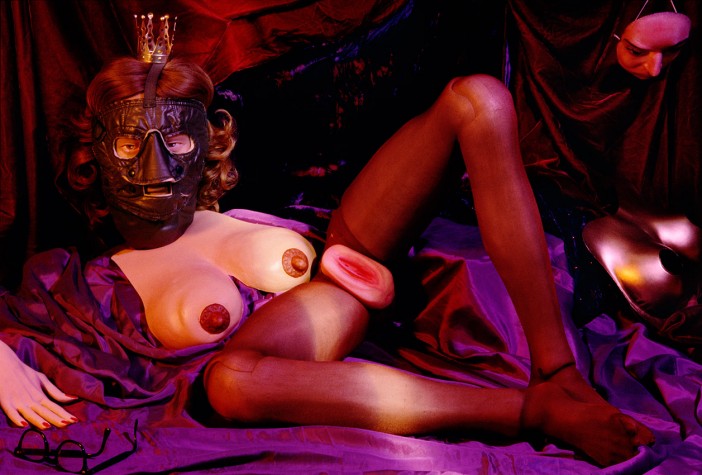 “…Her various accessories and props are appealingly economical and rudimentary, and, given that her art is based on deception, one could say that her large photographs, which sometimes come with transparently cheesy frames, are meant to have the appearance of fake paintings. During much of the 1990s, she also experimented, in pictures she herself was not in, with close cropping and artificial, theatrical color and lighting. But none of this quite erased the way that her pictures in general, and certainly those in which she appears front and center in some disguise, often had the disembodied presence of blown-up shots from one kind of movie or another.”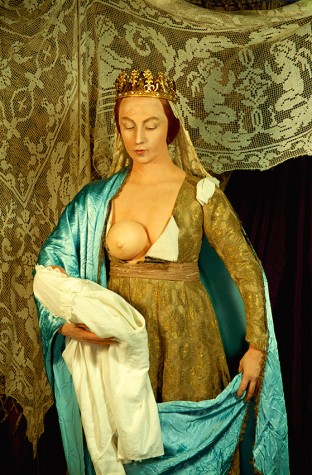
“…The end result of Sherman’s many approaches is a roller coaster of discontent, at times recalling Otto Dix, at other moments Carol Burnett. Sherman can be reproachful and quietly barbed, or merely leaden and gloomy, or showily horrifying, or buoyantly nasty. The works that held me longest were of her strivers and her patronesses. They bring together the poles of Sherman’s thinking: her feeling for contemporary life and for the monstrous. We see people who, carefully but excessively made up, have turned their faces into masks. This can be said of her clowns as well, but they are so fully masked that we have little sense (as we have little sense with actual, professional clowns) of the person underneath the makeup.”
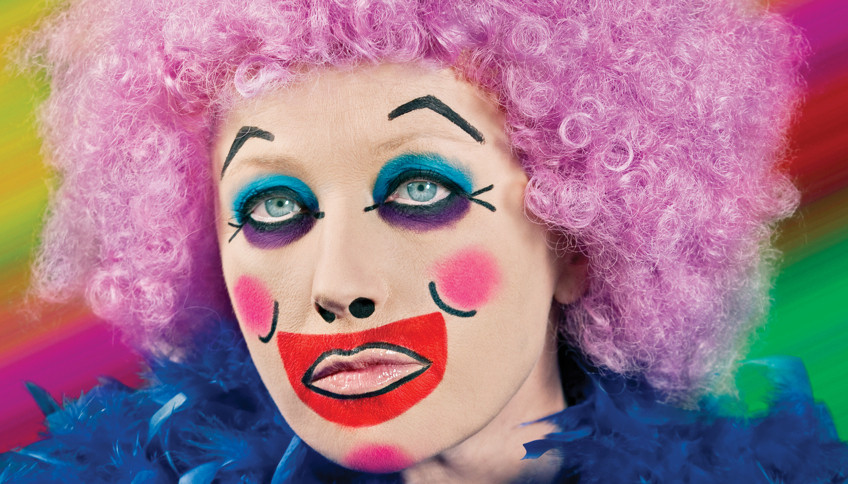
“More crucially, clowns, whether threatening or sad, are so familiar a theme that it is hard to put much stock in Sherman’s versions, which add little to the lore. With her overly avid women and her lionesses of the social scene, however, we feel we look, in each picture, at three people. There is Sherman herself, who, with her fair hair, pale eyebrows, and somewhat pointed features, resembles women in Memling portraits. Then there is her subject, who is clearly hidden behind a protective armor.”
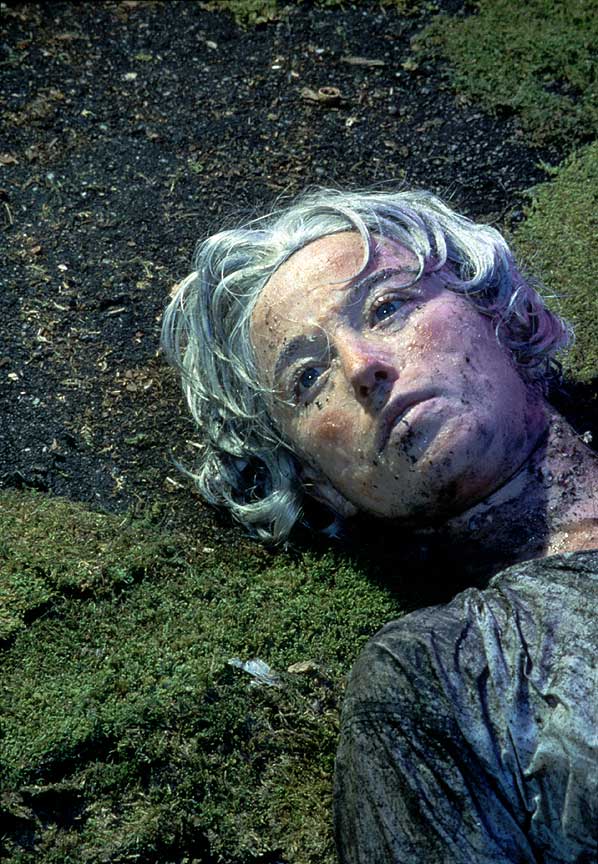 “…Sherman isn’t the first artist to come before the camera in a series of disguises or impersonations. Surely no artist, though, has used the notion as a premise for an entire career, and it creates for her audience a rare sense of intimacy with her and suspense about where she will go next. We seem to look at someone who has indentured her very person for the sake of her art. We can believe we are in this strange lifelong adventure with her, and, especially if we are her age or older, we wonder a little apprehensively how she will handle the issue of aging.”
 “…On the most literal level, though, we look at someone who has a gift for impersonation. Born in New Jersey and raised on Long Island, Sherman went to Buffalo State College in the early 1970s with the idea of becoming a painter. But she had been disguising herself as different people since childhood. There is a photo of her in the Modern’s catalog around age twelve in which, standing on a suburban street along with a friend who is also in masquerade, she appears convincingly as a little old lady. In college she was exposed to conceptual art, which, already supplanting painting as the field that art students wanted to work in, enabled her to see that she could build on her feeling for impersonation.”
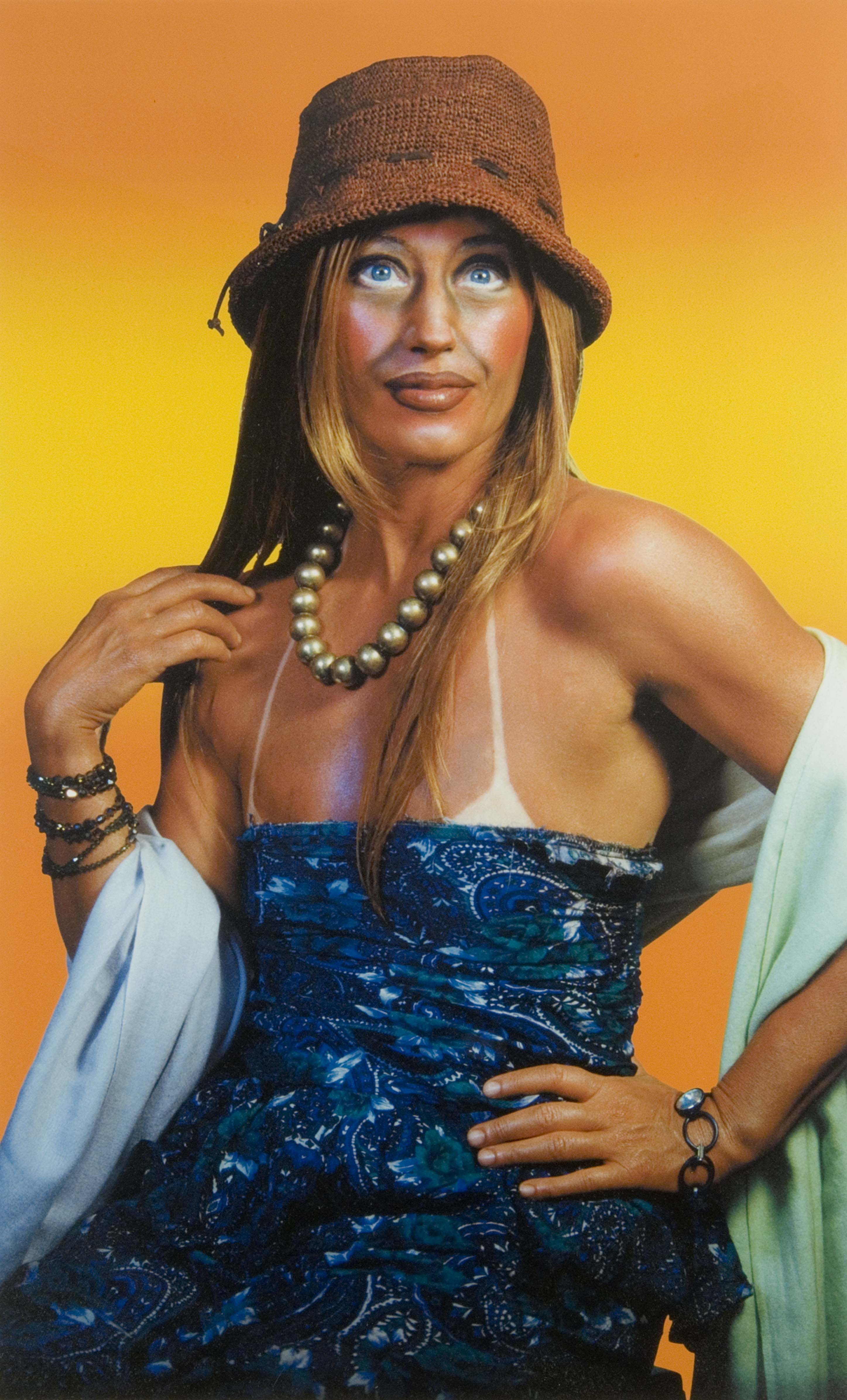 read the whole article here
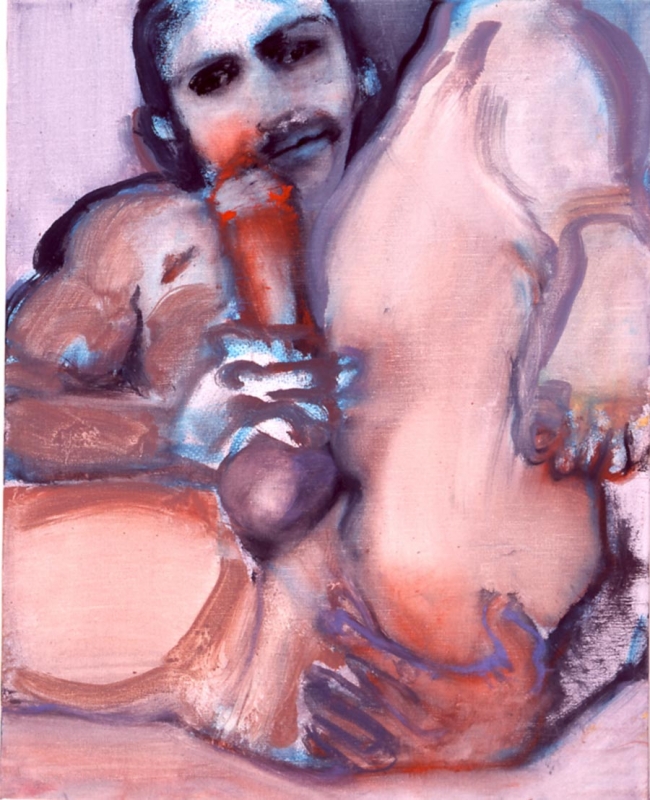 1999
1999
Oil on canvas, 50 x 40 cm
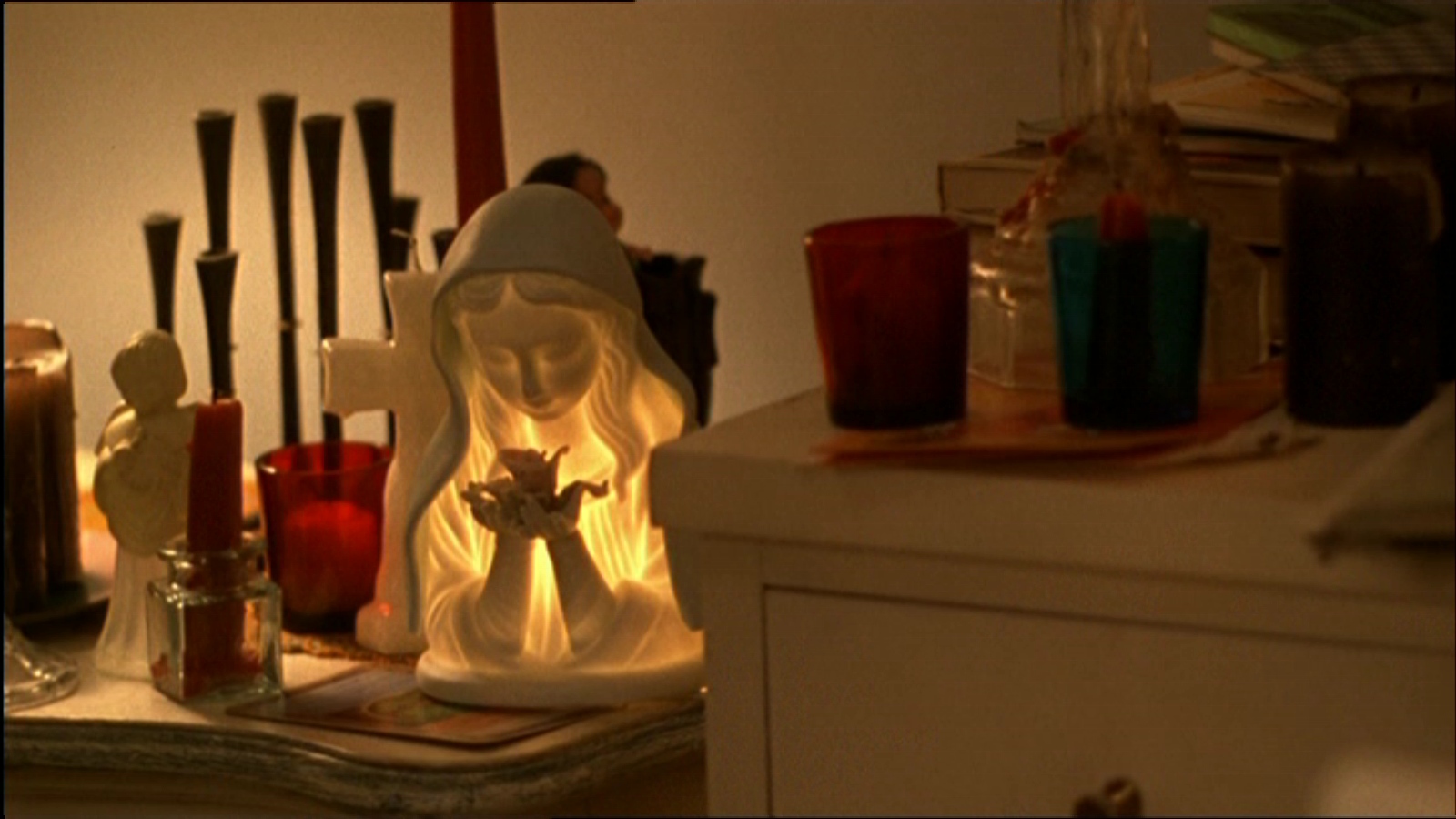 Narrator:
So much has been said about the girls over the years. But we have never found an answer. It didn’t matter in the end how old they had been, or that they were girls… but only that we had loved them, and that they hadn’t heard us calling… still do not hear us, up here in the tree house with our thinning hair and soft bellies, calling them from out of those rooms where they went to be alone for all time… and where we will never find the pieces to put them back together…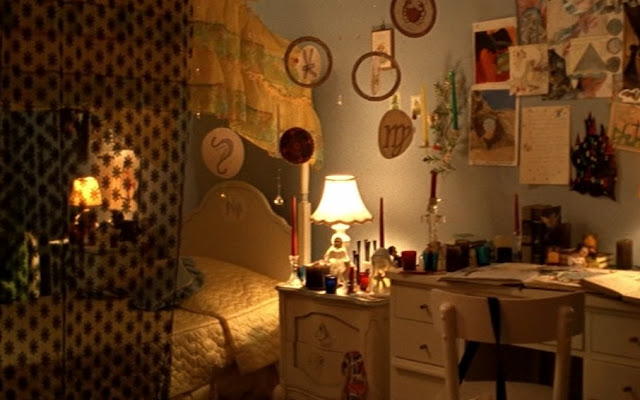
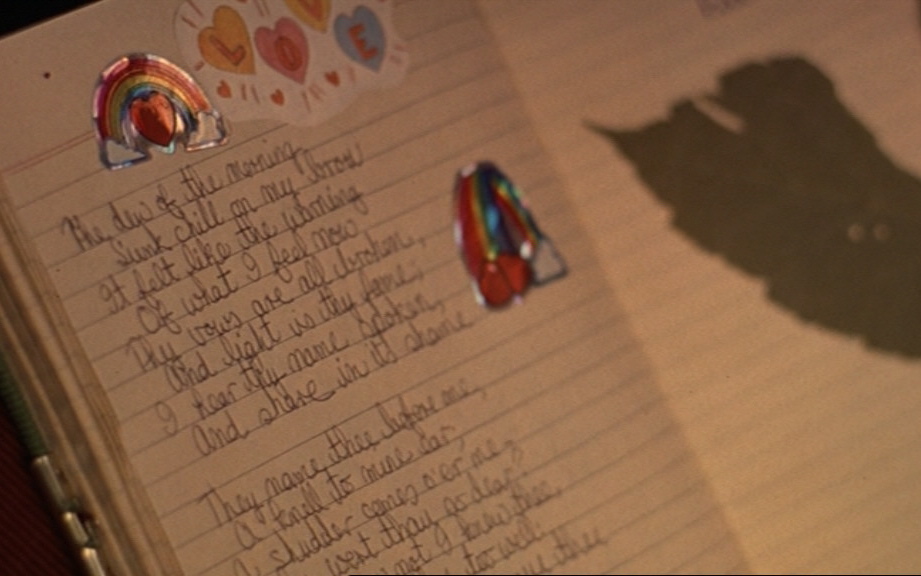
From Cecilia Lisbon’s diary:
Lux lost it over Kevin Haines, the garbage man. She’d wake up at five in the morning
and hang out on the front steps – like it wasn’t completely obvious.
She wrote his name in marker on all her underwear. Mom found them and bleached out the Kevins.
Lux was crying on her bed all day.
The trees like lungs filling with air.
My sister, the mean one, pulling my hair.
Narrator:
And so we started to learn about their lives, coming to hold collective memories of times we hadn’t experienced.
We felt the imprisonment of being a girl, the way it made your mind dreamy… so you ended up knowing
what colours went together.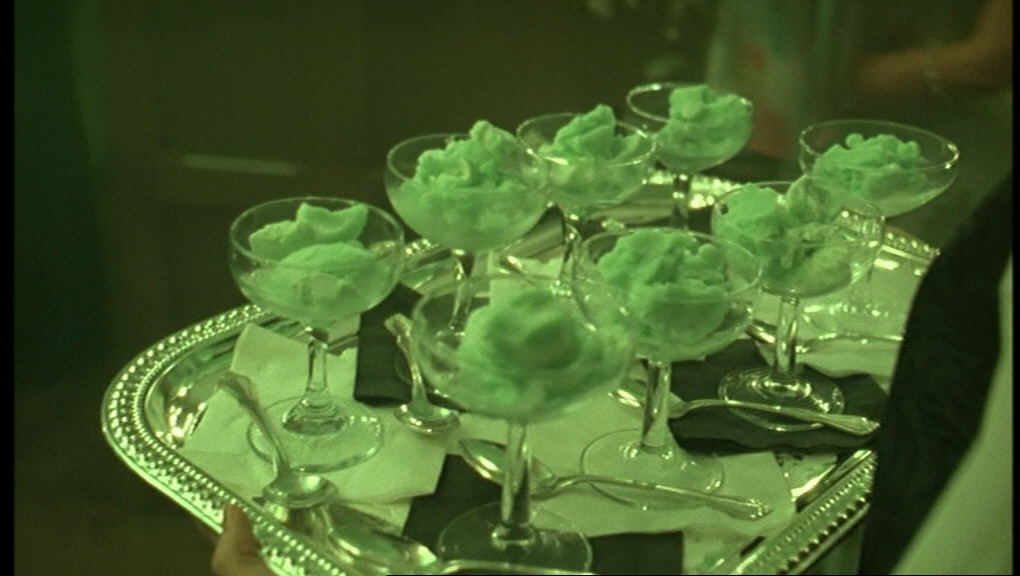

We knew the girls were really women in disguise… that they understood love and even death… and that our job was merely to create the noise that seemed to fascinate them.
We knew that they knew everything about us. And that we couldn’t fathom them at all.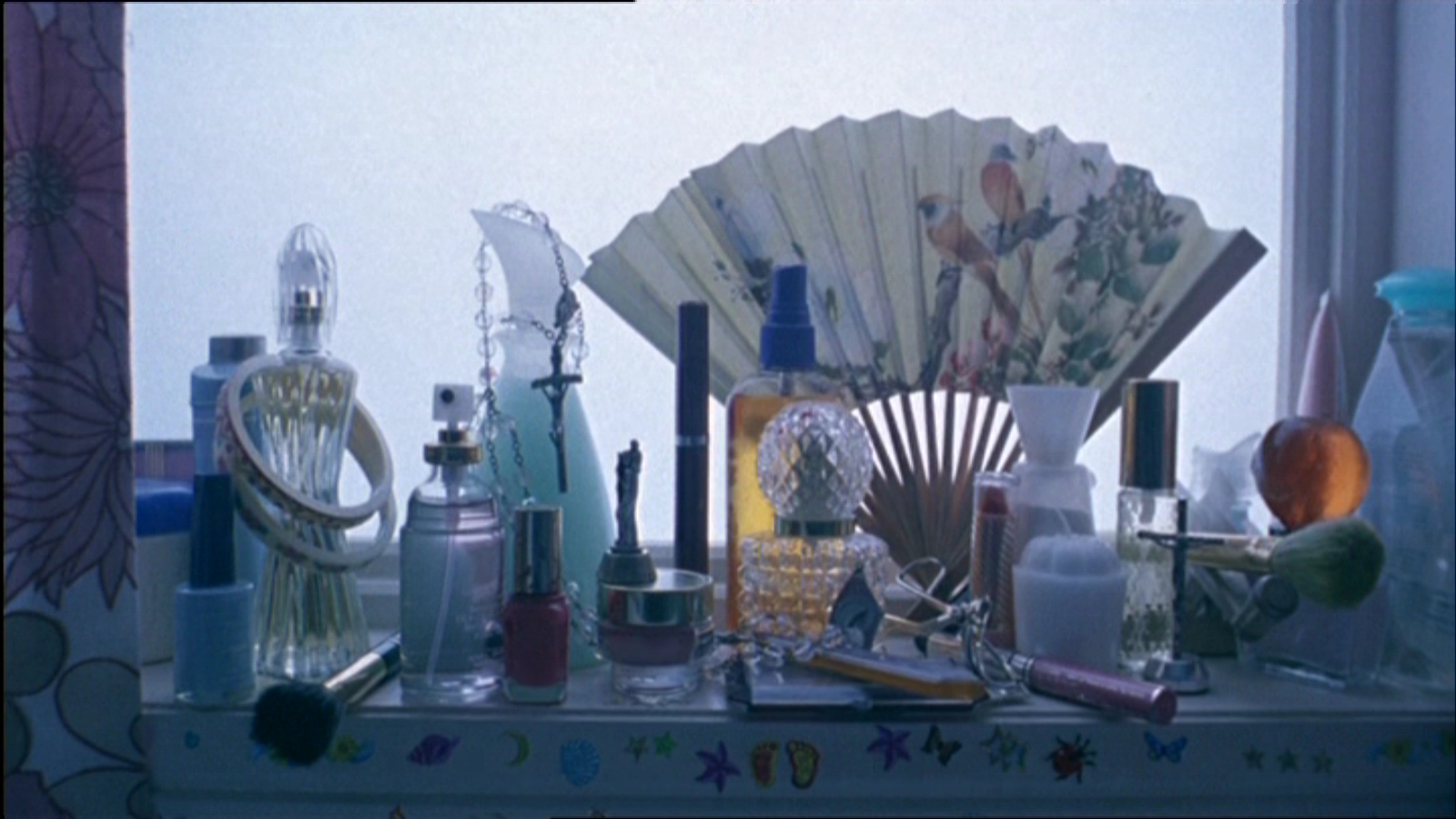
Screenplay based on the novel by Jeffrey Eugenides.
HANS BELLMER: The female body…is like an endless sentence that invites us to rearrange it, so that its real meaning becomes clear through a series of endless anagrams. (1)
UNICA ZÜRN: If woman is to put into form the ‘ule’ [Greek: matter] that she is, she must not cut herself off from it nor leave it to maternity, but succeed in creating with that primary material that she is […] Otherwise, she risks using or reusing what man has already put into forms, especially about her, risks remaking what has already been made, and losing herself in that labyrinth. (2)
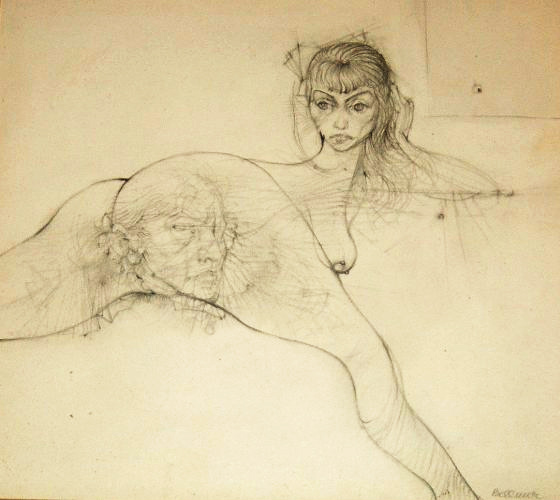
A Portrait of Hans Bellmer
Unica Zurn, 1965
References
(1) Webb P.& Short R., Hans Bellmer (New York: Quartet Books, 1985). Cited in: Miranda Argyle, “Hans Bellmer and The Games of the Doll” (Online Publication, 2004).
(2) Quote cited in: Subversive Intent: Gender, Politics, and the Avant-Gardex by Susan Rubin Suleiman (Cambridge, MA: Harvard University Press, 1990).
my menstrual blood does not “run”.
it’s too viscous.
it builds up behind the bottleneck of my cervix until the weight of
sloughed-off lining gets too heavy to contain,
then it blurts out
in thick, slimy strands of not-baby,
a cosmic disappointment
smelling of fresh death.
sometimes crimson, still almost fecund,
sometimes older and blacker, a nauseating cousin of bile,
blended with albumen, like broken egg white, like frogspawn frustrated.
inside my insides,
god’s scraping a blunt teaspoon round and round,
clearing the walls of my womb for another hit-and-miss next month.
on a heavy day,
pulling out an incontinent tampon,
i sit there on the loo,
toilet paper wrapped round my fingers,
trying to abbreviate the sentence of clots
my lips are drooling into the toilet bowl water.
it’s not a lake, it’s a suspension,
a hanging paragraph of placental full-stops that goes on and on,
inexorable
and i wipe and shove in another wad of cotton to staunch the ooze for
another few hours of outer peace.
one day, sometime in my forties or fifties
i’ll be paroled,
retired from service.
god will give up on my body
and that will be the end of that.
it’s irrelevant what anyone else wants.
my cunt is me, but it’s also beyond me,
ordained for a purpose beyond my control,
just like your cock is you, but it’s also beyond you,
ordained for a purpose beyond your control.
mostly we are blasphemous.
the obsession with looking into cunts, like the obsession with hard cocks,
is an ontological obsession with discovering and controlling our cosmic origins,
an expression of our raging, impossible desire for omnipotence.
and indeed pornographic images ARE redundant in that they hold no
physical power to alter the workings of sex
those closeups of fucking are nothing more than flat reproductions of
ten centimetres of Life’s copy machine –
mostly they are over-man-ipulated and bear little resemblance to real
bodies interacting.
porn is the simulacral fantasy of ruling the universe.
Note
I wrote this in 2009 as a comment on this piece:


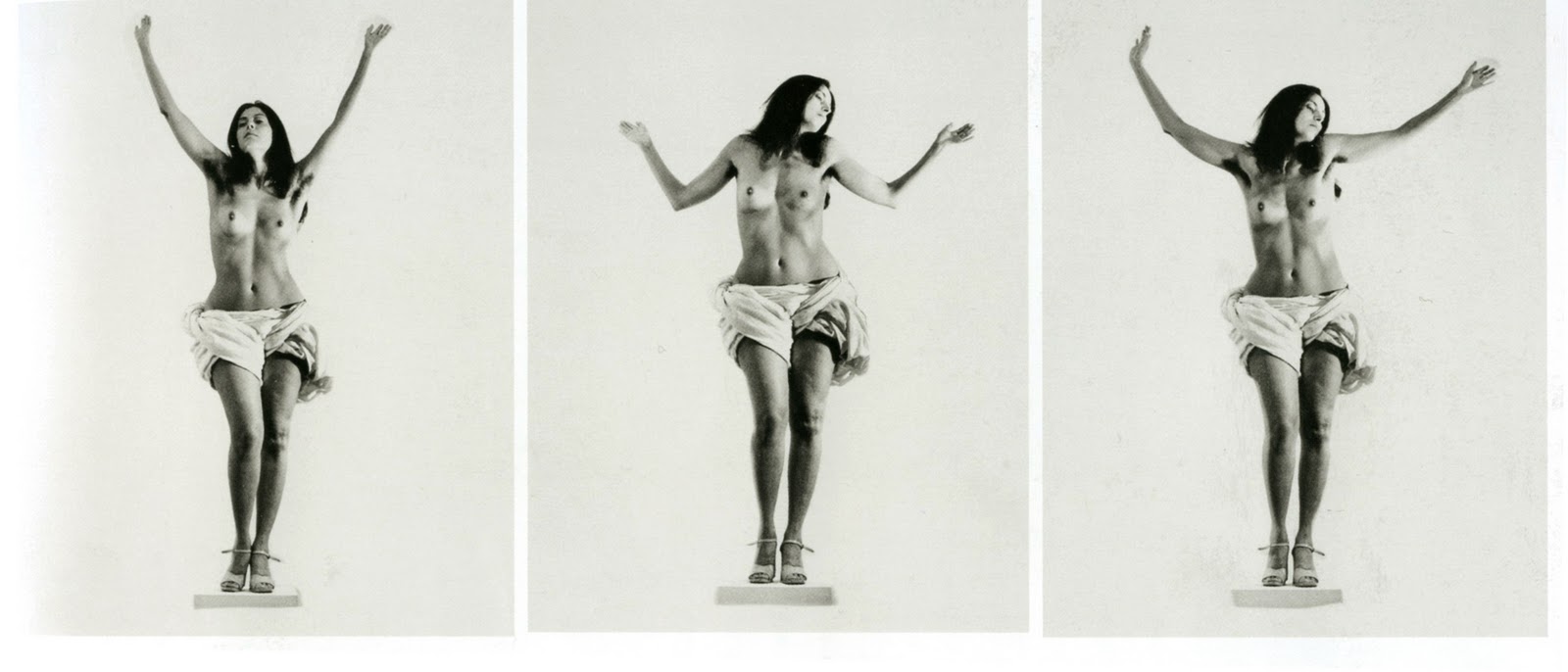 The politics of inclusion that shaped feminist discourse in the 1960s and 1970s spawned a legacy of body-based performance art, much of which was associated with women artists who used their own face as a subject of continual exploration. The self- imaging of women artists such as the provocative American artist Hannah Wilke was frequently attacked and dismissed by art critics as being indulgent exercises in narcissism that only served to reinforce the objectification of the female body. The charge of narcissism leveled on Wilke and her work may have been warranted, however, this should not be considered as a pejorative. Rather, the narcissism of Wilke can be viewed as a shrewd feminist tactic of self-objectification aimed at reclaiming the eroticized female body from the exclusive domain of male sexual desire. The ‘self-love’ of narcissism is a necessary component to this reclaiming of the body and the assertion of a female erotic will as being distinct from that of the male artist. Wilke wielded her narcissistic self-love as a powerful tool of critique, defiantly placing her own image into the hallowed halls of the male-dominated art institution.

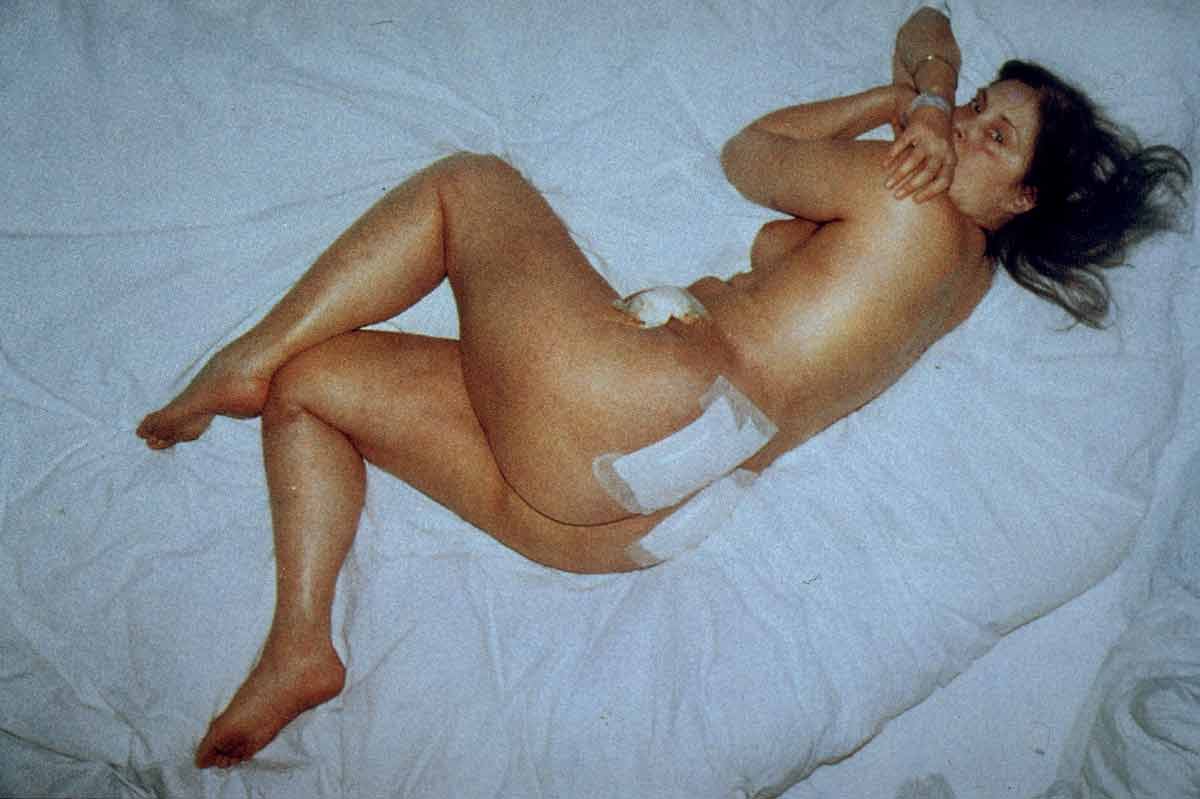
The term “narcissism” derives from the ancient Greek myth of Narcissus, a beautiful but arrogant youth who cruelly spurned the love of his admirers. For his cruelty, he was cursed by the goddess Nemesis and fell in love with his own reflection in a pool of water. The doomed Narcissus pined away for his unattainable lover – the image of his own self – and literally died as a result of his amorous longing.
Sigmund Freud bestowed the name of this mythic Greek youth upon his psychoanalytic theory of narcissism, a theory that describes normal personality development. According to Freud, the self-love of narcissism is a normal complement to the development of a healthy ego. Whereas a certain amount of narcissism is desirable, an excess of self-love is considered dysfunctional and indicative of pathology. This latter definition of narcissism, the one of pathological self-absorption, has cast our current understanding of narcissism in a negative light and reinforced the use of the term as a pejorative.
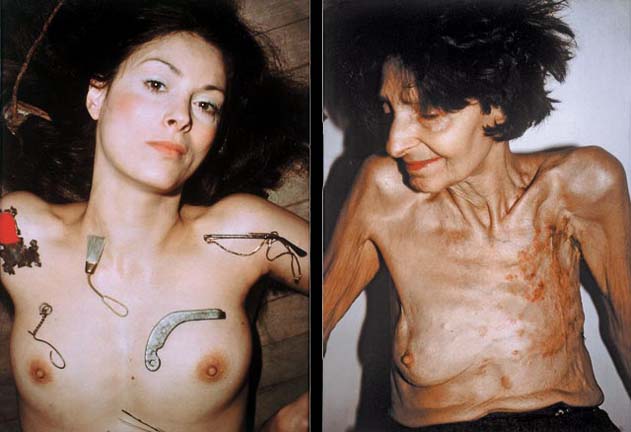
The psychoanalytic theories of Freud suggest that negative or pathological narcissism is a specifically female perversion. Art critic Amelia Jones writes that “[d]rawing loosely on Freud’s definitions – which connect narcissism to both a stage of development and to a form of homosexual neurosis – narcissism has come in everyday parlance to mean simply a kind of “self-love” epitomized through woman’s obsession with her own appearance.” Hence, the charges of narcissism leveled on Hannah Wilke were attempts by the critics to summarily dismiss her work as mere manifestations of a woman’s obsessive self-love and infer, according to Jones, that Wilke’s art was not “successfully feminist.”
Continue reading here
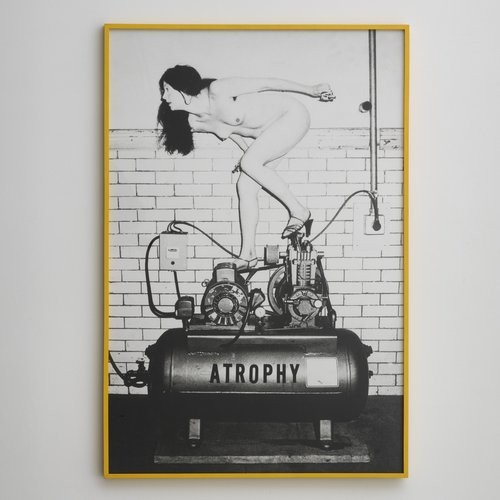

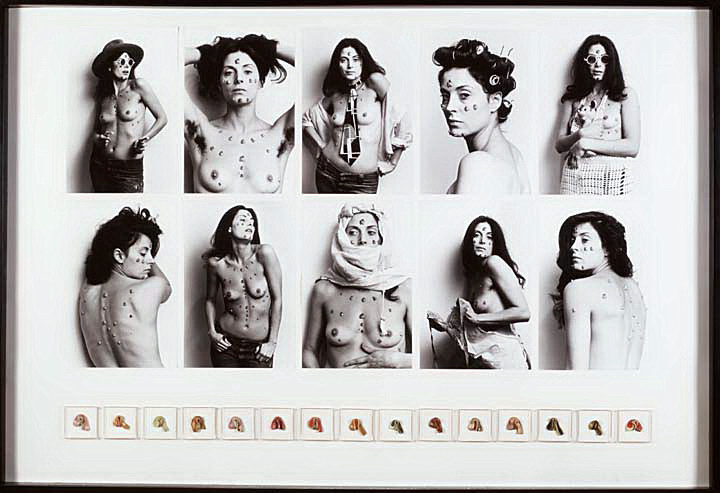
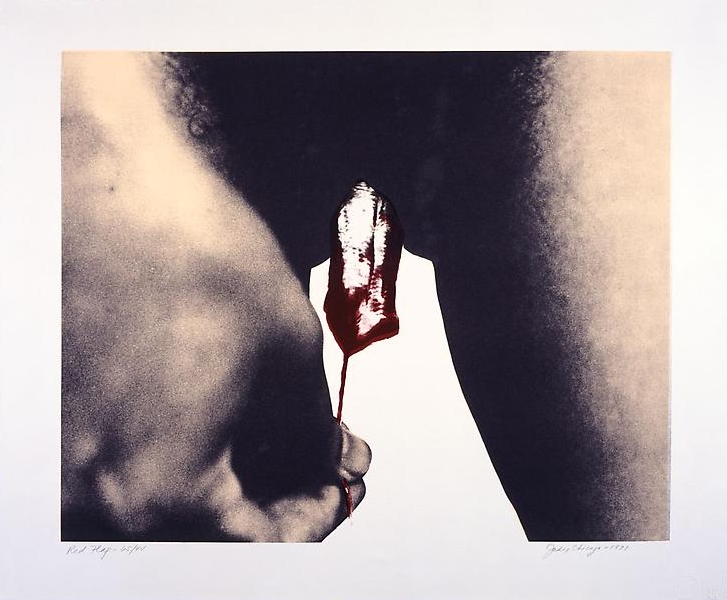
I bleed
I bleed and I wonder
“Will this be the last time?”
I bleed, therefore I am
“What will it be like?
This cessation of menses?”
The unequivocal end of child-bearing.
And my womb, though childless,
Will it feel the end of possibility?
Perhaps.
And then the unforeseen strength,
Promised by gender and age, will come.
The sureness, the wisdom,
The spirit to sing my songs.
I know this as all women before me have known.
We know this as we smile at the moon
“A thinking woman sleeps with monsters
that beak which grips her, she becomes.”
More HERE.
Pacifiers May Have Emotional Consequences for Boys
 Pacifiers may stunt the emotional development of baby boys by robbing them of the opportunity to try on facial expressions during infancy.
Three experiments by a team of researchers led by psychologists from the University of Wisconsin-Madison tie heavy pacifier use as a young child to poor results on various measures of emotional maturity.
The study, published September 18 by the journal Basic and Applied Social Psychology, is the first to associate pacifiers with psychological consequences. The World Health Organization and American Academy of Pediatrics already call for limiting pacifier use to promote breast-feeding and because of connections to ear infections or dental abnormalities.
Humans of all ages often mimic — unwittingly or otherwise — the expressions and body language of the people around them.
“By reflecting what another person is doing, you create some part of the feeling yourself,” says Paula Niedenthal, UW-Madison psychology professor and lead author of the study. “That’s one of the ways we understand what someone is feeling — especially if they seem angry, but they’re saying they’re not; or they’re smiling, but the context isn’t right for happiness.”
Mimicry can be an important learning tool for babies.
“We can talk to infants, but at least initially they aren’t going to understand what the words mean,” Niedenthal says. “So the way we communicate with infants at first is by using the tone of our voice and our facial expressions.”
With a pacifier in their mouth, a baby is less able to mirror those expressions and the emotions they represent.
The effect is similar to that seen in studies of patients receiving injections of Botox to paralyze facial muscles and reduce wrinkles. Botox users experience a narrower range of emotions and often have trouble identifying the emotions behind expressions on other faces.
“That work got us thinking about critical periods of emotional development, like infancy,” says Niedenthal, whose work is supported by the French Agence Nationale de la Recherche. “What if you always had something in your mouth that prevented you from mimicking and resonating with the facial expression of somebody?”
The researchers found six- and seven-year-old boys who spent more time with pacifiers in their mouths as young children were less likely to mimic the emotional expressions of faces peering out from a video.
College-aged men who reported (by their own recollections or their parents’) more pacifier use as kids scored lower than their peers on common tests of perspective-taking, a component of empathy.
A group of college students took a standard test of emotional intelligence measuring the way they make decisions based on assessing the moods of other people. Among the men in the group, heavier pacifier use went hand-in-hand with lower scores.
“What’s impressive about this is the incredible consistency across those three studies in the pattern of data,” Niedenthal says. “There’s no effect of pacifier use on these outcomes for girls, and there’s a detriment for boys with length of pacifier use even outside of any anxiety or attachment issues that may affect emotional development.”
Girls develop earlier in many ways, according to Niedenthal, and it is possible that they make sufficient progress in emotional development before or despite pacifier use. It may be that boys are simply more vulnerable than girls, and disrupting their use of facial mimicry is just more detrimental for them.
“It could be that parents are inadvertently compensating for girls using the pacifier, because they want their girls to be emotionally sophisticated. Because that’s a girly thing,” Niedenthal says. “Since girls are not expected to be unemotional, they’re stimulated in other ways. But because boys are desired to be unemotional, when you plug them up with a pacifier, you don’t do anything to compensate and help them learn about emotions.”
Suggesting such a simple and common act has lasting and serious consequences is far from popular.
“Parents hate to have this discussion,” Niedenthal says. “They take the results very personally. Now, these are suggestive results, and they should be taken seriously. But more work needs to be done.”
Sussing out just why girls seem to be immune (or how they may compensate) is an important next step, as is an investigation of what Niedenthal calls “dose response.”
“Probably not all pacifier use is bad at all times, so how much is bad and when?” she asks. “We already know from this work that nighttime pacifier use doesn’t make a difference, presumably because that isn’t a time when babies are observing and mimicking our facial expressions anyway. It’s not learning time.”
But even with more research planned to further explain the new results, Niedenthal is comfortable telling parents to consider occasionally pocketing the pacifier.
“I’d just be aware of inhibiting any of the body’s emotional representational systems,” Niedenthal says. “Since a baby is not yet verbal — and so much is regulated by facial expression — at least you want parents to be aware of that using something like a pacifier limits their baby’s ability to understand and explore emotions. And boys appear to suffer from that limitation.”
University of Wisconsin-Madison. “Pacifiers may have emotional consequences for boys.“ScienceDaily, 18 Sep. 2012. Web. 20 Sep. 2012.
Without subtitles:
Translated lyrics (probably a bad translation):
My love is increasing and transcends common sense
The love in rose broke out like a mutation
Pure as to be able to call it violence
‘Je t’aime’ with great force that carved into Showa history
Kiss me like thumping, as blood clots on my lips
Hold me, as my ribs are breaking
I love you so much
I love you so much
I love you so much
Say you love me or I’ll kill you!
‘Eros’ breaks the daily life and is crystallizing
Repeating the affairs instinctively in the Avici hell
The intuitive cognition with anti-nihilism is a trigger for latent infant violence
Kiss me like thumping, as blood clots on my lips
Hold me, as my ribs are breaking
I love you so much
I love you so much
I love you so much
Say you love me or I’ll kill you!
With subtitles (they’re kinda distracting):
From the first volume of the infamous “Female Ninjas Magic Chronicles” series (1991). Oyui shows a band of Iga ninja what’s up her wizard sleeve.
Some self-portraits by gender bender Claude Cahun
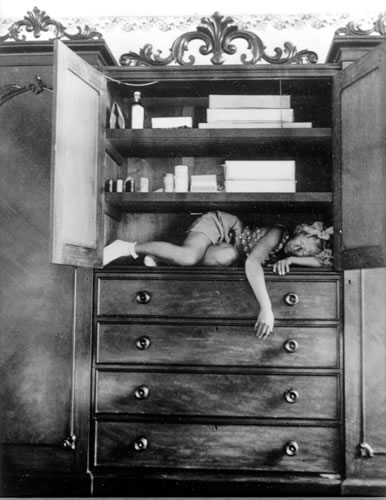
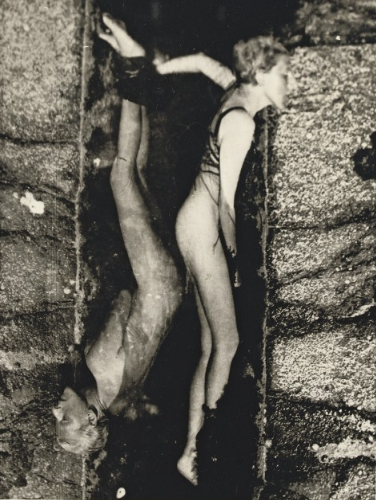
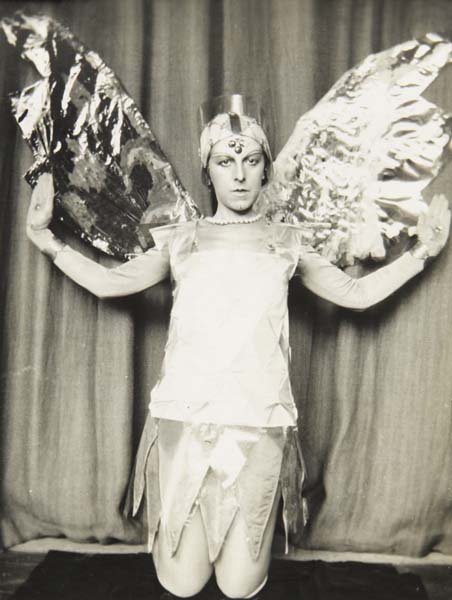
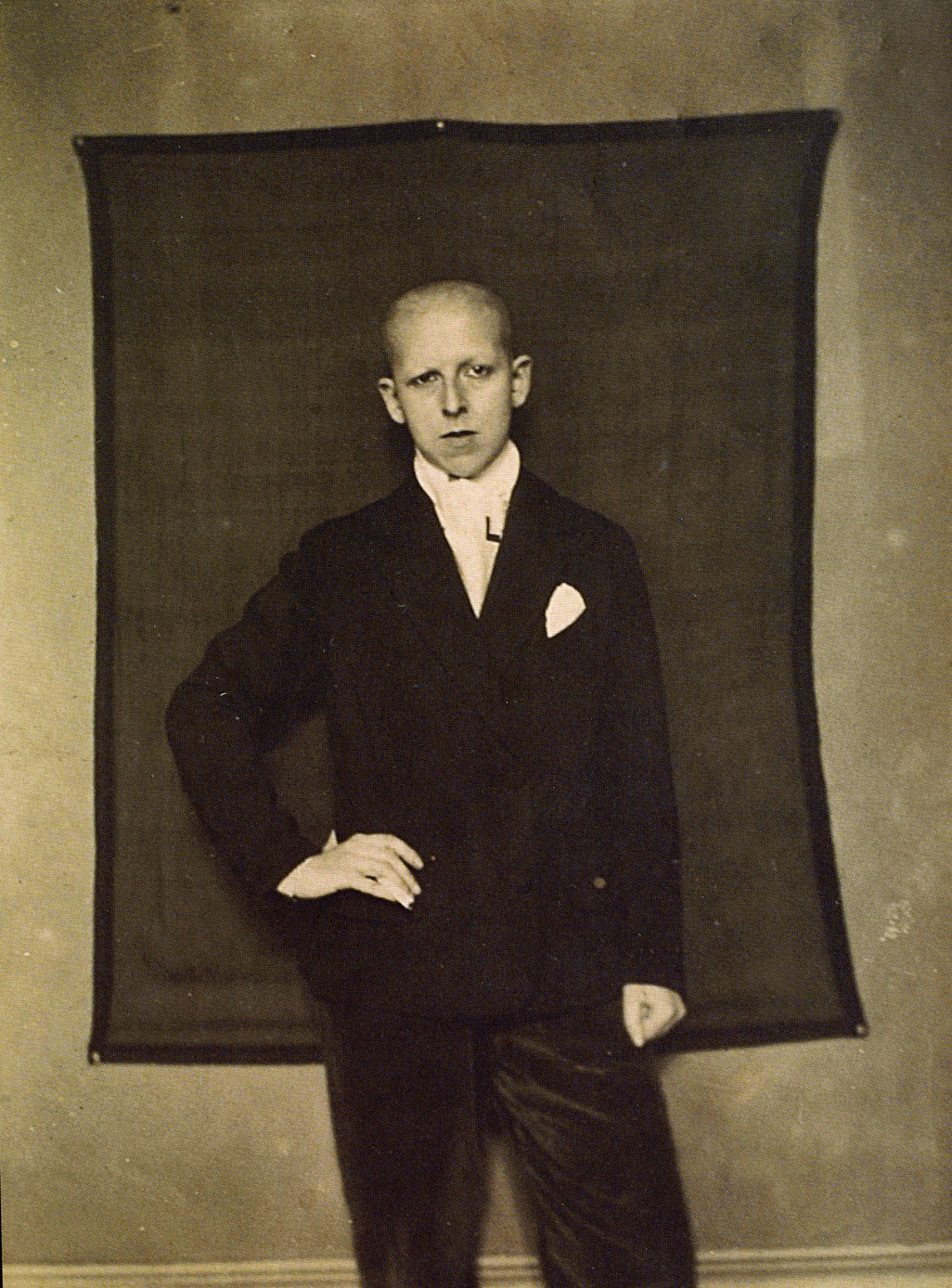
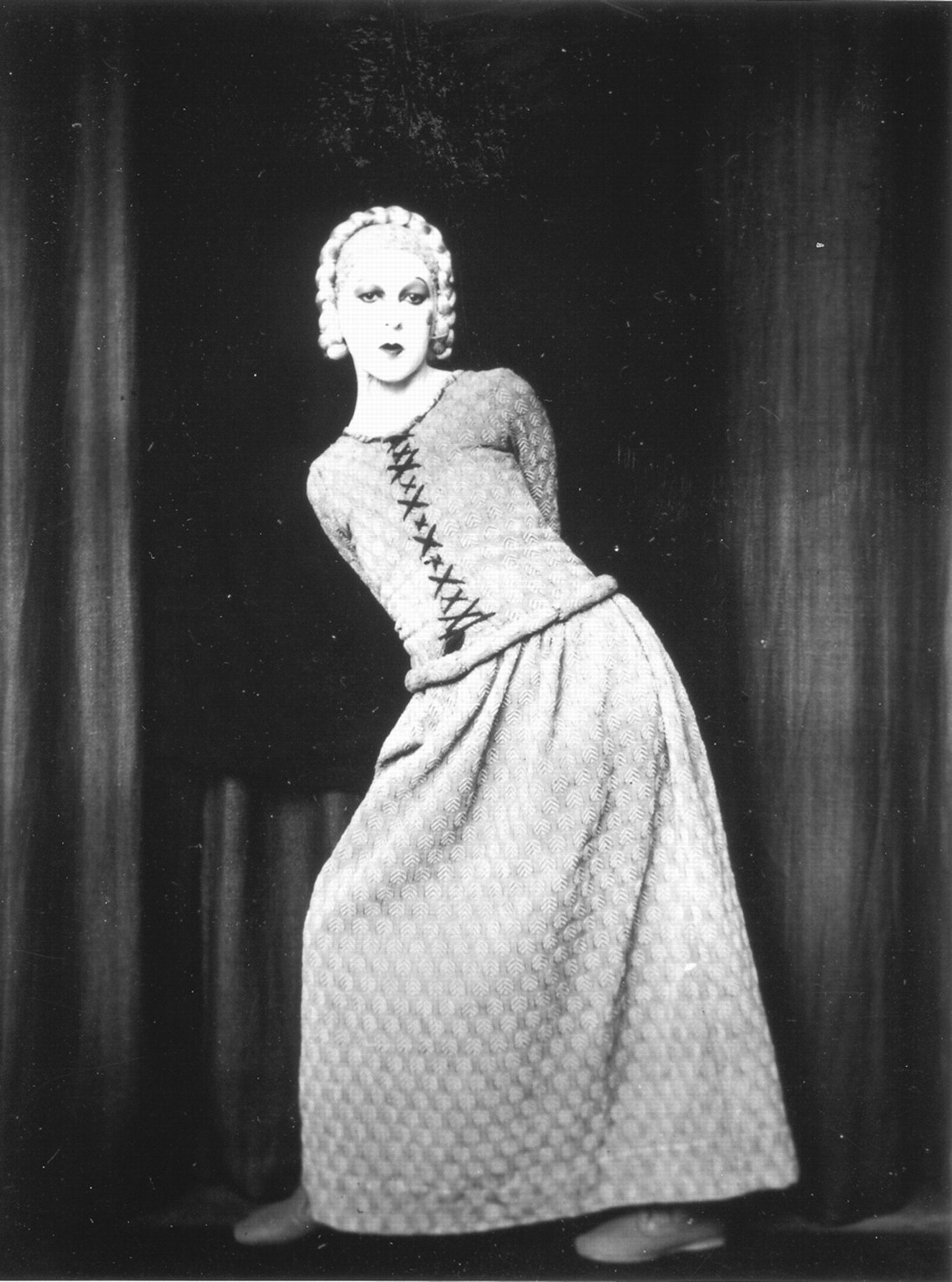 Early self portraits as a young girl here
An overview worth viewing here
“Peter” from Daughter (Elena Tonra). Tales From Shop Session, filmed in Bristol by Tom Swindell, 2010.
My niece made this. In one day. Knowing absolutely nothing about stop-frame animation.
I sleep with one eye open, so I can see them coming.
I can’t get away, but at least I can see them coming and steel myself.
Ideas like bunnies fuck me in my bed.
Sometimes they bounce in uninvited, coquettish, and it’s almost fun. They keep me up till morning. I writhe, giggle hysterically, chase them pillow to post. Fluff tickles, a humid sneeze, and I’m knocked up, swelling anaphylactically. On colder nights I’m gang-raped, tied down and stabbed, bloating with high-pressure jets of rabid spores.
However it happens, the thoughts germinate in swarms, another and another and another sprouting.
I’m weepy again. Exhausted.
I don’t want the mutants that grow from these unions. I wish there was a contraceptive. A chastity belt. Anything to stop this brood, to render my imagination infertile. The pills are useless.
I can feel my chemistry changing inexorably as the cells divide. Thalidomide embryos kick with vestigial limbs, opposable pink stubs. Leprous digits dropping off and repropagating like mitotic cacti. Opaque eyes, squamous ear buds, mouths filmed over with milky membrane. Foreheads bulging with gestating thoughts trapped in undifferentiated tissue, crying out restlessly in underwater bubbles before they can even breathe. They’re so ugly!
Fruitless and multiplying.
I have to abort them all.
Distended oxygen thieves.
They mustn’t breathe.
They mustn’t breed.
Halt the assembly line!
I wish I could give these little niggling creations a chance, the benefit of my doubt. Wish I were able to carry them to term, to quietly, patiently allow them to ripen inside me till they could live by themselves. If only human nature could be allowed to take its organicky course… I cry for their inchoateness as I spew them out. It seems such a pity that I’m allergic to them.
Yes, they’re poisoning me.
Yes, I make myself sick.
Yellow serum oozes the truth of what I’m doing. I’m bleeding inside, putrescing slowly.
Maybe I’ve succeeded this time in gouging free? I wonder every time if what I’ve done will make me barren.
But no, the root won’t be cauterised. I still malfunction just fine afterwards. Each time I pick at the raw scab over the umbilical entrance, each time I lance the pus, another swelling surfaces elsewhere, ballooning mercilessly with the filth that I’m never able to excise completely, swimming with stillborn nonsense.
I’m leaking rotten discharge out of every opening. I don’t even try to hide the bulimic blurts any more. Everyone knows. I can’t stay home ALL the time. I’ve become inured to their “Shut up!” “Shut up!”… I like to believe they’d be more sympathetic if only they understood the advanced state of septicaemia I’m living with. Then again, no one likes someone else’s bloody vomit on their shoes I s’pose… They recoil, grimaces masked with grins.
I smile beatifically.
Plop!
Another black clot of afterthought.
Malformed.
Malignant.
It smells disgusting.
And oh, the cramp!
The nausea rises, throbbing.
Heave. Swallow. Metallic post-nasal drip.
Rises again…
I can’t down another millilitre of this bloody mucus, eat one more word.
BLAAAAAAAAAAAAAAAAAHAHAHAHA
Sorry.
I’ll go home now.
Lock the door.
Lie down. Palms up.
Oh it’s quiet.
Teeth chattering.
SHUT UP!
Baby talk.
Stupidness.
Stupor.
Smooth and cool… So serene. So sterile for a few moments.
But the sweet stench is creeping back. I turn on my side, hug my legs up to my chest. And my cheek is wet with the dark patch spreading on my sheets. Squirming with infection, with congealing dread. I scrub and scrub, but the stain is under my nails.
So? I’ll paint them vamp red then.
I click on the hundred-watt bulb, swinging futile against the darkness, awaiting the cuddly incubi’s return. I can hear them breathing behind the curtains.
First published at http://www.africans.co.za, april 22, 2004
 fleurmach
