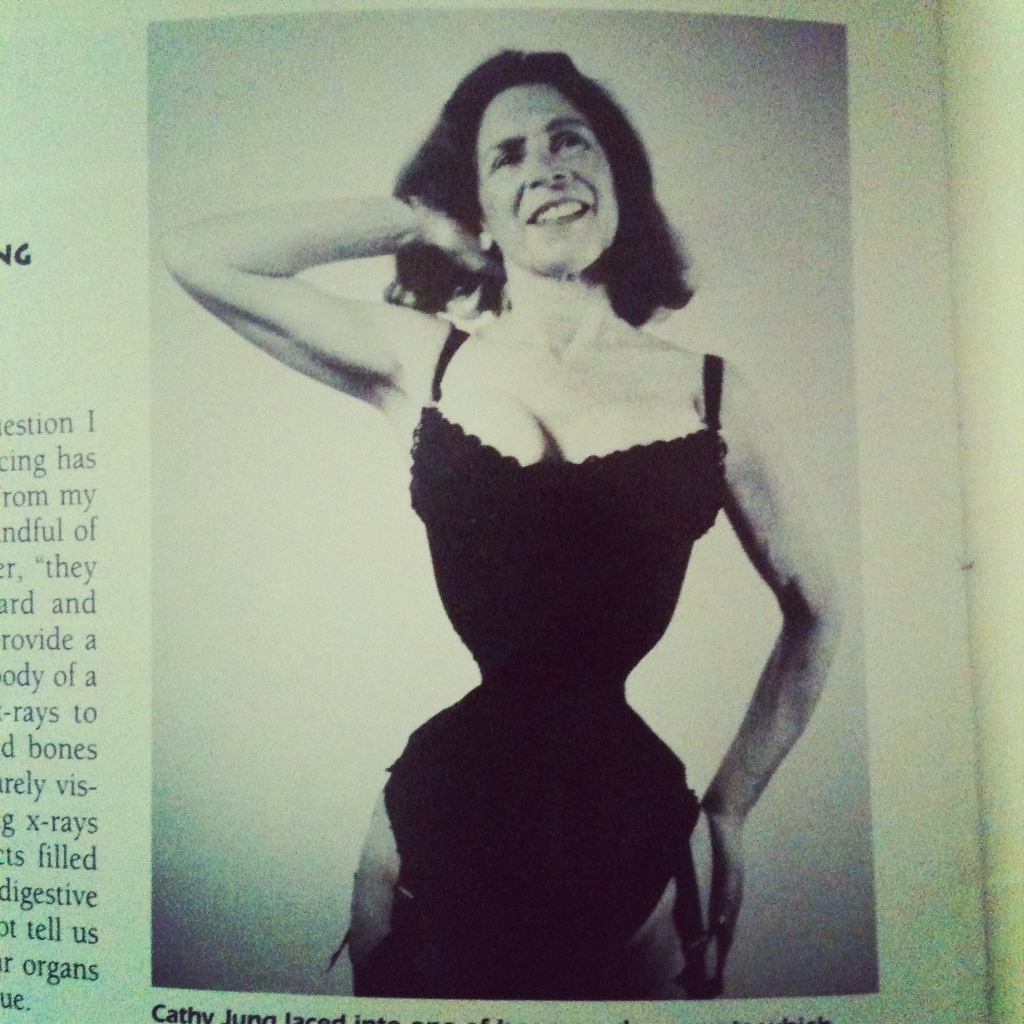
silent vigil this wednesday in cape town

Via Malika Ndlovu:

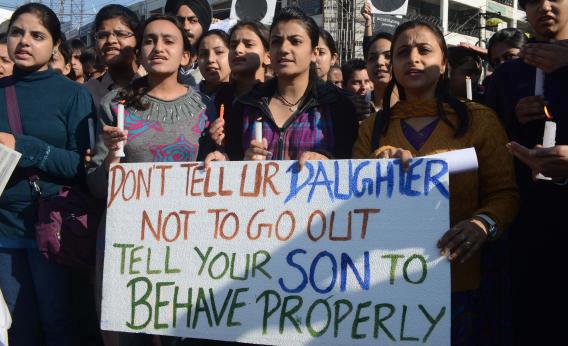
Stand Up! Be still. Join the Tower of Silence in reflection and protest against the silencing, a pillar of honouring and mourning. Wear white  (a symbol of spirit, light, cleansing, unity beyond gender, language, political or religious agenda) and join this 1 hour vigil against the violence epitomized by the death and brutalisation of Anene Booysen… and too many of our daughters and sisters like her. This Wednesday, 13th February 2013, on the steps of St George’s Cathedral, from 12 pm to 1 pm.

Bring a photograph on a placard of anyone you think we need to remember in this way too. We will not be sloganeering or shouting retaliations against our lost sons, brothers who have perpetuated this crime against their own and her humanity. Our collective presence and solidarity speaks volumes and calls for multiple responses to this complex situation, affecting an entire nation. We make this physical visual statement on the eve of onebillionrising.org global campaign and the president’s “State of the Nation” address. For us, these faces, these stories, these discarded bodies and all the reasons why this continues to happen in the world and all over South Africa – THIS is OUR ‘State of our Nation’ call to address!

taking back our city #takingbackourcity #dicktatorfreejozi #genderfreesa

Participate in the creation of the city you want to live in. #takingbackourcity #dicktatorfreejozi #genderfreesa
Image
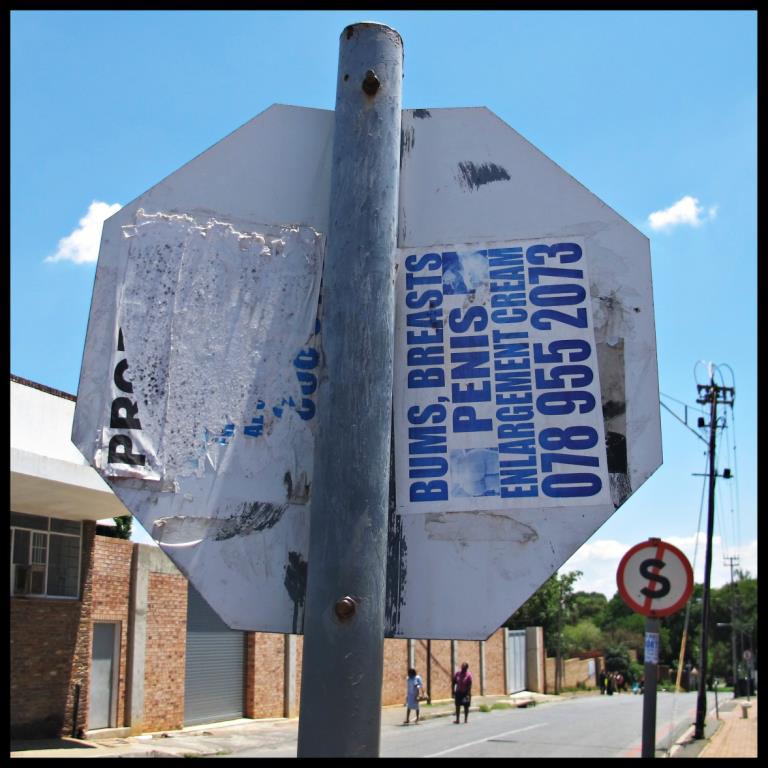
I don’t just live my life, I create my life. And after almost a year of creating images reflecting my vision of the city and its inhabitants, I no longer just want to reflect the city, but create it. Just as I need to be an activist in my own life and my own identity to fully be alive, as an artist, I need to be an artivist, actively participating in the creation of the city I want to live in. Joburg is not just a city, it is my city; it is my home. And as an artivist it is not just a place I want to live in, but a place I actively want to participate in creating.The idea for #takingbackourcity was born out of my return to Joburg from my first real visit to Cape Town. My return to Jozi from CT shocked me with the everyday messages and symbols we Joburgers take for granted; the messages and symbols that shape the collective unconscious of our city and our people. The ‘Penis Enlargement’ posters that adorn every robot, electrical box and street pole were the most glaring example. I asked myself: what does this say about Joburg? what does this say about Joburgers?

We are a city obsessed with the power of the phallus; a presidency obsessed with the symbol and virility and representation of the phallus; a people whose penis size reflects its masculinity, whose masculinity reflects its identity. The effect of this overtly embodied and gendered mantra on our collective unconscious plays itself out in our lives daily.

More so than with other cultures, Joburg constantly genders us. It equates our identity with our gender, places our gendered attributes – our penises, our breasts – under the microscope, and finds us wanting. Those who are found wanting and those who pass the grade play out the script of the power struggle that has been written for us. And as with the Battle of the Sexes in decades before us, the Battle of the Genders brings with it a long, long casualty list. Being part of the female-bodied and -gendered community, as well as the LGBTIQ community, from where so many of the casualties come, I cannot be part of an existence or an art that hides behind the privilege of aesthetic.

Those of you who follow my work know that I believe that gender is nothing more than a social construction and that I perform my gender through my identity and my art daily. But playing with gender and bearing witness to the daily reality of my and others’ lives as queers in my writing and images is not enough. How do I as a queer artist respond to the overt gendering of our city; the grossly embodied sexing of the spirit of Joburg?

I need to take responsibility for the city I want to live in and actively participate in creating it. I need to undermine the gendering of the city and its inhabitants with more than just my existence and my documentation of my play with gender and identity, more than just through my collaborations with others who do the same.

‘Taking Back our City’ is thus this journey of active and creative participation in my city. I hope that you will follow my journey and join me in taking our city back.

as long as we exist, we will be raped – sisonke msimang

(First published HERE.)

anene

I read an article on Thursday morning. It said: “The victim had been sliced open from her stomach to her genitals and dumped.” The radio is full of this story. Full of politicians and posers, trying to outdo one another. Like funeral criers. But it will end, the show. And there will be marches and petitions. There will be statements and rage. But it will happen again. Until we are inured to shock. It will happen again. Until our bones are worn into dust and our teeth crushed into the sand. It will happen and happen. Until we invent a way to stop being women. Until we find a way for our blood to no longer bleed between our legs. As long as we exist, we will be raped.

So, no, I will not march. I don’t believe my marching will stop this war. I will cry, as I have been already this morning. And maybe, I will begin to feel my way out of the lurching, heavy knowing after I have spoken with others. With the mothers and the sisters, the brothers and fathers – those like me, who have girls.

There is only this: a dead, hollow knowing that has always been knocking at my heart. From the minute she was born, it fell in step with the rhythm of my breath: to raise a girl in this world, to raise her strong and healthy and proud, to ensure that she survives and then to insist ferociously that she laugh and dance and think and dream, is to choose the most heartbreaking and joyous path. It is to tempt fate every single day, it is to fear that her breath will be strangled by a stranger. It is to live with the horrible possibility that this could be your child.

Anene was raped and mutilated because she was a girl. It was her vagina and her breasts that they wanted to destroy. It was her walk and her talk. It was her girl-ness. These parts of her were broken and sliced and pulled apart, not by monsters, but by friends. Each of her 10 fingers were broken.

Ten fingers and 10 toes. I kiss my baby girl goodnight. Ten fingers and 10 toes, I counted them when she was born just to be sure that she was real. I found love in the spaces between each. I cried at the weight of her. Tiny and strong.

Tonight, I will kiss her neck in the bath and she will wiggle away from me. ‘Stop it Mama’, and I will pinch her wet bum and she will sparkle. Tonight, she will be safe. But they will not stop killing girls.

And I will die defending her. Let them wear my bones into dust. Let them crush my teeth into the sand. Only this will stop the war. That we be prepared to die – our bodies barricades against the fingers that should not be there. The knives that slit. The guns that lodge. Let them lodge in me. In us.

Anene’s mother said that if she hadn’t seen her shoes, she wouldn’t have known that it was her own child. Her intestines? Her intestines.

God help us. And if God will not, Let the women be the barricades. The men, surely will follow.

Sisonke Msimang writes and comments on gender, race and politics. She works with Sonke Gender Justice Network, and is a Yale World Fellow.

lipstiffie

Facebook status update, this evening:

Storyboarding is strangely interesting when it gives a view into how different nation-states construct and respond to sales stereotypes. I’m doing a lipstick ad for actual French people from Paris right now, and it is noticeably stripped of that subtext one inevitably finds in American or South African ads that says, “Don’t worry, she’s not dangerous and what she really wants is to be your submissive little wifey.” This ad would freeze the testicles off a Sarf-Effriken jock, even though all it’s about is glamour.

It’s odd, because it is all about women achieving an aesthetic perfection so intense they are geisha-like objects of contemplation, yet the glamour is also tangibly an end in itself which doesn’t necessarily include men. It’s not like we don’t already know this, but it brought to my attention that South African culture which considers itself sophisticated is not only colonial but downright rural. Sexuality is confined to breeding, like farmyard-style.

Comments:

Lynne: Sounds like fun for a change! X are you gonna buy the lipstick? X

Lizza: Being briefed for a storyboard doesn’t necessarily go as far as anyone telling me what the product is! This time I needed to be told what it looked like, but I didn’t get the brand. Probably a load of bollocks. For all I know this could be the French version of Sarie magazine – I really wouldn’t be able to spot the difference.

audre lorde on the erotic

The erotic is a resource within each of us that lies in a deeply female and spiritual plane, firmly rooted in the power of our unexpressed or unrecognised feeling…

Of course, women so empowered are dangerous. So we are taught to separate the erotic from most vital areas of our lives other than sex…

The principal horror of any system which defines the good in terms of profit rather than in terms of human need, or which defines human need to exclusion of the psychic and emotional components of that need — the principal horror of such a system is that it robs our work of its erotic value, its erotic power and life appeal and fulfilment. Such a system reduces work to a travesty of necessities, a duty by which we earn bread or oblivion for ourselves and those we love. But this is tantamount to blinding a painter and then telling her to improve her work, and to enjoy the act of painting. It is not only next to impossible, it is also profoundly cruel.

. . . [O]nce we begin to feel deeply all the aspects of our lives, we begin to demand from ourselves and from our life-pursuits that they feel in accordance with that joy which we know ourselves to be capable of. Our erotic knowledge empowers us, becomes a lens through which we scrutinize all aspects of our existence, forcing us to evaluate those aspects honestly in terms of their relative meaning within our lives…

During World War II, we bought sealed plastic packets of white, uncolored margarine, with a tiny, intense pellet of yellow coloring perched like a topaz just inside the clear skin of the bag. We would leave the margarine out for a while to soften, and then we would pinch the little pellet to break it inside the bag, releasing the rich yellowness into the soft pale mass of margarine. Then, taking it carefully between our fingers, we would knead it gently back and forth, over and over, until the color had spread throughout the whole pound bag of margarine, thoroughly coloring it.

I find the erotic such a kernel within myself. When released from its intense and constrained pellet, it flows through and colors my life with a kind of energy that heightens and sensitizes and strengthens all my experience.

Lorde, Audre. “Uses of the Erotic: The Erotic as Power.” Sister Outsider: Essays and Speeches. Freedom, CA: Crossing Press, 1984. 53-59.

danni diana on bogus muthi (and ad agencies)

A year or so ago, some colleagues of mine did a campaign for a film called Night Drive, which was a slashy, schlocky horror that centred on the body-parts-for-muthi trade. The campaign handed out a couple hundred pamphlets, in the style of those ridiculous pamphlets that offer penis enlargement, bad luck cure, womb cleaning etc that we see littered around town every day. The pamphlets offered money for body parts, and linked to a website that detailed the “doctor’s” cash-for-organs trade in more detail. The people who received the pamphlets went ape-shit, calls were made to the national media, everyone was pranked and much outrage ensued. The campaign was slammed by the Department of Health for trivialising a “Serious Problem”, and was pulled, effective immediately, complete with apology from the ad agency in question, and a promise to conduct an “internal disciplinary procedure”.

0141

Pamphlet collected in Durban by Rosemary Lombard, 2009

My question is, what exactly is being done about this serious problem? Why do people get up in arms about a cash-for-body-parts hoax, but think its OK (and hilarious) for there to be pamphlets offering safe abortions, womb cleaning, AIDS cures and a whole manner of sexual health treatment that is not only bogus, but seriously harmful to those who pursue it. What effort is being made by the Department of Health to shut down these “doctors”? Most disturbing is the discriminatory gender ideas at the root of these so called treatments. Muthi to “make lover have sex with you”, and treatment for women for, among other things “cleaner vaginas, more willingness to have sex.”

These charlatan muthi men make a mockery of traditional healing, and the pamphlets and posters not only mislead the poor, vulnerable and uneducated, but reinforce negative stereotypes about traditional healing and the communities that take advantage of them. Is any work being done to address this “Serious Problem”, or do people only care so long as the content of said media panders to savage stereotypes of murderous muthi men lurking in the shadows to chop your heart out?

Pamphlet collected in Durban by Rosemary Lombard, 2009

Pamphlet collected in Durban by Rosemary Lombard, 2009

the gulabi gang

APTOPIX India Pink Women

The Gulabi Gang (from Hindi “gulabi” = “pink” – “pink gang”) is a group of women vigilantes and activists originally from Banda in Bundelkhand district, Uttar Pradesh, India, but reported to be active across North India as of 2010. It is named after the pink saris worn by its members.

The gang was founded in 2006 by Sampat Pal Devi, a mother of five and former government health worker (also a former child bride), as a response to widespread domestic abuse and other violence against women. Gulabis visit abusive husbands and beat them up with laathis (bamboo sticks) unless they stop abusing their wives. In 2008, they stormed an electricity office in Banda district and forced officials to turn back the power they had cut in order to extract bribes. They have also stopped child marriages and protested dowry and female illiteracy.

gulabi

gulabi 4More information HERE and HERE, and more pictures by Arindam Mukherjee HERE.

for the birds

i really don’t get it,
never have.
hard rock/metal in general, i mean.
too much sweaty hair thrashing around,
too many notes overcrowding each bar,
too many gratuitous tempo changes,
the voice (always male) too yowly or growly,
the lyrics, ridiculous.
i can dig the more spacey prog stuff from the ’70s, king crimson for example, or the o.t.t. weirdness of frank zappa, but the testosserterrain of deep purple/motorhead/budgie etc etc… i just don’t get it.

it reminds me of all the wankers i tried to sing or play guitar with at school.
i could never find anyone who wanted to do anything interesting.
all they did was spank away over and over for hours and hours at the same led zeppelin or sabbath or metallica riffs,
show off their paradiddle-diddle-diddle drumming,
their kakky renditions of les claypool slap bass,
drink black label quarts, smoke dagga, crow about forcing themselves on girls.

iron_maiden_bring_your_daughter_to_the_slaughter

here’s a memory from when i was about 15 or 16… i’m at a house party in kloof, drunk and very bored, after one such disappointing “jam”. the drummer, julian (still remember his stinking name), with long fluffy hair and a straggly beard and juicy zits who’s maybe a bit older than the rest of us, starts kissing me and i’m kinda flattered but not feeling anything at all. so i crawl off a bit later when he’s getting another beer to go sleep in someone’s bedroom plastered with creepy iron maiden posters.

he comes to find me and i wake to his entire weight bearing down on me, smothered in salty, smoky hair and he’s forcing his hands into my panties and shoving his filthy callused stompie fingers in my virginity and his penis is grinding into my thigh and i can’t move or breathe. i’m choking. i bite at his furry beer tongue and he swears at me and slaps me, calls me a cocktease, and then he’s gone. mercifully. i need to vomit and wash myself but i daren’t go to the bathroom. i’m scared that he’ll come back. i’m lying there groggy and rigid with the reek of him on me, his plaque in my mouth, with that eddie creature leering down at me from the moonlit posters, with the drone of mosquitoes and the signature riffs of the morning birds over and over for hours and hours – bulbul, white-eye, hadeda, bulbul, white-eye, hadeda, bulbul, hadeda… somewhere a cock is crowing and finally i can get out of there.

coda: my younger sister got seduced by the whole scene and ended up pregnant at 16 by one of these fret-tapping frauds that she’d called her boyfriend for about 2 years. a few months after the baby came, he slunk off with the chick he’d been cheating on her with.

so yeah. i don’t enjoy hard rock/metal’s machismo-drenched doodling.
i find it the aural equivalent of being fucked badly.
there’s not a smidgen of feminine awareness in its puffed-up rooster strut.

september 15, 2008

lucille ball and paula stewart – hey, look me over

Marching orders from Fleurmach! Here’s to 2013 kicking 2012’s sorry ass!

Lucille Ball and Paula Stewart as Wildy and Janey Jackson, live on the Ed Sullivan Show (1961), performing “Hey, Look Me Over” from the Broadway musical, Wildcat. These feisty dames are Thelma and Louise’s crazy aunts.

Hey look me over, lend me an ear,
Fresh out of clover, morgaged up to here,
Don’t pass the plate folks,
Don’t pass the cup,
I figure whenever you’re down and out,
The only way is up…
And I’ll be up like a rose bud,
High on the vine,
Don’t thumb your nose folks,
Take a tip from mine,
I’m a little bit short of elbow room,
But let me get me some,
And look out world, here I come!

garfunkel and oates – 29/31 (2012)

Garfunkel and Oates are an American comedy/musical duo from Los Angeles, California, consisting of actress-songwriters Kate Micucci and Riki Lindhome. The band name is derived from “two famous rock-and-roll second bananas”, Art Garfunkel and John Oates. In this song, Kate and Riki play the same woman, two years apart, at 29 and 31 respectively.

ruth etting – i’m nobody’s baby (1927)

Rising to fame in the twenties and early thirties, Ruth Etting was renowned for her great beauty, her gorgeous voice and her tragic life. She starred on Broadway, made movies in Hollywood, married a mobster, had numerous hit-records, and was known as America’s Sweetheart of Song.

Born in David City, Nebraska on November 23, 1897, Ruth left home at seventeen for Chicago and art school. She got a job designing costumes at a night club called the Marigold Gardens and when the tenor got sick, she was pulled into the show since she was the only one who could sing low enough. That led to dancing in the chorus line and eventually featured solos.

By 1918 she was the featured vocalist at the club and the Gimp entered her life. A Chicago gangster, Moe Snyder married Ruth in 1922 and managed her career for the next two decades. Her numerous radio appearances during these years led to her becoming known as Chicago’s Sweetheart.

In 1926 she was discovered by a record company executive and immediately signed to an exclusive recording deal with Columbia Records, which led to nationwide exposure. Her early recordings were very straightforward in delivery. She later commented that “I sounded like a little girl on those records!” and insisted that her voice was actually much deeper than these recordings would lead one to believe.

In 1927 Ruth hit New York and she was an instant success. Irving Berlin suggested her for the Ziegfeld Follies and she was hired after Ziegfeld checked her ankles, not her voice. She appeared in the Follies of 1927. In 1929 she starred with Eddie Cantor in Whoopee! and in 1930 she made 135 appearances in Simple Simon with Ed Wynn. In 1931 she appeared in the very last Follies, shortly before Ziegfeld’s death.

Her blond hair and blue eyes and stunning voice all led to her being dubbed the Sweetheart of Columbia Records, America’s Radio Sweetheart, and finally America’s Sweetheart of Song. She began to experiment with tempo and phrasing during this period in her career. Her trademark was to change the tempo – alternating between normal tempo, half-time and double-time to create and maintain interest.

Ruth had over sixty hit recordings. Among her best in the Jazz Age are “Button Up Your Overcoat” and “Mean to Me” and, in the depression, “Ten Cents A Dance”. Her versions of “Shine on Harvest Moon”, “Let Me Call You Sweetheart”, “You Made Me Love You” and “Love Me or Leave Me” became her signature songs.

Next she headed to Hollywood and made a string of movie shorts and three full-length features. Her big break came in Roman Scandals with Eddie Cantor and Lucille Ball in a bit part. Then came Gift of Gab and Hips Hips Hooray.

It was in Hollywood that her loveless marriage finally fell apart. In 1937 Ruth fell for her accompanist and, in a rage, the Gimp shot him. The musician survived, Snyder went to jail and Ruth ended up divorcing him and marrying her true love, Meryl Alderman. But the scandal was too much for her career to survive. She made a few attempts at a comeback, but her days as America’s Sweetheart were over.

(Information from ruthetting.com, a site maintained by the granddaughter of one of Ruth Etting’s cousins.)

what i rail against, impotently, and wish i could embrace

The following excerpt from John  Berger’s Booker Prize-winning 1972 novel, G, contains devastating insight into the social/cultural meaning of being a woman in the world, and how utterly inescapable and deeply formative it is of one’s sense of self. Reading this made me nod and shake my head so hard I felt like I had whiplash afterwards.

Although this passage ostensibly deals with late nineteenth-century constructions of love and gendered identity, such tropes persist as fundamental to our conceptions now, albeit less formally and thus less obviously. So much of the pain and loneliness in my life has stemmed from an unconscious/inarticulate sense of exactly what Berger describes here and my horror and refusal of it all, played out in the choices I have made since childhood.

* * * * *
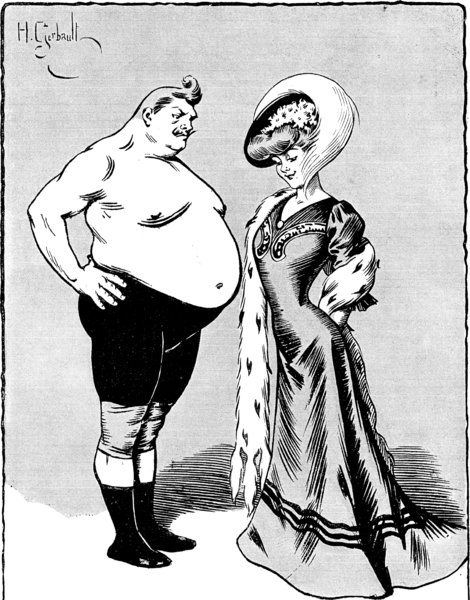
“Une Idée” – Henri Gerbault, 1907

The Situation of Women

… [T]he social presence of a woman was different in kind to that of a man. A man’s presence was dependent upon the promise of power which he embodied. If the promise was large and credible, his presence was striking. if it was small or incredible, he was found to have little presence. there were men, even many men, who were devoid of presence altogether. The promised power may have been moral, physical, temperamental, economic, social, sexual – but its object was always exterior to the man. A man’s presence suggested what he was capable of doing to you or for you.

By contrast, a woman’s presence expressed her own attitude to herself, and defined what could and could not be done to her. No woman lacked presence altogether. Her presence was manifest in her gestures, voice, opinions, expressions, clothes, chosen surroundings, taste – indeed there was nothing she could do which did not contribute to her presence.

To be born woman was to be born within an allotted and confined space, into the keeping of man. A woman’s presence developed as the precipitate of her ingenuity in living under such tutelage within such a limited cell. She furnished her cell, as it were, with her presence; not primarily in order to make it more agreeable to herself, but in the hope of persuading others to enter it.

A woman’s presence was the result of herself being split in two, and of her energy being inturned. A woman was always accompanied – except when quite alone – by her own image of herself. Whilst she was walking across a room or whilst she was weeping at the death of her father, she could not avoid envisaging herself walking or weeping. From earliest childhood she had been taught and persuaded to survey herself continually. And so she came to consider the surveyor and surveyed within her as two constituent yet always distinct elements of her identity as a woman.

A woman had to survey everything she was and everything she did because how she appeared to others, and ultimately how she appeared to men, was of crucial importance for her self-realisation. Her own sense of being in herself was supplanted by a sense of being appreciated as herself by another. Only when she was the content of another’s experience did her own life and experience seem meaningful to her. In order to live she had to install herself in another’s life.

gerbault 462px-Hensunken_i_stum_beundring

Drawing by Henri Gerbault (1863 – 1930)

Men surveyed women before treating them. Consequently how a woman appeared to a man might determine  how she would be treated. To acquire some control over this process, women had to contain it, and so they interiorised it. That part of a woman’s self which was the surveyor treated the part which was the surveyed, so as to demonstrate to others how her whole self should be treated. And this exemplary treatment of herself by herself constituted her presence. Every one of her actions, whatever its direct purpose, was also simultaneously an indication of how she should be treated.

If a woman threw a glass on the floor, this was an example of how she treated her own emotion of anger and so of how she would wish it to be treated by others. If a man had done the same, his action would only have been an expression of his anger. If a woman made good bread, this was an example of how she treated the cook in herself and accordingly of how she as a cook-woman should be treated by others. Only a man could make good bread for its own sake.

This subjunctive world of the woman, this realm of her presence, guaranteed that no action undertaken in it could ever possess full integrity; in each action there was an ambiguity which corresponded to an ambiguity in the self, divided between surveyor and surveyed. The so-called duplicity of woman was the result of the monolithic dominance of man.

A woman’s presence offered an example to others of how she would like to be treated – of how she would wish others to follow her in the way, or along the way, she treated herself. She could never cease offering this example, for it was the function of her presence. When, however, social convention or the logic of events demanded that she behave in a manner which contradicted the example she wished to give, she was said to be coquettish. Social convention insists that she should appear to reject something just said to her by a man. She turns away in apparent anger, but at the same time fingers her necklace and repeatedly lets it drop as tenderly as her own glance upon her breast.

When she is alone in her room and sure of being alone, a woman may look at herself in a mirror and put out her tongue. This makes her laugh and, on other occasions, cry.

It was with a woman’s presence that men fell in love. That part of a man which was submissive was mesmerised by the attention which she bestowed upon herself, and he dreamt of her bestowing the same attention upon himself. He imagined his own body, within her realm, being substituted for hers. This was a theme which occurred constantly in romantic poems about unrequited love. That part of a man which was masterful dreamt of possessing, not her body — this he called lust — but the variable mystery of her presence.

The presence of a woman in love could be very eloquent. the way she glanced or ran or spoke or turned to greet her lover might contain the quintessential quality of poetry. this would be obvious not only to the man she loved, but to any disinterested spectator. Why? Because the surveyor and the surveyed within herself were momentarily unified, and this unusual unity produced in her an absolute single-mindedness. The surveyor no longer surveyed. Her attitude to herself became as abandoned as she hoped her lover’s attitude to her would be. Her example was at last one of abandoning example. Only at such moments might a woman feel whole.

The state of being in love was usually short-lived — except in unhappy cases of unrequited love. Far shorter lived than the nineteenth-century romantic emphasis on the condition would lead us to believe. Sexual passion may have varied little throughout recorded history. But the account one renders to oneself about being in love is always informed and modified by the specific culture and social relations of the time.

„Würden Sie mir böse sein, wenn ich einen Kuss auf diese schöne Schulter drückte?“ „Das werden Sie ja nachher schon sehen“ (Henri Gerbault, 1901)

„Würden Sie mir böse sein, wenn ich einen Kuss auf diese schöne Schulter drückte?“ „Das werden Sie ja nachher schon sehen“ (Henri Gerbault, 1901)

For the nineteenth-century European middle classes the state of being in love was characterised by a sense of excessive uncertainty in an otherwise certain world. It was a state exempt from the promise of Progress. Its characteristic uncertainty was the result of considering the beloved as though he or she were free. Nothing that was an expression of the beloved’s wishes could be taken for granted. No single decision of the beloved could guarantee the next. Each gesture had to be read for its fresh meaning. Every arrangement became questionable until it had taken place. Doubt produced its own form of erotic stimulation: the lover became the object of the beloved’s choice of full liberty. Or so it seemed to the couple in love. In reality, the bestowing of such liberty upon the other, the assumption that the other was so free, was part of the general process of idealising and making the beloved seem unique.

Each lover believed that he or she was the willing object of the other’s unlimited freedom and, simultaneously, that his or her own freedom, so circumscribed until now, was at last and finally assured within the terms of the other’s adoration. Thus each became convinced that to marry was to free oneself. Yet as soon as a woman became convinced of this (which might be long before her formal engagement) she was no longer single-minded, no longer whole. She had to survey herself now as the future betrothed, the future wife, the future mother of X’s children.

For a woman the state of being in love was a hallucinatory interregnum between two owners, her bridegroom taking the place of her father or later, perhaps, a lover taking the place of her husband.

The surveyor-in-herself quickly became identified with the new owner. She would begin to watch herself as if she were him. What would Maurice say, she would ask, if his wife (that is me) did this? Look at me, she would address the mirror, see what Maurice’s wife is like. The surveyor-in-herself became the new owner’s agent. (A relationship which might well include as much deceit or chicanery as can be found between any proprietor and agent.)

The surveyed-within-herself became the creature of proprietor and agent, of whom both must be proud, She, the surveyed, became their social puppet and their sexual object. The surveyor made the puppet talk at dinner like a good wife. And when it seemsed to her fit, she layed the surveyed down on a bed for her proprietor to enjoy. One might suppose that when a woman conceived and gave birth, surveyor and surveyed were temporarily reunited. Perhaps sometimes this happened. But childbirth was so surrounded with superstition and horror that most women submitted to it, screaming, confused, or unconscious, as to a punishment for their intrinsic duplicity. When they emerged from their ordeal and held the child in their arms they found they were the agents of the loving mother of their husband’s child.
michelle mcgrane – the recalcitrant muse

Michelle McGrane, 2012. Photo by Arja Salafranca


The Recalcitrant Muse

Sunlight blisters through moth-eaten curtains.
In her mildewed apartment high above the city,
the Muse stumbles out of bed, stubs her toe
in the kitchen as she fumbles for a cigarette,
reheats last night’s coffee and loneliness,
gulps it down dark, bitter, thick with grounds
that refuse to dissolve her tongue’s furred lining.

She is late for the morning’s first appointment
with a middle-aged divorcée at 52 East Avenue.
It’s not all it’s cracked up to be, this muse business.
She’s tired of being aloof, untouchable.
Give me strong hands, warm flesh, a hairy chest,
a plunging prick, fucking on the formica table.
She could use a drink. A few hours’ sleep.
Immortality doesn’t pay the bills.

from The Suitable Girl (Pindrop Press/Modjaji Books).

feminism: the stereotyping and disempowerment of dominant gender roles – jada pinkett smith

Jada Pinkett-Smith: “The War on Men Through the Degradation of Woman” – “How is man to recognize his full self, his full power through the eyes of an incomplete woman? The woman who has been stripped of Goddess recognition and diminished to a big ass and full breast for physical comfort only. The woman who has been silenced so she may forget her spiritual essence because her words stir too much thought outside of the pleasure space. The woman who has been diminished to covering all that rots inside of her with weaves and red bottom shoes.I am sure the men, who restructured our societies from cultures that honored woman, had no idea of the outcome. They had no idea that eventually, even men would render themselves empty and longing for meaning, depth and connection.

There is a deep sadness when I witness a man that can’t recognize the emptiness he feels when he objectifies himself as a bank and truly believes he can buy love with things and status. It is painful to witness the betrayal when a woman takes him up on that offer.

He doesn’t recognize that the [creation] of a half woman has contributed to his repressed anger and frustration of feeling he is not enough. He then may love no woman or keep many half women as his prize.

He doesn’t recognize that it’s his submersion in the imbalanced warrior culture, where violence is the means of getting respect and power, as the reason he can break the face of the woman who bore him 4 four children.

When woman is lost, so is man. The truth is, woman is the window to a man’s heart and a man’s heart is the gateway to his soul.

Power and control will NEVER out weigh love.

May we all find our way.

~ Jada Pinkett-Smith, published in Sinuous Magazine (http://www.sinuousmag.com/). Originally published on her Facebook page.Image