“am i pretty or ugly?”

The following videos are posted by very young teenage girls looking for validation from strangers online in the face of negative comments about their appearance… There are MANY, MANY videos like this on Youtube – it’s become a strange sort of meme.

The exact motives for making these movies are mixed, but if you read the comments under the videos, you’ll see how mean people can be under the cloak of anonymity – meaner, probably, than the unkindness at school that the girls are hoping to drown out with the “objective” opinions of strangers online, for this is what all the videos have in common.

I don’t think I will ever understand how hurting someone else, even if it is because you yourself are hurting, could help you feel better at all… which I guess is what always made me an easy target for bullies myself. I don’t retaliate because it doesn’t make sense to me to do so. That’s lethal bully-bait when coupled with the conviction to stand up for oneself, to speak back. I hit people teasing me a few times when I was a kid, mainly to get them out of my face. It made me feel sick to do that, and it didn’t help. Mostly I would just try to shout them down.

My mom’s mantra, “Sticks and stones may break my bones, but words will never harm me,” roared uselessly.

It took me years and years to figure out how futile and dangerous it is to try to shout, to speak, to whisper back, to appeal to sense and truth, to reason with cruelty. It doesn’t work, because cruelty isn’t rational. It is senseless. Cruelty is fed by any and every reaction. These girls won’t realise until the damage is already done and they have lost their voices completely. It hurts to watch them exposing themselves to so much pain.

“I feel like I could just go away and never come back. I feel like I’ve been standing all these years and keep getting torn down… Deep down inside, all girls know that other people’s opinions don’t matter, but we still go to other people for help because we don’t believe what people say.”
~ Faye (13). More on her story HERE.

doos (2008)

Sometimes I wish I had a penis.
How much simpler it would make things!
We’d hang together,
free flowing,
without ration,
without suspicion,
without tourniquets
to cut off our blood
if it quickened
in each other’s presence.
It’s brutally,
uselessly,
PAINFUL
being confined to this
invisible,
plugged-up
box.

Käthe Kollwitz (July 8, 1867 – April 22, 1945)

“I have never produced anything cold but always to some extent with my blood. I do not want to die…until I have faithfully made the most of my talent and cultivated the seed that was placed in me until the last small twig has grown. I am in the world to change the world.”

kollwi01.jpg

http://www.rogallery.com/Kollwitz/Kollwitz-bio.htm

http://www.spaightwoodgalleries.com/Pages/Kollwitz_self_portraits.html

http://mhsartgallerymac.wikispaces.com/Kathe+Kollwitz

unsuitable girls


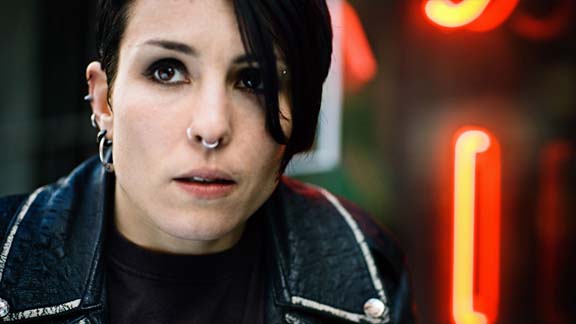
“As a girl she was legal prey, especially if she was dressed in a worn black leather jacket and had pierced eyebrows, tattoos, and zero social status.”
 
– Stieg Larsson, The Girl with the Dragon Tattoo (Quercus, 2008)
 
 
*
 
 
 “What is hidden in snow comes forth in the thaw.”

– Swedish proverb
 
 
*


audre lorde on speaking out

If I didn’t define myself for myself, I would be crunched into other people’s fantasies for me and eaten alive.
___

I was going to die, sooner or later, whether or not I had even spoken myself. My silences had not protected me. Your silences will not protect you… What are the words you do not yet have? What are the tyrannies you swallow day by day and attempt to make your own, until you will sicken and die of them, still in silence? We have been socialized to respect fear more than our own need for language.

I began to ask each time: “What’s the worst that could happen to me if I tell this truth?” Unlike women in other countries, our breaking silence is unlikely to have us jailed, “disappeared” or run off the road at night. Our speaking out will irritate some people, get us called bitchy or hypersensitive and disrupt some dinner parties. And then our speaking out will permit other women to speak, until laws are changed and lives are saved and the world is altered forever.

Next time, ask: What’s the worst that will happen? Then push yourself a little further than you dare. Once you start to speak, people will yell at you. They will interrupt you, put you down and suggest it’s personal. And the world won’t end.

And the speaking will get easier and easier. And you will find you have fallen in love with your own vision, which you may never have realized you had. And you will lose some friends and lovers, and realize you don’t miss them. And new ones will find you and cherish you. And you will still flirt and paint your nails, dress up and party, because, as I think Emma Goldman said, “If I can’t dance, I don’t want to be part of your revolution.” And at last you’ll know with surpassing certainty that only one thing is more frightening than speaking your truth. And that is not speaking.

― Audre Lorde, from Sister Outsider: Essays and Speeches (1984/2007, The Crossing Press).

the transformations of anne sexton, poststructuralist witch

Jeremy DeVito, 2011

“The world of the fairy tale has been traditionally read as one in which anything may happen, in which all things work toward and will eventually culminate in, the ‘perfect’ fairy tale ending of ‘happily ever after.’ However, the last half-century (with the rise of literary theory in general and feminist theory in particular) has produced a degree of cynicism towards this traditional reading. Fairy tale ideology has been challenged on the grounds that it is classist, racist, and, most blatantly, sexist. Hence, such tales have found new storytellers and have been adapted in such a way as to subvert the problematic ideals of tradition and, in most cases, replace them with what is seen as a fresher, more inclusive set of values. In 1972 Anne Sexton published Transformations, a collection of poetic retellings of seventeen widely recognizable fairy tales from the Brothers Grimm, which, in the eyes of such critics as Carol Leventen, “belongs to [this] significant body of revisionist / feminist work” (137). Although these retellings doreflect a new (and distinctly female) voice, however, Sexton’s critique contains complexities that go beyond a feminist objection to patriarchal concepts of perfection and happiness. Rather, Sexton’s tales suggest that the real problem with the fairy tale is to be found in its very striving towards the non-problematic; in short, Sexton’s poems are not so much feminist re-writings as they are poststructuralist re-readings. Their aim is not to adapt the traditional in providing or implying a new (feminist) central philosophy, but rather, to strip the tales of any centre whatsoever… ”

Read the rest of DeVito´s text here

this is my body, deal with it.

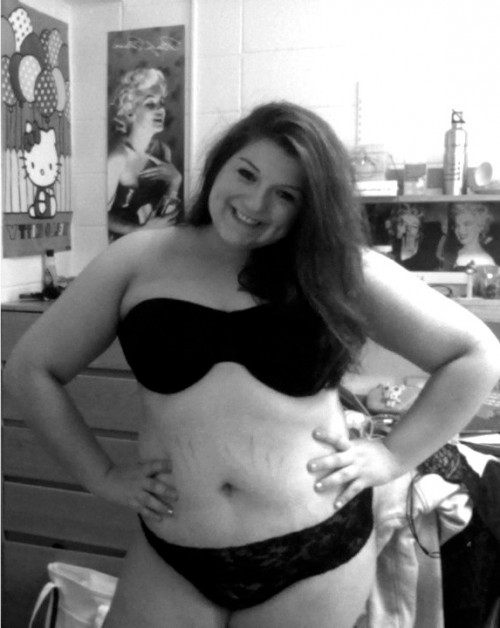
WARNING: The following picture might be considered obscene because subject is not thin. And we all know that only skinny people can show their stomachs and celebrate themselves. Well I’m not going to stand for that. This is my body. Not yours. MINE. Meaning the choices I make about it are none of your fucking business. Meaning my size IS NONE OF YOUR FUCKING BUSINESS.

If my big belly and fat arms and stretch marks and thick thighs offend you, then that’s okay. I’m not going to hide my body and my being to benefit your delicate sensitivities.

This picture is for the strange man at my nanny’s church who told me my belly was too big when I was five.
This picture is for my horseback riding trainer telling me I was too fat when I was nine.
This picture is for the girl from summer camp who told me I’d be really pretty if I just lost a few pounds
This picture is for all the fucking stupid advertising agents who are selling us cream to get rid of our stretch marks, a perfectly normal thing most people have (I got mine during puberty)
This picture is for the boy at the party who told me I looked like a beached whale.
This picture is for Emily from middle school, who bullied me incessantly, made mocking videos about me, sent me nasty emails, and called me “lard”. She made me feel like I didn’t deserve to exist. Just because I happened to be bigger than her. I was 12. And she continued to bully me via social media into high school.

MOST OF ALL, this picture is for me. For the girl who hated her body so much she took extreme measures to try to change it. Who cried for hours over the fact she would never be thin. Who was teased and tormented and hurt just for being who she was.

I’m so over that.

THIS IS MY BODY, DEAL WITH IT.”

Self-portrait by Stella

reblogged from thebodyloveblog.tumblr.com.

About Stella

the penis: mightier than the sword – rereading an old quotation at the time of abu ghraib (2004)

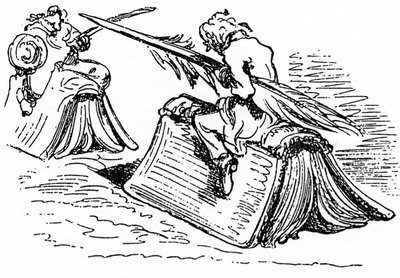
The famous quote ‘the pen is mightier than the sword’ has a different meaning today than it had when the English novelist Edward George Bulwer-Lytton (1803-1873) wrote in 1839: ‘Beneath the rule of men entirely great the pen is mightier than the sword’. Apart from the obvious fact that a sentence fragment cannot convey the same meaning as a full sentence, there are a number of reasons why we can assume there to have been significant changes in the meaning of these frequently quoted words in the last 160-odd years. After an initial non-exhaustive exploration of some of these reasons in order to discuss the contemporary reception of old texts in general, I will present an example of a possible contemporary rereading of the sentence in order to critically approach its form as well as its content in more detail.
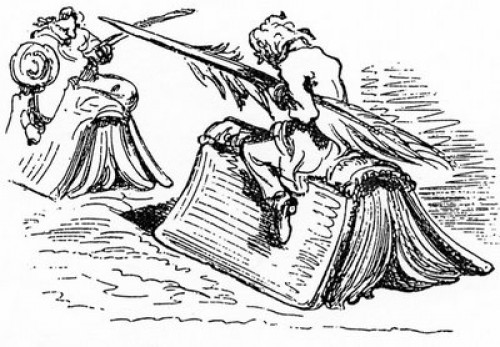
From the 19th through to the 21st century, radical shifts have taken place in the social, political and economic systems of the currently ‘European’ nations like England. Class differences have steadily decreased in importance while the levels of literacy have increased enormously. Nowadays readers of literary, journalistic and other texts come from all walks of life and all classes in society, which was not yet the case in Lytton’s time. Due to the cultural complexity of a postmodern and post-industrialised context, readings of this sentence today are not merely permitted to be different, but are necessarily far more numerous and varied than they would have been expected to be in the 1800s.

In the midst of this new plurality of discourses – which is for reasons of brevity and clarity merely stated here and will not be elaborated on – phrases of such universalising nature are rarely coined by writers and other intellectuals today, whereas in its original context a sentence such as this one may have had only one unmistakeable message to almost anyone reading or hearing it, simply because this context was rather narrow. Those who could read and write of course did not all think alike, but they would all more or less have agreed on what kind of meaning was being transmitted with these words. Nowadays we can observe a very different dynamic unfolding: whatever is said publicly immediately enters a broad field of more or less interconnected discourses, which form more or less homogenous or contradictory opinions as to its meaning within – and its relevance to – their own and possibly other world views.
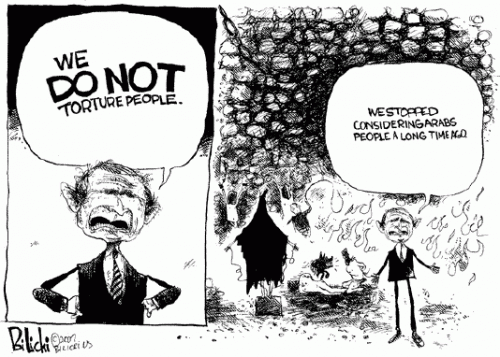
What any given politician is saying on any given day on any given subject is never entirely opaque to anyone reading about it in the paper who has also read the previous day’s edition, but what effectively stands behind these words is ever more difficult to contextualise constructively in terms of its respective outcomes. ‘Right’ and ‘wrong’ are constructs that have become almost interchangeable or irrelevant, because there are so many equally valid viewpoints on any given subject or utterance, which all have a more or less publicly audible – and thereby already minimally validated – voice.

In order to bring meaning to the signifying remnant ‘the pen is mightier than the sword’ of the 19th century message x (as in ‘unknown’) in this widened, or rather exploded context, it is necessary to – at least initially – ‘misunderstand’ it. ‘Misunderstanding’ here shall refer to the application of an interpretation based on the more or less unspecific world knowledge of an individual living in the 21st century, as opposed to assuming to be in the know about what meaning the text had in 19th century England. At best, in any critical approach the inevitability of this process of ‘misunderstanding’ is acknowledged and problematised; else it is taken for granted, or at worst denied. In the last case lies the danger of laying claims to an absolute truth of sorts. Nowadays certain versions alone – of the infinite number of possible readings – may succeed in presenting certain convincing insights, which do not lay claim to finality or completeness.

The penis: mightier than the sword. This modified version arrived at by simply dropping the space between ‘pen’ and ‘is’ and inserting a colon, crassly illustrates the imagery of pen and sword as charged with concepts of maleness. It is psychoanalytically easily accessible: we are presented with two phalluses holding recourse over their size. The reader is asked to identify with the smaller and therefore supposedly weaker member, and he is told that size not only doesn’t matter, but that he will – on this side of the argument – prevail in the face of overpowering adversity, or better still: competition. The question arises: over what? We do not know. Are we to assume that the sword stands for war and the pen for enlightenment – and in effect peace? If this is the case, what we are led to believe in this statement is that war is bad, and that consequently it is to be regarded as disconnected and even structurally different from everything that has to do with writing and reasoning: as ‘mightier’ human endeavours.
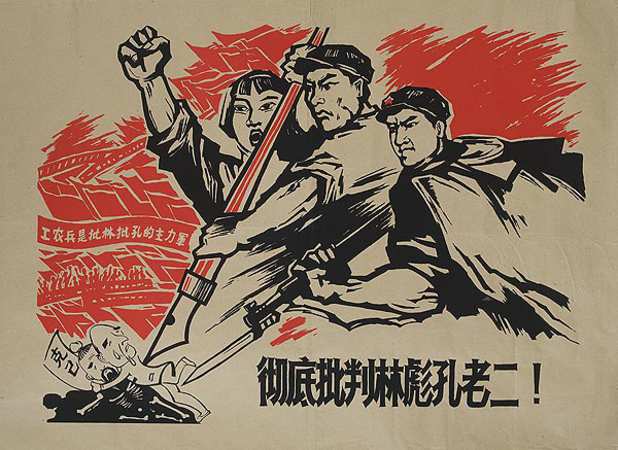
The ‘pen’ here stands for the word, an ideal idea, the thought worth concretising and writing down. The ‘sword’ stands for war, death, planned killing in the name of a higher power or principle. On this literally symbolic level the pen may be mightier than the sword; but moving on from this level it may be argued that the pen harnesses the power that also moves the sword, if less wisely so, and thereby causes greater destruction than the sword alone ever will. Nowadays, if only through the abundance of costume dramas and kung-fu movies, the sword as an image does no longer successfully symbolize chaos and destruction, for in its singularity and crafted clarity it visually far outruns the ill-defined pen. With its size, weight and sharpness, the sword suggests more self-discipline and mental order in its bearer than any pen might afford, which is too often engaged in merely noting down whimsical movements of mental current in forms ranging from scratchy to mannered.

On the surface of the image, pen and sword share the same space, but beyond the rationale of the proposed comparison, which actually draws the argument into one of two courts (where, as we will see later, both parties are at home), another battleground is implied, which stays as empty as it is hidden. Here, logically speaking, the sword has to be fighting with another unmentioned sword in order to be making war. This way the sword is – so to speak: secretly – set up to display its inferiority to the pen; which in turn, firstly as a symbol of a higher order of abstraction, and secondly due to its greater proximity as the first-mentioned in this short and brutal piece of rhetoric, refers more easily and convincingly to an enveloping structure of safety and sense.
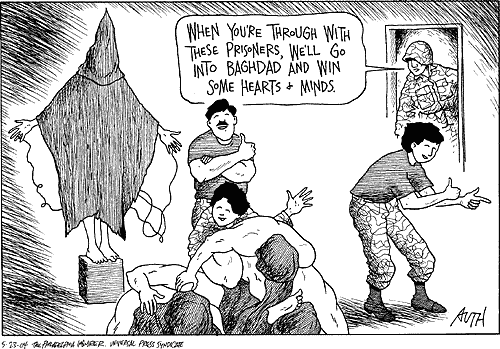
War, in this scenario, is denied any active role in the thinking, conscious persona, and conversely here, the thinking, rational persona is denied all the potency of the fight. The sentiment expressed here is a perfect example of the suppression mechanisms inherent in Western rationalism (‘Civilisation’): Making war, i.e. living out one’s ‘negative’ emotions on a non-intellectual stage – possibly even victoriously – is professedly barbaric, whereas to negate and suppress one’s emotions is constructed as a worthwhile and necessary endeavour. Even in a democratic system that purportedly aims to allow freedom of speech to everyone, there are these cultural limitations of emotional expression. This philosophy in practice may on the one hand be vital for the survival of our species, but the fact that it also provides the breeding ground for arguably the most perverted criminal offences on a daily basis (and has led to the creation of inarguably the most powerful weapons of mass destruction in human history), comes as no surprise when one contemplates how overpowering the restrictive reign of a rationalist culture over the hearts of its members has been. Imperatively, ‘the pen is mightier than the sword’ is voicing pure social conditioning: ‘Do not feel, upon failing at which (inevitable, unless you are dangerously deranged), at least stop yourself from acting on those feelings. Stay distracted, consume continuously according to pre-arranged patterns of perceived needs, and the state will cushion you from fearing death.’
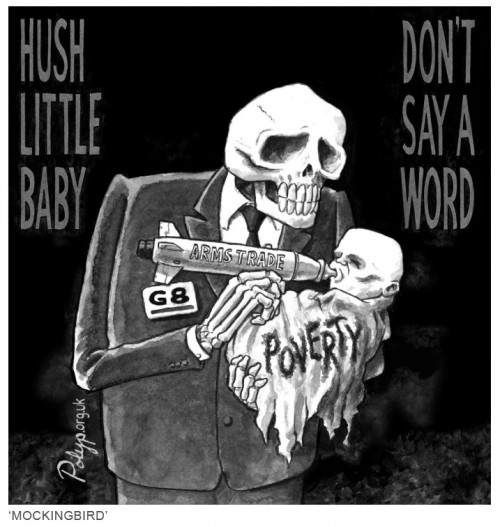
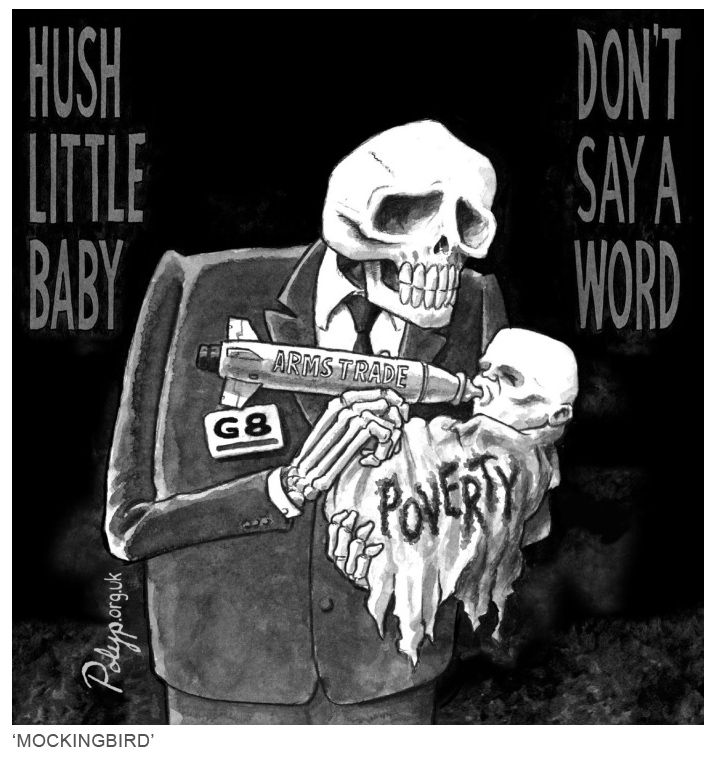
polyp cartoon _ G8 Arms Trade Poverty

It has become clear that, as a result of the immense complexities of our social, political and economic history, not only has the message of this sentence itself – like everything else in the cultural domain – had to change (hence the variety of possible and necessary contemporary readings), but so also has the sentiment that informed this message long vanished and been replaced by a range of new world views and belief systems. At present, what these generally have in common is that they sense themselves to be one of many possible views: heterogeneously scattered outside traditional hierarchies, others always requiring consideration.

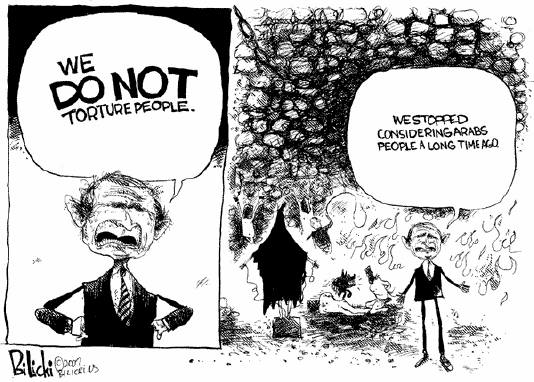
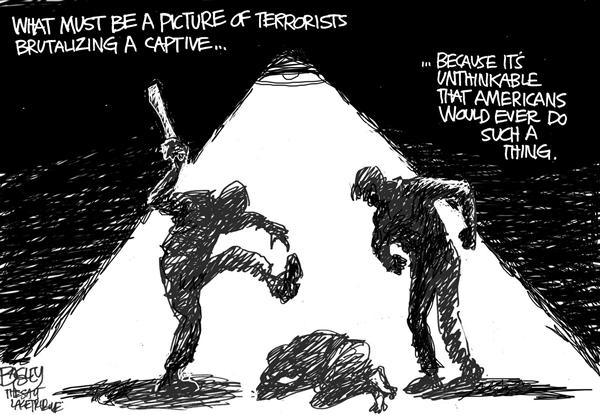
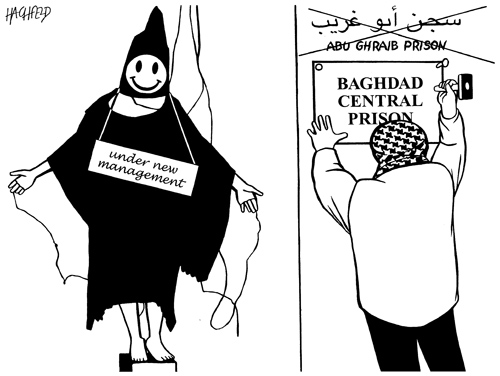
Of course there will always be fundamentalist and self-righteous tendencies in politics and other fields that need to set up an ‘other’ as opposite, with all the horrific consequences that ensue, as in the recent case of ordinary American country folk torturing and killing Iraqi prisoners of war in Abu Ghraib prison. The American defence minister’s public reasoning on this torture is that, far from being the carefully considered act of war between two nations that it was, it was supposedly a dirty deed carried out by rogue individuals. In the terminology of this text: that no ‘sword’ was involved. As a result of this denial the torturers will soon be publicly demonised and punished (under the same principle of othering), thereby serving as scapegoats for all those who have been actively involved in creating a lawless situation in these prisons in the first place. If the idea of a ‘mighty pen’ could be trusted to be referring to a positive pragmatism rather than a positivist idealism, it might now for example be able to symbolise an international military court, which could serve to address this new form of ideological and propagandist warfare. This kind of warfare is reminiscent of the public display of the severed heads of enemy soldiers in the Middle Ages, but it infinitely transcends it in calculation and coldness. That Iraqis are responding ‘in kind’ (with the recent public killing and burning of American tourists), surprises less than the Americans’ refusal to submit their soldiers to said international court of war.
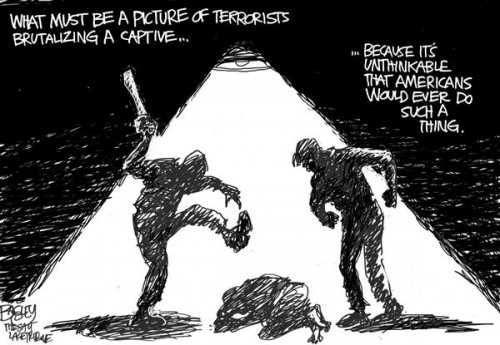
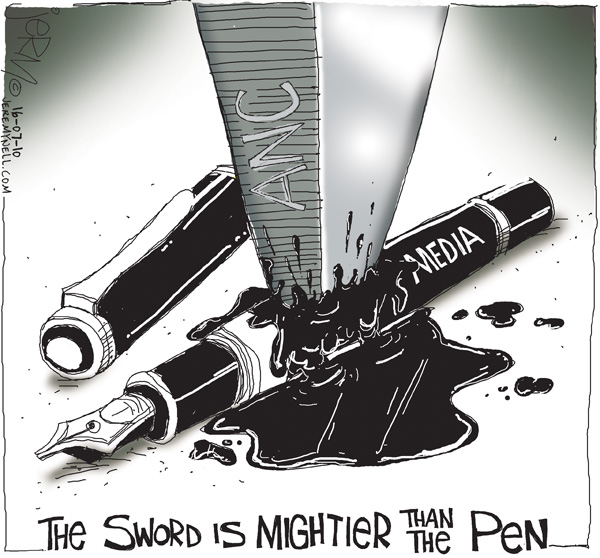
Most people today do not believe that wars are stopped by anything somebody writes with a pen: In fact, we are becoming increasingly sensitised to the demagoguery of the media. The worst wars, the greatest weapons, the most inescapable conflicts, the most far-reaching crimes and deepest infringements of basic human rights are all created on paper, but they are rarely prevented and almost never undone again through the use of that medium.

Once ‘The pen is mightier than the sword’ may actually have been a revolutionary and powerful statement, but nowadays it is merely an overused turn of phrase that invites kitsch sentiments on the one hand and bitter cynicism on the other. Googling this phrase, one comes across fantasy websites, dating chatrooms, reactionary rants by fundamentalist Islamic school children, and all other kinds of intellectually ill-directed verbiage. This selection naturally also has to do with the medium of the internet, and only represents that quantity of writing that has made itself available to us as html code. On the other hand, if ‘mighty’ writing was as easily and readily available today as all that web and magazine copy that likes to borrow this phrase, there would probably be less disillusionment in the mind of today’s reader who comes across it.
Many readers today are not used to enjoying or savouring the tensions and creative spaces offered by a linguistic symbol – they seem to lack the ability to read symbols as such. This is best exemplified by the mass of websites containing most literal readings of the quote. Self-defence sites for women describe a variety of techniques for using a pen as a weapon; crime-writer blogs publish stories investigating the poisonous qualities of ink; ‘Dungeons and Dragons’-fans have ‘webrings’, where the interpretations voted into the top five all delight in ‘setting things right’: the pen would have to be very big and the sword very small… etc. Many readers who have enjoyed the privilege of being exposed to a variety of literary genres may shudder at the shallowness of this method of constructing linguistic communication, but recognising the widespread reality of this practice could also be a less prematurely judgmental process and even bear new creative fruit: new sets of immediately recognisable symbols are forming all the time, including all the potential pitfalls of more or less hidden reactionary sentiments, but far more open to widespread critical discussion.

‘The sword is mightier than the pen’ – a statement that holds true, only rather less surprisingly so, which is why it is nowhere to be found as a quotation. What might have made the quote so long lasting is that it seems to be expressing something unthinkable: a pen battling with a sword and beating it, as it were: a poet wrestling down a soldier.
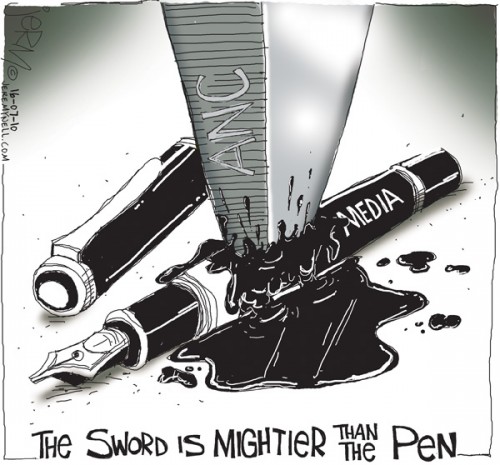
If, hypothetically unencumbered by any knowledge of the quote, a contemporary reader were to come across a sentence expressive of the negative ‘The pen is not mightier than the sword’, they might successfully be moved to contemplate the dynamics of power and information, and the worldwide imbalance regarding the privilege of acquiring knowledge. Installing this modified ‘quote’ publicly in the fashion of, for example, Jenny Holzer’s ‘Truisms’, may serve to draw attention to the Y-generation’s ubiquitous refusal to re-interpret and re-negotiate vital forms of human expression – a refusal structurally inherent in the banality of the practice of ‘sharing’ on (anti-)social networks, of regurgitating and replicating copies of once-historic fragments until the pen is dry.
louise bourgeois & tracey emin: do not abandon me

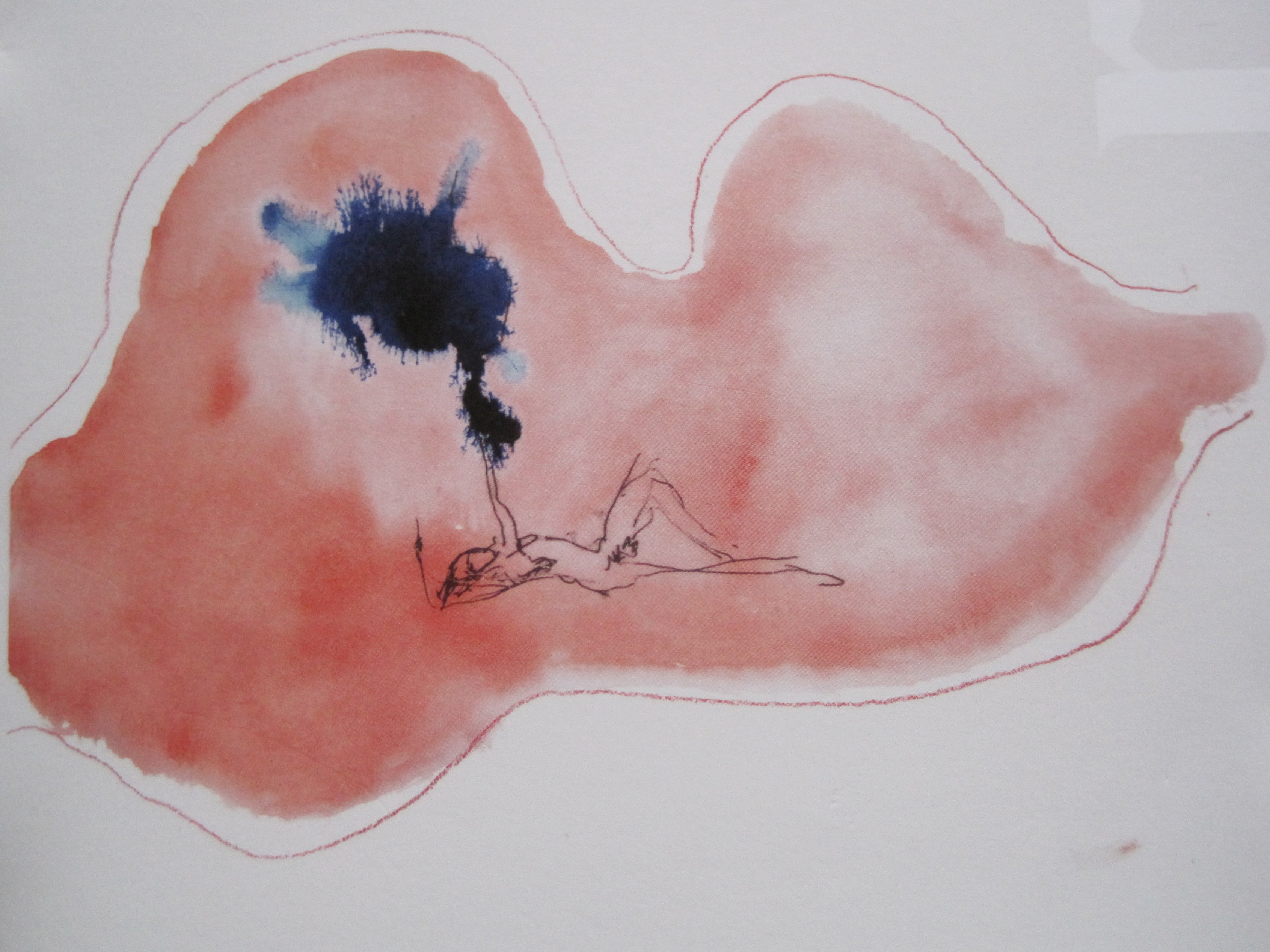
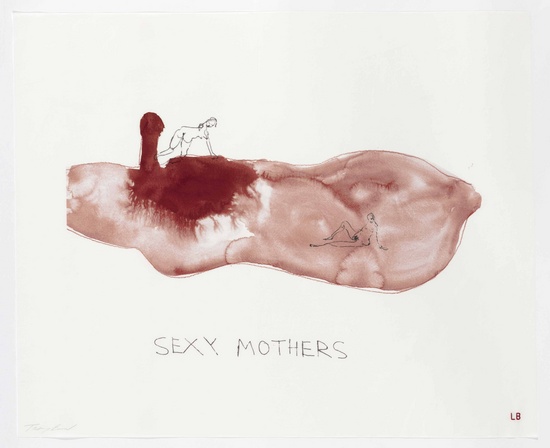
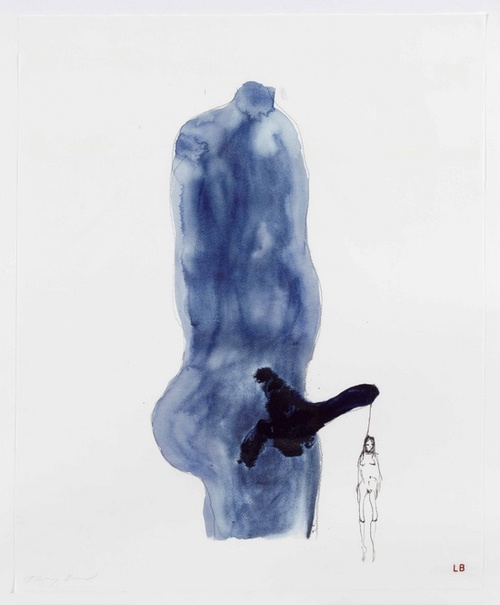
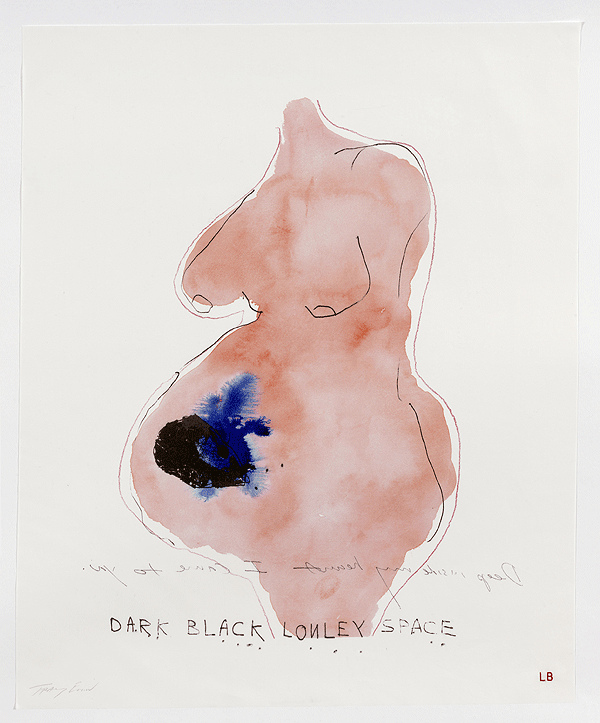
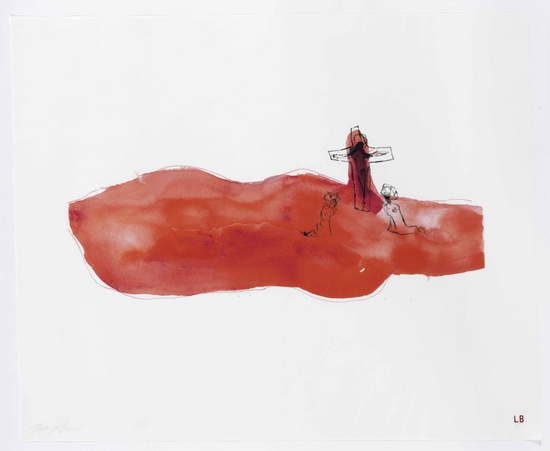
“Louise Bourgeois and Tracey Emin both blur the boundary between art and life is by pouring the turbulent history of an individual’s psyche into the work. The difference between them is that, for Bourgeois, life seeps into art, whereas for Emin, life collides with art. Do Not Abandon Me brings together these two approaches to also blur the boundary between two individuals’ life histories in a moving, sometimes upsetting and admirable collection of work.

Bourgeois began the project by painting male and female torsos on paper; the gouache pigments are combined with water to give fluidity to the mixtures of red, blue and black. All the bodies are depicted in profile, in various positions, presenting delicate silhouettes that form the basis of the final works. These were then passed to Emin for embellishment, who reportedly cradled them like porcelain babies for months on end, until she finally saw beneath the surfaces of the mute bodies. Emin’s contribution consists of smaller figures drawn in pencil and the addition of occasionally coherent, hurriedly scratched out words. The idea is that Emin’s additions tease out the emotions, anxieties, ideas and histories that already lay dormant in Bourgeois’ paintings.

The works are elegant in form and colour; they are simple but playful, and tinged with a wry seriousness. The elegance derives from the delicate hues and the way they are loosely contained within soft lines, which accentuates the simplicity of bodies represented only in outline. The playfulness is in Emin’s characteristically childish scrawl, which sometimes seems unsure of how to respond to nudity so opts to make a joke of it. Come unto Me depicts a man lying on his back, with two miniature women kneeling at the base of his penis on which a third woman hangs on a cross. The serious message that women are subjugated to male sexuality is obscured by the humorous conception of the erect penis as a purely structural accessory to an ancient form of execution.

The forgoing theme is clearly a feminist agenda, and the result of both artists’ preoccupations. The relation between man and woman is characterised as one where the woman is locked in service to the man who rejects her pleas for love, thus having to accept the potency of his sexuality as a form of affection. And So I Kissed You offers a heartbreaking image of male sexual obsession while Just Hanging predicts emotional and physical death as a result of this servitude.

In other works, the female relation to child-bearing is explored as an experience of pain, personal loss and lingering failure. I Wanted to Love You More shows a female figure embedded within the pregnant bulge of a woman, expressing perhaps the desire of an embittered mother to get closer to her unwanted child. Reaching for You shows a woman who has burrowed into her own womb in order to retrieve a lost, perhaps aborted, child.

These are serious, and sometimes harrowing, themes. You get the feeling, however, that Bourgeois meant them to retain the autobiographical subtlety and integrity of artistic form that her meditations on her mother – the huge spider sculptures, titled Maman – possessed. As a child of surrealism, Bourgeois excelled in burying her neurosis under layers of symbolism and maintaining a visceral glee in the materiality of her art. But with Emin, there is no such thing: like in her neon pleas for love that shout desperation through the night sky or her bed that celebrates her frantic degeneracy, her contributions to these works drags the emotions to the surface and screams a blood-curdling cry. At this point of contrast between the two artists’ approaches, Emin begins to look tired, as if repeating her story in the same language of vulgarity is the only way she knows how, having never learned Bourgeois’ subtlety. It looks, then, as if Bourgeois’ invitation to collaboration is also an attempt at tutelage.
Nonetheless, the work derives its brilliance from the contrast between the collaborators, where Emin has mapped her own ideas on to Bourgeois’. If you couldn’t tell where Bourgeois ends and Emin begins, you would lose the sense that two individuals are trying to tell their own stories together precisely because their stories are so remarkably similar. In the end, Bourgeois is responsible for the aesthetic brilliance of these works, while Emin brings the emotions in. Combined, these two elements make a provocative show in which Bourgeois, at the end of her illustrious career, hands her mantel to Emin, securing both of their places in art history as experts in autobiographical art.”

Text By Daniel Barnes blogged from here

the woman in my life – playing with the concept of the feminine

Image

Rapunzel

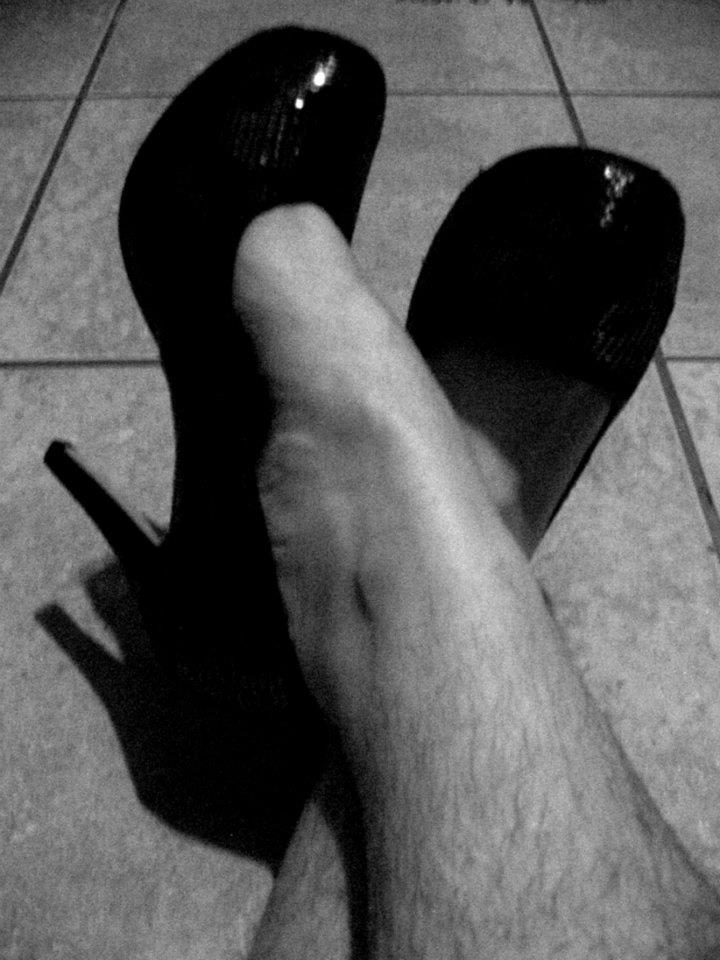
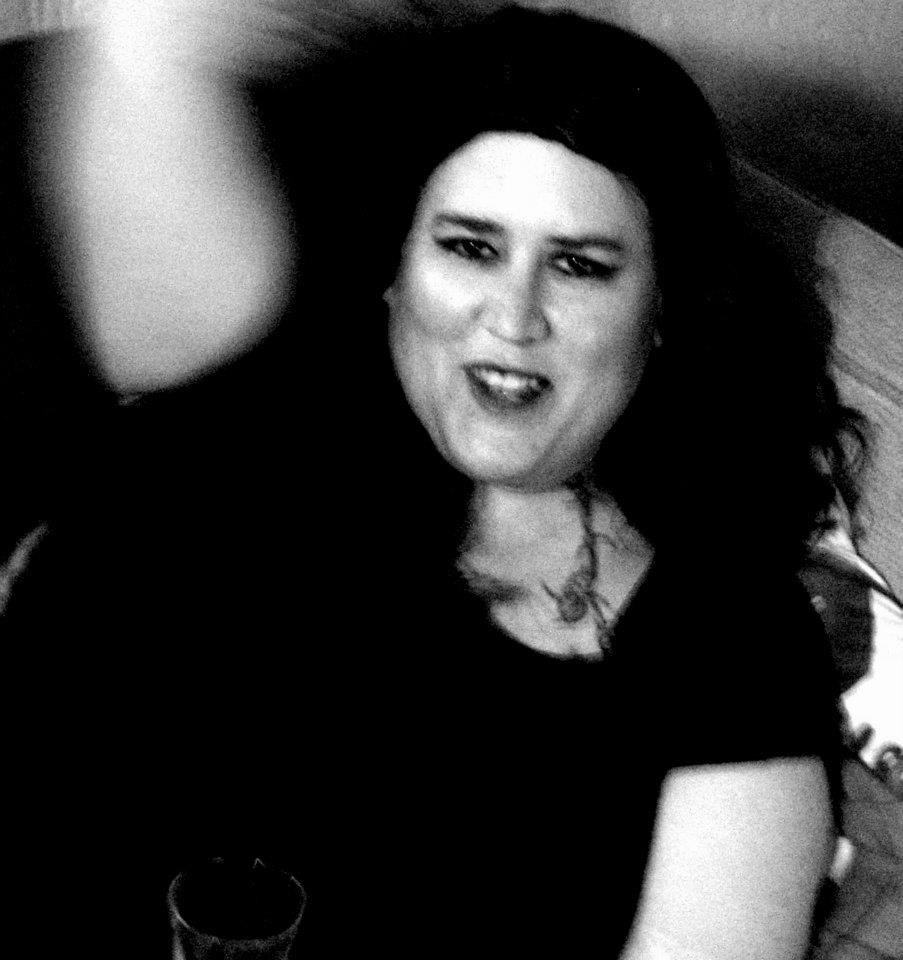
Grabbing my identity by the throat has allowed me to play with other identities in the space of play and performance. Being more secure in how I identify in terms of gender identity, gender expression and sexual orientation has allowed me the freedom to explore my boundaries: what I’m comfortable with and how far I can push myself.

Up until two years ago I found the feminine cloyingly repulsive and unnatural. My mother’s attempts to feminise me always left me feeling exceedingly uncomfortable, and I clearly remember the hideousness of my matric dance outfit and how I felt like a drag queen, and yet not, because it was an enforced drag, not the drag that stems from a place of play and a sense of security in one’s own gender.

Image

Playing the Femme Fatale, I

Since beginning the photographic project of documenting my play with gender, I have experienced conflicting emotions and reactions to placing myself within a feminine frame. Firstly, I found myself approaching the feminine from the space of play, experimentation and boundary testing. The idea of donning the feminine has been more exciting and less frightening, and I’ve truly had fun with and loved the experience of seeing the photographic results. The artistic process has thus been very revelatory and enjoyable.

Image

My Greta Garbo Moment

The physical experience, the experience of my self apart from the artistic process, has been difficult. I’ve been able to perform the feminine to the extent of playing with costume, props and make-up, but have been unable to perform feminine characteristics, behaviours, mannerisms and poses. Along with the wigs, dresses and shoes, I am still visited by those old feelings of intense discomfort, a sense of not being me, of having an otherness enforced on me. Even in the privacy of my own home with only me to witness my transformation, I am unable to express a femininity that stems from me rather than the costume. One interesting thing, though, is that when I’m playing the feminine and photographing myself, I’m able to smile (almost unable not to), while in my other self-portraits smiling feels unnatural and uncomfortable. In the blurb to this blog I say that, “I approach other spaces through fearlessly exploring inner space.” Sometimes the exploration is more brave than fearless. A lot of the time my performances touch a nerve, pointing to something I still need to investigate further, approaching it more carefully in my next encounter with it. Because sometimes when staring into the looking glass, it’s not only unexplored selves that stare back. Sometimes there are demons.

Image

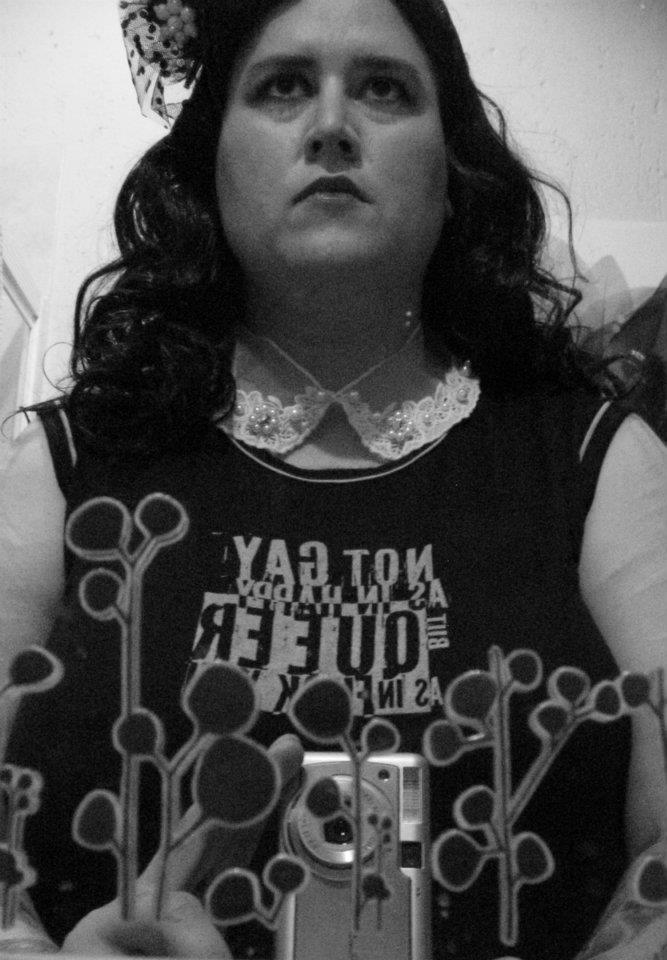
Not Gay as in Happy, Queer as in Fuck You

Looking back on these photos and experiments, I’m very happy with the results, because they denote a bravery that was previously unavailable to me; a sense of adventure I never had; and, a sense of playfulness I’m so grateful to have found.

Image

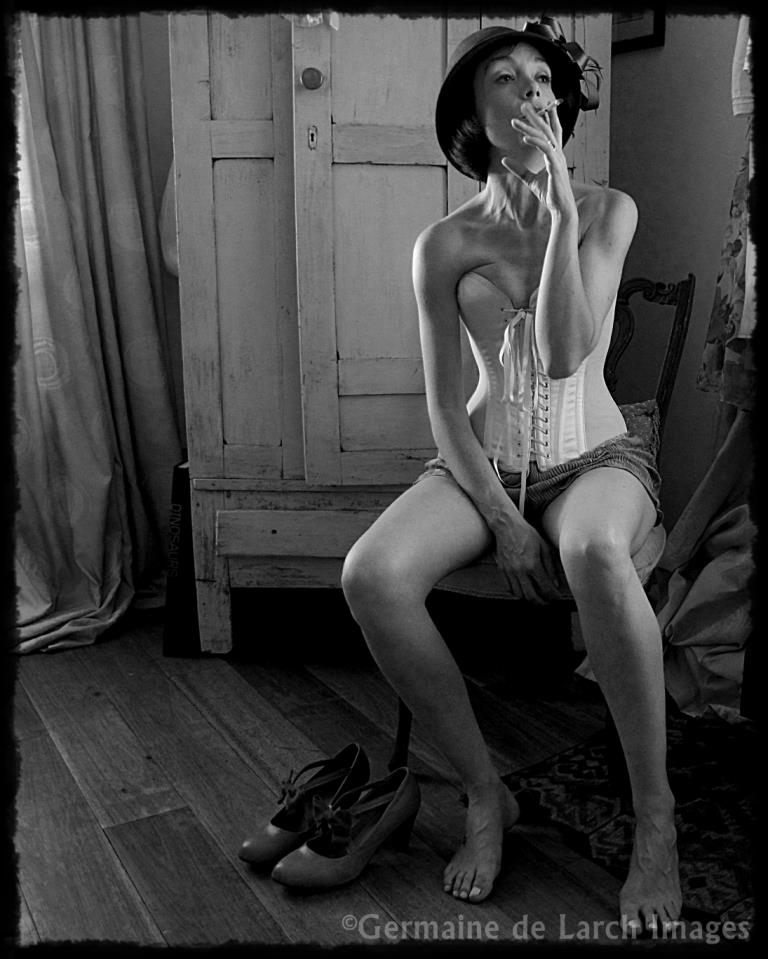
beatific

© Germaine de Larch Images. First published on www.life-writ-large.posterous.com

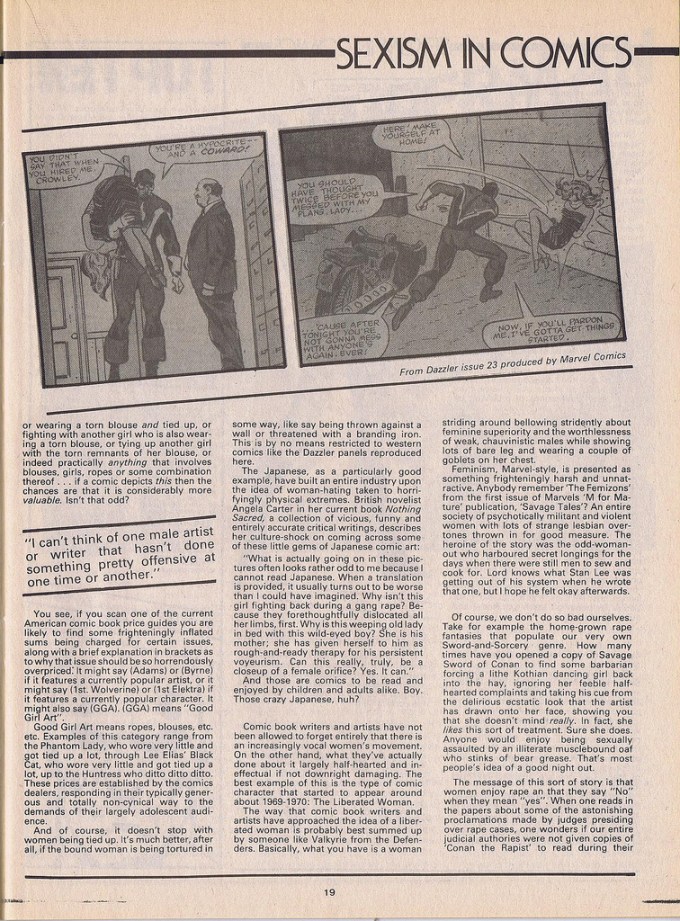
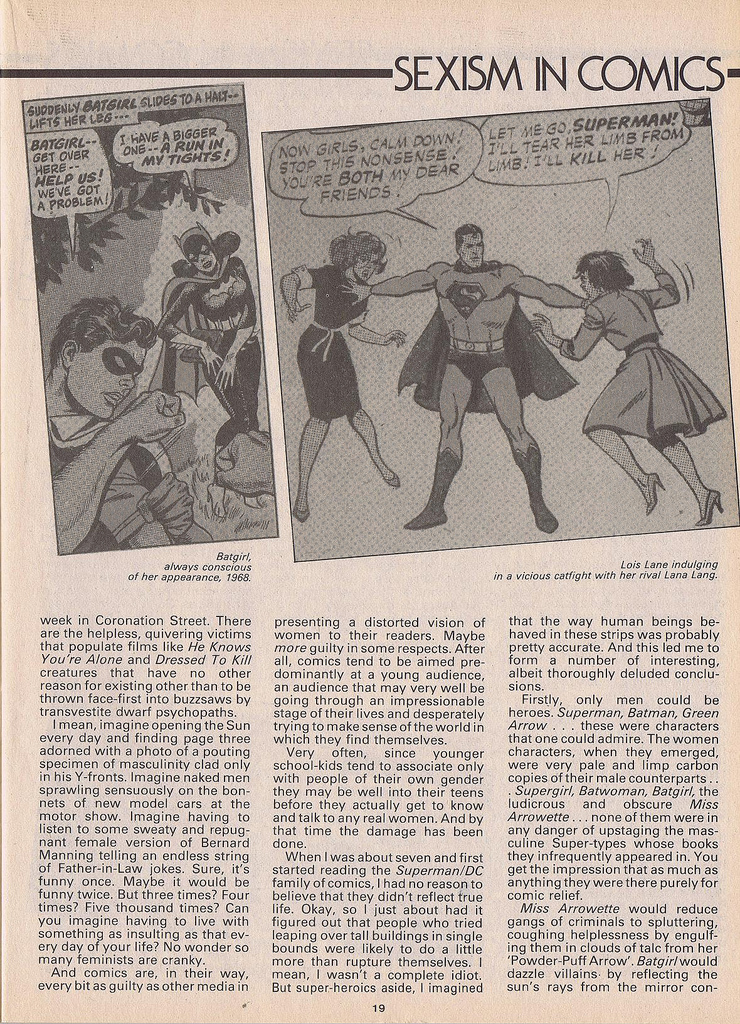
alan moore’s invisible girls and phantom ladies (1983)

During the afternoons I teach a small group of highly susceptible kids. They are easily influenced because of their age, which is around 9-12 years. Besides Thursdays and Fridays I have a group of only boys. I have my hands full, but a lot about the male specie becomes clear to me as I watch these boys.  They are forever ranting about Comic Books. Of course I share this passion, so we often discuss certain comic book characters etc. I always tell the boys that violence is bad (I mean, when I give a piece of clay to a girl, she will start kneading it and start problem solving about how she would produce a beautiful item. When I give a ball of clay to a boy, chances are he would threaten to throw another boy with it,or, like one boy actually did, start throwing it to the floor as hard as he can to see if he can flatten it in that manner.) One boy said he is going to draw `Thor´ for me, so I asked if there are no female characters he can draw for me and he replied sure, he´ll draw ´Invisible woman`. I am trying to find ways to teach these boys to become real men. And I´m not so sure the comic books are helping. I really love the work of Alan Moore, and recently came across his Invisible Girls and Phantom Ladies.

In his essay ‘And all right, we need a woman’: victimized heroines and heroic victims in Alan Moore’s quasi-Victorian graphic novels`,  Maciej Sulmicki writes:

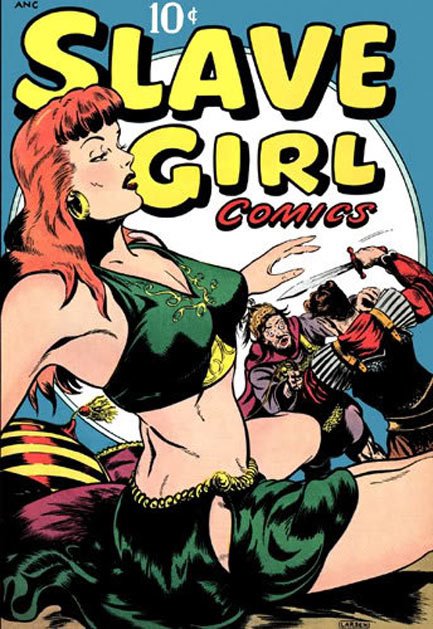
“Moore has long ago declared an interest in the image of women in comics books and recently confirmed that he has always felt ‘that [women’s problems] was an area that needed to be addressed’. 25 years ago, in a three-installment essay in The Daredevils he wrote of ‘Invisible Girls and Phantom Ladies’, i.e. sexism in comics. Although the text is written in a jocular tone, the main message is quite serious: that comics are rather fueling sexism and gender inequality than combating them. Women in mainstream comics are said to serve primarily as decoration, especially in visual terms, this being the case even when the female characters have something important to say. Such an approach to the visual presentation of females is a continuation of a long-standing tradition, visible as early as in comic strips from the first half of the twentieth century. Moore claims, however, that graphic depiction is not as important as the type of character as which the woman is presented. Both ‘helpless quivering victims’ and pale copies of female superheroes, as well as examples of rough ‘Marvel-style’ feminism serve to fuel stereotypes. In the case of the first two, scantily-clad and often captured and tied up heroines are accused of fueling ‘sordid adult fantasies’ and ideas such as women enjoying being raped. In the final installment of the essay Moore opines that the masculine world of comics is unlikely to significantly change its approach in favor of equal rights unless it is motivated from the outside – by the readers.”

Moore´s Invisible Girls and Phantom Ladies: Originally published in The Daredevils #4 – #6 (Marvel UK, April – June 1983)

PART I

Okay. Seeing as this is such a sticky subject suppose I’d better lay my cards on the table straight away.

I’m a wimpy, indecisive, burned-out woolly-minded liberal old hippy who eats quiche, saves whales, is friendly to the Earth and subscribes to Spare Rib, The Black One-Parent Gay Catholic Gazette, and Animal Welfare Against Nuking the Nazis Quarterly and if anybody wants to make anything of it, then I’ll quite cheerfully butt them in the face until their nose is flat enough to rollerskate on.

The reason I’m prepared to make such a candid confession is because I’m pretty sure that after reading the article in hand most of you will be saying pretty much the same things about me anyway and I thought it’d look better if I got in first. And the reason I’m donning my Sou’Wester in preparation for a torrent of abuse is because this feature concerns women, and women don’t seem to be a very popular topic nowadays. There are a couple of possible reasons for this sad state of affairs.

The first is that a small but vocal percentage of feminists are quite obviously as mad as snakes and have hopelessly damaged personalities. They pounce with demented glee upon increasingly trivial and unimportant examples of ‘sexism’, they make outrageously twisted and generalised statements to the Press along the lines of “All men are rapists“, and in general make themselves very difficult to like.

The problem arises when these foaming maniacs are presented in the media as being a representative cross section of the women’s movement, thus reinforcing the image of feminism that most men are only too eager to accept as the truth: an army of crop-haired Amazon gargoyles who chainsmoke untipped Woodbines, shift cement blocks for a living and have a physique somewhere between that of Popeye and a Commer van.

The other reason is that men, over the last few thousand years, have come to enjoy the perks and privileges that are part and parcel of being born into the male gender and are very reluctant to give them up. Men in general are a pretty insecure bunch and when they start to feel threatened by something they tend to respond by hurling forth salvoes of scorn and contempt, or, failing that, they refuse to take the issue seriously at all.

Even generally broadminded people who believe that the abolition of slavery in America was by and large a good thing seem to get very defensive and hysterical when it’s their Sunday Lunch that’s being threatened by the Women’s Movement. My guess is that if these gentlemen had been Southern Plantation owners they’d have felt the same reluctance in forgoing the pleasures of their Negro house-boy bringing them a Mint Julep on the veranda.

All right. So that’s the basic situation, and it’s one that is obscured by a lot of bluster, silliness and ratbrainery on both sides. But once you’ve swept away all the damned lies and statistics, it becomes plain that there really is a serious problem under there somewhere. Women in general are not really getting a fair suck of the sauce-stick, and it’s not just in obvious areas like equal pay for equal work and who brings up baby.

These areas are obviously important, but they’re all symptoms that spring from a central illness, an illness that affects the way it which we see women and the way we treat them in our largely male-oriented society.

The media presents us with a number of different stereotypes to choose from when forming our ideas of womanhood. There’s a wide variety of different designs, and they’re all about as palatable as a lobster with skin cancer. Continue reading

men-ups!

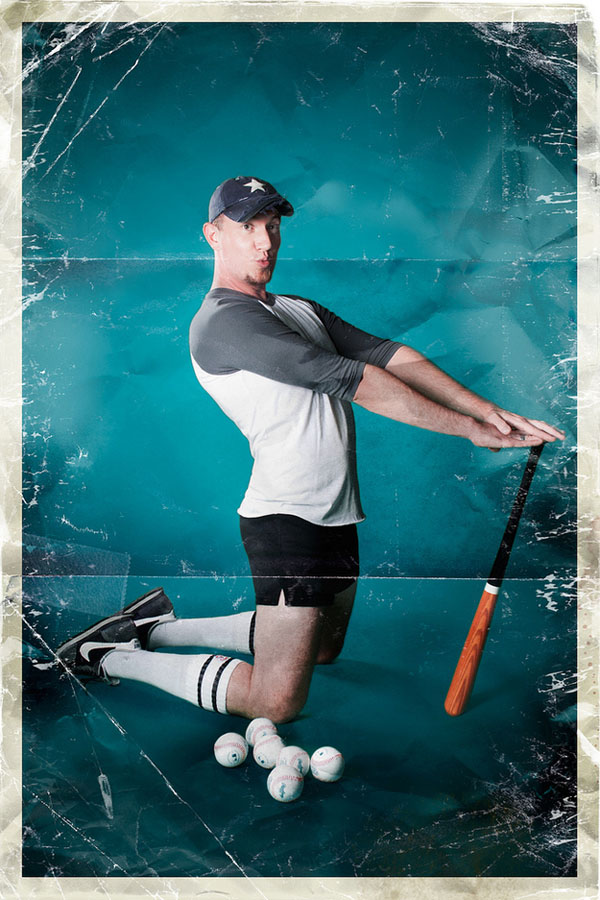
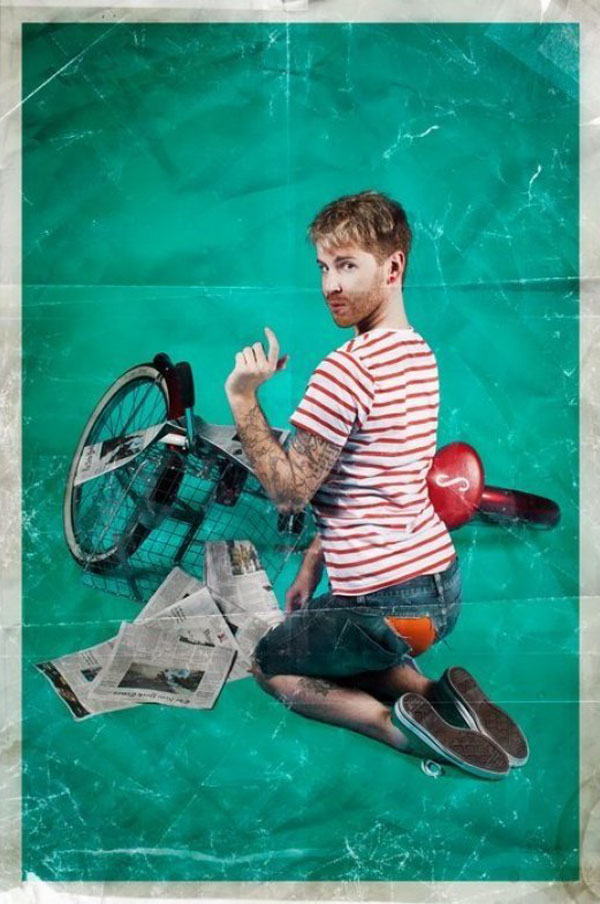
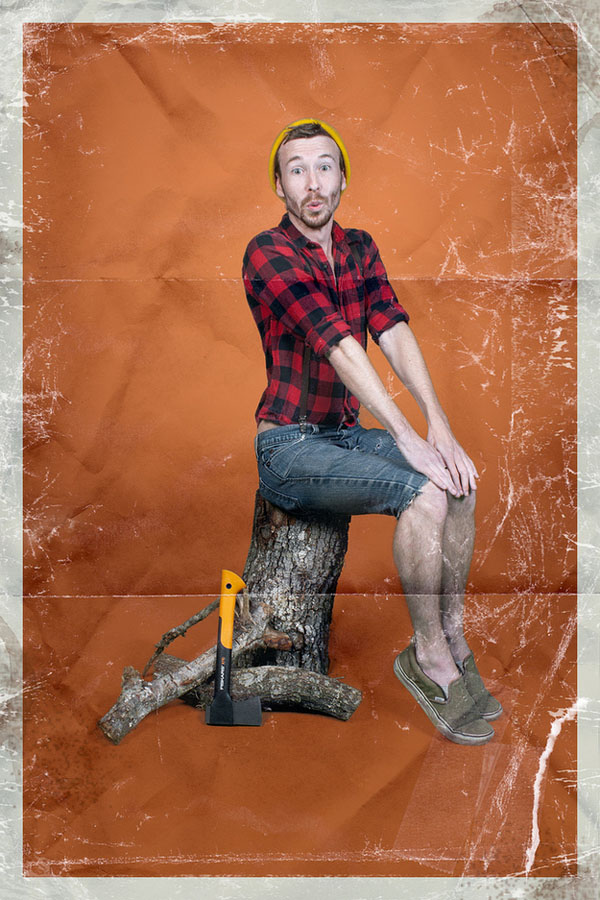
Men-Ups! is a photo series by photographer Rion Sabean featuring men in classic pin-up poses that are commonly associated with representations of femininity.

Rion says of his series: “I hope to have the viewer question their responses and why they feel the reaction that they do, and to associate those feelings with an understanding of societal brainwashing. Mainly, I want my audience to ask two things: why is it considered sexy for a woman to pose in such [hilarious] ways, and why isn’t it sexy for a man to do the same?”

Read more at the Huffington Post. Thanks to Debbie Pryor for “turning me on” to Men-Ups!

$pin$ta!

Sarah (Facebook status update): ‎”Spinster” is such a horrible word. So I am coining a new word for myself: I am a $PIN$TA, so watch out or I’ll set my cats on you.

Lizza: Yo, $pin$sta! It’s like a combination of spin and sista… works with the headphone look [in your profile pic].

Sarah: Yo homie! Thanks, although I fear those headphones are more ‘gamer nerd’ than ‘Dre’.

Lizza: Hey, being a murderer and stuff is too tired already. Kill them with your MIND.

Djf Head: It’s one of the few remaining words that closet misogynists get to use when they want to make a point without invoking obvious indignation. So please take it and transform it and own it.

Sarah: Yes but still “do you want to come back to my spinster pad?” is unlikely to work. It evokes visions of a giant sinister man-eating spider. *shudder*

Lizza: Any way you look at it, you have to end up being a goth :)

Sarah: A gangster goth.

Lizza: Yeah! Solid muthafuckin GOLD spiderwebs with diamonds on.

Sarah: LOL!!!! I’ll put chrome rims on my doc martens (sp?).

Lizza: Oh.my.god. and fluorescent lighting underneath, like a gangsta car. Imagine when you walk…

Sarah: That’s mental :D

Lizza: Judge Dredd would totally shit himself :))))

Rosemary: I like this entire conversation.