lumumba’s ghosts: immaterial matters and matters immaterial…

peerenThe Archive & Public Culture Research Initiative (where I work) has invited Esther Peeren, author of The Spectral Metaphor: Living Ghosts and the Agency of Invisibility (Palgrave, 2014), for a week of intense discussion, academic exchange and engagement around the theme of the ghost/spectre both as archival metaphor and as conceptual figure in post-colonial and cultural studies.

Peeren is Associate Professor of Media Studies at the University of Amsterdam, Vice-Director of the Amsterdam Centre for Globalisation Studies (ACGS) and senior researcher at the Amsterdam School for Cultural Analysis (ASCA). Her current research projects explore global spectralities and rural globalization.

On Tuesday, 26 August, she will deliver a lunchtime lecture, Lumumba’s Ghosts: Immaterial Matters and Matters Immaterial in Sven Augustijnen’s Spectres, in the Jon Berndt Thought Space (A17, Arts Block, Upper Campus, University of Cape Town). In her analysis of Belgian artist Sven Augustijnen’s 2011 multi-media exhibition, Spectres (which focuses on the mystery of the 1961 assassination of Patrice Lumumba, the first democratically elected Prime Minister of the independent Republic of the Congo), Peeren argues that a focus on immaterialities-as-spectralities prompts the viewer to take seriously that which is not immediately apprehensible, or deemed inconsequential. At the same time, it transforms our understanding of matter itself, since immateriality is inevitably implied in materiality, both metaphorically (materialities may be considered immaterial, insignificant) and literally (over time, materialities may transform, decay or even disappear).

Appealing to Jacques Derrida’s concept of spectrality, her analysis shows how Augustijnen’s work, especially the feature-length film included in the exhibition, moves the materiality of the immaterial and the immateriality of the material centre stage, and lays out the consequences of this double imbrication for individual and collective understandings of history, memory and the archive.

If you’d like to attend pn 26 August, RSVP to APC-admin@uct.ac.za.

miners shot down

This chillingly insightful documentary on the Marikana massacre should be required viewing for every South African. It’s two years tomorrow since that terrible, indelible day. The film is available to watch in full on Youtube for a few days only. Don’t miss this opportunity. EDIT: 18/8: The film is no longer available on Youtube. Please visit its website to find out about future screenings.

In August 2012, mineworkers at one of South Africa’s biggest platinum mines began a wildcat strike for better wages.

Six days later, on 16 August 2012, the police used live ammunition to suppress the strike, killing 34 and injuring many more.

Using the point of view of the Marikana miners, “Miners Shot Down” follows the strike from day one, showing the courageous but isolated fight waged by a group of low-paid workers against the combined forces of the mining company Lonmin, the ANC government and their allies in the National Union of Mineworkers.

What emerges is collusion at the top, spiralling violence, police brutality and the country’s first post-apartheid massacre. If you still have any doubts that this was a premeditated massacre by Lonmin, the government and the police, this documentary will change your mind with a lot of previously unseen footage. Nobody will have an excuse after watching this to continue to blame the miners.

South Africa will never be the same again.

marikana1


harun farocki – inextinguishable fire (1969)

“(1) A major corporation is like a construction set. It can be used to put together the whole world. (2) Because of the growing division of labour, many people no longer recognize the role they play in producing mass destruction. (3) That which is manufactured in the end is the product of the workers, students, and engineers.”

“When we show you pictures of napalm victims, you’ll shut your eyes. You’ll close your eyes to the pictures. Then you’ll close them to the memory. And then you’ll close your eyes to the facts.” These words are spoken at the beginning of an agitprop film that can be viewed as a unique and remarkable development. Farocki refrains from making any sort of emotional appeal. His point of departure is the following: “When napalm is burning, it is too late to extinguish it. You have to fight napalm where it is produced: in the factories.”

Harun Farocki, rest in peace.

1677 map of bohemia as a rose

1677 rose map of bohemia

A map that shows Bohemia as a stylised Hapsburg rose. The stem firmly connects the flowering Bohemian rose to the fertile soil of Vienna, the Habsburg’s political centre. The Latin text at the bottom explains:

There grew a graceful Rose in the Bohemian woods, and an armoured lion standing guard next to her. That Rose had grown out of the blood of Mars, not of Venus. […] Do not fear, lovely Rose! There comes the Austrian. […] The Rose of Bohemia, bloody for all the centuries, where more than 80 battles were waged. She has been now drawn in this form for the first time.

Read more about this strange propaganda map HERE.


stories we tell

Go and see this at the Encounters Documentary Festival, on right now in Cape Town and Jo’burg: the brilliant Sarah Polley‘s genre-defying examination of the workings of memory and narrative related to her own family’s secrets. It’s a gentle yet unflinching interrogation of how truth is shaped by the stories we tell ourselves when making sense of the things that happen in our lives. Humorous, poignant, profound… highly recommended.

vice v – mr president

“Mr President” is the controversial first single released on Long Talk 2 Freedom. It is a work of hip-hop protest literature which deals with the failed presidency of Jacob Zuma. The work remixes, and was inspired by, Tunisian rapper El-general’s classic, “Rayes lebled”, which became the theme song of the Tunisian revolution which brought Tunisian Prime Minister Zine El Abidine Ben Ali down in 2011.

Written, produced, mixed and mastered by Sizwe Mpofu-Walsh aka Vice V
Recorded by Tiger.X

Speeches referenced:
T. Lekota, “Response to the State of the Nation Address”, February, 2013.
J. Malema, “They Shot us Behind the Mountain: Address on the First Anniversary of the Marikana Massacre”, August, 2013.

http://longtalk2freedom.com/

laurie anderson – the dream before (for walter benjamin)

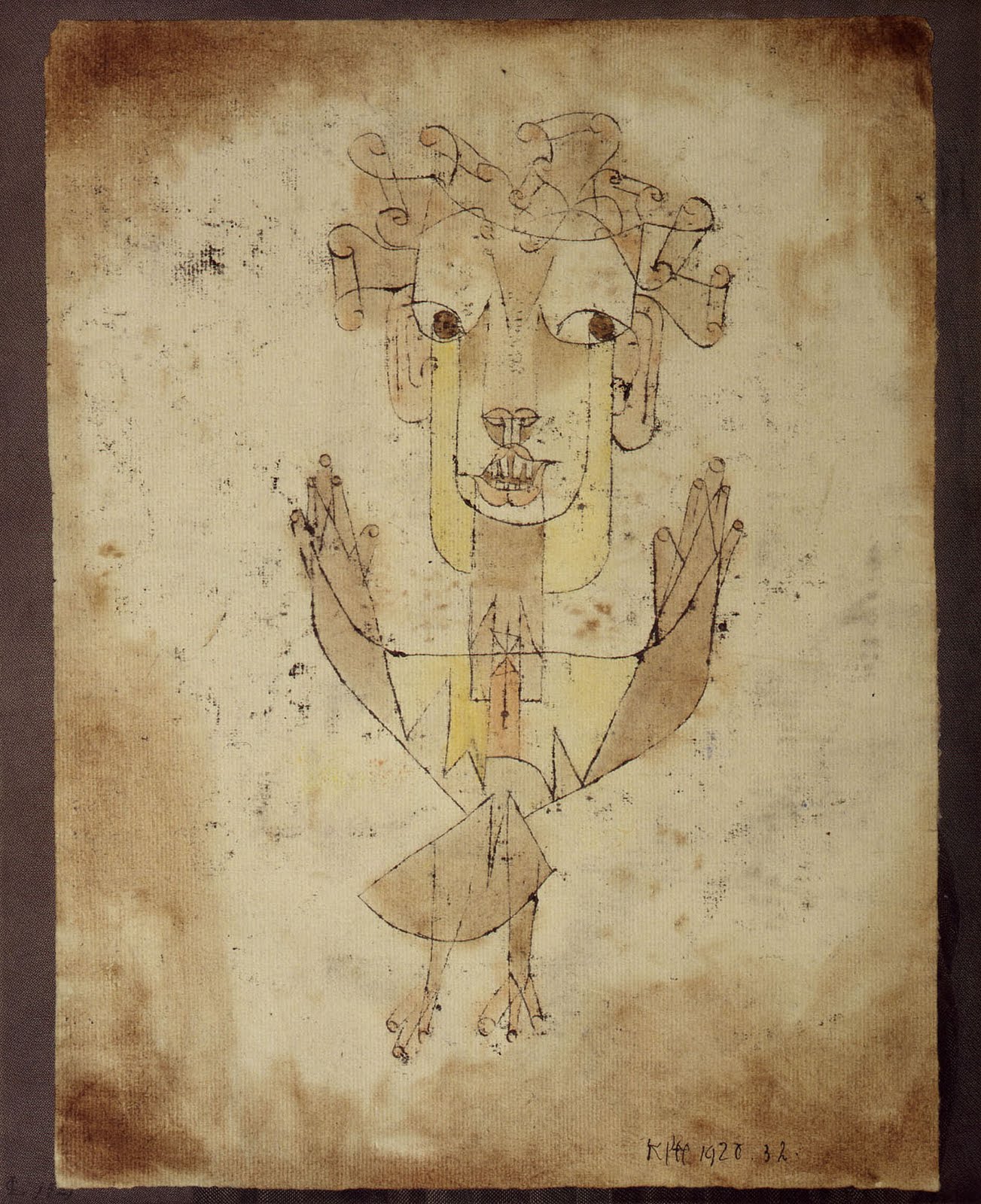
” A Paul Klee painting named Angelus Novus shows an angel looking as though he is about to move away from something he is fixedly contemplating. His eyes are staring, his mouth is open, his wings are spread. This is how one pictures the angel of history. His face is turned toward the past. Where we perceive a chain of events, he sees one single catastrophe which keeps piling wreckage upon wreckage and hurls it in front of his feet. The angel would like to stay, awaken the dead, and make whole what has been smashed. But a storm is blowing from Paradise; his wings are caught in it with such violence that the angel can no longer close them. The storm irresistibly propels him into the future to which his back is turned, while the pile of debris before him grows skyward. This storm is what we call progress.” 

— Walter Benjamin, 1940

paul-klee-angelus-novus

Paul Klee – Angelus Novus (1920)

“if i get killed, please don’t bury my soul”

The New York Times recently published an evocative long-form article penned by John Jeremiah Sullivan about the enigmatic Geeshie Wiley and Elvie Thomas, woman blues musicians who haunt the archive with just six songs ever recorded, pressed on cheap, poor quality 78s by Paramount in 1930, as was the custom with “race” records not intended for mainstream markets.

I have been gripped on every listening by “Last Kind Words Blues” since I first heard it on the soundtrack to Crumb in the late ’90s (the same place Sullivan did), so I understood what Caitlyn Love, who did much of the the on-the-ground research for Sullivan, meant about its haunting her. From her blog:

When I first started doing research for John Jeremiah Sullivan for his article about Geeshie Wiley and Elvie Thomas, two women who changed American music and then vanished without a trace, I kept Wiley’s song “Last Kind Words Blues” on repeat for days. I hadn’t listened closely to her songs before this project, but I was aware of the mythology around them. Now, I found myself hearing something new: a haunting, a mystery.

I began my research splitting time between the Clayton Library Center for Genealogical Research, hunting among death, birth and marriage records, and the Houston Metropolitan Research Center, looking through old maps, photographs and city-directory records. All of these materials provided context for the era that Lillie Mae (Geetchie) Wiley and L.V. Thomas lived through.

Eventually we learned a great deal about Thomas’s personal history. But leads to Wiley went nowhere. I made myself dizzy scrolling through rolls of microfilm to find any meaningful clue. She had disappeared. The trail only picked up once, but it picked up sharply.

 “We may have found Geeshie’s grave yesterday. Not 100 percent but optimistic,” John wrote in an email to editors at the magazine.

Continue reading about Caitlyn Love’s quest HERE.

Read John Jeremiah Sullivan’s piece HERE – it’s beautifully written, and reflects in deep ways on the romance and violence of the archive.

And this is the short version of the story, from a Youtube comment posted last week:

It is now believed that Elvie (L.V. Thomas nee Grant) and Geechie (Lillie Mae Wiley) recorded all of their songs in Grafton, WI for Paramount in 1930. According to L.V., she would play and Geechie would “bass” behind her or she’d play (guitar) and Geechie would “bass” behind her. Thus, it might very well be Geechie we hear doing this fine guitar work. L.V. turned her back on the blues (life) and dedicated herself to her local church in Texas. Geeshie disappeared into the unknown. Recent records indicate she killed her husband with a knife in 1931. She may have changed her name/I.D. to avoid being found.

motherless child blues

wislawa szymborska – consolation

Darwin.
They say he read novels to relax,
But only certain kinds:
nothing that ended unhappily.
If anything like that turned up,
enraged, he flung the book into the fire.

True or not,
I’m ready to believe it.

Scanning in his mind so many times and places,
he’d had enough of dying species,
the triumphs of the strong over the weak,
the endless struggles to survive,
all doomed sooner or later.
He’d earned the right to happy endings,
at least in fiction
with its diminutions.

Hence the indispensable
silver lining,
the lovers reunited, the families reconciled,
the doubts dispelled, fidelity rewarded,
fortunes regained, treasures uncovered,
stiff-necked neighbours mending their ways,
good names restored, greed daunted,
old maids married off to worthy parsons,
troublemakers banished to other hemispheres,
forgers of documents tossed down the stairs,
seducers scurrying to the altar,
orphans sheltered, widows comforted,
pride humbled, wounds healed over,
prodigal sons summoned home,
cups of sorrow thrown into the ocean,
hankies drenched with tears of reconciliation,
general merriment and celebration,
and the dog Fido,
gone astray in the first chapter,
turns up barking gladly
in the last.

electric jive huntley archive goes live!

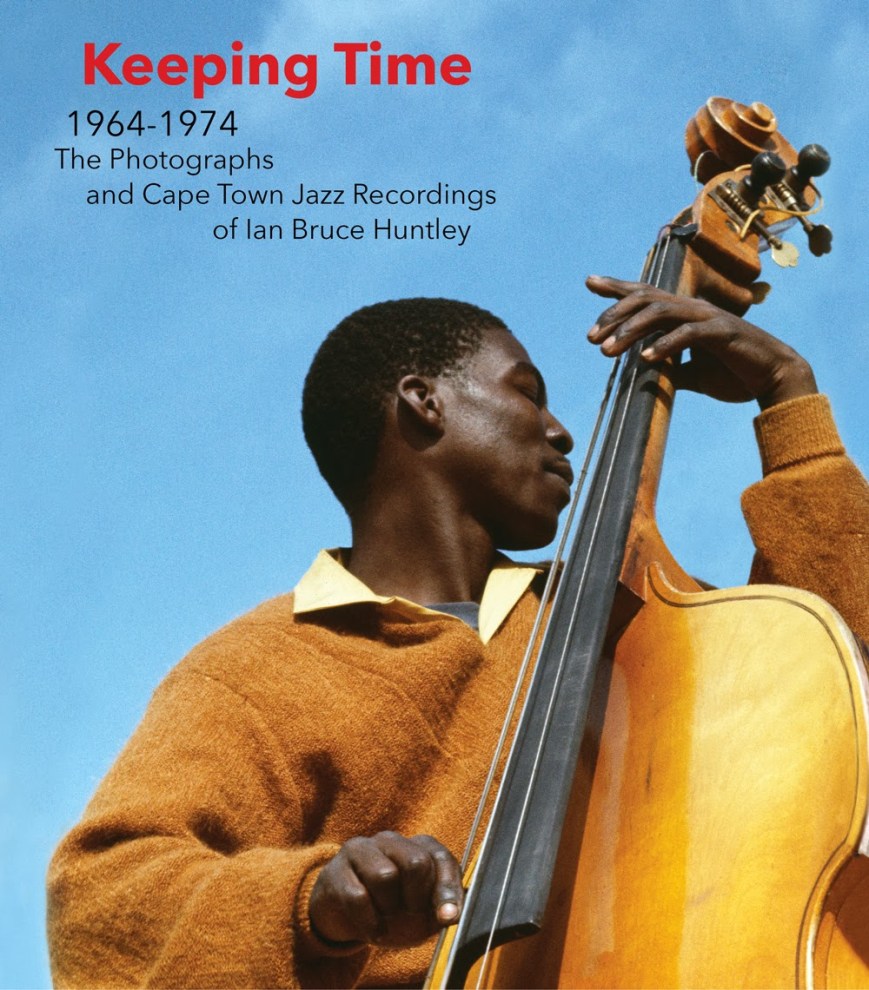
IBH-DJ-Cover-Front-medium

Psych “Big T” Ntsele on the cover of “Keeping Time”, the recently published book of Ian Bruce Huntley’s photographs that this archive of recordings accompanies.

SO VERY EXCITED TO BE ABLE TO SHARE THIS AT LAST! I’ve had the privilege of being involved in putting this amazing archive online over the past few months.

Find out more HERE, and then visit the archive for free downloads of more than 56 hours of jazz played in Cape Town between 1964 to 1972 by South African musicians — some famous, others who have had little exposure. Download a PDF of the book, browse the pictures, engage, enjoy!

ken jacobs on the archive

“I wish more stuff was available in its raw state, as primary source material for anyone to consider, and to leave for others in just that way, the evidence uncontaminated by compulsive proprietary misapplied artistry, “editing”, the purposeful “pointing things out” that cuts a road straight and narrow through the cine-jungle; we barrel through thinking we’re going somewhere and miss it all. Better to just be pointed to the territory, to put in time exploring, roughing it, on our own. For the straight scoop we need the whole scoop, or no less than the clues entire and without rearrangement. O, for a Museum of Found Footage, or cable channel, library, a shit-museum of telling discards accessible to all talented viewers/auditors. A wilderness haven salvaged from Entertainment.”

— The impossible idealism of Ken Jacobs (check out his films on UBUWEB). This is a quote from the hand-illustrated programme of his 1989 retrospective, Films that Tell Time – see a PDF HERE.

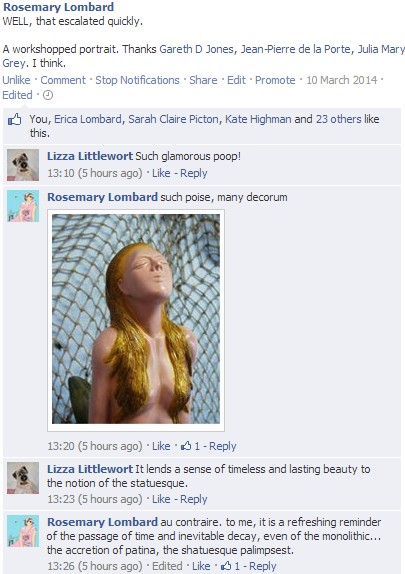
well, that escalated quickly.

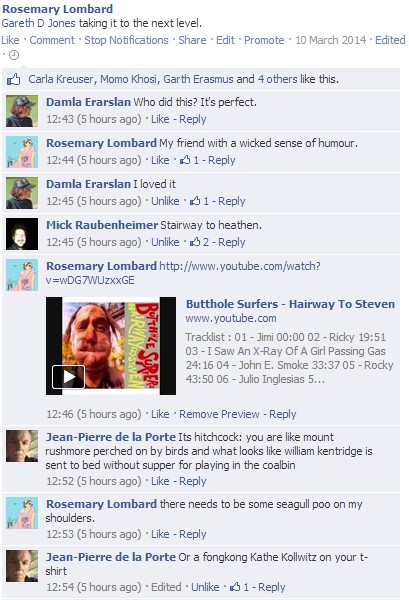
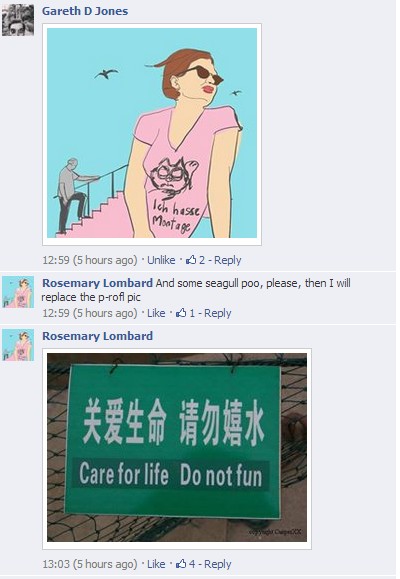
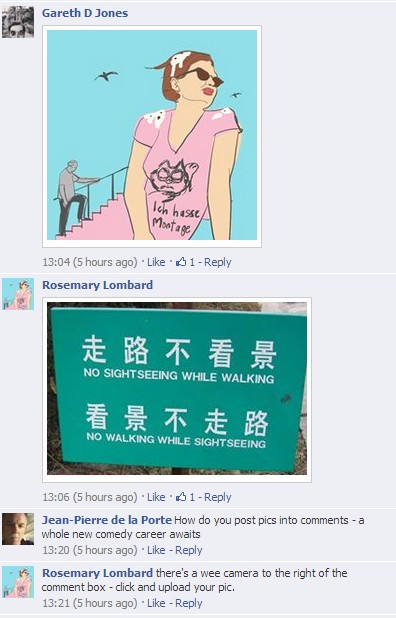
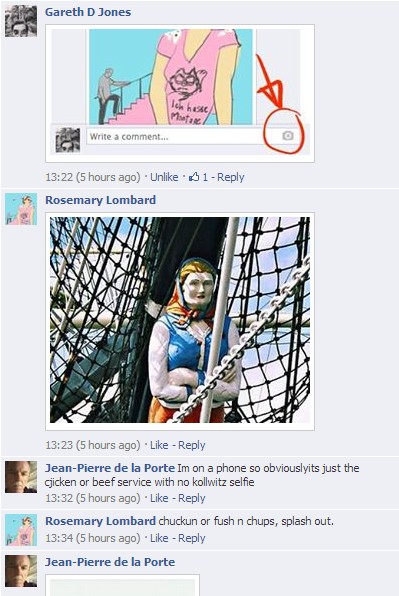
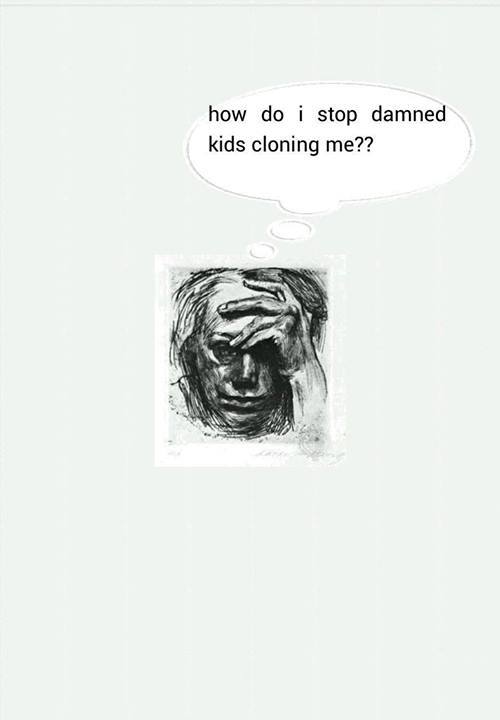
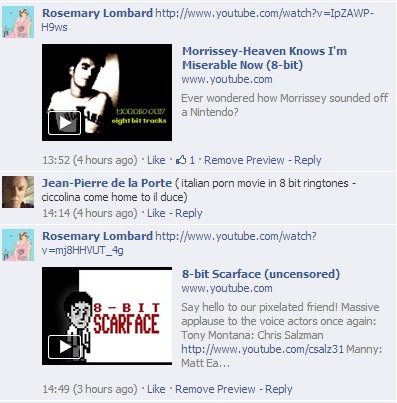
This is what Facebook is really for. Here is a funny conversation that evolved into a collaborative portrait in layers on my wall over a few hours today, a particularly suffocating Monday. I’m keeping this as a snapshot of what creative people used to do when bored silly with social media in 2014.

Photo by Julia Mary Grey, Kalk Bay harbour, Saturday 8 March, 2014

Photo by Julia Mary Grey, Kalk Bay harbour, Saturday 8 March, 2014

sea 1 comments

sea 2

By Gareth Jones,  in response to comments under the original image

sea 2a
sea 2b

sea 2c

sea 2d

By Jean-Pierre Delaporte

By Jean-Pierre de la Porte

http://youtu.be/IpZAWP-H9ws

sea 2e

Meanwhile, on another thread…

sea 3

By Gareth Jones, third iteration, after further comments under his first drawing

sea 3a

sea 3b

http://youtu.be/JgZbYaLqTLM

sea 3c

sea 3d

this heat – deceit (full album)

Released on Rough Trade in 1981, Deceit is a dark, intense post-punk classic. Band member Charles Hayward said of the zeitgeist that shaped the album:

“The whole speak, ‘Little Boy’, ‘Big Boy’, calling missiles cute little names. The whole period was mad! We had a firm belief that we were going to die and the record was made on those terms.… The whole thing was designed to express this sort of fear, angst, which the group was all about, really… Some of the album was really plush sounding, some dim and pokey. Sometimes it would sound like the machinery was breaking up. We deliberately would make it sound as though the record player was exploding.”

Read more about this brilliant album at DROWNED IN SOUND.

Track List

Sleep 0:00
Paper Hats 2:14
Triumph 8:17
S.P.Q.R. 11:12
Cenotaph 14:41
Shrink Wrap 19:20
Radio Prague 21:01
Makeshift Swahili 23:23
Independence 27:27
A New Kind Of Water 31:09
Hi Baku Shyo 36:06
__________________________________
Charles Hayward — Vocals, Bass Guitar, Keyboards, Drums, Tape Music
Gareth Williams — Vocals, Bass Guitar, Keyboards, Tape Music
Charles Bullen — Vocals, Clarinet, Guitar, Drums, Tape Music

David Cunningham — Production
Martin Frederick — Mixing
Laurie-Rae Chamberlain — Colour Xerography
Nicholas Goodall — Sleeve Photography Direction
Studio 54 — Sleeve Design

stepan razin’s dream (Казачья Притча)

Oy, to ne vecher” (Ой, то не вечер) is the incipit of a Russian folk song, also known as “The Cossack’s Parable” (Казачья Притча) or as “Stepan Razin’s Dream” (Сон Степана Разина). It was first published by composer Alexandra Zheleznova-Armfelt (1870–1933) in her collection Songs of the Ural Cossacks after her fieldwork in the Ural District during 1896–1897.

The original lyrics were in seven verses, with verse six making explicit that the dreamer is 17th century cossack rebel Stepan Razin. Razin has a dream, and his captain (esaul) interprets it as an omen of their defeat.

The song has been performed in several variants, sometimes expanded to up to eleven verses, but in the most common variant as sung by modern interpreters, it is reduced to four verses, removing the mention of Razin, and reducing the three omens in the dream to a single one.These lyrics may be translated thus:

Ah, it is not yet evening but I have taken a little nap, and a dream came to me. In the dream that came to me, it was as if my raven-black horse was playing about, dancing about, frisky beneath me.  Ah, and evil winds came flying out of the east, and they ripped the black cap from that wild head of mine.

And the esaul* was a clever one, he was able to interpret my dream: “Ah, it will surely come off”, he said, “that wild head of yours”.

Source of information: Wikipedia.

*Esaul: a post and rank in prerevolutionary Russia in the cossack hosts after 1576.

chris marker - staring back

Photo: Chris Marker, “Staring Back”

alain resnais/chris marker – statues also die (1953)

“We want to see their suffering, serenity, humour, even though we don’t know anything about them.”

Directors: Alain Resnais & Chris Marker
Narrator – Jean Négroni
Music – Guy Bernard

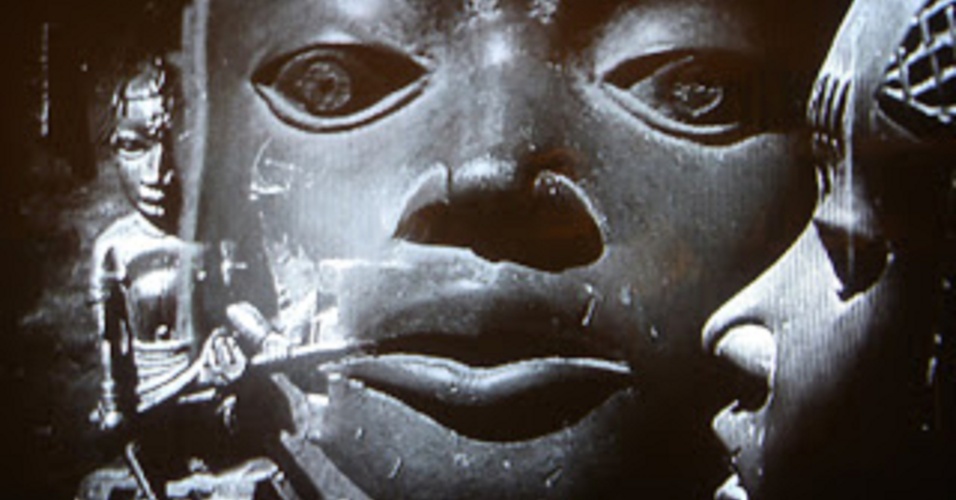
A collaborative work by Resnais and Marker, this is a deeply felt study of African art and the decline it underwent as a result of its contact with Western civilization. The film was banned for more than a decade by French censors as an attack on French colonialism, and is now only available to watch in the shortened version I’ve posted here (turn on the subtitles on Youtube if you want English subtitling).

Statues Also Die traces the devastating impact of French colonialism on African art. As Resnais’ co-director, Chris Marker, stated, “We want to see their suffering, serenity, humor, even though we don’t know anything about them.” Their film shows what happens when art loses its connection to its cultural context of production. Witty, thoughtful commentary is combined with images of stark formal beauty in this outcry against the fate of an art once integral to communal life that became debased as it fell victim to the demands of a different system of knowledge and values.

statues also die
From Wikipedia:

Statues Also Die (French: Les Statues meurent aussi) is a 1953 French essay film directed by Chris Marker and Alain Resnais, about historical African art and the effects colonialism has had on how it is perceived. The film won the 1954 Prix Jean Vigo. Because of its criticism of colonialism, the second half of the film was censored in France until the 1960s.

Synopsis

The film exhibits a series of sculptures, masks and other traditional art from Sub-Saharan Africa. The images are frequently set to music and cut to the music’s pace. The narrator focuses on the emotional qualities of the objects, and discusses the perception of African sculptures from a historical and contemporary European perspective. Only occasionally does the film provide the geographical origin, time period or other contextual information about the objects. The idea of a dead statue is explained as a statue which has lost its original significance and become reduced to a museum object, similarly to a dead person who can be found in history books. Interweaved with the objects are a few scenes of Africans performing traditional music and dances, as well as the death of a disemboweled gorilla.

During the last third of the film, the modern commercialisation of African culture is problematised. The film argues that colonial presence has compelled African art to lose much of its idiosyncratic expression, in order to appeal to Western consumers. A mention is made of how African currencies previously had been replaced by European. In the final segment, the film comments on the position of black Africans themselves in contemporary Europe and North America. Footage is seen from a Harlem Globetrotters basketball show, of the boxer Sugar Ray Robinson, and a jazz drummer intercut with scenes from a confrontation between police and labour demonstrators. Lastly the narrator argues that we should regard African and European art history as one inseparable human culture.

chhoun vanna – toa thea youm chlong (birds are singing but my lover won’t return)

“The birds are chirping, to and fro
My love, have you forgotten me?
As water can’t cut through the sand
I can’t cut you from my memories
The bridge (between you and I) has broken
The pathway is gone, and the water is so very deep
How am I to find you on the other side, so far away?”

Chhoun Vanna was a Cambodian singer between the 1950s and ’70s. She and her sister Chhoun Malai survived the Khmer Rouge genocide.

ros sereysothea – who’ll stop the rain?

Cambodian cover by Ros Sereysothea and Sinn Sisamouth of Creedence Clearwater Revival’s “Who’ll Stop The Rain?”. They died under unknown circumstances during the Khmer Rouge reign of terror,  as did countless other artists and intellectuals murdered in Pol Pot’s Killing Fields, and this recording only survived on tapes smuggled out of the country.

“Long as I remember the rain been comin’ down.
Clouds of mystery pourin’ confusion on the ground.
Good men through the ages, tryin’ to find the sun;
And I wonder, still I wonder, who’ll stop the rain.”

Read more of their story HERE.

ros sereysothea – i will starve myself to death/ shave your beard

I hardly ever put on a cd or listen to an LP these days (last is prolly due to the fact,that I killed my speakers/amplifier). In fact i am totally addicted to the net when it comes to music. I also am an avid KCRW listener. I often tune in to Henry Rollins’s radio show on KCRW. Henry does all the searching, comes up with all the cool tunes from every genre all over the place and all I have to do is listen. It was due to his radio show that i started listening to Sinn Sisamouth. This led me to Ros Sereysothea. I am 100% fascinated with her singing and music.

For the last days, I keep playing over and over this on Spotify:’ ‘Dengue Fever Presents Electric Cambodia”. Sounds amazing,and wished that i could understand the language. All performers on this compilation are dead,or ”vanished”. Killed/died during the communist Khmer Rouge regime.

”Electric Cambodia may be one of the saddest and most enraging compilations released this year—not for the music, but for the history. The performers are dead, all dead, or “vanished” into the Killing Fields—murdered, presumably, although the how is a mystery. Did they die quickly or slowly? ” – read more of this review HERE.

Ros Sereysothea – Shave your Beard

hannah arendt on the relationship between violence and power (1969)

To switch for a moment to conceptual language: Power is indeed of the essence of all government, but violence is not. Violence is by nature instrumental; like all means, it always stands in need of guidance and justification through the end it pursues. And what needs justification by something else cannot be the essence of anything. The end of war – end taken in its twofold meaning – is peace or victory; but to the question “And what is the end of peace?” there is no answer. Peace is an absolute, even though in recorded history periods of warfare have nearly always outlasted periods of peace. Power is in the same category; it is, as they say, “an end in itself.” (This, of course, is not to deny that governments pursue policies and employ their power to achieve prescribed goals. But the power structure itself precedes and outlasts all aims, so that power, far from being the means to an end, is actually the very condition enabling a group of people to think and act in terms of the means-end category.)

And since government is essentially organized and institutionalized power, the current question “What is the end of government?” does not make much sense either. The answer will be either question-begging – to enable men to live together – or dangerously utopian – to promote happiness or to realize a classless society or some other nonpolitical ideal, which if tried out in earnest cannot but end in some kind of tyranny.

Power needs no justification, being inherent in the very existence of political communities; what it does need is legitimacy. The common treatment of these two words as synonyms is no less misleading and confusing than the current equation of obedience and support. Power springs up whenever people get together and act in concert, but it derives its legitimacy from the initial getting together rather than from any action that then may follow. Legitimacy, when challenged, bases itself on an appeal to the past, while justification relates to an end that lies in the future.
assholesViolence can be justifiable, but it never will be legitimate. Its justification loses in plausibility the farther its intended end recedes into the future. No one questions the use of violence in self-defense, because the danger is not only clear but also present, and the end justifying the means is immediate.

Power and violence, though they are distinct phenomena, usually appear together. Wherever they are combined, power, we have found, is the primary and predominant factor. The situation, however, is entirely different when we deal with them in their pure states – as, for instance, with foreign invasion and occupation. We saw that the current equation of violence with power rests on government’s being understood as domination of man over man by means of violence. If a foreign conqueror is confronted by an impotent government and by a nation unused to the exercise of political power, it is easy for him to achieve such domination. In all other cases the difficulties are great indeed, and the occupying invader will try immediately to establish Quisling governments, that is, to find a native power base to support his dominion. The head-on clash between Russian tanks and the entirely nonviolent resistance of the Czechoslovak people is a textbook case of a confrontation between violence and power in their pure states. But while domination in such an instance is difficult to achieve, it is not impossible.

Violence, we must remember, does not depend on numbers or opinions, but on implements, and the implements of violence, as I mentioned before, like all other tools, increase and multiply human strength. Those who oppose violence with mere power will soon find that they are confronted not by men but by men’s artifacts, whose inhumanity and destructive effectiveness increase in proportion to the distance separating the opponents. Violence can always destroy power; out of the barrel of a gun grows the most effective command, resulting in the most instant and perfect obedience. What never can grow out of it is power.

on buried treasure (5 june 2012)

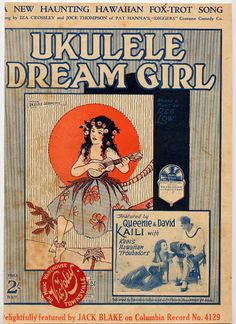
ukulele dream girlTo research (English definition): “To search for something.”

Rechercher (French definition): “To search for, to look for” and also “to search again, to look for again”.

Both “search” and “research” are the same word in French, it seems.  This makes sense: even if something was once common knowledge, after it is hidden it is no longer “there”; it has fallen from awareness. So you have to seek for it again, that which is not there. In “research”, you never know what is actually there until you find it, or there would be no need to look. You dis-cover it again, un-cover it anew.

Archives are fascinating places of preservation-with-intent to look in, and they are always tantalisingly incomplete, however exhaustive… But nothing beats the thrill of finding a treasure hoard saved by happenstance.

To “ondersoek” , in Afrikaans, is to look under other things… The term implies a palimpsestic patina, an accretion, a build-up of layers that must be lifted, peeled off to see underneath… the mother lode, the genealogy. Sometimes you know exactly what you are looking for; sometimes you don’t. You may only have a misty hope that there is anything there at all. It can be useful to lose focus, too, because you become open to other routes, other offshoots, that may take you further than your original hunch.

On Saturday, in a poky little shop in Kalk Bay, I found a trove of old sheet music: popular tunes from the 1920s and 1930s, the top few layers of it in torn, grubby disarray. A thrill ran through my fingertips as I started re-moving each sheet from the pile, putting it aside systematically. There was nothing of great interest until I got quite a way below the dusty surface layers, where most people’s patience obviously runs out (this is the trick with digging – to delve deeper, to expend more energy, more time than everyone else – om onder te soek, for there lies the gold). There was no way I could stop.

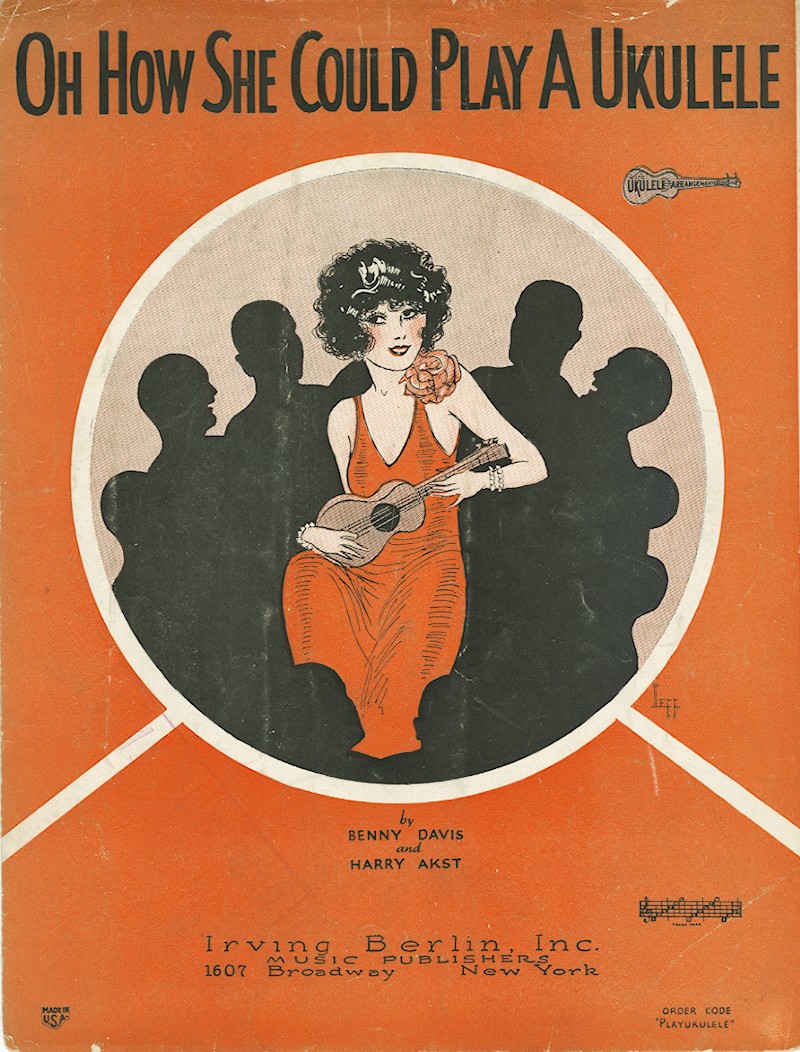
Buried in the pile, under piano exercise books, I found something that really astounded me… it almost made me shout for joy: many, many of the scores had ukulele chord diagrams on them! In all the popular sheet music I had ever been acquainted with before this, these diagrams were provided for guitar – with five lines for the five strings. These all had only four lines. It became clear to me on seeing this that, along with piano, ukulele was most likely the popular amateur instrument of choice back in the 1920s to 1940s, and not guitar. It makes sense when you listen to the jazziness of the pop arrangements of the time, and how well the chord progressions work technically with a ukulele’s tuning – GCEA. I would suppose that the guitar ousted the uke in popularity with the ascent of blues and rock and folk, in which different chords and tunings predominate, and for which the guitar’s EADGBE tuning is a more natural fit… How lovely to realise that this instrument I play very amateurishly, considered a funny curiosity by most these days, was accorded far more value in the past!oh how she could
What this little discovery means for me, practically, is that I can now play all these very old jazzy tunes with no in-depth knowledge of musical theory. Even the songs I have never heard before can be found with a bit of effort on the internet, listened to, and re-played, provided someone else along the way has seen their value. As long as they were ever recorded, be it on wax cylinder or 78rpm, they may have been digitised. And, as they spin up on my hard drive, a vortex is created, opening a wormhole back to the instant that band played for the first time as the cylinder turned. And the song comes back from the dead as my fingers form the chord shapes, stutters back to life as I sing my breath into the words. Technology is powerful magic, all the more so when it takes account of its historicity.

Information technology is not only about making the future more slick and manageable; it is also about keeping the past accessible… Essentially it is about conquering linear time and space. The prolific recording of moments allows us to live unconstrained by the present moment and space we’re in, almost continuously if we so wish… (For example, people sit on Facebook as they are out for coffee with a friend. Once they have “checked in” at the cafe, they check out what other people are doing elsewhere on their phones, then frame themselves carefully for a photo in that space and capture the moment, uploading it to join the feed for others who are moving through spaces connected via radio waves to know about. Very little other than eating, drinking and self-referential preening is going on in most coffee spots.)

The sheer volume of recording that goes on now is unprecedented. Imagine reading Twitter logs in a century – every ordinary so-and-so with a Twitter account, with their own account of an event… The hyper(in)significance of every moment of our lives being documented is overwhelming to think about. How will historians of the future ever manage to filter out the noise from the signal and deduce anything?

Or, will the noise be the signal – the fragments the whole? How does this affect our memories, our critical faculties, our creativity, our relationships? New technologies confer on us immense power that should be used wisely and with sober discernment, not trivially… as that dumb what’s-her-face model Leandra found out last week when tweeting 140 racially offensive characters cost her her modelling career and dignity, with satisfying, devastating swiftness!

So, anyway, I pulled out a large wad of music sheets; slowly, carefully replaced what I didn’t take for someone else to find. Tried to conceal my excitement as I got to the till; thwacked the pile down and asked nonchalantly, “How much for this old stuff?”

“Two rand a sheet.” After counting to fifteen the old guy stopped and said “I can’t be bothered to count higher than fifteen – it’s yours for thirty bucks.”

I paid thirty rand for all of it. That’s less than a cocktail or a sandwich in the seaside cafes lining that road. So few people seem to see value in this stuff. Not even antique dealers. To them it’s just quaint ephemera.

Research involves following the intuition, the hunch that something lies hidden out of time, out of sight, out of mind: perhaps recorded imperfectly, decaying, deliberately saved. Or, like these priceless music sheets, just debris left in a place where it makes no sense to anyone who has stumbled across it yet… In danger of being lost forever if someone doesn’t come along with enough focused curiosity to re-cognise it as valuable, to think it back into meaningful connection with right now.

To me, the serendipity of finds like Saturday’s feels more than coincidental. If the person looking didn’t happen to be me there at that precise moment, it would probably have been a non-event. Even if it were the me of last year leafing through, I wouldn’t have known what I was looking for. Would have seen the music but not had a ukulele and maybe not noticed that the chord diagrams had only four strings, not five. The me of just a few months back would have seen the music with interest but not known the extent of the 78rpm archive online (having become aware of the degree of coverage of obscure songs through something I have been working on in the past month) and so left it because I didn’t know the songs and didn’t know there was a way to hear them. I don’t often look through second hand stores these days, broke as I am. On Saturday, something compelled me to step inside as I was passing. It felt as if me and the music were drawn together. It felt magical.

poor wayfaring stranger

A recording of lined-out singing by the Indian Bottom Association Of The Old Regular Baptist Church in Appalachia.

“Lining out”, also called “hymn lining” or “line singing”, is a haunting form of a cappella hymn-singing or hymnody in which the song leader gives each line of a hymn tune as it is to be sung, usually in a chanted form suggesting the tune, and the rest of the congregation then sings the line. It can be considered a form of heterophonic call and response.

Although the practice has now all but died out, it was once very common in Old Regular and Primitive Baptist churches to hear line singing, because musical instruments were not allowed in these churches, and some people in the congregation could not read to use a hymnbook either.

Listen to more line singing HERE or read an interesting piece comparing line singing and sacred harp singing HERE.

sounds of silence

sos
LABEL: ALGA MARGHEN (ITALY)
CATALOG #: ALGA 046LP
RELEASE DATE: 21 JANUARY 2014

Sounds of Silence is an anthology of some of the most intriguing silent tracks in recording history and includes rare works, among others, by Andy Warhol, John Lennon, Maurice Lemaitre, Sly & The Family Stone, Robert Wyatt, John Denver, Whitehouse, Orbital, Crass, Ciccone Youth, Afrika Bambaataa and of course, Yves Klein.

In their own quiet way, these silences speak volumes: they are performative, political, critical, abstract, poetic, cynical, technical, absurd. They can be intended as a memorial or a joke, a special offer, or something entirely undefined. The carefully-chosen silences of this anthology are intrinsically linked to the medium of reproduction itself and reveal its nude materiality. They expose their medium in all its facets and imperfections, including the effect of time and wear. At the most basic level, these silences are surfaces. And it is in their materiality that they distinguish themselves from the conceptual experiments of John Cage with “4’33”.

Since the 1950s, silence has found a place in the economic structure of the record industry and since then it would increasingly be appropriated by a vast array of artists in a vast array of contexts. Indeed, the silent tracks seem to know no boundaries. The LP presents the silences as they were originally recorded, preserving any imperfection that the hardware conferred upon the enterprise, without banning the possibility of being satisfying to the ear. The liner notes provide historical background for each track, revealing the stated (or presumed) motivations for these silences, while providing novel sound correspondences or interferences.

This album is meant to be played loud (or not), at any time, in any place: a true aural experience. Only 250 copies available for distribution, in a gatefold iconic sleeve. ORDER THE LP HERE.

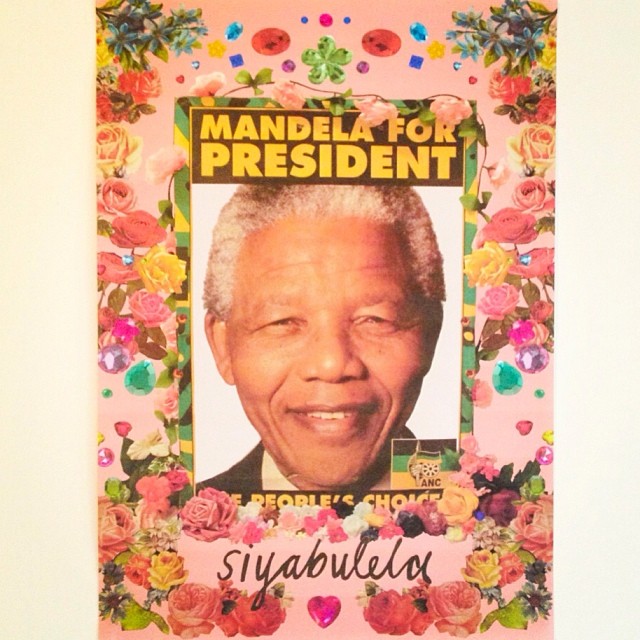
reflections on mandela’s legacy

mandela in the mirror

Photo: Adrian Steirn, 2011

Some links and excerpts from commentary that I have found to be worth reading today (I’ll add to this whenever I come across anything interesting – if anyone reading this has suggestions, please pass them on too):

From “The Contradictions of Mandela” –  Zakes Mda in the New York Times opinion pages:

The claim is that the settlement reached between the A.N.C. and the white apartheid government was a fraud perpetrated on the black people, who have yet to get back the land stolen by whites during colonialism. Mandela’s government, critics say, focused on the cosmetics of reconciliation, while nothing materially changed in the lives of a majority of South Africans.

This movement, though not representative of the majority of black South Africans who still adore Mandela and his A.N.C., is gaining momentum, especially on university campuses.

I understand the frustrations of those young South Africans and I share their disillusionment. I, however, do not share their perspective on Mandela. I saw in him a skillful politician whose policy of reconciliation saved the country from a blood bath and ushered it into a period of democracy, human rights and tolerance. I admired him for his compassion and generosity, values that are not usually associated with politicians. I also admired him for his integrity and loyalty.

But I fear that, for Mandela, loyalty went too far. The corruption that we see today did not just suddenly erupt after his term in office; it took root during his time. He was loyal to his comrades to a fault, and was therefore blind to some of their misdeeds.

Read the rest of what Mda has to say HERE.

From “Mandela’s Socialist Failure” – Slavoj Zizek in the New York Times opinion pages

In South Africa, the miserable life of the poor majority broadly remains the same as under apartheid, and the rise of political and civil rights is counterbalanced by the growing insecurity, violence, and crime. The main change is that the old white ruling class is joined by the new black elite. Secondly, people remember the old African National Congress which promised not only the end of apartheid, but also more social justice, even a kind of socialism. This much more radical ANC past is gradually obliterated from our memory. No wonder that anger is growing among poor, black South Africans.

South Africa in this respect is just one version of the recurrent story of the contemporary left. A leader or party is elected with universal enthusiasm, promising a “new world” — but, then, sooner or later, they stumble upon the key dilemma: does one dare to touch the capitalist mechanisms, or does one decide to “play the game”? If one disturbs these mechanisms, one is very swiftly “punished” by market perturbations, economic chaos, and the rest. This is why it is all too simple to criticize Mandela for abandoning the socialist perspective after the end of apartheid: did he really have a choice? Was the move towards socialism a real option?

It is easy to ridicule Ayn Rand, but there is a grain of truth in the famous “hymn to money” from her novel Atlas Shrugged: “Until and unless you discover that money is the root of all good, you ask for your own destruction. When money ceases to become the means by which men deal with one another, then men become the tools of other men. Blood, whips and guns or dollars. Take your choice – there is no other.” Did Marx not say something similar in his well-known formula of how, in the universe of commodities, “relations between people assume the guise of relations among things”?

In the market economy, relations between people can appear as relations of mutually recognized freedom and equality: domination is no longer directly enacted and visible as such. What is problematic is Rand’s underlying premise: that the only choice is between direct and indirect relations of domination and exploitation, with any alternative dismissed as utopian. However, one should nonetheless bear in mind the moment of truth in Rand’s otherwise ridiculously ideological claim: the great lesson of state socialism was effectively that a direct abolishment of private property and market-regulated exchange, lacking concrete forms of social regulation of the process of production, necessarily resuscitates direct relations of servitude and domination. If we merely abolish market (inclusive of market exploitation) without replacing it with a proper form of the Communist organization of production and exchange, domination returns with a vengeance, and with it direct exploitation.

The general rule is that, when a revolt begins against an oppressive half-democratic regime, as was the case in the Middle East in 2011, it is easy to mobilize large crowds with slogans which one cannot but characterize as crowd pleasers – for democracy, against corruption, for instance. But then we gradually approach more difficult choices: when our revolt succeeds in its direct goal, we come to realize that what really bothered us (our un-freedom, humiliation, social corruption, lack of prospect of a decent life) goes on in a new guise. The ruling ideology mobilizes here its entire arsenal to prevent us from reaching this radical conclusion. They start to tell us that democratic freedom brings its own responsibility, that it comes at a price, that we are not yet mature if we expect too much from democracy. In this way, they blame us for our failure: in a free society, so we are told, we are all capitalist investing in our lives, deciding to put more into our education than into having fun if we want to succeed…

… If we want to remain faithful to Mandela’s legacy, we should forget about celebratory crocodile tears and focus on the unfulfilled promises his leadership gave rise to. We can safely surmise that, on account of his doubtless moral and political greatness, he was at the end of his life also a bitter, old man, well aware how his very political triumph and his elevation into a universal hero was the mask of a bitter defeat. His universal glory is also a sign that he really didn’t disturb the global order of power.

Read Zizek’s full post HERE.

From “Nelson Mandela: The Crossing” –  Richard Pithouse at SACSIS

[W]e need to be very clear that we did not undo many of the injustices that honed Mandela’s anger in the 1950s…

…But as Mandela returns from myth and into history we should not, amidst the humanizing details of his life as it was actually lived, or the morass into which the ANC has sunk, forget the principles for which he stood. We should not forget the bright strength of the Idea of Nelson Mandela.

Mandela was a revolutionary who was prepared to fight and to risk prison or death for his ideals – rational and humane ideals. In this age where empty posturing on Facebook or reciting banal clichés at NGO workshops is counted as militancy, where rhetoric often floats free of any serious attempts to organise or risk real confrontation, where the human is seldom the measure of the political, we would do well to recall Mandela as a man who brought principle and action together with resolute commitment.

Mandela was also a man whose ethical choices transcended rather than mirrored those of his oppressors. Amidst the on-going debasement of our political discourse into ever more crude posturing we would do well to remember that no radicalism can be counted as adequate to its situation if it allows that situation to constrain its vision and distort its conception of the ethical.

Read the full article by Pithouse HERE.

stir it up, little darling (for thuli madonsela)

“Society is like a stew. If you don’t stir it up every once in a while then a layer of scum floats to the top.”

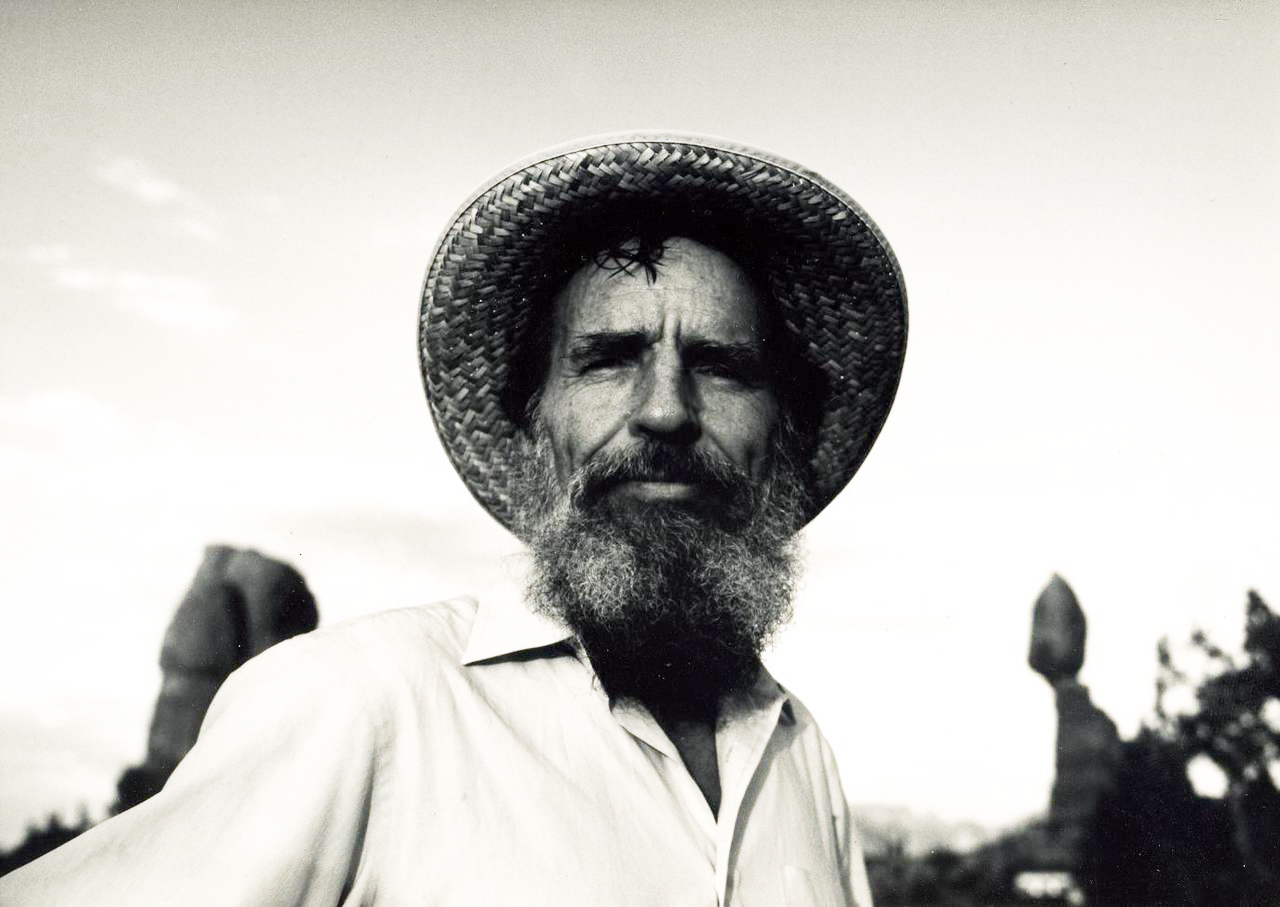
“My loyalties will not be bound by national borders, or confined in time by one nation’s history, or limited in the spiritual dimension by one language and culture. I pledge my allegiance to the damned human race, and my everlasting love to the green hills of Earth, and my intimations of glory to the singing stars, to the very end of space and time.”

— From Confessions of a Barbarian: Selections from the Journals of Edward Abbey, 1951-1989 (Boston: Little, Brown 1994).

edward-abbey

bergson on having a built-in bullshit detector

“Fortunately, some are born with spiritual immune systems that sooner or later give rejection to the illusory worldview grafted upon them from birth through social conditioning. They begin sensing that something is amiss, and start looking for answers. Inner knowledge and anomalous outer experiences show them a side of reality others are oblivious to, and so begins their journey of awakening. Each step of the journey is made by following the heart instead of following the crowd and by choosing knowledge over the veils of ignorance.”

― Henri Bergson

for y’all celebrating thanksgiving

Uncanny scene from the film Beetlejuice (1989)in which a frightfully posh dinner is ruptured when the table is re-possessed by the voices of exploited plantation labourers, specifically via Harry Belafonte’s “Day-O”. One of Tim Burton’s most politically subversive moments.