shine on, harvest moon

HarvestMoon

The Harvest Moon for 2013 falls on 19 September. Each full moon of the twelve months has a folkloric name of its own and that for the month of September is called the “Harvest Moon”. According to NASA, the Harvest Moon gets its name from farmers who relied on the moon and its celestial schedule to harvest their crops. Since most crops ripen in late summer and early autumn, farmers would have to harvest during this time of the year (in the northern hemisphere, this is September, but not in the southern hemisphere).

“In the days before electric lights, farmers depended on bright moonlight to extend the workday beyond sunset,” writes NASA’s Dr. Tony Phillips. “It was the only way they could gather their ripening crops in time for market. The full moon closest to the autumnal equinox became the Harvest Moon, and it was always a welcome sight.”

Info from NASA.

kurt vonnegut on the golden rule

kurt singature


Hello, babies. Welcome to Earth. It’s hot in the summer and cold in the winter. It’s round and wet and crowded. At the outside, babies, you’ve got about a hundred years here. There’s only one rule that I know of, babies — “God damn it, you’ve got to be kind.”

— From God Bless You, Mr Rosewater (1965)

rosalia chalia – i dreamt that i dwelt in marble halls (1901)

This is Rosalia Chalia (1863-1948) singing “I Dreamt That I Dwelt in Marble Halls” from the opera The Bohemian Girl, composed by MW Balfe in 1843, recorded on wax cylinder in 1901…

… And here’s the incomparable re-recording engineer and archivist Ward Marston talking about this forgotten Cuban soprano, and the physical realities of trying to rescue recordings of her from obscurity — fascinating:


kathleen ferrier – bist du bei mir

This recording was made in 1950.

When thou art near, I go with joy
To death and to my rest.
O how pleasant would my end be,
If your fair hands
Would close my faithful eyes.

Kathleen Mary Ferrier, CBE (22 April 1912 – 8 October 1953) was an English contralto singer who achieved an international reputation as a stage, concert and recording artist, with a repertoire extending from folksong and popular ballads to the classical works of Bach, Brahms, Mahler and Elgar. Her death from cancer, at the height of her fame, was a shock to the musical world and particularly to the general public, which was kept in ignorance of the nature of her illness until after her death.

“Bist du bei mir” (English: “be, thou, with me”) (BWV 508) is an aria in the Notebook for Anna Magdalena Bach. It was therefore attributed to Johann Sebastian Bach, but the melody is part of the Gottfried Heinrich Stölzel opera Diomedes, oder die triumphierende Unschuld that was performed in Bayreuth on November 16, 1718. The opera score is lost.

(Info taken from Wikipedia.)

victoria de los angeles – dido’s lament

Victoria de los Angeles sings “Thy hand Belinda… When I am laid in earth” from Dido and Aeneas by Henry Purcell (1695-1695) – recorded in 1965.
Derek Simpson, violincello
Colin Tilney, harpsichord
Ambrosian Singers
English Chamber Orchestra
Sir John Barbirolli, conductor

louise glück – the seven ages

In my first dream, the world appeared
the salt, the bitter, the forbidden, the sweet
In my second I descended

I was human, I couldn’t just see a thing
beast that I am

I had to touch, to contain it

I hid in the groves,
I worked in the fields until the fields were bare —

time
that will never come again —
the dry wheat bound, caskets
of figs and olives

I even loved a few times in my disgusting human way

and like every one I called that accomplishment
erotic freedom,
absurd as it seems

The wheat gathered and stored, the last
fruit dried: time

that is hoarded, that is never used,
does it also end?

In my first dream the world appeared
the sweet, the forbidden
but there was no garden, only
raw elements

I was human:
I had to beg to descend
the salt, the bitter, the demanding, the preemptive

And like everyone, I took, I was taken
I dreamed

I was betrayed:

Earth was given to me in a dream
In a dream I possessed it

t.s. eliot – little gidding (1942)

little-giddingI

Midwinter spring is its own season
Sempiternal though sodden towards sundown,
Suspended in time, between pole and tropic.
When the short day is brightest, with frost and fire,
The brief sun flames the ice, on pond and ditches,
In windless cold that is the heart’s heat,
Reflecting in a watery mirror
A glare that is blindness in the early afternoon.
And glow more intense than blaze of branch, or brazier,
Stirs the dumb spirit: no wind, but pentecostal fire
In the dark time of the year. Between melting and freezing
The soul’s sap quivers. There is no earth smell
Or smell of living thing. This is the spring time
But not in time’s covenant. Now the hedgerow
Is blanched for an hour with transitory blossom
Of snow, a bloom more sudden
Than that of summer, neither budding nor fading,
Not in the scheme of generation.
Where is the summer, the unimaginable
Zero summer?

If you came this way,
Taking the route you would be likely to take
From the place you would be likely to come from,
If you came this way in may time, you would find the hedges
White again, in May, with voluptuary sweetness.
It would be the same at the end of the journey,
If you came at night like a broken king,
If you came by day not knowing what you came for,
It would be the same, when you leave the rough road
And turn behind the pig-sty to the dull facade
And the tombstone. And what you thought you came for
Is only a shell, a husk of meaning
From which the purpose breaks only when it is fulfilled
If at all. Either you had no purpose
Or the purpose is beyond the end you figured
And is altered in fulfilment. There are other places
Which also are the world’s end, some at the sea jaws,
Or over a dark lake, in a desert or a city—
But this is the nearest, in place and time,
Now and in England.

If you came this way,
Taking any route, starting from anywhere,
At any time or at any season,
It would always be the same: you would have to put off
Sense and notion. You are not here to verify,
Instruct yourself, or inform curiosity
Or carry report. You are here to kneel
Where prayer has been valid. And prayer is more
Than an order of words, the conscious occupation
Of the praying mind, or the sound of the voice praying.
And what the dead had no speech for, when living,
They can tell you, being dead: the communication
Of the dead is tongued with fire beyond the language of the living.
Here, the intersection of the timeless moment
Is England and nowhere. Never and always.

II

Ash on an old man’s sleeve
Is all the ash the burnt roses leave.
Dust in the air suspended
Marks the place where a story ended.
Dust inbreathed was a house-
The walls, the wainscot and the mouse,
The death of hope and despair,
This is the death of air.

There are flood and drouth
Over the eyes and in the mouth,
Dead water and dead sand
Contending for the upper hand.
The parched eviscerate soil
Gapes at the vanity of toil,
Laughs without mirth.
This is the death of earth.

Water and fire succeed
The town, the pasture and the weed.
Water and fire deride
The sacrifice that we denied.
Water and fire shall rot
The marred foundations we forgot,
Of sanctuary and choir.
This is the death of water and fire.

In the uncertain hour before the morning
Near the ending of interminable night
At the recurrent end of the unending
After the dark dove with the flickering tongue
Had passed below the horizon of his homing
While the dead leaves still rattled on like tin
Over the asphalt where no other sound was
Between three districts whence the smoke arose
I met one walking, loitering and hurried
As if blown towards me like the metal leaves
Before the urban dawn wind unresisting.
And as I fixed upon the down-turned face
That pointed scrutiny with which we challenge
The first-met stranger in the waning dusk
I caught the sudden look of some dead master
Whom I had known, forgotten, half recalled
Both one and many; in the brown baked features
The eyes of a familiar compound ghost
Both intimate and unidentifiable.
So I assumed a double part, and cried
And heard another’s voice cry: “What! are you here?”
Although we were not. I was still the same,
Knowing myself yet being someone other—
And he a face still forming; yet the words sufficed
To compel the recognition they preceded.
And so, compliant to the common wind,
Too strange to each other for misunderstanding,
In concord at this intersection time
Of meeting nowhere, no before and after,
We trod the pavement in a dead patrol.
I said: “The wonder that I feel is easy,
Yet ease is cause of wonder. Therefore speak:
I may not comprehend, may not remember.”
And he: “I am not eager to rehearse
My thoughts and theory which you have forgotten.
These things have served their purpose: let them be.
So with your own, and pray they be forgiven
By others, as I pray you to forgive
Both bad and good. Last season’s fruit is eaten
And the fullfed beast shall kick the empty pail.
For last year’s words belong to last year’s language
And next year’s words await another voice.
But, as the passage now presents no hindrance
To the spirit unappeased and peregrine
Between two worlds become much like each other,
So I find words I never thought to speak
In streets I never thought I should revisit
When I left my body on a distant shore.
Since our concern was speech, and speech impelled us
To purify the dialect of the tribe
And urge the mind to aftersight and foresight,
Let me disclose the gifts reserved for age
To set a crown upon your lifetime’s effort.
First, the cold fricton of expiring sense
Without enchantment, offering no promise
But bitter tastelessness of shadow fruit
As body and soul begin to fall asunder.
Second, the conscious impotence of rage
At human folly, and the laceration
Of laughter at what ceases to amuse.
And last, the rending pain of re-enactment
Of all that you have done, and been; the shame
Of things ill done and done to others’ harm
Which once you took for exercise of virtue.
Then fools’ approval stings, and honour stains.
From wrong to wrong the exasperated spirit
Proceeds, unless restored by that refining fire
Where you must move in measure, like a dancer.”
The day was breaking. In the disfigured street
He left me, with a kind of valediction,
And faded on the blowing of the horn.

III

There are three conditions which often look alike
Yet differ completely, flourish in the same hedgerow:
Attachment to self and to things and to persons, detachment
From self and from things and from persons; and, growing between them, indifference
Which resembles the others as death resembles life,
Being between two lives – unflowering, between
The live and the dead nettle. This is the use of memory:
For liberation – not less of love but expanding
Of love beyond desire, and so liberation
From the future as well as the past. Thus, love of a country
Begins as an attachment to our own field of action
And comes to find that action of little importance
Though never indifferent. History may be servitude,
History may be freedom. See, now they vanish,
The faces and places, with the self which, as it could, loved them,
To become renewed, transfigured, in another pattern.
Sin is Behovely, but
All shall be well, and
All manner of thing shall be well.
If I think, again, of this place,
And of people, not wholly commendable,
Of not immediate kin or kindness,
But of some peculiar genius,
All touched by a common genius,
United in the strife which divided them;
If I think of a king at nightfall,
Of three men, and more, on the scaffold
And a few who died forgotten
In other places, here and abroad,
And of one who died blind and quiet,
Why should we celebrate
These dead men more than the dying?
It is not to ring the bell backward
Nor is it an incantation
To summon the spectre of a Rose.
We cannot revive old factions
We cannot restore old policies
Or follow an antique drum.
These men, and those who opposed them
And those whom they opposed
Accept the constitution of silence
And are folded in a single party.
Whatever we inherit from the fortunate
We have taken from the defeated
What they had to leave us – a symbol:
A symbol perfected in death.
And all shall be well and
All manner of thing shall be well
By the purification of the motive
In the ground of our beseeching.

IV

The dove descending breaks the air
With flame of incandescent terror
Of which the tongues declare
The one dischage from sin and error.
The only hope, or else despair
Lies in the choice of pyre of pyre-
To be redeemed from fire by fire.

Who then devised the torment? Love.
Love is the unfamiliar Name
Behind the hands that wove
The intolerable shirt of flame
Which human power cannot remove.
We only live, only suspire
Consumed by either fire or fire.

V

What we call the beginning is often the end
And to make and end is to make a beginning.
The end is where we start from. And every phrase
And sentence that is right (where every word is at home,
Taking its place to support the others,
The word neither diffident nor ostentatious,
An easy commerce of the old and the new,
The common word exact without vulgarity,
The formal word precise but not pedantic,
The complete consort dancing together)
Every phrase and every sentence is an end and a beginning,
Every poem an epitaph. And any action
Is a step to the block, to the fire, down the sea’s throat
Or to an illegible stone: and that is where we start.
We die with the dying:
See, they depart, and we go with them.
We are born with the dead:
See, they return, and bring us with them.
The moment of the rose and the moment of the yew-tree
Are of equal duration. A people without history
Is not redeemed from time, for history is a pattern
Of timeless moments. So, while the light fails
On a winter’s afternoon, in a secluded chapel
History is now and England.

With the drawing of this Love and the voice of this Calling

We shall not cease from exploration
And the end of all our exploring
Will be to arrive where we started
And know the place for the first time.
Through the unknown, unremembered gate
When the last of earth left to discover
Is that which was the beginning;
At the source of the longest river
The voice of the hidden waterfall
And the children in the apple-tree
Not known, because not looked for
But heard, half-heard, in the stillness
Between two waves of the sea.
Quick now, here, now, always—
A condition of complete simplicity
(Costing not less than everything)
And all shall be well and
All manner of thing shall be well
When the tongues of flames are in-folded
Into the crowned knot of fire
And the fire and the rose are one.

Context from Wikipedia:

“Little Gidding” is the fourth and final poem of T. S. Eliot‘s Four Quartets, a series of poems that discuss time, perspective, humanity, and salvation. It was first published in September 1942 after being delayed for over a year because of the air-raids on Great Britain during World War II and Eliot’s declining health. The title refers to a small Anglican community in Huntingdonshire, established by Nicholas Ferrar in the 17th century and scattered during the English Civil War.

The poem uses the combined image of fire and Pentecostal fire to emphasize the need for purification and purgation. According to the poet, humanity’s flawed understanding of life and turning away from God leads to a cycle of warfare, but this can be overcome by recognizing the lessons of the past. Within the poem, the narrator meets a ghost that is a combination of various poets and literary figures. Little Gidding focuses on the unity of past, present, and future, and claims that understanding this unity is necessary for salvation.

hideo shiraki quintet + 3 koto girls – sakura, sakura

Hideo Shiraki (drums), Terumasa Hino (trumpet), Takeru Muraoka (tenor sax, flute), Yuzuru Sera (piano), Hachiro Kurita (bass), Keiko Nosaka (koto), Kinuko Shurane (koto) and Sachiko Miyamoto (bass koto).

“Sakura” means cherry blossom – this flight of fancy is based on a traditional Japanese tune.

Recorded in Berlin on November 1, 1965 by Willi Fruth and Guenther Topel. Saba SB15064.

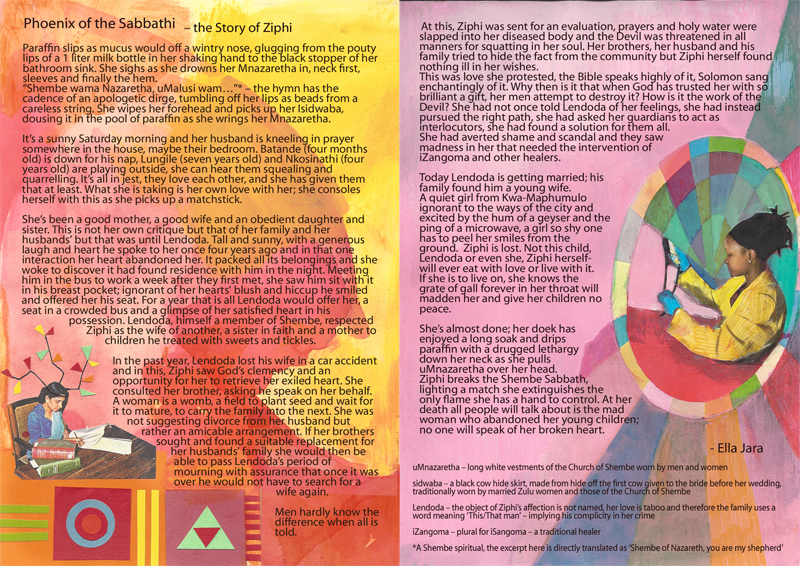
ella jara – phoenix of the sabbathi

fleurmach2

This is a page taken from FLEURZINE, a zine curated and illustrated by Julia Mary Grey. You can go and download this beautiful work of art for free on her site, HERE.

The name was inspired by Fleurmach, and six pieces of writing from this blog appear in the publication. This piece is by Fleurmach contributor NoHolyCows.

i’m sorry i have to post this

TRIGGER WARNINGS: rape; lethal violence; murder.

I have just dreamed again of being Anene Booysen at the moment of her rape and immediately after it, my pooled blood congealing as my insides lie unseamed in the dust outside me, hacked apart from me, the jagged outside slammed inside me, in my last flickers of awareness the spasms of their hate ripping through me, thudding waves of blows, my head a heavy, dull explosion… the swirling, pulsing aftershocks of pain… going cold, knowing I can never be back together again, that I am smeared asunder into the ground like a fly or a cockroach or an ant, irreversibly crushed. It’s that final. I am no longer me, just a slowly drying patch of gore, beyond being gathered up and revived, soothed, cradled, stitched, kissed better, healed. No one can fix this, not my ma, not the hospital, not God. There is no “if” or “but”. I am aware that this is how I have ended.

I have no words strong enough to express the horror of this experience every time it happens to me, this dream. Yet I need to try to write it out of me in the hope that I never dream it again. Shhh, I tell myself, shivering uncontrollably, curled rigid and foetal, it was only a dream.

But it isn’t. This really happened. Really happens. Continues to happen. And that is what is most horrifying of all.

the eternal flâneur moves on

mthandeni cigar

Photographer unknown – from Facebook

Goodbye and go well, Balthazar Mthandeni Ziqubu… We who are still here in the stream of ever-meandering human folly will miss your impeccable refinement and the always humorous, albeit trenchant, observations that flowed freely in your company.

mthandeni

Photo: Kirsty Cockerill

“If I take death into my life, acknowledge it, and face it squarely, I will free myself from the anxiety of death and the pettiness of life – and only then will I be free to become myself.”

— Martin Heidegger

mount eerie – i hold nothing

Your love
swells and pounds me

I know nothing (now that I know you)
My face goes blank
My eyes go open gates
and the world can go (in them)
it can make us wealthy
and take away
so
I hold nothing (now that I hold you)

There’s no place to use our money where we live
The generous world suggests we live generously
so we lay
under low wide branches
of the oldest tree on the dune
or in the hay
where we will stay for so long without moving
that the careful birds finally relax
and make black nests in your black hair
and find ants walking around my unmoving feet
and we will only notice this play of the world
(that long moss is growing on us)
(that that wind has rewritten us)
(the give and take not stopping ever)
for only a moment
and then, having briefly noticed,
let the world roll on
through open gates

In a generous way
I give long walks to the dogs
I put commas and periods in song
I give closed eye to the day
I give peace to the long decay
(we do not need to fear dying)

— Written by Phil Elvrum, from the 2005 Mount Eerie album, “No Flashlight”: Songs of the Fulfilled Night

on being here, now

The approach of a man’s life out of the past is history, and the approach of time out of the future is mystery. Their meeting is the present, and it is consciousness, the only time life is alive. The endless wonder of this meeting is what causes the mind, in its inward liberty of a frozen morning, to turn back and question and remember. The world is full of places. Why is it that I am here?

— Wendell Berry, from The Long-Legged House

blind willie johnson – dark was the night, cold was the ground

“Dark Was the Night, Cold Was the Ground” is a gospel-blues song written and performed by Blind Willie Johnson, probably recorded in 1927. The song is primarily an instrumental, featuring Johnson’s self-taught bottleneck slide guitar and picking style accompanied by humming and moaning.

For more about this haunting record, check out the fascinating Wikipedia page.

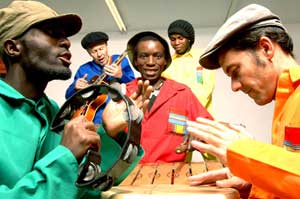
marimba memories

achiclose

In the year 2000 I stopped my beat-up old car to help two guys who were carrying marimbas and gave them a lift up to Melville. On the way we got to chatting, discovered we were all musos, and I decided to come and jam with them while they busked, which I did, a few nights later.

This pair used to come all the way in from Orange Farm township in the Vaal, almost 40km out of Joburg, to busk until midnight outside Melville’s clubs and restaurants, then take a taxi or train home again. So whatever they earned, which was often a pittance, had to cover considerable transport costs – one of apartheid’s architectural legacies, which will take generations to change.

I kept playing with these two guys on the streets, for a couple of years, through winter and summer, on my djembe, cos it was quite something to experience. We were all from Zim, so we had something in common. It wasn’t the first time I had played with so-called black musicians, having played djembe with a maskande outfit called Abafana Bakwa Zulu a couple of years previous to this, but busking was new to me.

Busking is quite a cool way to get really fit on your instrument, and tight as a band. It’s kind of halfway between practicing and performing … sometimes you have an audience, and you have to step it up, and sometimes you don’t, and you can experiment with new songs and licks. If a crowd gathers you can hit on a song for like, 10 or 15 minutes, as long as they are getting into it, which can create some pretty deep calluses if you happen to be a drummer.

In winter, it got so cold that I used to play with a T-shirt, long-sleeve shirt, jersey and leather biker jacket on, plus a hat, even though I was drumming full-tilt. The crap thing about playing a djembe drum outside in the cold is that your hands are moving, creating wind, so even though they are hitting the goatskin hard, on the way up and down they are cooling off, and never really warm up.

Time passed and our little group, which we called Chapungu – meaning ‘whirlwind’ in Shona – apparently it has other, mystical connotations – became fairly good. The dudes found a place to store their instruments, or they would store them at my place, making getting to and from our favourite busking place on the corner of 7th and 4th in Melville much easier. We started getting better tips – we even got a R200 note from a tourist once – and we made a free one-day recording dubbed Sons of the Sun with a guy called Adrian Ziller, bless his heart. My friends helped to design the album cover and print it.

I started visiting the dudes in Orange Farm, which was a full-on jol. Many so-called whites think townships are miserable places, full of suffering and hardship. I’m sure they can be, especially at night in winter, or when the wind howls through Orange Farm, whipping up the dust.

But on my visits, I found a tangible sense of community; neighbours would wander in while we played and get into the vibe. Gangs of kids and dogs would pass by; fences were few and far between. I was uplifted by the music, which was, I guess, our common language, and started playing at events with the dudes, at schools, cultural gatherings, sports meetings, weddings.

There were quite a few kids who used to come and play with the adults; generally the girls would dance and the boys would drum or play on the marimbas, which were all handmade. We started making uniforms for them, with cloth supplied by my friends, or gathered from here and there in the township. The singer’s partner was carving out dance routines for the girls. Things were gathering momentum.

There was a couple in Joburg who were also keen to help our band; they had access to a trust fund, and donated some money which was used to buy tools, which were to be used for making marimbas. We also tried making drums, but it’s not an easy thing to make a good drum.

This couple took us on a trip to visit the Khomani San, who had been granted land by the SA government – but not the means to make a living from it. This couple, they were trying to set things up for some of the Bushmen, a camp which tourists could sleep at, a place to grow indigenous plants, that kind of thing. We met Dawid Kruiper, who was quite famous for his role in getting the land, and a couple of San sangomas. We slept in the camp, which was full of large, black scorpions, and read Tarot cards on the roof of the Landrover, while high on Sceletium, which gives you loads of energy, a natural speed. We dropped our pants and gave brown-eye to the bottle store. It was quite a trip.

Then the couple organised a group of musicians and performers to go on a country-wide tour to advertise a new MTN product. It was called the Multi-Talented Nomad tour, but I didn’t go on it, cos I was working full-time and couldn’t get two weeks’ leave. The guys went on the tour, made a couple of thousand bucks, and decided to go and visit the same Bushmen again, but this return trip didn’t go too well. They apparently shagged some of the Bushmen prostitutes and at least one of them caught AIDS. The singer, a short, fiery character with only one eye – died a few years later. He didn’t make it to the era of ARVs, when having AIDS is no longer a death sentence.

Things had started falling apart even before he died. As soon as we got funding, he and the bassist started arguing about who owned what, and the tools bought with the funding were kept at the singer’s place, and the whole positive vibe started crumbling.

Sometimes they would bitch at me about each other and I just hated being the middle. Fuck that. I really didn’t want to take sides. I was trying to help, not because I thought I should, but because I had just ended up getting involved in the music with these guys and I often had the means to help – the access to transport, to money, to the media. It was unavoidable, but sometimes it had unforeseen consequences.

Eventually, Chapungu broke up, and shortly afterward I was invited to take part in a musical play at the Aardklop festival in Potchefstroom, with the bassist and a group of performers from Orange Farm. We had a teacher who had toured Germany and he knocked our performance into shape, around the idea of a Magic Marimba Tree, from which music came, and provided nourishment to a parched land. I was the white priest, and wore a dog-collar for the role.

When we drove down to Potch I was the only so-called white in the cast of about 14 people. We played on the fringe of the festival and did workshops in the townships. I ate and slept in a room full of blacks, who seldom spoke English … my fault for not knowing Zulu, I guess. The best part was between gigs, as we jammed all day at the backpackers we were staying in, often with outsiders from the festival, who heard us and joined in.

Our mentor came to watch our final performance, hated it, and crapped all over us. We were totally dispirited. Then he wanted to ride back to Joburg in my car, not the overloaded minibus the rest of the crew were to travel in. I split before he could get in, pissed off with his attitude. We had tried our hardest to do a good show. Then we couldn’t get our money out of him. We only got paid after I threatened to put a debt collector on his ass.

The most vivid memory from the whole show, which went on for about a week, was when a beautiful young woman in the cast, who I had been eyeing from the start, stood behind me on the stage and softly put her hands on my shoulders, during the encore. Nothing more happened, but it was an intimate acknowledgment. I see you.

After Aardklop, some of the performers started congregating round the bassist’s place, practicing on the marimbas, and continuing with coaching kids, who would come in after school to play. They were also playing at a nearby school, the kids were winning prizes for their performances, it was all very organic and grassroots. I set up a website for the group. We started playing gigs at cultural events like the Green Africa Party, and then got onto the books of booking agencies, and began playing at corporate events like year-end parties. We made business cards, bought bright uniforms, and started playing quite regularly. This was before the recession, which killed the golden goose of regular corporate gigs, for us and loads of other musicians, including my drum teacher.

I was still doing a day-job, and was asked to write a piece on jazz experimental maestro Zim Ngqawana by the Daily Sun. I met his agent at the Zimology Institute, which he had set up for his jazz students, ironically right next to Orange Farm township. I got to know his agent better, and she helped us to set up an NGO for the musical training of the township kids. After some applications – again, with the help of a friend – we obtained funding, enough to provide the adults with salaries for a couple of years, and to buy some better musical instruments.

This era was our peak. Both the kids and the adults were getting lots of gigs. The kids took part in the FNB Dance Festival a couple of times and won prizes at the National Marimba Competition. They appeared on TV shows and in newspapers; soon we had an entire album of photos and clippings.

The adult group was traveling all over Gauteng and beyond, playing at weddings and parties and openings. A really good (so-called white) guitarist joined the crew, adding an extra car and skilled licks. I evolved a new style of playing the drums, with the djembe where the snare usually stands, and the snare off to the left. I could switch fast between snare and djembe, and play hi-hat and bass foot with both.

We had a huge repertoire of songs, way over 50 songs; some were covers, but many were originals, which had evolved over years of playing. We were playing gospel songs, African jazz, traditional African songs, including some Chimurenga stuff (Zim protest music) and some more bluesy and reggae stuff.

We got a trailer to put the marimbas in; slept over in posh places and demanded, and got, proper meals and treatment from clients, via the contracts with our agencies. Achimota also brought out a CD, recorded free of charge by Brendan Jury, called Ukuxolelana (Forgiveness).

But, after a time, cracks began to show. A key member of the group left to pursue his own musical career. His replacement had less energy and the group, already low on vibrancy, started losing impetus. The recession provided less jobs … the funding for the NGO dried up. The problem of getting to practices, when the guys were 40km out of town, was a thorn in our flesh from the start, but it didn’t matter when we were all into the whole thing – we basically practiced when we played at gigs. Now it was just this massive divide. We weren’t learning new songs, and things were getting stale.

I started standing back, trying to get the other members of the band involved in setting up gigs, obtaining funding, running things themselves. But no-one seemed willing, or able, to keep the ball rolling. I became tired of putting in time and effort, to make things happen: organising gigs, drawing money, sorting paperwork, dealing with clients, auditors and agents.

There were two final straws which made me pull out after twelve years of playing with my marimba mates. On both occasions, we were booked to play for corporate clients, and the guys didn’t pitch on time. I was left carrying the can, got crapped out by the agent and client both times, and, on the last gig, we lost our one remaining agent in the process. That was it.

I had so many experiences with these guys. We travelled thousands of kilometres together, listening to reggae and world music, dreaming of the day when Mugabe would finally die and we could visit Zim to dance on his grave. We often slept in the same room en route to gigs, and I even shared the same bed with them a couple of times.

We played to ecstatic, wildly dancing audiences, and totally bored executives, who would have likely preferred wallflowers to our presence… the catering staff at events was usually our best audience! We fixed broken trailers, cars, instruments, egos and homes together. We busked in Newtown for the whole of the Fifa World Cup. I even did sweat lodges and took psychedelics with some of the dudes.

But there was always that line, that divide, between black and white, between middle-class and poor, between living in town and living in township. It was crossed at times, but it always returned. I count myself lucky that I caught a glimpse of a totally different type of lifestyle and culture to that of white urban Johannesburg.

The door to Orange Farm is still slightly open. I still see the bassist now and then; he is teaching marimbas at a school in Joburg, and is now playing with his uncle, from Zim, who taught him how to play. That sounds innarestin. Me and the guitarist are going to go check it out one of these days. Because there is something utterly organic and magical about playing marimba music. No getting round that.

There were times when I grew frustrated, because things didn’t pan out the way I hoped they would, but overall I don’t regret the experience. Things are born and then they die. I read, in an article on South African NGOs, that you never know what effect you are going to have when you set up structures in poor communities. You have an idea of things going one way; they end up going in another. There might be one or two kids who become brilliant performers after having played with Achimota or Chapungu, or perhaps it changed their lives in some other way, a way which I couldn’t possibly have predicted. That would be enough. For me,  my life and music were sure as hell enriched.

Having reread what I just wrote, I realise how much my friends and partners helped me, every step along the way with this crazy adventure, and if they ever read this, thanks a ton guys. We couldn’t have done it without you. At base, at heart, people want to help each other; often, they just don’t know how, but there channels, if you look, or if they find you. This whole dog-eat-dog system that’s been forced down our throats, it’s a load of balls. A lot of us are learning to see past that now. I hope it keeps spreading.

“like me, you must suffer in rhythm”

The truth is that I can’t put down my pen: I think I’m going to have the Nausea and I feel as though I’m delaying it while writing. So I write whatever comes into my mind. Madeleine, who wants to please me, calls to me from the distance, holding up a record:

“Your record, Monsieur Antoine, the one you like, do you want to hear it for the last time?”

“Please.”

I said that out of politeness, but I don’t feel too well disposed to listen to jazz. Still, I’m going to pay attention because, as Madeleine says, I’m hearing it for the last time: it is very old, even too old for the provinces; I will look for it in vain in Paris. Madeleine goes and sets it on the gramophone, it is going to spin; in the grooves, the steel needle is going to start jumping and grinding and when the grooves will have spiralled it into the centre of the disc it will be finished and the hoarse voice singing “Some of these days” will be silent forever.

It begins. To think that there are idiots who get consolation from the fine arts. Like my Aunt Bigeois:
“Chopin’s Preludes were such a help to me when your poor uncle died.” And the concert halls overflow with humiliated, outraged people who close their eyes and try to turn their pale faces into receiving antennas. They imagine that the sounds flow into them, sweet, nourishing, and that their sufferings become music, like Werther; they think that beauty is compassionate to them. Mugs. I’d like them to tell me whether they find this music compassionate. A while ago I was certainly far from swimming in beatitudes. On the surface I was counting my money, mechanically. Underneath stagnated all those unpleasant thoughts which took the form of unformulated questions, mute astonishments and which leave me neither day nor night. Thoughts of Anny, of my wasted life. And then, still further down, Nausea, timid as dawn. But there was no music then, I was morose and calm.

All the things around me were made of the same material as I, a sort of messy suffering. The world was so ugly, outside of me, these dirty glasses on the table were so ugly, and the brown stains on the mirror and Madeleine’s apron and the friendly look of the gross lover of the patronne, the very existence of the world so ugly that I felt comfortable, at home.

Now there is this song on the saxophone. And I am ashamed. A glorious little suffering has just been born, an exemplary suffering. Four notes on the saxophone. They come and go, they seem to say: You must be like us, suffer in rhythm. All right! Naturally, I’d like to suffer that way, in rhythm, without complacence, without self-pity, with an arid purity. But is it my fault if the beer at the bottom of my glass is warm, if there are brown stains on the mirror, if I am not wanted, if the sincerest of my sufferings drags and weighs, with too much flesh and the skin too wide at the same time, like a sea elephant, with bulging eyes, damp and touching and yet so ugly? No, they certainly can’t tell me it’s compassionate—this little jewelled pain which spins around above the record and dazzles me. Not even ironic: it spins gaily, completely self-absorbed; like a scythe it has cut through the drab intimacy of the world and now it spins and all of us, Madeleine, the thick-set man, the patronne, myself, the tables, benches, the stained mirror, the glasses, all of us abandon ourselves to existence, because we were among ourselves, only among ourselves, it has taken us unawares, in the disorder, the day to day drift: I am ashamed for myself and for what exists in front of it.

It does not exist. It is even an annoyance; if I were to get up and rip this record from the table which holds it, if I were to break it in two, I wouldn’t reach it. It is beyond—always beyond something, a voice, a violin note. Through layers and layers of existence, it veils itself, thin and firm, and when you want to seize it, you find only existants, you butt against existants devoid of sense. It is behind them: I don’t even hear it, I hear sounds, vibrations in the air which unveil it. It does not exist because it has nothing superfluous: it is all the rest which in relation to it is superfluous. It is.

And I, too, wanted to be. That is all I wanted; this is the last word. At the bottom of all these attempts which seemed without bonds, I find the same desire again: to drive existence out of me, to rid the passing moments of their fat, to twist them, dry them, purify myself, harden myself, to give back at last the sharp, precise sound of a saxophone note. That could even make an apologue: there was a poor man who got in the wrong world. He existed, like other people, in a world of public parks, bistros, commercial cities and he wanted to persuade himself that he was living somewhere else, behind the canvas of paintings, with the doges of Tintoretto, with Gozzoli’s Florentines, behind the pages of books, with Fabrizio del Dongo and Julien Sorel, behind the phonograph records, with the long dry laments of jazz. And then, after making a complete fool of himself, he understood, he opened his eyes, he saw that it was a misdeal: he was in a bistro, just in front of a glass of warm beer. He stayed overwhelmed on the bench; he thought: I am a fool. And at that very moment, on the other side of existence, in this other world which you can see in the distance, but without ever approaching it, a little melody began to sing and dance: “You must be like me; you must suffer in rhythm.”

The voice sings:

Some of these days
You’ll miss me, honey

Someone must have scratched the record at that spot because it makes an odd noise. And there is something that clutches the heart: the melody is absolutely untouched by this tiny coughing of the needle on the record. It is so far—so far behind. I understand that too: the disc is scratched and is wearing out, perhaps the singer is dead; I’m going to leave, I’m going to take my train. But behind the existence which falls from one present to the other, without a past, without a future, behind these sounds which decompose from day to day, peel off and slip towards death, the melody stays the same, young and firm, like a pitiless witness.

The voice is silent. The disc scrapes a little, then stops. Delivered from a troublesome dream, the cafe ruminates, chews the cud over the pleasure of existing. The patronne’s face is flushed, she slaps the fat white cheeks of her new friend, but without succeeding in colouring them. Cheeks of a corpse. I stagnate, fall half-asleep. In fifteen minutes I will be on the train, but I don’t think about it. I think about a clean-shaven American with thick black eyebrows, suffocating with the heat, on the twenty-first floor of a New York skyscraper. The sky burns above New York, the blue of the sky is inflamed, enormous yellow flames come and lick the roofs; the Brooklyn children are going to put on bathing drawers and play under the water of a fire-hose. The dark room on the twenty-first floor cooks under a high pressure. The American with the black eyebrows sighs, gasps and the sweat rolls down his cheeks. He is sitting, in shirtsleeves, in front of his piano; he has a taste of smoke in his mouth and, vaguely, a ghost of a tune in his head. “Some of these days.” Continue reading

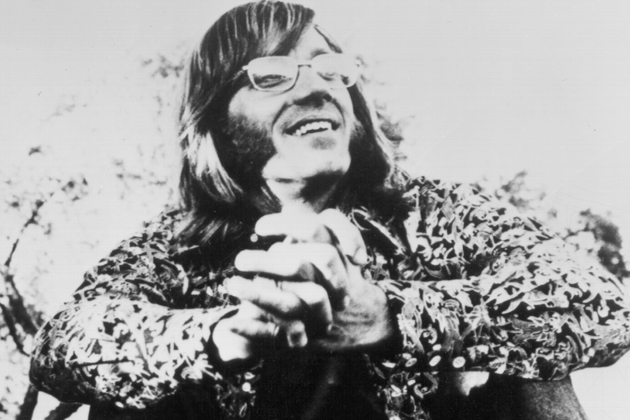
goodbye, ray manzarek

The Doors, live in Copenhagen,1968. Ray, I was always even more in love with you than I was with Jim…  That organ of yours is what really hypnotised me (that’s what she said).

doors-Michael-Ochs-Archives

From Michael Ochs’ archive

As my friend Carlo Germeshuys just put it, “Goodbye, Ray Manzarek – without your swirly lounge keyboard old Jimbo wouldn’t have gotten far with his whole bozo Dionysus act.” Oh wait, Carlo says he was referencing a diss by Lester Bangs. Well, whatever. “Bozo Dionysus” = best description of Jim Morrison ever.

HERE‘s an obituary from Rolling Stone.