Category Archives: memory
“so you think you can play with me” – the louis moholo-moholo legacy project (7 october 2016)
This promises to be an interesting evening in the company of a living legend…
 If you’re a young musician and fancy getting involved this coming Friday, get hold of Terry-Jo Thorne ASAP.
They need (and some positions are already filled):
2 x drummers,
2 x Guitarists with own amps
2 x Pianists
2 x Bassists with own amp
2 x Trumpets
2 x Alto sax
2 x Soprano sax
1 x Flute
3 x male singers
this can’t last (1945)
nick cave & the bad seeds – girl in amber (2016)
Released yesterday. Exquisite.
jolie holland – mexico city (2009)
Recorded live at Paste Magazine’s offices in Decatur, Georgia, on 16 January 2009.
simone weil – the ring of gyges
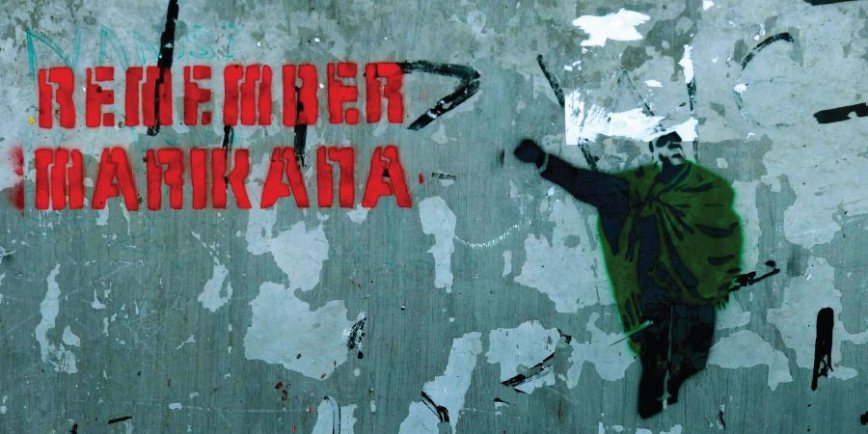
REMEMBER MARIKANA
 … We set things aside without knowing we are doing so; that is precisely where the danger lies. Or, which is still worse, we set them aside by an act of the will, but by an act of the will that is furtive in relation to ourselves. Afterwards we do not any longer know that we have set anything aside. We do not want to know it, and, by dint of not wanting to know it, we reach the point of not being able to know it.
This faculty of setting things aside opens the door to every sort of crime. Outside those departments where education and training have forged solid links, it provides a key to absolute licence. That is what makes it possible for men to behave in such an incoherent fashion, particularly wherever the social, collective emotions play a part (war, national or class hatreds, patriotism for a party or a church). Whatever is surrounded with the prestige of the social element is set in a different place from other things and is exempt from certain connexions.
We also make use of this key when we give way to the allurements of pleasure.
I use it when, day after day, I put off the fulfillment of some obligation. I separate the obligation and the passage of time.
There is nothing more desirable than to get rid of this key. It should be thrown to the bottom of a well whence it can never again be recovered.
The ring of Gyges who has become invisible—this is precisely the act of setting aside: setting oneself aside from the crime one commits; not establishing the connexion between the two.
The act of throwing away the key, of throwing away the ring of Gyges—this is the effort proper to the will. It is the act by which, in pain and blindness, we make our way out of the cave. Gyges: ‘I have become king, and the other king has been assassinated.’ No connexion whatever between these two things. There we have the ring!
The owner of a factory: ‘I enjoy this and that expensive luxury and my workmen are miserably poor.’ He may be very sincerely sorry for his workmen and yet not form the connexion.
For no connexion is formed if thought does not bring it about. Two and two remain indefinitely as two and two unless thought adds them together to make them into four.
We hate the people who try to make us form the connexions we do not want to form.
Justice consists of establishing between analogous things connexions identical with those between similar terms, even when some of these things concern us personally and are an object of attachment for us.
This virtue is situated at the point of contact of the natural and the supernatural. It belongs to the realm of the will and of clear understanding, hence it is part of the cave (for our clarity is a twilight), but we cannot hold on to it unless we pass into the light.
__
Excerpted from Simone Weil‘s Gravity and Grace. First French edition 1947. Translated by Emma Crawford. English language edition 1963. Routledge and Kegan Paul, London.
m. ward – hold time (2009)
so long, marianne…
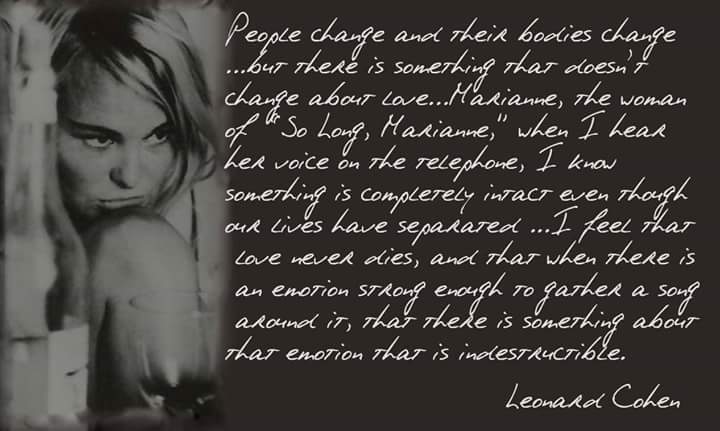
Leonard Cohen’s Marianne died last week. Two days before she left earth, he sent her a beautiful letter.
“Well, Marianne, it’s come to this time when we are really so old and our bodies are falling apart and I think I will follow you very soon. Know that I am so close behind you that if you stretch out your hand, I think you can reach mine.
“And you know that I’ve always loved you for your beauty and your wisdom, but I don’t need to say anything more about that because you know all about that. But now, I just want to wish you a very good journey. Goodbye old friend. Endless love, see you down the road.”
Read more here.
jacques derrida & “the science of ghosts” (1983)
Jacques Derrida appearing as himself in Ken McMullen’s Ghost Dance, interviewed by Pascale Ogier in 1983. He’s talking about #PokémonGo from 3:40 ;).
kathy acker – from “my mother: demonology” (1994)
But the desire you have for me cuts off my breath – These blind eyes see you, and no one else – My blind eyes see how desire is contorting your mouth – They see your mad eyes-
To see. I must see your face, which is enough for me, and now I don’t need anything else.
None of this is realizable.
As soon as I knew this, I agreed that we had to meet in person.
But at the moment we met, all was over. At that moment, I no longer felt anything. I became calm. (I who’ve been searching so hard for calmness.)
I can’t be calm, simple, for more than a moment when I’m with you. Because of want. Because your eyes are holes. In want, everything is always being risked; being is being overturned and ends up on the other side.
It’s me who’s let me play with fire: whatever is ‘I’ are the remnants. I’ve never considered any results before those results happened.
At this moment if I could only roll myself under your feet, I would, and the whole world would see what I am…,
Etc.
Etc.
Do you see how easy it is for me to ask to be regarded as low and dirty? To ask to be spat upon? This isn’t… The sluttishness… But the language of a woman who thinks: it’s a role. I’ve always thought for myself. I’m a woman who’s alone, outside the accepted. Outside the Law, which is language. This is the only role that allows me to be intelligent as I am and to avoid persecution.
But now I’m not thinking for myself, because my life is disintegrating right under me. My inability to bear that lie is what’s giving me strength. Even when I believed in meaning, when I felt defined by opposition between desire and the search for self-knowledge and self-reclamation was tearing me apart, even back then I knew that I was only lying, that I was lying superbly, disgustingly, triumphally.
Life doesn’t exist inside language: too bad for me.
__
Excerpted from Kathy Acker’s My Mother: Demonology, A Novel (pp 252-3). (1994)

Based loosely on the relationship between Colette Peignot and Georges Bataille, My Mother: Demonology is the powerful story of a woman’s struggle with the contradictory impulses for love and solitude. At the dawn of her adult life, Laure becomes involved in a passionate and all-consuming love affair with her companion, B. But this ultimately leaves her dissatisfied, as she acknowledges her need to establish an identity independent of her relationship with him.
Yearning to better understand herself, Laure embarks on a journey of self-discovery, an odyssey that takes her into the territory of her past, into memories and fantasies of childhood, into wildness and witchcraft, into a world where the power of dreams can transcend the legacies of the past and confront the dilemmas of the present.
With a poet’s attention to the power of language and a keen sense of the dislocation that can occur when the narrative encompasses violence and pornography, as well as the traumas of childhood memory, Kathy Acker here takes another major step toward establishing her vision of a new literary aesthetic.
“Memories do not obey the law of linear time,” reads one of the many aphorisms in this novel, and it seems a key point of departure for Acker’s unconventional exploration of memory and its manifestations in dreams. Here, a woman tries to come to terms with her vulnerability and with the excess mental baggage conferred by time. But that simple narrative is just one of the many important levels in the work, which also contains vast psychological wallpaper. Visceral, unflinching, wildly experimental with shifting contexts and settings, this is written in the “punk” style for which Acker (In Memoriam to Identity , LJ 7/90) is well known. Forget categories, though. Her formidably talented hand gives the cacophonous materials compelling poetic rhythm and balance.
daniel johnston – some things last a long time (1990)
❤
A new film:
“i made a film that you will never see” (2015)
A short film about Michiel Kruger, who despite being blind, has set and broken various sports records the last 56 years. At the age of 70 he still holds 2 world records and runs a piano tuning business in Bloemfontein.
Director – Elmi Badenhorst
Camera and Edit – Jaco Bouwer
Music Composition – Braam Du Toit
Script and concept – Annelize Frost and Elmi Badenhorst
Ruan Scott – Subtitles
yuki – “the snow” (edo period – late 1700s)
Yuki, “The Snow”, was composed by Koto Minezaki, and is considered one of the most difficult yet also iconic pieces of Jiuta, a traditional Japanese genre performed here by Shufu Abe. In many songs or theatrical pieces in which cold, dark weather is mentioned, the melody of Yuki’s instrumental interlude is employed as a leitmotif.
The character is reflecting on her string of failed love affairs. She decides to retreat from society and become a nun. As she walks towards the monastery, soft snow begins to fall.
INSTRUMENTS:
REIKIN (Steel-Stringed Koto/Lute)
SHAKUHACHI (Bamboo Flute)
HOTEKI (Japanese Flute)
Translation of the words (from HERE):
When I brush away
The flowers, and the snow-
How clear my sleeves become!
Truly it was an affair
Of long, long ago.
The man I waited for
May still be waiting for me.
The cry of the mandarin duck
Calling for his mate
From his freezing nest
Makes me feel sorrowful.
The temple bell at midnight
Wakes me
From my lonely reverie.
It makes me sad to hear
That distant temple bell.
When the patter of hail
Reaches my pillow,
I seem to hear, somehow,
His knocking on my door again.
And less and less am I able
To dam up my tears.
Freezing now
Into icicles.
I no longer care about
This hard, bitter life.
I’m only sorry that
I still can’t think of
My former lover as sinful.
Ah, the discarded sorrows!
The forsaken world of sorrow!
c 1983
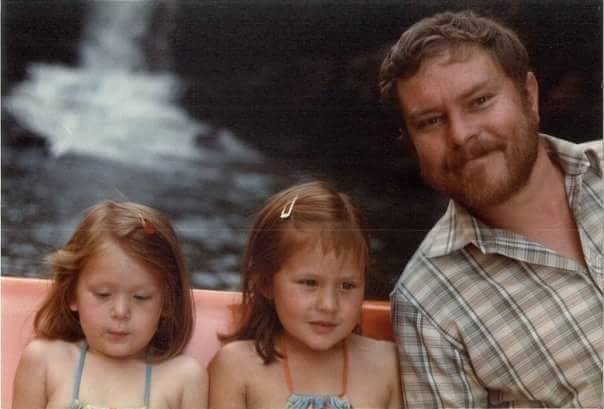
My dad with Heather and me - Uvongo
john fahey – tulip (when you wore a tulip and i wore a big red rose)
From his 1964 album Vol.3: The Dance of Death and Other Plantation Favorites.
alexis pauline gumbs – pulse (for the 50 and beyond)
A poem for those who died, shot in Pulse nightclub in Orlando this weekend past.

i was going to see you
i was going to dance
in the same place with you someday
i was going to pretend not to notice
how you and your friends smiled
when you saw me and my partner
trying to cumbia to bachata
but i was going to feel more free anyway
because you were smiling
and we were together
and you had your stomach out
and you felt beautiful in your sweat
i was going to smile when i walked by
i was going to hug you the first time
a friend of a friend introduced us
i was going to compliment your shoes
instead of writing you a love poem
i was going to smile every time i saw you
and struggle to remember your name
we were going to sing together
we were going to belt out Selena
i was going to mispronounce everything
except for amor
and ay ay ay
i was going to covet your confidence and your bracelet
i was going to be grateful for the sight of you
i was going scream YES!!! at nothing in particular
at everything especially
meaning you
meaning you beyond who i knew you to be
i was going to see you in hallways
and be too shy to say hello
you were going to come to the workshop
you were going to sign up for the workshop and not come
you were going to translate the webinar
even though my politics seemed out there
we were going to sign up for creating change the same day
and be reluctant about it for completely different reasons
we were going to watch the keynotes
and laugh at completely different times
i was going to hold your hand in a big activity
about the intimacy of strangers
about the strangeness of needing prayer
we were going to get the same automated voice message
when we complained that it was not what it should have been
we were going to be standing in the same line
for various overpriced drinks
during a shift change
i was going to breathe loudly so you would notice me
you were going to compliment my hair
it isn’t fair
because we were going to work
to beyonce and rihanna
and the rihanna’s and beyonce’s to come
and the beyonce’s and rihanna’s after that
we were going to not drink enough water
and stay out later than our immune systems could handle
we were going to sit in traffic in each others blindspots
listening to top 40 songs that trigger queer memories
just outside the scope of marketing predictions
we were going to get old and i was going to wonder
about the hint of a tattoo i could see under your sleeve
i was going to blink and just miss
the fought-for laughter lines around your liner-loved eyes
i was going to go out for my birthday
but i didn’t
and you did
we were going to be elders
just because we were still around
and i was going to listen to you on a panel
we didn’t feel qualified for
and hear you talk about your guilt
for still being alive
when so many of your friends were taken
by suicide
by AIDS
by racist police
and jealous ex-lovers
and poverty
and no access to healthcare
and how you had a stable job
you suffered at until the weekend
how you avoided the drama
and only went to the club at pride
and so here you were with no one to dance with anymore
i was going to see you and forget you
and only remember you in my hips
and how my smile came easier than clenching my teeth eventually
and how i finally learned whatever it is i still haven’t learned yet
i was going to hear you laugh and not know why
and not care
our ancestors fought for a future
and we were both going to be there
until we weren’t
and i don’t know if it would hurt more
to lose you later after knowing you
i don’t know if it would hurt more
to know you died on your own day
by your own hands
or any of the other systems
that stalk you and me and ours forever
i only know the pain that i am having
and that you are not here to share it
you are not here to bear it
you were going to pass me a candle at the next vigil
but now i am pulse
and now you
are flame.
duran duran – come undone/ordinary world (1993)
james – born of frustration (1992)
1992 was also the year I got glandular fever (Epstein-Barr virus), which was to lead to three years spent mostly in bed, ill with chronic fatigue syndrome/M.E., physically broken and depressed as fuck, while everyone else my age got on with having teenage fun. The radio literally saved my life.
new order – regret
I finally got a boombox that I could tape stuff off the radio with in 1992. These songs I’m posting tonight from that time occupy an indelible place in me for that reason… and they all happen to be songs about melancholy and memory, strangely, too.
thomas dolby – close but no cigar (1992)
suzanne vega – liverpool (1992)
This song, tonight, though.
lizza littlewort – the circular narrative of whiteness (2016)
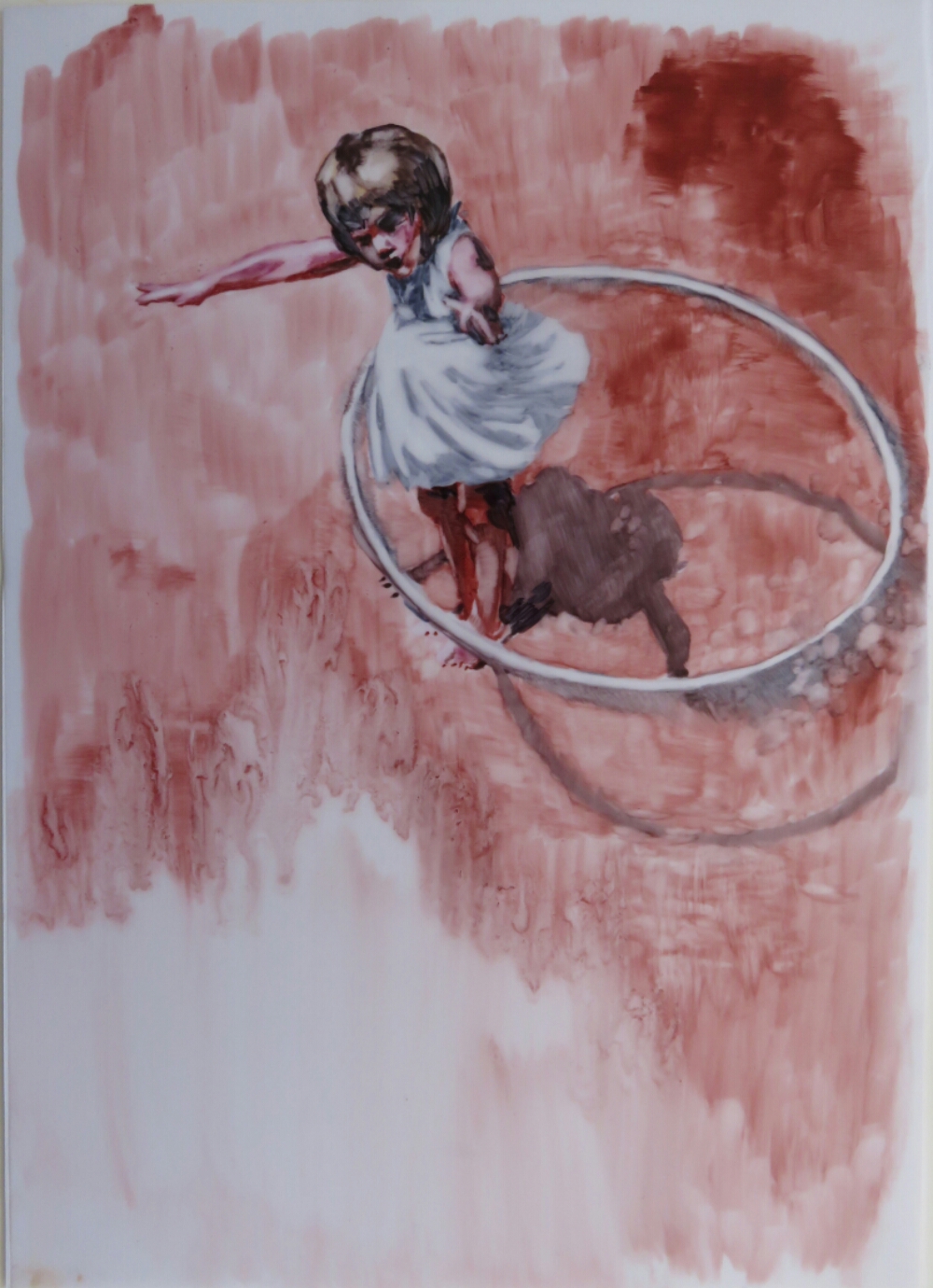

ed bean, you are missed!
I can’t quite believe it’s five years today since my beloved grandpa passed on.
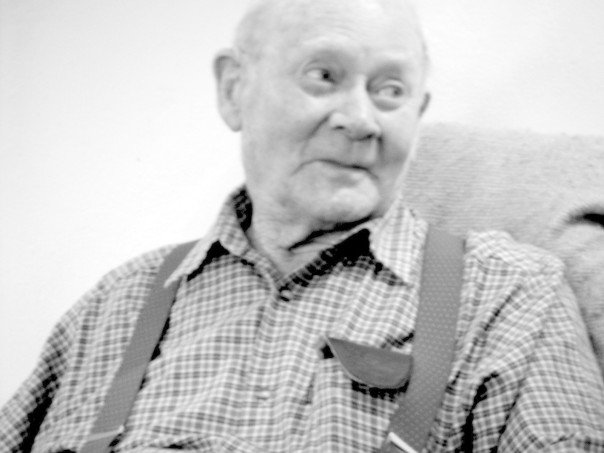
Ed Bean, Melville, December 2006.
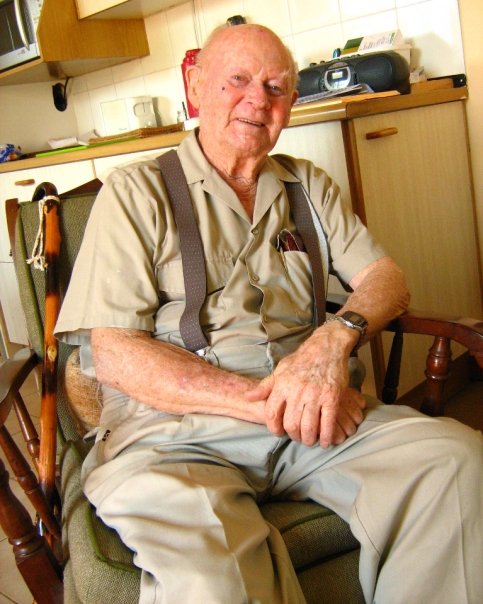
Gramps, behaving himself, 2007.
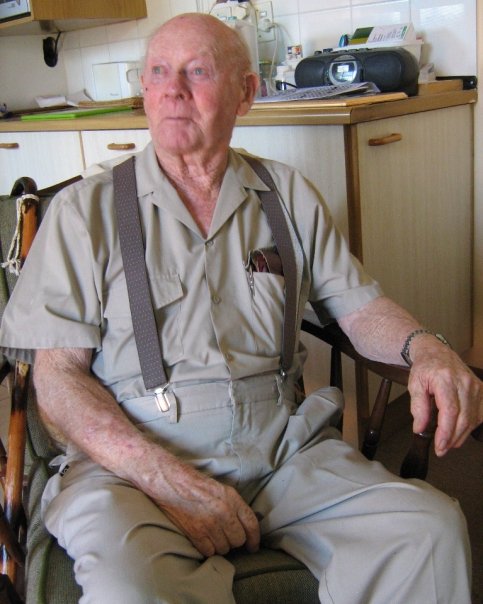
Gramps, posing. 2007.
lizza littlewort – the persistence of ghosts (2016)
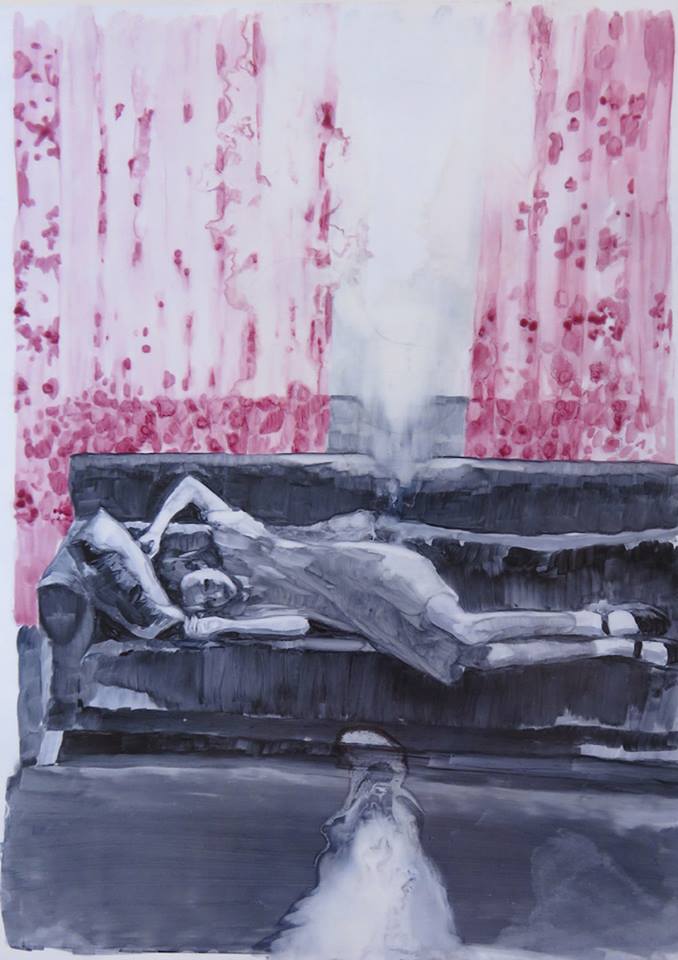
Lizza Littlewort – The Persistence of Ghosts (2016)
sufjan stevens – the only thing (2015)
From the album Carrie & Lowell (Asthmatic Kitty Records, 2015).
stevie nicks – gypsy (demo)
The album version of this song was released by Fleetwood Mac on Mirage in 1982, and my dad had it on a tape in his car for most of the ’80s.
But this, this is something else.
chairman miao at home (2003)
On Thursday I was sent a folder of photographs by Alex Hayn from a time when I didn’t have a camera for several years and so up until now have had no visual record… These are some of them, of an evening at home in Tamboerskloof with my housemate, Meg Wright.
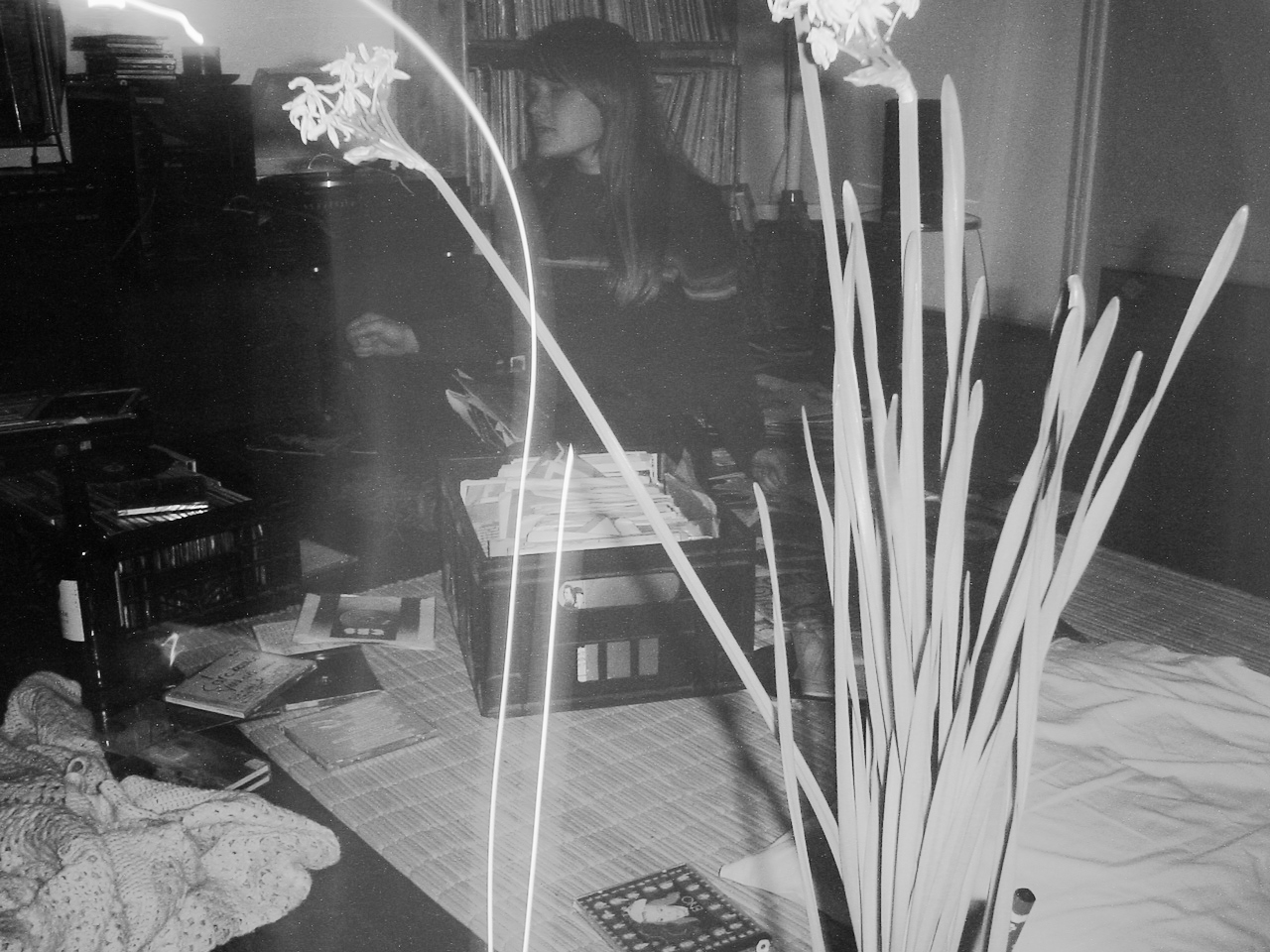
Rose with Narcissus. Photo: Alexander Hayn, 2003
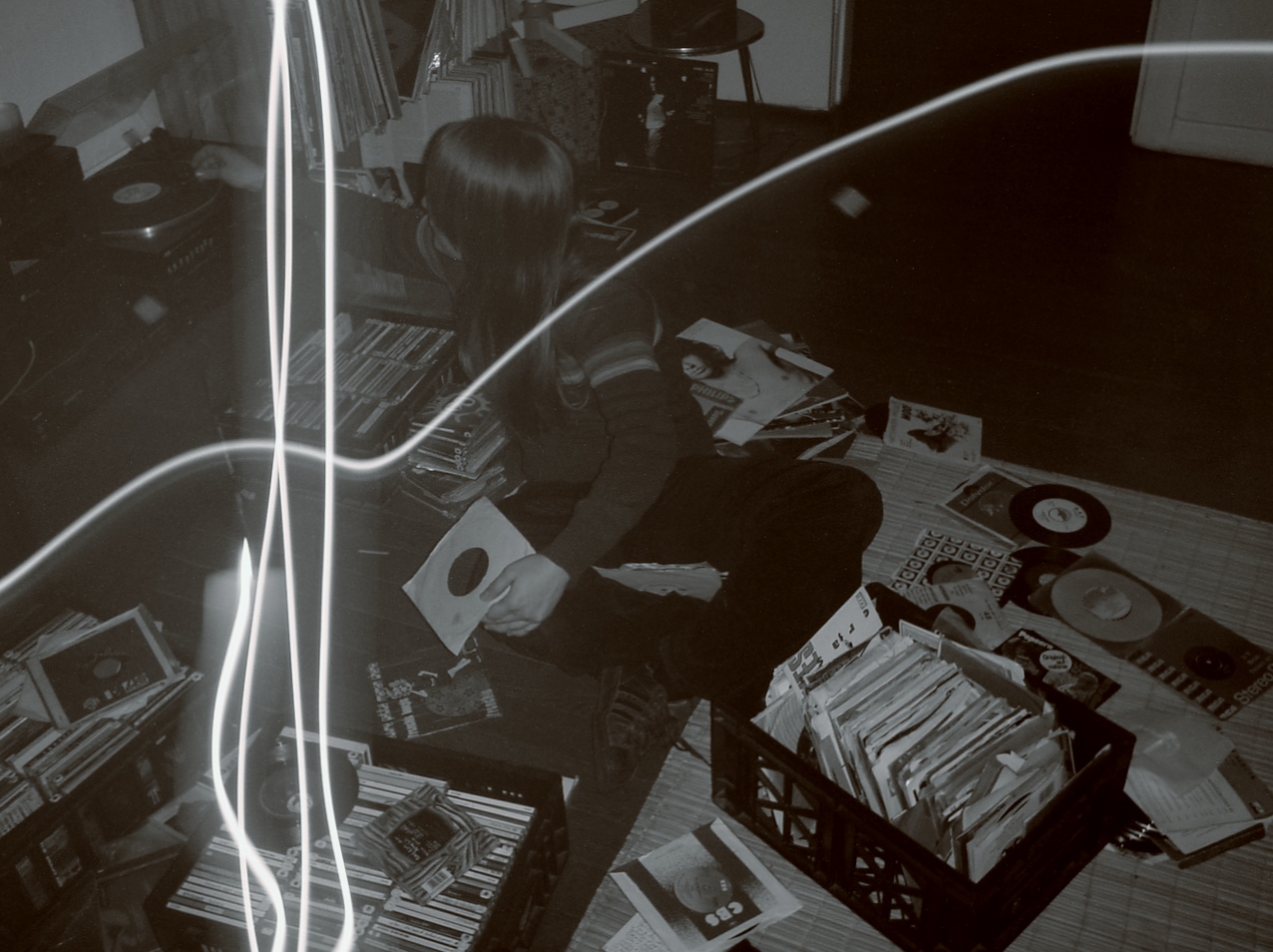
Photo: Alexander Hayn, 2003.

Photo: Alexander Hayn, 2003.
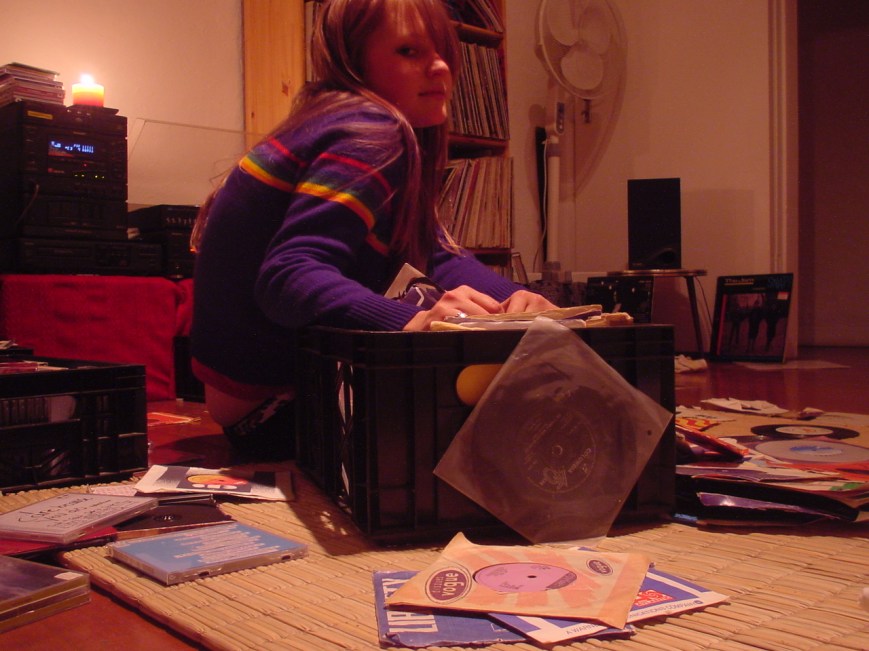
Photo: Alexander Hayn, 2003.
Photo: Alexander Hayn, 2003.
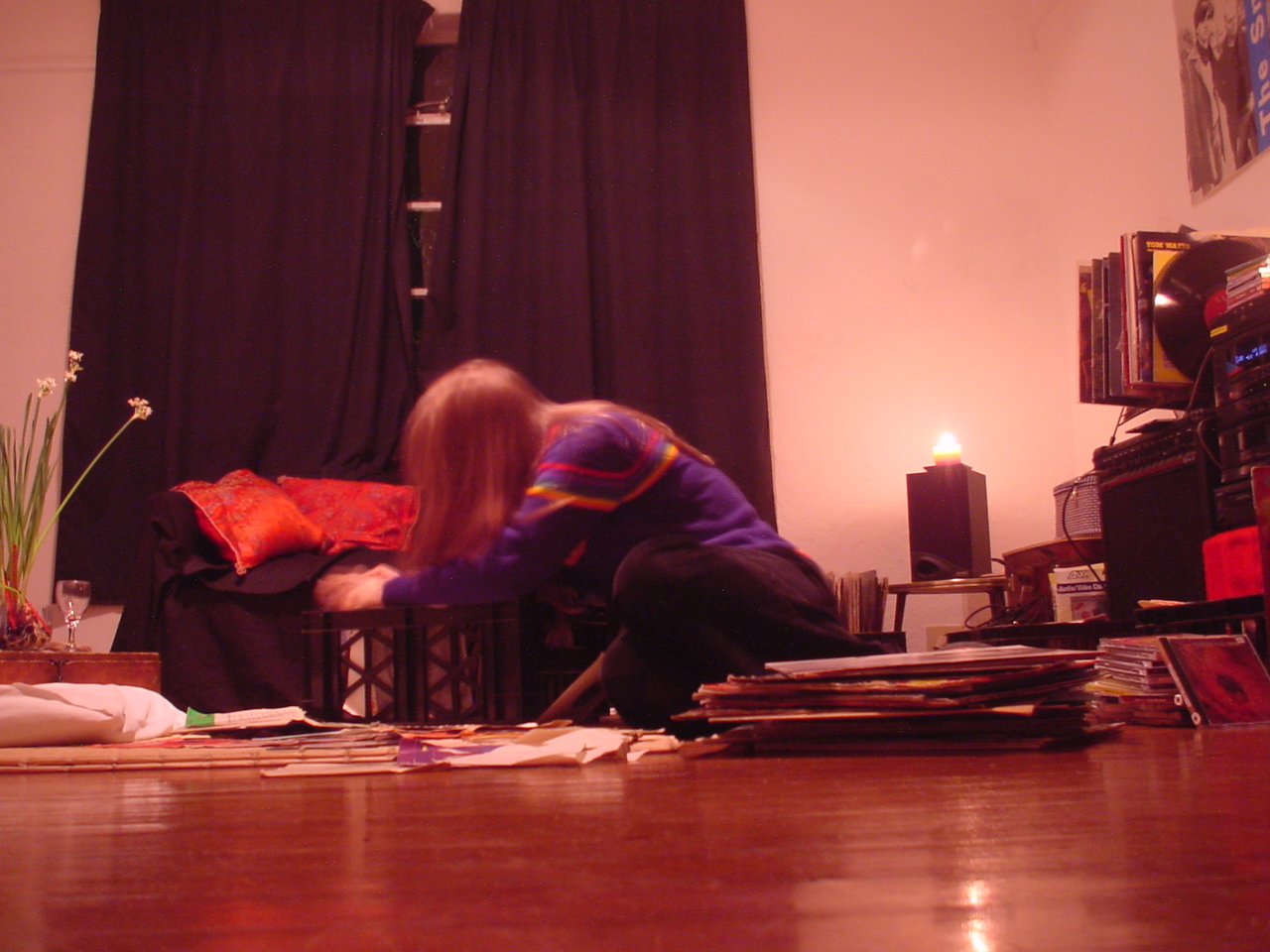
Photo: Alexander Hayn, 2003.
Photo: Alexander Hayn, 2003.
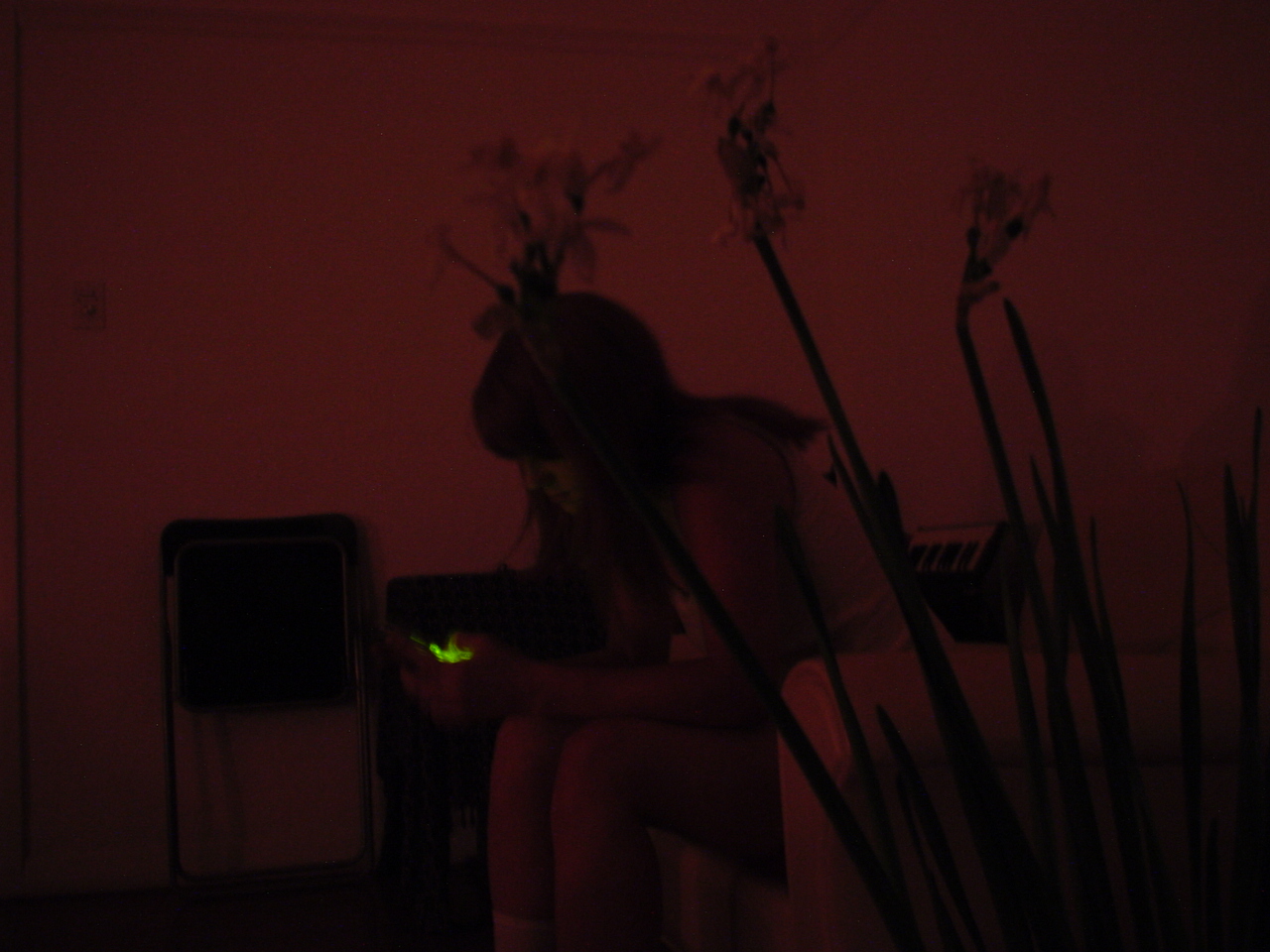
Meg, when cell phone screens were still monochrome green. Photo: Alexander Hayn, 2003
ethiopiques 10 – ethiopian blues and ballads
Today’s soundtrack.
Review by Dan Snowden:
Tezeta, an Ethiopian style with a relatively strict format built on repeated circular riffs, relies on the singer to put his stamp on the form with improvised verses and the up-and-down vocal spirals characteristic of Arabic music. The word itself means something like memory or nostalgia — in musical terms, it’s similar to saudade in Portuguese music, duende in flamenco, or blues and soul in the U.S. music world.
All ten tracks here date from the early ’70s, when versions of the tezeta were an innovative force in Ethiopian pop’s golden age. There’s a surprising variety: swirling accordion handles the circular riff accompanied only by minimal percussion on Fréw Haylou’s opening “Eyètègnu Nègu,” but an almost ’50s rock ballad feel pervades Alèmayèhu Eshèté’s “Tèrèdtchéwalèhu” and Menelik Wèsnatchèw’s “Tezeta” is tranquil and dreamy.
Tezeta is also an excellent launching pad for saxophonists Tèsfa-Maryam Kidané (featured on his own “Heywèté”) and Tèwodros Meteku to provide backing fills and solos behind the singers. It’s instrumental storytelling and the breathy saxes achieve that smoky, brooding flavour that seems unique to Ethiopian music, shading the music with a deep indigo to purple colour.
The slow, mournful versions really bring out that smoky trance sensation here. Sèyfu Yohannès is the first singer to really stand out on his nagging “Tezeta,” supported by Meketu’s fills and Mèssèlè Gèssèssè’s prominent piano. Moges Habté and Feqadu Amdè-Mèsquèl duel tenor saxes over a mysterious Fender Rhodes lick and Andrew Wilson’s sharp wah-wah guitar on Mulatu Astatqé’s instrumental “Gubèlyé.” And Mahmoud Ahmed’s “Tezeta” runs for 12 and a half gripping minutes with swirling organ, muted sax, and bubbling bass runs supplementing the voice of the most expressive singer in Ethiopian pop music.
With nearly 75 minutes of music and extensive liner notes, Tezeta is another impeccable release in the outstanding Ethiopiques series. But even more than earlier soul-influenced compilations geared toward dancing, these brooding love blues laments cut to the emotional core essence of the country’s music. This music sounds distinctly Ethiopian, like it could be from no other place on the planet.
ica 3rd space symposium at uct
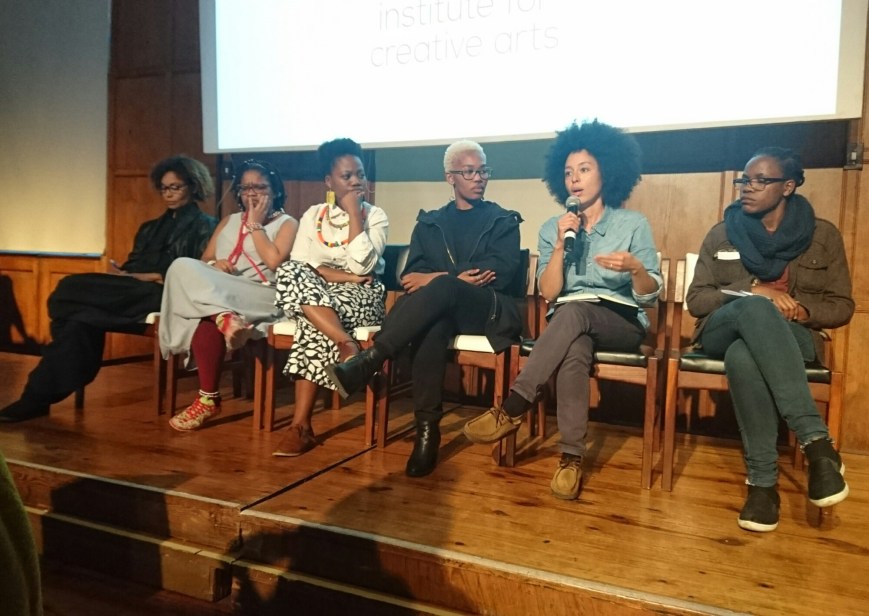
L-R: jackï job, Dee Moholo, Koleka Putuma, Khanyi Mbongwa (Vasiki), Ilze Wolff, Lois Anguria
The most decolonised academic space I have yet had the joy of experiencing. The conference continues today. If you’re in Cape Town, come. It’s free!
HERE is the programme. 🌸
being a girl: a brief personal history of violence
What is your narrative of misogyny? We all have one.

1.
I am six. My babysitter’s son, who is five but a whole head taller than me, likes to show me his penis. He does it when his mother isn’t looking. One time when I tell him not to, he holds me down and puts penis on my arm. I bite his shoulder, hard. He starts crying, pulls up his pants and runs upstairs to tell his mother that I bit him. I’m too embarrassed to tell anyone about the penis part, so they all just think I bit him for no reason.
I get in trouble first at the babysitter’s house, then later at home.
The next time the babysitter’s son tries to show me his penis, I don’t fight back because I don’t want to get in trouble.
One day I tell the babysitter what her son does, she tells me that he’s just a little boy, he doesn’t know…
View original post 1,529 more words
 fleurmach