rest in peace, pete seeger

Legendary American folk artist Pete Seeger has died at the age of 94. Here’s the New York Times’ eulogy, and one from the Huffington Post.

“Turn, Turn, Turn” is based on verses paraphrased from Ecclesiastes 3 in the Bible, widely believed to have been written by King Solomon around 1000 BCE. Pete Seeger put music to the words in 1959, recording his own version in 1962.

Miss Zingel, our sweet, slightly hippy music teacher at primary school during the last throes of 1980s apartheid, introduced us to this much-covered song, as well as to another of my favourites by Seeger/Malvina Reynolds, “Little Boxes”, which was released on CBS in 1963:

m. ward – involuntary

From one of my favourite albums of the last decade, Transfiguration of Vincent, released in 2003 (in fact, that’s more than a decade ago now, wow!). The title alludes to John Fahey’s 1965 album,The Transfiguration of Blind Joe Death, and also refers to the life and death of Vincent O’Brien, a close friend of Ward’s. Here’s a moving and informative interview with Ward from around the time of the album’s release.

poor wayfaring stranger

A recording of lined-out singing by the Indian Bottom Association Of The Old Regular Baptist Church in Appalachia.

“Lining out”, also called “hymn lining” or “line singing”, is a haunting form of a cappella hymn-singing or hymnody in which the song leader gives each line of a hymn tune as it is to be sung, usually in a chanted form suggesting the tune, and the rest of the congregation then sings the line. It can be considered a form of heterophonic call and response.

Although the practice has now all but died out, it was once very common in Old Regular and Primitive Baptist churches to hear line singing, because musical instruments were not allowed in these churches, and some people in the congregation could not read to use a hymnbook either.

Listen to more line singing HERE or read an interesting piece comparing line singing and sacred harp singing HERE.

ecclesiastes 1

Everything Is Meaningless

The words of the Teacher, a son of David, king in Jerusalem:

“Meaningless! Meaningless!”
says the Teacher.
“Utterly meaningless!
Everything is meaningless.”
What do people gain from all their labors
at which they toil under the sun?
Generations come and generations go,
but the earth remains forever.
The sun rises and the sun sets,
and hurries back to where it rises.
The wind blows to the south
and turns to the north;
round and round it goes,
ever returning on its course.
All streams flow into the sea,
yet the sea is never full.
To the place the streams come from,
there they return again.
All things are wearisome,
more than one can say.
The eye never has enough of seeing,
nor the ear its fill of hearing.
What has been will be again,
what has been done will be done again;
there is nothing new under the sun.
Is there anything of which one can say,
“Look! This is something new”?
It was here already, long ago;
it was here before our time.
No one remembers the former generations,
and even those yet to come
will not be remembered
by those who follow them.

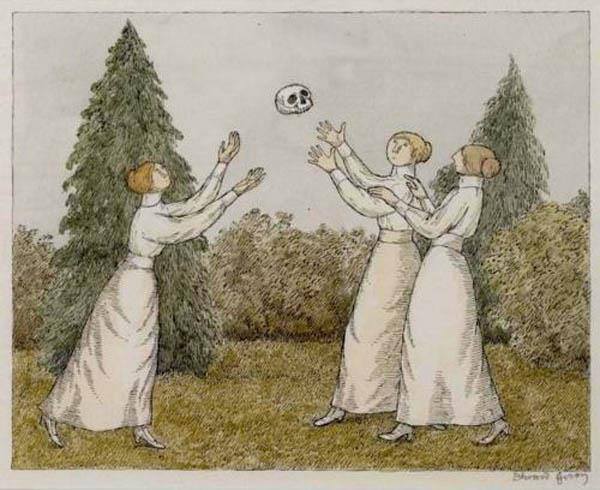
Edward Gorey - A Dull Afternoon

Edward Gorey – A Dull Afternoon

Wisdom Is Meaningless

I, the Teacher, was king over Israel in Jerusalem. I applied my mind to study and to explore by wisdom all that is done under the heavens. What a heavy burden God has laid on mankind!  I have seen all the things that are done under the sun; all of them are meaningless, a chasing after the wind.

What is crooked cannot be straightened;
what is lacking cannot be counted.
I said to myself, “Look, I have increased in wisdom more than anyone who has ruled over Jerusalem before me; I have experienced much of wisdom and knowledge.” Then I applied myself to the understanding of wisdom, and also of madness and folly, but I learned that this, too, is a chasing after the wind.

For with much wisdom comes much sorrow;
the more knowledge, the more grief.

— Ecclesiastes 1, The Holy Bible (New International Version)

happy birthday, simone de beauvoir

When she does not find love, she may find poetry. Because she does not act, she observes, she feels, she records; a colour, a smile awakens profound echoes within her; her destiny is outside her, scattered in cities already built, on the faces of men already marked by life, she makes contact, she relishes with passion and yet in a manner more detached, more free, than that of a young man.

WALKABOUT tumblr_mb7ukzuYA71qe0eclo1_r4_500

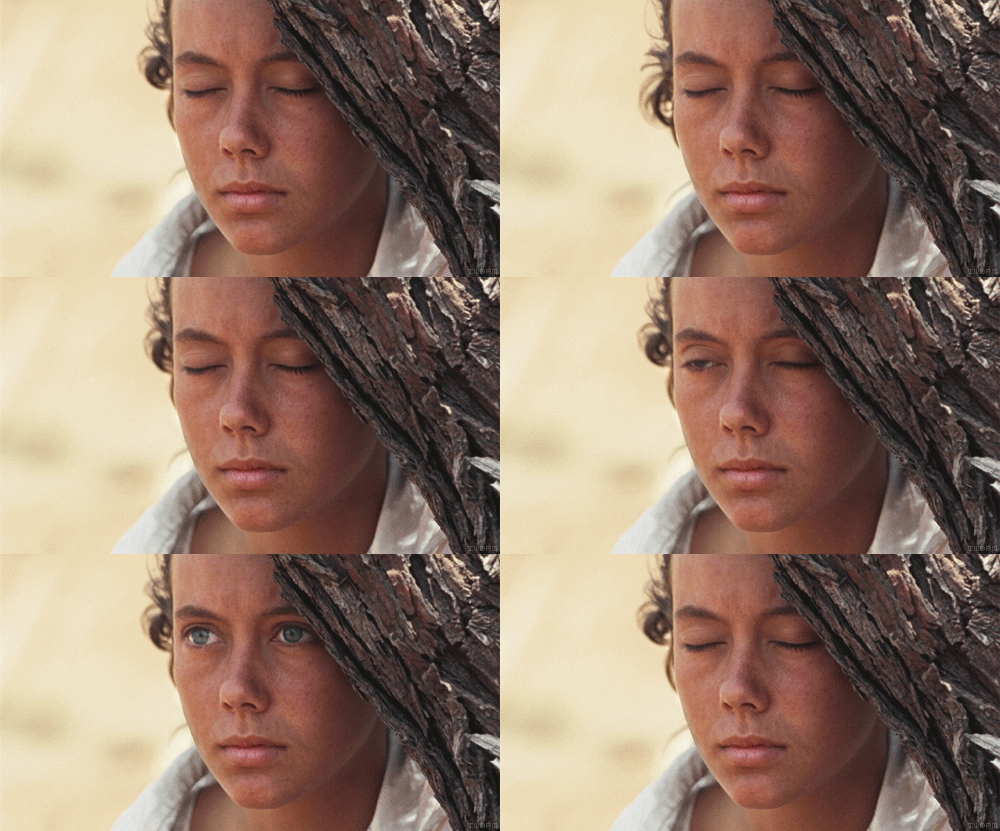
Jenny Agutter in “Walkabout” (Nicolas Roeg, 1971)

Being poorly integrated in the universe of humanity and hardly able to adapt herself therein, she, like the child, is able to see it objectively; instead of being interested solely in her grasp on things, she looks for their significance; she catches their special outlines, their unexpected metamorphoses. She rarely feels a bold creativeness, and usually she lacks the technique of self-expression; but in her conversation, her letters, her literary essays, her sketches, she manifests an original sensitivity.

The young girl throws herself into things with ardour, because she is not yet deprived of her transcendence; and the fact that she accomplishes nothing, that she is nothing, will make her impulses only the more passionate. Empty and unlimited, she seeks from within her nothingness to attain All.

― Simone de Beauvoir,  from The Second Sex (first published in French as Le Deuxième Sexe in 1949)
If you’re interested in reading this hugely influential text, you can find it online HERE.

ross campbell – song for alex

Ross Campbell wrote this heartfelt song for our extraordinary, mercurial friend, the visionary artist and musician Alex van Heerden, who was killed five years ago this morning in a car accident. The hole he left will never be closed.

HERE is another tribute written by Righard Kapp at the time of Alex’s passing.

And here is Alex talking with his singular insight at a workshop on Cape music held in Basel in 2006:

genna gardini – goodbye to rosie

For Rosemary Lombard (and Paul Simon)

This girl and this man sing together.

They are sitting on these steps,
which for them, which for me,
must also in some way be a stage,
scrim set and defined by a door shut behind
the camera’s squint squiz,
the gap between her space and his
grouted and flat,
locked like a spine snapped
between wings.

Complicating the exit.

It is early in the morning.
He has been asked to come and play music for,
no, with children. On television. On these stairs
which lead to the sort of porch (I write stoop)
that he has lately been avoiding.
But today he hovers near it, near her,
and says, and stops himself from saying,
that it was a brownstone (in my tongue,
a town house) like this where he’d first met his wife,

who tipped into him as stiff and iceless
as the drink he couldn’t buy her then.
He thought she would open up
as if an elevator in the building of conversation,
a device he could ride from across to sides
without ever having to construct a scaffold himself.
I’d say lift. He was wrong.
She divorced him a year before.
Now his problems are like his hair, parted.

He is 38.The girl is seven (or six).
They’ve asked her to come and sit,
to come and sing with him.
She says hello, ducks her head.
Small animal, small pump of blood
and possibility. She is made
of corduroy, he thinks, soft,
unmalleably furrowed. Without zip.
He can appreciate her wholeness,

he is weary of it.
He himself feels fetched,
feels stitched from thin material,
worrying at the connections.
You can see the marks of the alterations
he made, let others make, on his ancient guitar,
whose strings knot and flay where he has pulled at them.
This does not seem beautiful to him.
He won’t ever get another.

The song is about an event he refuses to explain
to the girl,
so he tries to only pronounce words like
“mamma” or “pyjama”,
leaving them placed sweet,
as if icing on a cake,
praying “Let her life lick past it”,
when, suddenly, she yells,
“Dance! Dance! Dance!”

The man is concerned, he interrupts her,
but she tries again, when the lenses turn,
this time pointing at him while humming,
“Look! I can see the bird!”

Two decades later, a friend will post this
link to my Facebook wall.
And I’ll think, “She wasn’t wrong at all!”
And I’ll think, “I’m nothing like you.”


This poem was first published on AERODROME. Thank you, Gen, for permission to post it on Fleurmach (and obviously for writing it! xx).

out of order

“A minute of silence in images for all the absent images, censored images, prostituted images, machinated images, delinquent images, buggered images, images beaten up by all the governments, televisions and westernized cinemas that rhyme information and repression with trash and culture.”

— Jean-Luc Godard – Le Gai Savoir (The Joy of Learning), 1969

http://youtu.be/65cLX0npa0U

“We can’t really understand. Of course. They’re speaking out of order.”

Continue reading

the notebook: it’s ok to live life offline

Excerpted from a thoughtful piece by Kayli Stollak, over at Hello Giggles.

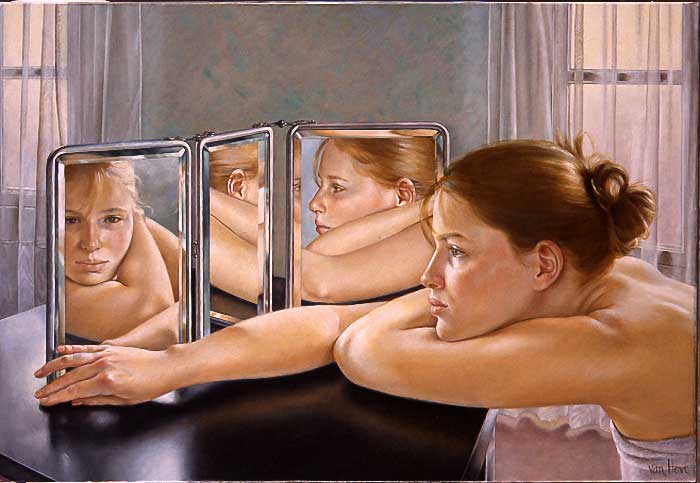
Painting by Francine van Hove

Painting by Francine van Hove

Online we tell a golden version of our lives filled with accomplishments, strictly (and often unbelievably) fun times, and a never-ending well of wit. The glorified digital narrative that we construct of our lives worries me like a 1950’s housewife watching Elvis wiggle his hips on TV. Our modern-day record keeping seems wildly inaccurate to the truth of our inner lives. What is happening in our too-much-information-nation? But more importantly, what is happening with us? Behind all the selfies and sandwich shots, who are we?

In order to correct the imbalance of truth, I propose we start writing it down. We share so much of ourselves with the web, but do we take enough time accounting for our private lives in realm that is removed from the world of likes, comments and followers? The idea of keeping a journal is nothing new, but we’re living in a time where we could benefit from taking a personal inventory of who we are, lest we deceive our future selves through our revisionist digital autobiographies.

While our faces are buried in our phones, we risk missing the smaller details in life. If we don’t remember the bad, how can we possibly enjoy the good to the highest degree? With time, I’m concerned we’ll look back at our Facebook timelines and mistake the façade that we presented of ourselves as fact for who we actually were.

As a writer who spends a large (and probably unhealthy) amount of time writing about herself, I often hear the condemnation of navel gazing. Sure, it is narcissistic to think your life is exciting enough to put to paper, but is it really more self-centered than a side-angled pouty pose of you enjoying your fun-filled Saturday night in the club, posted to Instagram with hopes of garnering likes from your followers, confirming that, yes, you are hot? I would venture to say that the former is self-reflective and productive, while the latter is vapidity and belly-button eagle eye-ing at its worst.

I’m not recommending you go all “dear diary” and start documenting your daily rhythms by laboriously chronicling what you ate for breakfast, the jerk who cut you off on the freeway, or what your plans are for the weekend—if that works for you, do it, but there’s no need to pen a three volume memoir. What I’m championing is the process of jotting down your feelings, thoughts, conversations, inspirations, events that meant something to you now that you might benefit from reflecting on in the future. This is a dose of honesty for you today, in five months, in ten years, at 97. To look back on after your next break up, when you’re contemplating marriage, on your graduation, before a big interview, or simply on a rainy day.

Your notebook should be far from the manicured image you pimp out on Instagram, Facebook, OKCupid, etc. In Joan Didion’s 1966 essay “On Keeping a Notebook”, written before our over-stimulated minds were flooded with technology and its never-ending distractions, she explained, “We are not talking here about the kind of notebook that is patently for public consumption, a structural conceit for binding together a series of graceful pensées, we are talking about something private, about bits of the mind’s string too short to use, an indiscriminate and erratic assemblage with meaning only for its maker.”

For me, a piece of ‘mind string’ is the harmonica chords to ‘Piano Man’ scribbled in my notebook from 2008. A stranger might assume a bizarre Billy Joel fixation, but when I revisit them in my journal, the mess of notes and the triggered sound insist on memories of a motorcycle trip through Spain and feelings of maddening love. All you need is sentence, a word, a thought, and suddenly you remember who you actually were.

If I skip forward in my notebook to 2009 I stumble upon a string of doubts, the point where this love began to unravel. The same way the smell of sunscreen can instantly bring back memories of summer,  a list labeled “Pros and Cons” reminds me of the creeping anxiety I felt for planning my future. My Facebook timeline, however, tells a different tale of a giddy girl with bangs who enjoys raves, beaches, and doing the limbo.

Didion advocated for the importance of preserving a part of yourself that in time you can return to. She wrote, “It all comes back. Perhaps it is difficult to see the value in having one’s self back in that kind of mood, but I do see it; I think we are well advised to keep on nodding terms with the people we used to be, whether we find them attractive company or not… We forget all too soon the things we thought we could never forget. We forget the loves and the betrayals alike, forget what we whispered and what screamed, forget who we were.”

Notebooks are fantastic tools for keeping in touch with our former selves that go far beyond the sculpted image we present on the web. I love delving back into my journals from middle school to the present, not because I’m a fan of the person I see there, but rather because I understand the benefit of knowing her.
francine van hove 02

Painting by Francine van Hove

I want to yell at my thirteen year-old self to please take off that padded bra andstop being in such a rush to grow up. I want to hold my fourteen year-old self and explain to her that you are the company you keep and the sooner she starts loving herself the better. I want to bitch slap my sixteen year-old self, she was one angsty girl. I want to tell my seventeen year-old self not to mistake lust for love and to please stop talking to that boy in the band that told you he learned how to play “Brown-Eyed Girl” for you when, in fact, your eyes are green. I want to stay up all night talking to my twenty year-old self, feeding off her energy and drinking up her thirst for spontaneity. I want to see the world through her eyes, she reminds me to believe in magic. I want to whisper in the ear of my twenty-three year-old self, and tell her that soon enough she will see that it really was a means to an end. I want to tell my twenty-five year old self to trust her gut and not settle, I want to remind her what love looks like and tell her that this is not it. But I can’t tell her any of that. All I can do is learn from her mistakes, be reminded of what to hold meaning to, take note of her intuition, celebrate the coincidences, and enjoy all the beautiful moments and connections made.

Although I already know how most of the stories end, it’s important to track the progress I’ve made, reminding me who I am and who I was. To draw my own attention to the larger patterns my tendencies and predilections make when I can see them from a bird’s eye view. A notebook can serve as a wake up call on what I may be rightly or wrongly romanticizing and what I may be purposefully forgetting. Notebooks give us a shot at staying honest and in touch with ourselves, something I think we should strive to be in this digital age.

Read the full article HERE. Thanks to Stella for sharing it.
burial – come down to us

http://youtu.be/9GF4v6yfebw

Beautiful video by Alexander Petrov set to this anthem, off Burial’s brand new EP, Rival Dealer, out now on Hyperdub. I looked Petrov up because his animation style reminded me of some of the work of another Russian master, Yuri Norstein – and, indeed, he was one of Norstein’s protégés at the Advanced School for Screenwriters and Directors in Moscow.

UPDATE 17/12/13: Looks like the person who put this lovely video together has been forced to take it down for copyright reasons. That’s just wrong. It was truly an inspired combination, and I don’t know how it would have hurt the sales of either the song or the animation. Anyway. You can stream the track without the video HERE.

Still from the Alexander Petrov footage that was paired with the song.

Still from the Alexander Petrov footage that was paired with the song.

A rare, candid message from the usually silent and mysterious William Bevan, a.k.a. Burial, on Rival Dealer (via Mary Anne Hobbs’ BBC radio show):

I put my heart into the new EP; I hope someone likes it. I wanted the tunes to be anti-bullying tunes that could maybe help someone to believe in themselves, to not be afraid, and to not give up, and to know that someone out there cares and is looking out for them. So it’s like an angel’s spell to protect them against the unkind people, the dark times, and the self-doubt.

mandela will never, ever be your minstrel

“… [P]erhaps the greatest tragedy of Mandela’s life isn’t that he spent almost thirty years jailed by well-heeled racists who tried to shatter millions of spirits through breaking his soul, but that there weren’t or aren’t nearly enough people like him.
Because that’s South Africa now, a country long ago plunged headfirst so deep into the sewage of racial hatred that, for all Mandela’s efforts, it is still retching by the side of the swamp. Just imagine if Cape Town were London.  Imagine seeing two million white people living in shacks and mud huts along the M25 as you make your way into the city, where most of the biggest houses and biggest jobs are occupied by a small, affluent to wealthy group of black people. There are no words for the resentment that would still simmer there.
Nelson Mandela was not a god, floating elegantly above us and saving us. He was utterly, thoroughly human, and he did all he did in spite of people like you. There is no need to name you because you know who you are, we know who you are, and you know we know that too. You didn’t break him in life, and you won’t shape him in death. You will try, wherever you are, and you will fail.”

Read the rest of the words at OKWONGA.COM.

still so far to go, south africa

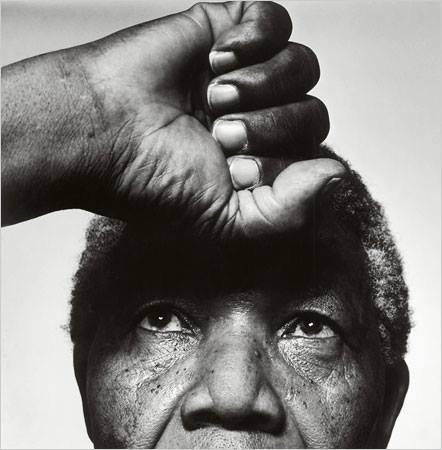
mandela fist

Yesterday, on the day those in control would later turn Nelson Rolihlahla Mandela’s life support system off, allowing him his final, politically expedient release after months held captive in a purportedly vegetative state, I was driving with my niece Juliette in KwaZulu-Natal, behind a white woman in a bakkie. The passenger seat of the vehicle was empty. In the open back, bumping around in the drizzling rain, sat a black woman in a blue maid’s uniform trimmed, profound irony, with ribbon in the rainbow hued design of the “new” South African flag.

Utterly disgusted, Juliette and I wanted to yell out something as we drove past, something to say that we saw, we recognised, we hated the thoughtless inhumanity of the woman in the driver’s seat, and that we saw, we recognised, we hated that this was a microcosm of the sickness persisting in the world all around us every day… but something in the grim, faraway expression on the face of the woman in the back made us realise that anything we said, however well-intentioned, would only compound her humiliation. Even the clouds were spitting on her.

South Africa still has so far to go before there can be any exaltation about transformation here. Sadly, far too little in the material circumstances of the majority of South Africans has changed since 1994, and for this reason the triumphant official narrative we are bombarded with today, as the media orchestrate the nation’s performance of grief for Mandela’s passing, rings hollow. Despite the man’s humility and admission of his own fallibility, South Africans have fashioned of him a myth, a brand, a magical fetish that distracts from the truth that we are ALL responsible for changing the way we live in this country, this world… and that we will need to do more, much more, before we can talk about freedom from oppression.

My friend Andre Goodrich posted a similar anecdote on Facebook this morning, and I would like to share what he wrote and echo his exhortation:

“From my office window, I can see a young white foreman, a child really, sit watching black men at work. I see this when I look up from marking first year exam essays on the political economy of race and class in South Africa. Alongside the stack of exam papers is a sheet of paper a garden worker used to explain to me how he sees the word ‘location’ as related to the Tswana word for cattle kraal. Between these, the excitement I felt in the 90s for the massive change promised by Mandela’s release from prison feels false and jaded.

I am saddened by Mandela’s death, but I am angered by his leaving such a sense of transformation amid such an absence of it. I encourage you to be angry too, and to hold us all to a better standard than what we have settled for.”

Lala ngoxolo, Madiba. A luta continua.

stir it up, little darling (for thuli madonsela)

“Society is like a stew. If you don’t stir it up every once in a while then a layer of scum floats to the top.”

“My loyalties will not be bound by national borders, or confined in time by one nation’s history, or limited in the spiritual dimension by one language and culture. I pledge my allegiance to the damned human race, and my everlasting love to the green hills of Earth, and my intimations of glory to the singing stars, to the very end of space and time.”

— From Confessions of a Barbarian: Selections from the Journals of Edward Abbey, 1951-1989 (Boston: Little, Brown 1994).

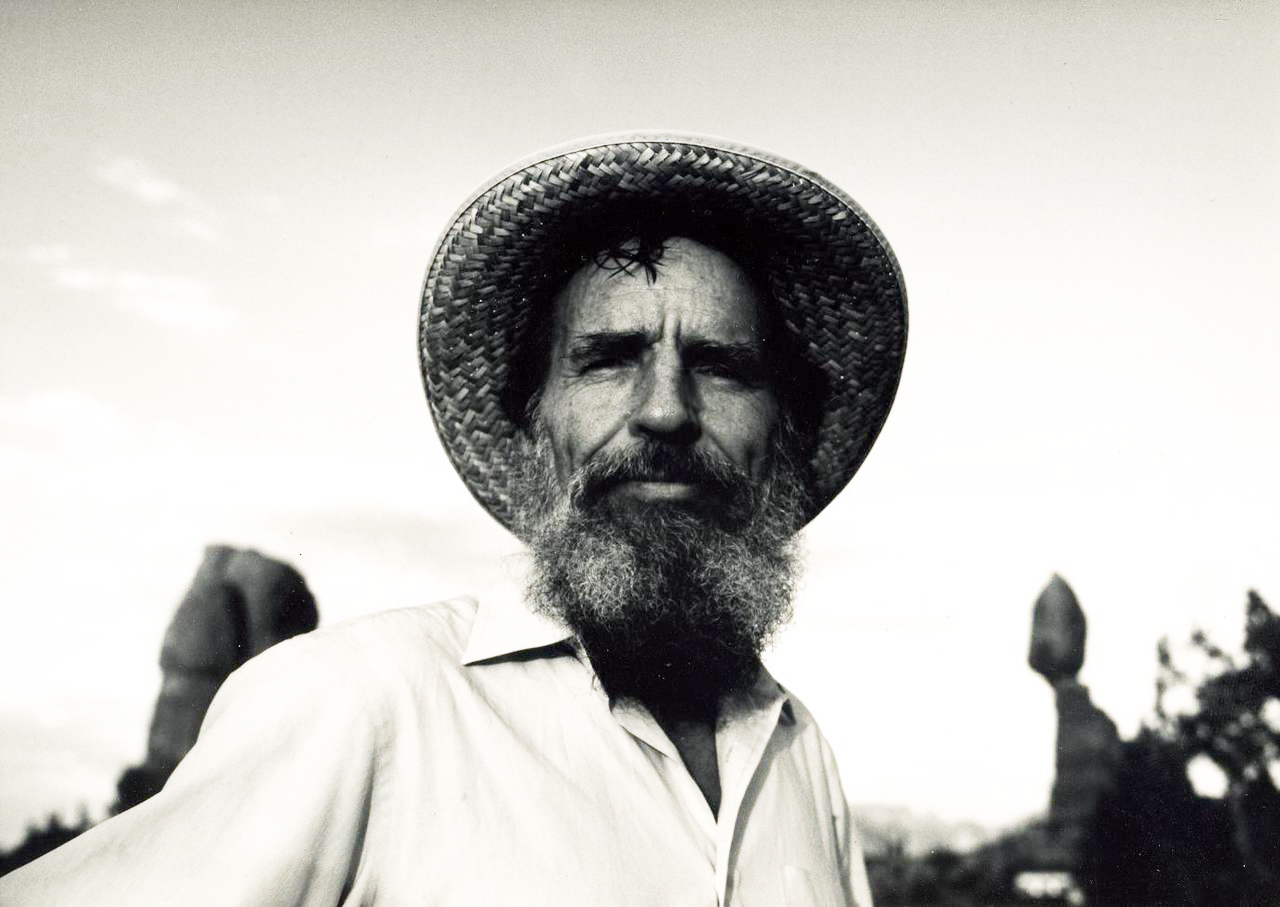
edward-abbey

bergson on having a built-in bullshit detector

“Fortunately, some are born with spiritual immune systems that sooner or later give rejection to the illusory worldview grafted upon them from birth through social conditioning. They begin sensing that something is amiss, and start looking for answers. Inner knowledge and anomalous outer experiences show them a side of reality others are oblivious to, and so begins their journey of awakening. Each step of the journey is made by following the heart instead of following the crowd and by choosing knowledge over the veils of ignorance.”

― Henri Bergson

for y’all celebrating thanksgiving

Uncanny scene from the film Beetlejuice (1989)in which a frightfully posh dinner is ruptured when the table is re-possessed by the voices of exploited plantation labourers, specifically via Harry Belafonte’s “Day-O”. One of Tim Burton’s most politically subversive moments.

tori amos – if 6 was 9

http://youtu.be/bLXT_3QhQjw

A Jimi Hendrix cover, released on the limited edition UK CD single of “Cornflake Girl” in 1994. To date it is one of the few Amos recordings that has not been re-released in a collection or boxed set, or made available digitally — which is a shame, because it’s one of my favourite things she’s done.

a blanket for juliette

My sister Heather started crocheting this beautiful blanket at the age of 16 while pregnant with Juliette, spending hours of time in difficult reflection as her friends carried on being carefree teenagers. Heather has finally finished the blanket and handed it to Juliette, now 16 herself, who has also been going through an incredibly hard and painful time lately. Today Heather posted a couple of photographs on Facebook with the following caption:

“Labour of love for my big girl-child. Every stitch was done with you in mind. Tears and love and prayers are woven into the threads, my precious gift from God.”

My heart is swollen.

blanket for juliette

how could you go ahead of me? (1586)

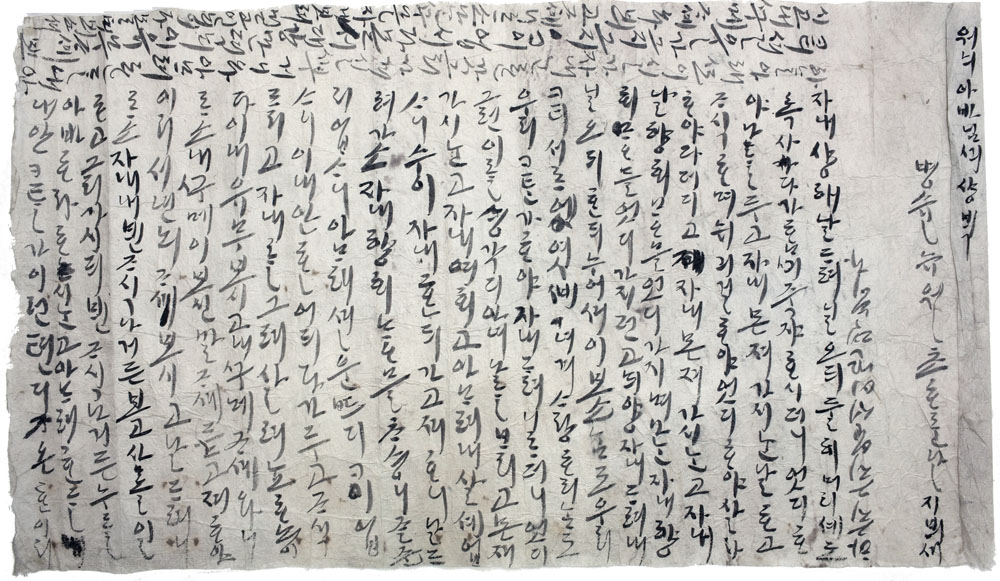
Excavating an ancient tomb in South Korea, archaeologists found the 4-centuries-old mummy of Eung-Tae Lee, who had died at the age of 30. Lying on his chest was this letter, written by his pregnant widow and addressed to the father of their unborn child:

mummy letter

Source: Letters of Note

Transcript

To Won’s Father
June 1, 1586

You always said, “Dear, let’s live together until our hair turns grey and die on the same day.” How could you pass away without me? Who should I and our little boy listen to and how should we live? How could you go ahead of me?

How did you bring your heart to me and how did I bring my heart to you? Whenever we lay down together you always told me, “Dear, do other people cherish and love each other like we do? Are they really like us?” How could you leave all that behind and go ahead of me?

I just cannot live without you. I just want to go to you. Please take me to where you are. My feelings toward you I cannot forget in this world and my sorrow knows no limit. Where would I put my heart in now and how can I live with the child missing you?

Please look at this letter and tell me in detail in my dreams. Because I want to listen to your saying in detail in my dreams I write this letter and put it in. Look closely and talk to me.

When I give birth to the child in me, who should it call father? Can anyone fathom how I feel? There is no tragedy like this under the sky.

You are just in another place, and not in such a deep grief as I am. There is no limit and end to my sorrows that I write roughly. Please look closely at this letter and come to me in my dreams and show yourself in detail and tell me. I believe I can see you in my dreams. Come to me secretly and show yourself. There is no limit to what I want to say and I stop here.

Source: Letters of Note

on marching to a different tune

“They are really always saying the same thing. They don’t change; everybody else changes. They are accused of the most incompatible crimes, of egoism and a mania for power, indifference to the fate of their cause, fanaticism, triviality, lack of humour, buffoonery and irreverence. But they sound a certain note. Hence the great practical power of persistent radicals. To all appearance, nobody follows them, yet everyone believes them. They hold a tuning-fork and sound A, and everybody knows it really is A, though the time-honoured pitch is G flat.”

Isn’t this a good description of the effect of Pussy Riot performances? In spite of all accusations, you sound a certain note. It may appear that people do not follow you, but secretly, they believe you, they know you are telling the truth, or, even more, you are standing for truth.

— Slavoj Žižek, quoting political essayist John Jay Chapman (who was writing in 1900) in a recent letter to imprisoned Pussy Riot member, Nadezhda Tolokonnikova. Read more from their correspondence HERE.

Eve Warren - A Punk Prayer. Find out more HERE

Eve Warren – “A Punk Prayer”. Find out more about this work HERE.

on self-protection

dunceWhen I was a girl, my life was music that was always getting louder.
Everything moved me.
A dog following a stranger. That made me feel so much.
A calendar that showed the wrong month. I could have cried over it.
I did.
Where the smoke from the chimney ended.
How an overturned bottle rested at the edge of a table.
I spent my life learning to feel less.
Every day I felt less.
Is that growing old? Or is it something worse?
You cannot protect yourself from sadness without protecting yourself from happiness.

— Jonathan Safran Foer, from Everything is Illuminated

Thanks to Lex for sharing this.

baby huey – hard times

Baby Huey (born James Ramey, August 17, 1944 – October 28, 1970) was an American rock and soul singer, born in Richmond, Indiana. He was the frontman for the band Baby Huey & The Babysitters, whose single LP for Curtom Records in 1971 was influential in the development of hip hop music. Unfortunately, a fatal heart attack prevented him from seeing the release of the disc.

This is my favourite off the album:

marcel proust on attaining wisdom

swanning
There is no man… however wise, who has not at some period of his youth said things, or lived in a way the consciousness of which is so unpleasant to him in later life that he would gladly, if he could, expunge it from his memory. And yet he ought not entirely to regret it, because he cannot be certain that he has indeed become a wise man—so far as it is possible for any of us to be wise—unless he has passed through all the fatuous or unwholesome incarnations by which that ultimate stage must be preceded.

I know that there are young fellows, the sons and grandsons of famous men, whose masters have instilled into them nobility of mind and moral refinement in their schooldays. They have, perhaps, when they look back upon their past lives, nothing to retract; they can, if they choose, publish a signed account of everything they have ever said or done; but they are poor creatures, feeble descendants of doctrinaires, and their wisdom is negative and sterile.

We are not provided with wisdom, we must discover it for ourselves, after a journey through the wilderness which no one else can take for us, an effort which no one can spare us, for our wisdom is the point of view from which we come at last to regard the world. The lives that you admire, the attitudes that seem noble to you, are not the result of training at home, by a father, or by masters at school, they have sprung from beginnings of a very different order, by reaction from the influence of everything evil or commonplace that prevailed around them. They represent a struggle and a victory.

— Marcel Proust, from Within a Budding Grove