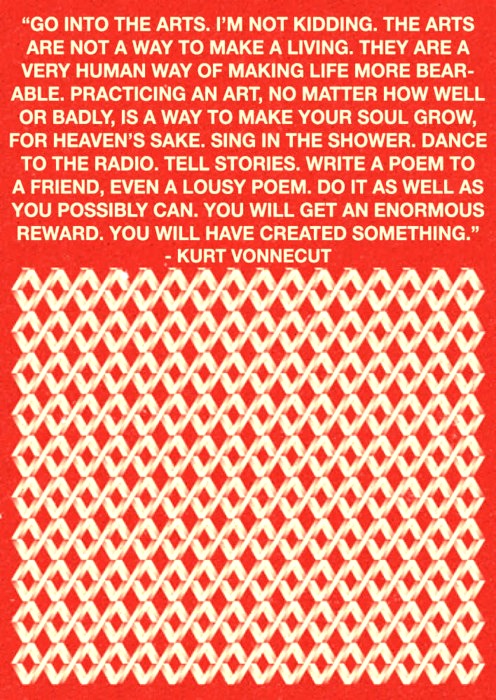
the penis: mightier than the sword – rereading an old quotation at the time of abu ghraib (2004)

The famous quote ‘the pen is mightier than the sword’ has a different meaning today than it had when the English novelist Edward George Bulwer-Lytton (1803-1873) wrote in 1839: ‘Beneath the rule of men entirely great the pen is mightier than the sword’. Apart from the obvious fact that a sentence fragment cannot convey the same meaning as a full sentence, there are a number of reasons why we can assume there to have been significant changes in the meaning of these frequently quoted words in the last 160-odd years. After an initial non-exhaustive exploration of some of these reasons in order to discuss the contemporary reception of old texts in general, I will present an example of a possible contemporary rereading of the sentence in order to critically approach its form as well as its content in more detail.
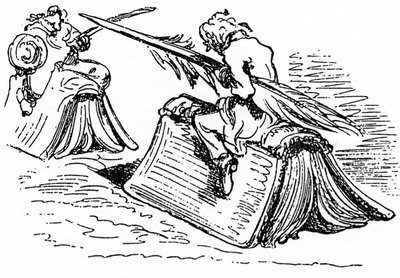
From the 19th through to the 21st century, radical shifts have taken place in the social, political and economic systems of the currently ‘European’ nations like England. Class differences have steadily decreased in importance while the levels of literacy have increased enormously. Nowadays readers of literary, journalistic and other texts come from all walks of life and all classes in society, which was not yet the case in Lytton’s time. Due to the cultural complexity of a postmodern and post-industrialised context, readings of this sentence today are not merely permitted to be different, but are necessarily far more numerous and varied than they would have been expected to be in the 1800s.

In the midst of this new plurality of discourses – which is for reasons of brevity and clarity merely stated here and will not be elaborated on – phrases of such universalising nature are rarely coined by writers and other intellectuals today, whereas in its original context a sentence such as this one may have had only one unmistakeable message to almost anyone reading or hearing it, simply because this context was rather narrow. Those who could read and write of course did not all think alike, but they would all more or less have agreed on what kind of meaning was being transmitted with these words. Nowadays we can observe a very different dynamic unfolding: whatever is said publicly immediately enters a broad field of more or less interconnected discourses, which form more or less homogenous or contradictory opinions as to its meaning within – and its relevance to – their own and possibly other world views.
What any given politician is saying on any given day on any given subject is never entirely opaque to anyone reading about it in the paper who has also read the previous day’s edition, but what effectively stands behind these words is ever more difficult to contextualise constructively in terms of its respective outcomes. ‘Right’ and ‘wrong’ are constructs that have become almost interchangeable or irrelevant, because there are so many equally valid viewpoints on any given subject or utterance, which all have a more or less publicly audible – and thereby already minimally validated – voice.

In order to bring meaning to the signifying remnant ‘the pen is mightier than the sword’ of the 19th century message x (as in ‘unknown’) in this widened, or rather exploded context, it is necessary to – at least initially – ‘misunderstand’ it. ‘Misunderstanding’ here shall refer to the application of an interpretation based on the more or less unspecific world knowledge of an individual living in the 21st century, as opposed to assuming to be in the know about what meaning the text had in 19th century England. At best, in any critical approach the inevitability of this process of ‘misunderstanding’ is acknowledged and problematised; else it is taken for granted, or at worst denied. In the last case lies the danger of laying claims to an absolute truth of sorts. Nowadays certain versions alone – of the infinite number of possible readings – may succeed in presenting certain convincing insights, which do not lay claim to finality or completeness.

The penis: mightier than the sword. This modified version arrived at by simply dropping the space between ‘pen’ and ‘is’ and inserting a colon, crassly illustrates the imagery of pen and sword as charged with concepts of maleness. It is psychoanalytically easily accessible: we are presented with two phalluses holding recourse over their size. The reader is asked to identify with the smaller and therefore supposedly weaker member, and he is told that size not only doesn’t matter, but that he will – on this side of the argument – prevail in the face of overpowering adversity, or better still: competition. The question arises: over what? We do not know. Are we to assume that the sword stands for war and the pen for enlightenment – and in effect peace? If this is the case, what we are led to believe in this statement is that war is bad, and that consequently it is to be regarded as disconnected and even structurally different from everything that has to do with writing and reasoning: as ‘mightier’ human endeavours.
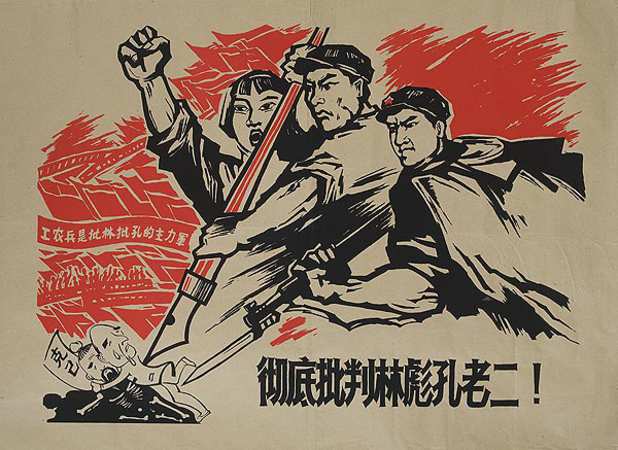
The ‘pen’ here stands for the word, an ideal idea, the thought worth concretising and writing down. The ‘sword’ stands for war, death, planned killing in the name of a higher power or principle. On this literally symbolic level the pen may be mightier than the sword; but moving on from this level it may be argued that the pen harnesses the power that also moves the sword, if less wisely so, and thereby causes greater destruction than the sword alone ever will. Nowadays, if only through the abundance of costume dramas and kung-fu movies, the sword as an image does no longer successfully symbolize chaos and destruction, for in its singularity and crafted clarity it visually far outruns the ill-defined pen. With its size, weight and sharpness, the sword suggests more self-discipline and mental order in its bearer than any pen might afford, which is too often engaged in merely noting down whimsical movements of mental current in forms ranging from scratchy to mannered.

On the surface of the image, pen and sword share the same space, but beyond the rationale of the proposed comparison, which actually draws the argument into one of two courts (where, as we will see later, both parties are at home), another battleground is implied, which stays as empty as it is hidden. Here, logically speaking, the sword has to be fighting with another unmentioned sword in order to be making war. This way the sword is – so to speak: secretly – set up to display its inferiority to the pen; which in turn, firstly as a symbol of a higher order of abstraction, and secondly due to its greater proximity as the first-mentioned in this short and brutal piece of rhetoric, refers more easily and convincingly to an enveloping structure of safety and sense.
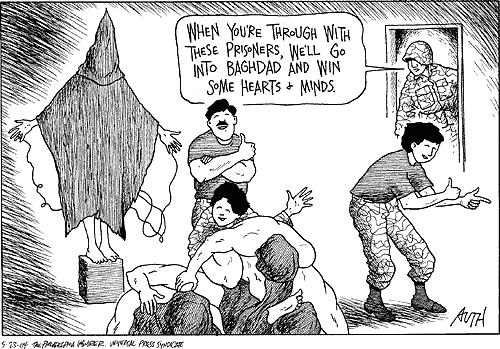
War, in this scenario, is denied any active role in the thinking, conscious persona, and conversely here, the thinking, rational persona is denied all the potency of the fight. The sentiment expressed here is a perfect example of the suppression mechanisms inherent in Western rationalism (‘Civilisation’): Making war, i.e. living out one’s ‘negative’ emotions on a non-intellectual stage – possibly even victoriously – is professedly barbaric, whereas to negate and suppress one’s emotions is constructed as a worthwhile and necessary endeavour. Even in a democratic system that purportedly aims to allow freedom of speech to everyone, there are these cultural limitations of emotional expression. This philosophy in practice may on the one hand be vital for the survival of our species, but the fact that it also provides the breeding ground for arguably the most perverted criminal offences on a daily basis (and has led to the creation of inarguably the most powerful weapons of mass destruction in human history), comes as no surprise when one contemplates how overpowering the restrictive reign of a rationalist culture over the hearts of its members has been. Imperatively, ‘the pen is mightier than the sword’ is voicing pure social conditioning: ‘Do not feel, upon failing at which (inevitable, unless you are dangerously deranged), at least stop yourself from acting on those feelings. Stay distracted, consume continuously according to pre-arranged patterns of perceived needs, and the state will cushion you from fearing death.’
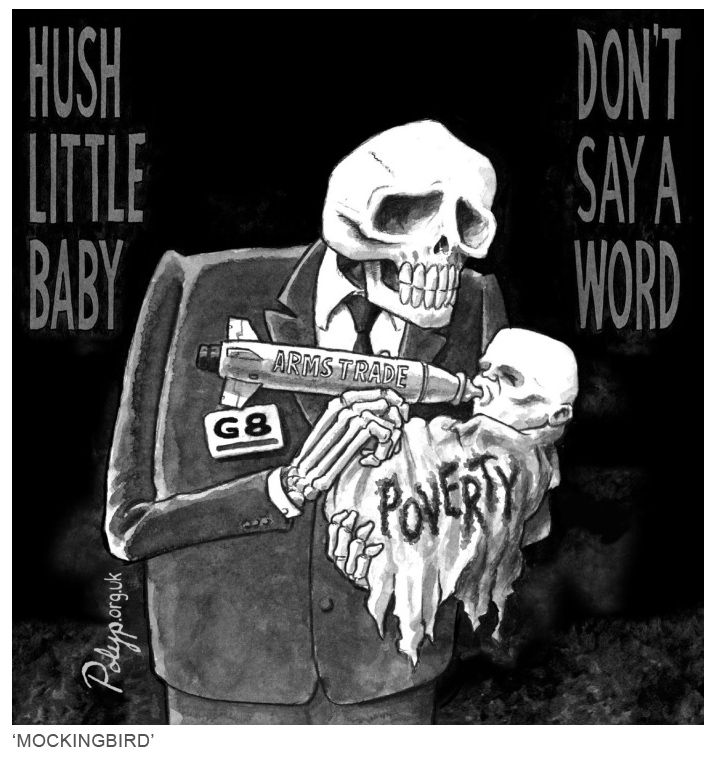
polyp cartoon _ G8 Arms Trade Poverty

It has become clear that, as a result of the immense complexities of our social, political and economic history, not only has the message of this sentence itself – like everything else in the cultural domain – had to change (hence the variety of possible and necessary contemporary readings), but so also has the sentiment that informed this message long vanished and been replaced by a range of new world views and belief systems. At present, what these generally have in common is that they sense themselves to be one of many possible views: heterogeneously scattered outside traditional hierarchies, others always requiring consideration.

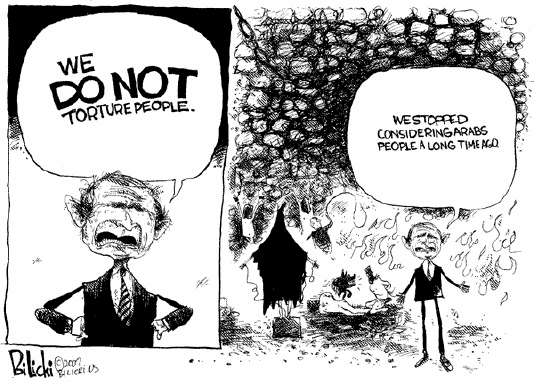
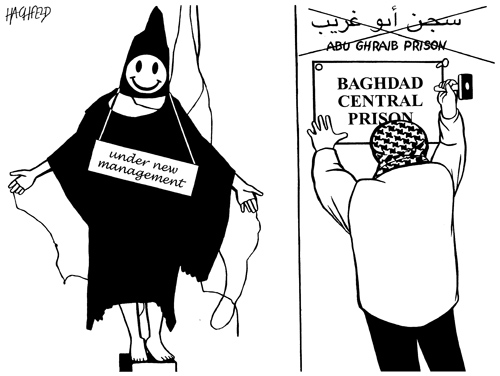
Of course there will always be fundamentalist and self-righteous tendencies in politics and other fields that need to set up an ‘other’ as opposite, with all the horrific consequences that ensue, as in the recent case of ordinary American country folk torturing and killing Iraqi prisoners of war in Abu Ghraib prison. The American defence minister’s public reasoning on this torture is that, far from being the carefully considered act of war between two nations that it was, it was supposedly a dirty deed carried out by rogue individuals. In the terminology of this text: that no ‘sword’ was involved. As a result of this denial the torturers will soon be publicly demonised and punished (under the same principle of othering), thereby serving as scapegoats for all those who have been actively involved in creating a lawless situation in these prisons in the first place. If the idea of a ‘mighty pen’ could be trusted to be referring to a positive pragmatism rather than a positivist idealism, it might now for example be able to symbolise an international military court, which could serve to address this new form of ideological and propagandist warfare. This kind of warfare is reminiscent of the public display of the severed heads of enemy soldiers in the Middle Ages, but it infinitely transcends it in calculation and coldness. That Iraqis are responding ‘in kind’ (with the recent public killing and burning of American tourists), surprises less than the Americans’ refusal to submit their soldiers to said international court of war.

Most people today do not believe that wars are stopped by anything somebody writes with a pen: In fact, we are becoming increasingly sensitised to the demagoguery of the media. The worst wars, the greatest weapons, the most inescapable conflicts, the most far-reaching crimes and deepest infringements of basic human rights are all created on paper, but they are rarely prevented and almost never undone again through the use of that medium.

Once ‘The pen is mightier than the sword’ may actually have been a revolutionary and powerful statement, but nowadays it is merely an overused turn of phrase that invites kitsch sentiments on the one hand and bitter cynicism on the other. Googling this phrase, one comes across fantasy websites, dating chatrooms, reactionary rants by fundamentalist Islamic school children, and all other kinds of intellectually ill-directed verbiage. This selection naturally also has to do with the medium of the internet, and only represents that quantity of writing that has made itself available to us as html code. On the other hand, if ‘mighty’ writing was as easily and readily available today as all that web and magazine copy that likes to borrow this phrase, there would probably be less disillusionment in the mind of today’s reader who comes across it.
Many readers today are not used to enjoying or savouring the tensions and creative spaces offered by a linguistic symbol – they seem to lack the ability to read symbols as such. This is best exemplified by the mass of websites containing most literal readings of the quote. Self-defence sites for women describe a variety of techniques for using a pen as a weapon; crime-writer blogs publish stories investigating the poisonous qualities of ink; ‘Dungeons and Dragons’-fans have ‘webrings’, where the interpretations voted into the top five all delight in ‘setting things right’: the pen would have to be very big and the sword very small… etc. Many readers who have enjoyed the privilege of being exposed to a variety of literary genres may shudder at the shallowness of this method of constructing linguistic communication, but recognising the widespread reality of this practice could also be a less prematurely judgmental process and even bear new creative fruit: new sets of immediately recognisable symbols are forming all the time, including all the potential pitfalls of more or less hidden reactionary sentiments, but far more open to widespread critical discussion.

‘The sword is mightier than the pen’ – a statement that holds true, only rather less surprisingly so, which is why it is nowhere to be found as a quotation. What might have made the quote so long lasting is that it seems to be expressing something unthinkable: a pen battling with a sword and beating it, as it were: a poet wrestling down a soldier.
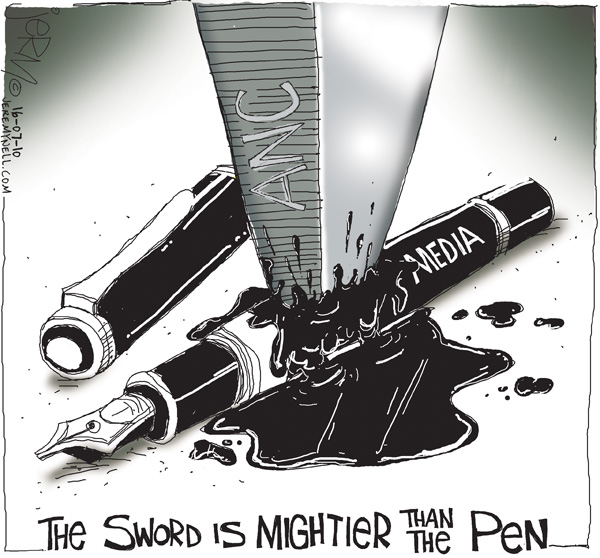
If, hypothetically unencumbered by any knowledge of the quote, a contemporary reader were to come across a sentence expressive of the negative ‘The pen is not mightier than the sword’, they might successfully be moved to contemplate the dynamics of power and information, and the worldwide imbalance regarding the privilege of acquiring knowledge. Installing this modified ‘quote’ publicly in the fashion of, for example, Jenny Holzer’s ‘Truisms’, may serve to draw attention to the Y-generation’s ubiquitous refusal to re-interpret and re-negotiate vital forms of human expression – a refusal structurally inherent in the banality of the practice of ‘sharing’ on (anti-)social networks, of regurgitating and replicating copies of once-historic fragments until the pen is dry.
the romance of winds

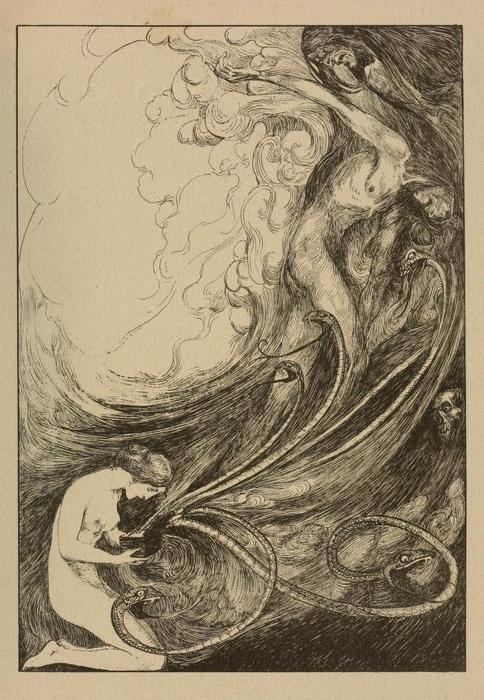
There is a whirlwind in southern Morocco, the aajej, against which the fellahin defend themselves with knives. There is the africo, which has at times reached into the city of Rome. The alm, a fall wind out of Yugoslavia. The arifi, also christened aref or rifi, which scorches with numerous tongues. These are permanent winds that live in the present tense.

There are other, less constant winds that change direction, that can knock down horse and rider and realign themselves anticlockwise. The bist roz leaps into Afghanistan for 170 days, burying villages. There is the hot, dry ghibli from Tunis, which rolls and rolls and produces a nervous condition. The haboob — a Sudan dust storm that dresses in bright yellow walls a thousand metres high and is followed by rain. The harmattan, which blows and eventually drowns itself into the Atlantic. Imbat, a sea breeze in North Africa. Some winds that just sigh towards the sky. Night dust storms that come with the cold. The khamsin, a dust in Egypt from March to May, named after the Arabic word for ‘fifty,’ blooming for fifty days–the ninth plague of Egypt. The datoo out of Gibraltar, which carries fragrance.

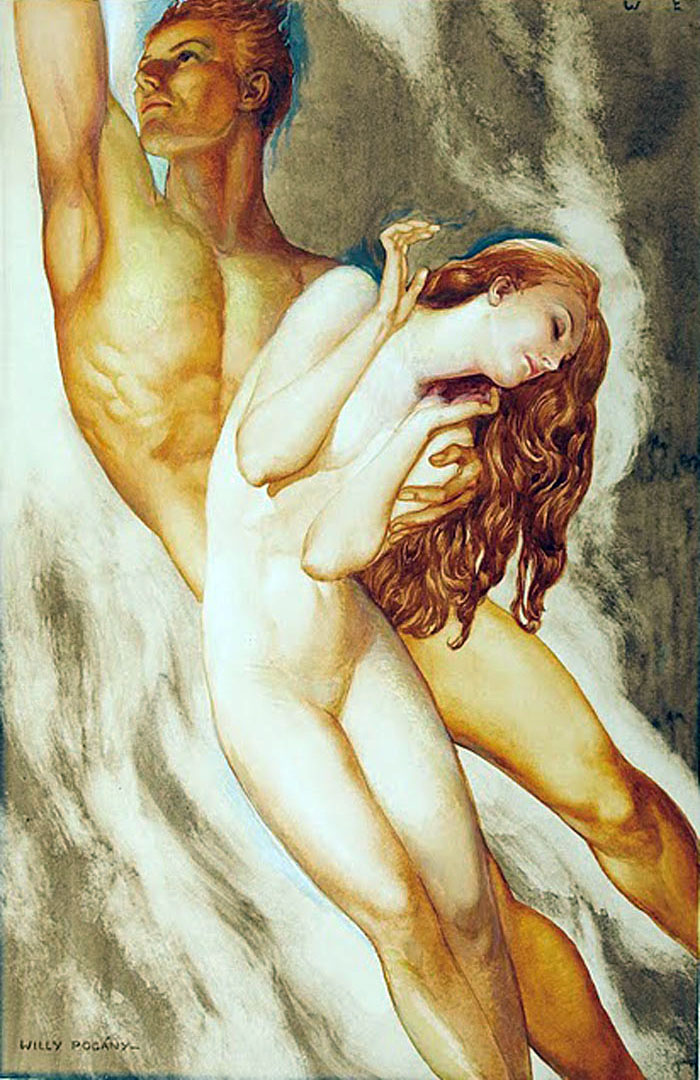
Illustration by Willy Pogany (Hungary, 1882-1955)

There is also the ——, the secret wind of the desert, whose name was erased by a king after his son died within it. And the nafhat — a blast out of Arabia. The mezzar-ifoullousen — a violent and cold southwesterly known to Berbers as ‘that which plucks the fowls.’ The beshabar, a black and dry northeasterly out of the Caucasus, ‘black wind.’ The samiel from Turkey, ‘poison and wind,’ used often in battle. As well as the other ‘poison winds,’ the simoom, of North Africa, and the solano, whose dust plucks off rare petals, causing giddiness.

Other, private winds.

Travelling along the ground like a flood. Blasting off paint, throwing down telephone poles, transporting stones and statue heads. The harmattan blows across the Sahara filled with red dust, dust as fire, as flour, entering and coagulating in the locks of rifles. Mariners called this red wind the ‘sea of darkness.’ Red sand fogs out of the Sahara were deposited as far north as Cornwall and Devon, producing showers of mud so great this was also mistaken for blood. ‘Blood rains were widely reported in Portugal and Spain in 1901.’

There are always millions of tons of dust in the air, just as there are millions of cubes of air in the earth and more living flesh in the soil (worms, beetles, underground creatures) than there is grazing and existing on it. Herodotus records the death of various armies engulfed in the simoom who were never seen again. One nation was ‘so enraged by this evil wind that they declared war on it and marched out in full battle array, only to be rapidly and completely interred.

— Michael Ondaatje, from The English Patient.

schtumm!

Illustration done by Willy Pogany in 1914 for T. W. Rolleston’s Tale of Lohengrin,1914. You can download the whole book from HERE.

Lohengrin is a character in German Arthurian literature. His story, which first appears in Wolfram von Eschenbach’s Parzival, is a version of the Knight of the Swan legend known from a variety of medieval sources.

The son of Parzival (Percival), Lohengrin is a knight of the Holy Grail sent in a boat pulled by swans to rescue a maiden, Elsa, who is the daughter of the Duke of Brabant, and who is forbidden to ask about his identity. At King Arthur’s command he is taken by a swan through the air to Mainz, where he fights for Elsa, overthrows her persecutor, and marries her. He then accompanies the emperor to fight against the Hungarians, and subsequently against the Saracens. On his return home to Cologne, Elsa, contrary to the prohibition, persists in asking him about his origin. After being asked a third time he tells her, but at that instant is carried away by the swan back to the Grail.

Wolfram’s story was expanded in two later romances. In 1848 Richard Wagner adapted the medieval tale into his popular opera Lohengrin, on which Rolleston based his book.

the woman in my life – playing with the concept of the feminine

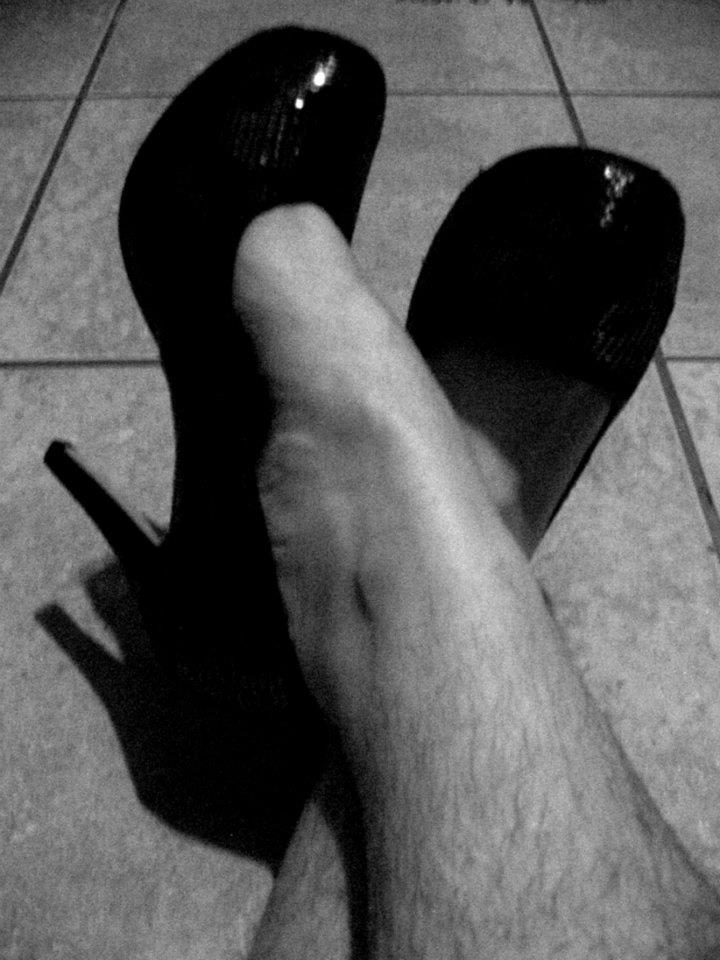
Image

Rapunzel

Grabbing my identity by the throat has allowed me to play with other identities in the space of play and performance. Being more secure in how I identify in terms of gender identity, gender expression and sexual orientation has allowed me the freedom to explore my boundaries: what I’m comfortable with and how far I can push myself.

Up until two years ago I found the feminine cloyingly repulsive and unnatural. My mother’s attempts to feminise me always left me feeling exceedingly uncomfortable, and I clearly remember the hideousness of my matric dance outfit and how I felt like a drag queen, and yet not, because it was an enforced drag, not the drag that stems from a place of play and a sense of security in one’s own gender.

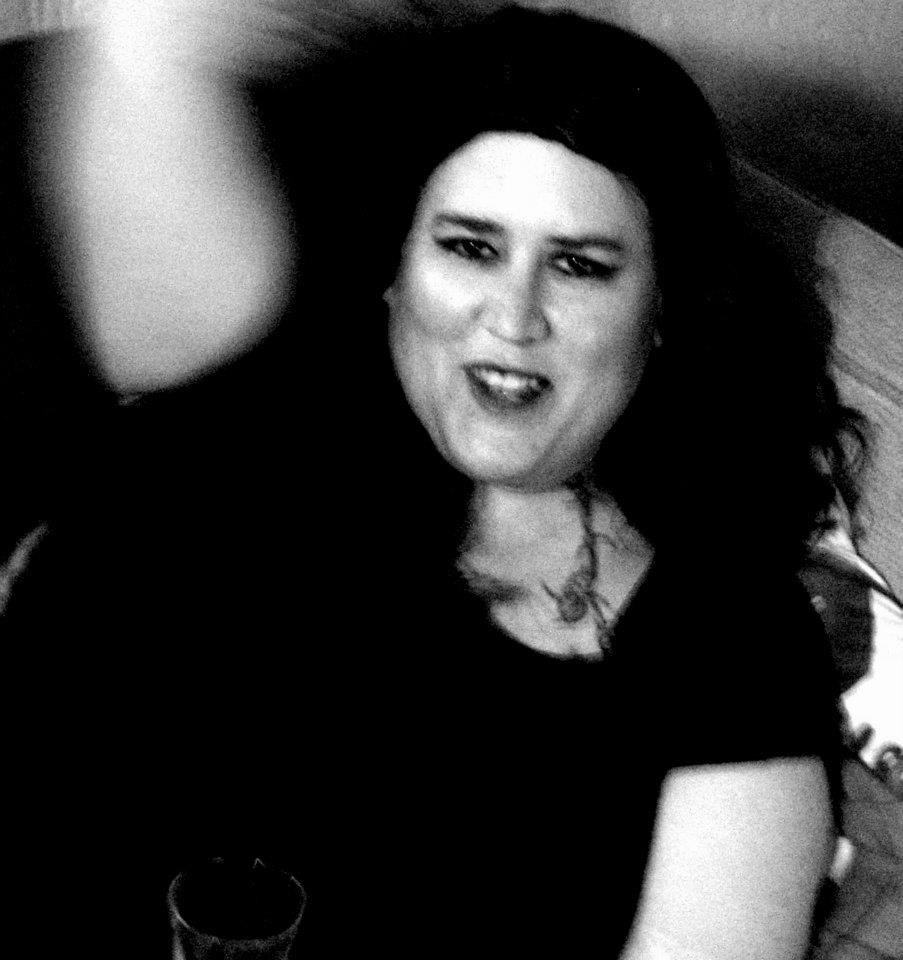
Image

Playing the Femme Fatale, I

Since beginning the photographic project of documenting my play with gender, I have experienced conflicting emotions and reactions to placing myself within a feminine frame. Firstly, I found myself approaching the feminine from the space of play, experimentation and boundary testing. The idea of donning the feminine has been more exciting and less frightening, and I’ve truly had fun with and loved the experience of seeing the photographic results. The artistic process has thus been very revelatory and enjoyable.

Image

My Greta Garbo Moment

The physical experience, the experience of my self apart from the artistic process, has been difficult. I’ve been able to perform the feminine to the extent of playing with costume, props and make-up, but have been unable to perform feminine characteristics, behaviours, mannerisms and poses. Along with the wigs, dresses and shoes, I am still visited by those old feelings of intense discomfort, a sense of not being me, of having an otherness enforced on me. Even in the privacy of my own home with only me to witness my transformation, I am unable to express a femininity that stems from me rather than the costume. One interesting thing, though, is that when I’m playing the feminine and photographing myself, I’m able to smile (almost unable not to), while in my other self-portraits smiling feels unnatural and uncomfortable. In the blurb to this blog I say that, “I approach other spaces through fearlessly exploring inner space.” Sometimes the exploration is more brave than fearless. A lot of the time my performances touch a nerve, pointing to something I still need to investigate further, approaching it more carefully in my next encounter with it. Because sometimes when staring into the looking glass, it’s not only unexplored selves that stare back. Sometimes there are demons.

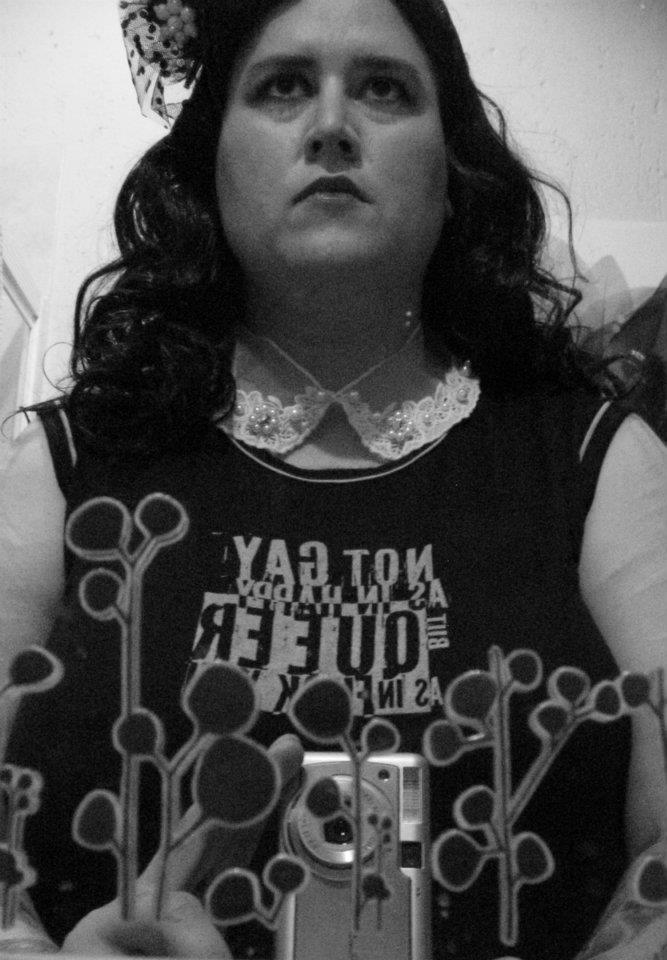
Image

Not Gay as in Happy, Queer as in Fuck You

Looking back on these photos and experiments, I’m very happy with the results, because they denote a bravery that was previously unavailable to me; a sense of adventure I never had; and, a sense of playfulness I’m so grateful to have found.

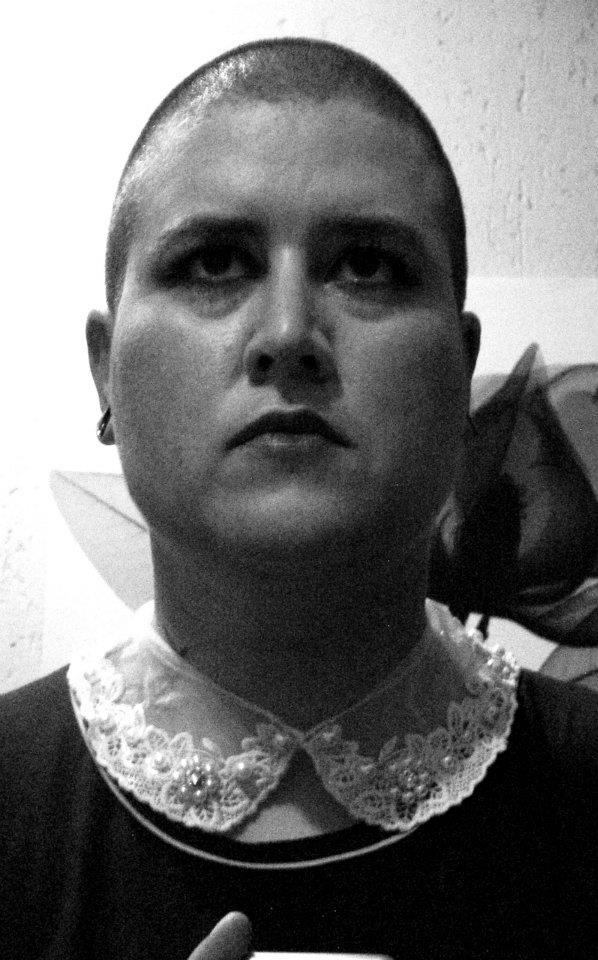
Image

beatific

© Germaine de Larch Images. First published on www.life-writ-large.posterous.com

each day

“She arches her body like a cat on a stretch. She nuzzles her cunt into my face like a filly at the gate. She smells of the sea. She smells of rockpools when I was a child. She keeps a starfish in there. I crouch down to taste the salt, to run my fingers around the rim. She opens and shuts like a sea anemone. She’s refilled each day with fresh tides of longing.”

– Jeanette Winterson, ‘Written on the Body’

wild life narrator

The natural born cheater is a deadly animal. Research suggests that a cheater can comfortably live up to nine lives simultaneously. That’s why it moves in for the kill so fast. There is very little at stake. Its young must fend for themselves from an early age. Just look at it go! The finesse, the merciless focus, the fondness for black eyeliner. But the cheater has little stamina. It tires quickly of the chase, seeking new quarry rather than putting in effort beyond a certain point… Success! Yet what a bloody mess afterwards as it lies licking its chops… Replete… for tonight.

resolutions by franz kafka

To lift yourself out of a miserable mood, even if you have to do it by strength of will, should be easy. I force myself out of my chair, stride around the table, exercise my head and neck, make my eyes sparkle, tighten the muscles around them. Defy my own feelings, welcome A. enthusiastically supposing he comes to see me, amiably tolerate B. in my room, swallow all that is said at C.’s, whatever pain and trouble it may cost me, in long draughts.

Yet even if I manage that, one single slip, and a slip cannot be avoided, will stop the whole process, easy and painful alike, and I will have to shrink back into my own circle again.

So perhaps the best resource is to meet everything passively, to make yourself an inert mass, and, if you feel that you are being carried away, not to let yourself be lured into taking a single unnecessary step, to stare at others with the eyes of an animal, to feel no compunction, in short, with your own hand to throttle down whatever ghostly life remains in you, that is, to enlarge the final peace of the graveyard and let nothing survive save that.

A characteristic movement in such a condition is to run your little finger along your eyebrows.

Translated by Willa and Edwin Muir

david foster wallace on interiority (1989)

We all have our little solipsistic delusions, ghastly intuitions of utter singularity: that we are the only one in the house who ever fills the ice-cube tray, who unloads the clean dishwasher, who occasionally pees in the shower, whose eyelid twitches on first dates; that only we take casualness terribly seriously; that only we fashion supplication into courtesy; that only we hear the whiny pathos in a dog’s yawn, the timeless sigh in the opening of the hermetically-sealed jar, the splattered laugh in the frying egg, the minor-D lament in the vacuum’s scream; that only we feel the panic at sunset the rookie kindergartner feels at his mother’s retreat. That only we love the only-we. That only we need the only-we. Solipsism binds us together, J.D. knows. That we feel lonely in a crowd; stop not to dwell on what’s brought the crowd into being. That we are, always, faces in a crowd.

–  from “Westward The Course Of Empire Takes Its Way”, a short story in the collection Girl With Curious Hair (1989)

she wolf

“If your heart is pounding, think upon a child’s most obscene moments.

With a child, different moments are separated–

ingenuousness
joyful games
dirtiness.

An adult links these moments together: in dirtiness he attains an ingenuous joy.

Dirtiness without a childish shame, games without a child’s joy, ingenuousness without the thoughtless reflex by which it is characterized in children–all of these are but comedies staged by adulthood’s reductive seriousness. Health, on the other hand, maintains childhood’s burning flame. The worst impotence coincides with the domination of seriousness.

Naked breasts and the obscenity of your sex have the power to bring about that which as a little girl, able to do nothing, you could only dream.

—III.—

Battered by frozen despair, by the majestic horrors of life! At exasperation’s end. Today I find myself at the edge of the abyss. At the limit of disaster and an intolerable happiness. At the very peak of a vertiginous height I sing a HALLELUIAH: the purest, most dolorous you could hear.

Calamity’s solitude is a halo, a veil of tears with which you will be able to cover your dog’s nakedness.

Listen to me. I speak softly in your ear. But don’t misunderstand my soft tone. Go out into the anguished night, naked, go to the place where the path turns.

Press your fingers into your moist folds. It will be sweet to smell upon you the viscous, bitter scent of pleasure: the damp, stale odor of flesh made happy. Voluptuousness contracts the lips burning to open out onto anguish. The wind upon the small of your back makes you feel more than naked as you quake and quiver with the cartilaginous snap of your spine–that snapping which makes the whites of your eyes roll up to fill the voids between your eyelids.

In a lonely forest far from your abandoned clothing will you hunch down carefully like a she-wolf.

Lightning with its fierce stench and pounding rain are the companions of anguish and obscenity.

Get up, and flee: childish, abandoned, howling in frightened laughter.”

-From Halleluiah! The Catechism of dianus by Georges Bataille

madrugada

What makes you sing so sweetly in the dark, White-eyes, hours before dawn? I want to know. Is it your sureness of the imminent arrival of the light? Or is it to wake the sun, in case it’s forgotten its appointment with the day? I want to know, because right now things are cold and dark here, and your song is puncturing the silence with a conviction I do not share.

gregory david roberts — shantaram

“It took me a long time and most of the world to learn what I know about love and fate and the choices we make, but the heart of it came to me in an instant, while I was chained to a wall and being tortured. I realised, somehow, through the screaming in my mind, that even in that shackled, bloody helplessness, I was still free: free to hate the men who were torturing me, or to forgive them. It doesn’t sound like much, I know. But in the flinch and bite of the chain, when it’s all you’ve got, that freedom is a universe of possibility. And the choice you make, between hating and forgiving, can become the story of your life.”

“The past reflects eternally between two mirrors—the bright mirror of words and deeds, and the dark one, full of things we didn’t do or say.”

“The ancient Sanskrit legends speak of a destined love, a karmic connection between souls that are fated to meet and collide and enrapture one another. The legends say that the loved one is instantly recognised because she’s loved in every gesture, every expression of thought, every movement, every sound, and every mood that prays in her eyes. The legends say that we know her by her wings—the wings that only we can see—and because wanting her kills every other desire of love.

The same legends also carry warnings that such fated love may, sometimes, be the possession and obsession of one, and only one, of the two souls twinned by destiny. But wisdom, in one sense, is the opposite of love. Love survives in us precisely because it isn’t wise.”

” … the soul has no culture. The soul has no nations. The soul has no colour or accent or way of life. The soul is forever. The soul is one. And when the heart has its moment of truth and sorrow, the soul can’t be stilled.”

“It’s forgiveness that makes us what we are. Without forgiveness, our species would’ve annihilated itself in endless retributions. Without forgiveness, there would be no history. Without that hope, there would be no art, for every work of art is in some way an act of forgiveness. Without that dream, there would be no love, for every act of love is in some way a promise to forgive. We live on because we can love, and we love because we can forgive.”

“They claim a hidden corner of our hearts, all those moments that stay with us unscreamed. That’s where loves, like elephants, drag themselves to die. It’s the place where pride allows itself to cry.”

“You can’t kill love. You can’t even kill it with hate. You can kill in-love, and loving, and even loveliness. You can kill them all, or numb them into dense, leaden regret, but you can’t kill love itself. Love is the passionate search for a truth other than your own; and once you feel it, honestly and completely, love is forever. Every act of love, every moment of the heart reaching out, is a part of the universal good: it’s a part of God, or what we call God, and it can never die.”

“The cloak of the past is cut from patches of feelings, and sewn with rebus threads. Most of the time, the best we can do is wrap it around ourselves for comfort or drag it behind us as we struggle to go on. But everything has its cause and its meaning. Every life, every love, every action and feeling and thought has its reason and significance: its beginning, and the part it plays in the end. Sometimes, we do see. Sometimes, we see the past so clearly, and read the legend of its parts with such acuity, that every stitch of time reveals its purpose, and a kind of message is enfolded in it. Nothing in any life, no matter how well or poorly lived, is wiser than failure or clearer than sorrow. And in the tiny, precious wisdom that they give to us, even those dread and hated enemies, suffering and failure, have their reason and their right to be.”

breathe sparingly

“Silently, Siddhartha exposed himself to burning rays of the sun directly
above, glowing with pain, glowing with thirst, and stood there, until he
neither felt any pain nor thirst any more.  Silently, he stood there in
the rainy season, from his hair the water was dripping over freezing
shoulders, over freezing hips and legs, and the penitent stood there,
until he could not feel the cold in his shoulders and legs any more,
until they were silent, until they were quiet.  Silently, he cowered in
the thorny bushes, blood dripped from the burning skin, from festering
wounds dripped pus, and Siddhartha stayed rigidly, stayed motionless,
until no blood flowed any more, until nothing stung any more, until
nothing burned any more.

Siddhartha sat upright and learned to breathe sparingly, learned to
get along with only few breaths, learned to stop breathing.  He
learned, beginning with the breath, to calm the beat of his heart,
leaned to reduce the beats of his heart, until they were only a few and
almost none.”

 – from Siddhartha by Hermann Hesse

emily brontë – wuthering heights

Heaven did not seem to be my home; and I broke my heart with weeping to come back to earth; and the angels were so angry that they flung me out into the middle of the heath on the top of Wuthering Heights; where I woke sobbing for joy. That will do to explain my secret, as well as the other. I’ve no more business to marry Edgar Linton than I have to be in heaven; and if the wicked man in there had not brought Heathcliff so low I shouldn’t have thought of it. It would degrade me to marry Heathcliff now; so he shall never know how I love him; and that not because he’s handsome, Nelly, but because he’s more myself than I am. Whatever our souls are made of, his and mine are the same, and Linton’s is as different as a moonbeam from lightning, or frost from fire…

… I cannot express it; but surely you and everybody have a notion that there is, or should be an existence of yours beyond you. What were the use of creation if I were entirely contained here? My great miseries in this world have been Heathcliff’s miseries, and I watched and felt each from the beginning; my great thought in living is himself. If all else perished, and he remained, I should still continue to be; and all else remained, and he were annihilated, the universe would turn to a mighty stranger; I should not seem a part of it. My love for Linton is like the foliage in the woods. Time will change it, I’m well aware, as winter changes the trees — my love for Heathcliff resembles the eternal rocks beneath — a source of little visible delight, but necessary. Nelly, I am Heathcliff — he’s always, always in my mind — not as a pleasure, any more than I am always a pleasure to myself — but as my own being — so, don’t talk of our separation again — it is impracticable.
~ Catherine Earnshaw (Ch. IX).

_____
Wuthering Heights is the only published novel by Emily Brontë, written between October 1845 and June 1846 and published in July of the following year. It was not printed until December 1847 under the pseudonym Ellis Bell, after the success of her sister Charlotte Brontë’s novel Jane Eyre. A posthumous second edition was edited by Charlotte in 1850.

suspended sentence (2009)

my menstrual blood does not “run”.
it’s too viscous.
it builds up behind the bottleneck of my cervix until the weight of
sloughed-off lining gets too heavy to contain,
then it blurts out
in thick, slimy strands of not-baby,
a cosmic disappointment
smelling of fresh death.
sometimes crimson, still almost fecund,
sometimes older and blacker, a nauseating cousin of bile,
blended with albumen, like broken egg white, like frogspawn frustrated.

inside my insides,
god’s scraping a blunt teaspoon round and round,
clearing the walls of my womb for another hit-and-miss next month.

on a heavy day,
pulling out an incontinent tampon,
i sit there on the loo,
toilet paper wrapped round my fingers,
trying to abbreviate the sentence of clots
my lips are drooling into the toilet bowl water.
it’s not a lake, it’s a suspension,
a hanging paragraph of placental full-stops that goes on and on,
inexorable
and i wipe and shove in another wad of cotton to staunch the ooze for
another few hours of outer peace.

one day, sometime in my forties or fifties
i’ll be paroled,
retired from service.
god will give up on my body
and that will be the end of that.
it’s irrelevant what anyone else wants.

my cunt is me, but it’s also beyond me,
ordained for a purpose beyond my control,
just like your cock is you, but it’s also beyond you,
ordained for a purpose beyond your control.
mostly we are blasphemous.

the obsession with looking into cunts, like the obsession with hard cocks,
is an ontological obsession with discovering and controlling our cosmic origins,
an expression of our raging, impossible desire for omnipotence.
and indeed pornographic images ARE redundant in that they hold no
physical power to alter the workings of sex
those closeups of fucking are nothing more than flat reproductions of
ten centimetres of Life’s copy machine  –
mostly they are over-man-ipulated and bear little resemblance to real
bodies interacting.
porn is the simulacral fantasy of ruling the universe.

Note
I wrote this in 2009 as a comment on this piece:

_20170509_071606

one morning by jamie heckert, 2006

One morning, not that long ago, I answered the door in my dressing gown
to the sight of a man from the energy company. He came to ask me why I had
chosen to switch suppliers. As I explained that I preferred one with a better
environmental policy, I slowly realised that not only did this guy have gorgeous
eyes, he was watching me closely. I went on to say, performing a bit for this
beautiful man, “Of course all corporations and really capitalism in general is bad
for the environment”. He agreed, his eyes glowing with excitement. But, what
could he do? He had a mortgage to pay. I’m not quite sure why, maybe I was
scared of the intensity of my attraction, but suddenly I found myself channeling
some broken record of anarchist propaganda and said, “We need resistance on
the inside, too.” That was it. His beautiful eyes looked away and the connection
was lost.
I feel grief remembering that morning; I would have liked to have listened
with empathy to both his desire for change and for security, to maintained that
beautiful sense of connection. Instead, I tried to recruit him. When I replay the
incident in my mind, it has a different ending. I ask him, “What would you like
to do?”

anaïs nin on writing

I had always believed in Andre Breton’s freedom, to write as one thinks, in the order and disorder in which one feels, to follow sensations and absurd correlations of events and images, to trust to the new realms they lead one into. “The cult of the marvelous.” Also the cult of the unconscious leadership, the cult of mystery, the evasion of false logic. The cult of the unconscious as proclaimed by Rimbaud. It is not madness. It is an effort to transcend the rigidities and the patterns made by the rational mind.

Winter, 1931-1932, from The Diary of Anaïs Nin , Volume One 1931-1934

the beautiful music all around us: field recordings and the american experience, by stephen wade

The Beautiful Music All Around Us presents the extraordinarily rich backstories of thirteen performances captured on Library of Congress field recordings between 1934 and 1942 in locations reaching from Southern Appalachia to the Mississippi Delta and the Great Plains. Including the children’s play song “Shortenin’ Bread,” the fiddle tune “Bonaparte’s Retreat,” the blues “Another Man Done Gone,” and the spiritual “Ain’t No Grave Can Hold My Body Down,” these performances were recorded in kitchens and churches, on porches and in prisons, in hotel rooms and school auditoriums. Documented during the golden age of the Library of Congress recordings, they capture not only the words and tunes of traditional songs but also the sounds of life in which the performances were embedded: children laugh, neighbors comment, trucks pass by.

Musician and researcher Stephen Wade sought out the performers on these recordings, their families, fellow musicians, and others who remembered them. He reconstructs the sights and sounds of the recording sessions themselves and how the music worked in all their lives. Some of these performers developed musical reputations beyond these field recordings, but for many, these tracks represent their only appearances on record: prisoners at the Arkansas State Penitentiary jumping on “the Library’s recording machine” in a rendering of “Rock Island Line”; Ora Dell Graham being called away from the schoolyard to sing the jump-rope rhyme “Pullin’ the Skiff”; Luther Strong shaking off a hungover night in jail and borrowing a fiddle to rip into “Glory in the Meetinghouse.”

Reflecting decades of research and detective work, the profiles and abundant photos in The Beautiful Music All Around Us bring to life largely unheralded individuals–domestics, farm laborers, state prisoners, schoolchildren, cowboys, housewives and mothers, loggers and miners–whose music has become part of the wider American musical soundscape. The book also includes an accompanying CD that presents these thirteen performances, songs and sounds of America in the 1930s and ’40s. By exploring how these singers and instrumentalists exerted their own creativity on inherited forms, “amplifying tradition’s gifts,” Wade shows how a single artist can make a difference within a democracy.

Musician, recording artist, and writer Stephen Wade is best known for his long-running stage performances of Banjo Dancing and On the Way Home. He also produced and annotated the Rounder CD collection that gave rise to this book, A Treasury of Library of Congress Field Recordings. Since 1996 his occasional commentaries on folksongs and traditional tunes have appeared on National Public Radio’s All Things Considered.

For more information, go to http://www.go.illinois.edu/StephenWade

*****
Video Produced by The Prairie Production Group
509 S. Country Fair Drive
Champaign, IL 61820
http://www.prairie-production.com

Videography and Editing by Sam Ambler

*****

pamella dlungwana – sweets for thohoyandou

I was seven and she was six. She had came to visit, spend time with her big sister. I was too busy to spend all my days with her. She loved to play outside, roam the rivers and catch frogs and fireflies like she did at home with our sister and brother but that wasn’t my scene. She tried to teach me games, skipping rope, umagalobha and amatshe but I sucked at every one. I always wanted to be inside, alone. I felt bad, not being able to join in on her fun and so everyday I’d come home with a sherbet, a lollipop, something she could squeeze from a wrapper and eat in the dark. Ayanda would rush to the gate to greet me in the afternoon or I’d find her at the bus stop waiting to walk me home, her arms open for a hug. I thought at first that she was after the sweeties in my jumper but discovered that she was excited to have me back. This devotion was new to me. I didn’t know how to hug her back or say simple things like, “I’ll miss you” or “I love you too.”

In the evenings as she washed getting into her nightie I would tell my sister stories. I would lie to her and she would laugh. When I was attacked by a waif of a girl who took me for everything, I told my sister I had met a giant on my way home. I told her he had fangs. I said I’d fought him till he broke down and told me he had a sick child and so I decided to give him everything I had. She thought that I was brave, that I was kind. She told me this as she pressed toothpaste onto the brush, I stopped her before she could wet the brush, reached into the front pocket of my jumper and pressed two socks of sherbet into her wet palm. I leaned in and kissed someone else, for the first time in my life.

Today my sister is at the dentist. I can imagine her panic and fear but I’m glad she’s old enough to brave it on her own.

ted hughes, in a letter to his son

“The only calibration that counts is how much heart people invest, how much they ignore their fears of being hurt or caught out or humiliated. And the only thing people regret is that they didn’t live boldly enough, that they didn’t invest enough heart, didn’t love enough. Nothing else really counts at all.”

“The melancholy river bears us on. When the moon comes through the trailing willow boughs, I see your face, I hear your voice. What are you whispering? Sorrow, sorrow. Joy, joy. Woven together in the moonlight.”

~ Virginia Woolf

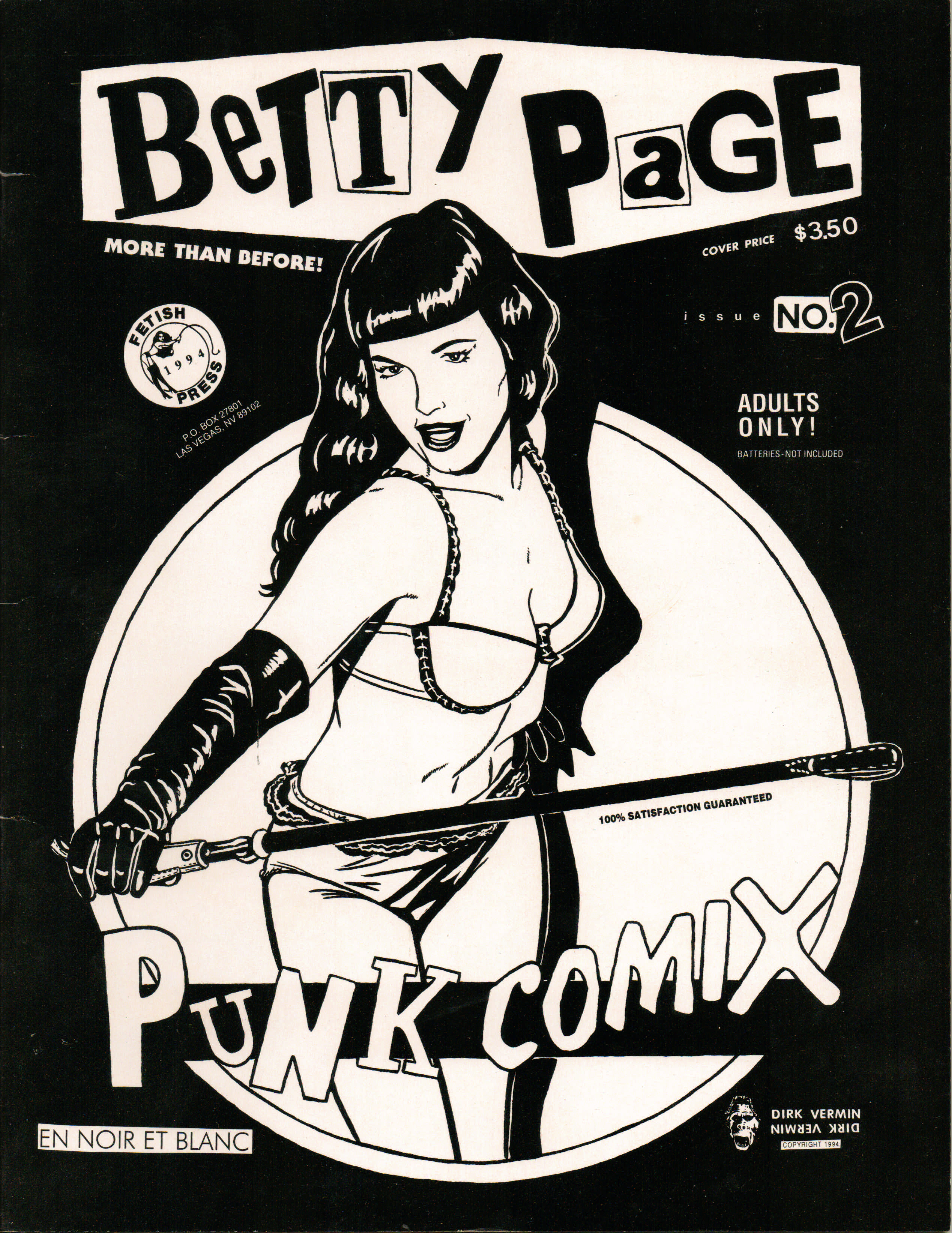
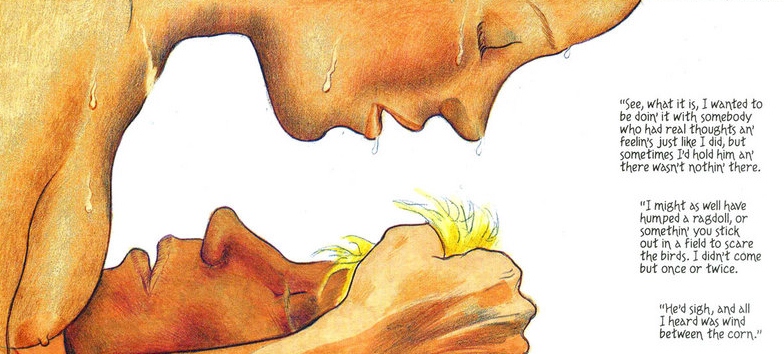
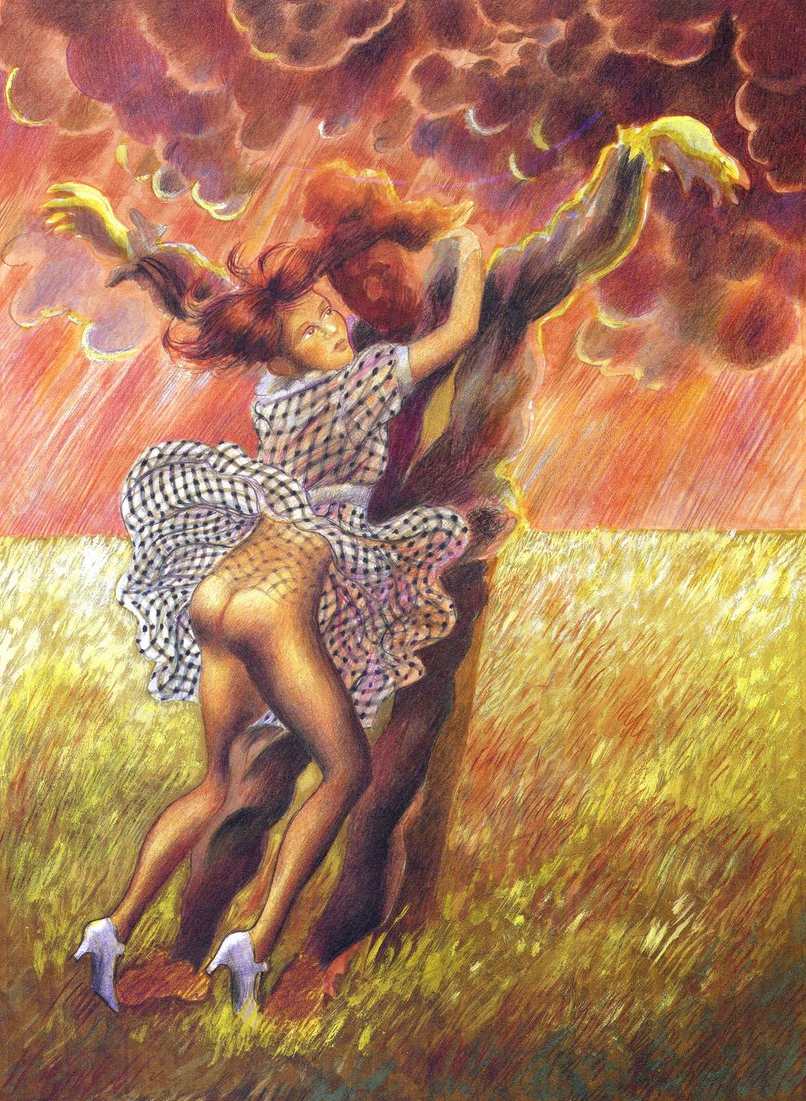
“lost girls” by alan moore, illustrated by melinda gebbie


“When I first started writing comics for adults, I found myself forever needing to explain that, no, I wasn’t writing those kind of adult stories.

The boundary between pornography and erotica is an ambiguous one, and it changes depending on where you’re standing. For some, perhaps, it’s a matter of whatever turns you on (my erotica, your pornography), for some the distinction occurs in class (i.e. erotica is pornography for rich people). Perhaps it’s also something to do with the means of distribution – internet pornography is unquestionably porn, while an Edwardian publication, on creamy paper, bought by connoisseurs, part works bound into expensive volumes, must be erotica.

Alan Moore knows his words.”

Read the rest of this review by Neil Gaiman here

Download Lost Girls here

egghead (2004)

I sleep with one eye open, so I can see them coming.
I can’t get away, but at least I can see them coming and steel myself.
Ideas like bunnies fuck me in my bed.

Sometimes they bounce in uninvited, coquettish, and it’s almost fun. They keep me up till morning. I writhe, giggle hysterically, chase them pillow to post. Fluff tickles, a humid sneeze, and I’m knocked up, swelling anaphylactically. On colder nights I’m gang-raped, tied down and stabbed, bloating with high-pressure jets of rabid spores.

However it happens, the thoughts germinate in swarms, another and another and another sprouting.

I’m weepy again. Exhausted.
I don’t want the mutants that grow from these unions. I wish there was a contraceptive. A chastity belt. Anything to stop this brood, to render my imagination infertile. The pills are useless.

I can feel my chemistry changing inexorably as the cells divide. Thalidomide embryos kick with vestigial limbs, opposable pink stubs. Leprous digits dropping off and repropagating like mitotic cacti. Opaque eyes, squamous ear buds, mouths filmed over with milky membrane. Foreheads bulging with gestating thoughts trapped in undifferentiated tissue, crying out restlessly in underwater bubbles before they can even breathe. They’re so ugly!
Fruitless and multiplying.
I have to abort them all.
Distended oxygen thieves.
They mustn’t breathe.
They mustn’t breed.
Halt the assembly line!

I wish I could give these little niggling creations a chance, the benefit of my doubt. Wish I were able to carry them to term, to quietly, patiently allow them to ripen inside me till they could live by themselves. If only human nature could be allowed to take its organicky course… I cry for their inchoateness as I spew them out. It seems such a pity that I’m allergic to them.
Yes, they’re poisoning me.
Yes, I make myself sick.
Yellow serum oozes the truth of what I’m doing. I’m bleeding inside, putrescing slowly.

Maybe I’ve succeeded this time in gouging free? I wonder every time if what I’ve done will make me barren.
But no, the root won’t be cauterised. I still malfunction just fine afterwards. Each time I pick at the raw scab over the umbilical entrance, each time I lance the pus, another swelling surfaces elsewhere, ballooning mercilessly with the filth that I’m never able to excise completely, swimming with stillborn nonsense.

I’m leaking rotten discharge out of every opening. I don’t even try to hide the bulimic blurts any more. Everyone knows. I can’t stay home ALL the time. I’ve become inured to their “Shut up!” “Shut up!”… I like to believe they’d be more sympathetic if only they understood the advanced state of septicaemia I’m living with. Then again, no one likes someone else’s bloody vomit on their shoes I s’pose… They recoil, grimaces masked with grins.

I smile beatifically.

Plop!

Another black clot of afterthought.

Malformed.
Malignant.
It smells disgusting.
And oh, the cramp!

The nausea rises, throbbing.

Heave. Swallow. Metallic post-nasal drip.

Rises again…
I can’t down another millilitre of this bloody mucus, eat one more word.

BLAAAAAAAAAAAAAAAAAHAHAHAHA

Sorry.
I’ll go home now.

Lock the door.

Lie down. Palms up.

Oh it’s quiet.

Teeth chattering.
SHUT UP!

Baby talk.
Stupidness.

Stupor.

Smooth and cool… So serene. So sterile for a few moments.
But the sweet stench is creeping back. I turn on my side, hug my legs up to my chest. And my cheek is wet with the dark patch spreading on my sheets. Squirming with infection, with congealing dread. I scrub and scrub, but the stain is under my nails.
So? I’ll paint them vamp red then.

I click on the hundred-watt bulb, swinging futile against the darkness, awaiting the cuddly incubi’s return. I can hear them breathing behind the curtains.

First published at http://www.africans.co.za, april 22, 2004