Jaki Liebezeit, you held it all together. RIP <3
‘“If we want a world with less suffering and more flourishing, it would be useful to perceive complexity and complicity as the constitutive situation of our lives, rather than as things we should avoid,” she writes. We can’t help that we’ve inherited these problems—a warming Earth, institutional racism, increasingly antibiotic-resistant bacteria—nor can we help sometimes perpetuating them. Better to stop pretending at purity, own up to our imperfections, and try to create a morality that works with them.’
This video is one of the things I treasure most on Youtube – it gives me chills every time. It’s a recording of Liz Mitchell of Boney M performing “Motherless Child” live with the Les Humphries singers in the early 1970s. It’s incredible how Mitchell seems to be singing about her removal from herself via recording, its simulacral persistence beyond her existence in that moment… And the wavering picture also speaks of analog decay, arrested and mummified by its digitisation from analog video and (again lossy) upload to Youtube. And then, of course, the song’s origins in slavery and dispossession. So many degrees of loss, so many layers of noise.
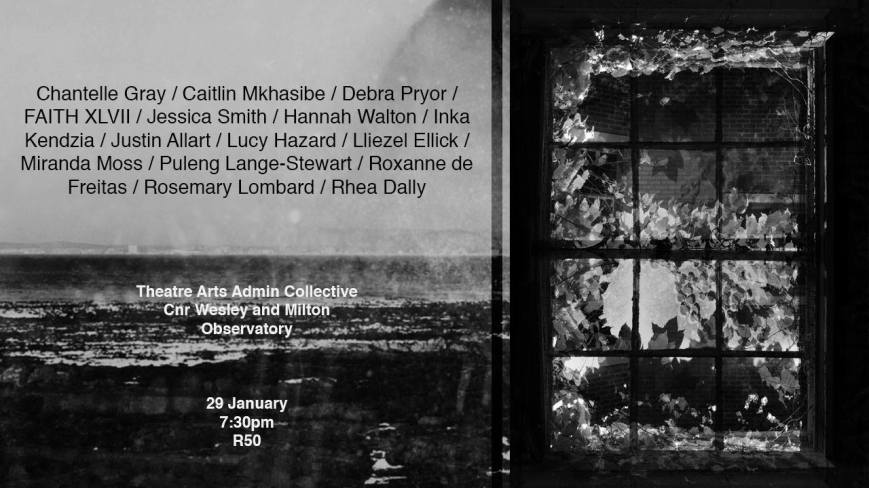
Join us! More details HERE. Dedicating my performance to Mark Fisher, who took his own life the other day. His brilliant work, particularly this blog post on hauntology, has been profoundly influential on how I understand archive and aspire to use sound. I’m so sad he is gone.
Read about the age-old concept of the homunculus and the homunculus argument related to the theory of vision.
Sublime cover of New Order.
Thanks to Helgé Janssen for this record.
“I don’t want to live under the clock; I don’t want to climb to the top…”
One of the hottest garage girl bands ever.
And then they say the same thing a bit differently.
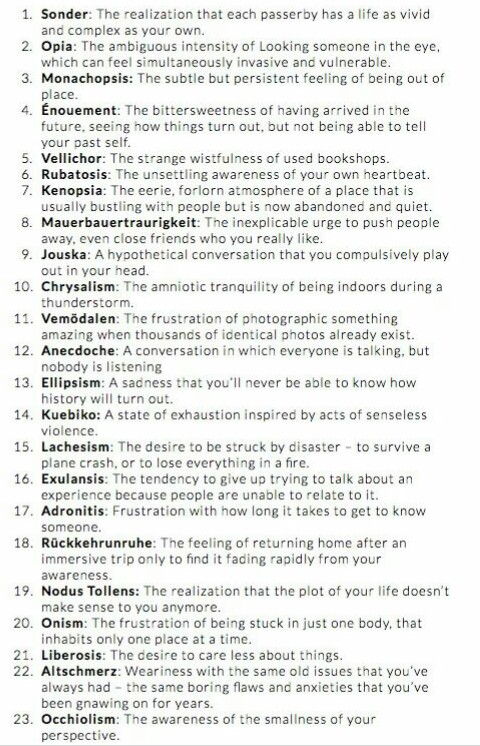
Check out The Dictionary of Obscure Sorrows.
Off Come Again II, a Japanese noise compilation released on Furnace Records in 1993, put together by Michio Teshima, head of Vanilla Records, who released the Tawamure – Come Again compilation in 1991.
The liners to the second Come Again compilation call the Japanese noise genre “an exorcism of limits as performed under the clever disguise of music,” a description which effectively negates the idea that the bands which fall under this banner are all about aggression.
Before you know what kindness really is
you must lose things,
feel the future dissolve in a moment
like salt in a weakened broth. What you held in your hand,
what you counted and carefully saved,
all this must go so you know how desolate the landscape can be between the regions of kindness. How you ride and ride
thinking the bus will never stop,
the passengers eating maize and chicken
will stare out the window forever.
Before you learn the tender gravity of kindness
you must travel where the Indian in a white poncho
lies dead by the side of the road. You must see how this could be you,
how he too was someone
who journeyed through the night with plans
and the simple breath that kept him alive.
Before you know kindness as the deepest thing inside,
you must know sorrow as the other deepest thing.
You must wake up with sorrow.
You must speak to it till your voice
catches the thread of all sorrows
and you see the size of the cloth.
Then it is only kindness that makes sense anymore,
only kindness that ties your shoes
and sends you out into the day to gaze at bread,
only kindness that raises its head
from the crowd of the world to say
It is I you have been looking for,
and then goes with you everywhere
like a shadow or a friend.
__

Naomi Shihab Nye was born in St. Louis, Missouri in 1952. Her father was a Palestinian refugee and her mother an American of German and Swiss descent, and Nye spent her adolescence in both Jerusalem and San Antonio, Texas. Read more here.
From the documentary All by Myself: the Eartha Kitt Story.
These are the days of the open hand
They will not be the last
Look around now
These are the days of the beggars and the choosers
This is the year of the hungry man
Whose place is in the past
Hand in hand with ignorance
And legitimate excuses
The rich declare themselves poor
And most of us are not sure
If we have too much
But we’ll take our chances
Because god’s stopped keeping score
I guess somewhere along the way
He must have let us alt out to play
Turned his back and all God’s children
Crept out the back door
And it’s hard to love, there’s so much to hate
Hanging on to hope
When there is no hope to speak of
And the wounded skies above say it’s much too late
Well maybe we should all be praying for time
These are the days of the empty hand
Oh you hold on to what you can
And charity is a coat you wear twice a year
This is the year of the guilty man
Your television takes a stand
And you find that what was over there is over here
So you scream from behind your door
Say “what’s mine is mine and not yours”
I may have too much but i’ll take my chances
Because God’s stopped keeping score
And you cling to the things they sold you
Did you cover your eyes when they told you
That he can’t come back
Because he has no children to come back for
It’s hard to love there’s so much to hate
Hanging on to hope when there is no hope to speak of
And the wounded skies above say it’s much too late
So maybe we should all be praying for time
 What world to which you do not belong
What barren place, what days are these
What awful thing has laid you down
Betwixt this bed alone, you sleep
In a room of ghosts and grime and sin
With no bedding to curl against your chest
To comfort skin and heart and head
Or find reprieve, remember this:
This world to which you do not belong
Is not of you or Her or He
But a world of them, the scribbled lines
of man and man, now man-machine
What of your bed amidst their house
Do you make it, leave it, invite them in?
Or do you tie the sheets and fashion means
To hang your life, go whispering
Along the corridors where they tried to kiss you
Beneath the beams of others gone
Below the words of men who missed you
And missed the most, your unborn son
What now, what world (you’re standing yet –
You’ve left the bed and room and curse)
“What will you have me do this time
What good is left, what use of verse?”
And yonder still, the One you seek
Forever held in suspension there
Just beyond and just ahead
The endless walk to God knows where
But now the ghosts and grime are yours
Not all have seen that bathroom floor,
Fewer still, been strapped to beds;
Freed their limbs and asked for more
Folly! You live; you’re safe and sound
And most of ghosts have long since left
This talk of lover and beloved, how,
When Aleppo burns, lovers bereft
Of beloved, once in bone and flesh
Oh God (for what is God but wonder)
In what world does hell come breathing thus?
Who tears such limbs and hearts asunder?
But this is mine (you speak of light)
And that is theirs, by karma dealt
If this were true (you once were them)
You’d fall to the floor with all you felt
And further into darkness go,
With mimicry of the darkest yet,
To give all that you could and all that you are
To pray in a place where light had left
Throw glitter, glitter at every bent
Hold lightly prayers for beloved thine
You ask for more but don’t malign
A God who’s busy with ghosts and grime.
In the, in the countryside, under the stream
Suck the, suck the marrow out of her bones
Inject, inject, inject me with chemotherapies
Suck the, suck the money out of her face
We are, we are all Americans now
Africa, Iceland, Europe and Brazil
China, Thailand, India and Great Britain
Australia, Borneo and Nigeria
We are, we are all Americans now
Suck the, suck the oil out of her face
Burn her, burn her hair, boil her skin
We are, we are all Americans now
Pain Is…’ (1997) unflinchingly examines the role of pain within society. Attempting “to make an image of pain”, Dwoskin’s film is practical and philosophical.
“Pain Is… combines interviews, archival footage and Dwoskin’s thoughtful voice-over to arrive at a scrupulous anatomy of pain (encompassing disease, dental work and sadomasochism). The interviews range from those who suffer from chronic pain to those who find pleasure in wilfully inflicting pain.” (Dennis Lim, director of Film at Lincoln Centre NYC)
Stephen Dwoskin’s experimental film records in a single continuous shot a woman’s face before, during and after orgasm.
A static camera records, in one single continuous shot, a woman’s face before, during and after orgasm. The act of looking and the limits of the film frame are highlighted in this intimate sexual episode with Tina Fraser. Stephen Dwoskin presents a powerful, personal moment while maintaining a distance and resisting the viewer being subsumed into the action on screen.
Stephen Dwoskin was a highly regarded underground filmmaker who had moved from New York to London and helped to found the London Filmmakers’ Co-op in 1966. His extremely striking work quickly received critical attention and he made several feature-length works through the 1970s with support from German television and the BFI. He continued with both personal and essayistic films and documentaries, and in the 1990s began shooting on handheld video. He made collage films and explored his family’s home movies as he reflected on age, sexuality and the passing of different generations.
Info from the BFI.
Taken from the CD ‘Early Works 1967 – 1982’ (EM), “Tiger Balm” is a piece originally released as a 10″ with Issue No. 9 of SOURCE magazine, USA 1970. More Annea Lockwood HERE.
From Phantom Orchard (Mego, 2004).
 fleurmach