grimes – art angel documentary (2015)

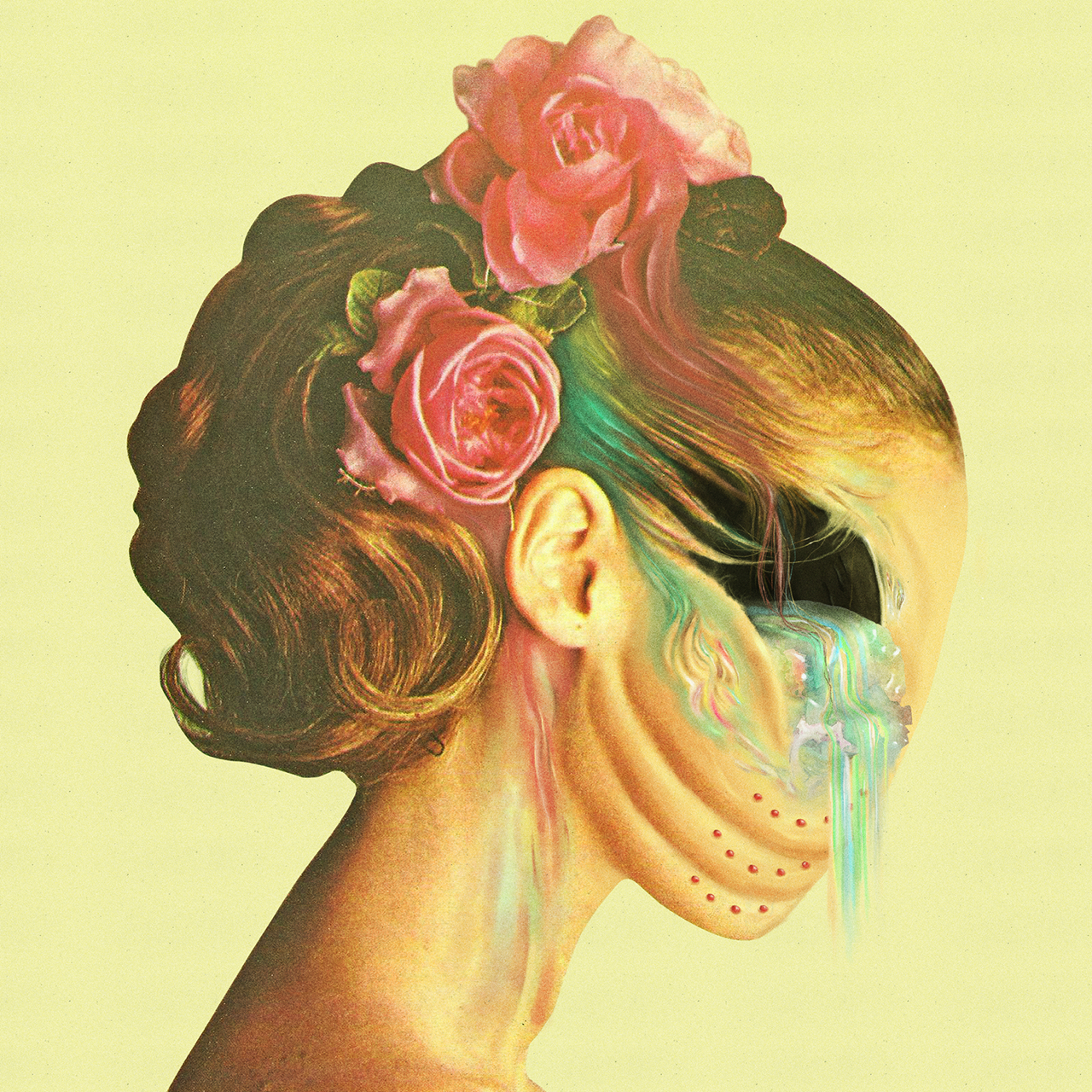
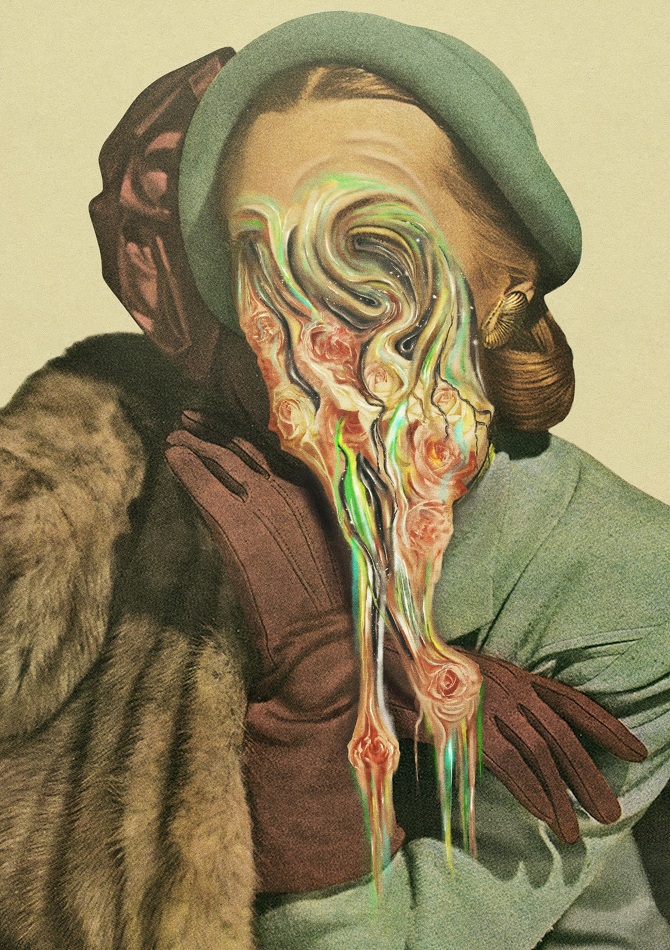
“At first, I guess, there was just Grimes,” she says in the documentary. “I don’t technically have control of her narrative anymore—she very much exists in pop culture now. Grimes as one person cannot represent more than a couple of ideas. That’s why I started developing some of the other characters, like really abstract from who I am and how I am.”

“i just push the things that i’m naturally good at really hard” (2012)

Interview with Grimes from 2012.
‘She’s only 24, but already releasing her third album Visions: Claire Boucher a.k.a. Grimes. With a sense of irony, the Canadian musician admits that she’s ‘pretty good at faking’. She says she doesn’t know that much about music at all. “I just push the things I’m naturally good at really hard, but if I would play as a back-up musician in someone else’s band, I would totally fuck it up for everybody.”‘

rainer maria rilke – les roses xxi

img_20160410_184513.jpgXXI
Cela ne te donne-t-il pas le vertige
de tourner autour de toi sur ta tige
pour te terminer, rose ronde?
Mais quand ton propre élan t’inonde,
tu t’ignores dans ton bouton.
C’est un monde qui tourne en rond
pour que son calme centre ose
le rond repos de la ronde rose.

XXI
Doesn’t it make you dizzy, rose,
to spin on your stem around yourself
ending in your round self ?
Overwhelmed by your own momentum
you forget the bud that is you.
It’s a world that whirls around,
daring its calm center to hold
the round repose of the round rose.

Rainer Maria Rilke (c 1926) From his series “Les Roses”, Jung Journal: Culture & Psyche,
5:4, 17-21. Translated from French by Susanne Petermann (2011).

rilke on god

fb_img_1461648488387.jpg“Yet, no matter how deeply I go down into myself, my God is dark, and like a webbing made of a hundred roots that drink in silence. I know that my trunk rose from his warmth, but that’s all, because my branches hardly move at all near the ground, and just wave a little in the wind.”

― Rainer Maria Rilke

paul celan – the no-one’s-rose (1963)

nothing rose (2)

PSALM

No one kneads us again out of earth and clay,
no one incants our dust.
No one.

Blessed art thou, No One.
In thy sight would
we bloom.
In thy
spite.

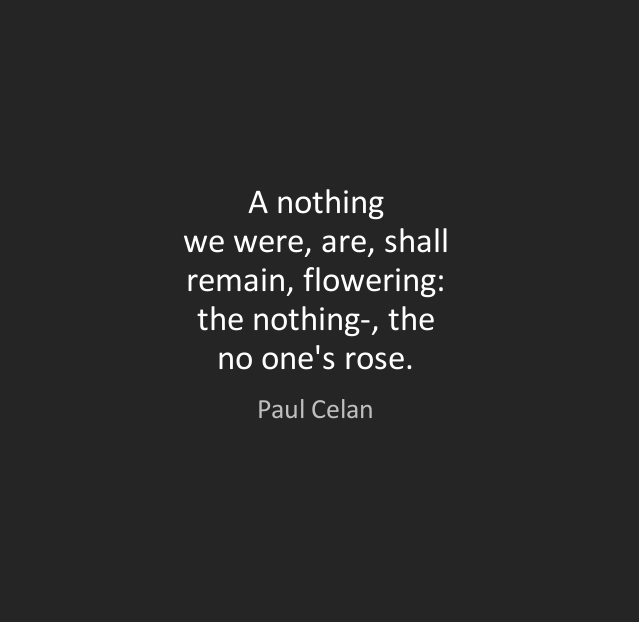
A Nothing
we were, are now, and ever
shall be, blooming:
the Nothing-, the
No-One’s-Rose.

With
our pistil soul-bright,
our stamen heaven-waste,
our corona red
from the purpleword we sang
over, O over
the thorn.

Paul Celan, “Psalm” from Selected Poems and Prose, translated by John Felstiner. Copyright © 2001 by John Felstiner.

michel foucault – the utopian body (1966)

The body is the zero point of the world. There, where paths and spaces come to meet, the body is nowhere. It is at the heart of the world, this small utopian kernel from which I dream, I speak, I proceed, I imagine, I perceive things in their place, and I negate them also by the indefinite power of the utopias I imagine. My body is like the City of the Sun. It has no place, but it is from it that all possible places, real or utopian, emerge and radiate.

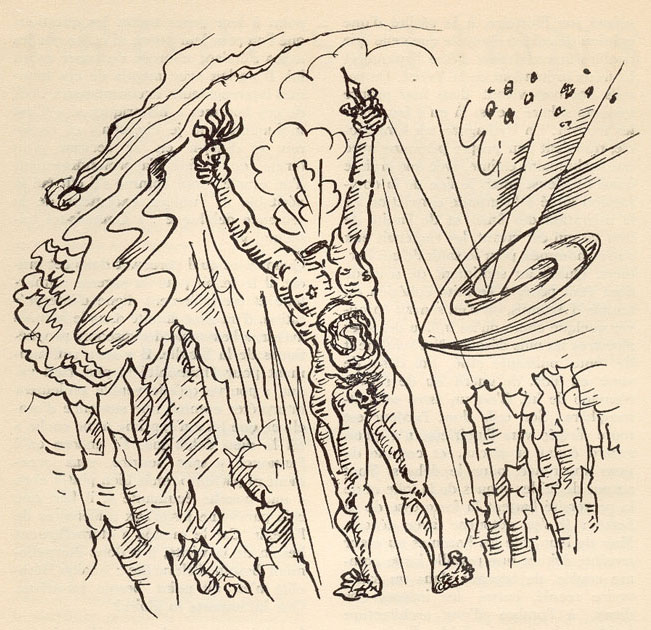
Illustration by Andre Masson, 1936.

Illustration by Andre Masson, 1936.

Excerpts from the translation by Lucia Allais of a radio lecture Foucault delivered in 1966. Published in Sensorium, MIT Press, 2006, 229-34:

My body: it is the place without recourse to which I am condemned. And actually I think that it is against this body (as if to erase it) that all these utopias have come into being. The prestige of utopia–to what does utopia owe its beauty, its marvel? Utopia is a place outside all places, but it is a place where I will have a body without body, a body that will be beautiful, limpid, transparent, luminous, speedy, colossal in its power, infinite in its duration. Untethered, invisible, protected–always transfigured. It may very well be that the first utopia, the one most deeply rooted in the hearts of men, is precisely the utopia of an incorporeal body.

No, really, there is no need for magic, for enchantment. There’s no need for a soul, nor a death, for me to be both transparent and opaque, visible and invisible, life and thing. For me to be a utopia, it is enough that I be a body. All those utopias by which I evaded my body–well they had, quite simply, their model and their first application, they had their place of origin, in my body itself, I really was wrong, before, to say that utopias are turned against the body and destined to erase it. They were born from the body itself, and perhaps afterwards they turned against it.

My body, in fact, is always elsewhere. It is tied to all the elsewheres of the world. And to tell the truth, it is elsewhere than in the world, because it is around it that things are arranged. It is in relation to it–and in relation to it as if in relation to a sovereign–that there is a below, an above, a right, a left, a forward and a backward, a near and a far. The body is the zero point of the world. There, where paths and spaces come to meet, the body is nowhere. It is at the heart of the world, this small utopian kernel from which I dream, I speak, I proceed, I imagine, I perceive things in their place, and I negate them also by the indefinite power of the utopias I imagine. My body is like the City of the Sun. It has no place, but it is from it that all possible places, real or utopian, emerge and radiate.

Maybe it should also be said that to make love is to feel one’s body close in on oneself. It is finally to exist outside of any utopia, with all of one’s density, between the hands of the other. Under the other’s fingers running over you, all the invisible parts of your body begin to exist. Against the lips of the other, yours become sensitive. In front of his half-closed eyes, your face acquires a certitude. There is a gaze, finally, to see your closed eyelids. Love also, like the mirror and like death–it appeases the utopia of your body, it hushes it, it calms it, it encloses it as if in a box, it shuts and seals it. This is why love is so closely related to the illusion of the mirror and the menace of death. And if, despite these two perilous figures that surround it, we love so much to make love, it is because, in love, the body is here.

rainer maria rilke – les roses (1926)

Rilke chose as his own epitaph this poem:

Rose, oh reiner Widerspruch, Lust,
Niemandes Schlaf zu sein unter soviel
Lidern.

Rose, o pure contradiction, desire
to be no one’s sleep beneath so many lids.

“The following selections from David Need’s Roses: The Late French Poetry of Rainer Maria Rilke provide an illuminating glimpse into the ways Rilke uses the rose as motif. The poems seek to elucidate how time’s ceaseless transformations do not rectify or allay the contradictions they invoke. The living rose is “fully awake” but discreet, possessing “many pages / of detailed happiness / we will never read.” Rilke is fascinated by these irreducible relationships: the flower’s vitality belies its eventual death; its blooming won’t diminish the impenetrable density of its petals.” —Dan Holmes

Rilke’s posthumously published Roses calls us into a more intimate relationship with things, asking us to consider the material world as sister of our imagination, rather than nameless patient of our ideas.

I
If your blooming sometimes so astonishes us,
happy rose,
it’s that, petal against petal, you rest
within yourself, inside.

Fully awake, your petals, whose surroundings
sleep, though numberless, meet
this silent heart’s tendernesses
which end in these urgent lips.

II
I see you, rose, book half-opened,
having so many pages
of detailed happiness
we will never read. Mage-Book,

which is opened by the wind and can be read,
eyes shut…
from which butterflies scatter, confused
to have had the same ideas.

dsc_1074.jpg

III
Oh Rose, you perfect thing beyond compare,
infinitely restrained
and infinitely lavished, oh, head
of a body with far too much wandering sweetness,

nothing is equal to you, oh you supreme essence
of this inconstant hour,
your perfume wanders all about
this space of love we have scarcely entered.

VI
A single rose, it’s every rose
and this one—the irreplaceable one,
the perfect one—a supple spoken word
framed by the text of things.

How could we ever speak without her
of what our hopes were,
and of the tender moments
in the continual departure.

XVIII
All that we feel, you share,
yet we ignore what happens to you.
There would have to be a hundred butterflies
to read all your pages.

There are ones among you like dictionaries;
those who gather these
are tempted to bind all the pages.
Me? I like the roses which are letters.

XXIII
Rose, come so late, when the bitter nights stop
in their too sidereal brilliance,
Rose, do you divine the facile, perfect pleasures
of your summer sisters?

Day after day, I watch you who hesitate
in your sheath, clasped too tight.
Rose who, when born, imitates in reverse
the slow ways of the dead.

Does your indescribable state make you understand
in a mingling in which all is silenced
that ineffable harmony of nothingness and being
that we ignore?

XXVI
Infinitely reassured
despite so many dangers
with no change ever
in her habits
is the Rose which opens, prelude
to her immeasurable duration.

Do we know how she lives?
One of her days, without doubt,
is all the earth, all
the infinity of this moment.

XXVII
Rose, was it necessary to leave you outdoors,
exquisite dear?
What is a rose doing there, where fate
exhausts itself on us?

Point of turning back. It’s you
who share
with us, desperately, this life, this life
which is not your time.

(Translated from the French by David Need. To read the original, click HERE.)

RosesRainer Maria Rilke.Translation by David Need. Illustrations by Clare Johnson.Horse & Buggy Press, 2014.

simone weil – training

simone weil gravity and graceWe have to accomplish the possible in order to touch the impossible. The correct exercise (according to our duty) of the natural faculties of will, love and knowledge is, in relation to spiritual realities, exactly what the movement of the body is in relation to the perception of tangible objects. A paralyzed man lacks this perception.

The fulfilment of our strictly human duty is of the same order as correctness in the work of drafting, translating, calculating, etc. To be careless about this correctness shows a lack of respect for the object. The same thing applies to neglect of duty.

Those things which have to do with inspiration are the only ones which are the better for delay. Those which have to do with natural duty and the will cannot allow of delay.

Precepts are not given for the sake of being practised, but practice is prescribed in order that precepts may be understood. They are scales. One does not play Bach without having done scales. But neither does one play a scale merely for the sake of the scale.

Training. Every time we catch ourselves involuntarily indulging in a proud thought, we must for a few seconds turn the full gaze of our attention upon the memory of some humiliation in our past life, choosing the most bitter, the most intolerable we can think of.

We must not try to change within ourselves or to efface desires and aversions, pleasures and sorrows. We must submit to them passively, just as we do to the impressions we receive from colours, according no greater credit to them than in the latter case. If my window is red I cannot, though I should reason day and night for a whole year, see my room as anything but pink. I know, moreover, that it is necessary, just and right that I should see it thus. At the same time, as far as information about my room goes, I only accord to the pink colour a credit limited by my knowledge of its relation to the window. I must accept in this way and no other the desires and aversions, pleasures and sorrows of every kind which I find within me.

On the other hand, as we have also a principle of violence in us—that is to say the will—we must also, in a limited measure, but to the full extent of that measure, use this violent principle in a violent way; we must compel ourselves by violence to act as though we had not a certain desire or aversion, without trying to persuade our sensibility—compelling it to obey. This causes it to revolt and we have to endure this revolt passively, taste of it, savour it, accept it as something outside ourselves, as the pink colour of the room with the red window.

Each time that we do violence to ourselves in this spirit we make an advance, slight or great but real, in the work of training the animal within us.

Of course if this violence we do ourselves is really to be of use in our training it must only be a means. When a man trains a dog to perform tricks he does not beat it for the sake of beating it, but in order to train it, and with this in view he only hits it when it fails to carry out a trick. If he beats it without any method he ends by making it unfit for any training, and that is what the wrong sort of asceticism does.

Violence against ourselves is only permissible when it is based on reason (with a view to carrying out what we clearly consider to be our duty)—or when it is enjoined on us through an irresistible impulsion on the part of grace (but then the violence does not come from ourselves).

The source of my difficulties lies in the fact that, through exhaustion and an absence of vital energy, I am below the level of normal activity. And if something takes me and raises me up I am lifted above it. When such moments come it would seem to me a calamity to waste them in ordinary activities. At other times, I should have to do violence to myself with a violence which I cannot succeed in mustering.

I could consent to the anomaly of behaviour resulting from this; but I know, or I believe I know, that I should not do so. It involves crimes of omission towards others. And as for myself, it imprisons me.

What method is there then?

I must practise transforming the sense of effort into a passive sense of suffering. Whatever I may have to bear, when God sends me suffering, I am inescapably forced to suffer all that there is to suffer. Why, when it comes to duty, should I not in like manner do all that there is to be done?

Mountains, rocks, fall upon us and hide us far from the wrath of the Lamb. At the present moment I deserve this wrath.

I must not forget that according to Saint John of the Cross the inspirations which turn us from the accomplishment of easy and humble obligations come from the side of evil.

Duty is given us in order to kill the self—and I allow so precious an instrument to grow rusty.

We must do our duty at the prescribed time in order to believe in the reality of the external world. We must believe in the reality of time. Otherwise we are in a dream.

It is years since I recognized this defect in myself and recognized its importance, and all this time I have done nothing to get rid of it. What excuse can I find?

Has it not been growing in me since I was ten years old? But however great it may be, it is limited. That is enough. If it is great enough to take from me the possibility of wiping it out during this life and so attaining to the state of perfection, that must be accepted just as it is, with an acceptance that is full of love. It is enough that I know that it exists, that it is evil and that it is finite. But to know each of these three things effectively and to know them all three together implies the beginning and the uninterrupted continuation of the process of wiping out. If this process does not begin to show itself, it is a sign that I do not know in truth the very thing that I am writing.

The necessary energy dwells in me, since I live by means of it. I must draw it relentlessly out of myself, even though I should die in so doing.

Uninterrupted interior prayer is the only perfect criterion of good and evil. Everything which does not interrupt it is permitted, everything which interrupts it is forbidden. It is impossible to do harm to others when we act in a state of prayer—on condition that it is true prayer. But before reaching that stage, we must have worn down our own will against the observance of rules.

Hope is the knowledge that the evil we bear within us is finite, that the slightest turning of the will towards good, though it should last but an instant, destroys a little of it, and that, in the spiritual realm, everything good infallibly produces good. Those who do not know this are doomed to the torture of the Danaïds.

Good infallibly produces good, and evil evil, in the purely spiritual realm. On the other hand, in the natural realm, that of psychology included, good and evil reciprocally produce each other. Accordingly we cannot have security until we have reached the spiritual realm—precisely the realm where we can obtain nothing by our own efforts, where we must wait for everything to come to us from outside.

__

1 ‘If thou wilt thou canst make me clean’ (Gospel text).

__
Excerpted from Simone Weil‘s Gravity and Grace. First French edition 1947. Translated by Emma Crawford. English language edition 1963. Routledge and Kegan Paul, London.
félix guattari on writing (1972)

10/06/1972

I’m strapped to this journal. Grunt. Heave. Impression that the ship is going down. The furniture slides, the table legs wobble …

Writing so that I won’t die. Or so that I die otherwise. Sentences breaking up. Panting like for what. […]

You can explain everything away. I explain myself away. But to whom? You know … The question of the other. The other and time. I’m home kind of fucking around. Listening to my own words. Redundancy. Peepee poopoo. Things are so fucking weird! […]

Have to be accountable. Yield to arguments. What I feel like is just fucking around. Publish this diary for example. Say stupid shit. Barf out the fucking-around-o-maniacal schizo flow. Barter whatever for whoever wants to read it. Now that I’m turning into a salable name I can find an editor for sure […] Work the feed-back; write right into the real. But not just the professional readers’ real, “Quinzaine polemical” style. The close, hostile real. People around. Fuck shit up. The stakes greater than the oeuvre or they don’t attain it […]

Just setting up the terms of this project makes me feel better. My breathing is freed up by one notch. Intensities. A literary-desiring machine. […]

When it works I have a ton to spare, I don’t give a shit, I lose it as fast as it comes, and I get more. Active forgetting! What matters is interceding when it doesn’t work, when it spins off course, and the sentences are fucked up, and the words disintegrate, and the spelling is total mayhem. Strange feeling, when I was small, with some words. Their meaning would disappear all of a sudden. Panic. And I have to make a text out of that mess and it has to hold up: that is my fundamental schizo-analytic project. Reconstruct myself in the artifice of the text. Among other things, escape the multiple incessant dependencies on images incarnating the “that’s how it goes!”

Writing for nobody? Impossible. You fumble, you stop. I don’t even take the trouble of expressing myself so that when I reread myself I can understand whatever it was I was trying to say. Gilles will figure it out, he’ll work it through. […]

I tell myself I can’t take the plunge and leave this shit for publication because that would inconvenience Gilles. But really, though? I just need to cross out the passages he’s directly involved in. I’m hiding behind this argument so that I can let myself go again and just fucking float along. Even though when it comes to writing an article, I start over like twenty-five times!!

And this dance of anxiety …

From The Anti-Oedipus Papers, a set of notes and journal entries by Félix Guattari written while he and Gilles Deleuze were busy writing Anti-Oedipus together(1972) .Translated from the French by Stéphane Nadaud.

simone weil – intelligence and grace

simone weil gravity and graceWe know by means of our intelligence that what the intelligence does not comprehend is more real than what it does comprehend.

Faith is the experience that intelligence is enlightened by love.
Only, intelligence has to recognize by the methods proper to it, that is to say by verification and demonstration, the pre-eminence of love. It must not yield unless it knows why, and it must know this quite precisely and clearly. Otherwise its submission is a mistake and that to which it submits itself is something other than supernatural love. For example it may be social influence.

In the intellectual order, the virtue of humility is nothing more nor less than the power of attention.

The wrong humility leads us to believe that we are nothing in so far as we are ourselves—in so far as we are certain particular human beings.
True humility is the knowledge that we are nothing in so far as we are human beings as such, and, more generally, in so far as we are creatures.
The intelligence plays a great part in this. We have to form a conception of the universal.

When we listen to Bach or to a Gregorian melody, all the faculties of the soul become tense and silent in order to apprehend this thing of perfect beauty—each after its own fashion—the intelligence among the rest. It finds nothing in this thing it hears to affirm or deny, but it feeds upon it.
Should not faith be an adherence of this kind?
The mysteries of faith are degraded if they are made into an object of affirmation and negation, when in reality they should be an object of contemplation.

The privileged rôle of the intelligence in real love comes from the fact that it is inherent in the nature of intelligence to become obliterated through the very fact that it is exercised. I can make efforts to discover truths, but when I have them before me they exist and I do not count.

There is nothing nearer to true humility than intelligence. It is impossible to be proud of our intelligence at the moment when we are really exercising it. Moreover, when we do exercise it we are not attached to it, for we know that even if we became an idiot the following instant and remained so for the rest of our life, the truth would continue unchanged.

The mysteries of the Catholic faith are not intended to be believed by all the parts of the soul. The presence of Christ in the host is not a fact of the same kind as the presence of Paul’s soul in Paul’s body (actually both are completely incomprehensible, but not in the same way). The Eucharist should not then be an object of belief for the part of me which apprehends facts. That is where Protestantism is true. But this presence of Christ in the host is not a symbol, for a symbol is the combination of an abstraction and an image, it is something which human intelligence can represent to itself, it is not supernatural. There the Catholics are right, not the Protestants. Only with that part of us which is made for the supernatural should we adhere to these mysteries.

The rôle of the intelligence—that part of us which affirms and denies and formulates opinions—is merely to submit. All that I conceive of as true is less true than those things of which I cannot conceive the truth, but which I love. Saint John of the Cross calls faith a night. With those who have had a Christian education, the lower parts of the soul become attached to these mysteries when they have no right to do so. That is why such people need a purification of which Saint John of the Cross describes the stages. Atheism and incredulity constitute an equivalent of this purification.

The desire to discover something new prevents people from allowing their thoughts to dwell on the transcendent, undemonstrable meaning of what has already been discovered. My total lack of talent which makes such a desire out of the question for me is a great favour I have received. The recognized and accepted lack of intellectual gifts compels the disinterested use of the intelligence.

The object of our search should not be the supernatural, but the world. The supernatural is light itself: if we make an object of it we lower it.

The world is a text with several meanings, and we pass from one meaning to another by a process of work. It must be work in which the body constantly bears a part, as, for example, when we learn the alphabet of a foreign language: this alphabet has to enter into our hand by dint of forming the letters. If this condition is not fulfilled, every change in our way of thinking is illusory.

We have not to choose between opinions. We have to welcome them all but arrange them vertically, placing them on suitable levels.
Thus: chance, destiny, Providence.

Intelligence can never penetrate the mystery, but it, and it alone, can judge of the suitability of the words which express it. For this task it needs to be keener, more discerning, more precise, more exact and more exacting than for any other.

The Greeks believed that only truth was suitable for divine things—not error nor approximations. The divine character of anything made them more exacting with regard to accuracy. (We do precisely the opposite, warped as we are by the habit of propaganda.) It was because they saw geometry as a divine revelation that they invented a rigorous system of demonstration…

In all that has to do with the relations between man and the supernatural we have to seek for a more than mathematical precision; this should be more exact than science.1

We must suppose the rational in the Cartesian sense, that is to say mechanical rule or necessity in its humanly demonstrable form, to be everywhere it is possible to suppose it, in order to bring to light that which lies outside its range.

The use of reason makes things transparent to the mind. We do not, however, see what is transparent. We see that which is opaque through the transparent—the opaque which was hidden when the transparent was not transparent. We see either the dust on the window or the view beyond the window, but never the window itself. Cleaning off the dust only serves to make the view visible. The reason should be employed only to bring us to the true mysteries, the true undemonstrables, which are reality. The uncomprehended hides the incomprehensible and should on this account be eliminated.

Science, today, will either have to seek a source of inspiration higher than itself or perish.
Science only offers three kinds of interest: (1) Technical applications, (2) A game of chess, (3) A road to God. (Attractions are added to the game of chess in the shape of competitions, prizes and medals.)

Pythagoras. Only the mystical conception of geometry could supply the degree of attention necessary for the beginning of such a science. Is it not recognized, moreover, that astronomy issues from astrology and chemistry from alchemy? But we interpret this filiation as an advance, whereas there is a degradation of the attention in it. Transcendental astrology and alchemy are the contemplation of eternal truths in the symbols offered by the stars and the combinations of substances. Astronomy and chemistry are degradations of them. When astrology and alchemy become forms of magic they are still lower degradations of them. Attention only reaches its true dimensions when it is religious.

Galileo. Having as its principle unlimited straight movement and no longer circular movement, modern science could no longer be a bridge towards God.

The philosophical cleansing of the Catholic religion has never been done. In order to do it it would be necessary to be inside and outside.
__

1 Here again is one of those contradictions which can only be resolved in the realm of the inexpressible: the mystic life, which only arises from the divine arbitrariness, is nevertheless subject to the most severe rules. Saint John of the Cross was able to give a geometric plan of the journey of the soul towards God. [Editor’s note.]

__
Excerpted from Simone Weil‘s Gravity and Grace. First French edition 1947. Translated by Emma Crawford. English language edition 1963. Routledge and Kegan Paul, London.

antonio gramsci – history (1916)

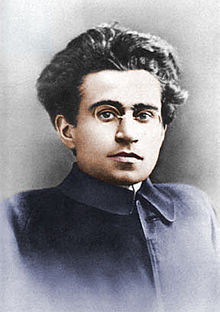
Gramsci_colorized_photoGive up to life your every action, your every ounce of faith. Throw all your best energies, sincerely and disinterestedly, into life. Immerse yourselves, living creatures that you are, in the live, pulsing tide of human existence, until you feel at one with it, until it floods through you, and you feel your individual personality as an atom within a body, a vibrating particle within a whole, a violin string which receives and echoes all the symphonies of history; of that history which, in this way, you are helping to create.

In spite of this utter abandonment of the self to the reality which surrounds it, in spite of this attempt to key your individuality into the complex play of universal causes and effects, you may still, suddenly, feel a sense that something is missing; you may become conscious of vague and indefinable needs, those needs which Schopenhauer termed metaphysical.

You are in the world, but you do not know why you are here. You act, but you do not know why. You are conscious of voids in your life; you desire some justification of your being, of your actions; and it seems to you that human reasons alone do not suffice. Tracing the causal links further and further back, you arrive at a point where, to co-ordinate, to regulate the movement, some supreme reason is necessary, some reason which lies beyond what is known and what is knowable. You are just like a man looking at the sky, who, as he moves further and further back through the space while science has mapped out for us, finds ever greater difficulties in his fantastic uncontrolled impulses.

But what can conquer them is the force of life itself; historical activity can annul them. They are simply the products of tradition, the instinctual vestiges of millennia of terror and of ignorance of the reality that surrounds us. Their origin can be traced. To explain them is to overcome them. To make them the object of history is to recognize their emptiness. And then one can return to the active life, and experience more authentically the reality of history. By bringing feeling, as well as fact, within the sphere of history, one can finally recognize that it is in history alone that the explanation of our existence lies. What can be historicized cannot be supernatural in origin, the vestige of some divine revelation. If something still remains inexplicable, that is due only to our cognitive deficiencies, to the still imperfect grasp of our intellect. Recognizing this may make us more humble, more modest, but it will not throw us into the arms of religion.

Our religion becomes, once again, history. Our faith becomes, once again, man, and man’s will and his capacity for action. We feel an enormous, an irresistible, force from our human past.

We recognize the good things it brings us, like the energetic certainty that what has been possible will be possible again; all the more so, in that we have become wise through the experience of others. But we also recognize the bad, like these inorganic vestiges of transcended states of mind. And this is why we inevitably feel ourselves to be in conflict with Catholicism; and this is why we call ourselves modern. Because, though we feel the past fuelling our struggle, it is a past that we have tamed; our servant, not our master; a past which illuminates and does not overshadow us.

Avanti, 29 August 1916
__
From Pre-Prison Writings, edited by Richard Bellamy. Cambridge Texts in the History of Political Thought, 1994, pp 13-14.

chairman miao at home (2003)

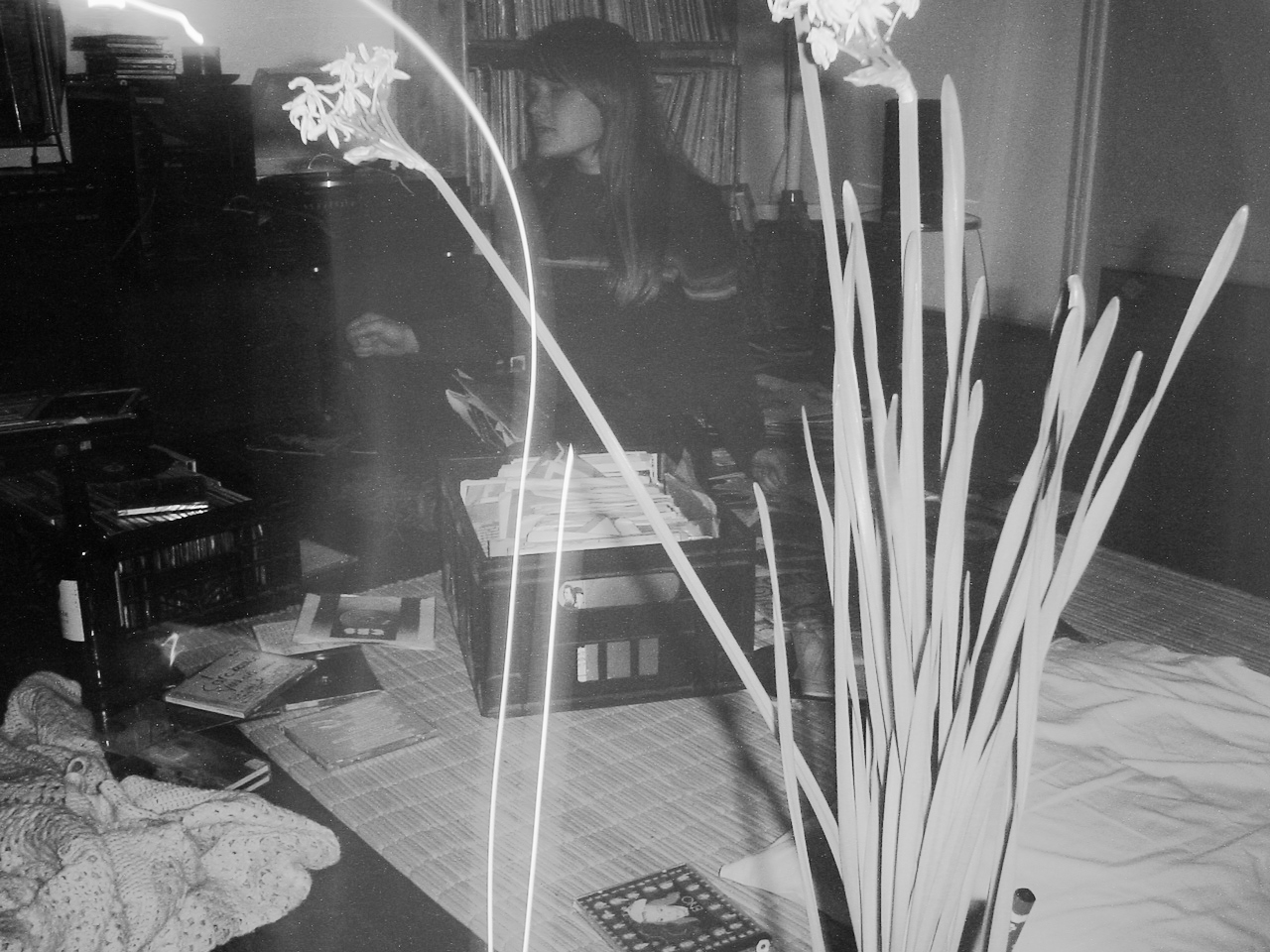
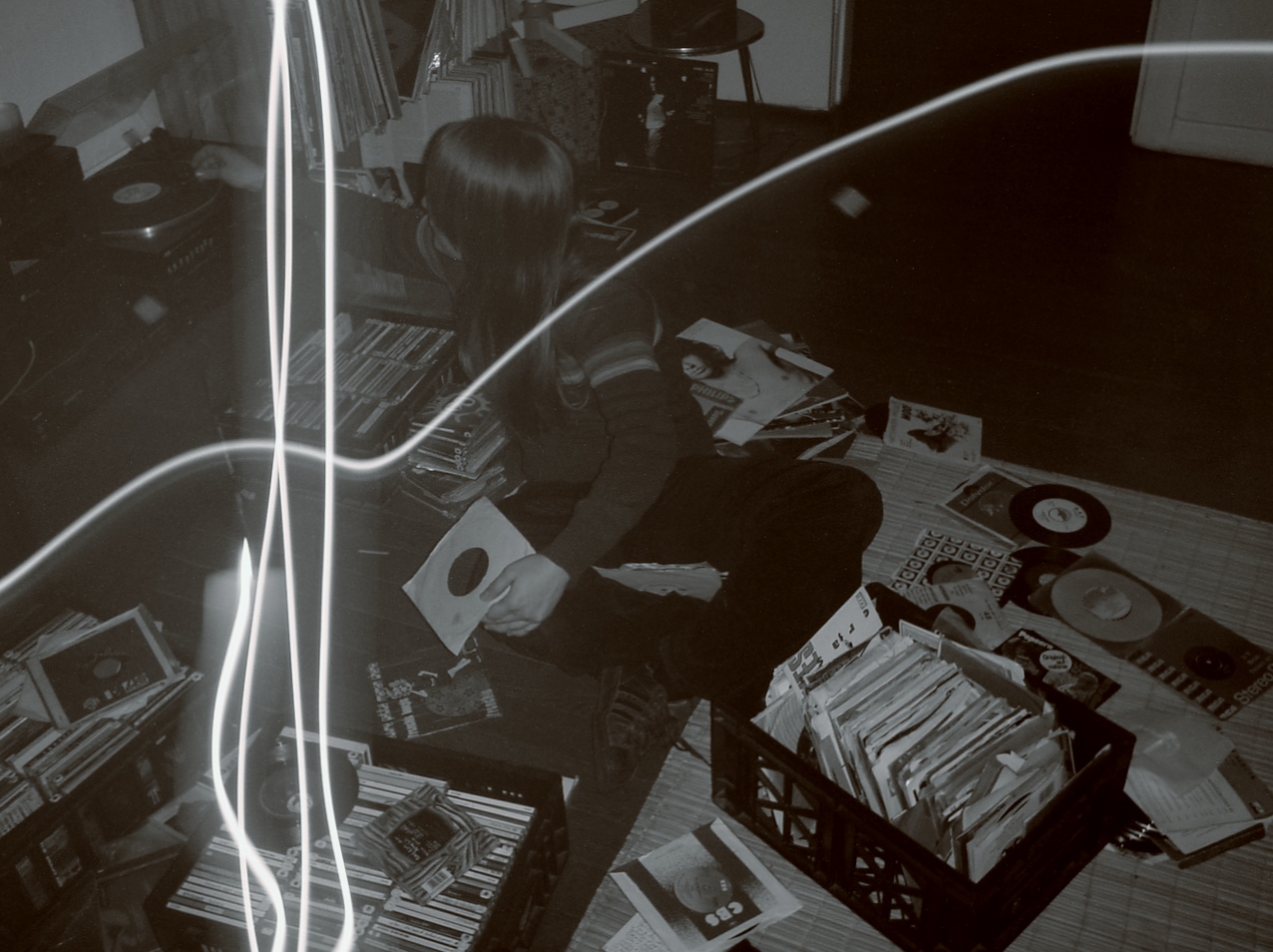
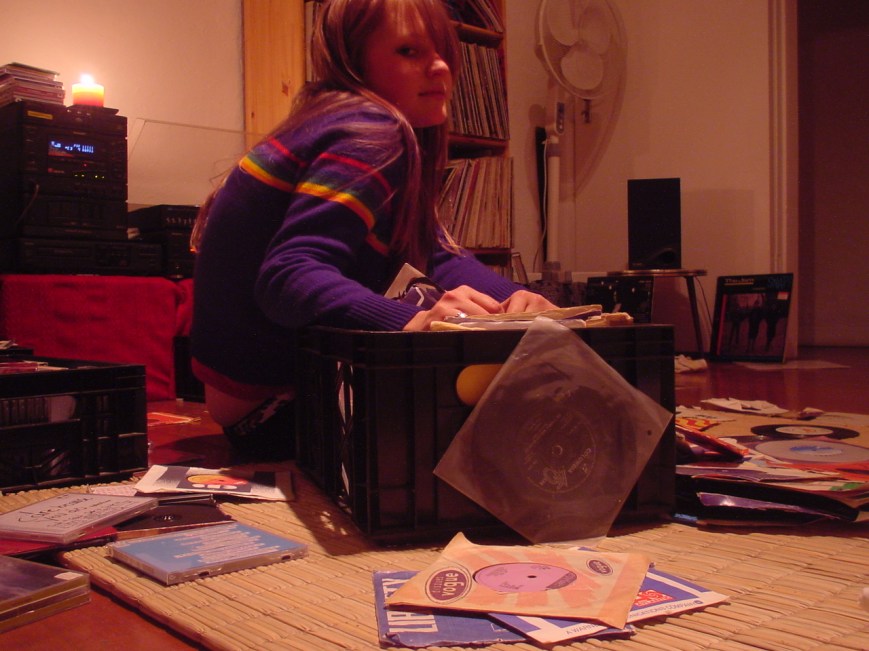
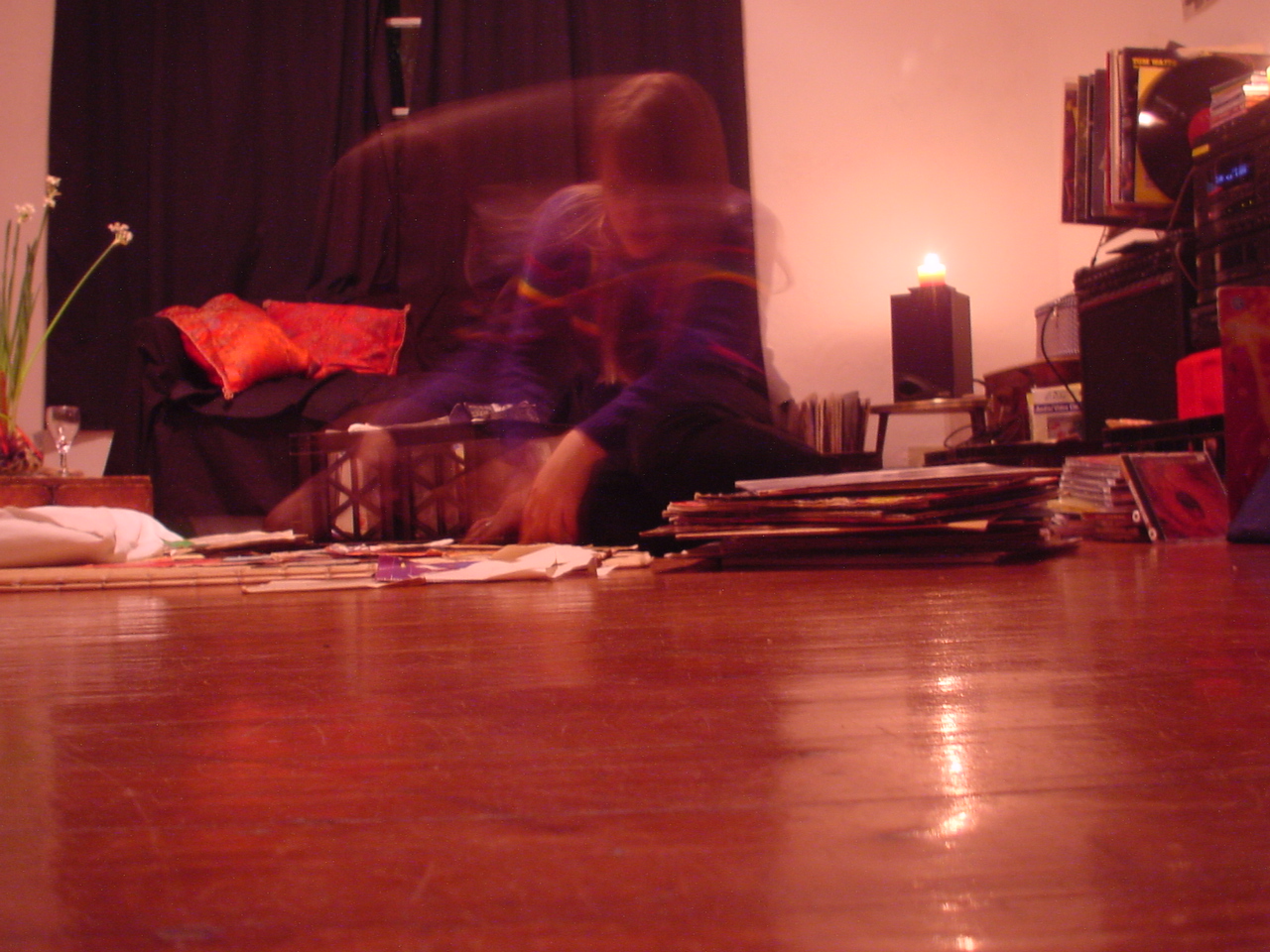
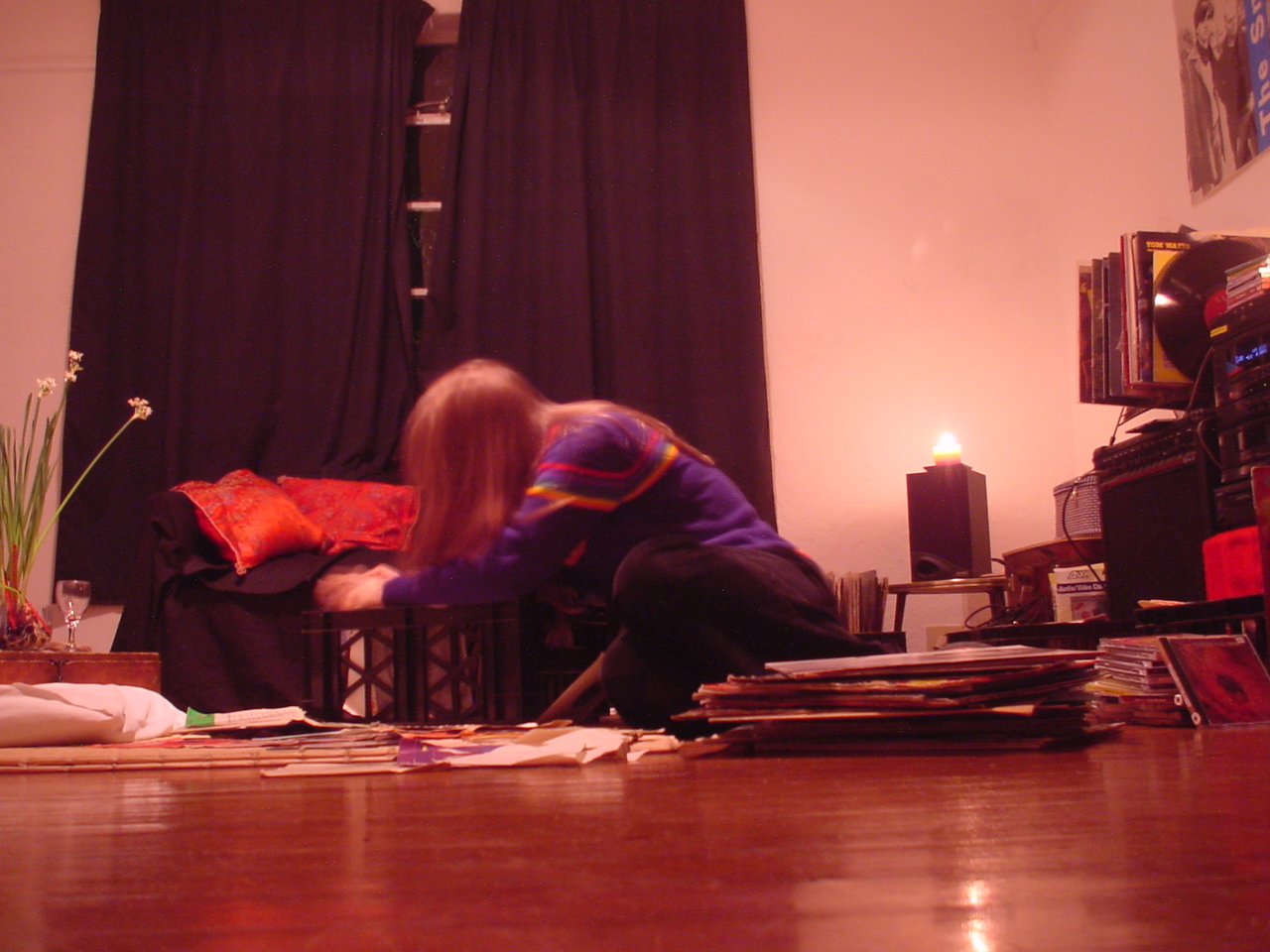
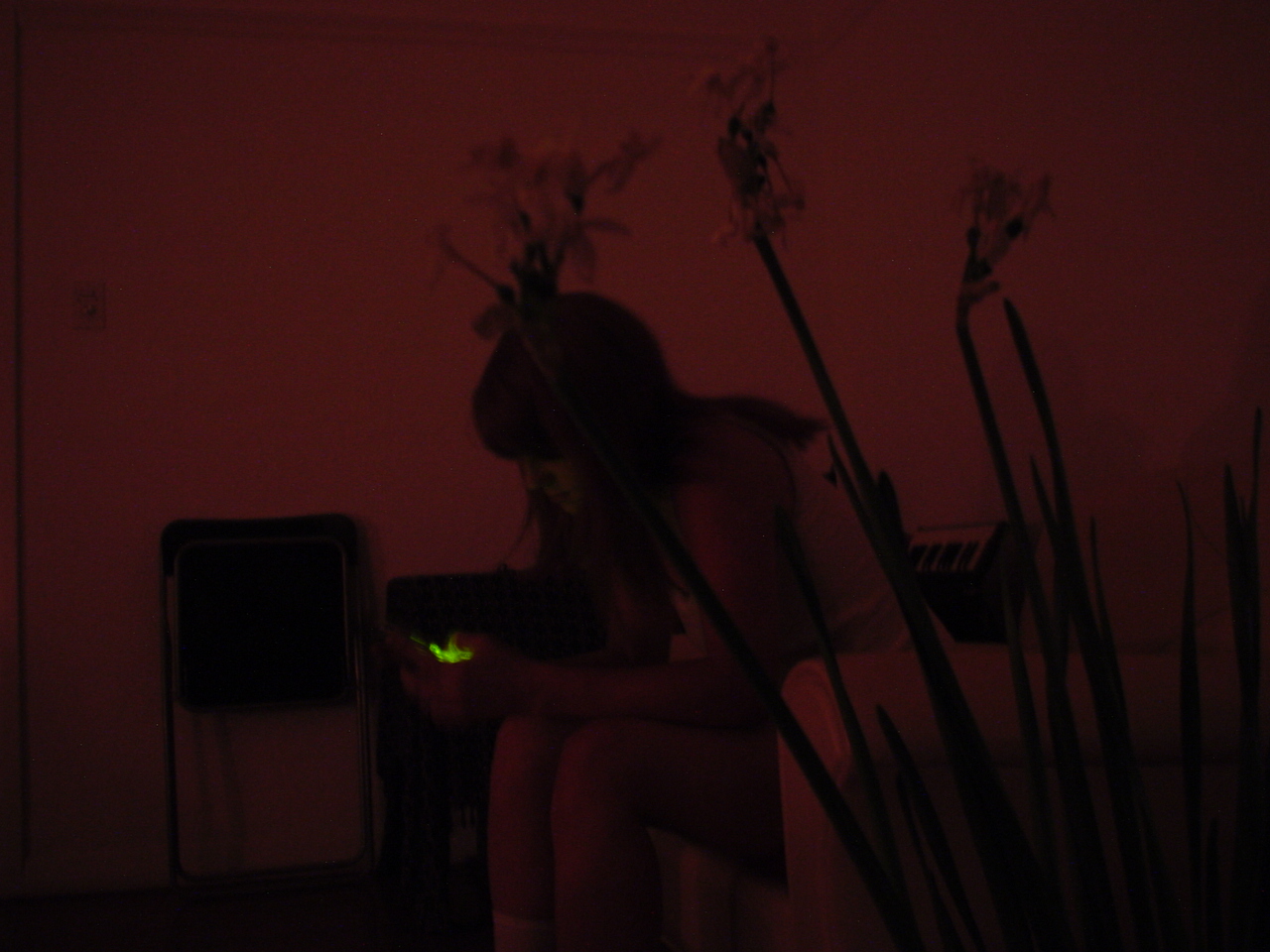
On Thursday I was sent a folder of photographs by Alex Hayn from a time when I didn’t have a camera for several years and so up until now have had no visual record… These are some of them, of an evening at home in Tamboerskloof with my housemate, Meg Wright.

Rose and Narcissus. 2003. Photo: Alexander Hayn

Rose with Narcissus. Photo: Alexander Hayn, 2003

DSC05603 (2)

Photo: Alexander Hayn, 2003.

DSC05608

Photo: Alexander Hayn, 2003.

DSC05648

Photo: Alexander Hayn, 2003.


DSC05635

Photo: Alexander Hayn, 2003.

DSC05636

Photo: Alexander Hayn, 2003.

DSC05591

Photo: Alexander Hayn, 2003.

DSC05585

Meg, when cell phone screens were still monochrome green. Photo: Alexander Hayn, 2003

julia holter – goddess eyes i (2012)

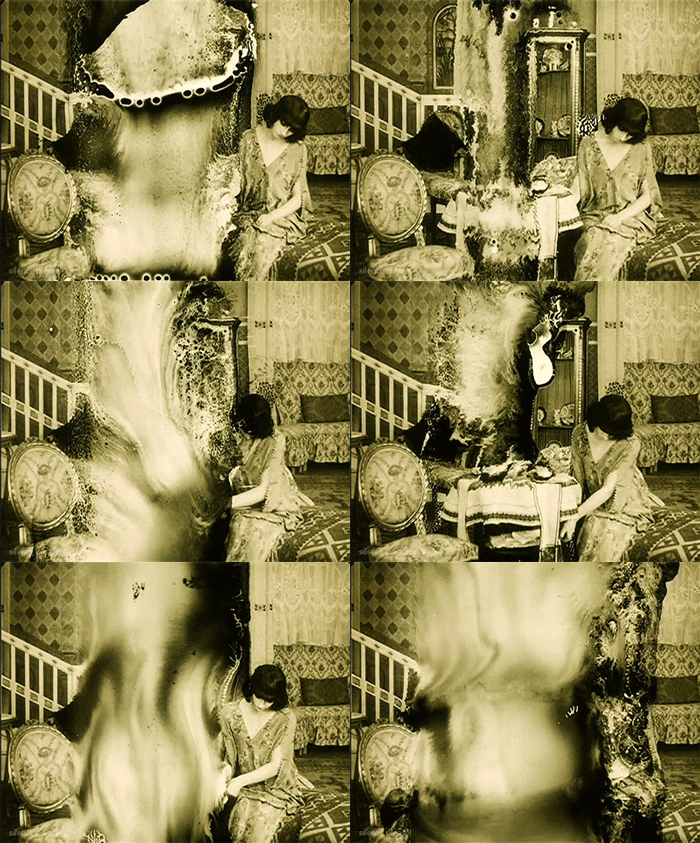
This track comes from her brilliant 2012 album, Ekstasis, which you can listen to HERE. Video directed by Jose Wolff.

“The first thing that came to mind was an image that gradually deteriorates with visual noise, echoing the sonic noise present in the song. We go from lightness to darkness, away from a structured, fabricated place and into raw territory.” – Jose Wolff – August 2012

simone weil – attention and will

simone weil gravity and graceWe do not have to understand new things, but by dint of patience, effort and method to come to understand with our whole self the truths which are evident.

Stages of belief. The most commonplace truth when it floods the whole soul, is like a revelation.

We have to try to cure our faults by attention and not by will.

The will only controls a few movements of a few muscles, and these movements are associated with the idea of the change of position of nearby objects. I can will to put my hand flat on the table. If inner purity, inspiration or truth of thought were necessarily associated with attitudes of this kind, they might be the object of will. As this is not the case, we can only beg for them. To beg for them is to believe that we have a Father in heaven. Or should we cease to desire them? What could be worse? Inner supplication is the only reasonable way, for it avoids stiffening muscles which have nothing to do with the matter. What could be more stupid than to tighten up our muscles and set our jaws about virtue, or poetry, or the solution of a problem? Attention is something quite different.

Pride is a tightening up of this kind. There is a lack of grace (we can give the word its double meaning here) in the proud man. It is the result of a mistake.

Attention, taken to its highest degree, is the same thing as prayer. It presupposes faith and love.

Absolutely unmixed attention is prayer.

If we turn our mind towards the good, it is impossible that little by little the whole soul will not be attracted thereto in spite of itself.

Extreme attention is what constitutes the creative faculty in man and the only extreme attention is religious. The amount of creative genius in any period is strictly in proportion to the amount of extreme attention and thus of authentic religion at that period.

The wrong way of seeking. The attention fixed on a problem. Another phenomenon due to horror of the void. We do not want to have lost our labour. The heat of the chase. We must not want to find: as in the case of an excessive devotion, we become dependent on the object of our efforts. We need an outward reward which chance sometimes provides and which we are ready to accept at the price of a deformation of the truth.

It is only effort without desire (not attached to an object) which infallibly contains a reward.

To draw back before the object we are pursuing. Only an indirect method is effective. We do nothing if we have not first drawn back.

By pulling at the bunch, we make all the grapes fall to the ground.

There are some kinds of effort which defeat their own object (example: the soured disposition of certain pious females, false asceticism, certain sorts of self-devotion, etc.). Others are always useful, even if they do not meet with success.

How are we to distinguish between them? Perhaps in this way: some efforts are always accompanied by the (false) negation of our inner wretchedness; with others the attention is continually concentrated on the distance there is between what we are and what we love.

Love is the teacher of gods and men, for no one learns without desiring to learn. Truth is sought not because it is truth but because it is good.

Attention is bound up with desire. Not with the will but with desire—or more exactly, consent.

We liberate energy in ourselves, but it constantly reattaches itself. How are we to liberate it entirely? We have to desire that it should be done in us—to desire it truly—simply to desire it, not to try to accomplish it. For every attempt in that direction is vain and has to be dearly paid for. In such a work all that I call ‘I’ has to be passive. Attention alone—that attention which is so full that the ‘I’ disappears—is required of me. I have to deprive all that I call ‘I’ of the light of my attention and turn it on to that which cannot be conceived.

The capacity to drive a thought away once and for all is the gateway to eternity. The infinite in an instant.

As regards temptations, we must follow the example of the truly chaste woman who, when the seducer speaks to her, makes no answer and pretends not to hear him.

We should be indifferent to good and evil but, when we are indifferent, that is to say when we project the light of our attention equally on both, the good gains the day. This phenomenon comes about automatically. There lies the essential grace. And it is the definition, the criterion of good.

A divine inspiration operates infallibly, irresistibly, if we do not turn away our attention, if we do not refuse it. There is not a choice to be made in its favour, it is enough not to refuse to recognize that it exists.

The attention turned with love towards God (or in a lesser degree, towards anything which is truly beautiful) makes certain things impossible for us. Such is the non-acting action of prayer in the soul. There are ways of behaviour which would veil such attention should they be indulged in and which, reciprocally, this attention puts out of the question.

As soon as we have a point of eternity in the soul, we have nothing more to do but to take care of it, for it will grow of itself like a seed. It is necessary to surround it with an armed guard, waiting in stillness, and to nourish it with the contemplation of numbers, of fixed and exact relationships.
We nourish the changeless which is in the soul by the contemplation of that which is unchanging in the body.

Writing is like giving birth: we cannot help making the supreme effort. But we also act in like fashion. I need have no fear of not making the supreme effort—provided only that I am honest with myself and that I pay attention.

The poet produces the beautiful by fixing his attention on something real. It is the same with the act of love. To know that this man who is hungry and thirsty really exists as much as I do— that is enough, the rest follows of itself.

The authentic and pure values—truth, beauty and goodness— in the activity of a human being are the result of one and the same act, a certain application of the full attention to the object.

Teaching should have no aim but to prepare, by training the attention, for the possibility of such an act. All the other advantages of instruction are without interest.

Studies and faith. Prayer being only attention in its pure form and studies being a form of gymnastics of the attention, each school exercise should be a refraction of spiritual life. There must be method in it. A certain way of doing a Latin prose, a certain way of tackling a problem in geometry (and not just any way) make up a system of gymnastics of the attention calculated to give it a greater aptitude for prayer.

Method for understanding images, symbols, etc. Not to try to interpret them, but to look at them till the light suddenly dawns.

Generally speaking, a method for the exercise of the intelligence, which consists of looking.

Application of this rule for the discrimination between the real and the illusory. In our sense perceptions, if we are not sure of what we see we change our position while looking, and what is real becomes evident. In the inner life, time takes the place of space. With time we are altered, and, if as we change we keep our gaze directed towards the same thing, in the end illusions are scattered and the real becomes visible. This is on condition that the attention be a looking and not an attachment.

When a struggle goes on between the will attached to some obligation and a bad desire, there is a wearing away of the energy attached to good. We have to endure the biting of the desire passively, as we do a suffering which brings home to us our wretchedness, and we have to keep our attention turned towards the good. Then the quality of our energy is raised to a higher degree. We must steal away the energy from our desires by taking away from them their temporal orientation.

Our desires are infinite in their pretensions but limited by the energy from which they proceed. That is why with the help of grace we can become their master and finally destroy them by attrition. As soon as this has been clearly understood, we have virtually conquered them, if we keep our attention in contact with this truth.

Video meliora … In such states, it seems as though we were thinking of the good, and in a sense we are doing so, but we are not thinking of its possibility.

It is incontestable that the void which we grasp with the pincers of contradiction is from on high, for we grasp it the better the more we sharpen our natural faculties of intelligence, will and love. The void which is from below is that into which we fall when we allow our natural faculties to become atrophied.

Experience of the transcendent: this seems contradictory, and yet the transcendent can be known only through contact since our faculties are unable to invent it.

Solitude. Where does its value lie? For in solitude we are in the presence of mere matter (even the sky, the stars, the moon, trees in blossom), things of less value (perhaps) than a human spirit. Its value lies in the greater possibility of attention. If we could be attentive to the same degree in the presence of a human being…

We can only know one thing about God—that he is what we are not. Our wretchedness alone is an image of this. The more we contemplate it, the more we contemplate him.

Sin is nothing else but the failure to recognize human wretchedness. It is unconscious wretchedness and for that very reason guilty wretchedness. The story of Christ is the experimental proof that human wretchedness is irreducible, that it is as great in the absolutely sinless man as in the sinner. But in him who is without sin it is enlightened…

The recognition of human wretchedness is difficult for whoever is rich and powerful because he is almost invincibly led to believe that he is something. It is equally difficult for the man in miserable circumstances because he is almost invincibly led to believe that the rich and powerful man is something.

It is not the fault which constitutes mortal sin, but the degree of light in the soul when the fault, whatever it may be, is accomplished.

Purity is the power to contemplate defilement.

Extreme purity can contemplate both the pure and the impure; impurity can do neither: the pure frightens it, the impure absorbs it. It has to have a mixture.

__
Excerpted from Simone Weil‘s Gravity and Grace. First French edition 1947. Translated by Emma Crawford. English language edition 1963. Routledge and Kegan Paul, London.